
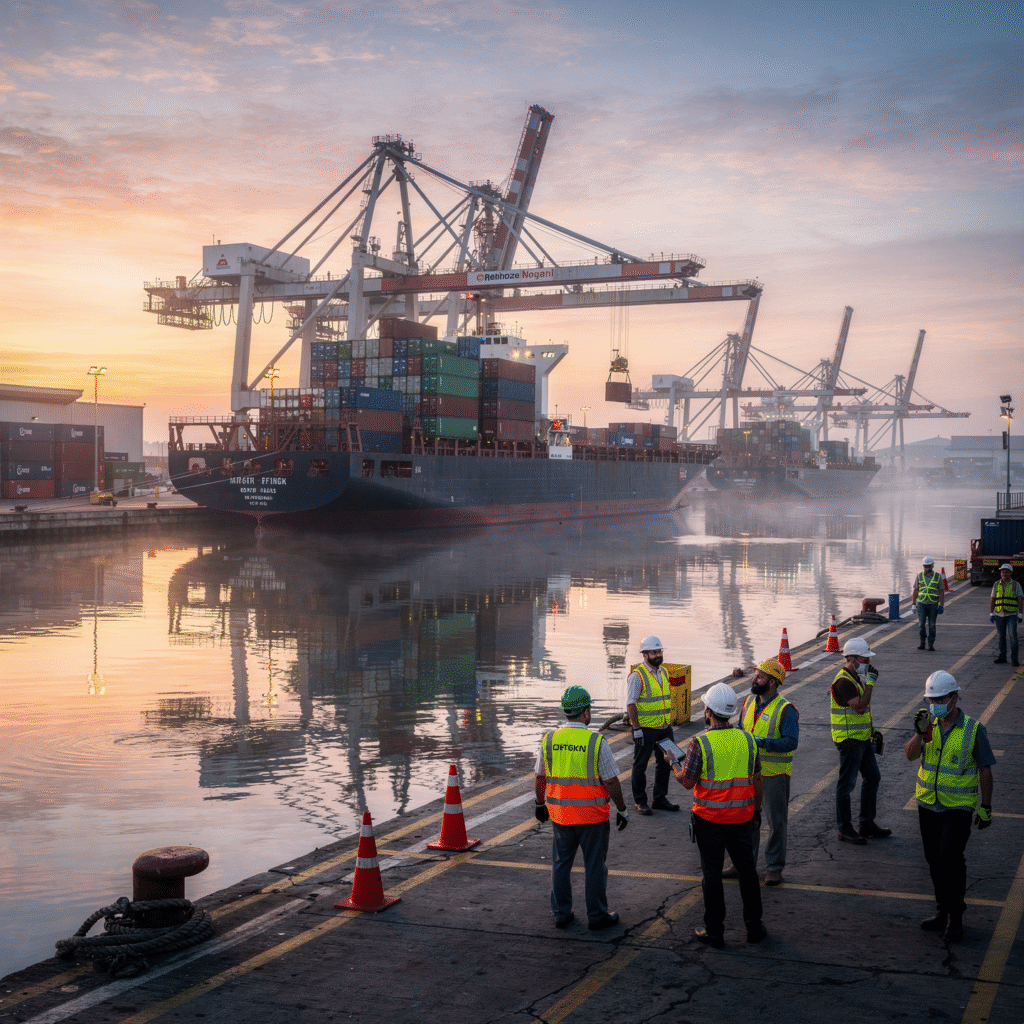
A marina looks like a car park for boats and operates like a property business with a marine hazard attached. Occupancy, yield, technical services, safety and an environmental compliance burden that grows every year. This is how the business actually works and what the careers in it look like.
Where the money comes from
Berthing income is the foundation and rarely the whole story. A marina that depends entirely on annual berths is exposed to a single, slow-moving market.
Annual berths give predictable income and low churn. They also lock capacity at a fixed rate, which is a problem if demand is seasonal and peaks hard.
Visitor and seasonal berths command far higher daily rates and require availability precisely when the marina is fullest. Holding capacity back for them is a yield management decision of the same kind an airline makes.
Technical services are often where the margin is: lift-out, storage ashore, maintenance, antifouling, winterisation, engineering. A marina with a boatyard is a different and generally better business than one without.
Fuel, chandlery, brokerage and commercial rents complete the picture, along with events, moorings and in some cases property.
The strategic question for any marina is how dependent it is on berthing alone, and most of the interesting management work follows from answering it. The Master’s in Management of Marinas and Sports Ports is aimed at exactly this level of decision.
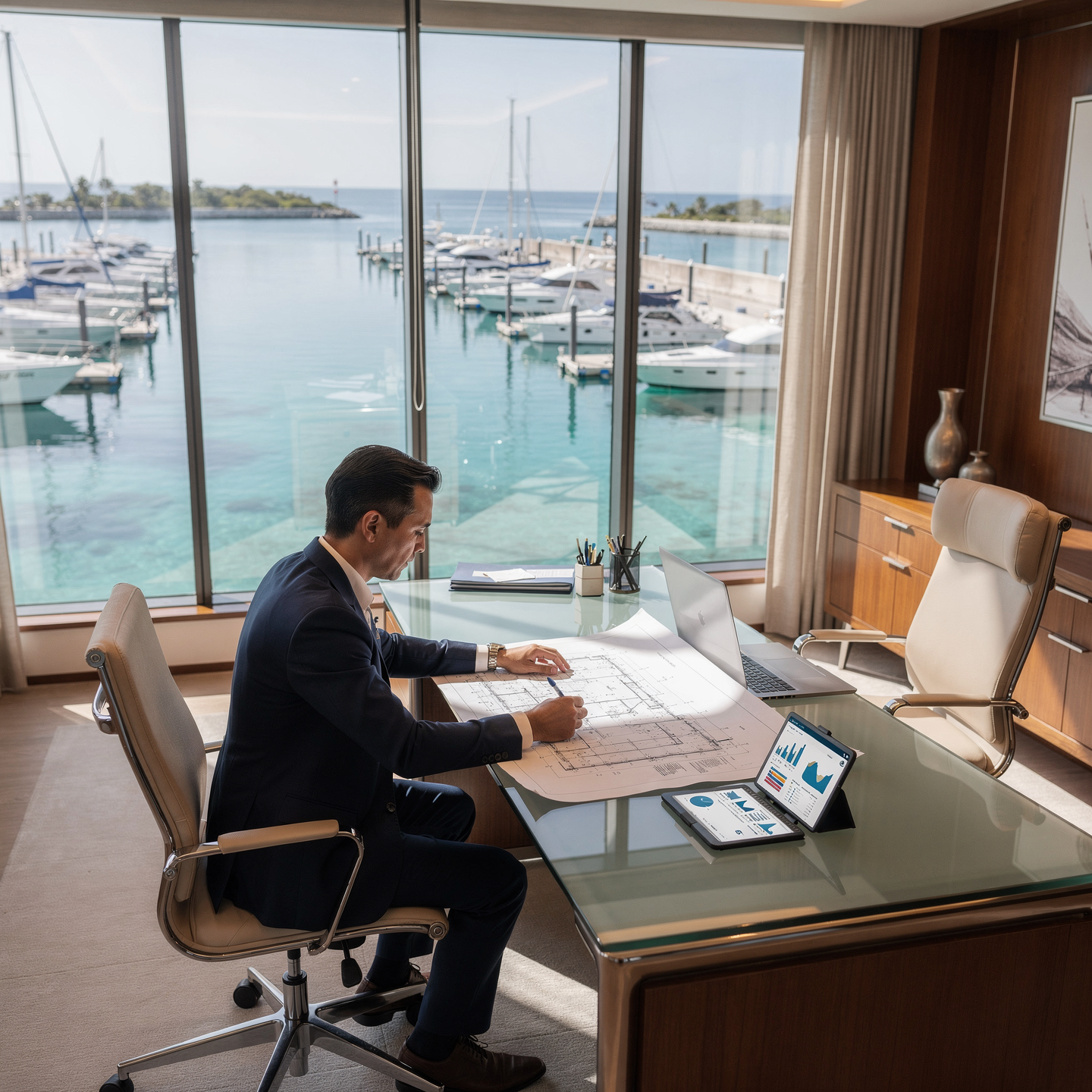
Yield, occupancy and the thing that looks like success
High occupancy is not automatically good. A marina that is full of long-stay boats at a historic rate has excellent occupancy and poor revenue per metre.
The useful measures are revenue per metre of berth, revenue per square metre of the whole site, and the proportion of income that is not berthing. Measured this way, the decisions change: a berth freed from a low-paying long-stay customer and sold to visitors in season may earn considerably more.
Berth allocation is also a physical optimisation problem. Boats vary in length, beam and draught; berths vary in all three. Fitting the fleet efficiently is closer to the terminal yard problem than most marina managers realise, and the software that supports it is a genuine competitive advantage. The Diploma in Nautical Management Software covers that systems layer.
Operations: the daily reality
Arrivals and departures, berth allocation, lines and fenders, assisting boats in a crosswind in a space designed for a smaller fleet than currently exists. Berths got narrower in relative terms as boats got beamier, and manoeuvring space did not grow.
Alongside that: utilities, waste, security, lost keys, disputed invoices, a boat taking on water at three in the morning, and the owner who has not paid for eight months and whose vessel cannot simply be removed.
The lift-out operation is the highest-risk routine activity on most sites. A travel hoist carrying thirty tonnes of boat over a yard with people in it concentrates more risk than anything else that happens on a normal day, and the discipline around it is the clearest single indicator of how well a marina is run.
The Marina Management Course and the Diploma in Port and Marina Operations cover the operational layer, the second taking in the commercial port side as well.
Safety in a recreational environment
Marinas combine deep water, electricity, fuel, heavy lifting and members of the public who may have no marine experience and may have been enjoying the club bar.
Three hazards account for most serious incidents. Falls into the water, particularly at night, from pontoons or while boarding, where cold water shock is a greater immediate danger than drowning. Electrical faults at the shore power connection, where the marine environment is hostile to installations and faults can energise the water. Fire, which in a densely berthed marina spreads between vessels alarmingly fast and is difficult to fight from a pontoon.
Staff competence in on-water rescue is the difference between an incident and a fatality, and it is not something to improvise. The Recreational Rescue Techniques Course covers recreational rescue specifically, which is a different discipline from commercial sea survival.
Where a marina also runs activities, the Aquatic Recreational Activities Course and the Recreational Underwater Photography Course cover supervised recreational operations, which carry their own duty of care.
Environmental obligations
The compliance burden has grown steadily and is now a meaningful part of the management job.
Antifouling residues from hull washing must be captured and treated rather than washed into the basin. Waste oil, batteries and chemicals require proper reception facilities. Sewage pump-out provision is increasingly expected and in places required. Fuel systems need spill containment and a response plan that works at night.
Beyond compliance there is water quality in the basin itself, which is often poorly flushed, and in sensitive areas the condition of the seabed under moorings. Several environmental certification schemes exist for marinas, and in some markets they have become a commercial expectation rather than a differentiator.
Marketing a marina
Marinas sell a location, a standard of service and a community, usually to a customer who will stay for years once they arrive. That makes retention worth far more than acquisition, and it is routinely under-invested in.
The acquisition side has shifted almost entirely online: discovery, reviews, booking and payment. A visiting skipper choosing between two ports does it on a phone, and the marina with clear information, visible availability and the ability to take a booking without a phone call wins the night.
The Digital Marketing Course for Marinas covers this directly, and it is one of the more immediately profitable short courses on this list for anyone running a small site.
The careers
Berth and dock staff. Entry level, practical, and the route most managers came up through. Boat handling, customer contact and the ability to stay calm when a thirty-metre yacht arrives beam-on in a gale.
Marina manager. A general management job: staff, budget, maintenance, compliance, customers and the owner or local authority above you. Broad rather than deep, and genuinely demanding.
Technical and yard management. Running the lifting, storage and maintenance operation. Closer to boatyard work and the area where margin is made.
Group and development roles. Marina groups need people who can standardise operations, assess acquisitions and run development projects. This is where the Master’s in Management of Marinas and Sports Ports is aimed.
Adjacent moves. Marina experience transfers well to small port management, harbour authorities and the shore side of the charter and yacht sector.
Worth knowing before you commit
It is seasonal, and the season is relentless. It is weather-dependent in a way that office work is not. The customers are spending leisure money and expect leisure-standard service, which is a different register from commercial shipping.
Against that, it is one of the few marine careers that is compatible with living in one place, which for people leaving seagoing work is frequently the whole point.
Building and extending: the part with the long horizon
Marina capacity is expensive to create and slow to permit, which is why supply responds to demand over a decade rather than a season.
A development project involves consent from marine and planning authorities, environmental assessment, dredging and its disposal, breakwater or wave attenuation works, pontoon systems, utilities and shore facilities. The marine works are the visible part and frequently not the largest cost.
Three decisions shape the economics for the next thirty years. Berth mix, because the fleet gets longer and beamier over time and a marina built for yesterday’s fleet strands capacity. Dredged depth, which constrains which vessels can ever use the site and sets a recurring maintenance dredging cost. Land area, because dry storage and yard space are where the margin is and no amount of water compensates for not having them.
Climate adaptation has moved onto this list in earnest: sea level rise and increasing storm intensity affect pontoon freeboard, breakwater design and insurance terms over the life of the asset.
Dry stack and the economics of not using water
For smaller motorboats, racking ashore in a covered stack and launching on demand is often a better business than a wet berth. Boats occupy a fraction of the space, suffer less fouling and deterioration, and the operator captures the launch and recovery service.
The constraints are real: it suits boats below a certain size and weight, it requires handling equipment and the staff to run it, and the service promise, that a customer can have their boat in the water within a set time, is operationally demanding on a summer weekend when everyone wants it at once.
Where the site has the land, it is one of the clearest routes to raising revenue per square metre without extending into the water.
Three numbers worth tracking
Revenue per metre of berth, which exposes the long-stay customer on a historic rate that pure occupancy hides.
Proportion of non-berthing income, which measures how exposed the business is to a single slow-moving market.
Retention rate, because a berth holder who stays ten years is worth many times the cost of keeping them, and almost every marina spends more on winning customers than on not losing them.
Dealing with the abandoned boat
Every marina has them: vessels whose owner has stopped paying, stopped visiting, and in some cases stopped being contactable. They occupy a berth, deteriorate, and in the worst cases sink at it.
The problem is that a boat is property, and a marina cannot simply dispose of someone else’s property because they owe money. The legal route varies by jurisdiction and generally involves documented notice, a defined waiting period, and often a court process before a sale or disposal is lawful.
What protects a marina is almost entirely administrative and done years earlier: berthing agreements that set out clearly what happens on non-payment, accurate owner contact records kept current, and a documented trail of attempts to make contact. Operators who treat the berthing agreement as a formality discover its importance at the least convenient moment.
A sunken vessel in a berth is the acute version of the same problem: a removal cost, an environmental incident and a blocked berth at once, with recovery from the owner uncertain. It is one of the clearest arguments for requiring proof of insurance as a condition of berthing, which a surprising number of sites still do not.
One honest note on recognition
Recognition of a qualification depends on the programme completed and on the regulations of each country. The programmes referenced here are professional training; they are not statutory certificates of competency, and they do not replace one where a flag state or regulator requires it. If the role you want is gated by a specific certificate or professional body, check what that body requires before choosing a programme. Our recognition and accreditations page sets out more detail.
Where to go next
Fees and start dates are published on every programme page, and the course catalogue, diploma catalogue and master’s catalogue let you compare side by side. Study is online, and each programme page shows its next start date.
If you would rather talk it through, the application process starts with a short form and a conversation with an academic adviser, normally within 24 to 48 hours, at no cost and with no obligation.
Related reading: nine maritime careers you can move into from sea and decarbonising shipping: rules, levers and careers.