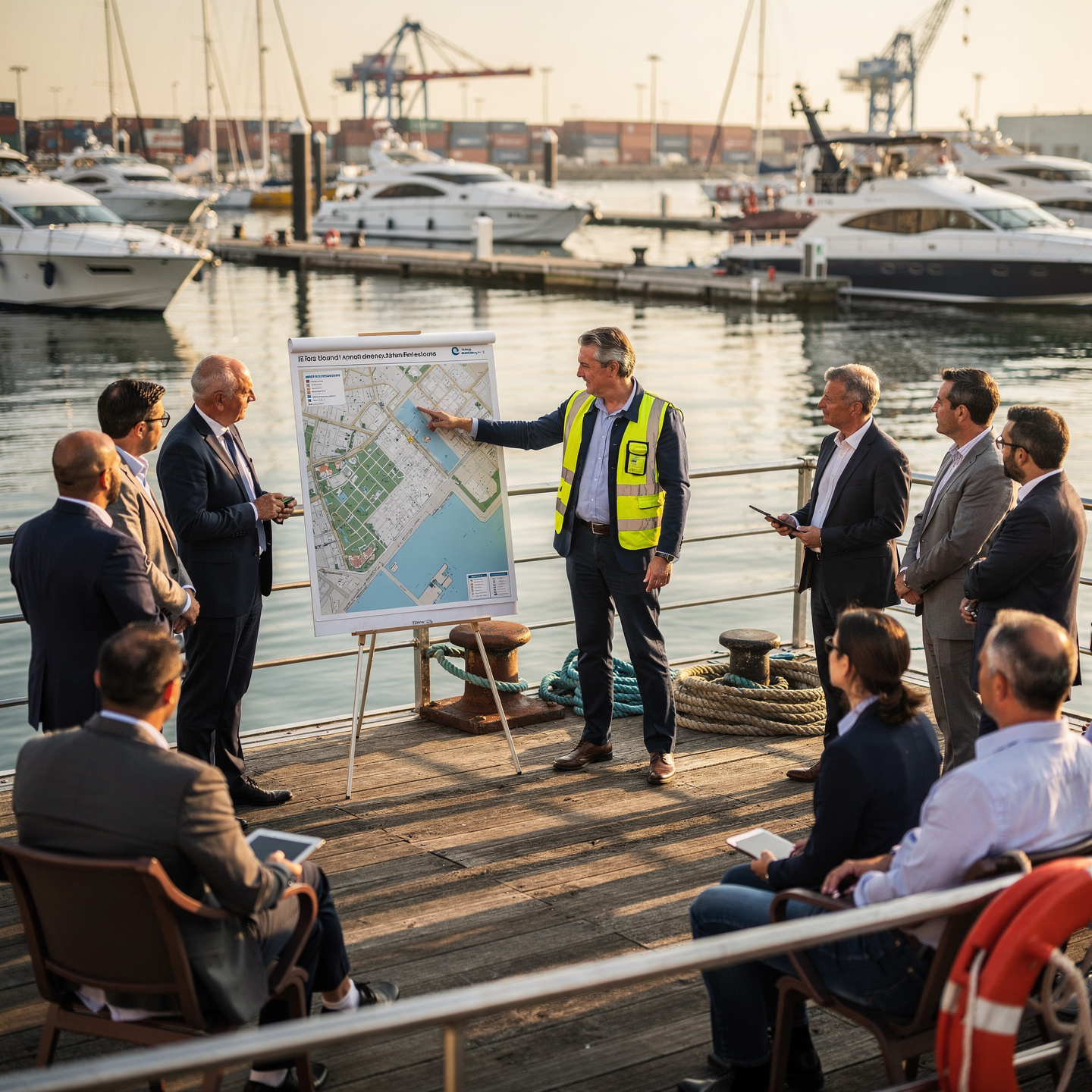
Master’s Degree in Management of Marinas and Sports Ports
Why this master’s programme?
The Master’s Degree in Marina and Marina Management
Offers comprehensive training for professionals seeking to lead and optimize the operation of nautical facilities. Learn to efficiently manage resources, plan infrastructure development, and apply innovative marketing and sales strategies. Master maritime legislation, port security, and best practices for environmental sustainability in the sector.
Differentiating Advantages
- Practical Approach: Real-world case studies and management simulations to apply knowledge.
- Networking: Access to industry experts and professional networking opportunities.
- Skills Development: Leadership, team management, negotiation, and effective communication.
- Sustainability and CSR: Integration of environmental and social criteria into port management.
- Global Perspective: Analysis of nautical market trends and international best practices.
- Modality: Online
- Level: Masters
- Hours: 1600 H
- Start date:
Availability: 1 in stock
Who is it aimed at?
- Directors and managers of marinas and harbors seeking to optimize profitability, improve the customer experience, and lead with a strategic vision.
- Operations and maintenance managers who need to deepen their knowledge of infrastructure management, sustainability, and regulatory compliance.
- Nautical professionals interested in specializing in port management and developing management skills.
- Investors and real estate developers who want to understand the marina business and analyze project feasibility.
- Graduates in Business Administration, Tourism, Civil Engineering, or Nautical Engineering seeking a career boost in the port sector Sports.
Professional Flexibility
Adapted for working professionals: online classes with flexible scheduling, 24/7 accessible content, and personalized tutoring.
Objectives and skills

Optimizing the profitability and sustainability of port facilities:
“Implement asset management strategies that maximize infrastructure performance and minimize long-term operating costs.”

To efficiently manage and coordinate complex port operations:
“Optimize docking/undocking planning, allocating resources (personnel, equipment) and prioritizing safety and efficiency in operations.”

Develop marketing and sales strategies to attract and retain customers:
“Analyze the target market, design a differentiated value proposition, and optimize the conversion funnel.”

Implement safety and environmental regulations in marinas:
Manage waste (MARPOL), prevent accidental spills and act in accordance with port environmental emergency plans.

To effectively manage the human and financial resources of a marina:
Optimize budget allocation and ensure profitability by implementing cost control strategies and seeking alternative revenue sources.

Design and manage improvement and innovation projects in marinas:
“Identify opportunities for improvement in the port’s operational efficiency and environmental sustainability, prioritizing projects with high impact and technical feasibility.”
Study plan – Modules
- Comprehensive diagnosis of port operations: analysis of logistics flows, identification of bottlenecks, and evaluation of physical and human resources
- Advanced simulation and optimization models: application of queuing theory, linear programming, and genetic algorithms in the operational planning of marinas
- Bertling space and capacity management: quantitative methods for the dynamic allocation of moorings and optimization of space use based on seasonal demand
- Technological integration in operations: implementation of geographic information systems (GIS), IoT, and marine management software for real-time monitoring and data-driven decision-making
- Predictive and preventive maintenance protocols in port infrastructure: use of smart sensors, vibration analysis, and non-destructive diagnostic techniques
- Advanced management of nautical services: coordination of repair activities, Fuel supply, provisioning, and auxiliary services to maximize efficiency and profitability.
Implementation of international quality and sustainability standards (ISO 14001, EMAS, Blue Flag) applied to operations and environmental management in marinas.
Strategic planning for sustainability: environmental impact assessment, development of waste management plans, energy efficiency, and promotion of renewable energy in marinas.
Safety and risk management protocols: design of comprehensive contingency plans, impact assessment of extreme events, and ongoing staff training in operational safety.
Key indicators and performance analysis: development of balanced scorecards for monitoring operational, environmental, and economic KPIs aimed at continuous improvement.
- Fundamentals and scope of strategic planning in marinas and harbors: analysis of the competitive context and organizational diagnosis
- Advanced strategic formulation methodologies: SWOT analysis, BCG and Ansoff matrices applied to port management
- Design and implementation of strategic plans aimed at resource optimization and profitability maximization
- Technological innovation applied to port management: process digitization, information systems, and automation in marinas
- Integration of IoT and Big Data for real-time monitoring and intelligent decision-making in marinas
- Blockchain applications for security, traceability, and document management in maritime operations
- Environmental management and sustainability: international regulations (MARPOL, ISO 14001), environmental impact assessment, and best ecological practices
- Design and management of sustainable infrastructure: renewable energies, energy efficiency, and the circular economy in marinas
Integrated management models for reducing carbon footprint and mitigating climate change in marinas
Innovation in port services: smart marinas, sustainable mobility, and personalized experiences for users and visitors
Advanced control and monitoring tools: SCADA systems, GIS, and integrated platforms for smart port management
Case studies: successful implementation of innovative and sustainable strategies in leading marinas globally
Continuous evaluation and monitoring of strategic effectiveness and its adjustment through specialized key performance indicators (KPIs)
Change management and leadership in technological innovation and sustainability processes in the marina sector
Legal and regulatory aspects that condition planning and innovation in the comprehensive management of marinas and harbors
- Fundamentals of Technological Innovation Applied to Marinas and Ports: Global and Disruptive Trends in Port Management
- Sustainable Design and Environmental Certifications for Port Infrastructure: LEED, BREEAM, and Other Standards Applied to Construction and Operation
- Environmental Impact Analysis: Aquatic Ecosystem Modeling, Waste Management, and Pollution Mitigation in Port Areas
- Optimization of Port Operations through Integrated Systems: Resource Management, Process Automation, and Service Digitization
- Implementation of Geographic Information Systems (GIS) and IoT for Real-Time Monitoring of Facilities and Operational Efficiency
- Advanced Energy Management Models in Marinas: Integration of Renewable Energies and Smart Grid Technologies Applied to the Nautical Sector
- Intelligent Traffic Management
Maritime and Berth Allocation: Predictive Algorithms for Efficient Space Allocation and Reduced Waiting Times
Advanced Security and Emergency Protocols: Integration of Surveillance Systems, Early Detection, and Rapid Response in Marinas
Design and Maintenance of Resilient Infrastructure: Analysis of Climate Risks, Natural Hazards, and Engineering Principles for Marina Adaptability to Climate Change
International Case Studies and Comparative Studies: Analysis of High-Performance Marinas with a Focus on Innovation, Sustainability, and Operational Optimization
- Fundamentals of port engineering in marinas: materials, floating structures, and adaptive design to maritime environmental conditions
- Comprehensive operational management: logistics, infrastructure maintenance, optimization of berth space and vessel capacity
- Advanced port security systems: intrusion detection, electronic surveillance, ISPS regulations applied to marinas
- Risk assessment methodologies and contingency plans for natural and human-caused events in marinas
- Implementation of IoT technologies for real-time monitoring of assets, water quality, and weather conditions
- Sustainable environmental management: spill control, wastewater and solid waste treatment, and marine conservation programs
- International certifications and ISO standards applied to environmental management and quality in marinas
- Financial and commercial models for revenue maximization: analysis of tariffs, ancillary services, and Customer loyalty in the nautical sector
Digital marketing strategies and commercial positioning: branding, online platforms, and reservation management in smart marinas
Current maritime and port legislation: practical application in the operation and technical management of marinas and harbors
Preventive and corrective maintenance procedures for critical infrastructure: docks, walkways, supply points, and electrical systems
Emergency planning and management: coordination with local authorities, drills, and evacuation protocols in maritime contexts
Renewable energy innovations applied to marinas: integration of solar panels, batteries, and energy efficiency systems
Technical and environmental audits: inspection tools, performance metrics, and reports for continuous operational improvement
Case studies and leading projects: successful design, operation, and management of marinas in complex and highly regulated environments
- Fundamentals of Technological Innovation Applied to Marinas and Ports: Global Trends and Success Stories
- Advanced Infrastructure Design and Planning: Technical Criteria for Structural and Environmental Sustainability
- Disruptive Digital Technologies: IoT, Big Data, and Their Integration into Port Management Systems
- Automation and Intelligent Control of Access and Berths: Sensors, Actuators, and Embedded Systems
- Integrated Management Platforms: Design, Functionality, and Analysis of Specialized Software for Smart Marinas
- Implementation of Predictive Models Based on Artificial Intelligence for Operational Optimization and Preventive Maintenance
- Renewable Energy Systems and Efficient Energy Management: Integration of Solar, Wind, and Storage Sources into Port Infrastructure
- Real-Time Environmental Monitoring: Remote Sensors for Water Quality, Air Quality, and Marine Biodiversity
- Digital Security and Cybersecurity Applied to Port Operations:
- Data protection and resilience against cyberattacks
- International regulations and standards for technological innovation in marinas: compliance and certifications
- Impact of digitalization on user experience: smart portals, online bookings, and personalized service management
- Integration of electric vehicles and smart charging systems in marinas: technical and regulatory challenges
- Trends in sustainable mobility and accessibility within marina infrastructure
- Monetization and business models derived from technological innovation: digital platforms and value-added services
- Analysis of case studies and development of innovation projects for the efficient and sustainable management of marinas and harbors
- Technological Innovation in Marinas: Current Trends and Future of the Nautical Sector
- Intelligent Systems for Marina Management: Automation, IoT, and Big Data Applied to Port Operations
- Implementation of Renewable Energies in Port Infrastructure: Solar, Wind, and Hybrid Systems for Energy Optimization
- Advanced Sustainable Management Models: Environmental Certifications, Carbon Footprint, and Circular Economy Strategies in Marinas
- Integrated Water and Waste Management: Technologies for Treatment, Recycling, and Minimizing Environmental Impacts
- Integration of Real-Time Environmental Monitoring Systems: Water Quality, Pollution Levels, and Marine Biodiversity
- Smart Marinas: Development of Digital Platforms for Continuous Improvement in User Experience and Operational Efficiency
- Big Data and Predictive Analytics for Optimizing Maritime Traffic and Berth Allocation in High-Volume Marinas
- Technological tools for emergency and security management: drones, sensors, and automated response systems
- Continuous improvement methodologies applied to port administration: Lean Management, Six Sigma, and ISO 9001 quality systems
- Innovation in modular and sustainable infrastructure: advanced materials, construction techniques, and predictive maintenance
- International policies and regulations related to sustainability and technology in marinas
- Success stories and benchmarks of technological innovation in globally recognized marinas
- Economic and financial evaluation of investments in sustainable technologies for marinas
- Training and human talent management: training adapted to new technologies and a culture of continuous improvement
Performance
- Fundamentals of Strategic Management in Marinas and Yacht Clubs: analysis of the competitive environment, internal diagnosis, and strategic positioning
- Design and application of innovative business models for port management geared towards high-performance nautical users
- Evaluation and management of the port lifecycle: planning, implementation, monitoring, and continuous optimization through key performance indicators (KPIs)
- Technological innovation applied to port infrastructure: integration of intelligent systems for mooring automation, access control, and personalized digital services
- Implementation of IoT (Internet of Things) solutions for real-time monitoring of environmental conditions, safety, and nautical traffic in the marina
- Adoption and management of Big Data platforms and advanced analytics for demand forecasting, resource optimization, and improving the user experience
- client
Advanced environmental sustainability strategies: international certifications, waste management, marine ecosystem maintenance, and carbon footprint reduction in marinas
Design and implementation of corporate social responsibility (CSR) programs focused on the local community and stakeholders in the port environment
Relevant international regulations and standards for the sustainable and safe management of marinas: compliance, audits, and regulatory updates
Risk management and contingency plans for climate emergencies, maritime safety, and cybersecurity for port infrastructure
Development of integrated technology marketing strategies for attracting and retaining premium nautical clients, including the use of digital channels and specialized social networks
International case studies: successful implementation of innovation and sustainability in globally recognized marinas
Emerging trends in marina management: energy Renewables, electric mobility for vessels, and new nautical service platforms
Leadership methodologies for port managers focused on the digital and cultural transformation of the organization
Integration of quality and continuous improvement systems applied to the overall user experience in the marina
- Fundamentals of Integrated Port Operations Management: Definition, Scope, and Methodologies Applied in Marinas and Ports
- Design and Optimization of Operational Processes: Modeling, Flow Analysis, and Automation for Continuous Improvement
- Port Security Management Systems: Implementation of International Regulations (ISPS, SOLAS) and Development of Security Plans Adapted to Recreational Environments
- Emergency Protocols and Crisis Management: Contingency Plans, Drills, and Coordination with Maritime and Land Authorities
- Advanced Quality Management: ISO 9001 Standards Applied to Port and Marina Services, Internal Audits, and Specific Certifications
- Innovative Technologies for Port Operations: Digitalization, IoT, Big Data, and SCADA Systems for Real-Time Control
- Integration of Renewable Energies and Eco-efficient Systems in Port Facilities: Solar Panels, Wind turbines and smart energy management systems
Environmental impact assessment and mitigation: life cycle analysis, waste management, and marine conservation plans in operational planning
Implementation of sustainable practices: LEED certification, environmental standards in infrastructure, and procedures to minimize ecological footprint
Key performance indicators (KPIs) for operational management and monitoring of safety and quality in marinas
Predictive models and advanced analytics for decision-making based on operational and environmental data
Training and leadership in multidisciplinary teams: fostering a culture of safety, quality, and sustainability
Current regulations and legislation in port management focused on marinas: compliance and adaptation to international changes
International and national case studies on technological innovation applied to operation and sustainable management
Design of strategic plans for the evolution and modernization of marina facilities, ensuring competitiveness and operational excellence
- Fundamentals of Integrated Marina Management: organizational structure, roles, and responsibilities in modern marina administration
- Operational Optimization Models: flow analysis, berth allocation, efficient resource management, and dynamic planning
- Applied Technological Innovation: IoT implementation, intelligent real-time monitoring and control systems for continuous improvement
- Environmental Management and Sustainability Systems: international regulations, environmental impact indicators, and ecological footprint reduction strategies
- Design and application of Lean and Six Sigma methodologies for process improvement in marina port administration
- Renewable Energy Management and Energy Efficiency in port infrastructure, energy audits, and energy management plans
- Advanced Water and Waste Management Strategies: innovative technologies for treatment, Recycling and reuse in marinas
Integration of Geographic Information Systems (GIS) and Big Data for strategic decision-making in the operation and development of marinas
Protocol and regulations for safety, emergency response, and risk prevention in high-performance port environments
Strategic and sustainable planning: development of business plans, economic and financial feasibility analysis, and innovation management in the nautical sector
- Introduction to the final project: objectives, scope, and methodology for developing sustainable models in the management of marinas and harbors
- Theoretical foundations of applied sustainability: analysis of the three pillars (economic, environmental, and social) and their integration into port management
- Comprehensive diagnosis of the marina: collection and analysis of operational, environmental, and socioeconomic data
- Advanced tools for designing sustainable management models: Geographic Information Systems (GIS), multi-criteria analysis, and environmental modeling
- Technological innovations in marina management: automation, telemetry, smart ports, and their impact on sustainability
- Environmental impact assessment: international regulations, mitigation techniques, and efficient use of natural resources in marinas
- Waste and wastewater management: design of integrated systems to minimize ecological footprints and ensure regulatory compliance
- Strategic planning for the Comprehensive management: establishing key performance indicators (KPIs) and continuous monitoring mechanisms
Economic and financial aspects: feasibility studies, sustainable financing models, and cost-benefit analyses in port projects
Risk assessment and security management: addressing environmental, operational, and marine security contingencies
Community participation and social management: techniques for engaging stakeholders, conflict management, and strengthening social capital
Benchmarking and international best practices: success stories and lessons learned in sustainable marina management
Professional writing and presentation of the final paper: structure, academic standards, technical argumentation, and defense before an evaluation panel
Applied software tools: advanced use of specialized platforms for simulation, analysis, and presentation of results
Legal and regulatory aspects: specific regulatory compliance for marinas and ports at the national and international levels
- Innovation and Sustainable Development: Integration of Renewable Energies, Electric Mobility, and Green Solutions Applied to the Port Environment
- Sustainable Commercial Management and Marketing: Strategies to Boost Occupancy, Customer Loyalty, and the Development of Responsible Nautical Tourism
- Post-Implementation Monitoring and Evaluation: Indicators, Audits, and Techniques for the Continuous Improvement of Designed Models
- Impact of Climate Change: Adaptation and Resilience in Marina Infrastructure and Operations
- Professional Ethics and Corporate Social Responsibility: Implications for Decision-Making and Sustainable Marina Management
Career prospects
“`html
- Marina or Port Director/Manager: Responsible for comprehensive management, including operations, finance, marketing, and human resources.
- Operations Manager: Oversees daily port operations, ensuring efficiency and safety.
- Marketing and Sales Manager: Develops strategies to attract new clients and retain existing ones, promoting port services.
- Environment and Quality Manager: Implements policies and procedures to ensure sustainability and regulatory compliance in environmental matters.
- Port Facilities Technician: Responsible for the maintenance and repair of port infrastructure and equipment.
- Marina Management Consultant: Advises companies and public administrations on the planning, development, and optimization of marinas and Marinas.
- Nautical Event Manager: Organizes and coordinates events related to sailing and maritime tourism within the port.
- Yacht Club Administrator: Manages the services and activities of a yacht club, attending to the needs of its members.
“`
Entry requirements

Academic/professional profile:
Bachelor’s degree in Nautical Science/Maritime Transport, Naval/Marine Engineering or a related qualification; or proven professional experience on the bridge/in operations.

Language proficiency:
Functional Maritime English (SMCP) recommended for simulations and technical materials.

Documentation:
Updated CV, copy of qualification or seaman’s book, national ID/passport, motivation letter.

Technical requirements (for online):
Device with camera/microphone, stable internet connection, monitor ≥ 24” recommended for ECDIS/Radar-ARPA.
Admissions process and dates

Online
application
(form + documents).

Academic review and interview
Admissions decision

Admissions decision
(+ scholarship offer if applicable).

Place reservation
(deposit) and enrolment.

Induction
(access to the virtual campus, calendars, simulator guides).
Scholarships and financial support
- Innovative Management Strategies: Master the latest trends in the efficient and sustainable management of marinas.
- Legal and Regulatory Framework: Delve into maritime legislation and sector-specific regulations, ensuring regulatory compliance.
- Marketing and Sales: Learn to attract and retain customers by developing digital marketing strategies and managing the user experience.
- Infrastructure Planning and Development: Acquire skills in space optimization, project management, and improving sustainability. Environmental.
- Finance and Profitability: Analyze the economic viability of projects, manage financial resources, and maximize the profitability of operations.
Testimonials
This master’s program provided me with the tools and knowledge necessary to optimize the management of the marina where I work. I implemented a new online booking system that increased occupancy by 15% and customer satisfaction by 20% in the first year. Furthermore, the marketing strategies I learned allowed us to attract a new customer segment, increasing revenue by 12%.
This master’s program provided me with the tools and knowledge necessary to launch my own sustainable boat rental company. In less than a year, we have achieved 30% growth and established partnerships with local marine conservation organizations, exceeding my initial expectations and positioning ourselves as a leader in responsible tourism.
This master’s program provided me with the tools and knowledge necessary to optimize the management of our marina. I implemented a new online booking system that increased occupancy by 15% and revenue by 20% in the first year. Furthermore, the marketing strategies I learned allowed us to attract a new customer segment, solidifying our position as the leading marina in the region.
This Master’s program provided me with the tools and knowledge necessary to optimize the management of our marina. I implemented a new online booking system that increased occupancy by 15% and customer satisfaction by 20% in the first year.

Frequently asked questions
The management of marinas and harbors.
Yes. The itinerary includes ECDIS/Radar-ARPA/BRM with harbor, ocean, fog, storm, and SAR scenarios.
Online with live sessions; hybrid option for simulator/practical placements through agreements.
Marina and port management sector.
Recommended functional SMCP. We offer support materials for standard phraseology.
Yes, with a relevant degree or experience in maritime/port operations. The admissions interview will confirm suitability.
Optional (3–6 months) through Companies & Collaborations and the Alumni Network.
Simulator practice (rubrics), defeat plans, SOPs, checklists, micro-tests and applied TFM.
A degree from Navalis Magna University + operational portfolio (tracks, SOPs, reports and KPIs) useful for audits and employment.
- Introduction to the final project: objectives, scope, and methodology for developing sustainable models in the management of marinas and harbors
- Theoretical foundations of applied sustainability: analysis of the three pillars (economic, environmental, and social) and their integration into port management
- Comprehensive diagnosis of the marina: collection and analysis of operational, environmental, and socioeconomic data
- Advanced tools for designing sustainable management models: Geographic Information Systems (GIS), multi-criteria analysis, and environmental modeling
- Technological innovations in marina management: automation, telemetry, smart ports, and their impact on sustainability
- Environmental impact assessment: international regulations, mitigation techniques, and efficient use of natural resources in marinas
- Waste and wastewater management: design of integrated systems to minimize ecological footprints and ensure regulatory compliance
- Strategic planning for the Comprehensive management: establishing key performance indicators (KPIs) and continuous monitoring mechanisms
Economic and financial aspects: feasibility studies, sustainable financing models, and cost-benefit analyses in port projects
Risk assessment and security management: addressing environmental, operational, and marine security contingencies
Community participation and social management: techniques for engaging stakeholders, conflict management, and strengthening social capital
Benchmarking and international best practices: success stories and lessons learned in sustainable marina management
Professional writing and presentation of the final paper: structure, academic standards, technical argumentation, and defense before an evaluation panel
Applied software tools: advanced use of specialized platforms for simulation, analysis, and presentation of results
Legal and regulatory aspects: specific regulatory compliance for marinas and ports at the national and international levels
- Innovation and Sustainable Development: Integration of Renewable Energies, Electric Mobility, and Green Solutions Applied to the Port Environment
- Sustainable Commercial Management and Marketing: Strategies to Boost Occupancy, Customer Loyalty, and the Development of Responsible Nautical Tourism
- Post-Implementation Monitoring and Evaluation: Indicators, Audits, and Techniques for the Continuous Improvement of Designed Models
- Impact of Climate Change: Adaptation and Resilience in Marina Infrastructure and Operations
- Professional Ethics and Corporate Social Responsibility: Implications for Decision-Making and Sustainable Marina Management
Request information
Complete the Application Form.
Attach your CV/degree certificate (if you have it to hand).
Indicate your preferred cohort (January/May/September) and whether you would like the hybrid option with simulator sessions.
An academic advisor will contact you within 24–48 hours to guide you through the admission process, scholarships, and compatibility with your professional schedule.
Faculty
Eng. Tomás Riera
Full Professor
Eng. Tomás Riera
Full Professor
Eng. Sofía Marquina
Full Professor
Eng. Sofía Marquina
Full Professor
Eng. Javier Bañuls
Full Professor
Eng. Javier Bañuls
Full Professor
Dr. Nuria Llobregat
Full Professor
Dr. Nuria Llobregat
Full Professor
Dr. Pau Ferrer
Full Professor
Dr. Pau Ferrer
Full Professor
Cap. Javier Abaroa (MCA)
Full Professor
Cap. Javier Abaroa (MCA)
Full Professor

