

The most useful question to ask any training provider is not how many programmes it offers. It is who teaches them. This is an account of the Navalis Magna Institute faculty, what each of them specialises in, and why the structure is built the way it is.
Why the faculty structure matters more than the catalogue
Maritime training has a recurring weakness: material written by people who understand the subject academically and have never had to apply it in a working environment. It produces courses that are technically correct and operationally useless, and anyone who has worked at sea recognises the result within about ten minutes.
The alternative problem is just as common. Material written by practitioners with deep experience and no idea how to structure learning, which produces war stories rather than competence.
The structure here is built to avoid both: subject leads who are practitioners in their field, coordinating defined specialisms, with an academic directorate responsible for how the teaching is designed and assessed. The faculty pages for each are published on the rectoral team and faculty section of the site.
The academic directorate
Dr Marina Alcover is Academic Director and Head of Quality Assurance. Her remit is curriculum design, quality assurance against ISO 21001 and ISO 9001, alignment with the IMO and STCW frameworks, learning assessment and educational analytics.
That last item is worth drawing out, because it is unusual to state it openly. Educational analytics means measuring whether students actually learn what a programme claims to teach, and changing the programme when they do not. It is the difference between a course that has been delivered and a course that has worked.
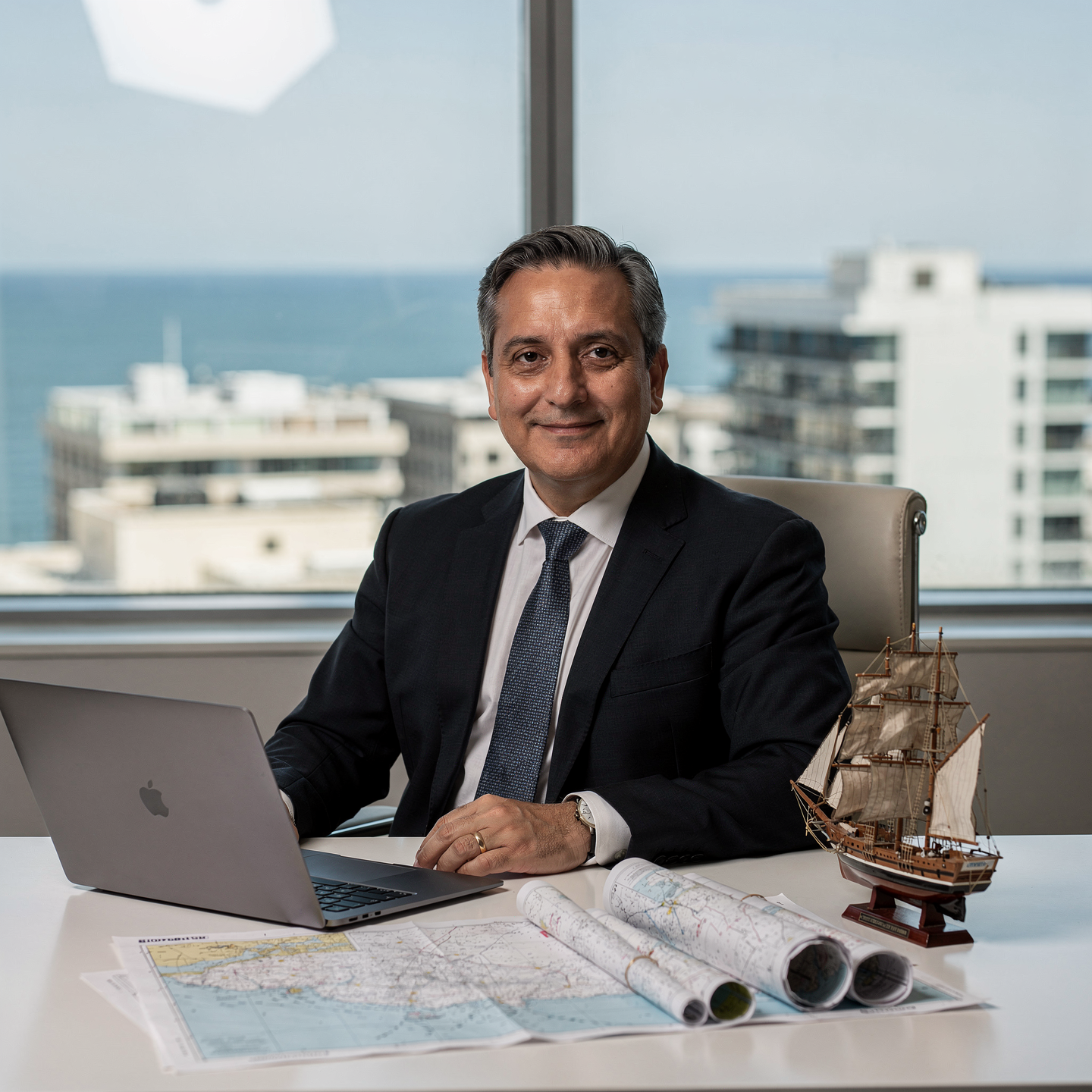
Navigation, manoeuvring and bridge operations
Cap. Javier Abaroa (MCA) is Full Professor of Manoeuvring and Electronic Navigation, covering ECDIS, radar and ARPA and GMDSS, and coordinates STCW compliance and bridge resource management.
He holds MCA certification and has held command on ocean-going vessels. His teaching covers advanced manoeuvring, navigation management and bridge safety in accordance with STCW, and integrates bridge and crew resource management with standard operating procedures, checklists and evidence-based briefing and debriefing.
That last emphasis is the signature of someone who has actually run a bridge team rather than only studied one. Most close-quarters incidents are failures of coordination and communication, not of equipment, and a curriculum built around that fact looks different from one built around instrument theory.
Meteorology, search and rescue, and operational safety
Dr Nuria Llobregat is Professor of Marine Meteorology, Search and Rescue, and Operational Safety, and coordinates navigation risk management. Her specialisms include weather and wave models, weather routing and sailing windows, and SAR planning and execution.
Weather routing sits at an interesting intersection: it is a safety discipline, a fuel efficiency discipline and a commercial one simultaneously, and the three pull in different directions. Teaching it properly means teaching the trade-off rather than the technique.
Naval architecture, hydrodynamics and simulation
Dr Pau Ferrer is Professor of Naval Architecture and Simulation and directs the Hydrodynamics and CFD Laboratory. His work covers hull forms and waterlines, resistance and propulsion, and computational fluid dynamics using open-source and commercial solvers.
The practical relevance of this is larger than it first appears. Hull efficiency is where a meaningful share of a ship’s fuel consumption is decided, and computational modelling is how modern decisions about hull form, appendages and retrofits are actually made.

Propulsion, alternative fuels and energy performance
Eng. Tomás Riera is Professor of Propulsion, Alternative Energies and Hybrids, and coordinates energy performance and vibrations. His specialisms span diesel and gas plants, waterjets, alternative fuels including methanol, ammonia and LNG, and hybrid arrangements.
This is the fastest-moving technical area in the sector. The fuels and architectures arriving in the fleet now are ones most serving engineers were not trained on, and the gap between what is being built and what people have been taught is widening rather than closing.
Electrical systems, automation and ETO engineering
Eng. Javier Bañuls is Professor of Electricity, Automation and Electro-Technical Officer engineering, and coordinates electronic integration and machine alarms. His area covers marine power generation and distribution in AC and DC, and power converters.
The electro-technical role exists because ships became electrical systems with engines attached rather than the reverse. On vessels with diesel-electric or hybrid propulsion, the fault that stops the ship is as likely to be in power management as in a cylinder.
Materials, composites and corrosion
Eng. Sofía Marquina is Professor of Materials, Composites and Corrosion Protection, and coordinates the advanced paints and coatings line. Her specialisms include glass, carbon and aramid laminates and sandwich structures using PVC, SAN, PET and balsa cores.
Corrosion and coating breakdown are, quietly, the largest maintenance cost across the fleet and the leading indicator surveyors look at first. Composites are where small craft, yacht and increasingly larger structures are heading.
Welding and non-destructive testing
Eng. Diego Cifuentes is Professor of Naval Welding and Non-Destructive Testing and heads quality assurance and control for welded joints. His area covers welding procedure specifications and qualification records, welder qualification, and MIG, MAG and TIG processes in carbon steel, stainless steel and aluminium.
Welding is where structural integrity is created or compromised, and the qualification framework around it is one of the most formalised in engineering. Teaching it credibly requires someone who has signed off on joints, not someone who has read about them.
What this adds up to
Eight specialists covering navigation and bridge operations, meteorology and safety, naval architecture and hydrodynamics, propulsion and alternative fuels, electrical and automation, materials and coatings, welding and inspection, and the academic quality function that holds the rest together.
That spread is deliberate. It maps onto the areas where the industry is actually changing: decarbonisation, electrification, composites, digital navigation and the inspection regime around all of them.
What we do not claim
It would be easy to describe this faculty in grander terms, and we would rather be precise.
These are practitioners teaching their specialisms within a quality-assured academic structure. They are not a substitute for the statutory certification regime. Recognition of a qualification depends on the programme completed and on the regulations of each country, and professional training of this kind does not replace a certificate of competency where a flag state requires one.
What a faculty like this does provide is the technical depth behind a programme, and a reasonable assurance that the person who designed the material has done the work it describes. Given how much online training in this sector is assembled by people who have not, that is worth asking about before you enrol anywhere, including here.
Questions worth asking any training provider
Whether you study with us or not, these are the questions that separate substance from presentation.
Who wrote this programme, and what have they done? A named specialist with a verifiable background, or an anonymous content team.
What is actually assessed, and how? A quiz at the end of each module is not assessment of competence.
What does it explicitly not cover? Providers confident in their material will tell you plainly. Providers who are not will change the subject to accreditation logos.
What does recognition depend on? The honest answer always involves the programme completed and the regulations of the country where you intend to work. Any other answer deserves scrutiny.
How the specialisms connect
A faculty list reads as a set of separate subjects. In practice the value is in the overlaps, and most real problems sit in them.
Fuel efficiency is simultaneously a hydrodynamics question, a propulsion question and an operational one. Hull form and fouling sit with naval architecture, engine performance and fuel choice with propulsion, and speed and routing with the bridge. A programme that teaches any one of these alone produces someone who can optimise their own piece and miss the system.
Structural integrity spans materials, coatings, welding and inspection. Corrosion is a materials and coatings problem, cracking is a welding and fatigue problem, and both are found, or missed, by inspection.
Safety runs through meteorology, bridge operations and the engineering disciplines at once. A weather routing decision is a safety decision, a stability decision and a commercial one in the same moment.
This is why the coordination roles exist alongside the teaching ones. Someone has to be responsible for the seams.
What practitioners teach differently
Three things consistently distinguish material written by people who have done the work.
They teach the failure modes first. Theory explains how something works; experience explains how it goes wrong, and the second is what keeps people safe and employed.
They are specific about tools. Naming the solvers, the processes, the standards and the equipment, rather than describing categories. Specificity is hard to fake and immediately recognisable to anyone in the field.
They are comfortable saying what they do not know. Alternative fuels are a good example: the honest position is that the industry is still learning, and a curriculum that presents it as settled is misleading its students.
One honest note on recognition
Recognition of a qualification depends on the programme completed and on the regulations of each country. The programmes referenced here are professional training; they are not statutory certificates of competency, and they do not replace one where a flag state or regulator requires it. If the role you want is gated by a specific certificate or professional body, check what that body requires before choosing a programme. Our recognition and accreditations page sets out more detail.
Where to go next
Fees and start dates are published on every programme page, and the course catalogue, diploma catalogue and master’s catalogue let you compare side by side. Study is online, and each programme page shows its next start date.
If you would rather talk it through, the application process starts with a short form and a conversation with an academic adviser, normally within 24 to 48 hours, at no cost and with no obligation.
Related reading: nine maritime careers you can move into from sea and decarbonising shipping: rules, levers and careers.