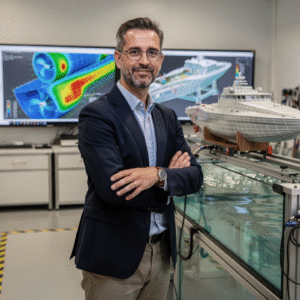
Diploma in Aquatic Activities and Marine Sports

Why this certificate program?

The Diploma in Aquatic Activities and Marine Sports

Immerse yourself in a world of professional possibilities in the aquatic field. Learn to design, manage, and implement safe and effective aquatic activity programs, from beginner to advanced training. Master the techniques of swimming, lifesaving, recreational diving, and sailing, with a focus on safety, teaching, and sustainability. This program provides you with the tools to excel as an instructor, guide, or manager in clubs, resorts, and sports organizations.

Differentiating Advantages

  • Recognized Certifications: Earn accreditations in aquatic rescue, diving, and other specialties.
  • Professional Internships: Apply your knowledge in real-world settings and build your network.
  • Focus on Safety: Learn protocols and techniques to prevent and respond to aquatic emergencies.
  • Skills Development: Improve your communication, leadership, and teamwork skills.
  • Marine Sustainability: Integrate responsible practices for the conservation of the aquatic environment.
Actividades

Diploma in Aquatic Activities and Marine Sports

Availability: 1 in stock

Who is it aimed at?

  • Swimming instructors and lifeguards looking to expand their expertise in recreational and sporting aquatic activities at sea.
  • Active and sports tourism professionals who wish to certify their knowledge in nautical sports and risk management in the marine environment.
  • Students of Sports Science and Physical Activity aspiring to specialize in the aquatic and maritime sector, with a practical and up-to-date approach.
  • Managers of aquatic facilities and sports clubs interested in diversifying their offerings and integrating activity programs at sea for all levels.
  • Water sports and marine environment enthusiasts seeking comprehensive and professional training to lead and promote activities safely and responsible.

Training flexibility
Designed for professionals and students: online modality with live classes, multimedia resources and personalized tutoring to facilitate learning at your own pace.

Actividades

Objectives and competencies

Mastering water rescue and salvage techniques:

“Use rescue equipment (buoys, ropes, boats) efficiently and safely, adapting to diverse environmental conditions.”

Designing personalized training programs in water sports:

“Considering individual needs, skill level, specific goals, and adapting the progression according to the athlete’s response to training.”

Manage and promote safety at aquatic facilities and marine sporting events:

“Implement aquatic rescue and first aid protocols, adapting them to different scenarios and populations.”

Apply current regulations and protocols for action in aquatic activities:

“Implement aquatic safety and rescue procedures, including the correct use of equipment and the management of environment-specific risks.”

Develop skills for teaching and training in various aquatic disciplines:

Design, implement and evaluate aquatic instruction programs adapted to different levels and needs, using innovative and safe pedagogical methodologies.

Assess and minimize risks inherent in aquatic activities and marine sports:

“Implement specific safety protocols for each activity, including prior risk assessments, emergency plans and appropriate equipment, ensuring the competence of staff and participants.”

Curriculum - Modules

  1. Comprehensive Maritime Incident Management: protocols, roles, and chain of command for coordinated response
  2. Operational Planning and Execution: briefing, routes, weather windows, and go/no-go criteria
  3. Rapid Risk Assessment: criticality matrix, scene control, and decision-making under pressure
  4. Operational Communication: VHF/GMDSS, standardized reports, and inter-agency liaison
  5. Tactical Mobility and Safe Boarding: RHIB maneuvers, approach, mooring, and recovery
  6. Equipment and Technologies: PPE, signaling, satellite tracking, and field data logging
  7. Immediate Care of the Affected: primary assessment, hypothermia, trauma, and stabilization for evacuation
  8. Adverse Environmental Conditions: swell, Visibility, flows, and operational mitigation

    Simulation and training: critical scenarios, use of VR/AR, and exercises with performance metrics

    Documentation and continuous improvement: lessons learned, indicators (MTTA/MTTR), and SOP updates

  1. Introduction to Aquatic Safety: Basic concepts, risks, and legal responsibilities.
  2. Safety and Rescue Equipment: Types, use, maintenance, and regulations.
  3. Swimming and Survival Techniques: Adapting to the aquatic environment, efficient swimming styles, buoyancy, and water survival techniques.
  4. Aquatic Rescue: Rescue techniques with and without equipment, safe approach to the victim, extraction, and transport.
  5. First Aid in Aquatic Environments: Drowning, hypothermia, injuries from marine life, trauma, and water-related illnesses.
  6. Cardiopulmonary Resuscitation (CPR) in Aquatic Environments: Adapting CPR techniques to the aquatic environment, special considerations.
  7. Communication and Signaling in Emergencies Aquatic Safety: Communication systems, distress signals, and action protocols.

    Prevention of aquatic accidents: Risk identification, preventive measures, and awareness campaigns.

    Legislation and regulations in aquatic safety: National and international regulations, responsibilities, and penalties.

    Rescue drills and practice: Realistic scenarios, evaluation, and continuous improvement.

  1. Introduction to Water Safety: Drowning, Risk Factors, and Prevention
  2. Pathophysiology of Drowning: Mechanisms, Types, and Consequences
  3. Water Rescue Equipment: Life Jackets, Lifebuoys, Rescue Ropes, and Other Devices
  4. Non-Contact Rescue Techniques: Throwing Ropes and Lifebuoys, Towing with Boats
  5. Contact Rescue Techniques: Safe Approach, Rescue Grips, and Victim Extraction
  6. Water First Aid: Basic Life Support (BLS), Water CPR, and Airway Management
  7. Common Injuries in Aquatic Environments: Cuts, Bruises, Sprains, Fractures, and Spinal Cord Injuries
  8. Hypothermia and Hyperthermia: Prevention, symptoms, and treatment.

    Dangerous animals in the water: Identification, prevention of attacks, and first aid in case of bites or stings.

    Legal and ethical aspects of aquatic rescue: Responsibility, informed consent, and confidentiality.

  1. Introduction to Water Safety: Concepts, Risks, and Responsibilities
  2. Pathophysiology of Drowning: Mechanisms, Phases, and Complications
  3. Personal Protective Equipment (PPE): Life Jackets, Wetsuits, Helmets
  4. Water Entry Techniques: Controlled, Emergency, and with Equipment
  5. Swimming and Approach Techniques: Freestyle, Breaststroke, Tow
  6. Rescue Techniques: Contact, Non-Contact, Tow, and Extraction
  7. Basic First Aid: CPR, Foreign Body Airway Obstruction (FBAO), Hemorrhage and Shock Control
  8. Advanced Life Support (ALS): AED Use, Oxygen Administration
  9. Maritime Rescue: Search and Rescue (SAR) Operations
  10. Communication and coordination in aquatic emergencies: VHF, distress signals

  1. Introduction to Aquatic Safety: Statistics, risks, and prevention.
  2. Physiology of Drowning: Types, phases, and influencing factors.
  3. Personal Safety Equipment: Life jackets, wetsuits, helmets.
  4. Swimming and Survival Techniques: Rescue swimming, flotation, self-protection.
  5. Water Rescue Techniques: Rescue with and without equipment, towing, extraction.
  6. First Aid in Aquatic Environments: CPR, airway obstruction, hypothermia, injuries.
  7. Aquatic Rescue Equipment: Rescue boards, rescue tubes, ropes.
  8. Communication and Signaling: Communication systems, distress signals, protocols.
  9. Emergency Planning and Management: Risk assessment, contingency plans.
  10. Legislation and Regulations: Current regulations on water safety and rescue.

  1. System Architecture and Components: Structural design, materials, and subsystems (mechanical, electrical, electronic, and fluid) with selection and assembly criteria for marine environments
  2. Fundamentals and Principles of Operation: Physical and engineering foundations (thermodynamics, fluid mechanics, electricity, control, and materials) that explain performance and operating limits
  3. Safety and Environmental (SHE): Risk analysis, PPE, LOTO, hazardous atmospheres, spill and waste management, and emergency response plans
  4. Applicable Regulations and Standards: IMO/ISO/IEC requirements and local regulations;
  5. Conformance criteria, certification, and best practices for operation and maintenance
  6. Inspection, testing, and diagnostics: Visual/dimensional inspection, functional testing, data analysis, and predictive techniques (vibration, thermography, fluid analysis) to identify root causes
  7. Preventive and predictive maintenance: Hourly/cycle/seasonal plans, lubrication, adjustments, calibrations, consumable replacement, post-service verification, and operational reliability
  8. Instrumentation, tools, and metrology: Measuring and testing equipment, diagnostic software, calibration and traceability; selection criteria, safe use, and storage
  9. Onboard integration and interfaces: Mechanical, electrical, fluid, and data compatibility; Sealing and watertightness, EMC/EMI, corrosion protection, and interoperability testing.

    Quality, acceptance testing, and commissioning: process and materials control, FAT/SAT, bench and sea trials, go/no-go criteria, and evidence documentation.

    Technical documentation and integrated practice: logs, checklists, reports, and a complete case study (safety → diagnosis → intervention → verification → report) applicable to any system.

  1. Introduction to Water Safety: Risks and Prevention
  2. Pathophysiology of Drowning: Mechanisms and Phases
  3. Water Rescue Equipment: Types, Use, and Maintenance
  4. Water Entry Techniques and Approach to the Victim
  5. Towing and Extraction Techniques of the Victim
  6. First Aid in the Water: Basic Life Support (BLS) in the Aquatic Environment
  7. Airway Management and Artificial Ventilation in Water Rescue
  8. Immobilization and Transport of Victims with Suspected Spinal Cord Injury
  9. Hypothermia and Shock: Prevention, Detection, and Initial Treatment
  10. Communication and Coordination in Emergencies aquatics: protocols and chain of rescue

Career opportunities

  • Water Activities Monitor/Instructor: teaching swimming, aquagym, surfing, paddle surfing, kayaking, and other water sports.
  • Lifeguard: surveillance and rescue at beaches, swimming pools, and aquatic facilities.
  • Water Activities Tour Leader: organization and facilitation of leisure and recreational activities in aquatic environments.
  • Water Facilities Manager: supervision and maintenance of swimming pools, water parks, and aquatic sports centers.
  • Active Tourism Technician: guiding and accompanying participants in activities such as snorkeling, diving, sea kayaking, and boat trips.
  • Water Sports Event Promoter: organization and management of competitions, exhibitions, and events related to water sports.
  • Personal Trainer Aquatic: Design and implementation of personalized training programs in swimming pools or the sea.

    Aquatic Safety Consultant: Risk assessment, design of safety plans, and training in aquatic accident prevention.

    “`

Admission requirements

Academic/professional profile:

Degree/Bachelor's degree in Nautical Science/Maritime Transport, Naval/Marine Engineering, or a related field; or proven professional experience in bridge/operations.

Language proficiency:

Recommended functional maritime English (SMCP) for simulations and technical materials.

Documentation:

Updated resume, copy of degree or seaman's book, ID card/passport, letter of motivation.

Technical requirements (for online):

Equipment with camera/microphone, stable connection, ≥ 24” monitor recommended for ECDIS/Radar-ARPA.

Admission process and dates

1. Online
application

(form + documents).

2. Academic review and interview

(profile/objectives/schedule compatibility).

3. Admission decision

(+ scholarship proposal if applicable).

4. Reservation of place

(deposit) and registration.

5. Induction

(access to campus, calendars, simulator guides).

Scholarships and grants

  • Explore the Aquatic World: Master swimming, diving, and water rescue techniques, with a focus on safety and responsible enjoyment.
  • In-Depth Water Sports: Immerse yourself in surfing, windsurfing, stand-up paddleboarding, and sailing, learning from the fundamentals to advanced strategies.
  • Management and Leadership: Develop skills to plan, organize, and lead aquatic activities and sporting events in marine environments.
  • Professional Certification: Obtain a recognized accreditation that will open doors to job opportunities in the tourism, sports, and recreation sectors.
  • Practical Experience: Participate in practical sessions in the pool and open water, applying the knowledge acquired in real-world situations real.
Get ready for an exciting and adrenaline-filled race, contributing to the well-being and enjoyment of people on the water.

Testimonials

Frequently asked questions

Yes. The itinerary includes ECDIS/Radar-ARPA/BRM with harbor, ocean, fog, storm, and SAR scenarios.

Online with live sessions; hybrid option for simulator/practical placements through agreements.

Primarily salted, with a focus on water sports.

Recommended functional SMCP. We offer support materials for standard phraseology.

Yes, with a relevant degree or experience in maritime/port operations. The admissions interview will confirm suitability.

Optional (3–6 months) through Companies & Collaborations and the Alumni Network.

Simulator practice (rubrics), defeat plans, SOPs, checklists, micro-tests and applied TFM.

A degree from Navalis Magna University + operational portfolio (tracks, SOPs, reports and KPIs) useful for audits and employment.

  1. Introduction to Water Safety: Basic concepts, risks, and legal responsibilities.
  2. Pathophysiology of Drowning: Types of drowning, mechanisms, and consequences.
  3. Water Safety and Rescue Equipment: Types, use, and maintenance of life jackets, ropes, buoys, etc.
  4. Non-Contact Rescue Techniques: Throwing ropes and floats.
  5. Contact Rescue Techniques: Safe approach, releases, and towing.
  6. Basic First Aid: Initial assessment, CPR, wound and bleeding management.
  7. Basic Life Support (BLS) in Aquatic Environments: Adapting CPR to aquatic conditions.
  8. Immobilization and victim transfer: Techniques for spinal cord injuries and other emergencies.

    Communications in aquatic emergencies: Alert systems, distress calls, and coordination with emergency services.

    Prevention of aquatic accidents: Safety measures in swimming pools, beaches, and other aquatic environments.

Request information

  1. Complete the Application Form.

  2. Attach your CV/degree certificate (if you have it to hand).

  3. Indicate your preferred cohort (January/May/September) and whether you would like the hybrid option with simulator sessions.

    An academic advisor will contact you within 24–48 hours to guide you through the admission process, scholarships, and compatibility with your professional schedule.

Please enable JavaScript in your browser to complete this form.
Click or drag a file to this area to upload.

Faculty

0
    0
    Tu carrito
    Tu carrito esta vacíoRegresar a la tienda
    Scroll to Top