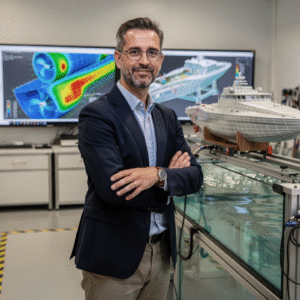
Master’s Degree in Competitive Sailing Training
Why this master’s programme?
The Master in Competitive Sailing Training
This program prepares you to lead teams and optimize the performance of sailors. Master the most advanced training techniques, from strategic season planning to biomechanical movement analysis. Learn to manage high-performance teams, develop personalized training programs, and use cutting-edge technology for continuous improvement. This program will make you a leader in the world of competitive sailing.
Differentiating Advantages
- Innovative Methodology: Combines theory and practice with real-world case studies and simulations.
- Expert Instructors: Learn from internationally renowned coaches and sports scientists.
- Cutting-Edge Technology: Uses data analysis software, sailing simulators, and performance monitoring tools.
- Professional Networking: Connect with sailors, coaches, and professionals in the nautical industry.
- Flexibility: Online format with live sessions and multimedia resources available 24/7.
- Modality: Online
- Level: Masters
- Hours: 1600 H
- Start date:
Availability: 1 in stock
Who is it aimed at?
- Ambitious sailors looking to maximize their performance and compete at the highest level.
- Sailing coaches who want to delve deeper into innovative training methodologies and competition strategies.
- Sailing instructors interested in expanding their knowledge and obtaining a higher qualification in competition coaching.
- Ship designers and builders looking to understand the demands of high-performance sailing to optimize their designs.
- Managers of yacht clubs and federations who want to develop elite training programs and attract talent.
Flexibility and applicability
Designed for professionals and students: online format flexible, real-world case studies and direct connection with industry experts.
Objectives and skills

Maximize individual and team technical-tactical performance:
Anticipating scenarios, adapting the strategy and optimizing execution based on changing conditions and opposition, fostering effective communication and joint decision-making.

Develop personalized, high-performance training programs:
“Design individualized training plans, adapted to specific objectives, experience levels, and using methodologies based on scientific evidence.”

Optimizing resource management and strategic decision-making in regattas:
“Implement meteorological data and vessel performance analysis tools to predict outcomes and adapt strategies in real time.”

Leading sailing teams towards competitive excellence:
To foster a high-performance culture based on effective communication, mutual trust and shared responsibility, optimizing resource management and strategic decision-making in changing conditions.

Apply innovative methodologies for performance analysis and continuous improvement:
Implement data-driven PDCA cycles (KPIs), foster a culture of feedback and experimentation (A/B testing), and use data visualization tools to identify optimization opportunities.

Master the latest technologies and tools for data analysis and simulation in sailing:
“Use Python and libraries such as Pandas, NumPy, and Matplotlib to clean, transform, and visualize vessel performance and weather conditions data.”
Study plan – Modules
- In-depth analysis of weather conditions: advanced interpretation of numerical models, marine microclimates, and their influence on race tactics
- Wind dynamics and variations: gradients, gusts, temperature inversions, and local patterns for route optimization
- Starting strategies: optimal positioning on the starting line, pressure and space management, and anticipation of fleet behavior
- Real-time incident management: analysis of decision-making under pressure, tactical adjustments, and changes of plan based on evolving competition and conditions
- Advanced use of electronic instruments: integration of smart instruments for monitoring speed, angle of attack, GPS tactics, and performance analysis
- Application of game theory in competitive sailing: prediction and reaction to opponents’ movements to maximize the Advantage
- Upwind and Downwind Optimization: Techniques to maximize VMG, focus on dynamic trim and efficient use of ballast and sails in variable conditions
- Strategic Race Planning: Route selection based on probabilistic wind and current analysis, identification of risk and opportunity areas
- Advanced Study of Currents and Tides: Impact on tack selection, tactical decisions to take advantage of or avoid unfavorable current zones
- Competition Psychology: Stress management, effective crew communication, and leadership in high-pressure situations
- Post-Race Evaluation and Adjustment: Detailed telemetry analysis, review of key maneuvers, and design of individual and collective improvement plans
- Physiological Foundations of Sailing Performance: Specific Cardiovascular, Muscular, and Metabolic Adaptations for Sailors
- Periodization of Physical Training: Macrocyclic, Mesocyclic, and Microcyclic Cycles Aimed at Optimizing Strength, Endurance, and Flexibility
- Constant Assessment and Monitoring: Biomarkers of Fatigue, Training Load, Recovery, and Injury Prevention
- Functional and Sailing-Specific Training: Core Stabilization Exercises, Explosive Strength, and Localized Muscular Endurance
- Advanced Sports Nutrition: Nutritional Strategies to Maximize Energy, Hydration, and Recovery in Intense Regattas
- Optimizing Mental Performance: Sports Psychology Techniques such as Mindfulness, Visualization, and Anxiety Management under Competitive Pressure
- Stress and Concentration Management in Adverse Conditions: Protocols and Tools to Maintain Cognition and Decision-Making Real-time decision-making
Comprehensive season planning: balancing physical, mental, and competitive workload with adaptation to pre-competitive and peak-demand phases
Implementation of wearable technology and data analysis for continuous improvement of individual and team performance
Advanced recovery strategies: techniques such as compression therapy, cryotherapy, and active recovery to optimize physical and mental availability during training camps and regattas
- Fundamentals of Tactics in High-Performance Racing: analysis of match race theory, relative positioning upwind and downwind, shore control, and the effects of wind pressure.
- Design and Analysis of Pre-Race Strategies: evaluation of nautical charts, identification of advantage lines on the racecourse, and selection of favorable pressure zones.
- Wind Dynamics and Its Strategic Impact: advanced study of thermal patterns, gusts, and abrupt changes; Use of real-time anemometry and its impact on tactical decision-making.
Layline and Tacking Routine Optimization: Techniques to maximize speed near the layline, anticipate wind changes, and minimize losses during critical maneuvers.
Current and Tidal Modeling in Race Strategy: Integration of hydrographic data to predict horizontal and vertical displacements and their influence on the course.
Application of Information Systems and GPS for Tactical Tracking: Advanced interpretation of telemetry data, use of specialized software, and live monitoring for continuous strategic adjustments.
Competitive Psychology and Team Management: Managing mental pressure in high-level competition, coordinating roles, and ensuring efficient communication in the cockpit to guarantee synchronized execution.
Contingency Plan Development: Analysis of adverse scenarios related to conditions Weather conditions, technical failures, and opponent tactics, with response protocols and rapid decision-making.
Regatta Rules and Their Influence on Tactics: Advanced interpretation of World Sailing rules, application in conflict situations, and aggressive tactics with regulatory compliance.
Post-Regatta Study and Analysis: Techniques for reviewing course layouts, tactical performance, and video analysis for continuous improvement in future races.
- Fundamentals of Sailing Aerodynamics: Principles of Lift, Drag, and Induced Lift Applied to Racing Sails
- Hydrodynamics Applied to the Hull: Analysis of Viscous and Pressure Drag, Laminar and Turbulent Flow, and Their Impact on Speed and Stability
- Computational Fluid Dynamics (CFD): Introduction, 3D Modeling of Hull and Rigging, Flow Simulation, and Results Analysis for Performance Optimization
- Advanced Telemetry: Real-Time Data Acquisition Systems, Pressure Sensors, Accelerometers, and GPS for Monitoring and Adjustment During the Race
- Rigging Optimization: Tension, Adjustment, and Load Distribution Using Digital Tools and Structural Calculations to Maximize Efficiency and Durability
- Integration Between Aerodynamics and Hydrodynamics: Coordination Between Sail Trim and Hull Configuration to Improve Force Balance and Minimize Drift
- Analysis Performance under different weather and sea conditions: variable wind, waves, current, and their interaction with trim.
Technical interpretation of telemetry data for tactical decision-making in regattas and intensive high-performance training.
Design and selection of advanced materials for sails and rigging: carbon fibers, aramid, and composites, focusing on stiffness and weight.
Case studies and field studies: application of CFD and telemetry to solve real-world performance problems, with results analysis and continuous improvement.
- Applied Atmospheric Dynamics: Analysis of frontal systems, pressure gradients, and large-scale wind structures
- Coastal Microclimates: Formation, interaction with topography, local effects, and their impact on race strategy
- Advanced interpretation of numerical weather models (WRF, ECMWF, GFS) for wind and rainfall prediction
- Surface and subsurface currents: Identification, prediction, and tactical use for on-water performance optimization
- Impact of tides and barometric oscillations on seaworthiness and tack selection
- High-resolution oceanographic mapping: Analysis of bathymetry, thermoclines, and zones of thermal variability
- Integration of satellite and AIS data for real-time assessment of conditions
- Meteoro-oceanographic
- Uncertainty Management in Weather Forecasts: Validation, Sensitivity, and Adjustment Techniques in Dynamic Regattas
- Strategic Decision-Making Based on Advanced Meteorological Analysis: Simulations and “What-If” Scenarios Applied to Elite Regattas
- Use of Emerging Technologies in Environmental Monitoring: Drones, Smart Buoys, and Remote Sensors for Tactical Support in Competition
- Advanced racing tactics analysis: dynamic positioning, upwind angle optimization, and strategic disadvantages on the racecourse
- Global strategy models: pre-race planning, real-time adaptation, and post-race evaluation with data analytics tools specifically designed for competitive sailing
- Physiology applied to sailor performance: aerobic and anaerobic load studies, specialized sports nutrition, and rapid recovery protocols
- Optimization of deck ergonomics: biomechanics, injury prevention, and teamwork techniques to maximize efficiency and reduce fatigue
- Integration of real-time measurement technologies: analysis of GPS data, wind sensors, accelerometers, and advanced telemetry for tactical decision-making
- Simulation and numerical modeling for weather forecasting
- Analysis of international regulations and their influence on tactical and performance optimization strategies
and its impact on race strategy design
Sports psychology applied to high-performance sailing: stress management, concentration, decision-making under pressure, and crew leadership
Detailed study of complex maneuvers: tacks, jibes, and optimal starts, including aerodynamic and kinematic analysis
Advanced programming of periodized training: performance cycles, workload management, and use of specialized software for progress monitoring
Criteria for selecting and adjusting rigging and sails in response to specific wind and current conditions during competition
Development of continuous evaluation protocols: key individual and crew performance metrics, feedback, and continuous improvement based on quantifiable indicators
Application of effective communication systems in racing to improve coordination and tactical execution under high pressure competitive
- Fundamentals and analysis of tactical strategies in regattas: fleet dynamics, wind patterns, situational analysis, and real-time decision-making
- Advanced physical optimization for sailors: biomechanics of movement, specific muscular endurance, functional training protocols, and injury prevention
- Applied meteorological modeling: interpretation of meteorological data in regattas, analysis of pressure changes, thermal winds, and their impact on navigation
- Implementation of integrated tactical plans: risk assessment, optimal route selection, and management of the competitive space
- Sensor and telemetry technology: real-time monitoring of physiological parameters, technical performance, and environmental conditions on board the vessel
- Advanced data analysis with specialized software: decision support systems, marine condition simulators, and post-race evaluation for continuous improvement
- Optimization Nutrition and recovery: Hydration strategies, supplementation, and recovery protocols adapted to high-level sailing competition
Psychological training for peak performance: Concentration, stress management, visualization, and decision-making under pressure
Innovations in boat design and materials: Impact on hydrodynamic efficiency, utilization tactics, and continuous technological adaptation
Comprehensive management of the racing team: Multidisciplinary coordination, effective crew communication, and strategic leadership in high-demand situations
- Advanced fundamentals of biomechanics applied to rowing and sailing maneuvers: kinematic and kinetic analysis for optimizing technical movement
- Psychophysiological evaluation of the athlete: continuous monitoring of heart rate, heart rate variability (HRV), lactate levels, and muscle oxygenation during training sessions and races
- Implementation of neuromuscular strategies to improve endurance and explosiveness in high-demand competitive contexts
- Dynamic modeling of the boat under variable wind and wave conditions: application of CFD simulators and digital modeling to anticipate hydrodynamic and aerodynamic behaviors
- Design and personalized adjustment of the training program integrating technical, physiological, and psychological variables using Artificial Intelligence and Machine Learning systems
- Use of wearable technologies and IoT sensors for capturing biometric and biomechanical data in real time during high-level competitive races
- Advanced interpretation of Big Data generated in competitions for tactical and strategic decision-making based on individual and collective performance analysis
- Active and passive recovery protocols parameterized by physiological metrics and sleep patterns: optimization of fitness and injury prevention
- Comprehensive psychological assessment: stress management, executive control, intrinsic motivation, and visualization using neurofeedback techniques applied to advanced competitive sailing
- Implementation of haptic and visual feedback systems for immediate correction of sailing techniques, sail trim, and maneuvers, optimizing real-time response during competition
- Planning of multidisciplinary training sessions, synchronizing aerobic, anaerobic, technical, and strategic power areas using digital sports management platforms
- International and ethical standards for the use of advanced technologies for monitoring and analyzing data in high-performance sports
- Practical cases of technical and psychophysiological optimization in international regattas: critical analysis and application of innovative solutions based on scientific evidence
- Fundamentals of competitive sailing strategy: Analysis of tactical dynamics and key factors for decision-making in high-level regattas
- Advanced modeling of weather conditions: Interpretation of wind maps, analysis of pressure patterns, thermal gradients, and their impact on boat performance
- Application of nautical sensor technologies: Use of anemometers, high-precision GNSS systems, heel angle and speed sensors for real-time optimization
- Integration of big data and machine learning in race forecasting: Processing of historical and live data for predicting wind and current trends
- Kinematic and dynamic analysis of the boat: Parameters for maximizing effective speed and reducing hydrodynamic drag
- Implementation of real-time feedback systems: Monitoring of onboard sensors and tactical use for strategic adjustments during the Competition
- Planning and execution of tactical maneuvers: optimal positioning on the racecourse, managing positions, and analyzing opponents using advanced simulators
- Optimizing sail trim and intelligent rigging: strategies for quickly adapting to weather and sea state variations
- Detailed study of ocean currents and their integration into sailing strategy: prediction and management to gain a decisive advantage
- Applied psychology and decision-making under pressure: cognitive training to improve concentration and strategic response in high-stakes situations
- Application of specialized competitive analysis software: interpretation of graphical and numerical data for continuous performance improvement
- Implementation of advanced onboard communication systems and crew coordination for efficient execution of tactical strategies
- Post-race evaluation: detailed analysis of results, identification of areas for improvement, and development of training plans Customized for the next competition
Sustainable development and management of technological and human resources to maximize performance without compromising the safety or integrity of the vessel
Case studies and emblematic regattas: application of theories and technologies in real-world international competition scenarios
- Theoretical foundations of dynamic analysis applied to regatta performance: fluid mechanics, sail aerodynamics, and sailor ergonomics
- Development and validation of mathematical models for predicting boat behavior under variable wind and wave conditions
- Integration of advanced sensor and telemetry technologies: on-site instrumentation, real-time data acquisition, and calibration
- Big data processing and analysis techniques for interpreting tactical and strategic variables during competition
- Artificial intelligence and machine learning algorithms applied to optimizing decision-making in high-performance regattas
- Development of interactive dashboards for monitoring and dynamically visualizing key metrics and environmental factors
- Feedback and feedback methodologies in training based on quantitative and qualitative data for continuous team improvement
- Design and Implementation of experimental protocols for the objective evaluation of the system’s impact on competitive performance.
Analysis of case studies and international regattas for the real-world application of the comprehensive dynamic analysis system.
Technical writing and professional presentation of the final project: structure, publication guidelines, and oral defense before the evaluation committee.
Career prospects
“`html
- Competitive Sailing Coach: Design and implementation of customized training programs.
- Sailing Team Technical Director: Comprehensive team management, including strategy, tactics, and logistics.
- Sailing Fitness Coach: Development of specific fitness plans for sailors.
- Sailing Performance Analyst: Data collection and analysis to optimize performance in competition.
- Sailing Consultant: Advising yacht clubs, federations, and individual sailors.
- Advanced Sailing Instructor: Training new sailors and improving skills in different sailing classes.
- Sailing Project Manager: Planning and execution of sailing events and competitions.
- Equipment Developer Sailing: Participation in the design and improvement of boats and accessories.
“`
Entry requirements

Academic/professional profile:
Bachelor’s degree in Nautical Science/Maritime Transport, Naval/Marine Engineering or a related qualification; or proven professional experience on the bridge/in operations.

Language proficiency:
Functional Maritime English (SMCP) recommended for simulations and technical materials.

Documentation:
Updated CV, copy of qualification or seaman’s book, national ID/passport, motivation letter.

Technical requirements (for online):
Device with camera/microphone, stable internet connection, monitor ≥ 24” recommended for ECDIS/Radar-ARPA.
Admissions process and dates

Online
application
(form + documents).

Academic review and interview
Admissions decision

Admissions decision
(+ scholarship offer if applicable).

Place reservation
(deposit) and enrolment.

Induction
(access to the virtual campus, calendars, simulator guides).
Scholarships and financial support
- Performance Analysis: Master key metrics and cutting-edge tools to optimize sailors’ performance.
- Competition Strategies: Learn to develop and implement winning strategies in different conditions and race formats.
- Physical and Mental Preparation: Integrate sailing-specific physical and mental training techniques, maximizing each athlete’s potential.
- Program Design and Management: Create personalized and efficient training programs tailored to the needs of each team or sailor.
- Technological Innovation: Explore the latest technologies applied to competitive sailing and their impact on performance.
Testimonials
This Master’s program provided me with the tools and knowledge necessary to transform my passion for sailing into a professional career. Thanks to the combination of advanced theory and intensive practice, I was able to significantly improve my technical and tactical skills, enabling me to successfully lead a junior team to victory in the national championship.
During the Master’s in Nautical Sports & Marine Recreation, I developed a sustainable tourism project based on sea kayaking, which received the highest rating and the interest of a local company for its implementation, demonstrating the ability to combine my new skills with the need of the market.
This master’s program provided me with the tools and knowledge necessary to transform my passion for sailing into a successful career. I have significantly improved my understanding of tactics, strategy, meteorology, and physical preparation, which has allowed me to climb the rankings and secure the sponsorship I needed to compete internationally.
I applied the performance analysis techniques I learned in the master’s program to optimize my team’s strategy in the National Championship. The result was a 20% improvement in our speed, which allowed us to achieve first place, an unprecedented accomplishment for the club.
Frequently asked questions
Yes. The itinerary includes ECDIS/Radar-ARPA/BRM with harbor, ocean, fog, storm, and SAR scenarios.
Online with live sessions; hybrid option for simulator/practical placements through agreements.
Coach training.
Recommended functional SMCP. We offer support materials for standard phraseology.
Yes, with a relevant degree or experience in maritime/port operations. The admissions interview will confirm suitability.
Optional (3–6 months) through Companies & Collaborations and the Alumni Network.
Simulator practice (rubrics), defeat plans, SOPs, checklists, micro-tests and applied TFM.
A degree from Navalis Magna University + operational portfolio (tracks, SOPs, reports and KPIs) useful for audits and employment.
- Theoretical foundations of dynamic analysis applied to regatta performance: fluid mechanics, sail aerodynamics, and sailor ergonomics
- Development and validation of mathematical models for predicting boat behavior under variable wind and wave conditions
- Integration of advanced sensor and telemetry technologies: on-site instrumentation, real-time data acquisition, and calibration
- Big data processing and analysis techniques for interpreting tactical and strategic variables during competition
- Artificial intelligence and machine learning algorithms applied to optimizing decision-making in high-performance regattas
- Development of interactive dashboards for monitoring and dynamically visualizing key metrics and environmental factors
- Feedback and feedback methodologies in training based on quantitative and qualitative data for continuous team improvement
- Design and Implementation of experimental protocols for the objective evaluation of the system’s impact on competitive performance.
Analysis of case studies and international regattas for the real-world application of the comprehensive dynamic analysis system.
Technical writing and professional presentation of the final project: structure, publication guidelines, and oral defense before the evaluation committee.
Request information
Complete the Application Form.
Attach your CV/degree certificate (if you have it to hand).
Indicate your preferred cohort (January/May/September) and whether you would like the hybrid option with simulator sessions.
An academic advisor will contact you within 24–48 hours to guide you through the admission process, scholarships, and compatibility with your professional schedule.
Faculty
Eng. Tomás Riera
Full Professor
Eng. Tomás Riera
Full Professor
Eng. Sofía Marquina
Full Professor
Eng. Sofía Marquina
Full Professor
Eng. Javier Bañuls
Full Professor
Eng. Javier Bañuls
Full Professor
Dr. Nuria Llobregat
Full Professor
Dr. Nuria Llobregat
Full Professor
Dr. Pau Ferrer
Full Professor
Dr. Pau Ferrer
Full Professor
Cap. Javier Abaroa (MCA)
Full Professor
Cap. Javier Abaroa (MCA)
Full Professor