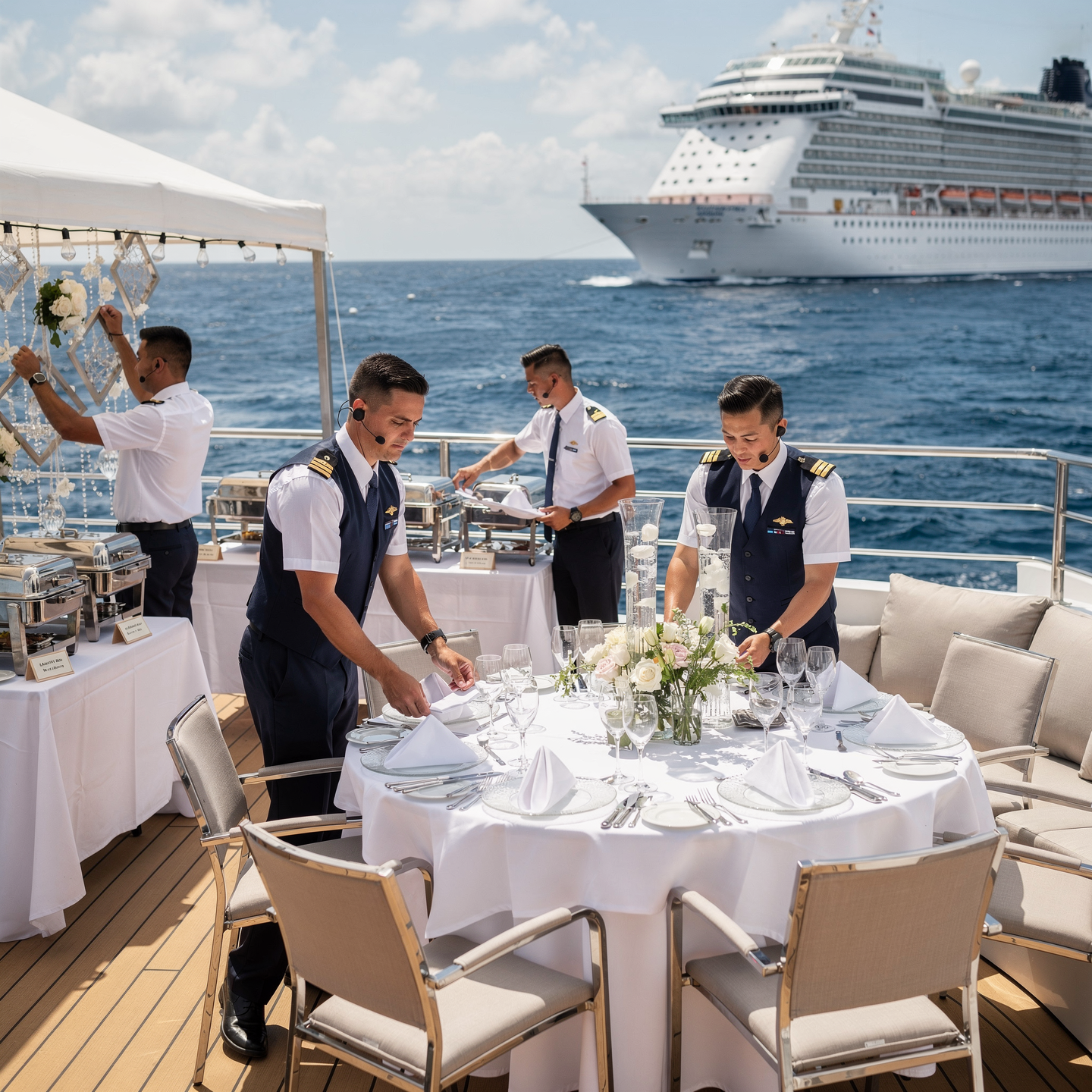
Master’s Degree in Event Management on Board Yachts and Cruise Ships

Why this master’s programme?

The Master’s in Event Management on Board Yachts and Cruise Ships

This program provides you with the tools and expert knowledge to design, plan, and execute unforgettable events in exclusive maritime environments. Master the intricacies of onboard logistics, specialized human resource management, and safety regulations at sea. Learn to create unique experiences, from luxury weddings to high-level corporate events, guaranteeing client satisfaction and business profitability.

Differentiating Advantages

  • Comprehensive Planning: management of budgets, suppliers, permits, and specific insurance.
  • Experience Design: creation of innovative concepts, themed dĆ©cor, and personalized entertainment.
  • Maritime Logistics: handling of supplies, transportation, customs, and port regulations.
  • Marketing and Sales: promotional strategies targeting the luxury market and customer loyalty.
  • Networking: access to leading industry professionals, exclusive suppliers, and job opportunities.
Gestión

Master’s Degree in Event Management on Board Yachts and Cruise Ships

Availability: 1 in stock

Who is it aimed at?

  • Tourism and hospitality professionals who aspire to lead unique experiences in the nautical sector.
  • Event organizers who seek to specialize in managing exclusive celebrations on board.
  • Yacht and cruise ship crew members who wish to advance to event planning and management roles.
  • Entrepreneurs who want to develop innovative businesses in the luxury maritime tourism sector.
  • Graduates in Marketing, Communication, and Public Relations who seek practical application in a booming sector.

Flexibility and professional development
Ā Tailored to your needs: online and in-person options, guaranteed professional internships, and direct connections with leading companies in the sector.

Gestión

Objectives and skills

Mastering the logistics and operations of maritime events:

Plan efficient routes considering currents, tides and port restrictions, optimizing fuel consumption and minimizing environmental impact.

Maximize profitability and customer experience:

“Optimize terminal management and stopover planning, anticipating contingencies and ensuring operational safety.”

Design and market innovative nautical events:

“Develop creative proposals that attract diverse audiences and generate memorable experiences, using digital marketing and public relations strategies to maximize impact and profitability.”

Managing multicultural teams in demanding environments:

“Promoting effective intercultural communication, adaptive conflict resolution, and trust building to maximize team performance and cohesion in high-pressure situations.”

Comply with current maritime and safety regulations:

Manage the ship’s regulatory documentation (certificates, plans, manuals) and updated safety procedures (ISM/PBIP), verifying compliance and recording relevant actions.

Lead the comprehensive organization of exclusive onboard events:

“Designing memorable experiences, managing budgets, suppliers and crew, ensuring excellence in service and regulatory compliance.”

Study plan – Modules

  1. Fundamentals of experiential design in luxury nautical events: VIP client psychology and audience segmentation
  2. Analysis and selection of onboard spaces: architectural design, ergonomics, and adaptation for exclusive experiences
  3. Advanced logistics planning: coordination of timelines, resources, and specialized personnel for nautical events
  4. Comprehensive management of high-end suppliers: gourmet catering, themed dƩcor, audiovisual technology, and premium entertainment
  5. VIP service and attention protocols: international standards, body language, etiquette, and handling of critical situations
  6. Design of exclusive itineraries: integration of strategic stops, complementary activities, and personalized experiences
  7. Implementation of technology in onboard events: home automation systems, augmented reality, and secure connectivity for select guests
  8. Coordination of crew and specific roles for events: briefing, internal communication, and contingency management
  9. Financial and budgetary control applied to nautical events: resource optimization and investment in memorable experiences
  10. Post-event evaluation: feedback analysis, preparation of technical reports, and continuous improvement strategies for future events
  1. Fundamentals of strategic planning in luxury maritime events: objectives, scope, and competitive differentiators
  2. Market analysis and VIP client segmentation: profiles, expectations, and trends in events aboard yachts and cruise ships
  3. Design and development of customized proposals: integration of branding, exclusive themes, and immersive experiences
  4. Advanced logistics in maritime environments: supplier management, contracts, permits, and international regulations
  5. Interdepartmental coordination and effective communication between the captain, crew, and events team
  6. Selection and optimization of floating spaces: distribution, capacity, mobility, and safety criteria
  7. Rigorous control of schedules and execution times: digital tools for real-time monitoring
  8. Management of specialized suppliers: gourmet catering, exclusive entertainment, nautical decor, and state-of-the-art audiovisual technology
  9. Safety protocols for high-risk events
  10. Marine Events: Risk Assessment, Contingency Plans, and Legal Compliance
  11. Implementation of Sustainability and Environmental Responsibility in Logistics Planning: Eco-efficient Practices and International Certifications
  12. Dynamic Monitoring and Adjustment During Event Execution: Interpretation of Operational Variables and Strategic Decision-Making
  13. Post-Event Evaluation: Success Metrics, Client Feedback, and Preparation of Detailed Reports for Continuous Improvement
  14. Technological Innovation Applied to Maritime Event Management: Planning Software, Augmented Reality, and Predictive Analytics
  15. Specific Legal and Contractual Aspects for Onboard Events: Insurance, Image Rights, Authorizations, and Regulatory Compliance
  16. Case Studies and Benchmarking of Landmark Events on Luxury Yachts and Cruise Ships: Lessons Learned and Best Practices
  1. Fundamentals of strategic planning for onboard events: analysis of objectives, stakeholders, and defining the scope of the event
  2. Advanced methodologies for logistical coordination in luxury maritime environments: integration of human, technical, and material resources
  3. Management of the nautical supply chain: provisioning, storage, and specific handling for high-end yachts and cruise ships
  4. Selection and coordination of exclusive suppliers: gourmet catering, premium dƩcor, and state-of-the-art audiovisual technology
  5. Maritime safety regulations and protocols applied to event organization: compliance with SOLAS, ISM, and ISPS in highly exclusive environments
  6. Optimization of schedules and temporary logistics: synchronization of activities, management of downtime and onboard contingencies
  7. Design and execution of contingency plans for nautical events: handling emergencies, weather variations, and real-time operational adjustments
  8. Logistics for mobility and access in ports and private marinas: coordination with port authorities, management of VIP embarkations and disembarkations
  9. Implementation of logistics management technologies: planning, tracking, and advanced communication software for comprehensive event control
  10. Post-event evaluation and analysis of lessons learned: success metrics, customer feedback, and continuous optimization for future events
  1. Applicable International and National Regulations: SOLAS, ISPS, STCW, and MARPOL in the context of onboard events
  2. Design and Implementation of Security Protocols for Events: assessment of specific risks on yachts and luxury cruise ships
  3. Comprehensive Risk Management: identification, analysis, prevention, and mitigation of risks during event planning and execution
  4. Coordination of Multidisciplinary Crews: roles, responsibilities, and effective communication under demanding standards
  5. Advanced Evacuation and Rescue Procedures: drills, emergency equipment, escape routes, and assembly points in maritime environments
  6. Access Control and Physical Security: port security protocols, guest control, and identification management
  7. Technological Monitoring and Alert Systems: integration of CCTV, smoke detectors, fire detection systems, and
  8. Crisis Management and Contingency Plans: development of operational manuals for emergency situations and communication with authorities
  9. Ergonomics and Occupational Safety: prevention of workplace hazards for the crew during onboard events
  10. Quality Customer Experience Under Safety Regulations: balancing strict protocols and comfort to guarantee uncompromising luxury service
  11. Safety Documentation and Auditing: report generation, regulatory compliance, and preparation for regulatory inspections
  12. Environmental Impact and Sustainability in Event Management: application of practices that minimize the ecological footprint in the maritime environment
  13. Communication and Coordination with Maritime and Safety Authorities: protocols for reporting, permits, and incident management
  1. Fundamentals of Sensory Perception: Anatomy and Physiology of the Senses Applied to Sensory Experience in Nautical Environments
  2. Olfactory Design in Enclosed Spaces: Selection and Diffusion of Fragrances to Optimize the Onboard Environment, Applied Aromacology Techniques
  3. Dynamic and Intelligent Lighting: Advanced LED Systems, Light Spectrum Control, Color Temperature, and Visual Effects for Creating Immersive Atmospheres
  4. Acoustics and Soundscape Design: Integration of High-Fidelity Audio Systems, Ambient Noise Management, and Soundscape Design for High-Impact Events
  5. Sensory Gastronomy: Multisensory Pairings, Presentation Techniques, and Textures that Enhance the Onboard Culinary Experience
  6. Augmented Reality (AR) and Virtual Reality (VR) in Nautical Events: Practical Implementation, Specialized Hardware, Generation of Immersive Content, and Safety Protocols
  7. Home automation and smart home automation: Integration of IoT systems for centralized control of climate, lighting, sound, and multimedia on luxury yachts and cruise ships
  8. Technological platforms for real-time management: Coordination software, guest tracking, biometric data analysis, and experience personalization
  9. Innovations in wearables and portable devices: Functionalities, integration with onboard systems, and contributions to interactivity and well-being during events
  10. Technological sustainability: Selection of eco-efficient equipment and solutions, smart energy management, and minimization of environmental impact at high-end nautical events
  11. Success stories and international benchmarking: Technical analysis of landmark events, implemented strategies, and evaluation of multisensory and technological results
  12. Regulations and technical standards applicable to technological systems on private and commercial vessels: Certifications, safety, and regulatory compliance
  13. Staff training and technological leadership: Development of digital skills Advanced methods, crisis management, and protocols for responding to technological failures at nautical events.

    Advanced methodologies for evaluating sensory experiences: quantitative and qualitative analysis, use of biometrics, and feedback for continuous optimization.

    Emerging trends in sensory innovation and applied technology: artificial intelligence, machine learning, holography, and other disruptive advances in the luxury nautical sector.

  1. Fundamentals of nautical event design: context analysis, client profile, and exclusivity objectives
  2. Advanced methodologies for comprehensive coordination: detailed timelines, stakeholder management, and onboard resource optimization
  3. VIP protocols and maritime etiquette: international regulations, personalized service, and managing expectations in the high-end sector
  4. Selection and adaptation of spaces: architectural evaluation of yachts and cruise ships for events, design of themed environments, and guest flow planning
  5. Logistics and specialized supply: sourcing exclusive suppliers, gourmet catering, and handling delicate ingredients in confined spaces
  6. Applied technological innovations: use of integrated audiovisual systems, intelligent lighting, and connectivity solutions at sea
  7. Safety and emergency management: specific protocols for VIP events, coordination with the crew, and compliance with SOLAS and ISPS regulations
  8. Team dynamics and leadership in a nautical environment: staff training and supervision, effective communication, and real-time conflict resolution
  9. Experiential marketing strategies: storytelling, sensory branding, and creating memorable moments adapted to the maritime environment
  10. Post-event evaluation and analytical feedback: KPI measurement, satisfaction analysis, and continuous improvements for future high-exclusivity events
  1. Fundamentals of emotional design applied to nautical experiences: theories, customer journey modeling, and advanced segmentation of ultra-exclusive clients
  2. Personalization strategies based on data analytics and CRM to anticipate needs and preferences in onboard events
  3. Integration of luxury services: coordination of gourmet catering, high-end mixology, and sensory ambiance adapted to maritime environments
  4. Advanced logistics protocols in confined spaces: team synchronization, supplier management, and quality control in floating environments
  5. Multichannel experience management: direct interaction, digitization, and use of VR/AR platforms for planning and presenting exclusive events
  6. Interdepartmental coordination between crew, chefs, entertainers, and technical services to ensure operational excellence during the event
  7. International regulations and standards for luxury nautical events: regulatory compliance, safety, hygiene, and sustainability onboard
  8. Real-time quality control and evaluation using specific KPIs for high-level events on yachts and cruise ships
  9. Technological innovations applied to experiential design: home automation, intelligent lighting, and surround sound for marine environments
  10. Case studies and practical simulations of comprehensive coordination for private, corporate, and social events in highly exclusive nautical settings
  1. Fundamentals of protocol in luxury events: historical evolution, international standards, and maritime specificities
  2. Design and development of the onboard customer experience: profile identification, personalization, and expectation management
  3. Multidisciplinary coordination in floating environments: integration of kitchen, entertainment, security, and service teams
  4. Advanced management of interpersonal and nonverbal communication in multicultural and multilingual contexts onboard
  5. Relationship marketing and loyalty strategies specific to the yacht and cruise ship event industry
  6. Management of nautical etiquette and ceremonial protocols: uniforms, roles, hierarchies, and behavior in restricted spaces
  7. Planning and execution of themed and exclusive events: technical adaptations for maritime requirements and regulatory standards
  8. Implementation of technological systems for the real-time coordination and monitoring of activities and human resources onboard
  9. Crisis management and conflict resolution during events: action protocols, emergency communication, and prevention

    Post-event evaluation: qualitative and quantitative service metrics, feedback analysis, and continuous improvement in nautical environments

  1. Fundamentals and objectives of logistics planning for luxury nautical events: analysis of client requirements and expectations
  2. Comprehensive management of suppliers and services: selection, negotiation, and coordination in highly specialized maritime environments
  3. Design and development of detailed schedules: synchronization of activities in areas with operational and environmental restrictions
  4. Supervision and control of specialized inventories: audiovisual equipment, furniture, catering, and technical elements for yachts and cruise ships
  5. Optimization of routes and access for embarkation and disembarkation: evaluation of ports, marinas, and exclusive anchorage areas
  6. Contingency planning and security protocols: management of specific risks in onboard events and international regulations (SOLAS, ISPS)
  7. Multidisciplinary coordination: integration of crew, catering, security, and production teams for an efficient operational flow
  8. Application of advanced technologies for monitoring Real-time: maritime communication systems, GPS, and logistics management software

    Quality control and customer experience: satisfaction metrics, real-time feedback, and dynamic adjustments during the event

    Post-event evaluation and performance analysis: generation of technical reports, strategic conclusions, and continuous improvement plans for future operations

  1. Current landscape and disruptive trends in onboard communication technologies: integration of 5G, satellite, and maritime broadband networks to ensure stable, high-speed connectivity in mobile environments
  2. Advanced digital entertainment platforms: design, implementation, and management of immersive audiovisual systems (augmented reality, VR, and holographic projections) geared towards exclusive events on luxury yachts and cruise ships
  3. Intelligent IoT systems architecture for the personalization and automation of experiences: environmental sensors, lighting control, climate control, sound, and personalized assistance via AI
  4. Internal and external communications infrastructure: protocols, redundancies, cybersecurity, and bandwidth management to guarantee uninterrupted operation during high-demand events
  5. Development of mobile applications and interactive platforms for guest engagement: agenda management, networking, gamification, and real-time feedback, optimizing participation and satisfaction
  6. Real-time data management and analysis systems: using Big Data and predictive analytics to anticipate logistical needs, audience profiles, and continuous event improvement
  7. International regulations and technical standards applicable to communication and entertainment facilities in maritime spaces: regulatory compliance and best practices for homologation and certification
  8. Integration of sustainable technologies in audiovisual and communication systems: energy efficiency, emissions reduction, and minimization of environmental impact in onboard operations
  9. Protocols for specialized training of technical and operational personnel: handling, maintenance, and troubleshooting of advanced technological platforms that support high-end nautical events
  10. Final project design: an innovative proposal that combines multiple technologies to create exceptional nautical events, applying technical knowledge to maximize optimization and exclusivity in onboard experiences

Career prospects

“`html

  • Onboard Event Coordinator: Planning, organizing, and executing events on yachts and cruise ships.
  • Entertainment Manager: Designing and managing entertainment programs for passengers onboard.
  • Nautical Event Marketing Specialist: Promoting and marketing special events in the nautical sector.
  • Catering and Banquet Director: Supervising and managing food and beverage services for events.
  • Protocol and Public Relations Officer: Attending to VIP guests and managing relationships with suppliers and clients.
  • Luxury Event Consultant: Advising on the creation and management of exclusive events onboard.
  • Wedding and Celebration Planner: Comprehensive planning of weddings and special events on yachts and cruise ships.
  • Cruises.

  • Event Logistics Manager: Coordination of transportation, accommodation, and related services for onboard events.

“`

Entry requirements

Academic/professional profile:

Bachelor’s degree in Nautical Science/Maritime Transport, Naval/Marine Engineering or a related qualification; or proven professional experience on the bridge/in operations.

Language proficiency:

Functional Maritime English (SMCP) recommended for simulations and technical materials.

Documentation:

Updated CV, copy of qualification or seaman’s book, national ID/passport, motivation letter.

Technical requirements (for online):

Device with camera/microphone, stable internet connection, monitor ≄ 24ā€ recommended for ECDIS/Radar-ARPA.

Admissions process and dates

Online
application

(form + documents).

Academic review and interview

Admissions decision

Admissions decision

(+ scholarship offer if applicable).

Place reservation

(deposit) and enrolment.

Induction

(access to the virtual campus, calendars, simulator guides).

Scholarships and financial support

  • Unique Specialization: Master the management of exclusive events in luxury maritime settings.
  • Practical Skills: Learn to plan, coordinate, and execute unforgettable events aboard yachts and cruise ships.
  • Professional Networking: Connect with industry experts and build a valuable network of contacts.
  • Career Opportunities: Boost your career in the luxury tourism industry with a highly sought-after profile.
  • Up-to-Date Content: Discover the latest trends and technologies in maritime event management.
Prepare to lead exceptional events in the world’s most exclusive settings.

Testimonials

Frequently asked questions

On yachts and cruise ships, mainly in event organization, catering, public relations or entertainment departments.

Yes. The itinerary includes ECDIS/Radar-ARPA/BRM with harbor, ocean, fog, storm, and SAR scenarios.

Online with live sessions; hybrid option for simulator/practical placements through agreements.

Recommended functional SMCP. We offer support materials for standard phraseology.

Yes, with a relevant degree or experience in maritime/port operations. The admissions interview will confirm suitability.

Optional (3–6 months) through Companies & Collaborations and the Alumni Network.

Simulator practice (rubrics), defeat plans, SOPs, checklists, micro-tests and applied TFM.

A degree from Navalis Magna University + operational portfolio (tracks, SOPs, reports and KPIs) useful for audits and employment.

  1. Current landscape and disruptive trends in onboard communication technologies: integration of 5G, satellite, and maritime broadband networks to ensure stable, high-speed connectivity in mobile environments
  2. Advanced digital entertainment platforms: design, implementation, and management of immersive audiovisual systems (augmented reality, VR, and holographic projections) geared towards exclusive events on luxury yachts and cruise ships
  3. Intelligent IoT systems architecture for the personalization and automation of experiences: environmental sensors, lighting control, climate control, sound, and personalized assistance via AI
  4. Internal and external communications infrastructure: protocols, redundancies, cybersecurity, and bandwidth management to guarantee uninterrupted operation during high-demand events
  5. Development of mobile applications and interactive platforms for guest engagement: agenda management, networking, gamification, and real-time feedback, optimizing participation and satisfaction
  6. Real-time data management and analysis systems: using Big Data and predictive analytics to anticipate logistical needs, audience profiles, and continuous event improvement
  7. International regulations and technical standards applicable to communication and entertainment facilities in maritime spaces: regulatory compliance and best practices for homologation and certification
  8. Integration of sustainable technologies in audiovisual and communication systems: energy efficiency, emissions reduction, and minimization of environmental impact in onboard operations
  9. Protocols for specialized training of technical and operational personnel: handling, maintenance, and troubleshooting of advanced technological platforms that support high-end nautical events
  10. Final project design: an innovative proposal that combines multiple technologies to create exceptional nautical events, applying technical knowledge to maximize optimization and exclusivity in onboard experiences

Request information

  1. Complete the Application Form.

  2. Attach your CV/degree certificate (if you have it to hand).

  3. Indicate your preferred cohort (January/May/September) and whether you would like the hybrid option with simulator sessions.

    An academic advisor will contact you within 24–48 hours to guide you through the admission process, scholarships, and compatibility with your professional schedule.

Please enable JavaScript in your browser to complete this form.
Click or drag a file to this area to upload.

Faculty

0
    0
    Tu carrito
    Tu carrito esta vacĆ­oRegresar a la tienda
    Scroll to Top


