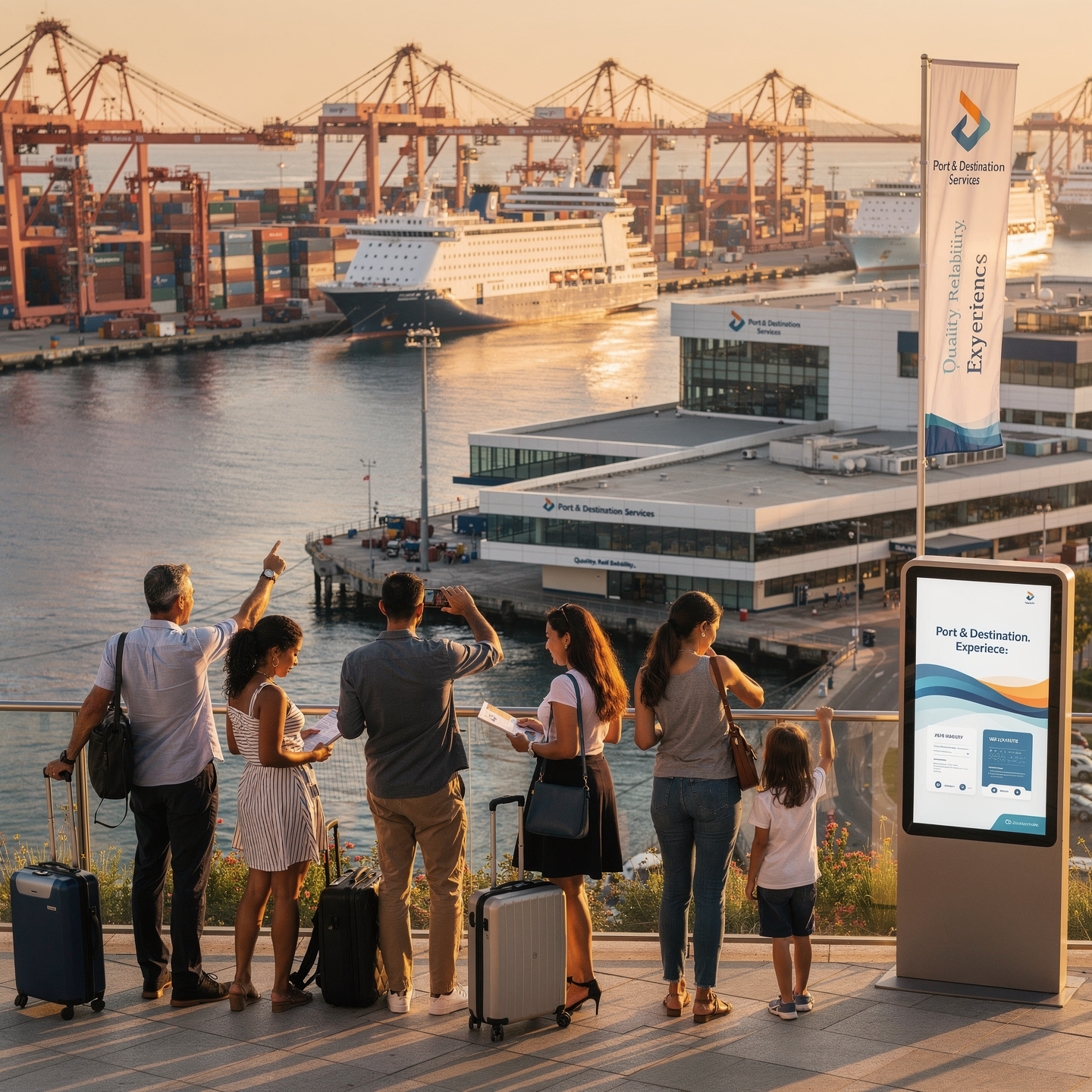
Diploma in Port and Destination Branding
Why this certificate program?
The Diploma in Port and Destination Branding
This program prepares you to build strong and attractive port brands, driving economic and tourism development. Learn to identify unique opportunities, define a differentiating brand strategy, and communicate it effectively to key audiences. Master the tools of digital marketing and online reputation management to position your port or destination as a global benchmark.
Differentiating Advantages
- Practical Approach: Real-world case studies and exercises applied to the port and tourism industries.
- Leading Experts: Professors with extensive experience in branding, marketing, and port management.
- Networking: Connect with industry professionals and expand your network.
- Tools and Methodologies: Access frameworks and templates to implement your branding strategy.
- Comprehensive Vision: Addresses branding from the perspective of sustainability, innovation, and customer experience.
- Modality: Online
- Level: Diplomado
- Hours: 800 H
- Start date: 17-06-2026
Availability: 1 in stock
Who is it aimed at?
- Marketing and communications professionals seeking to specialize in the promotion of ports and tourist destinations.
- Port managers and tourism authorities wishing to drive economic development through effective branding strategies.
- Consultants and entrepreneurs interested in creating distinctive and successful port and tourist destination brands.
- Graphic designers and creatives aspiring to lead branding projects in the maritime and tourism sector.
- Students and recent graduates in marketing, tourism, or design seeking high-impact specialization in a growing sector.
Flexibility and applicability
Designed for busy professionals: 24/7 accessible asynchronous modules, real-world case studies, and networking with industry experts.
Objectives and competencies

Boosting identity and commercial value:
“Develop a strong and distinctive brand narrative, highlighting the unique value proposition and key attributes that appeal to the target market.”

Designing memorable brand experiences:
“Implement transmedia storytelling strategies, personalized interactions, and sensory design to connect emotionally with the customer and foster long-term loyalty.”

Develop competitive differentiation strategies:
“Analyze the market, identify niches and adapt the value proposition, communicating it effectively to the target customers.”

Managing port reputation and communication:
Establish strong relationships with media, key stakeholders and the local community, using proactive and reactive crisis communication strategies.

Fostering stakeholder loyalty and advocacy:
“Communicate proactively, manage expectations, and personalize the interaction to build long-term relationships.”

Capitalizing on the uniqueness of port heritage:
“To promote the creation of innovative tourism and cultural products that highlight the history, architecture and maritime traditions of the port.”
Curriculum - Modules
- Comprehensive Maritime Incident Management: protocols, roles, and chain of command for coordinated response
- Operational Planning and Execution: briefing, routes, weather windows, and go/no-go criteria
- Rapid Risk Assessment: criticality matrix, scene control, and decision-making under pressure
- Operational Communication: VHF/GMDSS, standardized reports, and inter-agency liaison
- Tactical Mobility and Safe Boarding: RHIB maneuvers, approach, mooring, and recovery
- Equipment and Technologies: PPE, signaling, satellite tracking, and field data logging
- Immediate Care of the Affected: primary assessment, hypothermia, trauma, and stabilization for evacuation
- Adverse Environmental Conditions: swell, Visibility, flows, and operational mitigation
Simulation and training: critical scenarios, use of VR/AR, and exercises with performance metrics
Documentation and continuous improvement: lessons learned, indicators (MTTA/MTTR), and SOP updates
- Brand Storytelling Fundamentals: What it is and why it matters.
- Brand Archetypes: Identification and Strategic Application.
- Brand Voice and Tone: Definition and Consistency in Communication.
- Storytelling for Brands: Narrative Techniques to Connect with the Audience.
- Visual Elements of Identity: Logo, Typography, Color Palette.
- Visual Style Guide: Creation and Application for Brand Consistency.
- Designing Spaces and Experiences for Visitors: Basic Principles.
- Signage and Wayfinding: Intuitive and Functional Design.
- The Impact of Lighting and Ambiance on the Visitor Experience.
- Measuring and Continuously Improving the Experience of the visitor.
‘
- Introduction to Port Narrative: Key Concepts and Historical Evolution
- Visual Identity: Elements, Principles, and Applications in the Port Environment
- The Port Visitor: Profiles, Motivations, and Expectations
- Experience Design: Basic Principles and Creative Methodologies
- Storytelling Applied to Ports: Building Engaging and Meaningful Narratives
- Signage and Graphic Design: Creating Informative and Aesthetically Pleasing Environments
- Interpretive Spaces: Museums, Visitor Centers, and Themed Routes
- Technology and Narrative: Augmented Reality, Virtual Reality, and Mobile Applications
- Marketing and Communication: Promoting the Port Experience
- Evaluation and continuous improvement: satisfaction and sustainability metrics
‘
- Introduction to Port Identity: Definition, Elements, and Historical Evolution
- The Port as a Cultural Hub: Tangible and Intangible Heritage
- The Port Narrative: Narrative, Memory, and Collective Imagination
- Port Stakeholders: Typology, Interests, and Power Relations
- Port Communication and Marketing: Strategies for Image Building
- The Port and the City: Urban Integration, Development, and Sustainability
- Port Tourism: Opportunities and Challenges for Identity
- Conflicts and Tensions in the Construction of Port Identity
- Case Studies: Analysis of Diverse Port Identities
- Tools for Port Identity Management
‘
- Introduction to Port Identity: History, Evolution, and Typologies
- The Port as a Meeting Place: Flows, Cultures, and Narratives
- Tangible and Intangible Heritage: Docks, Buildings, Traditions, and Trades
- Port Narrative: Construction of Stories, Myths, and Legends
- Tourist Experiences in Port Environments: Authenticity, Innovation, and Sustainability
- Design of Tourism Products: Routes, Guided Tours, Events, and Festivals
- Communication and Marketing of Port Destinations: Storytelling, Branding, and Social Media
- Heritage Interpretation: Techniques, Resources, and Audiences
- Quality Management and Visitor Satisfaction: Evaluation, Continuous improvement and feedback.
- Success stories and best practices in enhancing port identity.
‘
- System Architecture and Components: Structural design, materials, and subsystems (mechanical, electrical, electronic, and fluid) with selection and assembly criteria for marine environments
- Fundamentals and Principles of Operation: Physical and engineering foundations (thermodynamics, fluid mechanics, electricity, control, and materials) that explain performance and operating limits
- Safety and Environmental (SHE): Risk analysis, PPE, LOTO, hazardous atmospheres, spill and waste management, and emergency response plans
- Applicable Regulations and Standards: IMO/ISO/IEC requirements and local regulations;
- Conformance criteria, certification, and best practices for operation and maintenance
- Inspection, testing, and diagnostics: Visual/dimensional inspection, functional testing, data analysis, and predictive techniques (vibration, thermography, fluid analysis) to identify root causes
- Preventive and predictive maintenance: Hourly/cycle/seasonal plans, lubrication, adjustments, calibrations, consumable replacement, post-service verification, and operational reliability
- Instrumentation, tools, and metrology: Measuring and testing equipment, diagnostic software, calibration and traceability; selection criteria, safe use, and storage
- Onboard integration and interfaces: Mechanical, electrical, fluid, and data compatibility; Sealing and watertightness, EMC/EMI, corrosion protection, and interoperability testing.
Quality, acceptance testing, and commissioning: process and materials control, FAT/SAT, bench and sea trials, go/no-go criteria, and evidence documentation.
Technical documentation and integrated practice: logs, checklists, reports, and a complete case study (safety → diagnosis → intervention → verification → report) applicable to any system.
- Introduction to Brand Storytelling: Key Concepts and Their Relevance in Tourism
- The Port as a Narrative Setting: History, Heritage, and Identity
- Storytelling for Port Tourism: Techniques and Best Practices
- Defining the Target Audience: Tourist Profiles and Their Motivations
- Creating Characters and Archetypes: Application to the Port Context
- Developing the Plot: Conflicts, Resolutions, and Key Messages
- Designing Memorable Tourist Experiences: From Arrival to Departure
- Integrating Sensory Elements: Sound, Image, Taste, and Touch into the Experience
- Content Marketing for Port Tourism: Blogs, Social Media, and Video
- Measuring Impact of the narrative: success indicators and customer feedback.
‘
Career opportunities
- Port/Destination Brand Manager: Definition and execution of branding strategies, management of the visual identity and narrative of the port or destination.
- Port Tourism Marketing Manager: Development of marketing campaigns to attract tourists and visitors to the port and its surroundings.
- Branding Consultant for Port Entities: Advising ports and destinations on the creation and management of their brand, positioning, and communication.
- Port and Tourism Communication Specialist: Creation of content for digital and traditional media, social media management, and public relations.
- Designer of Tourism Experiences in Port Environments: Creation of innovative tourism products and services that leverage the potential of the port and its surroundings.
- Port Tourism Market Researcher: Analysis of trends and opportunities in the port tourism market. Identification of market niches and development of segmentation strategies.
- Port Events and Promotions Manager: Organization of events and promotions to raise awareness of the port and its tourist attractions.
- Institutional Relations Manager in the Port Tourism Sector: Establishment and maintenance of relationships with key stakeholders in the tourism and port sector.
“`
Admission requirements

Academic/professional profile:
Degree/Bachelor's degree in Nautical Science/Maritime Transport, Naval/Marine Engineering, or a related field; or proven professional experience in bridge/operations.

Language proficiency:
Recommended functional maritime English (SMCP) for simulations and technical materials.

Documentation:
Updated resume, copy of degree or seaman's book, ID card/passport, letter of motivation.

Technical requirements (for online):
Equipment with camera/microphone, stable connection, ≥ 24” monitor recommended for ECDIS/Radar-ARPA.
Admission process and dates

1. Online
application
(form + documents).

2. Academic review and interview
(profile/objectives/schedule compatibility).

3. Admission decision
(+ scholarship proposal if applicable).

4. Reservation of place
(deposit) and registration.

5. Induction
(access to campus, calendars, simulator guides).
Scholarships and grants
- Port Branding Strategies: Master the creation of visual identities and narratives that boost the value of your port and destination.
- Port Tourism Marketing: Learn to design effective campaigns to attract visitors and position your port as an appealing destination.
- Online Reputation Management: Protect and enhance your port’s image in the digital environment through specialized tools and techniques.
- Sustainable Development and Branding: Integrate sustainable practices into your brand strategy for responsible and attractive growth for stakeholders.
- International Success Stories: Analyze real-world examples of successful port branding and adapt best practices to your context.
Testimonials
This diploma program provided me with the strategic tools to reposition our port’s image. Thanks to the branding knowledge I gained, we achieved a 15% increase in cruise traffic in the first year after implementing the new brand strategy. The training was key to understanding the needs of our target audience and effectively communicating our unique value proposition, solidifying our position as a preferred destination in the region.
The Diploma in Nautical Marketing & Tourism provided me with the tools and knowledge necessary to boost my boat rental business. I applied the digital marketing strategies I learned and achieved a 30% increase in bookings in just six months, exceeding my initial expectations and positioning myself as a leader in the sector.
This diploma program provided me with the strategic tools to boost the brand of a port with low visibility. By applying the knowledge I gained, we achieved a 20% increase in cruise traffic in one year, solidifying its image as a preferred tourist destination in the region.
The Diploma in Port and Destination Branding provided me with the tools and strategic knowledge to lead the rebranding of our port. Thanks to the methodology I learned, we achieved a 30% increase in cruise traffic in the first year after implementing the new brand strategy, exceeding initial expectations and positioning ourselves as a preferred destination in the region.

Frequently asked questions
Ports and tourist destinations.
Yes. The itinerary includes ECDIS/Radar-ARPA/BRM with harbor, ocean, fog, storm, and SAR scenarios.
Online with live sessions; hybrid option for simulator/practical placements through agreements.
Tourism and port sector.
Recommended functional SMCP. We offer support materials for standard phraseology.
Yes, with a relevant degree or experience in maritime/port operations. The admissions interview will confirm suitability.
Optional (3–6 months) through Companies & Collaborations and the Alumni Network.
Simulator practice (rubrics), defeat plans, SOPs, checklists, micro-tests and applied TFM.
A degree from Navalis Magna University + operational portfolio (tracks, SOPs, reports and KPIs) useful for audits and employment.
- Introduction to Port Identity: History, Culture, and Heritage
- The Port as a Narrative Space: Maritime Tales, Myths, and Legends
- Tangible and Intangible Heritage: Architecture, Art, Crafts, and Traditions
- The Port in Literature and Film: Representation and Collective Imagination
- The Port Landscape: Natural Elements, Infrastructure, and Human Activity
- Port Tourism: Challenges and Opportunities for Sustainability
- Communication and Marketing Strategies for Port Destinations
- Creating Tourism Products Based on Port Identity
- Interpreting Port Heritage: Techniques and Tools
- Ethics, Social Responsibility, and Community Development in Tourism port.
‘
Request information
Complete the Application Form.
Attach your CV/degree certificate (if you have it to hand).
Indicate your preferred cohort (January/May/September) and whether you would like the hybrid option with simulator sessions.
An academic advisor will contact you within 24–48 hours to guide you through the admission process, scholarships, and compatibility with your professional schedule.
Faculty
Eng. Tomás Riera
Full Professor
Eng. Tomás Riera
Full Professor
Eng. Sofía Marquina
Full Professor
Eng. Sofía Marquina
Full Professor
Eng. Javier Bañuls
Full Professor
Eng. Javier Bañuls
Full Professor
Dr. Nuria Llobregat
Full Professor
Dr. Nuria Llobregat
Full Professor
Dr. Pau Ferrer
Full Professor
Dr. Pau Ferrer
Full Professor
Cap. Javier Abaroa (MCA)
Full Professor
Cap. Javier Abaroa (MCA)
Full Professor

