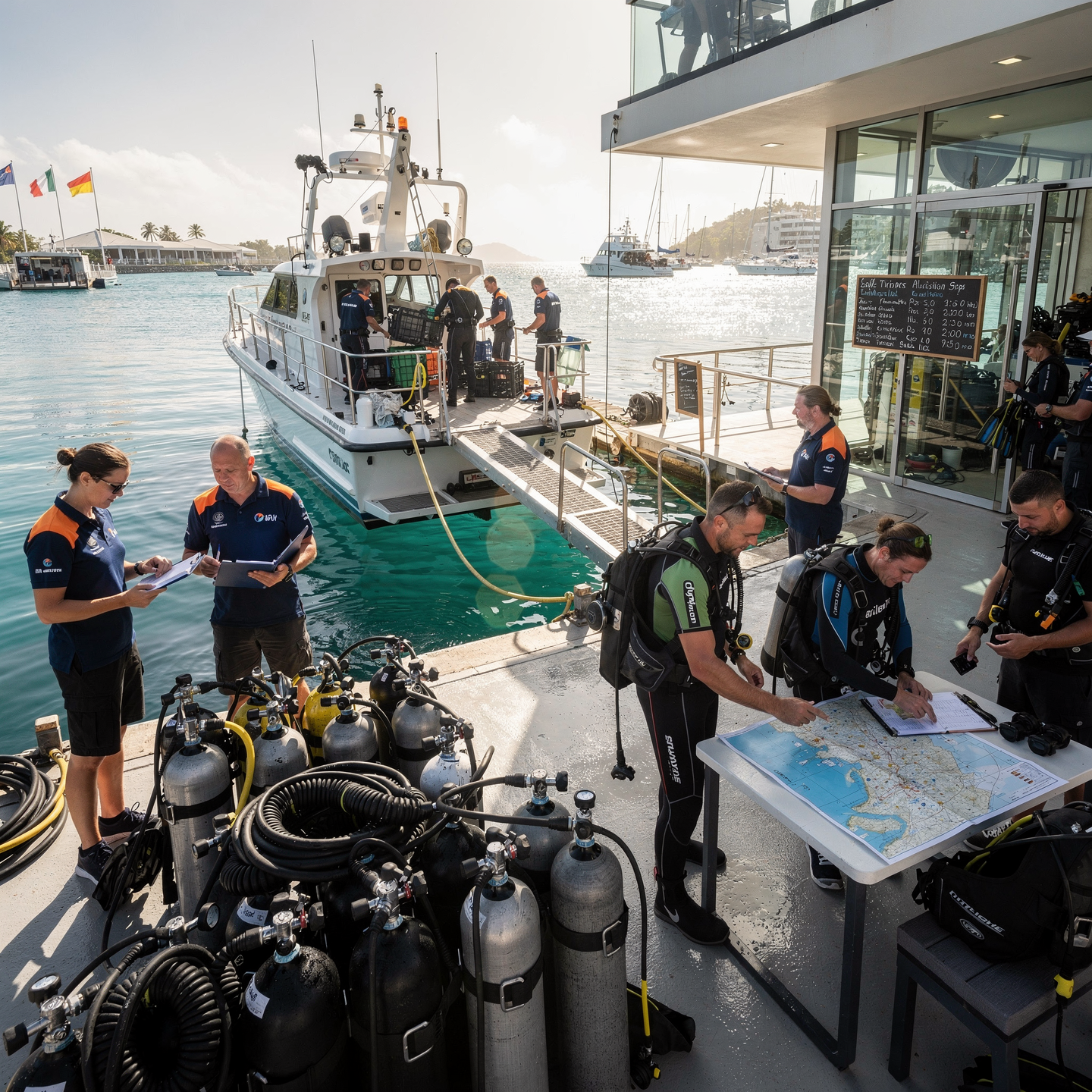
Master’s Degree in Management of International Diving Centers

Why this master’s programme?

The Master’s in International Diving Center Management

This program prepares you to lead and optimize diving centers anywhere in the world. Learn to master everything from business strategy and digital marketing to risk management, underwater safety, and environmental sustainability. Become a highly sought-after professional in the diving industry and create unforgettable experiences for your clients.

Differentiating Advantages

  • International Focus: Adapted to the regulations and standards of different countries and regions.
  • Management Skills Development: Team leadership, financial management, and resource optimization.
  • Specialized Marketing and Sales: Strategies to attract and retain clients in the diving market.
  • Safety and Risk Management: Emergency protocols, equipment maintenance, and accident prevention.
  • Sustainability and Marine Conservation: Eco-friendly practices and environmental protection programs.

Master’s Degree in Management of International Diving Centers

Availability: 1 in stock

Who is it aimed at?

  • Globally-minded entrepreneurs who want to establish or expand their diving business in international markets.
  • Experienced diving instructors aspiring to leadership and management roles at high-end dive centers.
  • Tourism and hospitality professionals looking to specialize in water sports and diving management.
  • Marine biologists and conservationists interested in integrating sustainable management into the operation of dive centers.
  • Graduates in Business Administration, Marketing, or Tourism seeking specialization in the diving and water sports industry.

Flexibility and global reach
Designed for busy professionals demanding: flexible online format, international case studies and networking with experts from around the world.

Objectives and skills

Lead the commercial and operational strategy:

“Define SMART goals, allocate resources efficiently, and monitor key KPIs to achieve results.”

Optimize customer experience and security:

“Anticipate operational and environmental risks, acting proactively according to procedures and best practices.”

Efficiently manage human and financial resources:

“Optimize budget allocation and personnel management, minimizing costs and maximizing productivity through the application of analysis and control tools.”

Develop and implement innovative marketing plans:

“Identify market trends and adapt strategies with agility, using data analytics to optimize ROI.”

Establish and maintain global strategic alliances:

“Identify key partners, negotiate mutually beneficial agreements, and manage communication for mutual growth.”

Adapting to international regulations and standards:

“To comply with maritime safety regulations (SOLAS, MARPOL) to prevent pollution and ensure the safety of human life at sea.”

Study plan – Modules

  1. Fundamentals of situational leadership: styles, adaptability, and decision-making in dynamic environments such as international dive centers
  2. Design and execution of strategic plans for operational optimization: resource analysis, definition of objectives, and specific KPIs for dive centers
  3. Advanced management of multicultural and multidisciplinary teams: effective communication, motivation, and conflict resolution in international contexts
  4. Implementation of quality and safety control systems: inspection protocols, risk management, and international certifications in diving activities
  5. Optimization of operational logistics: dive scheduling, equipment management, coordination with suppliers, and preventive maintenance of technical diving equipment
  6. Technological tools applied to management: ERP and CRM systems and specialized digital platforms for dive centers and their impact on operational efficiency
  7. Advanced marketing and international positioning strategies: market analysis, design of multilingual campaigns, and Customer loyalty in a highly competitive sector

    International regulations and legal compliance: document management, permits, and ISO standards applied to the operation of dive centers with a global reach

    Financial optimization and budget management: cost analysis, dynamic pricing, and profitability assessment for the center’s sustainability

    Innovation and sustainable development: implementation of eco-efficient practices and corporate social responsibility in the management of international dive centers

  1. Advanced Sustainable Management Models: Integrating Eco-efficient Practices and Circular Economies in Diving Centers
  2. Environmental Impact Assessment: Techniques for Measuring and Mitigating the Ecological Footprint of Recreational and Professional Diving
  3. Applied Technological Innovation: Implementation of Smart Systems for Controlling Energy Consumption and Water Resources
  4. International Certifications for Sustainability and Quality: ISO 14001, Green Fins, and Blue Flag in Marine Environments
  5. Design and Optimization of Administrative Processes with a Focus on Corporate Social Responsibility (CSR)
  6. Sustainable Value Chain Management: Suppliers, Green Logistics, and Reducing Plastic Waste in Daily Operations
  7. Training and Awareness for Staff and Clients: Environmental Education Programs and Marine Conservation Protocols
  8. Real-Time Monitoring Tools: Use of IoT Sensors for Monitoring Environmental Parameters and water quality
  9. Ethical marketing strategies and green branding: positioning diving centers as benchmarks in global sustainability

    International legal and political implications: regulatory compliance in the management of marine resources and protected areas

  1. Fundamentals of Sustainable Innovation: Key Concepts, Triple Impact Approach, and Trends Applied to International Diving Centers
  2. Strategic Leadership Models in Global Operations Management: Theory, Leadership Styles, and Cultural Adaptation in Multicultural Environments
  3. Environmental and Social Diagnosis of Diving Centers: Advanced Tools for Evaluating Operational Impact on Marine Ecosystems and Local Communities
  4. Design and Implementation of Sustainable Strategic Plans: Setting SMART Objectives, SWOT Analysis, and Competitive Differentiation Strategies
  5. Advanced Resource Management: Optimizing Equipment Use, Eco-efficient Technologies, and Waste Management to Minimize Environmental Footprint
  6. Technological Innovation Applied to Underwater Operations: Integration of IoT Solutions, Real-Time Monitoring Systems, and Digital Management Platforms
  7. Developing an Organizational Culture Oriented Towards Sustainability: Training, Internal Communication, and Fostering Commitment in Multidisciplinary Teams
  8. International Regulations and Environmental Certifications: Compliance with ISO Standards ISO 14001, Blue Flag, and specific regulations for the professional diving sector

    Risk management and operational safety in marine environments: advanced protocols, simulations, and response to ecological and technical emergencies

    Performance measurement and sustainability reporting: key performance indicators (KPIs), life cycle analysis, and transparent reporting for stakeholders

    Global positioning strategies and sustainable marketing: value communication, strategic alliances, and corporate social responsibility applied to dive centers

    Innovation in business models and financing: circular economy, crowdfunding, green grants, and opportunities for sustainable investment

    Inclusive leadership and change management: skills to motivate teams in multicultural and dynamic contexts, conflict management, and advanced negotiation

    Implementation of integrated management systems: synchronizing quality, environment, and safety for international operational excellence

    Case studies and best practices: detailed analysis of leading global dive centers that use innovation and sustainability as a competitive advantage

  1. International legal framework for diving: applicable treaties, conventions, and regulations (UNCLOS, IMO, IANTD, PADI, and CMAS)
  2. Regulation of underwater activities: licenses, certifications, and operating standards in different jurisdictions
  3. International safety protocols in dive centers: guidelines for accident prevention and risk management
  4. Emergency and rescue procedures: design, implementation, and evaluation of contingency plans adapted to marine environments
  5. Coordination with maritime authorities and emergency services: communication, roles, and responsibilities in underwater incidents
  6. Fleet maintenance and technical management: inspection, certification, and repair of diving equipment and auxiliary vessels
  7. Management of technical records: logbooks, maintenance audits, and document control in accordance with international regulations
  8. Protocols for quality control and safety in daily operations: from pre-immersion inspections to post-operational procedures
  9. Technological innovations and trends in safety and maintenance systems: remote monitoring, sensors, and digital platforms
  10. Implementation of integrated management systems (ISO 45001, ISO 9001) focused on continuous improvement in safety and maintenance
  1. Fundamentals of Advanced Human Resource Management: Contemporary Theories and Their Application in International Diving Centers
  2. Organizational Diagnosis: Competency Assessment, Analysis of Technical and Soft Skills of Diving Personnel
  3. Design of Efficient Operational Structures: Roles, Responsibilities, and Hierarchical Levels in Multicultural Teams
  4. International Recruitment and Selection Strategies: Technical, Cultural, and Legal Criteria for Incorporating Diverse Talent
  5. Continuing Education and Professional Development: Specific Training Plans for Instructors, Guides, and Support Staff in Multicultural Environments
  6. Performance Management and 360° Evaluation: Key Indicators, Constructive Feedback, and Individualized Improvement Plans
  7. Intercultural Leadership Dynamics: Adaptive Leadership Models for Global Diving Teams
  8. Promoting Effective Communication: Tools and Techniques to Overcome Linguistic and Cultural Barriers in Activity Coordination Underwater Diving
  9. Conflict Management and Collaborative Resolution in Multicultural Environments: Proven Methodologies for Maintaining Harmony and Productivity

    Design and Implementation of Inclusive Policies: Diversity, Equity, and Organizational Culture in International Diving Centers

    Wellbeing and Motivation Programs: Strategies to Increase Staff Retention and Satisfaction in Demanding Operating Conditions

    International Legal and Regulatory Aspects Applied to Human Resource Management in Professional Diving

    Use of Advanced Technologies for Talent Management: Information Systems, E-learning, and Specialized Collaborative Platforms

    Strategic Human Resource Planning: Alignment with the Diving Center’s Business and Operational Objectives

    Cultural Impact Assessment in Operational Safety: How Diversity Affects Underwater Protocols and Procedures

    Case Studies and Success Stories in Managing Multicultural Teams: Analysis of Real-World Experiences in Leading International Centers

  1. Leadership Fundamentals in International Environments: Theoretical Models and Practical Applicability in Diving Centers
  2. Transformational Leadership Strategies: Motivation, Influence, and Commitment Building in Multicultural Teams
  3. Innovation in Operational Management: Implementing Disruptive Technologies for Continuous Improvement and Efficiency in Diving Centers
  4. Environmental Sustainability: Integrating Eco-efficient Practices and International Certifications into Daily Operations
  5. Design and Management of Processes Oriented Towards Excellence in Customer Experience and Operational Safety
  6. Change Management and Conflict Resolution: Advanced Tools for Dynamic Adaptation in Volatile Environments
  7. Global Optimization of Human and Material Resources: Strategic Planning for Cost Reduction and Results Maximization
  8. Key Performance Indicators (KPIs) for Comprehensive Control and Data-Driven Decision Making
  9. Corporate social responsibility policies and their impact on the reputation and sustainability of the dive center
  10. International strategic planning: development of strategic alliances, market expansion, and adaptation to local and international regulations
  1. Fundamentals of organizational leadership applied to dive centers: styles, contemporary theories, and innovation models.
  2. Change management in multicultural and dynamic environments: techniques for adaptation and operational resilience.
  3. Design and implementation of sustainability strategies: environmental, social, and economic impact analysis in underwater operations.
  4. Optimization of human and material resources: strategic planning to maximize efficiency and operational performance.
  5. Advanced digital tools for comprehensive management: management software, specialized CRM, and predictive data analytics.
  6. Development of innovative safety protocols: integration of international regulations with emerging technologies in underwater safety.
  7. Strategic marketing and global positioning: building strong brands and networks Strategic alliances in the diving industry.

    Implementation of eco-efficiency practices and environmental certifications to improve corporate responsibility.

    Advanced financial management for international diving centers: budgeting, profitability analysis, and investment evaluation.

    Roles and competencies of the innovative leader: effective communication, data-driven decision-making, and fostering a culture of continuous improvement.

    Methodologies for performance measurement and the preparation of strategic reports for internal and external stakeholders.

    Case studies and simulations of complex scenarios for decision-making in critical operational situations.

    Development of internal policies focused on diversity, equity, and inclusion within the diving team.

    Assessment and mitigation of operational and reputational risks: planning of Contingencies and crisis management.

  8. Technological innovation applied to diving centers: trends in equipment, automation, and environmental monitoring.
  1. Fundamentals of strategic planning in dive center management: analysis of the competitive environment, definition of short- and long-term objectives, and development of comprehensive action plans.
  2. Design and optimization of supply chains specifically for international dive centers: supplier selection, management of critical inventories (diving equipment, gases, and consumables), and global procurement strategies.
  3. Implementation of advanced logistics systems for dive centers: integration of ERP and SCM software with real-time control of incoming and outgoing goods, equipment traceability, and management of preventive and corrective maintenance.
  4. Evaluation of operational efficiency using key performance indicators (KPIs) focused on cost reduction, improved equipment availability, and customer satisfaction in multi-location environments.
  5. Advanced protocols for fleet management and specialized transport: planning of optimized routes for the transport of equipment and personnel, considering international regulations and restrictions.
  6. Local.

  7. Integration of sustainable practices in the supply chain: assessment of the ecological footprint, adoption of eco-efficient materials and technologies, and environmental certifications applicable to the diving sector.
  8. Management of risks and logistical contingencies: contingency plans for supply chain disruptions, crisis management for extreme weather conditions, and safety protocols for the transport of gases and pressurized equipment.
  9. Advanced cost analysis and specific budgets for diving centers: financial modeling based on direct and indirect costs, resource allocation, and negotiation techniques with international suppliers.
  10. Technological innovation applied to logistics management: use of Big Data, IoT, and automation for inventory monitoring, process optimization, and continuous improvement in service delivery.
  11. Design of corporate policies for international regulatory compliance: adaptability to local and international environmental, commercial, and safety regulations, including IMO, ISO, and other standards.
  12. diving certification bodies.

  1. Fundamentals of Strategic Leadership: contemporary theories, situational and adaptive models applied to international dive centers
  2. Design and execution of strategic planning: SWOT analysis, strategic maps, establishment of KPIs oriented towards operational and commercial optimization
  3. Disruptive innovation in dive center management: integration of emerging technologies (AI, IoT, big data) to improve customer experience and safety
  4. Organizational change management: agile methodologies, resistance to change, and empowerment of the multidisciplinary diving team
  5. Environmental sustainability applied to comprehensive operations: ecosystem protection protocols, international certifications, and sectoral environmental regulations
  6. Implementation of corporate social responsibility (CSR) policies in dive centers, with a focus on local communities and sustainable development
  7. Resource optimization and management Sustainable finance: cost analysis, green funding sources, and long-term economic impact assessment

    Strategic marketing and global positioning: branding strategies, international alliances, and online reputation management in the diving sector

    Operational safety and international protocols: ISO, PADI, and CMAS standards, and best practices for risk mitigation in underwater activities

    Developing inclusive leadership and cultural diversity: techniques for managing multicultural teams and improving intercultural communication in international environments

    Advanced tools for continuous performance monitoring and evaluation: interactive dashboards, integrated management systems, and predictive analytics

    Real-world case studies and competitive benchmarking of high-performing dive centers in different regions of the world

    Contingency planning and crisis management: designing protocols for rapid response to emergencies and unforeseen events in the underwater environment

  8. Human talent development: strategic recruitment, continuous training, executive coaching, and development of key competencies in underwater management
  9. Professional ethics and corporate governance: establishing codes of conduct, administrative transparency, and regulatory compliance at the international level
  1. Final Project Foundations: Objectives, Scope, and Relevance in the Management of International Diving Centers
  2. Strategic Analysis: Evaluation of the Competitive Environment, SWOT Analysis, and Global Industry Trends
  3. Design of the Integrated Model: Integration of Operational, Administrative, Commercial, and Customer Service Processes
  4. Implementation of the Strategic Model: Resource Planning, Definition of KPIs, and Establishment of Performance Indicators
  5. Quality Management and Continuous Improvement: Certification Systems, Internal Audits, and Safety Protocols for Diving Centers
  6. Applicable Technological Innovation: Digitalization, Management Software, and Real-Time Monitoring Tools
  7. Financial Management and Budgetary Control: Profitability Analysis, Cost Optimization, and International Financing Strategies
  8. Specialized Marketing Plan: Global Positioning, Customer Loyalty, and Strategies for Service Diversification
  9. Human Resources Management: Leadership, specialized training, team retention, and employee well-being policies
  10. International Legal and Regulatory Aspects: Environmental regulations, permits, insurance, and specific regulatory compliance for professional diving
  11. Environmental Impact Assessment and Sustainability: Integration of responsible practices and eco-friendly certifications
  12. Risk Management and Operational Safety Tools: Emergency protocols, incident management, and contingency planning
  13. Communication and Institutional Relations: Negotiation with suppliers, strategic alliances, and corporate reputation management
  14. Preparation of the Final Report: Structure, results analysis, improvement proposals, and executive summary
  15. Oral defense and evaluation of the final project before a specialized committee

Career prospects

“`html

  • Director/Manager of a Dive Center: comprehensive center management, marketing, sales, and HR.
  • International Diving Instructor: diver training, dive guiding, and program development.
  • Diving Tourism Consultant: tourism product development, risk assessment, and sustainability.
  • Marine Conservation Project Manager: project planning and execution, environmental education, and collaboration with NGOs.
  • Marketing and Sales Specialist for Diving Companies: strategy development, social media management, and customer service.
  • Diving and Snorkeling Tour Operator: itinerary planning, safety management, and customer service.
  • Marine Biology Researcher (with a focus on diving): data collection Data analysis and publication of results.
  • Diving Equipment Manager: maintenance, repair, and sale of equipment.

“`

Entry requirements

Academic/professional profile:

Bachelor’s degree in Nautical Science/Maritime Transport, Naval/Marine Engineering or a related qualification; or proven professional experience on the bridge/in operations.

Language proficiency:

Functional Maritime English (SMCP) recommended for simulations and technical materials.

Documentation:

Updated CV, copy of qualification or seaman’s book, national ID/passport, motivation letter.

Technical requirements (for online):

Device with camera/microphone, stable internet connection, monitor ≥ 24” recommended for ECDIS/Radar-ARPA.

Admissions process and dates

Online
application

(form + documents).

Academic review and interview

Admissions decision

Admissions decision

(+ scholarship offer if applicable).

Place reservation

(deposit) and enrolment.

Induction

(access to the virtual campus, calendars, simulator guides).

Scholarships and financial support

  • Comprehensive Mastery: Learn to manage a dive center, from daily operations to international business strategy.
  • Hands-on Experience: Immerse yourself in real-life case studies and simulations to apply your knowledge in concrete situations.
  • Networking: Connect with leading professionals and build valuable relationships in the global diving industry.
  • Professional Certification: Earn a qualification that will open doors to diving destinations around the world.
  • Skills Development: Enhance your capabilities in digital marketing, risk management, and Customer service, keys to success.
Boost your career and become a leader in the exciting world of professional diving.

Testimonials

Frequently asked questions

Yes. The itinerary includes ECDIS/Radar-ARPA/BRM with harbor, ocean, fog, storm, and SAR scenarios.

Online with live sessions; hybrid option for simulator/practical placements through agreements.

Diving sector, specifically the management and direction of diving centers at an international level.

Recommended functional SMCP. We offer support materials for standard phraseology.

Yes, with a relevant degree or experience in maritime/port operations. The admissions interview will confirm suitability.

Optional (3–6 months) through Companies & Collaborations and the Alumni Network.

Simulator practice (rubrics), defeat plans, SOPs, checklists, micro-tests and applied TFM.

A degree from Navalis Magna University + operational portfolio (tracks, SOPs, reports and KPIs) useful for audits and employment.

  1. Final Project Foundations: Objectives, Scope, and Relevance in the Management of International Diving Centers
  2. Strategic Analysis: Evaluation of the Competitive Environment, SWOT Analysis, and Global Industry Trends
  3. Design of the Integrated Model: Integration of Operational, Administrative, Commercial, and Customer Service Processes
  4. Implementation of the Strategic Model: Resource Planning, Definition of KPIs, and Establishment of Performance Indicators
  5. Quality Management and Continuous Improvement: Certification Systems, Internal Audits, and Safety Protocols for Diving Centers
  6. Applicable Technological Innovation: Digitalization, Management Software, and Real-Time Monitoring Tools
  7. Financial Management and Budgetary Control: Profitability Analysis, Cost Optimization, and International Financing Strategies
  8. Specialized Marketing Plan: Global Positioning, Customer Loyalty, and Strategies for Service Diversification
  9. Human Resources Management: Leadership, specialized training, team retention, and employee well-being policies
  10. International Legal and Regulatory Aspects: Environmental regulations, permits, insurance, and specific regulatory compliance for professional diving
  11. Environmental Impact Assessment and Sustainability: Integration of responsible practices and eco-friendly certifications
  12. Risk Management and Operational Safety Tools: Emergency protocols, incident management, and contingency planning
  13. Communication and Institutional Relations: Negotiation with suppliers, strategic alliances, and corporate reputation management
  14. Preparation of the Final Report: Structure, results analysis, improvement proposals, and executive summary
  15. Oral defense and evaluation of the final project before a specialized committee

Request information

  1. Complete the Application Form.

  2. Attach your CV/degree certificate (if you have it to hand).

  3. Indicate your preferred cohort (January/May/September) and whether you would like the hybrid option with simulator sessions.

    An academic advisor will contact you within 24–48 hours to guide you through the admission process, scholarships, and compatibility with your professional schedule.

Please enable JavaScript in your browser to complete this form.
Click or drag a file to this area to upload.

Faculty

0
    0
    Tu carrito
    Tu carrito esta vacíoRegresar a la tienda
    Scroll to Top


