
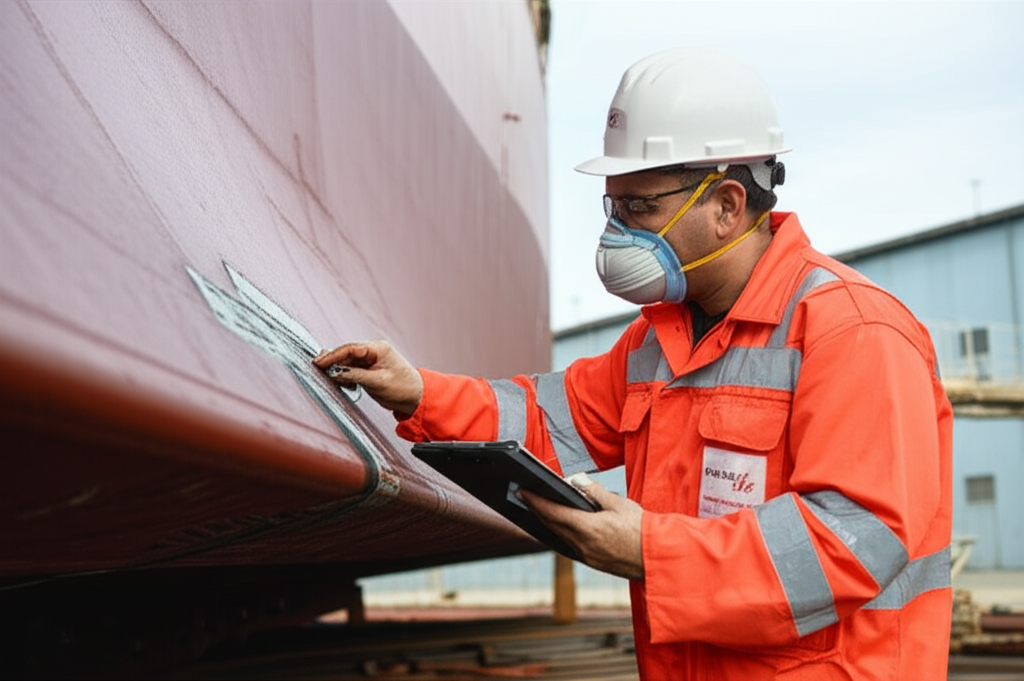
Marine surveying is the job most seafarers discover too late. It pays well, it uses everything you learned at sea, it keeps you in the industry without keeping you away from home for months, and almost nobody tells cadets it exists.
A marine surveyor inspects vessels, cargoes and marine equipment and writes down, with professional liability attached, what condition they are in. Someone is about to make a decision involving a large amount of money — buy a ship, insure it, accept a cargo, settle a claim, allow it to sail — and they need an independent competent person to tell them the truth first.
The core qualification is judgement, and judgement comes from having been on ships. That is why this is a second career rather than a first one.
The main types of survey
“Marine surveyor” covers several distinct jobs that share a method.
Condition and valuation surveys. Someone is buying a vessel, or a lender is financing one. You establish what state it is actually in: hull, machinery, structure, equipment, documentation. Commercial at one end, yacht and small craft at the other.
Cargo surveys. Inspecting cargo at loading or discharge — quantity, condition, stowage, securing, damage. Heavy on draught surveys, tank calibration and documentation, and the bread-and-butter work in most ports.
Damage and casualty surveys. After something has gone wrong. Establishing what happened, what the damage is, what it will cost, and — the part that matters legally — what caused it. Our article on how marine insurance claims work covers the process these feed into.
Pre-purchase yacht surveys. A distinct market with its own standards. Buyers of expensive pleasure craft want somebody independent to tell them what the broker did not.
Statutory and class surveys. Carried out on behalf of a flag state or classification society against a defined rule set. This route runs through employment by a class society rather than independent practice.
On-hire and off-hire surveys. When a vessel goes on or off charter, establishing condition and bunkers so the parties know where they stand.
What the work is actually like
Not glamorous and not office work. You climb into ballast tanks, cargo holds and engine spaces. You go aboard in weather, at awkward hours, at short notice, because vessels work to their own schedule and surveys happen when the ship is there. You spend substantial time in ports that are industrial estates by the sea.
Then you write. The report is the product. A survey report is a legal document that may be read by lawyers, underwriters, owners and a court, possibly years later. It has to be precise, evidenced, photographed and defensible. Surveyors who can inspect but cannot write do not last.
The other half of the job in independent practice is being self-employed: finding clients, quoting, invoicing, chasing payment, carrying professional indemnity insurance.
The route in
There is no single licence. That cuts both ways: the entry is flexible, and the market is crowded with people calling themselves surveyors who are not competent. Credibility comes from background plus professional accreditation.
Step one: the technical background
Nearly every working surveyor comes from one of three places.
Seagoing experience. The most common and the most respected. A deck or engineering officer with a Certificate of Competency and years of sea time has seen how ships are actually built, loaded, maintained and broken. Chief Mates and Chief Engineers are the classic profile.
Shipyard or marine engineering. Hands-on construction and repair background, strong on structure, welding, coatings and machinery.
Naval architecture or marine engineering degree. The academic route, usually needing practical exposure added. Our article on naval architecture careers covers that side.
Can you enter without any of these? In the small craft and yacht sector, yes — through a dedicated surveying qualification and supervised practice. In commercial shipping, realistically no. Nobody sends an inspector into a bulk carrier’s hold who has never worked on one.
Step two: a surveying qualification
Several routes exist. The International Institute of Marine Surveying runs recognised training and examinations and is the most internationally visible body. The Royal Institution of Naval Architects offers a surveyor accreditation route. Category-specific qualifications exist for yacht and small craft work.
Which one matters depends on your market. Check what your intended clients actually ask for before paying for a qualification.
Step three: professional membership
This is what clients and underwriters look for. Membership of a recognised body — IIMS, RINA, or the Institute of Marine Engineering, Science and Technology — signals that somebody independent has assessed your competence. Grades usually run from associate to full member to fellow.
Step four: experience under supervision
Almost everyone starts by working for an established surveying firm or a class society. You need someone to check your reports, show you what matters in each survey type, and let you build a portfolio.
Setting up independently on day one is possible and usually a mistake. The liability is real and the first serious error is expensive.
What it pays
Highly variable, which is an honest answer rather than an evasion. It depends on survey type, whether you are employed or independent, whether you work for a class society or in private practice, and your region. Employed surveyors at class societies have salaries comparable to other senior technical roles. Established independent surveyors with a specialism and a client base can earn considerably more, with the volatility self-employment brings.
For current figures, look at advertised class society positions and talk to the professional bodies.
The liability
A survey report is relied upon. If you miss something material and somebody loses money, you can be sued. Professional indemnity insurance is not optional, and the premium is a real cost of doing business.
This is also why accreditation and supervised experience matter. They are not bureaucracy; they are how the industry manages the risk of incompetent inspection.
Where the demand is going
Decarbonisation. New fuels — methanol, ammonia, LNG — new propulsion arrangements, and new regulation. Surveyors who understand these systems are scarce. Our article on decarbonising shipping covers the regulatory picture.
Offshore wind. A large and growing UK fleet of support, installation and maintenance vessels, all requiring survey, in a sector short of experienced people — see moving from the merchant navy into offshore wind.
Ageing tonnage and remote survey. More vessels trading past their comfortable design life, and classification societies expanding remote and drone-assisted inspection. The technology changes the method, not the need for judgement.
How Navalis UK fits
We do not issue surveyor accreditation. That comes from IIMS, RINA, IMarEST or a class society, and it requires assessed practical competence.
What we provide is the technical depth the role runs on, studied online while you are still at sea or already working: ship stability and structure, cargo operations, marine engineering systems, maritime law, and the regulatory framework surveyors work inside.
The common pattern is an officer with a few years of sea time who can see the shore move coming and wants to arrive with more than a certificate of competency — then adds the professional accreditation and the supervised experience on top.
Our naval engineering and technology and maritime law and regulation programmes are the usual fits. Recognition depends on which programme you complete and on the regulations of the country where you intend to work, and we set that out in writing before you enrol — see recognition and accreditations.
Frequently asked questions
Do I need to have been to sea?
For commercial shipping surveys, in practice yes. For yacht and small craft surveying, there is a route through dedicated qualifications and supervised practice without a seagoing background.
Is marine surveying regulated?
There is no single statutory licence for independent surveying in the UK. Statutory and class surveys are different — those are carried out by authorised organisations under delegated authority. Credibility in the independent market comes from professional accreditation.
Which professional body should I join?
It depends on your market. IIMS is the most visible internationally for independent surveyors; RINA and IMarEST carry weight on the naval architecture and engineering side. Ask the clients you intend to serve.
Can I work part-time or alongside sailing?
Many surveyors start this way, taking work during leave periods while still sailing. It is a sensible way to build a portfolio before committing.
How long does it take to establish independently?
Most people spend several years employed or supervised first. Building a client base takes longer again.
Is it the same as hydrographic surveying?
No. A marine surveyor inspects vessels and cargoes; a hydrographic surveyor measures the seabed. The names confuse people constantly.
The next step
If you are at sea now, start by talking to the surveyors who come aboard your vessel. They attend ships constantly and will tell you more in twenty minutes than any article.
Then build the technical depth. Browse our programmes by level and field, or ask an adviser which fits the sea time and certificates you already hold.