
A maritime cadetship is the closest thing left in Britain to an old-fashioned apprenticeship into a profession: a company pays for your training, puts you on their ships, and at the end you hold a qualification that works anywhere in the world. You are paid throughout, and you leave without the debt a university route would have given you.
That combination is unusual enough that it is worth understanding properly, because competition for the good sponsors is real and most applicants do not prepare for it.
What a cadetship actually is
A cadetship is a structured training programme, typically around three years, that takes someone with no maritime background to an Officer of the Watch Certificate of Competency — the first professional rank at sea.
Three parties are involved.
The sponsoring company — a shipping line, a ferry operator, an offshore or cruise company. They pay the fees, pay you an allowance, and crucially provide the ships you do your sea phases on.
The training provider — a nautical college. In the UK that means institutions such as Warsash, Fleetwood, South Shields, City of Glasgow and a handful of others.
You — alternating between the two for three years.
The structure matters: you are not a student who happens to do work placements. You are a trainee officer who happens to attend college between voyages.
Deck or engineering
The first real decision, and people make it too casually.
Deck cadets train toward navigation and vessel operation: bridge watchkeeping, passage planning, collision avoidance, stability, cargo operations, ship handling. The ladder runs Officer of the Watch, Chief Mate, Master. You end up responsible for where the ship goes and what it carries.
Engineering cadets train toward the machinery: main propulsion, auxiliaries, electrical systems, refrigeration, automation, maintenance planning. The ladder runs Engineer Officer of the Watch, Second Engineer, Chief Engineer. You end up responsible for whether the ship goes anywhere at all.
There is also an Electro-Technical Officer route, which has grown substantially as vessels have become more automated and more electrically driven. It is less well known and consequently less contested.
The honest guidance: choose deck if you are drawn to navigation, decision-making and eventually command. Choose engineering if you are drawn to systems and fixing things, and note that engineering officers generally find the transition to shore-side work easier, because the skills transfer to any heavy industry.
Both face the colour vision question. Deck has the stricter standard — see our guide to the ENG1 medical.
What the three years actually look like
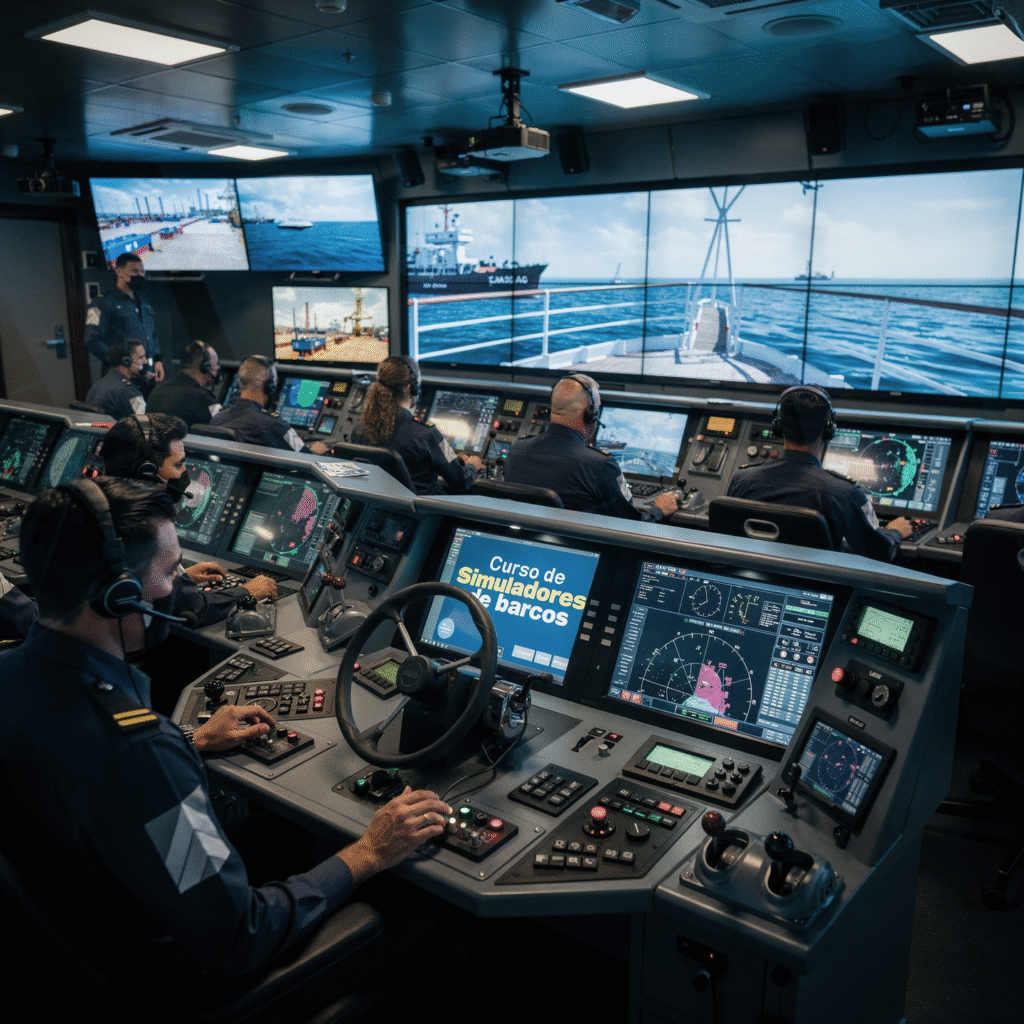
College phases. Classroom and simulator. Navigation, stability, meteorology, maritime law, engineering principles, communications. Plus the ancillary certificates: STCW Basic Safety Training, survival craft, advanced firefighting, medical first aid, security.
Sea phases. Aboard a working vessel as a cadet. You are supernumerary — not filling a crew position — and you carry a training record book that must be completed and signed off by the officers supervising you.
This is where the cadetship is won or lost, and where applicants’ expectations are furthest from reality.
A sea phase is months. You will be the youngest and least experienced person aboard. You will be given unglamorous work: sounding tanks, chipping and painting, inventory, logkeeping. The point is partly the tasks and largely the absorption — learning how a vessel actually operates, how a watch is actually run, and how the crew behave when something goes wrong.
You will be away over Christmas or a birthday. Connectivity at sea has improved but is not home broadband. You will be in a confined space with the same twenty people for months, some of whom you will not like.
People leave cadetships. The attrition is not mostly academic; it is people discovering that the life does not suit them. That is a legitimate discovery to make, and better in year one than year ten.
The money
You are paid a training allowance throughout. It is not a graduate salary — it is an allowance — but your fees are covered, your food and accommodation at sea are covered, and you emerge with no tuition debt.
Then the figures change sharply. A newly qualified Officer of the Watch earns considerably more than most graduates of the same age, largely because the qualification is scarce and the work pattern is demanding. Rather than quote a figure that will be stale within a year, look at current advertised rates from UK officer recruitment agencies and the Nautilus International pay guidance.
Many sponsors also attach a period of service commitment — an agreement to work for them for a defined period after qualifying, or repay part of the training cost. Read that clause before you sign.
Getting a sponsor
This is the competitive part. Places are limited and good sponsors receive many more applications than they take.
Apply early and widely. Intakes typically run annually, sometimes twice, and deadlines are earlier than people expect.
Apply directly to companies as well as through colleges. Many applicants only go through the college route and miss sponsors who recruit directly.
Sort the medical first. A sponsor will require a valid ENG1. Turning up without one wastes everyone’s time.
Demonstrate that you understand the life. This is the single biggest differentiator. Interviewers have seen a great many eighteen-year-olds who like the idea of ships. They are looking for people who have grasped what months away actually means. Anything that shows real engagement — sailing, sea cadets, a port visit, a conversation with a serving officer, genuine reading about the industry — counts more than enthusiasm.
Be able to say why this company. Container, tanker, ferry, offshore, cruise and gas are different industries with different lives. Knowing which one you are applying to, and why, puts you ahead of most of the field.
The alternative route
If you do not get a sponsorship, there is another way in that people overlook. Start as a rating — able seafarer, deck or engine. Entry requirements are lower, you are earning from the start, and you accumulate qualifying sea time. After sufficient documented service you can convert toward an officer certificate.
It is slower and nobody is paying your fees. But it is a genuine route, and officers who came up through the ratings are often the ones with the firmest practical grasp of how a vessel works.
Where it leads
The seagoing career is the obvious destination, but most officers eventually come ashore. An OOW ticket plus a few years of sea time opens: marine superintendent, port operations, vessel chartering, marine surveying, pilotage, harbour management, insurance and claims, maritime law, regulation and class, offshore wind, and training.
Those shore roles are frequently better paid than the sea roles that qualify you for them, and they are the reason a cadetship is a durable career decision rather than just a job. Our article on moving from sea to shore maps the options.
How Navalis UK fits
We do not run cadetships. A cadetship requires a sponsoring company with ships and a physical nautical college, and we are an online institute. Where we are genuinely useful is around the edges of that route.
Before you apply. The applicants who stand out are the ones who demonstrably understand the industry. Studying the subject matter before an interview is a cheap way to do that.
During sea phases. Cadets at sea have time and no campus. Online study is one of the few forms of structured learning that works from a vessel.
After qualifying. Officers building toward Chief Mate or Master, or planning the move ashore, need depth in subjects the certificate route covers only to the minimum standard.
Our navigation and operations, logistics and fleet management and port and marina management programmes are the usual fits. Recognition depends on which programme you complete and on the regulations of the country where you intend to work, and we set that out in writing before you enrol — see recognition and accreditations.
Frequently asked questions
What qualifications do I need to apply?
Entry requirements vary by college and sponsor but generally include GCSEs in maths, English and a science, with A-levels or equivalent for degree-linked programmes.
Is there an age limit?
There is no general upper limit and career changers are accepted, though some sponsors have preferences.
Do I get paid?
Yes — a training allowance, with fees, and food and accommodation at sea, covered by the sponsor.
How long am I away at sea?
Sea phases typically run two to four months at a time, with several across the cadetship.
What if I decide it is not for me?
People do leave. Check your sponsorship agreement for repayment terms before you sign, and raise doubts with your training officer early.
Can I do a cadetship without a sponsor?
Some colleges accept unsponsored cadets, but you pay the fees and must arrange your own qualifying sea time, which is the hard part. The rating-to-officer route is usually the more realistic unsponsored option.
The next step
If you are serious: pass the ENG1 first, research which sector you actually want, and apply to sponsors directly as well as through colleges. Give yourself a year of lead time.
If you are already in the industry and working out the next rung, browse our programmes by level and field, or ask an adviser which route fits the sea time and certificates you already hold.