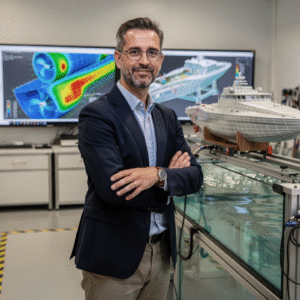
Diploma in Autonomous Vehicles and Electric Vessels
Why this certificate program?
The Diploma in Autonomous Vehicles and Electric Vessels
Immerse yourself in the future mobility revolution, exploring the technologies and challenges of autonomous land and sea driving, as well as electric propulsion in vessels. Acquire the skills to design, implement, and manage innovative systems in this booming field.
Differential Advantages
- Comprehensive Approach: from the perception and control of autonomous vehicles to electric propulsion systems in boats.
- Key Technologies: Lidar, radar, machine vision, inertial navigation, batteries, energy management systems, and electric motors.
- Simulation and Modeling: learn to use simulation tools to validate and optimize algorithms and systems.
- Regulatory and Ethical Framework: understand the regulations and ethical considerations related to autonomy and electrification.
- Practical Projects: apply your knowledge to real-world projects to develop innovative solutions.
- Modality: Online
- Level: Diplomado
- Hours: 800 H
- Start date: 01-10-2026
Availability: 1 in stock
Who is it aimed at?
- Engineers and technicians seeking to specialize in the design, development, and maintenance of autonomous vehicles and electric vessels.
- Automotive and marine professionals interested in the transition to sustainable mobility and the electrification of transportation.
- Entrepreneurs and startups wishing to innovate in the autonomous vehicle and electric vessel market.
- Researchers and academics seeking to deepen their knowledge of the latest technologies and trends in the sector.
- Engineering students and students in related fields aspiring to a career at the forefront of autonomous vehicle and electric vessel technology.
Flexibility for your learning
Designed for professionals and Students: flexible online modality, 24/7 access to content and personalized support for your progress.
Objectives and competencies

Design and implement control systems for autonomous vehicles:
“Integrating route planning, environmental perception, and vehicle actuators, ensuring safety and efficiency in navigation.”

Integrate sensors and actuators for environmental perception and control:
“Calibrate, configure and optimize the response of integrated systems, ensuring reliability and operational safety in the face of environmental variations and interference.”

Develop navigation and decision-making algorithms for autonomy:
Implement adaptive route planning, considering dynamic constraints (weather, traffic) and optimizing energy consumption/time, continuously validating execution with monitoring and early warning systems.

Evaluate and optimize the energy performance of electric vehicles and boats:
“Analyze telemetry data, identify consumption patterns, and adjust driving/navigation parameters to maximize range and efficiency.”

Managing the safety and reliability of autonomous and electrical systems:
Implement redundancy and continuous monitoring, analyzing data to predict failures and apply predictive maintenance, minimizing the impact on operability.

Adapting and applying legal and ethical regulations to autonomous and electric vehicles:
“Interpreting traffic laws and data privacy, ensuring road safety and respect for user information.”
Curriculum - Modules
- Comprehensive Maritime Incident Management: protocols, roles, and chain of command for coordinated response
- Operational Planning and Execution: briefing, routes, weather windows, and go/no-go criteria
- Rapid Risk Assessment: criticality matrix, scene control, and decision-making under pressure
- Operational Communication: VHF/GMDSS, standardized reports, and inter-agency liaison
- Tactical Mobility and Safe Boarding: RHIB maneuvers, approach, mooring, and recovery
- Equipment and Technologies: PPE, signaling, satellite tracking, and field data logging
- Immediate Care of the Affected: primary assessment, hypothermia, trauma, and stabilization for evacuation
- Adverse Environmental Conditions: swell, Visibility, flows, and operational mitigation
Simulation and training: critical scenarios, use of VR/AR, and exercises with performance metrics
Documentation and continuous improvement: lessons learned, indicators (MTTA/MTTR), and SOP updates
- Introduction to AMVs and Electric Vessels: Types, Architectures, and Applications
- Fundamentals of Autonomous Driving/Navigation: Perception, Planning, and Control
- Sensor Systems: LiDAR, Radar, Cameras, IMU, GPS/GNSS
- Control Architecture: Processing Units, Communication Buses, Real-Time Operating Systems
- Actuation Systems: Electric Motors, Steering/Rudder Systems, Brakes
- Batteries and Battery Management Systems (BMS): Types, Characteristics, Safety
- Vehicle/Marine Communication Networks: CAN Bus, Ethernet, Wireless
- Functional Safety: Risk Analysis, Secure Systems Design, Standards (ISO 26262, IEC 61508)
Cybersecurity in VAE/EE: Threats, Vulnerabilities, Protection Measures
Regulations and Standards: Current Legislation, Approval, Certification
‘
- Introduction to Autonomous Driving: Levels, Benefits, and Challenges
- Autonomous Vehicle Architecture: Perception, Planning, and Control
- Sensors: LiDAR, Radar, Cameras, Ultrasound, IMU, and GNSS
- Data Processing and Sensor Fusion: Algorithms, Filtering, and Calibration
- Route Planning and Decision Making: Search and Optimization Algorithms
- Vehicle Control: Actuators, Steering, Braking, and Acceleration Systems
- Functional Safety: Risk Analysis, Safe Design, and Validation
- Cybersecurity in Autonomous Vehicles: Threats, Vulnerabilities, and Countermeasures
- Regulations and Standards: SAE, ISO, and Regulations Specifics
- Testing and validation: simulation, closed-circuit and public road testing
‘
- Introduction to Autonomous Vehicles: History, Levels of Autonomy, Use Cases
- General Architecture of an Autonomous Vehicle: Perception, Planning, Control
- Sensors: LiDAR, Radar, Cameras, Ultrasound, IMU, GNSS – Operating Principles and Limitations
- Perception Systems: Object Detection, Classification, Tracking, SLAM
- Route Planning: Search Algorithms, Trajectory Optimization, Obstacle Avoidance
- Vehicle Control: Speed ​​Control, Steering, Braking, Actuation Systems
- Propulsion Systems: Internal Combustion Engines, Electric Engines, Hybrid Engines – Characteristics and Control
- Power Systems: Batteries, Fuel Cells, Energy Management
- Communication V2X: protocols, security, applications
Legal and ethical aspects of autonomous driving: responsibility, safety, privacy
‘
- Introduction to Intelligent Systems Architecture: Layers, Components, Interfaces
- Sensors and Actuators: Types, Characteristics, Integration with the Environment
- Control Systems: PID, Fuzzy Logic, Predictive Control
- Navigation Algorithms: SLAM, Pathfinding, Obstacle Avoidance
- Artificial Intelligence: Machine Learning, Neural Networks, Computer Vision
- Mission Planning: Goal Definition, Constraints, and Optimization
- Location and Positioning Systems: GPS, IMU, Odometry
- Environmental Perception: Data Processing, Sensor Fusion, World Modeling
- Communication and Connectivity: Protocols, Networks, Interoperability
- Ethics and Safety in Autonomous Systems: Responsibility, Privacy, data protection
‘
- System Architecture and Components: Structural design, materials, and subsystems (mechanical, electrical, electronic, and fluid) with selection and assembly criteria for marine environments
- Fundamentals and Principles of Operation: Physical and engineering foundations (thermodynamics, fluid mechanics, electricity, control, and materials) that explain performance and operating limits
- Safety and Environmental (SHE): Risk analysis, PPE, LOTO, hazardous atmospheres, spill and waste management, and emergency response plans
- Applicable Regulations and Standards: IMO/ISO/IEC requirements and local regulations;
- Conformance criteria, certification, and best practices for operation and maintenance
- Inspection, testing, and diagnostics: Visual/dimensional inspection, functional testing, data analysis, and predictive techniques (vibration, thermography, fluid analysis) to identify root causes
- Preventive and predictive maintenance: Hourly/cycle/seasonal plans, lubrication, adjustments, calibrations, consumable replacement, post-service verification, and operational reliability
- Instrumentation, tools, and metrology: Measuring and testing equipment, diagnostic software, calibration and traceability; selection criteria, safe use, and storage
- Onboard integration and interfaces: Mechanical, electrical, fluid, and data compatibility; Sealing and watertightness, EMC/EMI, corrosion protection, and interoperability testing.
Quality, acceptance testing, and commissioning: process and materials control, FAT/SAT, bench and sea trials, go/no-go criteria, and evidence documentation.
Technical documentation and integrated practice: logs, checklists, reports, and a complete case study (safety → diagnosis → intervention → verification → report) applicable to any system.
- Introduction to Autonomous Vehicles: History, Levels of Autonomy, and Applications
- Hardware Architecture: Sensors (LiDAR, Radar, Cameras), Processing Units, Actuators
- Software Architecture: Perception, Planning, Control, Communication
- Real-Time Operating Systems (RTOS) and Middleware (ROS, AUTOSAR)
- Control Systems: Predictive Control (MPC), Adaptive Control, Robust Control
- Electric Propulsion: Motors, Inverters, Batteries, Energy Management
- Navigation Systems: GNSS, IMU, Odometry, Sensor Fusion
- Functional Safety: ISO 26262, Risk Analysis, Fault Mitigation
- Cybersecurity: threats, vulnerabilities, hardening
- Regulatory and ethical aspects of autonomous vehicles
‘
Career opportunities
- Design and Development Engineer: Creation of control, navigation, and propulsion systems for autonomous vehicles and electric vessels.
- Testing and Validation Specialist: Verification of the performance, safety, and reliability of autonomous vehicles and electric vessels.
- Maintenance and Repair Technician: Diagnosis and troubleshooting of electrical, electronic, and mechanical systems in autonomous vehicles and electric vessels.
- Autonomous and Electric Mobility Consultant: Advising companies and organizations on the implementation of autonomous and electrified transportation solutions.
- Algorithm Researcher and Developer: Creation of perception, planning, and control algorithms for autonomous vehicles and electric vessels.
- Systems Integrator: Combination of different components and technologies to create complete solutions for autonomous vehicles and electric vessels.
- Project Manager: Planning, coordination, and supervision of development and deployment projects for autonomous vehicles and electric vessels.
- Cybersecurity Specialist: Protecting autonomous vehicles and electric vessels against cyberattacks and vulnerabilities.
“`
Admission requirements

Academic/professional profile:
Degree/Bachelor's degree in Nautical Science/Maritime Transport, Naval/Marine Engineering, or a related field; or proven professional experience in bridge/operations.

Language proficiency:
Recommended functional maritime English (SMCP) for simulations and technical materials.

Documentation:
Updated resume, copy of degree or seaman's book, ID card/passport, letter of motivation.

Technical requirements (for online):
Equipment with camera/microphone, stable connection, ≥ 24” monitor recommended for ECDIS/Radar-ARPA.
Admission process and dates

1. Online
application
(form + documents).

2. Academic review and interview
(profile/objectives/schedule compatibility).

3. Admission decision
(+ scholarship proposal if applicable).

4. Reservation of place
(deposit) and registration.

5. Induction
(access to campus, calendars, simulator guides).
Scholarships and grants
- Fundamentals and Key Technologies: Delve into artificial intelligence, advanced sensors, and navigation systems essential for the development of autonomous vehicles.
- Design and Control of Electric Vessels: Learn about electric propulsion systems, next-generation batteries, and energy optimization in the maritime sector.
- Regulation and Safety: Gain knowledge of current regulations, safety standards, and ethical challenges related to the implementation of these technologies.
- Simulation and Prototyping: Develop practical skills through the use of simulation tools and the creation of virtual prototypes of autonomous vehicles and electric boats.
- Case studies and real-world applications: Analyze concrete examples of implementation in various sectors and explore opportunities for innovation and future development.
Testimonials
This diploma program provided me with the tools and knowledge necessary to develop an autonomous navigation system for electric vessels. I applied what I learned to the design and construction of a functional prototype that demonstrated 20% greater energy efficiency than conventional systems, thus validating the program’s effectiveness and my ability to innovate in the sector.
The Diploma in Innovation in Maritime Transport provided me with the tools and knowledge necessary to lead the implementation of a new logistics system in my company. Thanks to the concepts I learned about digitalization and process automation, we were able to reduce delivery times by 15% and optimize operating costs by 10%, positively impacting the efficiency and profitability of our organization.
This diploma program provided me with the tools and knowledge necessary to develop an autonomous navigation system for electric vessels. I applied what I learned to optimize the energy consumption and route of a prototype, achieving a 25% increase in autonomy and a 15% reduction in navigation time during field tests.
This diploma program provided me with the tools and knowledge necessary to develop an autonomous navigation system for electric boats. I applied what I learned to the design and implementation of a functional prototype that successfully navigated a predefined course autonomously, demonstrating the viability of the technology and opening doors to future research in the field.
Frequently asked questions
The main difference lies in the operating environment: autonomous vehicles travel on land, while electric boats navigate on water. Although both can incorporate automation or autonomous technologies, their design, propulsion, and navigation systems differ significantly due to the characteristics of their respective environments.
Yes. The itinerary includes ECDIS/Radar-ARPA/BRM with harbor, ocean, fog, storm, and SAR scenarios.
Online with live sessions; hybrid option for simulator/practical placements through agreements.
Yes, this diploma covers hardware and software aspects related to autonomous vehicles and electric boats.
Recommended functional SMCP. We offer support materials for standard phraseology.
Yes, with a relevant degree or experience in maritime/port operations. The admissions interview will confirm suitability.
Optional (3–6 months) through Companies & Collaborations and the Alumni Network.
Simulator practice (rubrics), defeat plans, SOPs, checklists, micro-tests and applied TFM.
A degree from Navalis Magna University + operational portfolio (tracks, SOPs, reports and KPIs) useful for audits and employment.
- Introduction to Autonomous Driving: Levels of Autonomy and Architectures
- Sensors: Cameras, LiDAR, Radar, Ultrasound – Principles and Limitations
- Sensory Data Processing: Perception, Sensor Fusion, and Environmental Modeling
- Pathway Planning: Search, Optimization, and Decision-Making Algorithms
- Vehicle Control: Dynamic Models, Predictive Control, and Path Tracking
- Autonomous Driving System Architecture: Hardware and Software Components, Inter-Module Communication
- Functional Safety: Standards (ISO 26262), Risk Analysis (HAZOP, FTA), and Mitigation
- Cybersecurity in Autonomous Driving: Threats, Vulnerabilities, and Countermeasures
Validation and verification: Simulation, closed-circuit, and public road tests
Legal and ethical aspects of autonomous driving: Responsibility, privacy, and data security‘
Request information
Complete the Application Form.
Attach your CV/degree certificate (if you have it to hand).
Indicate your preferred cohort (January/May/September) and whether you would like the hybrid option with simulator sessions.
An academic advisor will contact you within 24–48 hours to guide you through the admission process, scholarships, and compatibility with your professional schedule.
Faculty
Eng. Tomás Riera
Full Professor
Eng. Tomás Riera
Full Professor
Eng. SofĂa Marquina
Full Professor
Eng. SofĂa Marquina
Full Professor
Eng. Javier Bañuls
Full Professor
Eng. Javier Bañuls
Full Professor
Dr. Nuria Llobregat
Full Professor
Dr. Nuria Llobregat
Full Professor
Dr. Pau Ferrer
Full Professor
Dr. Pau Ferrer
Full Professor
Cap. Javier Abaroa (MCA)
Full Professor
Cap. Javier Abaroa (MCA)
Full Professor