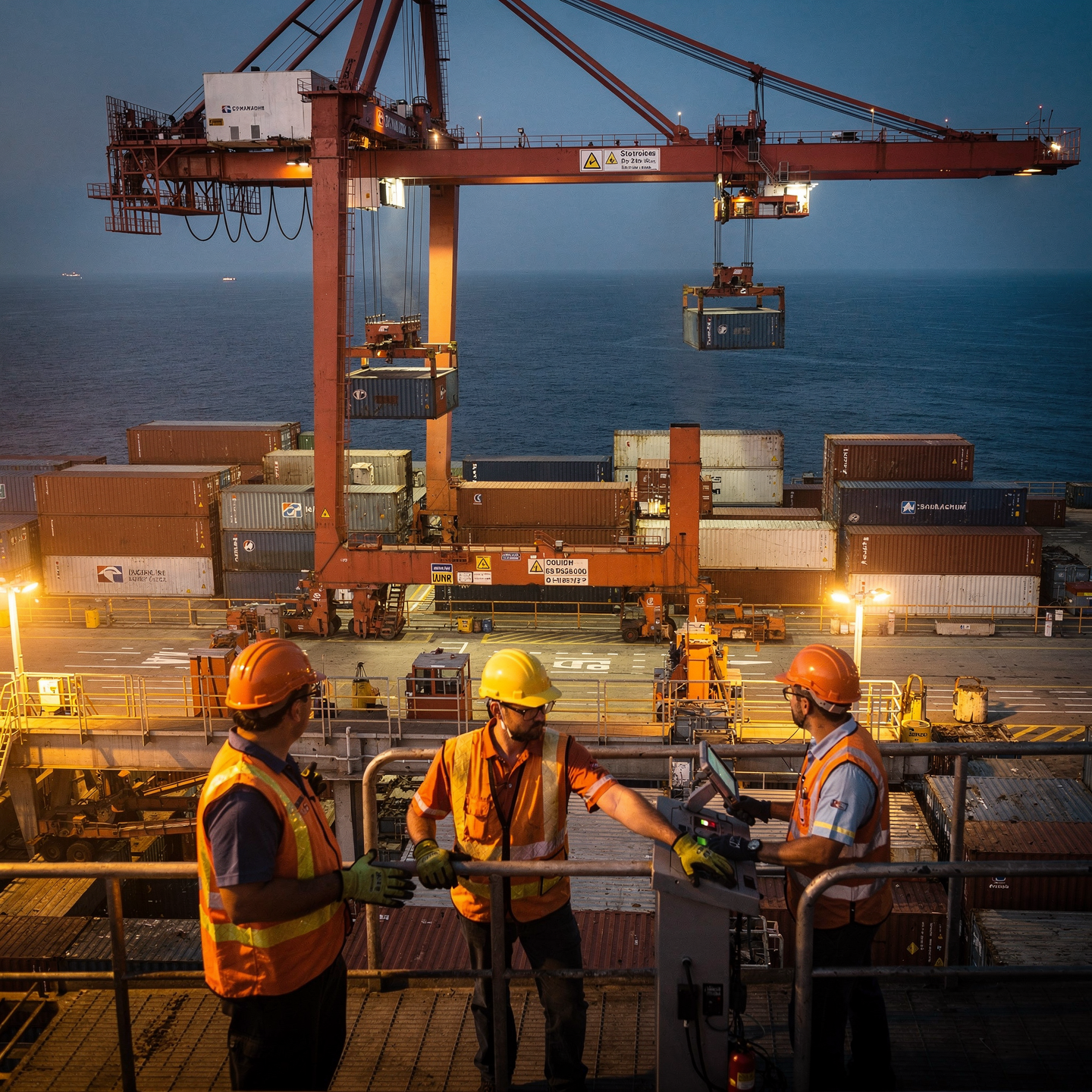
Master’s Degree in Container Terminal Engineering
Why this master’s programme?
The Master in Container Terminal Engineering
This program offers comprehensive and specialized training in the design, management, and optimization of container terminals. You will learn about the latest technologies and trends in automation, digitalization, and sustainability applied to the port sector. You will master strategic planning, operations management, and supply chain analysis to maximize terminal efficiency and profitability. This program prepares you to lead innovation and development projects in a globalized and competitive environment.
Differential Advantages
- Simulations and Case Studies: Operations modeling, bottleneck analysis, and flow optimization.
- Specialized Software: Handling simulation, planning, and terminal management tools.
- Technical Visits: First-hand experiences at state-of-the-art container terminals.
- Expert Faculty: Industry professionals with extensive experience in port engineering and management.
- Networking: Opportunities to connect with companies and professionals in the logistics and port sector.
- Modality: Online
- Level: Masters
- Hours: 1600 H
- Start date: 25-08-2026
Availability: 1 in stock
Who is it aimed at?
- Civil and naval engineers seeking to specialize in the design, construction, and management of modern port terminals.
- Graduates in logistics, maritime transport, and business administration interested in leading operations and optimizing efficiency in container terminals.
- Port industry professionals (operators, planners, consultants) who wish to update their knowledge of the latest technologies and trends in the sector.
- Safety and environmental managers seeking to implement strategies to ensure sustainability and regulatory compliance in container terminals.
- Investors and developers who wish to in-depthly understand the port terminal business and evaluate opportunities Investment.
Training flexibility
Adapted to working professionals: online format, 24/7 access to content, and personalized tutoring.
Objectives and skills

Optimize container management and flow:
Implement real-time route tracking and optimization systems, minimizing waiting times and maximizing efficiency in the use of port resources.

Implement advanced technologies in terminal management:
“Integrate automation and predictive analytics systems to optimize operational efficiency and safety at the terminal.”

Design and implement comprehensive security strategies:
“Identify vulnerabilities, assess risks and establish preventive/corrective measures, prioritizing the protection of people, assets and critical information.”

Leading expansion and modernization projects:
“Define scope, budget and schedule, managing risks and involving stakeholders to ensure the viability and success of the project.”

Efficiently manage human and material resources:
“Optimize task allocation, preventive maintenance, and inventory management to minimize costs and maximize operational availability.”

Leading the optimization of the port logistics chain:
“Implement Lean and Six Sigma methodologies to identify bottlenecks and reduce downtime in port operations.”
Study plan – Modules
- Container Terminal Design Fundamentals: Demand Analysis, Infrastructure Capacity, and Modular Design Criteria
- Advanced Operational Simulation Models: Optimization Techniques Using Traffic Flow and Cargo Handling Simulators
- Integration of IoT and Big Data Technologies for Real-Time Resource and Asset Management in Port Terminals
- Design and Evaluation of Automated Container Handling Systems: RTG Cranes, Automated STS Cranes, and Autonomous Vehicles
- Spatial Distribution Strategies and Port Urban Planning to Improve Operational Efficiency and Reduce Cycle Times
- Optimization of the Internal Logistics Chain: Coordination Between Storage, Transportation, and Consolidation Areas Using Advanced Analytics Tools
- Application of Artificial Intelligence and Machine Learning in Predicting Maritime and Land Traffic Flows for Dynamic Terminal Planning
- Environmental Impact Assessment and Sustainability Methodologies in Smart Terminal Design, Including Reduction of Emissions and Energy Management
Advanced Integrated Control and Monitoring Systems (SCADA) for continuous monitoring and proactive response to operational contingencies
Comparative analysis of emerging technologies: blockchain for logistics traceability, digital twins for simulation, and augmented reality for predictive maintenance
- Fundamentals of Automation in Container Terminals: Principles, Levels, and Models of Technological Integration
- Artificial Intelligence and Machine Learning: Applications for Optimizing Operational Flows and Predicting Demand in Terminals
- Advanced Control Systems: PLC, SCADA, and IoT in the Real-Time Management and Monitoring of Port Equipment and Processes
- Robotics and Autonomous Vehicles: Design, Implementation, and Maintenance of AGVs (Automated Guided Vehicles) in Loading and Unloading Operations
- Sensor Technologies and Wireless Communication: RFID, 5G, and IoT Networks for Container Tracking and Control
- Big Data and Predictive Analytics for Strategic Decision-Making Aimed at Reducing Waiting Times and Maximizing Operational Efficiency
- Implementation of Flexible and Modular Automation Systems: Advantages, Challenges, and Success Stories in Leading Terminals
- Sustainability and Energy Efficiency: Integration of renewable energies, reduction of CO2 emissions, and responsible resource management in automated terminals
- International regulations and technological standards applicable to automation and sustainability in port terminals
- Change Management and Technological Training: Strategies for the efficient adoption of disruptive technologies by operational and management personnel
- Cybersecurity and protection of critical infrastructure in automated environments
- Augmented Reality and Digital Twins: Advanced tools for predictive maintenance, training, and operational simulation
- Economic evaluation and return on investment (ROI) analysis in automation and sustainable modernization projects
- Key Performance Metrics (KPIs) and comprehensive management software for continuous monitoring of efficiency and sustainability in container terminals
- Studies Case study: Successful implementation of disruptive technologies in terminals in Asia, Europe, and the Americas
Future trends and technological roadmap for the evolution of smart and sustainable terminals
World
- Fundamentals of Sustainable Design in Port Terminals: Environmental, Social, and Economic Criteria
- Technological Innovation Applied to Terminal Automation: AGV Systems, Automated RTGs, and Intelligent Cranes
- Digitization and Use of Digital Twins: Advanced Simulation for Optimization and Predictive Maintenance
- Implementation of Renewable Energies in Terminals: Integration of Solar Panels, Wind Turbines, and Energy Recovery Systems
- Intelligent Management of Water Resources and Waste: Technologies for Recycling, Water Treatment, and Effluent Minimization
- Advanced Energy Management Systems: Real-Time Monitoring, Energy Storage, and Carbon Footprint Reduction
- Green Infrastructure and its Impact on Operational Efficiency: Biophilic Design, Heat Island Mitigation, and Microclimate Improvement
- Big Data and Predictive Analytics in Port Operations: Flow Optimization, Condition-Based Maintenance, and Reduction of Downtime
Integration of IoT systems and smart sensors: environmental control, security, and internal traffic management
Evaluation and certification of sustainable port terminals: international standards, key performance indicators, and sustainability audits
- Fundamentals and architecture of Terminal Operation Systems (TOS): design, key modules, and scalability in automated terminals
- Integration of Industrial IoT in port infrastructure: smart sensors, communication protocols (MQTT, OPC-UA), and 5G networks for real-time monitoring
- Implementation of predictive maintenance based on Big Data and Machine Learning: vibration analysis, thermography, and condition sensors for equipment lifecycle optimization
- Advanced analytics platforms for predicting operational failures and reducing downtime in container handling systems
- Cybersecurity architecture in container terminals: defense-in-depth strategies, industrial network segmentation, and digital identity management
- International regulations and security standards for industrial systems (IEC 62443, NIST Cybersecurity Framework) applicable to automated terminals
- Monitoring and control Real-time monitoring of operations through integrated dashboards and SCADA protocols adapted to port environments.
Optimization of operational availability through redundancy of critical systems, load balancing, and recovery from technological disasters.
Integration of TOS systems with ERP, CRM, and logistics platforms for comprehensive automation and traceability of the multimodal supply chain.
Advanced case studies and incident simulations in automated terminals: response to cyber threats and technological failures.
- Fundamentals of strategic planning in port terminals: defining objectives, situational analysis, and formulating operational strategies
- Advanced methodologies for multimodal flow analysis: traffic assessment, bottleneck identification, and operational capacity calculation
- Implementation of smart technologies for integrated terminal management: IoT sensors, Big Data, and predictive analytics platforms
- Modeling and simulation of multimodal logistics chains: port-rail-road integration and transit time optimization
- Design and planning of port infrastructure adapted to dynamic demands: storage spaces, docks, access points, and intermodal connections
- Management of digital terminals: control systems, process automation, and real-time monitoring using SCADA and WMS systems
- Risk and contingency analysis in multimodal flows: quantitative methods for identifying vulnerabilities and mitigation strategies Mitigation
- International standards and regulations applicable to the planning and operation of smart terminals: ISO 28000, IAPH, and IMDG Conventions
- Key performance indicators (KPIs) for operational efficiency and environmental sustainability in smart port terminals
- Case studies and global benchmarking studies in strategic planning and multimodal flows in next-generation terminals
- Principles of Technological Innovation Applied to Container Terminals: Current and Future Trends in Port Infrastructure
- Automation in Terminals: Automated Stowage Systems, Autonomous Guided Vehicles (AGVs), and Smart Cranes
- Integration of IoT and Big Data Technologies for Real-Time Operational Monitoring and Optimization
- Artificial Intelligence and Machine Learning: Demand Forecasting, Cargo Management, and Logistics Optimization
- Design and Application of SCADA Systems for Comprehensive Port Process Control
- Strategies for Environmental Sustainability in Terminals: Renewable Energy, Emissions Reduction, and Waste Management
- International Standards and Certifications in Sustainability and Energy Efficiency Applied to Container Terminals
- Implementation of Circular Economy Models and Corporate Social Responsibility (CSR) Practices in the Logistics Chain Port Authority
Advanced Simulation and Digital Twins: Tools for Efficient Terminal Planning and Operation
Environmental Impact Assessment and Management: Mitigation Measures and Environmental Audits in a Global and Local Regulatory Context
Workflow Optimization through Integrated Management Systems (ERP) Focused on the Container Terminal
Cybersecurity in Automated Terminals: Protecting Critical Infrastructure and Control Systems from Digital Threats
Analysis of Real-World Cases of Innovation and Sustainability in Leading Terminals: Lessons Learned and Best Practices
- Current and future landscape of technological innovation in container terminals: trends, challenges, and opportunities
- Implementation of advanced automation systems: Automated Guided Vehicles (AGVs), smart cranes, and collaborative robotics
- Integration of IoT (Internet of Things) technologies for real-time monitoring of operations and assets
- Big Data and predictive analytics applied to logistics management, predictive maintenance, and container flow optimization
- Digital platforms and digital twins for simulation, planning, and strategic decision-making
- Advanced environmental management systems for minimizing carbon footprint and ensuring international regulatory compliance
- Strategies and technologies for sustainable energy in terminals: energy integration Renewables, electrification, and efficient resource use
Application of blockchain in traceability and security of the port supply chain
Advanced management of operational risks and cybersecurity in smart terminals
Advanced integrated terminal management models based on artificial intelligence, machine learning, and autonomous decision-making
International standards and certifications related to sustainability and technological innovation in port operations
International case studies of smart port terminals and comparative analysis of their management models and technological development
Design and planning of resilient and sustainable port infrastructure using advanced engineering techniques and environmental impact assessment
Role of public policies and international agreements in promoting sustainable and innovative port terminals
Human capital training and development for the operation and management of advanced technological systems in container terminals
- Fundamentals of comprehensive optimization in port terminals: process analysis, bottleneck identification, and Lean Six Sigma methodologies applied to container operations
- Design and Architecture of advanced automation systems: PLC, SCADA, and distributed systems in terminal management
- Advanced modeling and simulation of terminal operations: digital tools for predicting flows, cycle times, and resource allocation
- Implementation of Industrial Internet of Things (IIoT) for real-time monitoring of heavy machinery, port cranes, and container handling equipment
- Application of artificial intelligence and machine learning for the dynamic optimization of berthing, storage, and dispatch planning
- Integration of Automated Stacking Cranes (ASC) and autonomous vehicles in the Terminal logistics chain: parameters, protocols, and technical challenges
Development of digital platforms for the comprehensive management of smart terminals: interoperability, APIs, and international standards
Advanced inventory control and traceability systems using RFID and machine vision applied to container handling
Energy optimization and sustainability in automated operations: consumption analysis, clean energy, and eco-efficient terminal design
Cybersecurity and resilience strategies in digitized port environments: data protection, access control, and defense against cyberattacks
International regulations and certifications applicable to the implementation of automation technologies in ports and container terminals
Case studies and global benchmarking: comparative analysis of leading automated terminals and practical lessons for their adoption
Training and change management for human teams in the face of the transition to smart and automated terminals
- Emerging Innovations: Collaborative Robotics, Digital Twins, and Blockchain in Port Operational Optimization
- Strategic Planning for the Scalability and Continuous Modernization of Smart Port Infrastructures
- Real-Time KPI Monitoring and Evaluation for Continuous Improvement of Terminal Efficiency and Reduction of Unproductive Time
- Advanced Use of Big Data and Predictive Analytics in Operational Decision-Making and Crisis Management at Container Terminals
- Integration with External Logistics Systems: Coordination with Shipping Lines, Land Operators, and Port Authorities via Digital Platforms
- Management of Risks Associated with Automation: Assessment, Mitigation, and Contingency Protocols for Technological Failures
- Development of Investment Projects and Economic Feasibility Studies for the Implementation of Advanced Solutions in Smart Terminals
- Fundamentals of Technological Innovation Applied to Port Terminals: Global Trends and Analysis of Success Stories
- Advanced Automation in Port Operations: Terminal Operations Systems (TOS), Automated Cranes, and Automated Guided Vehicles (AGVs)
- Integration of IoT and Big Data Technologies for Real-Time Monitoring of Container Flow and Operational Resources
- Design and Application of Digital Twins for the Simulation and Continuous Optimization of Smart Port Processes
- Environmental Sustainability Strategies: Life Cycle Assessment, CO2 Neutrality, and Emission Reduction in Port Operations
- Efficient Management of Energy Resources: Use of Renewable Energies and Energy Storage Systems in Terminals
- Comprehensive Planning Based on Predictive Analytics for Reducing Operating Costs and Improving Productivity
- Cybersecurity Protocols in Automated Terminals: Protection Against Threats and Operational Continuity
- International standards and certifications related to sustainability and automation in container terminals
- Implementation of smart port logistics systems: interoperability, blockchain, and traceability in the supply chain
- Data management models for real-time decision-making and support for integrated terminal management
- Assessment of the socioeconomic and environmental impact of smart terminals on port communities and surrounding areas
- Human capital training for the transition to fully automated and sustainable terminals
- Study of international case studies: challenges, technological solutions, and results obtained in smart port management
- Advanced methodologies for strategic planning based on innovation and sustainability in next-generation terminals
- Conceptual design and theoretical foundations of the integrated automation system in container terminals: analysis of operational and regulatory requirements
- Implementation of IoT (Internet of Things) technologies for real-time monitoring of handling and storage equipment in the terminal
- Integration of SCADA (Supervisory Control and Data Acquisition) systems for the centralized supervision and control of port operations
- Development of logistics optimization algorithms based on artificial intelligence and machine learning for the dynamic management of container flows
- Industrial network architectures and communication protocols: OPC UA, Modbus TCP/IP, and 5G networks to guarantee low latency and high availability
- Application of machine vision systems and LIDAR sensors for the automation of stacking and precise positioning of containers
- Design of predictive maintenance strategies using data analysis and failure models to maximize the availability of the
- Machinery
- Implementation of sustainable energy management systems: integration of renewable sources and optimization of consumption in facilities
- Environmental impact assessment and mitigation strategies for reducing emissions and carbon footprint in automated terminals
- Development of advanced cybersecurity protocols to protect critical infrastructure from attacks and ensure data integrity
- Integrated management systems (advanced ERP) to coordinate human, financial, and material resources in the automated port environment
- Modeling and simulation of critical scenarios for operational resilience against weather contingencies, technical failures, and high-demand events
- Protocols for the safe transition between manual and automated operations in emergency or maintenance situations
- International regulations and certification standards applicable to the design and operation of automated systems in container terminals (ISO, IEC, IAPH)
- Real-world case studies and benchmarking of World-leading terminals in automation and sustainability
Integration of data analytics tools for real-time strategic decision-making through customized dashboards
Methodologies for evaluating return on investment and cost-benefit analysis in port automation projects
Planning and execution of multidisciplinary projects: coordination between engineering, operational management, and sustainability
Development of the final project through a detailed proposal of an integrated system that maximizes efficiency, safety, and operational resilience in a container terminal
Professional presentation and technical defense of the proposal before a panel specializing in port engineering and logistics management
Career prospects
“`html
- Terminal Operations Manager: Planning, coordination, and supervision of operational activities at the terminal.
- Logistics and Transportation Manager: Optimization of the supply chain and management of container flow.
- Terminal Planning Specialist: Design and optimization of the terminal layout to maximize efficiency.
- Equipment Maintenance Engineer: Supervision of the maintenance and repair of terminal machinery and equipment (cranes, reach stackers, etc.).
- Port Operations Consultant: Advising companies in the sector on process improvement and the implementation of new technologies.
- Terminal Data Analyst: Collection and analysis of data to optimize operational efficiency and predict trends.
- Safety and Environment Manager: Implementation of safety and environmental protection measures at the terminal.
- Infrastructure Project Manager: Participation in the planning and execution of projects to expand or improve the terminal’s infrastructure.
“`
Entry requirements

Academic/professional profile:
Bachelor’s degree in Nautical Science/Maritime Transport, Naval/Marine Engineering or a related qualification; or proven professional experience on the bridge/in operations.

Language proficiency:
Functional Maritime English (SMCP) recommended for simulations and technical materials.

Documentation:
Updated CV, copy of qualification or seaman’s book, national ID/passport, motivation letter.

Technical requirements (for online):
Device with camera/microphone, stable internet connection, monitor ≥ 24” recommended for ECDIS/Radar-ARPA.
Admissions process and dates

Online
application
(form + documents).

Academic review and interview
Admissions decision

Admissions decision
(+ scholarship offer if applicable).

Place reservation
(deposit) and enrolment.

Induction
(access to the virtual campus, calendars, simulator guides).
Scholarships and financial support
- Design and Optimization: Master the techniques for efficient design and optimization of container terminals.
- Operations Management: Learn to manage port operations with the latest technologies and best practices.
- Technology and Automation: Delve into automation, digitalization, and disruptive technologies in the sector.
- Simulation and Modeling: Develop simulation and modeling skills for strategic decision-making.
- Regulations and Sustainability: Understand current regulations and strategies for sustainable terminal management.
Testimonials
This master’s degree provided me with the tools and knowledge necessary to lead the optimization of container flow at the Port of Rotterdam. I implemented a new crane management system that increased efficiency by 15% and reduced vessel waiting times by 12%, resulting in a significant increase in profitability for the terminal.
During my Master’s in Global Transport and Logistics, I developed a route optimization model for an international transport company, reducing its logistics costs by 18% and improving delivery times by 12%. This project allowed me to apply the knowledge I had acquired and demonstrate my ability to solve real-world problems in the sector.
“I applied the knowledge I gained from my Master’s degree in Container Terminal Engineering to optimize container flow at the Port of Rotterdam. I redesigned the stacking strategy and crane routes, resulting in a 15% reduction in vessel waiting times and a 12% increase in TEU handling capacity.”
I applied the knowledge acquired in the Master’s program to optimize crane management at the port of Rotterdam, achieving a 15% increase in terminal performance and an 8% reduction in vessel waiting times.

Frequently asked questions
Gantry cranes, RTG cranes, automated container handling systems, and yard design and management.
Yes. The itinerary includes ECDIS/Radar-ARPA/BRM with harbor, ocean, fog, storm, and SAR scenarios.
Online with live sessions; hybrid option for simulator/practical placements through agreements.
Port infrastructures specialized in container handling, including docks, cranes, storage areas, access gates and internal transport systems.
Recommended functional SMCP. We offer support materials for standard phraseology.
Yes, with a relevant degree or experience in maritime/port operations. The admissions interview will confirm suitability.
Optional (3–6 months) through Companies & Collaborations and the Alumni Network.
Simulator practice (rubrics), defeat plans, SOPs, checklists, micro-tests and applied TFM.
A degree from Navalis Magna University + operational portfolio (tracks, SOPs, reports and KPIs) useful for audits and employment.
- Conceptual design and theoretical foundations of the integrated automation system in container terminals: analysis of operational and regulatory requirements
- Implementation of IoT (Internet of Things) technologies for real-time monitoring of handling and storage equipment in the terminal
- Integration of SCADA (Supervisory Control and Data Acquisition) systems for the centralized supervision and control of port operations
- Development of logistics optimization algorithms based on artificial intelligence and machine learning for the dynamic management of container flows
- Industrial network architectures and communication protocols: OPC UA, Modbus TCP/IP, and 5G networks to guarantee low latency and high availability
- Application of machine vision systems and LIDAR sensors for the automation of stacking and precise positioning of containers
- Design of predictive maintenance strategies using data analysis and failure models to maximize the availability of the
- Machinery
- Implementation of sustainable energy management systems: integration of renewable sources and optimization of consumption in facilities
- Environmental impact assessment and mitigation strategies for reducing emissions and carbon footprint in automated terminals
- Development of advanced cybersecurity protocols to protect critical infrastructure from attacks and ensure data integrity
- Integrated management systems (advanced ERP) to coordinate human, financial, and material resources in the automated port environment
- Modeling and simulation of critical scenarios for operational resilience against weather contingencies, technical failures, and high-demand events
- Protocols for the safe transition between manual and automated operations in emergency or maintenance situations
- International regulations and certification standards applicable to the design and operation of automated systems in container terminals (ISO, IEC, IAPH)
- Real-world case studies and benchmarking of World-leading terminals in automation and sustainability
Integration of data analytics tools for real-time strategic decision-making through customized dashboards
Methodologies for evaluating return on investment and cost-benefit analysis in port automation projects
Planning and execution of multidisciplinary projects: coordination between engineering, operational management, and sustainability
Development of the final project through a detailed proposal of an integrated system that maximizes efficiency, safety, and operational resilience in a container terminal
Professional presentation and technical defense of the proposal before a panel specializing in port engineering and logistics management
Request information
Complete the Application Form.
Attach your CV/degree certificate (if you have it to hand).
Indicate your preferred cohort (January/May/September) and whether you would like the hybrid option with simulator sessions.
An academic advisor will contact you within 24–48 hours to guide you through the admission process, scholarships, and compatibility with your professional schedule.
Faculty
Eng. Tomás Riera
Full Professor
Eng. Tomás Riera
Full Professor
Eng. Sofía Marquina
Full Professor
Eng. Sofía Marquina
Full Professor
Eng. Javier Bañuls
Full Professor
Eng. Javier Bañuls
Full Professor
Dr. Nuria Llobregat
Full Professor
Dr. Nuria Llobregat
Full Professor
Dr. Pau Ferrer
Full Professor
Dr. Pau Ferrer
Full Professor
Cap. Javier Abaroa (MCA)
Full Professor
Cap. Javier Abaroa (MCA)
Full Professor

