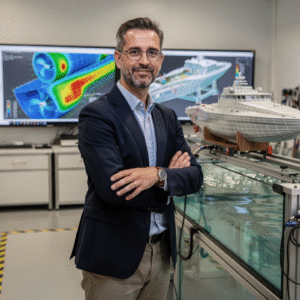
Diploma in Marine Fire Prevention
Why this certificate program?
The Diploma in Marine Fire Prevention
This program provides you with the essential tools and knowledge to protect lives and vessels. Learn to identify, assess, and mitigate fire risks on board, mastering detection and suppression systems, and international regulations. This program prepares you to act efficiently and safely in emergencies, minimizing damage and ensuring operational continuity.
Differential Advantages
- Specific Risk Analysis: Identification of critical points and vulnerabilities in ships.
- Advanced Firefighting Systems: Operation, maintenance, and use of marine firefighting equipment.
- Up-to-Date International Regulations: Compliance with SOLAS, IMO, and other relevant standards.
- Emergency Management and Evacuation: Action and leadership protocols in critical situations.
- Practical Drills and Real-Life Cases: Training in simulated scenarios for an effective response.
- Modality: Online
- Level: Diplomado
- Hours: 800 H
- Start date: 30-09-2026
Availability: 1 in stock
Who is it aimed at?
- Dock and engine room officers seeking specialization in onboard fire detection, control, and suppression, in compliance with the latest IMO and SOLAS regulations.
- Security and emergency response personnel in ports and maritime terminals who need to deepen their knowledge of intervention strategies and risk management.
- Maritime safety inspectors and auditors requiring advanced knowledge of fire protection systems and inspection procedures.
- Naval engineers and naval architects interested in designing and implementing efficient and compliant fire prevention and suppression systems.
- Marine insurance professionals seeking to in-depth understanding of fire risks and assess the effectiveness of fire prevention and suppression measures.
Prevention.
Study Flexibility:
Ā Designed for working professionals: online format, 24/7 access to content, and personalized tutoring to answer questions and progress at your own pace.
Objectives and competencies

Implement fire safety measures:
“Install and maintain detection and extinguishing systems, conduct drills, and train the crew in emergency procedures.”

Manage and control fire emergencies:
“Prioritize the safety of human life, execute emergency procedures, and minimize damage to property and the environment.”

Inspect and maintain fire prevention equipment:
“Following SOLAS regulations, with special attention to detection systems, extinguishing systems (fixed and portable) and self-contained breathing apparatus.”

Assess and mitigate fire risks on board:
Implement inspections and preventive maintenance, using checklists and standardized procedures, to identify and correct potential fire hazards in equipment and facilities.

Comply with national and international regulations on fire prevention:
“Implement emergency and evacuation plans, ensuring staff training and the operability of detection and extinguishing systems.”

Lead and coordinate marine fire response teams:
“Organize realistic drills, evaluate performance, and adjust emergency plans based on experience.”
Curriculum - Modules
- Comprehensive Maritime Incident Management: protocols, roles, and chain of command for coordinated response
- Operational Planning and Execution: briefing, routes, weather windows, and go/no-go criteria
- Rapid Risk Assessment: criticality matrix, scene control, and decision-making under pressure
- Operational Communication: VHF/GMDSS, standardized reports, and inter-agency liaison
- Tactical Mobility and Safe Boarding: RHIB maneuvers, approach, mooring, and recovery
- Equipment and Technologies: PPE, signaling, satellite tracking, and field data logging
- Immediate Care of the Affected: primary assessment, hypothermia, trauma, and stabilization for evacuation
- Adverse Environmental Conditions: swell, Visibility, flows, and operational mitigation
Simulation and training: critical scenarios, use of VR/AR, and exercises with performance metrics
Documentation and continuous improvement: lessons learned, indicators (MTTA/MTTR), and SOP updates
- Fire Theory: Fire Triangle and Tetrahedron, Fire Classes
- Fire Detection Systems: Smoke, Heat, and Flame Detectors
- Portable Firefighting Equipment: Extinguishers, Hoses, and Nozzles
- Fixed Firefighting Systems: Sprinklers, Foam, CO2, Water Mist
- Respiratory Protection Equipment: Self-Contained Breathing Apparatus, Masks, and Filters
- Organization of Firefighting on Board: Roles and Responsibilities
- Emergency Plans: Risk Assessment, Evacuation and Rescue Procedures
- Damage Control: Watertightness, Pumping, and Ventilation
- First Aid: Treatment of Burns, Smoke Inhalation, and Other Injuries
- National and International Legislation and Regulations on fire safety on ships
‘
- Introduction to Life Safety: Key Concepts, Responsibilities, and Legal Framework.
- Fire Theory: Fire Triangle and Tetrahedron, Fire Classes, and Extinguishing Agents.
- Personal Protective Equipment (PPE): Types, Proper Use, Maintenance, and Inspection.
- Portable Firefighting Equipment: Extinguishers, Hoses, Nozzles, and Other Equipment.
- Fixed Firefighting Systems: Water Mist, CO2, Foam, and Inert Systems.
- Onboard Emergency Plans: Evacuation, Damage Control, Communication, and Coordination.
- Firefighting Techniques: Strategies and Tactics for Different Types of Fires.
- Search and Rescue in Smoke and Fire Environments: Techniques and Procedures.
- First aid in emergency situations: Burns, smoke inhalation, and other injuries.
- Fire drills and response evaluation: Planning, execution, and results analysis.
‘
- Fire Theory: Fire Triangle and Tetrahedron, Fire Classes
- Extinguishing Agents: Water, Foam, Dry Chemical Powder, CO2, Clean Agents
- Portable Extinguishing Equipment: Fire Extinguishers, Hoses, Nozzles
- Fixed Extinguishing Systems: Automatic Sprinklers, Deluge Systems, Gas Systems
- Personal Protective Equipment (PPE): Firefighter Suits, Self-Contained Breathing Apparatus (SCBA)
- Onboard Emergency Plans: Organization, Roles and Responsibilities, Evacuation Routes
- Fire Detection: Smoke, Heat, and Flame Detectors, Alarm Systems
- Smoke Control: Ventilation, Smoke Barriers, Depressurization
- Firefighting operations: tactics and techniques, coordination, safety
- First aid in case of fire: burns, smoke inhalation, injuries
‘
- Legal framework for life safety on board: SOLAS, STCW, and other conventions
- Fire theory: fire triangle and tetrahedron, fire classes
- Extinguishing agents: water, foam, dry chemical powder, CO2, inert gases
- Personal protective equipment (PPE) for firefighting: SCBA, suits
- Fire detection systems: smoke, heat, and flame detectors
- Fixed fire suppression systems: sprinklers, deluge, CO2, foam
- Portable firefighting equipment: extinguishers, hoses, nozzles
- Organization of firefighting on board: roles and responsibilities
- Emergency procedures: Alarms, evacuation, communication
Maintenance and inspection of fire detection and extinguishing equipment
‘
- System Architecture and Components: Structural design, materials, and subsystems (mechanical, electrical, electronic, and fluid) with selection and assembly criteria for marine environments
- Fundamentals and Principles of Operation: Physical and engineering foundations (thermodynamics, fluid mechanics, electricity, control, and materials) that explain performance and operating limits
- Safety and Environmental (SHE): Risk analysis, PPE, LOTO, hazardous atmospheres, spill and waste management, and emergency response plans
- Applicable Regulations and Standards: IMO/ISO/IEC requirements and local regulations;
- Conformance criteria, certification, and best practices for operation and maintenance
- Inspection, testing, and diagnostics: Visual/dimensional inspection, functional testing, data analysis, and predictive techniques (vibration, thermography, fluid analysis) to identify root causes
- Preventive and predictive maintenance: Hourly/cycle/seasonal plans, lubrication, adjustments, calibrations, consumable replacement, post-service verification, and operational reliability
- Instrumentation, tools, and metrology: Measuring and testing equipment, diagnostic software, calibration and traceability; selection criteria, safe use, and storage
- Onboard integration and interfaces: Mechanical, electrical, fluid, and data compatibility; Sealing and watertightness, EMC/EMI, corrosion protection, and interoperability testing.
Quality, acceptance testing, and commissioning: process and materials control, FAT/SAT, bench and sea trials, go/no-go criteria, and evidence documentation.
Technical documentation and integrated practice: logs, checklists, reports, and a complete case study (safety ā diagnosis ā intervention ā verification ā report) applicable to any system.
- Introduction to Structural Safety in Ships: Regulations and Responsibilities
- Shipbuilding Materials: Steel, Aluminum, and Composites. Properties and Degradation
Key Structural Elements: Hull, Deck, Bulkheads, and Bracing
Analysis of Static and Dynamic Loads: Weight, Buoyancy, Wave, Wind, and Operational Loads
Corrosion: Types, Mechanisms, Inspection, and Protection Methods
Basic Principles of Chemical Hazards: Identification, Toxicity, and Routes of Exposure
Safety Data Sheets (SDS): Interpretation and Proper Use
Safe Storage of Chemicals on Board: Compatibility and Segregation
Personal Protective Equipment (PPE) for Chemical Hazards: Selection, Use, and Maintenance
- Fire Theory: Fire Triangle and Tetrahedron. Fire Classes
- Extinguishing Agents: Types, Properties, and Applications
- Fire Detection and Alarm Systems: Types and Operation
- Onboard Firefighting Equipment: Hoses, Nozzles, Self-Contained Breathing Apparatus (SCBA)
- Emergency and Evacuation Plans in Case of Fire or Chemical Leak
- Inspection and Maintenance of Safety Equipment: Procedures and Records
‘
Career opportunities
- Marine Fire Prevention Technician on Board Ships: Responsible for the implementation and supervision of fire prevention and suppression measures.
- Fire Safety Inspector in Port Facilities: Assessment and control of fire risks in terminals and port areas.
- Fire Prevention Consultant for Shipping Companies: Advising on the development of emergency plans and fire safety protocols.
- Member of Emergency Response Teams in Ports and Ships: Active participation in fire suppression and rescue in emergency situations.
- Marine Fire Prevention and Suppression Trainer: Instructor in training courses for maritime and port personnel.
- Marine Firefighting Equipment Maintenance Technician: Inspection, repair, and maintenance of detection systems and equipment. and firefighting.
Fire safety auditor in the maritime sector: Evaluation of compliance with fire safety regulations and standards.
Marine fire investigation expert: Determination of the causes and origin of fires on ships and in port facilities.
“`
Admission requirements

Academic/professional profile:
Degree/Bachelor's degree in Nautical Science/Maritime Transport, Naval/Marine Engineering, or a related field; or proven professional experience in bridge/operations.

Language proficiency:
Recommended functional maritime English (SMCP) for simulations and technical materials.

Documentation:
Updated resume, copy of degree or seaman's book, ID card/passport, letter of motivation.

Technical requirements (for online):
Equipment with camera/microphone, stable connection, ā„ 24ā monitor recommended for ECDIS/Radar-ARPA.
Admission process and dates

1. Online
application
(form + documents).

2. Academic review and interview
(profile/objectives/schedule compatibility).

3. Admission decision
(+ scholarship proposal if applicable).

4. Reservation of place
(deposit) and registration.

5. Induction
(access to campus, calendars, simulator guides).
Scholarships and grants
- Master the techniques: Learn the essential strategies for fire prevention and suppression on board.
- Comply with regulations: Gain in-depth knowledge of the applicable SOLAS and IMO regulations.
- Protect lives and assets: Develop skills for risk assessment and the implementation of effective preventive measures.
- Realistic simulations: Participate in practical exercises and simulations that will prepare you to act in emergency situations.
- Recognized certification: Receive a professional certification that validates your competence in fire prevention mariners.
Testimonials
This diploma program exceeded my expectations. The combination of theory and practice provided me with the necessary tools to identify and mitigate fire risks on board. I now feel much more confident and prepared to respond to an emergency, protecting both the crew and the vessel. The expert instruction and focus on realistic scenarios made this program an invaluable experience.
The Diploma in Security, Emergencies, and First Aid exceeded my expectations. I acquired essential practical and theoretical knowledge to respond effectively to various emergency situations. The training gave me the confidence and skills necessary to act promptly and safely, protecting my own safety and that of others. I highly recommend this program to anyone seeking comprehensive, high-quality training in this area.
“This diploma program exceeded my expectations. The combination of theory and practice, along with the instructors’ experience, provided me with the necessary tools and knowledge to handle emergency situations safely and efficiently. Now I feel much more prepared and confident in my ability to prevent and control fires on board.”
This diploma program provided me with the tools and knowledge necessary to identify and mitigate fire risks on board. Thanks to the practical and theoretical training, I was able to implement a new safety protocol on my vessel that reduced response time to fire drills by 30%, significantly improving our ability to react to a real emergency.
Frequently asked questions
To train professionals to prevent, control and extinguish fires on ships, minimizing human and material losses.
Yes. The itinerary includes ECDIS/Radar-ARPA/BRM with harbor, ocean, fog, storm, and SAR scenarios.
Online with live sessions; hybrid option for simulator/practical placements through agreements.
Recommended functional SMCP. We offer support materials for standard phraseology.
Yes, with a relevant degree or experience in maritime/port operations. The admissions interview will confirm suitability.
Optional (3ā6 months) through Companies & Collaborations and the Alumni Network.
Simulator practice (rubrics), defeat plans, SOPs, checklists, micro-tests and applied TFM.
A degree from Navalis Magna University + operational portfolio (tracks, SOPs, reports and KPIs) useful for audits and employment.
- Fire Theory: Fire Triangle and Tetrahedron, Fire Classes
- Extinguishing Agents: Water, foam, dry chemical powder, CO2, clean agents
- Portable Extinguishing Equipment: Extinguishers, hoses, nozzles
- Fixed Extinguishing Equipment: Automatic sprinklers, total flooding systems
- Personal Protective Equipment (PPE): Firefighter suits, self-contained breathing apparatus (SCBA)
- Specific Hazards: Electrical fires, flammable liquid fires, gas fires
- Structural Hazards: Collapse, smoke, toxic gases, explosive atmospheres
- Response Procedures: Assessment, attack, rescue, ventilation
- Emergency and evacuation plans: design, drills, coordination
- Equipment maintenance and inspection: regulations and procedures
‘
Request information
Complete the Application Form.
Attach your CV/degree certificate (if you have it to hand).
Indicate your preferred cohort (January/May/September) and whether you would like the hybrid option with simulator sessions.
An academic advisor will contact you within 24ā48 hours to guide you through the admission process, scholarships, and compatibility with your professional schedule.
Faculty
Eng. TomƔs Riera
Full Professor
Eng. TomƔs Riera
Full Professor
Eng. SofĆa Marquina
Full Professor
Eng. SofĆa Marquina
Full Professor
Eng. Javier BaƱuls
Full Professor
Eng. Javier BaƱuls
Full Professor
Dr. Nuria Llobregat
Full Professor
Dr. Nuria Llobregat
Full Professor
Dr. Pau Ferrer
Full Professor
Dr. Pau Ferrer
Full Professor
Cap. Javier Abaroa (MCA)
Full Professor
Cap. Javier Abaroa (MCA)
Full Professor