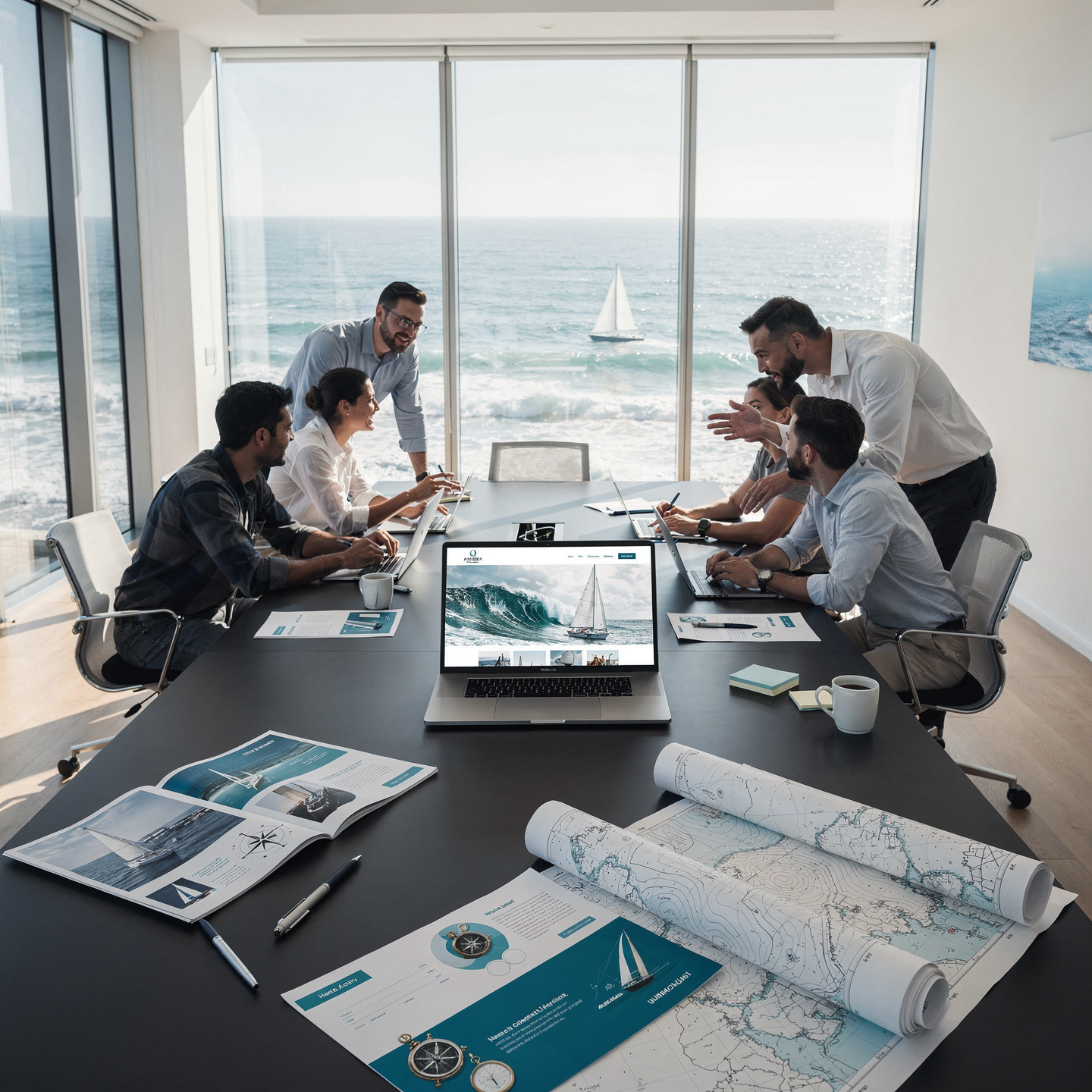
Nautical Content Marketing Course

Why this course?

The Nautical Content Marketing Course

Equips you with the essential skills to excel in the competitive maritime digital world. Learn to create engaging and relevant content that connects with your audience, boosts engagement, and generates tangible results for your business. Master SEO, social media, and email marketing strategies specifically tailored to the nautical sector.

Differentiating Advantages

  • Practical Approach: Create real campaigns during the course, applying the latest trends and tools.
  • Nautical Specialization: Content and examples designed for the maritime sector, including yachts, fishing, tourism, and more.
  • Optimized SEO: Learn how to position your content in the top search results to attract qualified traffic.
  • Effective Social Media: Discover how to create viral content and build a loyal online community.
  • Data Analysis: Measure the performance of your campaigns and optimize your strategies to obtain the maximum return on investment.
Marketing

Nautical Content Marketing Course

Availability: 1 in stock

Who is it aimed at?

  • Marketing professionals looking to specialize in the nautical niche and connect with a passionate audience.
  • Nautical companies wanting to increase their online visibility and attract new clients through valuable content.
  • Content creators (bloggers, YouTubers, Instagrammers) who want to monetize their passion for the sea and build a strong community.
  • Specialized writers and journalists looking to master digital marketing strategies to boost their reach in the nautical sector.
  • Marketing and communication students with an interest in the nautical industry who aspire to a professional future in a sector in boom.

Total Flexibility
 Progress at your own pace: on-demand content, practical exercises, lifetime access and constant updates to keep you up to date.

Marketing

Objectives and competencies

Navigating with words: Attracting and retaining the nautical audience through relevant and valuable content.

“Create useful content (guides, tutorials, tips) that solves real problems for internet users.”

Anchoring the brand: Positioning itself as a benchmark in the nautical sector through a solid and differentiated content strategy.

“Create valuable content (tutorials, analyses, stories) that solves problems and builds community, demonstrating expertise and passion for sailing.”

Set sail towards conversion: Boost lead generation and sales growth through nautical content marketing.

Create SEO-optimized and persuasive content (blogs, guides, videos) that attracts qualified traffic and converts visitors into leads and customers.

Mapping interest: Identifying the needs and desires of the nautical audience to create content that generates engagement and fosters community.

Analyze forums, social networks, and surveys to understand trends, common questions, and content preferences (formats, topics, technical level).

Mastering the winds of virality: Creating original and impactful nautical content that spreads across social networks and online media.

“To generate disruptive ideas, innovative formats, and emotional narratives that connect with the digital nautical audience and create the ‘WOW effect’.”

Calibrate communication: Adapt the message to the different profiles of the nautical audience to maximize the impact of the campaigns.

“Segment by roles (owners, crew members, athletes) and adapt the tone (formal, technical, inspirational) to achieve greater resonance.”

Curriculum - Modules

  1. Comprehensive Maritime Incident Management: protocols, roles, and chain of command for coordinated response
  2. Operational Planning and Execution: briefing, routes, weather windows, and go/no-go criteria
  3. Rapid Risk Assessment: criticality matrix, scene control, and decision-making under pressure
  4. Operational Communication: VHF/GMDSS, standardized reports, and inter-agency liaison
  5. Tactical Mobility and Safe Boarding: RHIB maneuvers, approach, mooring, and recovery
  6. Equipment and Technologies: PPE, signaling, satellite tracking, and field data logging
  7. Immediate Care of the Affected: primary assessment, hypothermia, trauma, and stabilization for evacuation
  8. Adverse Environmental Conditions: swell, Visibility, flows, and operational mitigation

    Simulation and training: critical scenarios, use of VR/AR, and exercises with performance metrics

    Documentation and continuous improvement: lessons learned, indicators (MTTA/MTTR), and SOP updates

  1. Introduction to Content Marketing in the Nautical Sector: Opportunities and Challenges
  2. Nautical Keyword Research: Identifying Relevant and Long-Tail Keywords
  3. On-Page SEO for Nautical Content: Optimizing Titles, Descriptions, URLs, and Content Structure
  4. Creating Evergreen Content: Guides, Tutorials, FAQs, and In-Depth Articles on Nautical Topics
  5. Seasonal Content: Editorial Calendar, Nautical Events, Regattas, and Festivals
  6. Content Formats: Blog Posts, Videos, Podcasts, Infographics, and Ebooks
  7. Optimizing Images and Videos: Compression, Alt Tags, Descriptions, and Thumbnails.
  8. Link building: Strategies for obtaining quality links from other nautical websites.
  9. Web analytics and results tracking: Google Analytics, Search Console, and other tools.
  10. Strategies for adapting to Google algorithm changes and SEO trends.

  1. Introduction to Nautical SEO: Sector Peculiarities and Opportunities.
  2. Nautical Keyword Research: Tools and Strategies for Finding the Best Keywords.
  3. On-Page SEO for Nautical Content: Optimizing Titles, Descriptions, and Website Structure.
  4. Creating Engaging and Useful Content: Guides, Tutorials, Reviews, and Nautical News.
  5. Off-Page SEO and Nautical Link Building: How to Get Quality Links and Improve Site Authority.
  6. Local SEO for Nautical Businesses: Google My Business and Specialized Directories.
  7. Web Analytics for the Nautical Sector: Key Metrics and Tracking Tools (Google Analytics).
  8. Content Strategies for Nautical Social Media: Instagram, Facebook, and YouTube.
  9. Email Marketing for the Nautical Industry: newsletters, promotions, and audience segmentation.
  10. Continuous Monitoring and Optimization: adapting to Google algorithm changes and market trends.

  1. Introduction to Nautical SEO: Sector characteristics, keywords, and market niches.
  2. Keyword Research: Tools and techniques for identifying relevant keywords in the nautical field.
  3. On-Page SEO for Nautical Websites: Optimizing content, tags, meta descriptions, and site structure.
  4. Off-Page SEO and Link Building: Strategies for generating quality backlinks and improving domain authority.
  5. Local SEO for Nautical Businesses: Google My Business, reviews, and local directories.
  6. Web Analytics with Google Analytics: Setup, tracking key metrics, and data analysis for decision-making.
  7. Google Search Console: Monitoring performance on Google, crawling, and indexing and problem-solving.
  8. Competitive Analysis: Identifying successful strategies and opportunities for improvement.
  9. SEO Reporting and Results Communication: Creating clear and concise reports to present to clients or stakeholders.
  10. Trends and Future of Nautical SEO: Adapting to algorithmic changes and new technologies.

  1. SEO Fundamentals: How nautical search engines work.
  2. Nautical Keyword Research: Tools and strategies for finding relevant terms.
  3. On-Page SEO for the Nautical Sector: Optimizing titles, descriptions, and content.
  4. Creating Quality Content: Articles, guides, and videos to attract the nautical audience.
  5. Off-Page SEO and Link Building: Getting links from relevant nautical websites.
  6. Local SEO for Nautical Businesses: Optimizing for local searches in ports and marinas.
  7. Content Strategies for Nautical Social Media: Attracting and retaining the online community.
  8. Analytics
  9. Web and results tracking: Measuring the impact of SEO and content strategies.
  10. Current trends in nautical SEO: Adapting to changes in algorithms and technologies.
  11. Success stories and practical examples: Inspiration and learning from effective strategies.

  1. System Architecture and Components: Structural design, materials, and subsystems (mechanical, electrical, electronic, and fluid) with selection and assembly criteria for marine environments
  2. Fundamentals and Principles of Operation: Physical and engineering foundations (thermodynamics, fluid mechanics, electricity, control, and materials) that explain performance and operating limits
  3. Safety and Environmental (SHE): Risk analysis, PPE, LOTO, hazardous atmospheres, spill and waste management, and emergency response plans
  4. Applicable Regulations and Standards: IMO/ISO/IEC requirements and local regulations;
  5. Conformance criteria, certification, and best practices for operation and maintenance
  6. Inspection, testing, and diagnostics: Visual/dimensional inspection, functional testing, data analysis, and predictive techniques (vibration, thermography, fluid analysis) to identify root causes
  7. Preventive and predictive maintenance: Hourly/cycle/seasonal plans, lubrication, adjustments, calibrations, consumable replacement, post-service verification, and operational reliability
  8. Instrumentation, tools, and metrology: Measuring and testing equipment, diagnostic software, calibration and traceability; selection criteria, safe use, and storage
  9. Onboard integration and interfaces: Mechanical, electrical, fluid, and data compatibility; Sealing and watertightness, EMC/EMI, corrosion protection, and interoperability testing.

    Quality, acceptance testing, and commissioning: process and materials control, FAT/SAT, bench and sea trials, go/no-go criteria, and evidence documentation.

    Technical documentation and integrated practice: logs, checklists, reports, and a complete case study (safety → diagnosis → intervention → verification → report) applicable to any system.

Plan de estudio - Módulos

  1. Comprehensive Maritime Incident Management: protocols, roles, and chain of command for coordinated response
  2. Operational Planning and Execution: briefing, routes, weather windows, and go/no-go criteria
  3. Rapid Risk Assessment: criticality matrix, scene control, and decision-making under pressure
  4. Operational Communication: VHF/GMDSS, standardized reports, and inter-agency liaison
  5. Tactical Mobility and Safe Boarding: RHIB maneuvers, approach, mooring, and recovery
  6. Equipment and Technologies: PPE, signaling, satellite tracking, and field data logging
  7. Immediate Care of the Affected: primary assessment, hypothermia, trauma, and stabilization for evacuation
  8. Adverse Environmental Conditions: swell, Visibility, flows, and operational mitigation

    Simulation and training: critical scenarios, use of VR/AR, and exercises with performance metrics

    Documentation and continuous improvement: lessons learned, indicators (MTTA/MTTR), and SOP updates

  1. Introduction to Content Marketing in the Nautical Sector: Opportunities and Challenges
  2. Nautical Keyword Research: Identifying Relevant and Long-Tail Keywords
  3. On-Page SEO for Nautical Content: Optimizing Titles, Descriptions, URLs, and Content Structure
  4. Creating Evergreen Content: Guides, Tutorials, FAQs, and In-Depth Articles on Nautical Topics
  5. Seasonal Content: Editorial Calendar, Nautical Events, Regattas, and Festivals
  6. Content Formats: Blog Posts, Videos, Podcasts, Infographics, and Ebooks
  7. Optimizing Images and Videos: Compression, Alt Tags, Descriptions, and Thumbnails.
  8. Link building: Strategies for obtaining quality links from other nautical websites.
  9. Web analytics and results tracking: Google Analytics, Search Console, and other tools.
  10. Strategies for adapting to Google algorithm changes and SEO trends.

  1. Introduction to Nautical SEO: Sector Peculiarities and Opportunities.
  2. Nautical Keyword Research: Tools and Strategies for Finding the Best Keywords.
  3. On-Page SEO for Nautical Content: Optimizing Titles, Descriptions, and Website Structure.
  4. Creating Engaging and Useful Content: Guides, Tutorials, Reviews, and Nautical News.
  5. Off-Page SEO and Nautical Link Building: How to Get Quality Links and Improve Site Authority.
  6. Local SEO for Nautical Businesses: Google My Business and Specialized Directories.
  7. Web Analytics for the Nautical Sector: Key Metrics and Tracking Tools (Google Analytics).
  8. Content Strategies for Nautical Social Media: Instagram, Facebook, and YouTube.
  9. Email Marketing for the Nautical Industry: newsletters, promotions, and audience segmentation.
  10. Continuous Monitoring and Optimization: adapting to Google algorithm changes and market trends.

  1. Introduction to Nautical SEO: Sector characteristics, keywords, and market niches.
  2. Keyword Research: Tools and techniques for identifying relevant keywords in the nautical field.
  3. On-Page SEO for Nautical Websites: Optimizing content, tags, meta descriptions, and site structure.
  4. Off-Page SEO and Link Building: Strategies for generating quality backlinks and improving domain authority.
  5. Local SEO for Nautical Businesses: Google My Business, reviews, and local directories.
  6. Web Analytics with Google Analytics: Setup, tracking key metrics, and data analysis for decision-making.
  7. Google Search Console: Monitoring performance on Google, crawling, and indexing and problem-solving.
  8. Competitive Analysis: Identifying successful strategies and opportunities for improvement.
  9. SEO Reporting and Results Communication: Creating clear and concise reports to present to clients or stakeholders.
  10. Trends and Future of Nautical SEO: Adapting to algorithmic changes and new technologies.

  1. SEO Fundamentals: How nautical search engines work.
  2. Nautical Keyword Research: Tools and strategies for finding relevant terms.
  3. On-Page SEO for the Nautical Sector: Optimizing titles, descriptions, and content.
  4. Creating Quality Content: Articles, guides, and videos to attract the nautical audience.
  5. Off-Page SEO and Link Building: Getting links from relevant nautical websites.
  6. Local SEO for Nautical Businesses: Optimizing for local searches in ports and marinas.
  7. Content Strategies for Nautical Social Media: Attracting and retaining the online community.
  8. Analytics
  9. Web and results tracking: Measuring the impact of SEO and content strategies.
  10. Current trends in nautical SEO: Adapting to changes in algorithms and technologies.
  11. Success stories and practical examples: Inspiration and learning from effective strategies.

  1. System Architecture and Components: Structural design, materials, and subsystems (mechanical, electrical, electronic, and fluid) with selection and assembly criteria for marine environments
  2. Fundamentals and Principles of Operation: Physical and engineering foundations (thermodynamics, fluid mechanics, electricity, control, and materials) that explain performance and operating limits
  3. Safety and Environmental (SHE): Risk analysis, PPE, LOTO, hazardous atmospheres, spill and waste management, and emergency response plans
  4. Applicable Regulations and Standards: IMO/ISO/IEC requirements and local regulations;
  5. Conformance criteria, certification, and best practices for operation and maintenance
  6. Inspection, testing, and diagnostics: Visual/dimensional inspection, functional testing, data analysis, and predictive techniques (vibration, thermography, fluid analysis) to identify root causes
  7. Preventive and predictive maintenance: Hourly/cycle/seasonal plans, lubrication, adjustments, calibrations, consumable replacement, post-service verification, and operational reliability
  8. Instrumentation, tools, and metrology: Measuring and testing equipment, diagnostic software, calibration and traceability; selection criteria, safe use, and storage
  9. Onboard integration and interfaces: Mechanical, electrical, fluid, and data compatibility; Sealing and watertightness, EMC/EMI, corrosion protection, and interoperability testing.

    Quality, acceptance testing, and commissioning: process and materials control, FAT/SAT, bench and sea trials, go/no-go criteria, and evidence documentation.

    Technical documentation and integrated practice: logs, checklists, reports, and a complete case study (safety → diagnosis → intervention → verification → report) applicable to any system.

  1. Introduction to content marketing in the nautical industry: overview and trends.
  2. Defining the nautical target audience: segmentation, customer profiles, and needs analysis.
  3. Nautical keyword research: tools, search volumes, and competitor analysis.
  4. Creating an editorial calendar: content planning, formats, and distribution channels.
  5. SEO optimization for nautical content: on-page, off-page, and ranking factors.
  6. Social media content marketing strategies: platforms, engagement, and advertising.
  7. Web and social media analytics: KPIs, key metrics, and reporting.
  8. Nautical email marketing: segmentation, Automation and creation of effective newsletters.

    Measuring the ROI (Return on Investment) of nautical content marketing.

    Adapting content to different formats: video, podcast, infographics, and articles.

  1. Introduction to SEO: Fundamentals and Key Concepts
  2. Nautical Keyword Research: Tools and strategies for finding relevant keywords.
  3. On-Page SEO: Optimization of internal elements (titles, meta descriptions, headings) focused on the nautical industry.
  4. Off-Page SEO: Link building and digital public relations strategies in the nautical sector.
  5. SEO Copywriting for Nautical Content: Creating optimized and persuasive content to attract and convert.
  6. Content Structure and Hierarchy: Organizing information to facilitate reading and crawling.
  7. Image and Video Optimization: Formats, sizes, and attributes to improve performance.
  8. Local SEO for Businesses
  9. Nautical: Strategies to stand out in geolocated searches.

    Web Analytics and Monitoring: Interpreting data and metrics to improve SEO performance.

    Adapting to Google algorithm updates and nautical SEO trends.

    *
    *

  1. Introduction to Nautical Marketing: Overview and Opportunities
  2. SEO for the Nautical Sector: Keyword Research, On-Page and Off-Page Optimization
  3. Nautical Content Strategy: Content Types (Blog, Video, Guides), Planning, and Editorial Calendar
  4. Creating High-Quality Content: SEO Writing Techniques, Storytelling, and Engagement
  5. Mobile Optimization: Responsive Design and User Experience (UX)
  6. Social Media for the Nautical Industry: Key Platforms, Community Management, and Advertising
  7. Email Marketing: Audience Segmentation, Newsletters, and Automation
  8. Web Analytics and Key Metrics: Google Analytics, Search Console, and Tracking Tools
  9. Online Advertising: Google Ads, Social Ads, and Remarketing Strategies.
  10. Building a Nautical Audience: Identification, Segmentation, and Acquisition and Retention Strategies.

  1. Introduction to Nautical Branding: History, Evolution, and Current Trends
  2. The DNA of Your Nautical Brand: Defining Values, Mission, and Vision
  3. Target Audience Analysis: Identifying Niches and Segmentation
  4. Creating Buyer Personas: Understanding Your Customers’ Needs and Motivations
  5. Developing Your Brand Voice and Tone: Consistency in Communication
  6. Content Strategies for Nautical Platforms: Blogs, Social Media, Videos
  7. Nautical SEO: Optimizing Content for Search Engines
  8. Nautical Influencer Marketing: Strategic Collaborations
  9. Web Metrics and Analytics: Measuring Return on Investment (ROI)
  10. Building an Online Community: Fostering Engagement and Loyalty

Career opportunities

  • Nautical Content Manager: Creation and management of content for companies in the sector, including blogs, social media, and websites.
  • Nautical Digital Marketing Strategist: Development of online marketing strategies focused on the nautical sector, campaign optimization, and results analysis.
  • Nautical Writer: Creation of articles, guides, and other content for magazines, blogs, and companies in the nautical sector.
  • Nautical Community Manager: Management of the online presence of brands and companies in the nautical sector on social media, interaction with the community, and creation of engaging content.
  • Nautical Content Marketing Consultant: Advising companies in the nautical sector on the creation and implementation of effective content marketing strategies.
  • Nautical Content Marketing Consultant: Advising companies in the nautical sector on the creation and implementation of effective content marketing strategies.
  • Nautical SEO Specialist: Optimizing content and websites to improve search engine ranking and attract qualified traffic to the nautical sector.
  • Nautical Copywriter: Creating persuasive copy for advertising, direct marketing, and other promotional materials for the nautical sector.
  • Nautical Audiovisual Content Creator: Producing videos, podcasts, and other audiovisual formats for online and offline platforms in the nautical sector.

“`

Admission requirements

Academic/professional profile:

Degree/Bachelor's degree in Nautical Science/Maritime Transport, Naval/Marine Engineering, or a related field; or proven professional experience in bridge/operations.

Language proficiency:

Recommended functional maritime English (SMCP) for simulations and technical materials.

5. Induction

Updated resume, copy of degree or seaman's book, ID card/passport, letter of motivation.

Technical requirements (for online):

Equipment with camera/microphone, stable connection, ≥ 24” monitor recommended for ECDIS/Radar-ARPA.

Admission process and dates

1. Online
application

(form + documents).

2. Academic review and interview

(profile/objectives/schedule compatibility).

3. Admission decision

(+ scholarship proposal if applicable).

4. Reservation of place

(deposit) and registration.

5. Induction

(access to campus, calendars, simulator guides).

Scholarships and grants

  • Nautical Strategy: Learn to design effective marketing campaigns focused on the maritime sector.
  • Content Creation: Master the techniques to generate engaging and relevant content for your nautical audience.
  • Nautical SEO: Optimize your content for search engines and attract qualified traffic to your website.
  • Social Media: Use social platforms to connect with your community and promote your nautical brand.
  • Web Analytics: Measure the performance of your campaigns and optimize your content marketing strategy.
Learn to boost your nautical business with a content marketing strategy that sets you apart from the competition.

Testimonials

Frequently asked questions

Attract, engage and retain an audience interested in sailing to generate leads, increase sales and consolidate the brand image within the sector.

Yes. The itinerary includes ECDIS/Radar-ARPA/BRM with harbor, ocean, fog, storm, and SAR scenarios.

Online with live sessions; hybrid option for simulator/practical placements through agreements.

Boat owners, nautical enthusiasts, fishermen, sailors and anyone interested in water activities or coastal lifestyle.

Recommended functional SMCP. We offer support materials for standard phraseology.

Yes, with a relevant degree or experience in maritime/port operations. The admissions interview will confirm suitability.

Optional (3–6 months) through Companies & Collaborations and the Alumni Network.

Simulator practice (rubrics), defeat plans, SOPs, checklists, micro-tests and applied TFM.

A degree from Navalis Magna University + operational portfolio (tracks, SOPs, reports and KPIs) useful for audits and employment.

  1. Introduction to Nautical Branding: History, Evolution, and Current Trends
  2. The DNA of Your Nautical Brand: Defining Values, Mission, and Vision
  3. Target Audience Analysis: Identifying Niches and Segmentation
  4. Creating Buyer Personas: Understanding Your Customers’ Needs and Motivations
  5. Developing Your Brand Voice and Tone: Consistency in Communication
  6. Content Strategies for Nautical Platforms: Blogs, Social Media, Videos
  7. Nautical SEO: Optimizing Content for Search Engines
  8. Nautical Influencer Marketing: Strategic Collaborations
  9. Web Metrics and Analytics: Measuring Return on Investment (ROI)
  10. Building an Online Community: Fostering Engagement and Loyalty

Request information

  1. Complete the Application Form
  2. Attach your CV/Qualifications (if you have them to hand).
  3. Indicate your preferred cohort (January/May/September) and whether you want the hybrid option with simulator sessions.
An academic advisor will contact you within 24–48 hours to guide you through the admission process, scholarships, and compatibility with your professional schedule. Translated with DeepL.com (free version)
Please enable JavaScript in your browser to complete this form.
Click or drag a file to this area to upload.

Teachers

0
    0
    Tu carrito
    Tu carrito esta vacíoRegresar a la tienda
    Scroll to Top


