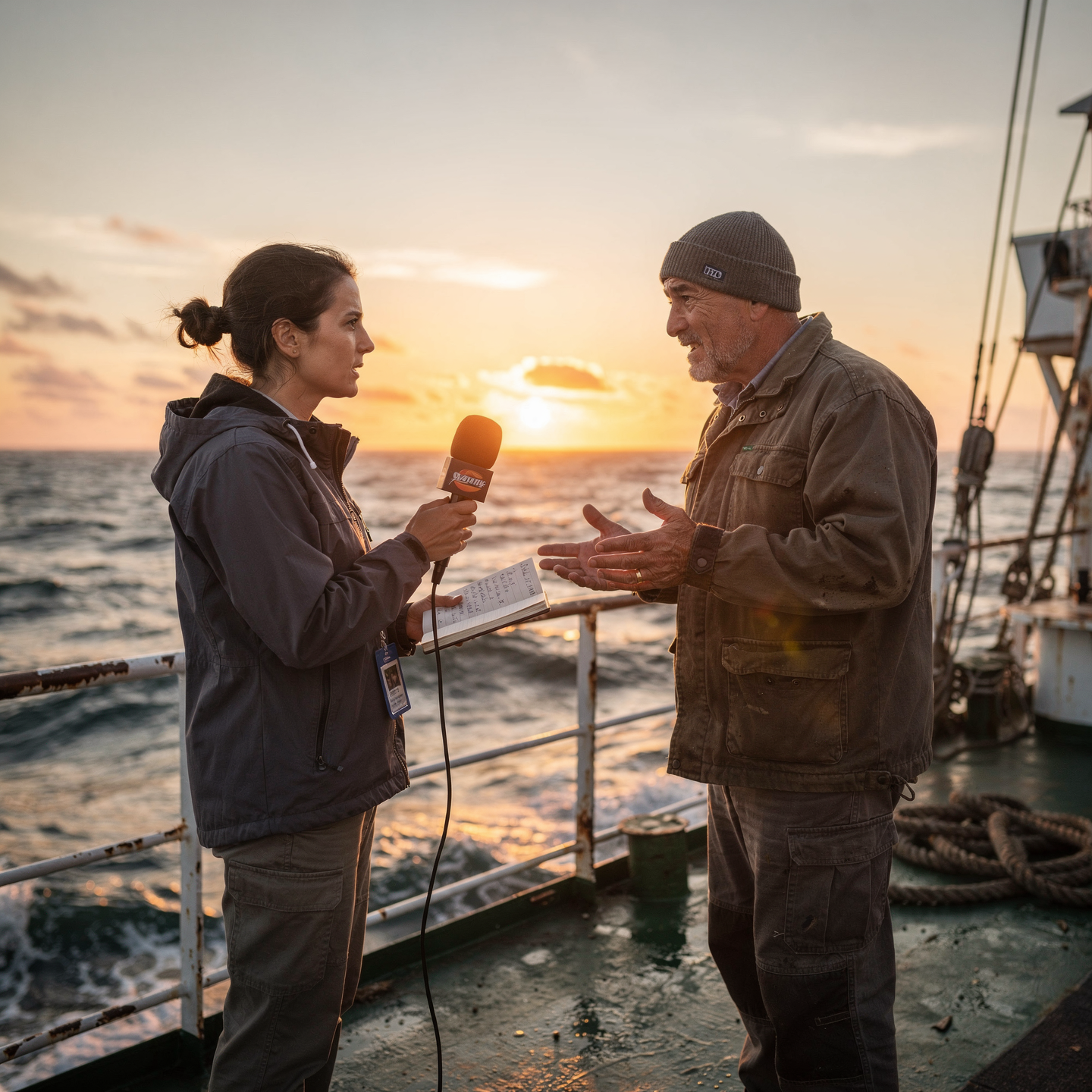
Crew and Expert Interview Course
Why this course?
The Crew and Expert Interviewing Course
This course will provide you with the essential skills to obtain valuable information and build strong relationships in the maritime sector. Learn to conduct effective interviews, interpret verbal and non-verbal language, and manage challenging situations. This course will equip you with the necessary tools to make informed decisions and optimize your team’s performance.
The Crew and Expert Interviewing Course
This course will provide you with the essential skills to obtain valuable information and build strong relationships in the maritime field. Learn to conduct effective interviews, interpret verbal and non-verbal language, and manage challenging situations.
Differentiating Advantages
- Proven Interview Techniques: Master the art of formulating key questions and eliciting revealing answers.
- Effective Communication: Improve your active listening, empathy, and rapport skills.
- Behavioral Analysis: Learn to identify patterns and assess the credibility of information.
- Conflict Resolution: Develop strategies for handling sensitive situations and maintaining a positive work environment.
- Practical Application: Conduct mock interviews and receive personalized feedback from experts.
- Modality: Online
- Level: Cursos
- Hours: 150 H
- Start date: 26-07-2026
Availability: 1 in stock
Who is it aimed at?
- Maritime recruitment managers looking to optimize their processes, identify talent, and improve retention.
- Merchant Navy officers aspiring to leadership positions and wishing to refine their communication and team management skills.
- Shipping companies and recruitment agencies interested in reducing staff turnover and building high-performing teams.
- Psychologists and consultants working in the maritime sector who want to gain a deeper understanding of the dynamics of life on board.
- Students in nautical-related fields seeking a practical and realistic view of working at sea through the experience of others.
Flexibility and Applicability
The course adapts to your pace: on-demand access to interviews, downloadable supplementary material, and discussion forums to answer your questions.
Objectives and competencies

Gather valuable information and perspectives:
“Through interviews, surveys, and analysis of existing data, synthesizing relevant findings and detecting key trends.”

Identify weaknesses and areas for improvement:
Analyze performance data (consumption, speed, maintenance) and incident reports, identifying patterns and root causes to optimize processes and reduce risks.

Promote transparency and collaboration:
Share relevant information (weather, ship status, incidents) with the team and port authorities in a proactive and transparent manner.

Improve communication and mutual understanding:
“Listen actively, rephrase messages, and use clear language adapted to the listener and the situation (emergencies, routine).”

Documenting experiences and lessons learned:
“Prepare clear and concise reports on incidents, best practices and areas for improvement, proposing corrective actions based on the analysis of experience.”

Generate detailed reports and practical recommendations:
“Analyze navigation data, vessel performance and fuel consumption, identifying areas for improvement and route optimization.”
Curriculum - Modules
- Comprehensive Maritime Incident Management: protocols, roles, and chain of command for coordinated response
- Operational Planning and Execution: briefing, routes, weather windows, and go/no-go criteria
- Rapid Risk Assessment: criticality matrix, scene control, and decision-making under pressure
- Operational Communication: VHF/GMDSS, standardized reports, and inter-agency liaison
- Tactical Mobility and Safe Boarding: RHIB maneuvers, approach, mooring, and recovery
- Equipment and Technologies: PPE, signaling, satellite tracking, and field data logging
- Immediate Care of the Affected: primary assessment, hypothermia, trauma, and stabilization for evacuation
- Adverse Environmental Conditions: swell, Visibility, flows, and operational mitigation
Simulation and training: critical scenarios, use of VR/AR, and exercises with performance metrics
Documentation and continuous improvement: lessons learned, indicators (MTTA/MTTR), and SOP updates
- Introduction: The Sea as a Source of Knowledge and Experience
- Sailors’ Tales: Personal Experiences and Lessons Learned
- Seafaring Traditions: Rituals, Songs, and Customs
- Seafaring Trades: Fishing, Shipbuilding, and Maritime Trade
- Marine Disasters: Lessons Learned from History
- The Sea in Art and Literature: Inspiration and Representation
- Marine Science and Exploration: Discoveries and Advances
- Ocean Conservation: Challenges and Solutions
- The Future of the Sea: Innovation and Sustainability
- Testimonies from Coastal Communities: Life, Culture, and adaptation
‘
- Introduction to Seafarers: Roles, Hierarchies, and Dynamics on Board
- Life at Sea: Work, Rest, Food, and Leisure Rhythms
- Communication on Board: Linguistic, Cultural, and Emotional Barriers
- Mental Health and Well-being: Isolation, Stress, Loneliness, and Adaptation
- Maritime Culture: Traditions, Superstitions, Slang, and Seafaring Folklore
- Working Conditions: Contracts, Rights, Wages, and Social Protection
- Safety and Emergencies: Protocols, Drills, Risks, and Prevention
- Gender and Diversity: Challenges and Opportunities for Inclusion
- Technology and Digitalization: Impact on Skills, Tasks, and Relationships
- Legacy and future: Evolution of the profession and challenges of the 21st century.
‘
- Oral History of Navigation: Stories, Songs, and Seafaring Traditions
- Ancestral Fishing Techniques: Traditional Fishing Gear, Tackle, and Bait
- Knowledge of the Sea: Reading Waves, Winds, and Currents
- Maritime Meteorology: Weather Forecasting Based on Observation
- Navigation Without Instruments: Using Stars, the Sun, and Landmarks
- Traditional Shipbuilding: Traditional Boatbuilding Techniques and Local Materials
- Useful Marine Plants and Animals: Identification and Traditional Uses
- First Aid at Sea: Home Remedies and Survival Techniques
- Survival at Sea: Building Rafts, Finding Water and Food
- Preservation of maritime heritage: defense of traditions and the marine environment
‘
- Interpersonal Communication: Active listening, empathy, and rapport.
- Cultural Diversity in Seafarers: Sensitivity and adaptation.
- Conversational Skills: Initiating, maintaining, and closing dialogues.
- Nonverbal Communication: Body language, facial expressions, and tone of voice.
- Conflict Resolution: Mediation, negotiation, and finding solutions.
- Communication in Crisis Situations: Calmness, clarity, and emotional support.
- Assertive Communication: Expressing needs and opinions respectfully.
- Effective Interviews and Meetings: Preparation, conducting, and follow-up.
- Communication with Different Roles: Subordinates, superiors, and authorities.
- Constructive Feedback: Giving and receiving feedback effective feedback.
‘
- System Architecture and Components: Structural design, materials, and subsystems (mechanical, electrical, electronic, and fluid) with selection and assembly criteria for marine environments
- Fundamentals and Principles of Operation: Physical and engineering foundations (thermodynamics, fluid mechanics, electricity, control, and materials) that explain performance and operating limits
- Safety and Environmental (SHE): Risk analysis, PPE, LOTO, hazardous atmospheres, spill and waste management, and emergency response plans
- Applicable Regulations and Standards: IMO/ISO/IEC requirements and local regulations;
- Conformance criteria, certification, and best practices for operation and maintenance
- Inspection, testing, and diagnostics: Visual/dimensional inspection, functional testing, data analysis, and predictive techniques (vibration, thermography, fluid analysis) to identify root causes
- Preventive and predictive maintenance: Hourly/cycle/seasonal plans, lubrication, adjustments, calibrations, consumable replacement, post-service verification, and operational reliability
- Instrumentation, tools, and metrology: Measuring and testing equipment, diagnostic software, calibration and traceability; selection criteria, safe use, and storage
- Onboard integration and interfaces: Mechanical, electrical, fluid, and data compatibility; Sealing and watertightness, EMC/EMI, corrosion protection, and interoperability testing.
Quality, acceptance testing, and commissioning: process and materials control, FAT/SAT, bench and sea trials, go/no-go criteria, and evidence documentation.
Technical documentation and integrated practice: logs, checklists, reports, and a complete case study (safety → diagnosis → intervention → verification → report) applicable to any system.
Plan de estudio - Módulos
- Comprehensive Maritime Incident Management: protocols, roles, and chain of command for coordinated response
- Operational Planning and Execution: briefing, routes, weather windows, and go/no-go criteria
- Rapid Risk Assessment: criticality matrix, scene control, and decision-making under pressure
- Operational Communication: VHF/GMDSS, standardized reports, and inter-agency liaison
- Tactical Mobility and Safe Boarding: RHIB maneuvers, approach, mooring, and recovery
- Equipment and Technologies: PPE, signaling, satellite tracking, and field data logging
- Immediate Care of the Affected: primary assessment, hypothermia, trauma, and stabilization for evacuation
- Adverse Environmental Conditions: swell, Visibility, flows, and operational mitigation
Simulation and training: critical scenarios, use of VR/AR, and exercises with performance metrics
Documentation and continuous improvement: lessons learned, indicators (MTTA/MTTR), and SOP updates
- Introduction: The Sea as a Source of Knowledge and Experience
- Sailors’ Tales: Personal Experiences and Lessons Learned
- Seafaring Traditions: Rituals, Songs, and Customs
- Seafaring Trades: Fishing, Shipbuilding, and Maritime Trade
- Marine Disasters: Lessons Learned from History
- The Sea in Art and Literature: Inspiration and Representation
- Marine Science and Exploration: Discoveries and Advances
- Ocean Conservation: Challenges and Solutions
- The Future of the Sea: Innovation and Sustainability
- Testimonies from Coastal Communities: Life, Culture, and adaptation
‘
- Introduction to Seafarers: Roles, Hierarchies, and Dynamics on Board
- Life at Sea: Work, Rest, Food, and Leisure Rhythms
- Communication on Board: Linguistic, Cultural, and Emotional Barriers
- Mental Health and Well-being: Isolation, Stress, Loneliness, and Adaptation
- Maritime Culture: Traditions, Superstitions, Slang, and Seafaring Folklore
- Working Conditions: Contracts, Rights, Wages, and Social Protection
- Safety and Emergencies: Protocols, Drills, Risks, and Prevention
- Gender and Diversity: Challenges and Opportunities for Inclusion
- Technology and Digitalization: Impact on Skills, Tasks, and Relationships
- Legacy and future: Evolution of the profession and challenges of the 21st century.
‘
- Oral History of Navigation: Stories, Songs, and Seafaring Traditions
- Ancestral Fishing Techniques: Traditional Fishing Gear, Tackle, and Bait
- Knowledge of the Sea: Reading Waves, Winds, and Currents
- Maritime Meteorology: Weather Forecasting Based on Observation
- Navigation Without Instruments: Using Stars, the Sun, and Landmarks
- Traditional Shipbuilding: Traditional Boatbuilding Techniques and Local Materials
- Useful Marine Plants and Animals: Identification and Traditional Uses
- First Aid at Sea: Home Remedies and Survival Techniques
- Survival at Sea: Building Rafts, Finding Water and Food
- Preservation of maritime heritage: defense of traditions and the marine environment
‘
- Interpersonal Communication: Active listening, empathy, and rapport.
- Cultural Diversity in Seafarers: Sensitivity and adaptation.
- Conversational Skills: Initiating, maintaining, and closing dialogues.
- Nonverbal Communication: Body language, facial expressions, and tone of voice.
- Conflict Resolution: Mediation, negotiation, and finding solutions.
- Communication in Crisis Situations: Calmness, clarity, and emotional support.
- Assertive Communication: Expressing needs and opinions respectfully.
- Effective Interviews and Meetings: Preparation, conducting, and follow-up.
- Communication with Different Roles: Subordinates, superiors, and authorities.
- Constructive Feedback: Giving and receiving feedback effective feedback.
‘
- System Architecture and Components: Structural design, materials, and subsystems (mechanical, electrical, electronic, and fluid) with selection and assembly criteria for marine environments
- Fundamentals and Principles of Operation: Physical and engineering foundations (thermodynamics, fluid mechanics, electricity, control, and materials) that explain performance and operating limits
- Safety and Environmental (SHE): Risk analysis, PPE, LOTO, hazardous atmospheres, spill and waste management, and emergency response plans
- Applicable Regulations and Standards: IMO/ISO/IEC requirements and local regulations;
- Conformance criteria, certification, and best practices for operation and maintenance
- Inspection, testing, and diagnostics: Visual/dimensional inspection, functional testing, data analysis, and predictive techniques (vibration, thermography, fluid analysis) to identify root causes
- Preventive and predictive maintenance: Hourly/cycle/seasonal plans, lubrication, adjustments, calibrations, consumable replacement, post-service verification, and operational reliability
- Instrumentation, tools, and metrology: Measuring and testing equipment, diagnostic software, calibration and traceability; selection criteria, safe use, and storage
- Onboard integration and interfaces: Mechanical, electrical, fluid, and data compatibility; Sealing and watertightness, EMC/EMI, corrosion protection, and interoperability testing.
Quality, acceptance testing, and commissioning: process and materials control, FAT/SAT, bench and sea trials, go/no-go criteria, and evidence documentation.
Technical documentation and integrated practice: logs, checklists, reports, and a complete case study (safety → diagnosis → intervention → verification → report) applicable to any system.
- Introduction to the Crew: Roles, Responsibilities, and Hierarchies
- Effective Communication: Active Listening, Feedback, and Conflict Management
- Situational Leadership: Adapting to the Context, Motivation, and Delegation
- Stress Management and Resilience: Coping Techniques and Well-being
- Teamwork: Cohesion, Synergy, and Complementary Roles
- Onboard Culture: Diversity, Inclusion, and Mutual Respect
- Emergency Response Protocols: Drills, Coordination, and Evacuation
- First Aid and Basic Medical Care onboard
- Preventive Maintenance: Routines, Inspections, and Task Safety
- Professional Development: Training, Mentoring, and Personal Growth
‘
- History of Navigation: From the First Vessels to the Present Day
- Types of Vessels: Sailboats, Motorboats, Cargo Ships, Fishing Vessels
- Marine Meteorology: Winds, Waves, Currents, Pressure Systems
- Maritime Communication: VHF, MF/HF, Satellites, GMDSS
- Safety at Sea: Rescue Equipment, Risk Prevention, First Aid
- Maritime Culture: Traditions, Slang, Values, Gastronomy
- Environmental Impact of Navigation: Pollution, Conservation, Sustainability
- Maritime Legal Framework: International Conventions, National Legislation, Authorities
- Experiences of Navigators: Travel Stories, Challenges, Overcoming
- Future of Navigation: Technological Innovation, Global Challenges, New Opportunities
‘
- Introduction to Human Factors: Definition, scope, and importance in aviation.
- Interpersonal Communication: Active listening, empathy, and assertiveness.
- Situational Awareness: Perception, understanding, and projection in the aeronautical environment.
- Teamwork and Coordination: Roles, responsibilities, and synergy in the cockpit and on the ground.
- Leadership and Team Management: Leadership styles, motivation, and delegation.
- Decision-making in critical situations: Decision models, cognitive biases, and risk management.
- Stress and Fatigue Management: Identifying symptoms, coping strategies, and prevention.
- Organizational Culture and Safety: Safety climate, error reporting, and organizational learning.
- Passenger Communication: Handling difficult situations, clear and concise information.
- Nonverbal Communication: Body language, facial expressions, and their impact on communication.
‘
- Maritime History: Explorations, Trade, and Naval Warfare.
- Traditional Shipbuilding: Materials, Techniques, and Evolution.
- Major Shipwrecks and Maritime Tragedies: Analysis and Lessons Learned.
- Lighthouses and Maritime Signals: History, Technology, and Their Role in Safety.
- Seafaring Trades: The Lives of Sailors, Fishermen, and Shipbuilders.
- Impact of Climate Change on the Oceans: Acidification, Sea Level Rise, and Extreme Events.
- Marine Conservation: Endangered Species, Protected Areas, and Fisheries Sustainability.
- Maritime Culture: Art, Literature, Music, and Traditions of the Sea.
- Development of Navigation: From Sextant to GPS, Technological Milestones.
- The Future of the Oceans: Challenges and Opportunities for Sustainable Development.
‘
Career opportunities
- Crew Interviewer: Selection and evaluation of candidates for onboard positions.
- Maritime HR Consultant: Advising on talent management and professional development in the sector.
- Maritime Journalist: Creating content for specialized media about life onboard and the industry.
- Maritime Market Researcher: Analyzing trends and crew needs to improve their well-being and performance.
- Communication and Interview Skills Trainer: Developing skills for effective communication and conducting interviews.
- Crew Professional Coach: Support and guidance for the personal and professional development of the crew.
- Crew Wellness Program Manager: Designing and implementing programs to improve quality of life. of life on board.
- Crew Data Analyst: Identifying patterns and trends to improve crew management and performance.
“`
Admission requirements

Academic/professional profile:
Degree/Bachelor's degree in Nautical Science/Maritime Transport, Naval/Marine Engineering, or a related field; or proven professional experience in bridge/operations.

Language proficiency:
Recommended functional maritime English (SMCP) for simulations and technical materials.

5. Induction
Updated resume, copy of degree or seaman's book, ID card/passport, letter of motivation.

Technical requirements (for online):
Equipment with camera/microphone, stable connection, ≥ 24” monitor recommended for ECDIS/Radar-ARPA.
Admission process and dates

1. Online
application
(form + documents).

2. Academic review and interview
(profile/objectives/schedule compatibility).

3. Admission decision
(+ scholarship proposal if applicable).

4. Reservation of place
(deposit) and registration.

5. Induction
(access to campus, calendars, simulator guides).
Scholarships and grants
- Master the art of interviewing: Learn proven techniques to select the best crew and obtain valuable insights from experts.
- Optimize your selection process: Discover how to structure effective interviews and objectively evaluate candidates’ responses.
- Extract key knowledge: Develop skills to interview experts and obtain relevant information for your decision-making.
- Improve communication: Hone your active listening and questioning skills for optimal results.
- Case studies and simulations: Apply what you’ve learned in real-world situations and receive personalized feedback to refine your technique.
Testimonials
During my training in crew and expert interviews, I managed to obtain crucial information from a flight engineer reluctant to discuss an incident. By employing active listening techniques and building trust, I got him to open up and share key technical details that allowed us to determine the root cause of the problem and prevent future incidents. His testimony was fundamental to the success of the investigation.
During the Maritime Communication and Journalism course, I developed crucial skills for effectively reporting on complex maritime issues. My final project, a multimedia report on sustainable fishing, was praised for its journalistic rigor and clarity of presentation, demonstrating my mastery of the concepts learned and my ability to communicate them to a broad audience.
I obtained crucial information about the Flight 123 incident by interviewing the cabin crew and mechanics. Their testimony, combined with analysis from aviation experts, allowed us to reconstruct the sequence of events that led to the engine failure, clarifying the causes and preventing similar incidents in the future.
During the interview process, my focus on active listening and follow-up questions allowed me to obtain crucial information from the crew regarding an intermittent system failure. By combining their observations with expert analysis, I identified the root cause and proposed a solution that prevented a costly launch delay.

Frequently asked questions
Obtain detailed information and diverse perspectives on the incident or issue under investigation.
Yes. The itinerary includes ECDIS/Radar-ARPA/BRM with harbor, ocean, fog, storm, and SAR scenarios.
Online with live sessions; hybrid option for simulator/practical placements through agreements.
Information about flight conditions, the state of the aircraft, the actions of the crew, and the possible causes of the incident or accident.
Recommended functional SMCP. We offer support materials for standard phraseology.
Yes, with a relevant degree or experience in maritime/port operations. The admissions interview will confirm suitability.
Optional (3–6 months) through Companies & Collaborations and the Alumni Network.
Simulator practice (rubrics), defeat plans, SOPs, checklists, micro-tests and applied TFM.
A degree from Navalis Magna University + operational portfolio (tracks, SOPs, reports and KPIs) useful for audits and employment.
- Maritime History: Explorations, Trade, and Naval Warfare.
- Traditional Shipbuilding: Materials, Techniques, and Evolution.
- Major Shipwrecks and Maritime Tragedies: Analysis and Lessons Learned.
- Lighthouses and Maritime Signals: History, Technology, and Their Role in Safety.
- Seafaring Trades: The Lives of Sailors, Fishermen, and Shipbuilders.
- Impact of Climate Change on the Oceans: Acidification, Sea Level Rise, and Extreme Events.
- Marine Conservation: Endangered Species, Protected Areas, and Fisheries Sustainability.
- Maritime Culture: Art, Literature, Music, and Traditions of the Sea.
- Development of Navigation: From Sextant to GPS, Technological Milestones.
- The Future of the Oceans: Challenges and Opportunities for Sustainable Development.
‘
Request information
- Complete the Application Form
- Attach your CV/Qualifications (if you have them to hand).
- Indicate your preferred cohort (January/May/September) and whether you want the hybrid option with simulator sessions.
Teachers
Eng. Tomás Riera
Full Professor
Eng. Tomás Riera
Full Professor
Eng. Sofía Marquina
Full Professor
Eng. Sofía Marquina
Full Professor
Eng. Javier Bañuls
Full Professor
Eng. Javier Bañuls
Full Professor
Dr. Nuria Llobregat
Full Professor
Dr. Nuria Llobregat
Full Professor
Dr. Pau Ferrer
Full Professor
Dr. Pau Ferrer
Full Professor
Cap. Javier Abaroa (MCA)
Full Professor
Cap. Javier Abaroa (MCA)
Full Professor

