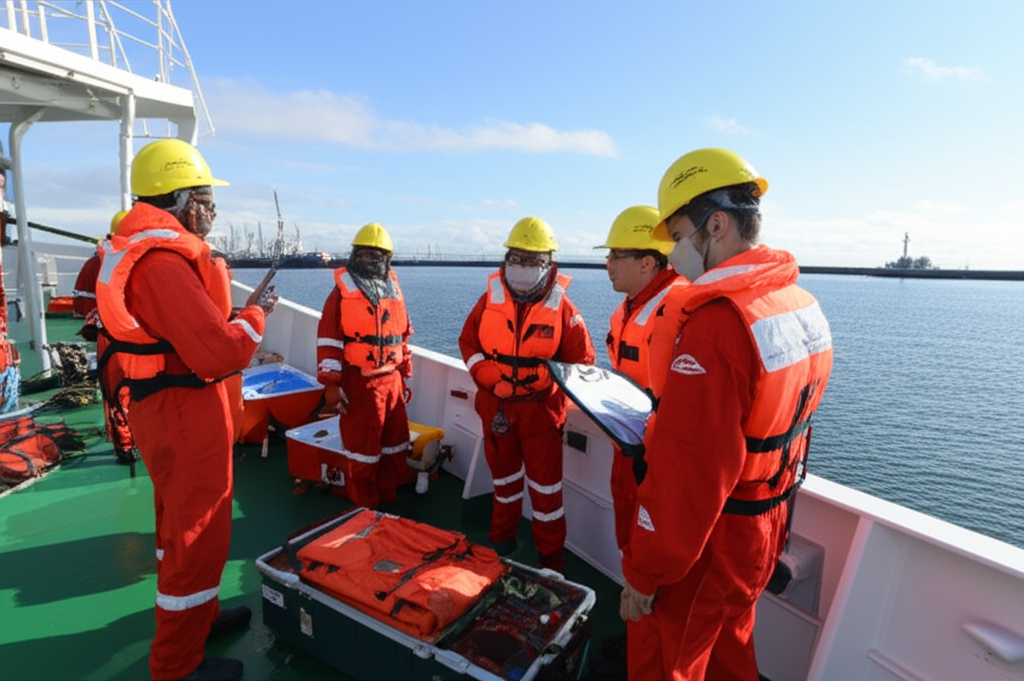
Master’s Degree in International Maritime Health Security
Why this master’s programme?
The Master’s Degree in International Maritime Health Security
Offers comprehensive training for professionals who wish to lead and manage public health in the global maritime context. The program focuses on emerging health threats, compliance with international regulations, and risk prevention on ships, in ports, and on offshore platforms. Through a multidisciplinary approach, the Master’s program provides the necessary tools for epidemiological surveillance, outbreak management, and implementation of effective control measures in the maritime environment.
Differential Advantages
- Global Approach: analysis of transboundary health challenges and their impact on maritime health.
- Legal Framework: comprehensive knowledge of the International Health Regulations (IHR) and other relevant regulations.
- Risk Management: development of skills for the identification, assessment, and mitigation of health risks at sea.
- Practical Simulations: application of acquired knowledge in real-world maritime health crisis scenarios.
- Expert Network: Access to a community of leading professionals and academics in international maritime health security.
- Modality: Online
- Level: Masters
- Hours: 1600 H
- Start date:
Availability: 1 in stock
Who is it aimed at?
- Healthcare professionals (doctors, nurses, epidemiologists) seeking to specialize in health security in international maritime environments.
- Merchant marine and cruise ship officers responsible for health and safety on board, who wish to deepen their knowledge of outbreak management and regulatory compliance.
- Port health technicians and port authorities who need to update their knowledge of international health regulations and risk management.
- Public health consultants and advisors interested in expanding their scope of action to the maritime sector, offering innovative solutions and complying with regulations.
- Graduates in health sciences and biology seeking cutting-edge specialization in a sector with high demand for Qualified professionals.
Flexibility and constant updates
Designed for working professionals: flexible online format, content updated with the latest WHO guidelines and real-world case studies from the sector.
Objectives and skills

Assessing and mitigating health risks in maritime environments:
“Implement hygiene and disinfection protocols, manage epidemiological outbreaks, and guarantee food and drinking water safety on board.”

Implement biosecurity protocols on ships and in ports:
“Establish health control zones, manage the flow of people and goods, and apply rigorous disinfection and cleaning measures in accordance with current regulations.”

Managing health emergencies on board and in port facilities:
Stabilize the patient, coordinate the evacuation, and communicate effectively with emergency services on the ground.

Coordinate the response to outbreaks of communicable diseases in the maritime sector:
“Implement international and national health protocols, communicating with port and health authorities to isolate and control the spread of the disease.”

Develop and implement training programs in international maritime health:
Assess health risks in ports and vessels, applying WHO and IMO regulations to prevent the spread of diseases.

Advising on the application of international health legislation in the maritime context:
“Interpret and apply the International Health Regulations (IHR) and other relevant regulations on board, managing outbreaks, inspections and communicating with port health authorities effectively and transparently.”
Study plan – Modules
- Fundamentals of Integrated Health Risk Management in the International Maritime Context: Definition, Scope, and Global Regulatory Framework
- Identification and Assessment of Biological, Chemical, and Physical Risks in Port Environments and on Board Ships: Advanced Methodologies and Technological Tools
- Design and Development of Maritime Biosecurity Protocols: International Standards (WHO, IMO, IHR) and Adaptation to Different Types of Vessels and Operations
- Implementation of Health Risk Management Systems: Gap Analysis, Document Management, and Regulatory Compliance
- Monitoring and Preventive Control of Communicable Diseases in Ports and During Maritime Transit: Epidemiological Surveillance Techniques, Sampling, and Rapid Diagnosis
- Biocontainment and Decontamination in Confined Spaces on Ships: Procedures, Specialized Personal Protective Equipment (PPE), and Validation of Effectiveness
- Management of Health Incidents in Maritime Operations: Rapid Response Protocols and Coordination Interinstitutional collaboration and health crisis management
Training and awareness-raising of maritime personnel in biosecurity: design of training programs, drills, and competency assessments
Integration of emerging technologies in maritime health management: onboard telemedicine, tracking and traceability systems, and artificial intelligence applied to health control
Internal and external compliance audits in maritime biosecurity: methodologies to ensure compliance and continuous improvement
Legal and ethical aspects in international maritime health management: responsibility, data privacy, and crew rights
Case studies and critical analyses of health outbreaks in the maritime sector: lessons learned and effective mitigation strategies
Relationship between health security and operational continuity in maritime supply chains: risk assessment and contingency plans
Protocols for interaction with port authorities and international organizations in the health control of vessels
- Development of comprehensive biosecurity plans for commercial and naval fleets: design, implementation, and multidisciplinary monitoring
- Microbiological and virological foundations of marine infectious diseases: emerging pathogens, transmission mechanisms, and survival in aquatic environments
- International epidemiological surveillance systems applied to ports and fleets: structure, notification protocols, and inter-institutional coordination
- Epidemiological risk analysis in maritime terminals: environmental factors, flow of people and goods, vectors, and transmission chains
- Advanced implementation of IoT and big data technologies for early detection and real-time monitoring of epidemiological outbreaks in maritime environments
- Current international regulations and their practical application: IHR (International Health Regulations), IMO, WHO, and their integration with port and maritime policies
- Design and implementation of health contingency plans for international fleets: isolation, decontamination, and emergency response protocols
- Monitoring and Control of zoonotic diseases on ships and in ports: surveillance of carrier species, biosecurity measures, and risk mitigation
Epidemiological predictive models applied to maritime scenarios for resource optimization and real-time decision-making
Specialized training and education of health teams and crews in advanced epidemiological control and response procedures
Integration of geographic information systems (GIS) and spatial analysis for health management in international maritime logistics networks
Protocols for continuous epidemiological assessment and health audits in ports and on ships: key indicators and performance metrics
Document management and health traceability: regulations, digital records, and chains of custody for epidemiological evidence
Impact of climate change and globalization on the dynamics of maritime infectious diseases and their health control
Roles and responsibilities of maritime and port health authorities in international epidemiological management
International case studies: detailed analysis of outbreaks and their effective management in fleets and strategic ports
- Fundamentals of health risk management in the maritime sector: identification, assessment, mitigation, and continuous monitoring
- International regulations and relevant regulatory frameworks: compliance with the International Health Regulations (IHR), ISPS Code, MARPOL Convention, and WHO guidelines for ports and ships
- Technical aspects of global biosecurity: disinfection protocols, safe handling of biological and chemical waste, and decontamination of spaces and equipment
- Design and implementation of integrated biosecurity plans in ports, vessels, and international maritime transit zones
- Advanced methodologies for epidemiological surveillance in maritime environments: collection, analysis, and reporting of health data and emerging diseases
- Application of technological systems for health surveillance: biometric sensors, environmental monitoring devices, and digital tracking platforms in real time
- Management of epidemic and zoonotic outbreaks on board: isolation protocols, immediate communication, and coordination with public health authorities
- Inter-institutional integration and international cooperation in maritime health response: coordination among ports, governments, WHO, and international organizations
- Assessment and management of risks associated with maritime mobility: impacts of trade routes, health hotspots, and the flow of potentially contaminated goods
- Advanced practices in health auditing and quality control: inspections, certification, and registration in accordance with international standards
- Continuing education and skills development in biosecurity and epidemiological surveillance for maritime professionals
- The strategic role of maritime health intelligence in anticipating and preventing health crises globally
- Case studies and critical analysis of historical and contemporary maritime health events
- Impact of the Cybersecurity in healthcare information management: data protection and operational continuity
- Innovations and emerging trends in maritime health: telemedicine, drones for health inspection, and automated disinfection systems
- Legal and Regulatory Framework: International Convention on Measures to Facilitate International Immunization (IHR 2005), IMO regulations related to maritime health, obligations of States Parties and their application in maritime health quarantine.
- Epidemiological Risk Assessment Protocols: identification, classification, and categorization of health risks on ships and in ports, tools for analysis, and predictive models adapted to maritime environments.
- Quarantine Design and Implementation: phases, isolation criteria, restricted areas on ships, port quarantine centers, protocols for handling passengers, crew, and cargo.
- Advanced Chemical and Biological Decontamination Procedures: selection of disinfectant agents, emerging technologies (nebulization, UV-C, ozonation), evaluation of efficacy and environmental safety.
- Health Logistics Comprehensive management: coordination of human resources, personal protective equipment (PPE), supply of critical materials, and management of hazardous waste in maritime health operations.
Command and control (C2) systems in maritime health incidents: hierarchical structure, effective communication, and interoperability among naval forces, port authorities, health authorities, and international organizations.
Inter-institutional coordination: protocols for integration among government health agencies, customs, coast guard, WHO, and IMO; early warning mechanisms; and joint response.
Comprehensive management of infectious outbreaks on board: identification of suspected cases, isolation, epidemiological monitoring, treatment, and evacuation in a maritime context.
Training and operational drills: design of training programs for crews and port personnel; and execution of practical exercises focused on contingencies. Health regulations.
- Reporting protocols and health documentation: official forms, chains of custody, maritime health certificates, and notifications to the World Health Organization.
- Current overview and trends in international health security in the global maritime context
- Digital platforms and advanced systems for epidemiological monitoring in port areas and vessels
- Integration of IoT (Internet of Things) in health surveillance: smart sensors and wearable devices for real-time detection
- Predictive models based on artificial intelligence and machine learning applied to the early identification of outbreaks and health events on board
- Automated rapid response protocols for maritime health emergencies, including multi-channel communication and alert systems
- International regulations and WHO/IMO guidelines on health technology in maritime environments and their practical implementation
- Telemedicine and remote assistance solutions for crews and passengers: tools, limitations, and operability at sea
- Blockchain and traceability of health supply chains: security and transparency in the distribution of medicines and medical equipment on board
Use of drones and robotics for health inspection, disinfection, and surveillance in port areas and on ships
Data management and cybersecurity applied to maritime health platforms to safeguard privacy and operational continuity
Training and development of digital skills in maritime health and operational teams for the effective implementation of emerging technologies
Global case studies: analysis of successful implementation and lessons learned in maritime health innovation
Ethical, legal, and regulatory challenges related to technology adoption in international maritime health surveillance and response
Future scenarios and technological outlook in the field of maritime health: disruptive trends and strategic opportunities
Design and evaluation of integrated health monitoring and alert systems in multinational port and maritime management
- Microbiological Foundations Applied to Maritime Health Security: Classification of Biological Agents, Mechanisms of Transmission and Survival in Maritime Environments
- Comprehensive Assessment of Biological Risks in Port Operations and Vessels: Quantitative and Qualitative Methodologies for Emerging Threat Analysis
- Design and Application of Advanced Epidemiological Surveillance Protocols in the Global Maritime Logistics Chain
- Implementation of Management and Control Systems Based on International Standards (WHO, IMO, ILO) for the Prevention of Outbreaks and Biological Contamination
- Use of Early Detection Technologies: Biosensors, Environmental Monitoring, and Molecular Analysis for Rapid Identification of Pathogens on Board and in Port Infrastructure
- Control and Disinfection of Confined Spaces and Critical Areas in Maritime Facilities: Effective Strategies to Minimize the Biological Load
- Biosafety Protocols for the Handling and Transport of Biohazardous Goods, Including Live Cargo and Waste Health professionals
Specialized training in rapid response and management of biological incidents: containment, isolation, and personal protective equipment procedures
Integrated management of communication and international coordination in maritime health emergencies: roles of multilateral organizations and logistics operators
Analysis of real-world cases and multi-sectoral simulations for optimizing contingency plans and lessons learned in international maritime health security
- Fundamentals of Maritime Health Surveillance: International Legal and Regulatory Context (IHR, IMO, WHO)
- Comprehensive Risk Assessment: Identification, Analysis, and Prioritization of Biological Threats in Port Areas and Shipping Routes
- Design and Implementation of Epidemiological Surveillance Systems: Technological Tools, Detection Sensors, and Standardized Protocols
- Biosecurity in the Maritime Sector: Physical Barriers, Access Controls, Decontamination, and Use of Specialized Personal Protective Equipment
- Environmental and Biological Monitoring Strategies: Analysis of Water, Air, and Surfaces for the Early Detection of Pathogens
- Inter-institutional Planning and Coordination: Communication Among Port Agencies, Public Health, Maritime Safety, and International Organizations
- Rapid Response to Health Incidents: Activation of Protocols, Crisis Management, and Logistics for Containment and Mitigation in Areas Maritime
- Use of advanced technology in health response: Geographic Information Systems (GIS), inspection drones, telemetry, and big data platforms
- Ongoing training and education of maritime personnel in health prevention and control: drills, audits, and regulatory updates
- Post-incident evaluation and continuous improvement: analysis of indicators, performance reports, and adaptation of maritime biosecurity strategies
- Fundamentals of International Health Security: standards, regulations, and regulatory bodies (WHO, IHR, IMO)
- Epidemiological Risk Analysis in Maritime Environments: identification, assessment, and mitigation of biological threats
- Comprehensive Design of Health Protocols: criteria for multilateral integration and operational adaptability
- Biosecurity Management in Ports and Ships: preventive measures, decontamination, and control of biological vectors
- Implementation of Maritime Epidemiological Surveillance Systems: technologies, sensors, and digital tools for real-time monitoring
- Isolation and Quarantine Procedures on Board: development of specific guidelines according to vessel type and capacity
- Crew Training and Education: health protocols, emergency management, and effective communication
- Inter-institutional Coordination and Multilevel: Port Health Crisis Management in Globalized Contexts
Integration of Telemedicine and Remote Support for Healthcare in International Shipping
Auditing and Continuous Improvement: Techniques for Evaluating, Verifying, and Updating Maritime Health Protocols
- Fundamentals of Integrated Health Risk Management in the International Maritime Context: Principles, Current Regulations, and Regulatory Bodies
- Biological Risk Assessment and Analysis in Maritime Transfer Centers: Identification, Classification, and Mitigation of Pathogens
- Advanced Biosecurity Systems: Design, Implementation, and Monitoring on Ships and in Port Terminals
- Standardized Operating Protocols for Infection Prevention and Control in International Maritime Operations
- Health Emergency Management on Board: Contingency Plans, Communication, and Coordination with Public Health Authorities
- Epidemiological Monitoring and Surveillance in the Maritime Sector: Applied Technologies and Real-Time Data Analysis
- Specialized Biosecurity Training for Crews and Shore Personnel: Competencies, Certifications, and Best Practices
- Key International Regulations: IHR (International Health Regulations), IMO, IMO, and its impact on maritime health management
Document management and traceability: registration, reporting, and auditing of health and biosecurity protocols
Implementation of disruptive technologies in maritime health security: artificial intelligence, IoT, and automation for risk control
Case studies and analysis of relevant health incidents in international maritime operations
Legal and ethical responsibility in health management: regulatory compliance, sanctions, and corporate responsibility
Design and evaluation of comprehensive occupational health and well-being programs for crew in maritime environments
Environmental and health impact in port areas and shipping routes: mitigation and sustainability strategies
Inter-institutional coordination in maritime health crises: joint response protocols between States, international organizations, and the private sector
- Fundamentals and methodology of the comprehensive analysis of health risks in maritime environments: identification, qualitative and quantitative assessment, and prioritization of threats
- Design and structuring of rapid response models: inter-institutional coordination, human resources, protocols, and logistics in maritime health emergencies
- Implementation of maritime epidemiological surveillance and biosecurity systems: detection technologies, real-time reporting, and early warning systems
- Advanced tools for crisis management: scenario analysis, decision-making under uncertainty, and response simulations in outbreak and pandemic situations
- Evaluation and optimization of health contingency plans in the maritime logistics chain and in international ports: integration with WHO, IMO, and local authority regulations
- Protocols for containment and
- Mitigation of biological risks on board and in port terminals: vector control, disinfection, and management of medical waste
- Mathematical and technological models for the prediction and simulation of the spread of pathogens in maritime environments and port areas
- Multidimensional assessment of the health, environmental, and economic impact of emergencies in the maritime sector: planning for sustainability and operational resilience
- Development of key performance indicators (KPIs) for continuous monitoring and audits of maritime health response plans
- Preparation and presentation of the Master’s Thesis: design, implementation, and defense of a customized, comprehensive model that optimizes rapid response capacity and risk assessment in health emergencies in international maritime contexts
Career prospects
“`html
- Maritime Health and Safety Technician: pest control, management of medical waste, and onboard water purification.
- Cruise/Ferry Biosecurity Officer: implementation of infectious disease prevention and control protocols.
- Maritime Health Inspector: ship audits, food and water control, and verification of regulatory compliance.
- Health and Safety Consultant for Shipping Companies: development of contingency plans, staff training, and technical advice.
- Port Health Emergency Manager: coordination of response teams, management of biological risks, and outbreak control.
- Maritime Public Health Researcher: analysis of epidemiological data, assessment of health risks, and development of new prevention strategies.
- Vector Control Technician in Port Areas: Surveillance and control of disease-carrying vectors (mosquitoes, rodents, etc.).
- Occupational Health Manager in the Maritime Sector: Assessment of workplace risks, promotion of maritime workers’ health, management of occupational diseases.
“`
Entry requirements

Academic/professional profile:
Bachelor’s degree in Nautical Science/Maritime Transport, Naval/Marine Engineering or a related qualification; or proven professional experience on the bridge/in operations.

Language proficiency:
Functional Maritime English (SMCP) recommended for simulations and technical materials.

Documentation:
Updated CV, copy of qualification or seaman’s book, national ID/passport, motivation letter.

Technical requirements (for online):
Device with camera/microphone, stable internet connection, monitor ≥ 24” recommended for ECDIS/Radar-ARPA.
Admissions process and dates

Online
application
(form + documents).

Academic review and interview
Admissions decision

Admissions decision
(+ scholarship offer if applicable).

Place reservation
(deposit) and enrolment.

Induction
(access to the virtual campus, calendars, simulator guides).
Scholarships and financial support
- Global Approach: Gain a comprehensive understanding of health security in the international maritime environment.
- Regulations and Legislation: Master the international legal frameworks and regulations governing maritime health security.
- Risk Management: Learn to identify, assess, and mitigate health risks on ships and in ports.
- Emergency Response: Develop skills for the effective management of health outbreaks and emergencies on board ships and in port facilities.
- Innovation and Technology: Explore the latest technologies and tools for disease surveillance and control in the maritime sector.
Testimonials
This master’s degree provided me with the tools and knowledge necessary to lead the response to a health emergency on board a cruise ship. I implemented the protocols I learned, effectively containing a norovirus outbreak and minimizing its impact on passengers and crew. Thanks to the training I received, the situation was managed professionally and efficiently, earning recognition from the cruise line and health authorities.
During the Master’s in Maritime Health & Medicine, I acquired crucial knowledge and skills that enabled me to successfully lead the implementation of new health protocols on a deep-sea fishing fleet. We reduced onboard medical incidents by 30% in the first year, significantly improving crew well-being and the company’s operational efficiency.
This Master’s program provided me with the tools and knowledge necessary to lead the response to a norovirus outbreak on a cruise ship. I implemented the protocols I learned, effectively containing the spread and minimizing the impact on the health of passengers and crew. Thanks to the training I received, the situation was managed quickly and professionally, earning me praise from the company and health authorities.
This master’s degree provided me with the tools and knowledge necessary to lead the response to a health emergency on board a cruise ship. I implemented the protocols I learned, containing a norovirus outbreak and minimizing its impact on passengers and crew, which earned me recognition from the company and a promotion to Environmental Health Officer.

Frequently asked questions
Yes. The itinerary includes ECDIS/Radar-ARPA/BRM with harbor, ocean, fog, storm, and SAR scenarios.
Online with live sessions; hybrid option for simulator/practical placements through agreements.
It covers both health and safety in ports and on ships at sea.
Recommended functional SMCP. We offer support materials for standard phraseology.
Yes, with a relevant degree or experience in maritime/port operations. The admissions interview will confirm suitability.
Optional (3–6 months) through Companies & Collaborations and the Alumni Network.
Simulator practice (rubrics), defeat plans, SOPs, checklists, micro-tests and applied TFM.
A degree from Navalis Magna University + operational portfolio (tracks, SOPs, reports and KPIs) useful for audits and employment.
- Fundamentals and methodology of the comprehensive analysis of health risks in maritime environments: identification, qualitative and quantitative assessment, and prioritization of threats
- Design and structuring of rapid response models: inter-institutional coordination, human resources, protocols, and logistics in maritime health emergencies
- Implementation of maritime epidemiological surveillance and biosecurity systems: detection technologies, real-time reporting, and early warning systems
- Advanced tools for crisis management: scenario analysis, decision-making under uncertainty, and response simulations in outbreak and pandemic situations
- Evaluation and optimization of health contingency plans in the maritime logistics chain and in international ports: integration with WHO, IMO, and local authority regulations
- Protocols for containment and
- Mitigation of biological risks on board and in port terminals: vector control, disinfection, and management of medical waste
- Mathematical and technological models for the prediction and simulation of the spread of pathogens in maritime environments and port areas
- Multidimensional assessment of the health, environmental, and economic impact of emergencies in the maritime sector: planning for sustainability and operational resilience
- Development of key performance indicators (KPIs) for continuous monitoring and audits of maritime health response plans
- Preparation and presentation of the Master’s Thesis: design, implementation, and defense of a customized, comprehensive model that optimizes rapid response capacity and risk assessment in health emergencies in international maritime contexts
Request information
Complete the Application Form.
Attach your CV/degree certificate (if you have it to hand).
Indicate your preferred cohort (January/May/September) and whether you would like the hybrid option with simulator sessions.
An academic advisor will contact you within 24–48 hours to guide you through the admission process, scholarships, and compatibility with your professional schedule.
Faculty
Eng. Tomás Riera
Full Professor
Eng. Tomás Riera
Full Professor
Eng. Sofía Marquina
Full Professor
Eng. Sofía Marquina
Full Professor
Eng. Javier Bañuls
Full Professor
Eng. Javier Bañuls
Full Professor
Dr. Nuria Llobregat
Full Professor
Dr. Nuria Llobregat
Full Professor
Dr. Pau Ferrer
Full Professor
Dr. Pau Ferrer
Full Professor
Cap. Javier Abaroa (MCA)
Full Professor
Cap. Javier Abaroa (MCA)
Full Professor

