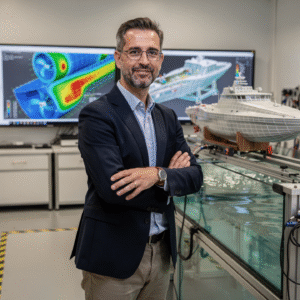
Masters · 1600 h · 11 modules

Master's in Digital Twins of Ships and Ports

Prepares you to lead the digital transformation of the maritime sector. Master the creation, management, and analysis of digital twins to optimize the design, operation, and maintenance of vessels and port infrastructure. This…

Duration1600 h
FormatOnline
Starts23 November
Places20 / 20
Prior knowledge

Prior Knowledge Assessment

These are the skills this programme builds. Tick the ones you already have and we will tell you which part of the syllabus is really for you.

Your profile
Tick what you already know to see your result.
Programme overview

What is the Master’s in Digital Twins of Ships and Ports?

The Master's in Digital Twins of Ships and Ports

Prepares you to lead the digital transformation of the maritime sector. Master the creation, management, and analysis of digital twins to optimize the design, operation, and maintenance of vessels and port infrastructure. This program immerses you in key technologies: 3D modeling, IoT sensors, data analytics, and artificial intelligence, applied to real-world and cutting-edge use cases.

Differentiating Advantages

  • Advanced Simulation: Predicts the behavior of ships and ports under diverse operating conditions.
  • Supply Chain Optimization: Improves logistical efficiency and reduces operating costs.
  • Predictive Maintenance: Anticipates failures and optimizes asset lifespan.
  • Innovative Design: Experiment virtually with new configurations and materials.
  • Holistic Vision: Connects the ship and the port in a single digital ecosystem.
Programme type
Master's Degree
Study mode
Online
Duration
1,600 hours
Modules
11

Programme highlights

  • Master the technology: Learn to create and manage digital twins of ships and ports with the latest tools.
  • Advanced simulation: Perform predictive simulations to optimize operations, reduce costs, and improve safety.
  • Real-world case studies: Work on applied projects that will prepare you for the challenges of the maritime and port sector.
  • Industry experts: Learn from leading professionals in the implementation of digital twins in the maritime sector.
  • Boost your career: Acquire in-demand skills and become an expert in the digital transformation of the sector.
  • Apply your knowledge in leading companies and contribute to innovation in the maritime-port sector.
Curriculum

Programme Structure

The programme is structured in 11 modules, listed below in order of study.

01

Advanced integration of IoT sensors and SCADA systems for real-time monitoring of ships and port terminals using digital twins

  • Fundamentals of IoT in maritime environments: architecture, protocols and standards for data capture on ships and port terminals
  • Advanced IoT sensor design and selection: application in extreme sea conditions, pressure, temperature, vibration, acoustic and environmental sensors
  • IoT network topologies for port terminals: LPWAN, 5G, Zigbee networks and their integration with Legacy Maritime Systems
  • Industrial communication protocols: MQTT, OPC UA, Modbus TCP/IP and its interoperability in SCADA and digital twins ecosystems
  • SCADA platform implementation: architecture, components and configuration for centralised data management in terminals and ships
  • Integration of IoT sensors with SCADA: technical challenges, data synchronisation and methodologies to ensure integrity and low latency
  • Digital twin real-time modelling and updating: data acquisition, filtering and transformation for faithful representation of maritime physical assets
  • Advanced prediction and diagnostic algorithms: Predictive maintenance and early failure detection using IoT and SCADA data analysis
  • Cyber security in IoT and SCADA infrastructures: Strategies for protection, encryption, authentication and management of vulnerabilities in critical ship and port environments
  • Integration Pilots: Detailed studies of implementation of digital twins in the monitoring of propulsion systems, harbour cranes and energy management
02

Advanced 3D modelling and simulation for operational optimisation and predictive maintenance of ships and port terminals using digital twins

  • Fundamentals of 3D modelling applied to ships and port terminals: geometry, topology and critical parametres for the creation of digital twins.
  • Advanced data capture technologies: 3D laser scanning, photogrammetry and remote sensing systems for accurate digital modelling.
  • Integration of IoT sensors in 3D models: Architecture, communication protocols and collection in real time for continuous update of the digital twin.
  • Multidisciplinary dynamic simulation: hydrodynamic, structural, thermal and aerodynamics for operational optimisation and behaviour analysis in real scenarios.
  • Operational optimisation through predictive simulation: Machine learning algorithms and artificial intelligence techniques to anticipate failures and improve port logistics efficiency.
  • Predictive maintenance based on digital models: state analysis, component life, anticipated degradation detection, and proactive intervention planning.
  • Specialised software platforms for the creation and management of 3D digital twins: features, integrations and interoperability standards in the maritime industry.
  • Implementation Pilots: Detailed study of digital twins in cargo ships and port terminals, performance indicators and ROI in optimisation and maintenance.
  • Applicable international regulations and standards: ISO 19650, BIM for maritime infrastructure and OECD guidelines and the IMO in port digitization.
  • Digital twin lifecycle management: from creation, updating, validation to deactivation, with emphasis on data security and technical auditing.
03

Integration of IoT sensors, SCADA systems and advanced 3D modelling for optimisation and predictive maintenance of maritime infrastructure

  • Fundamentals of IoT in maritime infrastructure: types of sensors, communication protocols and network architectures
  • Configuration and deployment of IoT sensors in port and naval environments: critical parametres and best practices
  • Introduction to SCADA systems: specific structure, components and functionalities for ports and ships
  • Real-time data integration: OPC UA, MQTT and Modbus protocols applied to maritime digital twins
  • Advanced 3D modelling: tools and techniques for the creation of accurate digital models of port and ship infrastructure
  • Digital twins in operational optimisation: IoT data-based simulation for logistics and asset management
  • Predictive maintenance through advanced analytics: from sensor monitoring to early detection of structural and mechanical failures
  • Implementation of machine learning algorithms in SCADA for automation and optimisation of maritime performance
  • Pilots and historical data analysis to anticipate adverse conditions and plan preventive interventions
  • Cyber security in the integration of IoT and SCADA systems: standards, vulnerabilities and mitigation strategies in port environments
04

Cloud architecture, standards and interoperability for digital twins in port ships and terminals (APIs, security and life cycle management)

  • Cloud architecture fundamentals for digital twins: distributed computing, virtualization, and containers in maritime environments
  • Cloud deployment models: public, private and hybrid, applied to the monitoring and management of ships and port terminals
  • Key Cloud Platforms and Services: Comparative Analysis of AWS, Azure and Google Cloud for Maritime Digital Twins
  • Open standards and protocols for digital twins: Digital Twin Definition Language (DTDL), OPC UA, MQTT and RESTful APIs
  • Design and implementation of APIs for real-time data integration: Intake, normalization and synchronisation from sensors and shipped systems
  • Interoperability between heterogeneous systems: data modelling strategies, ontologies and semantics for ships and smart ports
  • Security in Cloud Architectures: Principles of Zero Trust applied to Critical Maritime Infrastructure and Protection against Cyberattacks
  • Authentication, authorization and identity management on digital twin platforms: OAuth 2.0, OpenID Connect and Certificate Management
  • Encryption of data in transit and rest, advanced encryption techniques and compliance with international regulations such as GDPR and NIST
  • Digital twin lifecycle management: from creation, update, validation to controlled deactivation
05

Design and deployment of artificial intelligence systems and predictive analysis for the comprehensive optimisation of operations in maritime digital twins

  • Artificial intelligence fundamentals applied to maritime digital twins: machine learning, deep learning and specific algorithms for naval simulation
  • Design of architectures for AI systems in digital twins: real-time data integration, distributed storage, and hybrid Edge/Cloud processing
  • Implementation of predictive models for operational optimisation: analysis of historical data, simulation of scenarios and techniques of forecasting in maritime environments
  • Integration of IoT sensors and SCADA systems in digital twin platforms for capturing operational and environmental variables in ships and ports
  • Development of predictive maintenance algorithms for critical maritime equipment using vibration analysis techniques, thermal and neural networks
  • Intelligent automation of port operations: logistics optimisation, provisioning and traffic management through AI and advanced predictive analysis
  • Real-time modelling and simulation of maritime dynamics to anticipate navigation conditions and manoeuvres under different meteorological and traffic variables
  • Evaluation and mitigation of operational risks in digital twins through multi-source data analysis and machine learning applied to contingency scenarios
  • Scalable deployment of AI systems in maritime infrastructure: use of containers, microservices and orchestrators to ensure availability and elasticity
  • Cybersecurity aspects in the AI implementation for digital twins: data protection, anomaly detection and incident response
06

Emerging architecture and technologies for the effective implementation of digital twins in maritime infrastructures

  • Digital Twin Architecture Fundamentals: Reference Models, Simulation Layers, Real-Time Data Integration and Capture of the Maritime Asset Lifecycle
  • Technological platforms and frameworks: Comparative review of commercial and open source solutions for digital twins in ports and ships, including cloud-based systems, edge computing and industrial IoT
  • Sensor networks and IoT devices: communication protocols, interoperability standards, intelligent sensors for monitoring of operational and environmental conditions in real time
  • Massive data processing and management: Big data architectures for efficient management of heterogeneous information generated by multiple maritime sources, flow processing (streaming) and distributed storage
  • Modelling of maritime dynamic systems: advanced numerical simulation techniques, predictive analytics and applied machine learning algorithms for predictive maintenance and optimisation of port operations
  • Integration of cyberphysical systems: Interoperability with SCADA systems, port infrastructure control, automation of shipments and real-time fleet monitoring
  • Emerging technologies for digital twins: Advanced AI application, blockchain-based digital twins for secure traceability and use of augmented and virtual reality-enhanced digital twins
  • Security and cybersecurity in digitized maritime infrastructure: risk management strategies, protection of sensitive data, resilience protocols against cyberattacks and applicable international regulations
  • Practical implementation: agile methodologies for the development and progressive integration of digital twins, KPIs relevant to performance evaluation and case studies in smart ports and connected ships
  • Future and technological trends: Advances in quantum computing applied to maritime simulations, 5G/6G in maritime communications and the impact of comprehensive digitalisation on logistics and port operations
07

Innovation and technology in digital twins: IoT integration, 3D modelling, cloud architecture and advanced analytics for optimal management of ships and port terminals

  • Fundamentals of technological innovation in the maritime industry: current challenges and opportunities through digital twins
  • Advanced digital twin architecture for ships and ports: components, interoperability and open standards
  • Integration of IoT in maritime environments: types of sensors, communication protocols (MQTT, COAP), and field networks (LPWAN, 5G)
  • D modelling of maritime assets: laser scanning techniques, photogrammetry, maritime BIM, and generation of parameterized CAD models
  • Cloud platforms for data management in digital twins: distributed architecture, containers, orchestration and scalability
  • Advanced Analytics Applied to Digital Twins: Machine Learning, Artificial Intelligence, Predictive Analysis and Predictive Maintenance for Operational Optimisation
  • Real-time synchronisation processes: Dynamic capture, processing, and update of physical and virtual data
  • Viewer and simulation environments: Augmented Reality (AR), Virtual Reality (VR) and Mixed Reality (MR) for monitoring and decision making in ports and ships
  • Security and cybersecurity in digital twin solutions: data protection, access management and secure protocols in IoT and Cloud environments
  • Use cases and practical applications: efficient port terminal management, ship energy optimisation, maritime traffic simulation and emergency response
08

Operational optimisation and predictive maintenance on ships and ports using integrated digital twins and advanced analytics

  • Fundamentals and architecture of digital twins applied to ships and ports: virtual representation, integration of cyberphysical systems and real-time synchronisation.
  • Advanced methodologies for the collection and processing of IoT data: on-board sensors, port SCADA and AIS systems for continuous and contextualized monitoring.
  • Predictive modelling and simulation for operational management: energy performance analysis, optimisation of navigation routes and efficient distribution of resources in port terminals.
  • Implementation of predictive maintenance algorithms based on machine learning and advanced analytics: early detection of failures in naval machinery and port equipment through vibration, temperature and wear models.
  • Integration of control and automation systems with digital twins for the continuous improvement of logistics processes: crane coordination, internal transport and intelligent storage in smart ports.
  • Application of Big Data and Digital Twins analysis for the mitigation of operational risks: prediction and prevention of congestion, accidents and unscheduled stops in maritime infrastructure.
  • Frameworks for the interconnection and secure communication of digital twins: standard protocols, industrial cybersecurity and access management in complex maritime environments.
  • Use of augmented reality and immersive environments for advanced visualisation of operating state and environmental conditions in ships and ports to support strategic and tactical decision making.
  • Real cases and best practices in digital twins projects in the maritime-port industry: analysis of impact on cost reduction, downtime and improvement in operational sustainability.
  • Development of integrated predictive maintenance plans with digital twins: Preparation of inspection policies, dynamic programming and optimisation of the life cycle of assets for ships and port equipment.
09

Architecture, integration and data analysis in digital twins for the optimisation of maritime infrastructure

  • Fundamentals of Digital Twin Architecture: Definition, Key Components and Reference Models Applied to Maritime Infrastructures
  • Design and implementation of integrated platforms: technology frameworks, cloud computing and edge computing in port and naval environments
  • Integration of heterogeneous systems: Industrial communication protocols (OPC UA, MQTT), IoT sensors and SCADA systems in the maritime value chain
  • Advanced methodologies for data acquisition and normalization: real-time data management, semantic structuring and standardisation for interoperability
  • Processing and analysis of large volumes of data: Big data techniques, machine learning algorithms and predictive analysis applied to the operation and maintenance of ships and ports
  • Dynamic modelling and real-time simulation: bidirectional synchronisation between physical and digital assets for operational optimisation and decision making
  • Energetic and operational optimisation through the Digital Twin: Application of prescriptive analysis for consumption reduction, emissions and downtime
  • Advanced visualisation tools and platforms: Augmented reality, virtual reality and smart dashboards for comprehensive infrastructure monitoring and management
  • Cybersecurity and digital resilience strategies: protection of sensitive data, detection of anomalies and risk mitigation in connected maritime ecosystems
  • Case studies and applied projects: Successful integration of digital twins in smart ports, maritime traffic management and predictive fleet maintenance
10

Governance, cybersecurity and business model of digital twins

  • Digital Twins Implementation Strategy
  • Data governance and ownership
  • Digital Twin Platform Cybersecurity
  • ISO 23247 standards and frames of reference
  • Quality and model validation
  • Organisational change management
  • Business models and return on investment
  • Collabouration between shipping companies, shipyards and ports
  • Success stories on ships and terminals
  • Digital Transformation Roadmap
11

Master’s Final Project in Digital Twins of Ships and Ports

  • Fundamentals and advanced fundamentals of digital twins: definition, historical evolution, architecture and critical components applied to ships and ports
  • Digital modelling and simulation: CAD/CAM techniques, parametric 3D modelling, structural meshes and computational dynamics for functional and physical representation
  • Real-time data capture and integration: IoT sensors, SCADA systems, data integration from radar, AIS, cameras and port management systems
  • Hybrid Cloud Platforms and Scalability: Design, deployment and orchestration of microservices for digital twins in Cloud AWS, Azure and Google Cloud environments
  • Applied Artificial Intelligence: Machine Learning Techniques for Predicting Operational Behaviours, Predictive Maintenance, Logistics Optimisation and Energy Management
  • Advanced visualisation and user interface development: Interactive Dashboards, Augmented Reality (AR) and Virtual Reality (VR) for real-time strategic and operational decision making
  • Automation and intelligent control: Algorithm design for automation of port manoeuvres, maritime traffic control and intelligent fleet management through AI
  • Cybersecurity strategies for digital twins: protection of sensitive data, secure communication protocols, access management and resilience against cyberattacks in critical infrastructures
  • Sustainable optimisation: models of environmental assessment, emission reduction and energy consumption in the integrated operation of ships and ports through predictive simulations
  • Implementation of Pilots: Comprehensive development of a digital twin prototype system applied to a port complex, covering design, parameterization, integration and functional validation tests
Workload

Study Time and Workload

1600 hours of study, online and at your own pace. Move the slider to the hours a week you can really put in.

Hours a week8
Weeks to finish—
You finish around—
Who it is for

Naval and maritime engineers who wish to lead the digital transformation in the naval and port industry.Naval architects who seek to optimize the design and construction of ships through advanced simulation.Port and terminal managers who aspire to improve operational efficiency and safety through digital modeling.Software developers and IT specialists interested in applying their skills in t

Faculty

Academic direction and faculty

The teaching team at Navalis: working professionals who deliver and oversee the institute's programmes.

Dr. Marina Alcover
Dr. Marina AlcoverAcademic director focused on measurable results and operational excellence in maritime education. Integrates IMO/STCW regulations and ISO 21001/9001 f
Eng. Diego Cifuentes
Cap. Javier Abaroa (MCA)
Dr. Pau Ferrer
Dr. Pau Ferrer
Dr. Nuria Llobregat
Dr. Nuria Llobregat
Eng. Javier Bañuls
Eng. Javier Bañuls
Eng. Sofía Marquina
Eng. Sofía Marquina
Eng. Tomás Riera
Eng. Tomás Riera
Verified reviews

Student Reviews

Reviews collected and verified by Opynio, not written by us.

Outcomes

Learning Outcomes

  • 01Optimize predictive maintenance
  • 02Simulating maritime emergency scenarios
  • 03Evaluate the energy efficiency of maritime operations
  • 04Implement smart port management systems
  • 05Improve strategic decision-making
  • 06Develop predictive models of maritime behavior
Careers

Career Opportunities

01```html
02Digital Twin Developer: Creation and maintenance of virtual replicas of ships and ports.
03Maritime Simulation Engineer: Design and execution of simulations to optimize operations and safety.
04Maritime Digital Transformation Consultant: Advising companies on the implementation of digital twins.
05D Modeling and Visualization Specialist: Creation of accurate models and interactive visualizations.
06Maritime Data Analyst: Extraction of valuable information from data generated by digital twins.
07Innovation Project Manager: Leadership of projects for the development and implementation of new technologies.
08Maritime Technology Researcher: Development of new applications and functionalities for digital twins.
09Port Operations Optimization Expert: Improving efficiency and safety in ports through the use of digital twins.
Questions

Entry Requirements

Digital representations of physical maritime assets, such as ships and ports, that use real-time data and simulations to optimize design, construction, operation, and maintenance.
Yes. The itinerary includes ECDIS/Radar-ARPA/BRM with harbor, ocean, fog, storm, and SAR scenarios.
Online with live sessions; hybrid option for simulator/practical placements through agreements.
It covers both aspects: the creation of digital replicas (digital twins) and the management/operation of ships and ports using these replicas.
Recommended functional SMCP. We offer support materials for standard phraseology.
Yes, with a relevant degree or experience in maritime/port operations. The admissions interview will confirm suitability.
Optional (3–6 months) through Companies & Collaborations and the Alumni Network.
Simulator practice (rubrics), defeat plans, SOPs, checklists, micro-tests and applied TFM.
A degree from Navalis Magna Institute + operational portfolio (tracks, SOPs, reports and KPIs) useful for audits and employment.
Online admissions

Admissions Process

No waiting for a phone call. If your documents are complete, you can pay in the same session.

Entry requirements

```htmlAcademic/Professional Profile:Bachelor's/Undergraduate Degree in Naval Engineering, Computer Engineering, Industrial Engineering, Naval Architecture, Marine Sciences or related field; or accredited professional experience in the maritime-port sector.Language proficiency:Recommended: technical English for handling software and documentation related to digital twins.Prior knowledge:Desirable: knowledge of 3D modeling, programming, simulation, and/or BIM technologies.Documentation:Updated CV, copy of degree, ID/Passport, cover letter indicating interest in the applicat

Start my application

Questions?

Frequently Asked Questions

Leave your details and admissions will write back. If you already know this is the one, go straight to the application and pay in the same session.

Apply now

Please enable JavaScript in your browser to complete this form.
Related programmes

If this one is not for you, another one is

All of these are in the same subject area. The scope, the hours and the fee change, the subject does not.

At the same level

Other master's programmes in Artificial Intelligence & Maritime Big Data.

Diplomas in Artificial Intelligence & Maritime Big Data

Same subject, a different scale and fee.

0
0
Your basket
Your basket is emptyBack to the shop
Scroll to Top