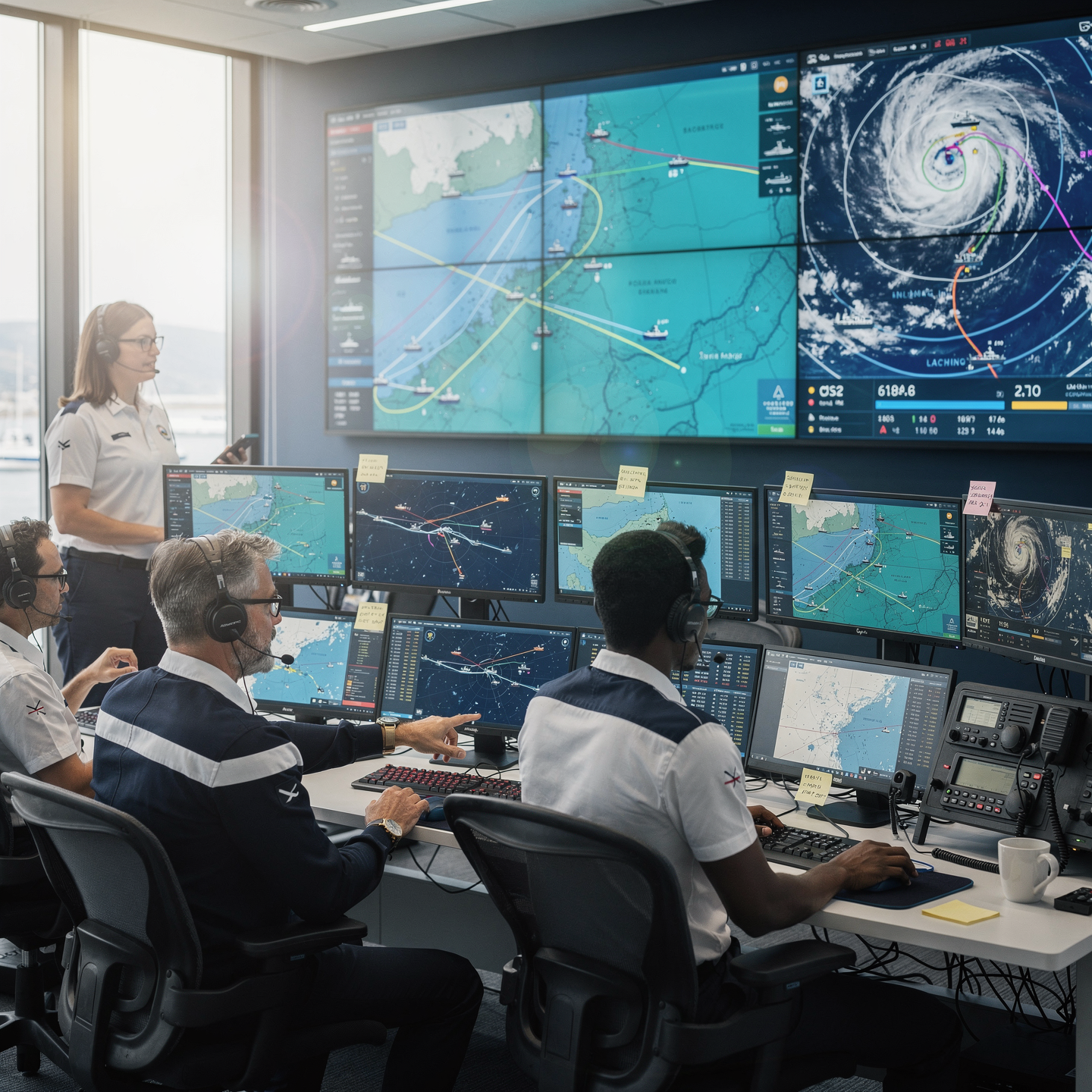
Diploma in Marine Tourist Route Planning

Why this certificate program?

The Diploma in Marine Tourism Route Planning

This program provides you with the tools to design unforgettable nautical experiences. Learn to combine navigation safety with the tourist appeal of each destination. Master maritime regulations, vessel logistics, and specialized tourism marketing strategies. This program prepares you to create innovative and profitable routes, driving the development of sustainable coastal tourism.

Differentiating Advantages

  • Customized Route Design: Adapt your offers to different customer profiles and budgets.
  • Permit and License Management: Ensure compliance with local and international regulations.
  • Digital Promotion Strategies: Attract your target audience through effective online channels.
  • Environmental Impact Assessment: Minimize the impact of your activities on the marine ecosystem.
  • Networking: Connect with suppliers, tour operators, and industry experts.
Rutas

Diploma in Marine Tourist Route Planning

Availability: 1 in stock

Who is it aimed at?

  • Tourism professionals looking to expand their offerings with innovative and sustainable nautical experiences.
  • Tour operators and travel agencies wanting to design attractive and safe maritime routes for different customer segments.
  • Tour guides and sociocultural facilitators wanting to specialize in coastal heritage interpretation and leading onboard activities.
  • Local tourism development managers and natural area managers interested in promoting nautical tourism responsibly and profitably.
  • Entrepreneurs with a business vision in the tourism sector looking to create differentiated and high-quality maritime tourism products Quality.

Flexibility for your development
 Adapted to your pace: 24/7 accessible online content, discussion forums, and personalized tutoring to answer your questions.

Rutas

Objectives and competencies

Designing innovative marine tourism experiences:

Integrating augmented reality and gamification to enrich user immersion and learning in marine environments.

Managing marine natural resources sustainably:

Implement responsible fishing practices, minimizing the impact on non-target species and vulnerable habitats, complying with national and international regulations and promoting sustainable certification of fishery products.

Optimizing logistics and risk management on marine tourist routes:

Implement contingency plans for maritime emergencies, ensuring effective communication and rapid response to mitigate risks and guarantee the safety of tourists.

To market and promote marine tourist routes effectively:

“Develop digital and traditional marketing strategies focused on specific market niches, highlighting the differentiating value of marine tourism experiences and using key metrics to optimize return on investment.”

Evaluate the economic and financial viability of marine tourism routes:

“Analyze potential revenues (fares, onboard services) versus operating costs (fuel, maintenance, personnel) and financial costs (initial investment, interest rates), considering optimistic and pessimistic scenarios.”

Apply current maritime and environmental regulations:

“Managing waste and preventing marine pollution (MARPOL) in ship operations.”

Curriculum - Modules

  1. Comprehensive Maritime Incident Management: protocols, roles, and chain of command for coordinated response
  2. Operational Planning and Execution: briefing, routes, weather windows, and go/no-go criteria
  3. Rapid Risk Assessment: criticality matrix, scene control, and decision-making under pressure
  4. Operational Communication: VHF/GMDSS, standardized reports, and inter-agency liaison
  5. Tactical Mobility and Safe Boarding: RHIB maneuvers, approach, mooring, and recovery
  6. Equipment and Technologies: PPE, signaling, satellite tracking, and field data logging
  7. Immediate Care of the Affected: primary assessment, hypothermia, trauma, and stabilization for evacuation
  8. Adverse Environmental Conditions: swell, Visibility, flows, and operational mitigation

    Simulation and training: critical scenarios, use of VR/AR, and exercises with performance metrics

    Documentation and continuous improvement: lessons learned, indicators (MTTA/MTTR), and SOP updates

  1. Introduction to Nautical Tourism: Trends, Types, and Markets
  2. Maritime Safety: Regulations, Safety Equipment, and Emergency Procedures
  3. Vessels: Types, Characteristics, Basic Maintenance, and Handling
  4. Marine Meteorology: Interpreting Weather Forecasts, Influence on Navigation, and Planning
  5. Basic Navigation: Nautical Charts, Instruments, and Coastal Navigation Techniques
  6. First Aid in Nautical Environments: Protocols and Emergency Response
  7. Tourism Legislation: Permits, Licenses, and Regulations Applicable to Nautical Tourism
  8. Marine Environmental Management: Conservation, Sustainability, and Best Practices
  9. Route and Activity Design: Creativity, Innovation, and Customer Adaptation
  10. Customer service: communication, problem-solving, and service quality

  1. Introduction to Maritime Voyages: Types, Challenges, and Opportunities
  2. International Maritime Law: Conventions, Regulations, and Agreements
  3. Analysis of Maritime Routes: Geographic, Climatic, and Geopolitical Factors
  4. Vessel Selection: Types of Ships, Capacities, and Technical Specifications
  5. Cargo Management: Stowage, Lashing, Security, and Handling of Goods
  6. Crew Planning: Roles, Responsibilities, and Required Training
  7. Marine Insurance: Types of Policies, Coverage, and Claims Management
  8. Port Logistics: Loading and Unloading Operations, Storage, and Inland Transport
  9. Tracking and Monitoring Technologies: Systems GPS, AIS, and satellite communication.
  10. Risk and security management: Contingency plans, emergency response, and hacking.

  1. Introduction to Nautical Tourism: Types, Trends, and Markets
  2. Maritime Legislation and Applicable Tourism Regulations
  3. Recreational Vessels: Types, Characteristics, and Safety
  4. Route Planning: Coastal, River, and Lake Routes
  5. Experience Design: Theming, Activities, and Entertainment
  6. Logistics and Operations: Transfers, Supplies, and Services
  7. Safety and Emergencies: Protocols, Equipment, and Rescue
  8. Marketing and Promotion: Branding, Channels, and Segmentation
  9. Customer Management: Customer Service, Loyalty, and Feedback
  10. Sustainability and Marine Environment Conservation: Best Practices

  1. Introduction to Nautical Tourism: History, Trends, and Types
  2. Tourism and Maritime Legislation: National and International Regulations
  3. Designing Tourist Itineraries: Market Analysis, Routes, and Attractions
  4. Tourist Vessels: Types, Characteristics, and Equipment
  5. Safety on Board: Regulations, Equipment, and Emergency Procedures
  6. Risk Management: Identification, Assessment, and Mitigation
  7. Customer Service: Service Quality, Communication, and Conflict Resolution
  8. Nautical Tourism Marketing: Promotion, Sales Channels, and Social Media
  9. Sustainability in Nautical Tourism: Environmental Impact and Best Practices
  10. Finance and Administration of Nautical tourism companies: costs, budgets and profitability

  1. System Architecture and Components: Structural design, materials, and subsystems (mechanical, electrical, electronic, and fluid) with selection and assembly criteria for marine environments
  2. Fundamentals and Principles of Operation: Physical and engineering foundations (thermodynamics, fluid mechanics, electricity, control, and materials) that explain performance and operating limits
  3. Safety and Environmental (SHE): Risk analysis, PPE, LOTO, hazardous atmospheres, spill and waste management, and emergency response plans
  4. Applicable Regulations and Standards: IMO/ISO/IEC requirements and local regulations;
  5. Conformance criteria, certification, and best practices for operation and maintenance
  6. Inspection, testing, and diagnostics: Visual/dimensional inspection, functional testing, data analysis, and predictive techniques (vibration, thermography, fluid analysis) to identify root causes
  7. Preventive and predictive maintenance: Hourly/cycle/seasonal plans, lubrication, adjustments, calibrations, consumable replacement, post-service verification, and operational reliability
  8. Instrumentation, tools, and metrology: Measuring and testing equipment, diagnostic software, calibration and traceability; selection criteria, safe use, and storage
  9. Onboard integration and interfaces: Mechanical, electrical, fluid, and data compatibility; Sealing and watertightness, EMC/EMI, corrosion protection, and interoperability testing.

    Quality, acceptance testing, and commissioning: process and materials control, FAT/SAT, bench and sea trials, go/no-go criteria, and evidence documentation.

    Technical documentation and integrated practice: logs, checklists, reports, and a complete case study (safety → diagnosis → intervention → verification → report) applicable to any system.

  1. Introduction to nautical tourism: history, types, and trends
  2. Nautical resources: ports, marinas, beaches, marine reserves
  3. Tourism legislation: applicable national and international regulations
  4. Tourism product design: segmentation, experiences, added value
  5. Quality management: ISO standards, tourism quality seals
  6. Tourism marketing: online and offline promotion, social media
  7. Tourism sustainability: environmental, social, and economic impact
  8. Safety and prevention: risks, emergency protocols, first aid
  9. Customer service: communication, conflict resolution, customer loyalty
  10. Planning strategic: SWOT analysis, objectives and strategies

Career opportunities

  • Nautical Tourism Product Designer: Creation of customized routes, tour packages, and innovative experiences.
  • Maritime Tourism Consultant: Advising companies and institutions on the planning and management of nautical destinations and activities.
  • Coastal Tourism Destination Manager: Planning and promotion of marine tourism routes in collaboration with local authorities and companies in the sector.
  • Specialized Marine Route Tour Guide: Accompanying and facilitating groups in nautical activities, interpreting the natural and cultural heritage.
  • Nautical Event Organizer: Planning and management of regattas, maritime festivals, and other events related to nautical tourism.
  • Nautical Tourism Marketing Manager: Promotion and marketing of marine tourism routes and products to through different channels.
  • Maritime Tourism Researcher: trend analysis, new product development, and evaluation of the socioeconomic impact of nautical tourism.
  • Nautical Tourism Entrepreneur: creating your own maritime tourism company, offering innovative routes, services, or products.

“`

Admission requirements

Academic/professional profile:

Degree/Bachelor's degree in Nautical Science/Maritime Transport, Naval/Marine Engineering, or a related field; or proven professional experience in bridge/operations.

Language proficiency:

Recommended functional maritime English (SMCP) for simulations and technical materials.

Documentation:

Updated resume, copy of degree or seaman's book, ID card/passport, letter of motivation.

Technical requirements (for online):

Equipment with camera/microphone, stable connection, ≥ 24” monitor recommended for ECDIS/Radar-ARPA.

Admission process and dates

1. Online
application

(form + documents).

2. Academic review and interview

(profile/objectives/schedule compatibility).

3. Admission decision

(+ scholarship proposal if applicable).

4. Reservation of place

(deposit) and registration.

5. Induction

(access to campus, calendars, simulator guides).

Scholarships and grants

  • Master the art of planning: Design innovative and profitable marine tourism routes, optimizing resources and maximizing the customer experience.
  • Know maritime regulations: Learn current legislation and best practices to ensure the safety and sustainability of your routes.
  • Specialized tourism marketing: Develop effective promotional strategies to attract your target audience and position your routes in the market.
  • Management of the onboard experience: Create memorable experiences through entertainment, gastronomy, and interpretation of natural and cultural heritage.
  • Applied tools and technologies: Use planning software, navigation systems, and online platforms for the comprehensive management of your routes.
Boost your career and become an expert in creating tourism experiences unforgettable seascapes.

Testimonials

Frequently asked questions

The main focus is the design, development and management of sustainable tourism experiences in marine environments, considering environmental, socioeconomic and cultural aspects.

Yes. The itinerary includes ECDIS/Radar-ARPA/BRM with harbor, ocean, fog, storm, and SAR scenarios.

Online with live sessions; hybrid option for simulator/practical placements through agreements.

For people interested in nautical tourism, travel agencies, tour guides, hotel professionals and anyone who wants to specialize in the planning and management of tourist routes in marine environments.

Recommended functional SMCP. We offer support materials for standard phraseology.

Yes, with a relevant degree or experience in maritime/port operations. The admissions interview will confirm suitability.

Optional (3–6 months) through Companies & Collaborations and the Alumni Network.

Simulator practice (rubrics), defeat plans, SOPs, checklists, micro-tests and applied TFM.

A degree from Navalis Magna University + operational portfolio (tracks, SOPs, reports and KPIs) useful for audits and employment.

  1. Introduction to Sustainable Nautical Tourism: Definition, importance, and current trends.
  2. Maritime Environmental Legislation and Regulations: International conventions, national laws, and local regulations.
  3. Environmental Impact Assessment (EIA): Methodologies, tools, and best practices in nautical environments.
  4. Design of Sustainable Nautical Itineraries: Route selection, activity planning, and impact minimization.
  5. Management of Natural and Cultural Resources: Conservation of marine ecosystems, protection of historical and cultural heritage.
  6. Energy Efficiency and Emissions Reduction: Use of renewable energies, optimization of fuel consumption, and clean technologies.
  7. Waste and Water Management
  8. Waste Management: Management plans, treatment technologies, and pollution prevention measures.

    Community Participation and Socioeconomic Benefits: Involvement of local communities, promotion of employment, and sustainable development.

    Sustainable Marketing and Communication: Strategies for promotion, awareness-raising, and fostering responsible practices.

    Sustainability Monitoring and Evaluation: Indicators, monitoring systems, and continuous improvement.

Request information

  1. Complete the Application Form.

  2. Attach your CV/degree certificate (if you have it to hand).

  3. Indicate your preferred cohort (January/May/September) and whether you would like the hybrid option with simulator sessions.

    An academic advisor will contact you within 24–48 hours to guide you through the admission process, scholarships, and compatibility with your professional schedule.

Please enable JavaScript in your browser to complete this form.
Click or drag a file to this area to upload.

Faculty

0
    0
    Tu carrito
    Tu carrito esta vacíoRegresar a la tienda
    Scroll to Top


