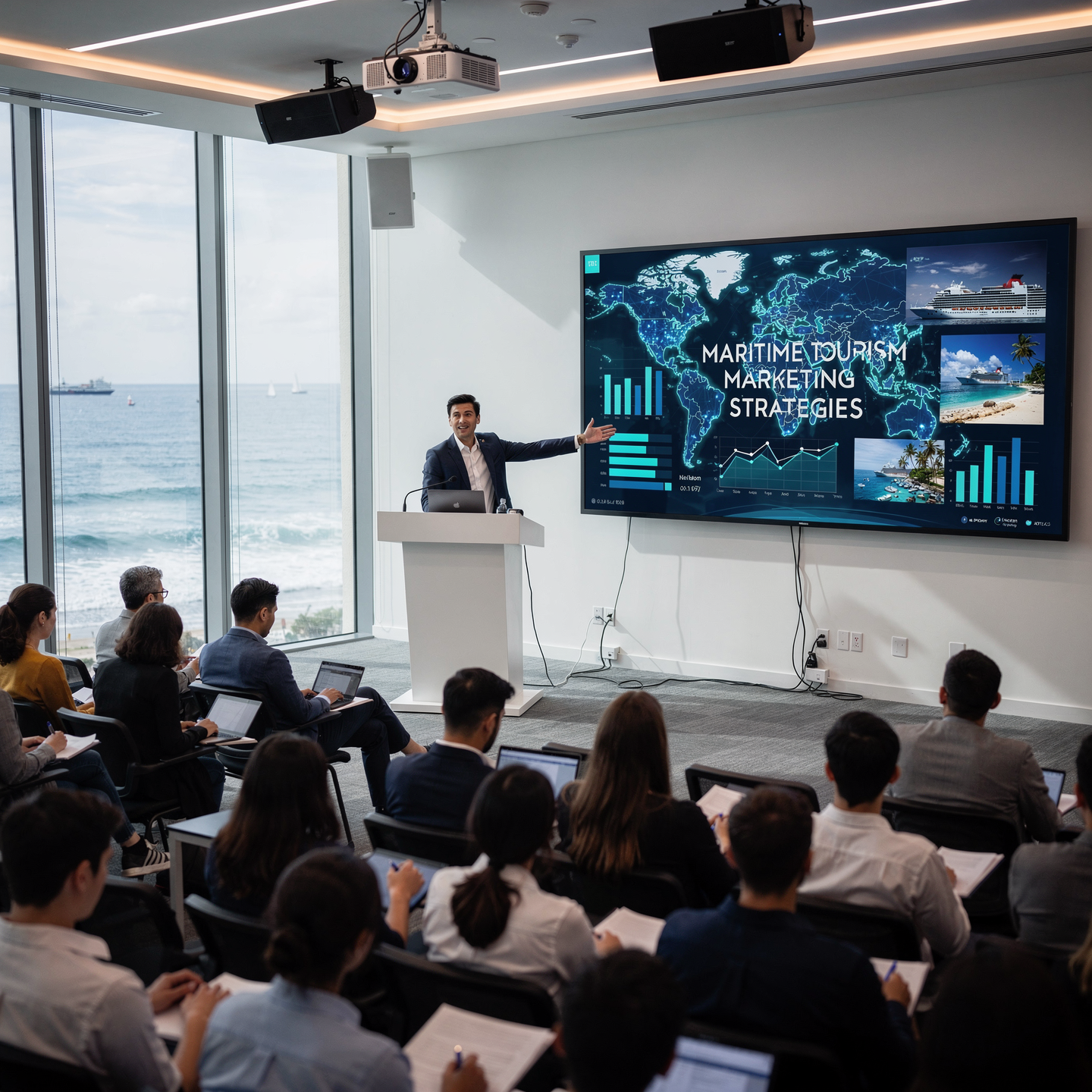
Master’s Degree in Maritime Tourism Marketing
Why this master’s programme?
The Master in Maritime Tourism Marketing
This program prepares you to lead the promotion and management of unique tourism experiences in the maritime environment. You will learn to design innovative strategies for cruises, nautical activities, coastal destinations, and sea-related events, leveraging the latest trends in digital marketing and sustainable tourism. Master the tools to segment markets, create impactful campaigns, and measure the ROI of your actions.
Differentiating Advantages
- Practical Approach: Development of real-world case studies and projects with companies in the sector.
- Specialized Digital Marketing: SEO/SEM, social media, email marketing, and web analytics applied to maritime tourism.
- Sustainable and Responsible Tourism: Strategies to minimize environmental impact and promote local development.
- Professional Networking: Direct contact with experts and leading companies in the sector.
- Global Vision: Analysis of international markets and expansion opportunities.
- Modality: Online
- Level: Masters
- Hours: 1600 H
- Start date: 26-04-2026
Availability: 1 in stock
Who is it aimed at?
- Marketing and communications professionals seeking to specialize in the maritime tourism sector, with a focus on innovative and digital strategies.
- Tourism business managers (cruise lines, shipping companies, marinas) who want to optimize their marketing campaigns and increase their market share.
- Entrepreneurs with maritime tourism projects who need to develop a solid and effective marketing plan to attract their target audience.
- Tourism professionals (hotels, travel agencies) who want to expand their offerings with products and services related to maritime tourism.
- Graduates in Tourism, Marketing, Business Administration, or related fields seeking specialization in a sector with high growth potential.
Academic flexibility:
Adapted for working professionals: online format flexible, practical cases and networking with industry experts.
Objectives and skills

Promoting sustainable growth:
Prioritize energy efficiency in navigation and optimize routes to reduce fuel consumption.

Designing memorable and innovative experiences:
“Integrating Design Thinking methodologies, considering user needs and prototyping creative solutions with digital tools.”

Leading the digital transformation of the sector:
“Implement agile strategies (SCRUM, Kanban) to optimize the adoption of new technologies and foster a culture of continuous innovation within the organization.”

Optimizing the management of tourist destinations:
“Implement segmented, data-driven digital marketing strategies to attract high-value visitors and improve the destination’s online reputation.”

Develop effective marketing strategies:
Analyze the target market, segmentation, and positioning of products/services to maximize ROI.

Managing online reputation and crisis communication:
Develop proactive response protocols and communication plans, actively monitoring mentions and sentiment on social media and digital platforms.
Study plan – Modules
- Fundamentals of digital marketing applied to maritime tourism destinations: characteristics, trends, and business opportunities
- Audience segmentation and analysis: identifying visitor profiles, online behavior, and maritime tourism consumption patterns
- Design and development of websites optimized for coastal destinations: UX/UI, visual content, and usability focused on the maritime experience
- Advanced local and international SEO strategies to position maritime tourism destinations in specialized search engines
- Use of digital advertising platforms: Google Ads, social media, remarketing, and specific campaigns for the nautical sector
- Social media management and creation of audiovisual content that enhances image and engagement with potential tourists
- Implementation of influencer marketing with maritime and nautical tourism specialists: selection, negotiation, and results measurement
- Integration of emerging technologies: Augmented reality, virtual tours, and mobile applications to enhance the maritime visitor experience
Digital analytics and key metrics for evaluating campaign performance: maritime tourism-specific KPIs and Business Intelligence tools
Loyalty and CRM strategies for maritime destinations: automation, personalization, and post-visit follow-up
Regulations and ethical best practices in digital tourism marketing: data protection, image rights, and digital sustainability
Case studies and success stories in digital marketing for maritime destinations: critical analysis and application of proven techniques
- Current Landscape of Digital Tourism Marketing: Analysis of the Competitive Environment in Maritime and Cruise Destinations
- Applied Technological Innovation: Use of Artificial Intelligence, Big Data, and Machine Learning for Segmentation and Personalization of Digital Campaigns
- Multichannel Digital Promotion Strategies: Integration of SEO, SEM, Social Media Marketing, and Email Marketing Targeted to the Maritime Tourism Sector
- User Experience (UX) Optimization and User Interface (UI) Design for Booking and Purchase Decision Platforms in Cruises and Coastal Destinations
- Data Analytics and Key Performance Indicators (KPIs): Advanced Data Interpretation for Continuous Improvement and Real-Time Adjustments of Promotional Campaigns
- Content Marketing and Storytelling Applied to Cruises and Coastal Destinations: Generation of Emotional and Cultural Value to Enhance Tourist Appeal
- Advanced Management of Social Networks and Online Communities: Brand Building, Engagement, and Loyalty for Target Segments for specific clients
Implementation of immersive technologies (VR/AR) and virtual experiences for the promotion and preview of maritime tourism destinations
Marketing automation: workflows, chatbots, and specialized CRM for the cruise and coastal tourism industry
Analysis of emerging trends and future forecasts: blockchain, the metaverse, and their potential impact on digital maritime tourism promotion
- Fundamentals and evolution of digital marketing applied to maritime tourism destinations: historical analysis and current context
- Advanced segmentation and analysis of maritime audiences: analytical tools, predictive modeling, and creation of personalized profiles
- Digital positioning strategies for aquatic destinations: technical SEO, geolocation, long-tail keywords, and optimization for specific maritime tourism searches
- Implementation of integrated multichannel campaigns: planning, execution, and monitoring on social media, display, video, and programmatic platforms focused on nautical audiences and specialized travelers
- Specialized content marketing: storytelling, creation of immersive experiences in augmented and virtual reality for the promotion of maritime routes and aquatic ecosystems
- Programmatic advertising and contextual segmentation in digital environments for maritime tourism: advanced automation, real-time bidding, and conversion performance analysis
- Strategic influencer management and Brand ambassadors in the maritime tourism sector: selection, negotiation, impact metrics, and co-creation of authentic content
Advanced use of Big Data and predictive analytics to anticipate consumer trends, the behavior of water tourists, and real-time campaign optimization
Technological innovations applied to maritime tourism marketing: blockchain for offer authenticity, IoT for personalized experiences, and AI-powered chatbots for customer service
Key metrics and specific KPIs to evaluate the success of digital campaigns in maritime tourism destinations: ROI analysis, conversion rate, engagement, and loyalty
Sustainability and green marketing strategies in the promotion of maritime destinations: responsible communication, certifications, and creating shared value with local communities
Adapting to emerging trends in digital marketing: TikTok, Clubhouse, podcasts, and new disruptive platforms targeting young and digital audiences
Legality and ethics in the digital promotion of tourist destinations Maritime destinations: regulations on privacy, cookies, transparent advertising, and social responsibility
Case studies and international benchmarking: detailed analysis of successful campaigns and lessons learned in the effective promotion of maritime destinations
Development of a comprehensive digital marketing strategic plan for a maritime destination, combining theory, advanced tools, and innovative practices to maximize tourist attraction and loyalty
- Fundamentals of Digital Marketing Applied to Maritime Destinations: digital ecosystem, trends, and sector specificities
- SEO for Maritime Tourism: keyword research, on-page/off-page optimization, local SEO, and advanced techniques for attracting qualified traffic
- Design and Optimization of Mobile User Experiences (UX): information architecture, responsive design, loading speed, and accessibility on mobile devices for tourism users
- Programmatic Advertising Strategies in Maritime Tourism: audience segmentation, real-time bidding (RTB), DSPs, and optimization of advertising spend in cruise and coastal destination campaigns
- Implementation and Advanced Management of Tourism CRM: acquisition, loyalty, campaign automation, and customer journey personalization on CRM platforms specifically designed for the sector Maritime
- Digital Analytics and Key Metrics: advanced Google Analytics setup, multi-channel attribution, behavioral analysis, data-driven optimization to increase conversion and retention
- Yield Management in Cruises and Coastal Areas: demand modeling, dynamic price segmentation, occupancy forecasting, and strategies to maximize revenue and profitability
- Comprehensive Management of Tourist Experiences: personalized itinerary design, integration of complementary services, satisfaction assessment, and storytelling development for customer loyalty
- Automation and Big Data Tools: integration of technological solutions for efficient marketing management, predictive analytics, and real-time response to fluctuating demand
- Sustainability and Social Responsibility Strategies in Maritime Tourism Marketing: effective communication and responsible positioning for conscious markets
- Fundamentals of Maritime Tourism Branding: Definition, Strategic Importance, and Evolution in the Sector
- Market Segmentation and Audience Analysis: Identifying Profiles of High-Value Maritime and Cruise Tourists
- Brand Identity Design for Destinations and Cruises: Visual Elements, Communication Tone, and Multichannel Consistency
- Advanced Competitive Positioning Strategies: Differentiation, Perceived Value, and Unique Selling Proposition in Maritime Tourism
- Integrated Multichannel Communication: Planning, Execution, and Measurement on Digital Platforms, Social Media, Traditional Media, and Point of Sale
- Experiential Storytelling Applied to Maritime Destinations: Building Exciting Narratives Focused on Loyalty and Engagement
- Technological Tools for Branding Management: CRM, Automation Platforms, Advanced Analytics, and Campaign Optimization
- Managing and Responding to Online Reputation Crises: Protocols, Real-Time Monitoring, and Image recovery
Influencer marketing and brand ambassadors: selection, collaboration, and impact measurement in luxury maritime tourism
Analysis of key metrics: KPIs to evaluate the effectiveness of multichannel communication and return on investment in tourism branding
Innovation and emerging trends in maritime branding: augmented reality, immersive experiences, and mass personalization
International success stories and models applicable to emerging markets in cruises and coastal tourism
Regulations and legal considerations in advertising communication: data protection, image rights, and responsible messaging
Integrated strategic planning: roadmap for sustainable brand development and a competitive tourism experience
Practical workshop: developing a branding and communication plan for a destination or cruise line with high differentiation and competitiveness
- Fundamentals of digital marketing applied to nautical destinations: analysis of the maritime digital environment and global trends
- Advanced segmentation strategies: identification and analysis of specific niches in cruise tourism and exclusive maritime activities
- Multichannel optimization: integration of SEO, SEM, content marketing, and social media for attracting high-value nautical travelers
- Implementation of technological platforms: CRM, marketing automation, and predictive analytics geared towards personalizing the customer experience
- User experience (UX) in nautical digital environments: design of intuitive and adapted interfaces for booking and managing onboard and destination experiences
- Advanced use of Big Data and behavioral analytics: generating insights for anticipating preferences and optimizing campaigns
- Branding and emotional storytelling strategies for maritime destinations: building a solid and Memorable, geared towards premium markets.
Management and marketing of exclusive experiences: design, promotion, and loyalty through events, personalized activities, and high-end onboard services.
Integration of augmented reality (AR) and virtual reality (VR) in the promotion and experience of the destination and nautical services.
Measurement of results and specific KPIs: evaluation of ROI in digital campaigns and experience programs, with advanced analytics tools and real-time feedback.
- Fundamentals of digital marketing applied to nautical destinations: segmentation, targeting, and strategic positioning in the maritime tourism sector
- Multimedia integration and digital storytelling: generating engaging content for cruises and high-end maritime experiences
- Digital platforms and technological ecosystems: advanced use of CRM, ERP, and automation tools for customer and operational management in nautical tourism
- SEO and SEM strategies specific to maritime destinations: search engine optimization, PPC campaigns adapted to the seasonality and competition of the sector
- Influencer marketing and digital communities: creation and management of social networks, collaborations with brand ambassadors, and social listening for cruises and marinas
- Advanced analytics and Big Data: interpretation of real-time data for personalized offers and optimization of the nautical tourist experience
- User experience (UX) and customer journey in digital environments: interface design, web navigation, and mobile applications to increase loyalty in cruises and coastal destinations
Customer Experience Management (CEM) in maritime tourism: tools and methodologies to measure and improve customer satisfaction at all touchpoints
Augmented reality (AR) and virtual reality (VR) strategies: implementation of immersive technologies for the promotion and advance experience of nautical destinations and exclusive cruises
Regulation and regulatory compliance in digital tourism communication: GDPR, consumer rights, and privacy policies applied to maritime marketing
Public-private collaboration models: strategic alliances, co-marketing, and joint promotion of nautical destinations with high international competitiveness
Crisis and online reputation management: advanced techniques for conflict prevention and resolution on digital platforms focused on the maritime tourism sector
Optimizing the digital sales funnel in Cruises and maritime tourism: from acquisition and conversion to loyalty and advocacy
Competitive analysis and digital benchmarking for nautical destinations: identifying trends, benchmarking, and innovation in maritime tourism products
Sustainable development and responsible marketing: integrating ESG criteria into the communication and positioning of high-value maritime tourism destinations
- Fundamentals of nautical tourist behavior: motivations, expectations, and consumption patterns
- Advanced segmentation of the nautical market: sociodemographic, psychographic, and geostrategic analysis
- Predictive behavior models: application of machine learning and artificial intelligence techniques
- Sources and types of Big Data in maritime tourism: IoT, social networks, online bookings, and real-time sensors
- Processing and analysis of large volumes of data: specialized tools and platforms (Hadoop, Spark, etc.)
- Integration of structured and unstructured data to obtain actionable insights
- Advanced data visualization for strategic decision-making: dashboards and dynamic reporting systems
- Application of geoanalytic techniques for identifying tourist hotspots and optimizing maritime routes
- Development and optimization of digital marketing campaigns based on predictive analytics and microtargeting segmentation
Measuring ROI in maritime tourism marketing using KPIs based on Big Data and cohort analysis
Implementation of automated recommendation and personalization systems to improve the nautical tourist experience
Case studies: success in campaigns optimized with Big Data analysis in international maritime destinations
Ethical and regulatory considerations in the management of personal data and privacy in the maritime tourism sector
Emerging trends: impact of artificial intelligence and sentiment analysis on the evolution of nautical marketing
Integrated tools for managing campaigns across multiple digital channels: SEO, SEM, social ads, email marketing, and CRM
- Fundamentals and current trends of digital marketing applied to the maritime tourism sector: contextual analysis and technological evolution
- Advanced data analysis and Big Data tools for precise market segmentation and campaign personalization in maritime destinations and cruises
- Digital positioning strategies: SEO, SEM, and content marketing focused on promoting exclusive maritime experiences
- Design and execution of integrated omnichannel campaigns: coordinated management across social media, programmatic platforms, and traditional media to maximize reach and conversion
- Automation and advanced CRM: implementation of intelligent systems for customer management, lead nurturing, and loyalty in the maritime tourism industry
- Use of emerging technologies (AR, VR, and interactive 3D models) for creating immersive virtual experiences that anticipate the cruise or maritime destination experience
- Marketing of Influencers and Content Co-Creation: Identification, collaboration, and impact assessment with opinion leaders specializing in luxury and nautical tourism
Strategies for online reputation management and crisis response in digital channels, coordinated with corporate communications and public relations
Implementation of advanced metrics and ROI-oriented KPIs and predictive analytics to optimize real-time decision-making
International case studies and best practices: Benchmarking successful digital campaigns and innovative trends in high-end maritime tourism promotion
- Advanced methodologies for analyzing the maritime tourism market: segmentation, targeting, and strategic positioning
- Design and execution of multichannel digital campaigns for maritime destinations and cruises: SEO, SEM, content marketing, and social media advertising
- Use of Big Data and predictive analytics for optimizing results in maritime tourism marketing
- Integrated customer journey models specific to tourism experiences on cruises and coastal destinations
- Emotional branding strategies focused on maritime tourist loyalty and digital community building
- Implementation of immersive technologies (VR/AR) as key tools for tourism promotion and marketing
- Advanced online reputation management and review management on specialized platforms for the maritime sector
- Influencer marketing and strategic collaborations with content creators specializing in maritime travel and tourism
- Planning and evaluation of KPIs and ROI in digital maritime marketing campaigns: dashboards, reporting, and continuous optimization
Master’s Thesis Development: practical integration of all techniques and strategies to design a competitive global plan for a cruise destination or line
Career prospects
“`html
- Director of Maritime Tourism Marketing: Leadership in the planning and execution of marketing strategies for tourism companies in the maritime sector.
- Maritime Tourism Product Manager: Development and management of tourism products and services related to the sea, such as cruises, nautical excursions, and water sports.
- Head of Communication and Public Relations in Maritime Tourism: Management of the image and communication of maritime tourism companies, including relations with media, influencers, and stakeholders.
- Maritime Tourism Digital Marketing Specialist: Development and execution of digital marketing strategies for maritime tourism companies, including SEO, SEM, social media, and email marketing.
- Maritime Tourism Market Analyst: Research and analysis of maritime tourism markets to identify opportunities and trends.
- Maritime Tourism Marketing Consultant: Advising maritime tourism companies on the definition and implementation of marketing strategies.
- Marine Ecotourism Manager: Developing and managing sustainable tourism products and services in the marine environment, such as whale watching or snorkeling on reefs.
- Maritime Tourism Event Organizer: Planning and organizing events related to maritime tourism, such as nautical festivals, regattas, or conferences.
“`
Entry requirements

Academic/professional profile:
Bachelor’s degree in Nautical Science/Maritime Transport, Naval/Marine Engineering or a related qualification; or proven professional experience on the bridge/in operations.

Language proficiency:
Functional Maritime English (SMCP) recommended for simulations and technical materials.

Documentation:
Updated CV, copy of qualification or seaman’s book, national ID/passport, motivation letter.

Technical requirements (for online):
Device with camera/microphone, stable internet connection, monitor ≥ 24” recommended for ECDIS/Radar-ARPA.
Admissions process and dates

Online
application
(form + documents).

Academic review and interview
Admissions decision

Admissions decision
(+ scholarship offer if applicable).

Place reservation
(deposit) and enrolment.

Induction
(access to the virtual campus, calendars, simulator guides).
Scholarships and financial support
- Specialization in the sector: Master marketing strategies specific to maritime tourism and new market trends.
- Comprehensive business vision: Learn to manage and promote destinations, cruises, nautical activities, and coastal tourism services.
- Advanced tools and techniques: Master the latest digital marketing tools, data analytics, and online reputation management.
- Professional networking: Connect with industry experts, leading companies, and colleagues from around the world.
- Real-world project development: Apply your knowledge to practical projects and case studies to boost your career.
Testimonials
This Master’s in Maritime Tourism Marketing provided me with the tools and knowledge necessary to boost my career. I applied the strategies I learned to develop a digital marketing campaign for a cruise company, achieving a 25% increase in online bookings in just three months. The hands-on training and focus on the latest industry trends were key to this success.
During my Master’s in Tourism & Cruises, I gained in-depth knowledge of the sector, from onboard hotel management to itinerary planning. I applied this knowledge to my final project, designing a sustainability strategy for a major cruise line, which was praised for its innovation and feasibility, opening the door to an exciting career in this industry.
This Master’s in Maritime Tourism Marketing provided me with the tools and knowledge necessary to boost my career. I applied the strategies I learned to the relaunch of a nautical charter company, achieving a 40% increase in bookings in just six months and positioning us as leaders in the local market.
This master’s program provided me with the tools and knowledge necessary to develop a digital marketing strategy that increased my cruise company’s online bookings by 35% in just six months. I learned to effectively segment the market, optimize social media campaigns, and analyze data to make strategic decisions, resulting in a significant increase in visibility and profitability.

Frequently asked questions
Maritime tourism.
Yes. The itinerary includes ECDIS/Radar-ARPA/BRM with harbor, ocean, fog, storm, and SAR scenarios.
Online with live sessions; hybrid option for simulator/practical placements through agreements.
Maritime tourism sector.
Recommended functional SMCP. We offer support materials for standard phraseology.
Yes, with a relevant degree or experience in maritime/port operations. The admissions interview will confirm suitability.
Optional (3–6 months) through Companies & Collaborations and the Alumni Network.
Simulator practice (rubrics), defeat plans, SOPs, checklists, micro-tests and applied TFM.
A degree from Navalis Magna University + operational portfolio (tracks, SOPs, reports and KPIs) useful for audits and employment.
- Advanced methodologies for analyzing the maritime tourism market: segmentation, targeting, and strategic positioning
- Design and execution of multichannel digital campaigns for maritime destinations and cruises: SEO, SEM, content marketing, and social media advertising
- Use of Big Data and predictive analytics for optimizing results in maritime tourism marketing
- Integrated customer journey models specific to tourism experiences on cruises and coastal destinations
- Emotional branding strategies focused on maritime tourist loyalty and digital community building
- Implementation of immersive technologies (VR/AR) as key tools for tourism promotion and marketing
- Advanced online reputation management and review management on specialized platforms for the maritime sector
- Influencer marketing and strategic collaborations with content creators specializing in maritime travel and tourism
- Planning and evaluation of KPIs and ROI in digital maritime marketing campaigns: dashboards, reporting, and continuous optimization
Master’s Thesis Development: practical integration of all techniques and strategies to design a competitive global plan for a cruise destination or line
Request information
Complete the Application Form.
Attach your CV/degree certificate (if you have it to hand).
Indicate your preferred cohort (January/May/September) and whether you would like the hybrid option with simulator sessions.
An academic advisor will contact you within 24–48 hours to guide you through the admission process, scholarships, and compatibility with your professional schedule.
Faculty
Eng. Tomás Riera
Full Professor
Eng. Tomás Riera
Full Professor
Eng. Sofía Marquina
Full Professor
Eng. Sofía Marquina
Full Professor
Eng. Javier Bañuls
Full Professor
Eng. Javier Bañuls
Full Professor
Dr. Nuria Llobregat
Full Professor
Dr. Nuria Llobregat
Full Professor
Dr. Pau Ferrer
Full Professor
Dr. Pau Ferrer
Full Professor
Cap. Javier Abaroa (MCA)
Full Professor
Cap. Javier Abaroa (MCA)
Full Professor

