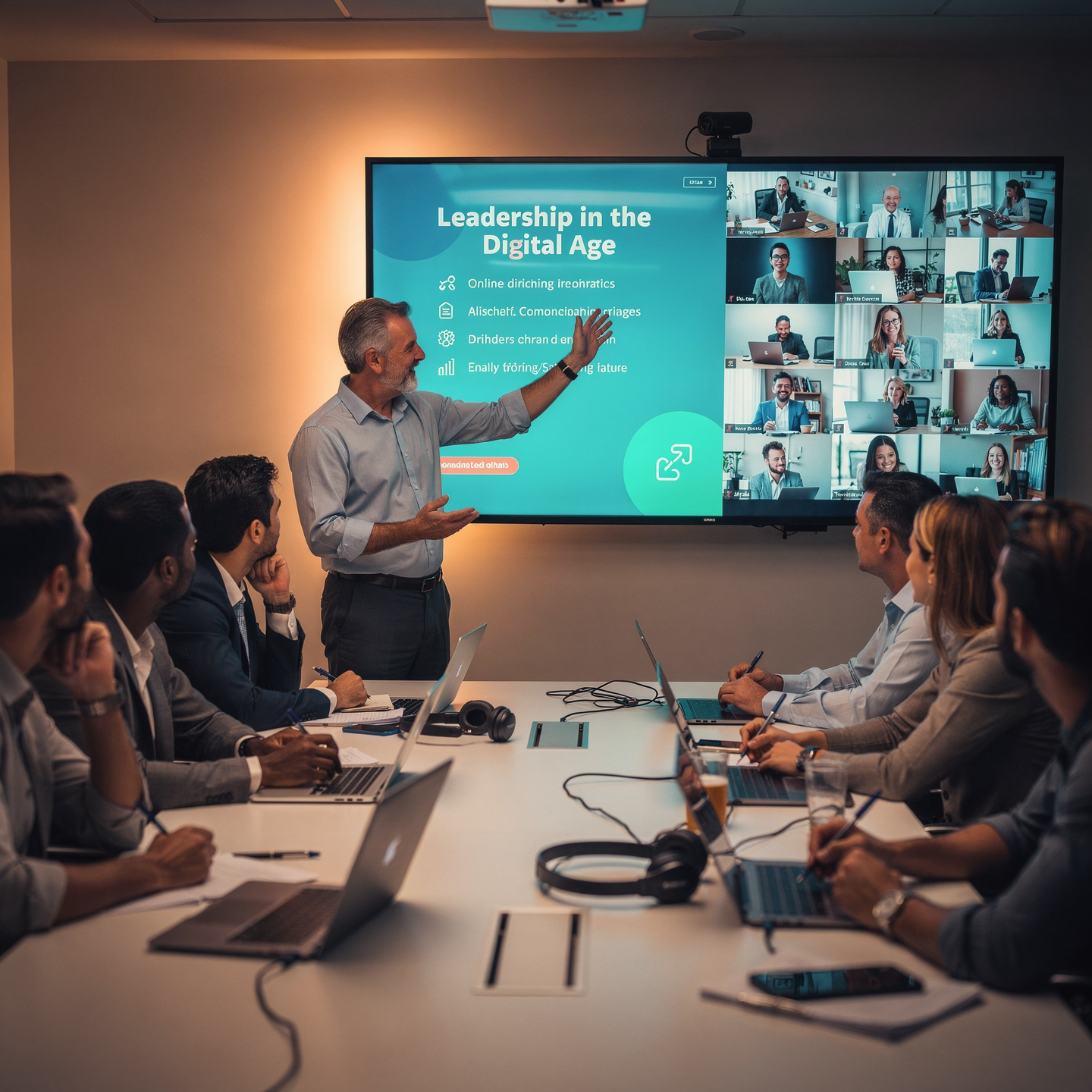
Online course on network and communication management

Why this course?

The Online Social Media and Communication Management Course

This course will provide you with the key tools and strategies to build and maintain an effective online presence. You will learn to master the main social media platforms, create engaging and relevant content, and analyze metrics to optimize your campaigns. This program will empower you to connect with your audience, boost engagement, and achieve your digital marketing goals.

Differentiating Advantages

  • Practical Approach: Real-world case studies and exercises to apply what you’ve learned.
  • Comprehensive Strategy: From defining objectives to measuring results.
  • Analytics Tools: Use of platforms to monitor and optimize performance.
  • Up-to-date Content: Latest trends and best practices in social media.
  • Networking: Opportunity to connect with other professionals in the sector.

Gestión

Online course on network and communication management

Availability: 1 in stock

Who is it aimed at?

  • Entrepreneurs and small business owners looking to boost their brand and increase sales through social media and digital marketing.
  • Marketing and communications professionals who want to update their skills on the latest social media management trends and online strategies.
  • Students and recent graduates interested in developing a career in the digital world and mastering the key tools for managing online communities.
  • Internal communications managers in organizations looking to optimize collaboration and engagement of their teams through digital platforms.
  • Anyone with an interest in the online world who wants to learn how to build an effective digital presence and manage their reputation on social media.
  • social.

Learning Flexibility
Ā Adaptable to your pace: live and recorded online classes, downloadable resources, and personalized tutoring to answer your questions.

Gestión

Objectives and competencies

Mastering the tools to build loyal virtual communities:

“Implement engagement strategies, proactive moderation, and metrics analysis to foster member participation and retention.”

Analyze and optimize your online presence to maximize impact:

Implement SEO and SEM strategies, analyzing web metrics and optimizing user experience to improve ranking and conversion.

Create innovative content strategies to amplify the brand's voice:

“Develop transmedia narratives, experimenting with emerging formats (AI, AR, VR) and prioritizing authenticity and active community participation.”

Implement effective digital marketing campaigns to drive growth:

“Define measurable KPIs, segment audiences, select optimal channels, and optimize ROI through analytics.”

Manage crises online with agility and effectiveness:

“Identify and prioritize threats, activate rapid response protocols, and communicate transparently to protect reputation and minimize negative impact.”

Orchestrating synergies between platforms to enhance visibility:

Integrate marketing, sales, and customer service data for a 360° view of the customer and effective omnichannel campaigns.

Curriculum - Modules

  1. Comprehensive Maritime Incident Management: protocols, roles, and chain of command for coordinated response
  2. Operational Planning and Execution: briefing, routes, weather windows, and go/no-go criteria
  3. Rapid Risk Assessment: criticality matrix, scene control, and decision-making under pressure
  4. Operational Communication: VHF/GMDSS, standardized reports, and inter-agency liaison
  5. Tactical Mobility and Safe Boarding: RHIB maneuvers, approach, mooring, and recovery
  6. Equipment and Technologies: PPE, signaling, satellite tracking, and field data logging
  7. Immediate Care of the Affected: primary assessment, hypothermia, trauma, and stabilization for evacuation
  8. Adverse Environmental Conditions: swell, Visibility, flows, and operational mitigation

    Simulation and training: critical scenarios, use of VR/AR, and exercises with performance metrics

    Documentation and continuous improvement: lessons learned, indicators (MTTA/MTTR), and SOP updates

  1. Fundamentals of Digital Connectivity: Evolution, Impact, and Current Trends.
  2. Network Infrastructures: Structured cabling, fiber optics, wireless networks (WiFi, Bluetooth, Zigbee).
  3. Communication Protocols: TCP/IP, HTTP/HTTPS, DNS, VPN, SSH.
  4. Network Security: Firewalls, IDS/IPS, authentication, encryption, perimeter security.
  5. Network Optimization: QoS, load balancing, data compression, caching.
  6. Network Monitoring and Diagnostics: Monitoring tools, traffic analysis, troubleshooting.
  7. Virtualization and Cloud Computing: Concepts, service models (IaaS, PaaS, SaaS), deployment, and management.
  8. Software-Defined Networking (SDN) and Network Automation.

    Mobile Connectivity: 4G, 5G, IoT, architectures, and protocols.

    Future Trends: Edge Computing, quantum networks, and Artificial Intelligence in network management.

  1. Introduction to Digital Marketing: Current Landscape and Trends
  2. SEO Fundamentals: Keyword Research, On-Page and Off-Page Optimization
  3. Content Marketing: Creating Relevant Content, Storytelling, and Editorial Calendar
  4. Social Media: Strategies for Different Platforms (Facebook, Instagram, LinkedIn, Twitter)
  5. Digital Advertising: Google Ads, Facebook Ads, and Other Platform Campaigns
  6. Email Marketing: Building Mailing Lists, Segmentation, and Automation
  7. Web Analytics: Google Analytics, KPIs, and Performance Measurement
  8. Digital Branding: Creating a Consistent Online Brand Identity
  9. E-commerce: Strategies for Online Stores and Platforms sale.
  10. Influencer Marketing: Identification, collaboration, and ROI measurement.

  1. Introduction to Social Media Marketing: Current Landscape and Trends.
  2. Defining the Target Audience: Segmentation, Buyer Persona, and Demographic Analysis.
  3. Selecting Social Media Platforms: Criteria, Comparative Analysis, and Alignment with Objectives.
  4. Content Strategy: Creation, Curation, and Planning.
  5. Community Building: Strategies for Creating and Managing Online Communities.
  6. Engagement and Participation: Techniques to Foster Interaction and Dialogue.
  7. Monitoring and Analyzing Results: KPIs, Metrics, and Measurement Tools.
  8. Crisis Management and Online Reputation: Response Protocols and Strategies.
  9. Social Media Advertising: Formats, segmentation, and campaign optimization.
  10. Tools and resources for social media management: Automation, scheduling, and analytics.

  1. Fundamentals of Digital Architecture: Principles, patterns, and best practices.
  2. Key Platforms and Technologies: CMS, e-commerce, social media, web analytics.
  3. User-Centered Design (UX/UI): User research, wireframing, prototyping, usability testing.
  4. Mobile-First Optimization: Responsive design, native apps, AMP.
  5. Web Accessibility (WCAG): Guidelines, assessment tools, and implementation strategies.
  6. SEO and Information Architecture: Site structure, keywords, internal linking.
  7. Systems and API Integration: Connecting platforms, process automation.
  8. Web Security: Protocols, vulnerabilities, protection measures.
  9. Scalability and Performance: Code optimization, CDN, caching.
  10. Analysis and Monitoring: Tracking tools, KPIs, reports.

  1. System Architecture and Components: Structural design, materials, and subsystems (mechanical, electrical, electronic, and fluid) with selection and assembly criteria for marine environments
  2. Fundamentals and Principles of Operation: Physical and engineering foundations (thermodynamics, fluid mechanics, electricity, control, and materials) that explain performance and operating limits
  3. Safety and Environmental (SHE): Risk analysis, PPE, LOTO, hazardous atmospheres, spill and waste management, and emergency response plans
  4. Applicable Regulations and Standards: IMO/ISO/IEC requirements and local regulations;
  5. Conformance criteria, certification, and best practices for operation and maintenance
  6. Inspection, testing, and diagnostics: Visual/dimensional inspection, functional testing, data analysis, and predictive techniques (vibration, thermography, fluid analysis) to identify root causes
  7. Preventive and predictive maintenance: Hourly/cycle/seasonal plans, lubrication, adjustments, calibrations, consumable replacement, post-service verification, and operational reliability
  8. Instrumentation, tools, and metrology: Measuring and testing equipment, diagnostic software, calibration and traceability; selection criteria, safe use, and storage
  9. Onboard integration and interfaces: Mechanical, electrical, fluid, and data compatibility; Sealing and watertightness, EMC/EMI, corrosion protection, and interoperability testing.

    Quality, acceptance testing, and commissioning: process and materials control, FAT/SAT, bench and sea trials, go/no-go criteria, and evidence documentation.

    Technical documentation and integrated practice: logs, checklists, reports, and a complete case study (safety → diagnosis → intervention → verification → report) applicable to any system.

Plan de estudio - Módulos

  1. Comprehensive Maritime Incident Management: protocols, roles, and chain of command for coordinated response
  2. Operational Planning and Execution: briefing, routes, weather windows, and go/no-go criteria
  3. Rapid Risk Assessment: criticality matrix, scene control, and decision-making under pressure
  4. Operational Communication: VHF/GMDSS, standardized reports, and inter-agency liaison
  5. Tactical Mobility and Safe Boarding: RHIB maneuvers, approach, mooring, and recovery
  6. Equipment and Technologies: PPE, signaling, satellite tracking, and field data logging
  7. Immediate Care of the Affected: primary assessment, hypothermia, trauma, and stabilization for evacuation
  8. Adverse Environmental Conditions: swell, Visibility, flows, and operational mitigation

    Simulation and training: critical scenarios, use of VR/AR, and exercises with performance metrics

    Documentation and continuous improvement: lessons learned, indicators (MTTA/MTTR), and SOP updates

  1. Fundamentals of Digital Connectivity: Evolution, Impact, and Current Trends.
  2. Network Infrastructures: Structured cabling, fiber optics, wireless networks (WiFi, Bluetooth, Zigbee).
  3. Communication Protocols: TCP/IP, HTTP/HTTPS, DNS, VPN, SSH.
  4. Network Security: Firewalls, IDS/IPS, authentication, encryption, perimeter security.
  5. Network Optimization: QoS, load balancing, data compression, caching.
  6. Network Monitoring and Diagnostics: Monitoring tools, traffic analysis, troubleshooting.
  7. Virtualization and Cloud Computing: Concepts, service models (IaaS, PaaS, SaaS), deployment, and management.
  8. Software-Defined Networking (SDN) and Network Automation.

    Mobile Connectivity: 4G, 5G, IoT, architectures, and protocols.

    Future Trends: Edge Computing, quantum networks, and Artificial Intelligence in network management.

  1. Introduction to Digital Marketing: Current Landscape and Trends
  2. SEO Fundamentals: Keyword Research, On-Page and Off-Page Optimization
  3. Content Marketing: Creating Relevant Content, Storytelling, and Editorial Calendar
  4. Social Media: Strategies for Different Platforms (Facebook, Instagram, LinkedIn, Twitter)
  5. Digital Advertising: Google Ads, Facebook Ads, and Other Platform Campaigns
  6. Email Marketing: Building Mailing Lists, Segmentation, and Automation
  7. Web Analytics: Google Analytics, KPIs, and Performance Measurement
  8. Digital Branding: Creating a Consistent Online Brand Identity
  9. E-commerce: Strategies for Online Stores and Platforms sale.
  10. Influencer Marketing: Identification, collaboration, and ROI measurement.

  1. Introduction to Social Media Marketing: Current Landscape and Trends.
  2. Defining the Target Audience: Segmentation, Buyer Persona, and Demographic Analysis.
  3. Selecting Social Media Platforms: Criteria, Comparative Analysis, and Alignment with Objectives.
  4. Content Strategy: Creation, Curation, and Planning.
  5. Community Building: Strategies for Creating and Managing Online Communities.
  6. Engagement and Participation: Techniques to Foster Interaction and Dialogue.
  7. Monitoring and Analyzing Results: KPIs, Metrics, and Measurement Tools.
  8. Crisis Management and Online Reputation: Response Protocols and Strategies.
  9. Social Media Advertising: Formats, segmentation, and campaign optimization.
  10. Tools and resources for social media management: Automation, scheduling, and analytics.

  1. Fundamentals of Digital Architecture: Principles, patterns, and best practices.
  2. Key Platforms and Technologies: CMS, e-commerce, social media, web analytics.
  3. User-Centered Design (UX/UI): User research, wireframing, prototyping, usability testing.
  4. Mobile-First Optimization: Responsive design, native apps, AMP.
  5. Web Accessibility (WCAG): Guidelines, assessment tools, and implementation strategies.
  6. SEO and Information Architecture: Site structure, keywords, internal linking.
  7. Systems and API Integration: Connecting platforms, process automation.
  8. Web Security: Protocols, vulnerabilities, protection measures.
  9. Scalability and Performance: Code optimization, CDN, caching.
  10. Analysis and Monitoring: Tracking tools, KPIs, reports.

  1. System Architecture and Components: Structural design, materials, and subsystems (mechanical, electrical, electronic, and fluid) with selection and assembly criteria for marine environments
  2. Fundamentals and Principles of Operation: Physical and engineering foundations (thermodynamics, fluid mechanics, electricity, control, and materials) that explain performance and operating limits
  3. Safety and Environmental (SHE): Risk analysis, PPE, LOTO, hazardous atmospheres, spill and waste management, and emergency response plans
  4. Applicable Regulations and Standards: IMO/ISO/IEC requirements and local regulations;
  5. Conformance criteria, certification, and best practices for operation and maintenance
  6. Inspection, testing, and diagnostics: Visual/dimensional inspection, functional testing, data analysis, and predictive techniques (vibration, thermography, fluid analysis) to identify root causes
  7. Preventive and predictive maintenance: Hourly/cycle/seasonal plans, lubrication, adjustments, calibrations, consumable replacement, post-service verification, and operational reliability
  8. Instrumentation, tools, and metrology: Measuring and testing equipment, diagnostic software, calibration and traceability; selection criteria, safe use, and storage
  9. Onboard integration and interfaces: Mechanical, electrical, fluid, and data compatibility; Sealing and watertightness, EMC/EMI, corrosion protection, and interoperability testing.

    Quality, acceptance testing, and commissioning: process and materials control, FAT/SAT, bench and sea trials, go/no-go criteria, and evidence documentation.

    Technical documentation and integrated practice: logs, checklists, reports, and a complete case study (safety → diagnosis → intervention → verification → report) applicable to any system.

  1. Introduction to Digital Marketing: Current Landscape and Trends
  2. Community Management Fundamentals: Roles, Responsibilities, and Skills
  3. Content Strategy: Creation, Curation, and Scheduling
  4. Social Media (Part 1): In-depth Analysis of Platforms (Facebook, Instagram)
  5. Social Media (Part 2): In-depth Analysis of Platforms (Twitter, LinkedIn)
  6. Web Analytics: Measuring and Optimizing Digital Performance
  7. Basic SEO: Search Engine Optimization
  8. Email Marketing: Acquisition, Segmentation, and Automation Strategies
  9. Digital Advertising: Introduction to Google Ads and Social Ads
  10. Online Reputation: Crisis Management and Monitoring the brand.

  1. Fundamentals of 360 Digital Marketing: Integrating Channels and Objectives
  2. Digital Audience Analysis: Segmentation, Buyer Persona, and Customer Journey
  3. Multi-Format Content Strategies: Creation, Curation, and Effective Distribution
  4. SEO and SEM: Search Engine Optimization and Online Advertising
  5. Advanced Social Media Marketing: Platforms, Engagement Strategies, and Community Management
  6. Email Marketing: Segmentation, Automation, and Campaign Personalization
  7. Influencer Marketing: Identification, Collaboration, and Results Measurement
  8. Web Analytics and Key Metrics: Google Analytics, Dashboards, and KPIs
  9. Programmatic Advertising: Media Buying, Advanced Segmentation, and Real-Time Optimization
  10. Measuring the ROI and Continuous Optimization of Digital Strategies

  1. Introduction to connected communities: definition, types, and strategic value.
  2. Setting SMART goals for the community: alignment with the business.
  3. Platform selection: Facebook, LinkedIn, forums, Discord, etc.
  4. Developing the content strategy: pillars, editorial calendar, and formats.
  5. Creating buyer personas for the community: identifying needs and interests.
  6. Defining key KPIs and metrics: engagement, reach, sentiment, conversions.
  7. Web and social analytics tools: Google Analytics, native platforms, third-party tools.
  8. Data tracking and analysis: identifying trends, patterns, and opportunities.
  9. Optimizing the strategy based on data: adjustments to content, channels, and tactics.
  10. Calculating the community’s ROI: value attribution, measurement models, and reporting.

  1. Introduction to Crossmedia: Definition, evolution, and current landscape.
  2. Crossmedia Strategies: Objectives, segmentation, and channels.
  3. Crossmedia Planning: Development of integrated campaigns.
  4. Channel Selection: Analysis and synergies (online and offline).
  5. Creation of Adapted Content: Formats and messages for each platform.
  6. Implementation and Execution: Team and resource coordination.
  7. Key Metrics in Crossmedia: KPIs and measurement tools.
  8. Results Analysis: Data interpretation and optimization.
  9. ROI Calculation: Attribution models and customer value.
  10. Success Stories and Trends: Innovation and best practices.

Career opportunities

  • Community Manager: Managing the online presence of brands and organizations, creating and engaging communities.
  • Social Media Strategist: Developing and implementing social media communication strategies to achieve marketing objectives.
  • Content Creator: Creating engaging and relevant content for various online platforms, including text, images, and videos.
  • Social Media Analyst: Monitoring and analyzing social media data to identify trends, measure campaign impact, and optimize strategies.
  • Digital Marketing Specialist: Designing and executing online marketing campaigns using diverse tools and platforms.
  • Online Communication Consultant: Advising companies and organizations on optimizing their online presence and communication.
  • Online Reputation Manager: Monitoring and managing the online image of Brands and personalities, responding to comments and managing crises.
  • SEO/SEM Technician: Optimizing websites to improve search engine ranking and managing online advertising campaigns.

“`

Admission requirements

Academic/professional profile:

Degree/Bachelor's degree in Nautical Science/Maritime Transport, Naval/Marine Engineering, or a related field; or proven professional experience in bridge/operations.

Language proficiency:

Recommended functional maritime English (SMCP) for simulations and technical materials.

5. Induction

Updated resume, copy of degree or seaman's book, ID card/passport, letter of motivation.

Technical requirements (for online):

Equipment with camera/microphone, stable connection, ≄ 24ā€ monitor recommended for ECDIS/Radar-ARPA.

Admission process and dates

1. Online
application

(form + documents).

2. Academic review and interview

(profile/objectives/schedule compatibility).

3. Admission decision

(+ scholarship proposal if applicable).

4. Reservation of place

(deposit) and registration.

5. Induction

(access to campus, calendars, simulator guides).

Scholarships and grants

  • Social Media Strategies: Master the latest techniques to create engaging content and connect with your audience.
  • Effective Digital Communication: Learn to write persuasive messages and manage your brand’s online communication.
  • Data and Metrics Analysis: Use analytics tools to measure the impact of your actions and optimize your strategy.
  • Online Reputation Management: Protect your brand’s image and manage communication crises in the digital environment.
  • SEO and SEM: Improve your brand’s search engine ranking and create effective advertising campaigns.
Learn to build a strong online presence and drive business growth with effective communication.

Testimonials

Frequently asked questions

Increase brand visibility, generate leads and retain existing customers.

Yes. The itinerary includes ECDIS/Radar-ARPA/BRM with harbor, ocean, fog, storm, and SAR scenarios.

Online with live sessions; hybrid option for simulator/practical placements through agreements.

A LAN (Local Area Network) connects devices in a small, limited area, such as a home or office, while a WAN (Wide Area Network) covers a larger geographical area, such as a city, country, or even globally, often using third-party infrastructure such as telephone lines or satellites.

Recommended functional SMCP. We offer support materials for standard phraseology.

Yes, with a relevant degree or experience in maritime/port operations. The admissions interview will confirm suitability.

Optional (3–6 months) through Companies & Collaborations and the Alumni Network.

Simulator practice (rubrics), defeat plans, SOPs, checklists, micro-tests and applied TFM.

A degree from Navalis Magna University + operational portfolio (tracks, SOPs, reports and KPIs) useful for audits and employment.

  1. Introduction to Crossmedia: Definition, evolution, and current landscape.
  2. Crossmedia Strategies: Objectives, segmentation, and channels.
  3. Crossmedia Planning: Development of integrated campaigns.
  4. Channel Selection: Analysis and synergies (online and offline).
  5. Creation of Adapted Content: Formats and messages for each platform.
  6. Implementation and Execution: Team and resource coordination.
  7. Key Metrics in Crossmedia: KPIs and measurement tools.
  8. Results Analysis: Data interpretation and optimization.
  9. ROI Calculation: Attribution models and customer value.
  10. Success Stories and Trends: Innovation and best practices.

Request information

  1. Complete the Application Form
  2. Attach your CV/Qualifications (if you have them to hand).
  3. Indicate your preferred cohort (January/May/September) and whether you want the hybrid option with simulator sessions.
An academic advisor will contact you within 24–48 hours to guide you through the admission process, scholarships, and compatibility with your professional schedule. Translated with DeepL.com (free version)
Please enable JavaScript in your browser to complete this form.
Click or drag a file to this area to upload.

Teachers

0
    0
    Tu carrito
    Tu carrito esta vacĆ­oRegresar a la tienda
    Scroll to Top


