Safety Standards Course for Small Boats
Why this course?
The Small Craft Safety Standards Course
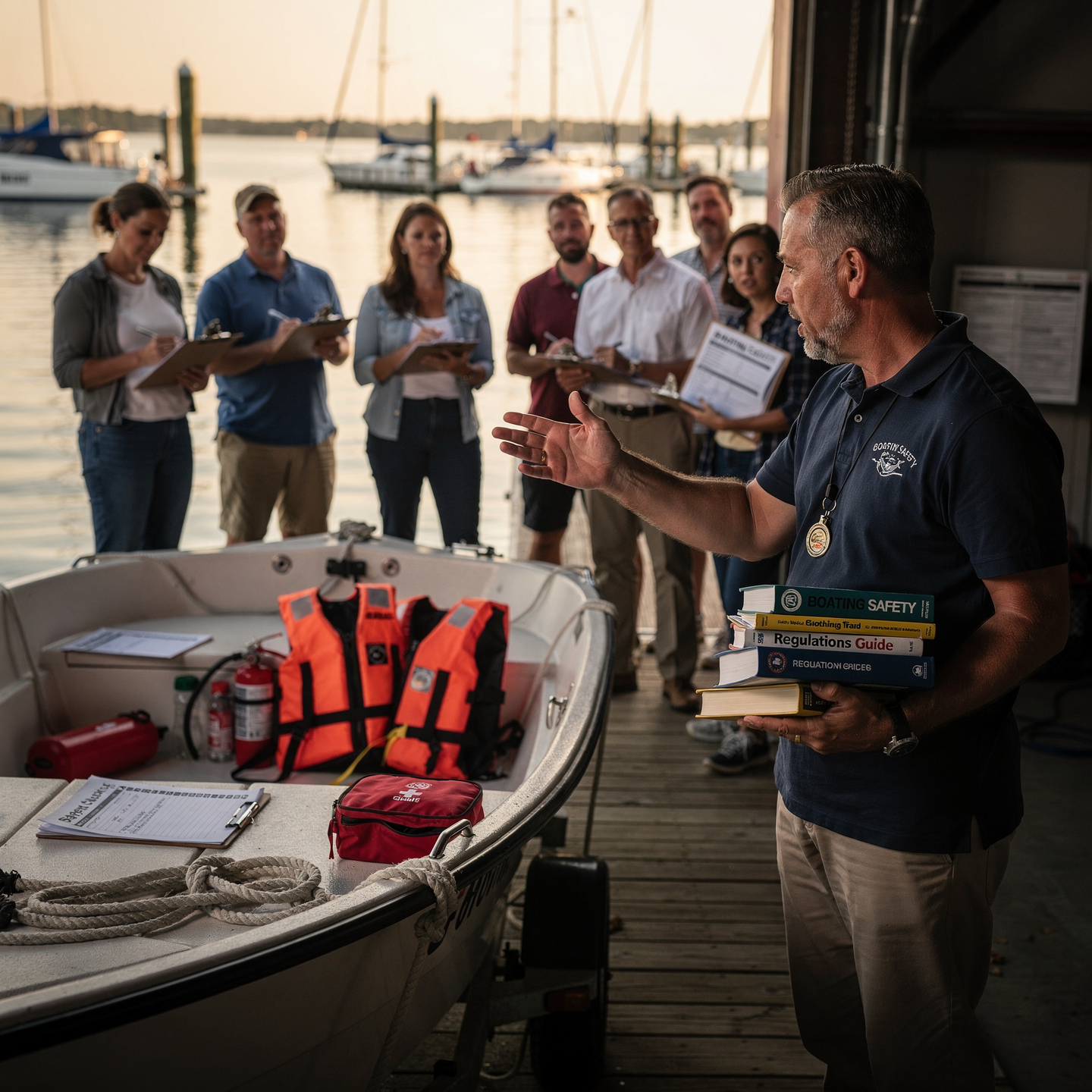
This course provides you with the essential knowledge to navigate safely and responsibly. Learn to identify and mitigate risks, use safety equipment correctly, and react to emergencies at sea. This program prepares you to obtain your nautical certification and enjoy sailing safely and confidently.
Differential Advantages
- Comprehensive Knowledge: Learn about current regulations, mandatory safety equipment, and best navigation practices.
- Practical Skills: Develop skills in navigation, vessel handling, first aid, and sea survival.
- Realistic Simulations: Participate in emergency simulations to test your knowledge and skills in a safe environment.
- Expert Instructors: Learn from instructors with extensive experience in navigation and maritime safety.
- Flexibility: Online format with multimedia content and interactive assessments, allowing you to learn at your own pace.
- Modality: Online
- Level: Cursos
- Hours: 150 H
- Start date: 24-07-2026
Availability: 1 in stock
Who is it aimed at?
- Recreational and sport boaters seeking a solid foundation in maritime safety, emergency procedures, and the correct use of safety equipment.
- Skippers of small craft wishing to update their knowledge, comply with current regulations, and improve the safety of their passengers.
- Small craft owners interested in protecting their investment, avoiding incidents, and ensuring a safe voyage for themselves and their companions.
- Sport fishing and water sports enthusiasts seeking to minimize risks, act confidently in unforeseen situations, and enjoy the sea responsibly.
- Members of yacht clubs and sailing schools wishing to complement their theoretical training with practical knowledge and essential safety tips.
mar.
Flexibility and effective learning:
Online course with downloadable learning materials, practical exercises, and access from any device to study at your own pace and with the comfort you need.
Objectives and competencies

Inspect and maintain essential safety equipment:
“Following manufacturer procedures, detecting anomalies, and replacing worn components.”

Identify and respond to maritime emergencies:
“Assess the situation (fire, flood, man overboard), activate the general alarm, communicate via GMDSS and coordinate the crew’s response according to the emergency plan.”

Understand and apply the relevant maritime regulations:
“Interpret and implement maritime safety regulations (SOLAS, MARPOL, etc.) during operations, emergencies, and drills.”

Operate the vessel safely and responsibly:
“Interpret and apply current maritime regulations, adjusting navigation to weather conditions and maritime traffic.”
Use communication and navigation equipment correctly:
“Interpreting equipment information for safe navigation, anticipating risk situations and acting proactively.”

Recognize and mitigate the specific risks associated with small vessels:
Assess stability, load capacity and weather conditions, and act preventively.
Curriculum - Modules
- Comprehensive Maritime Incident Management: protocols, roles, and chain of command for coordinated response
- Operational Planning and Execution: briefing, routes, weather windows, and go/no-go criteria
- Rapid Risk Assessment: criticality matrix, scene control, and decision-making under pressure
- Operational Communication: VHF/GMDSS, standardized reports, and inter-agency liaison
- Tactical Mobility and Safe Boarding: RHIB maneuvers, approach, mooring, and recovery
- Equipment and Technologies: PPE, signaling, satellite tracking, and field data logging
- Immediate Care of the Affected: primary assessment, hypothermia, trauma, and stabilization for evacuation
- Adverse Environmental Conditions: swell, Visibility, flows, and operational mitigation
Simulation and training: critical scenarios, use of VR/AR, and exercises with performance metrics
Documentation and continuous improvement: lessons learned, indicators (MTTA/MTTR), and SOP updates
- National and International Maritime Legislation: Conventions, laws, and regulations applicable to small craft.
- Required Documentation: Licenses, certificates of seaworthiness, insurance, and other permits.
- Safety Equipment: Life jackets, life rafts, fire extinguishers, flares, and other devices.
- Radiocommunications: Proper use of VHF radios, distress calls, and emergency channels.
- Fire and Explosion Prevention: Onboard hazards, preventive measures, and handling of fuels and gases.
- Basic First Aid: Cardiopulmonary resuscitation (CPR) techniques and treatment of wounds and burns.
- Survival at Sea: Floating techniques, use of survival equipment, and search and rescue. Rescue.
- Emergency Procedures: Abandonment of vessel, man overboard, collision, grounding, and other incidents.
- Inspection and Maintenance of Safety Equipment: Frequency, procedures, and records.
- Risk Assessment on Board: Identification, analysis, and control measures for maritime safety.
‘
- Regulations applicable to small craft: national and international legislation.
- Mandatory safety equipment: life jackets, flares, EPIRBs.
- Inspections and certifications: requirements and procedures.
- Safety at sea: collision prevention, navigation rules.
- Emergency procedures: man overboard, fire, abandoning ship.
- Basic first aid: initial care for the injured and sick on board.
- Maritime communication: use of VHF radio, distress calls.
- Basic meteorology: interpreting forecasts, identifying risks.
- Preventive maintenance of the Vessel: Periodic inspections and minor repairs.
Onboard risk management: Identification, assessment, and control.
‘
- Introduction to Maritime Safety in Small Vessels: Definitions and Scope
- International Legal Framework: Relevant Conventions and Agreements (SOLAS, MARPOL)
- National Regulations: Specific Legislation for Small Vessels
- Registration and Documentation: Requirements for Vessel Legalization
- Mandatory Safety Equipment: Life jackets, life rafts, fire extinguishers, etc.
- Communication Equipment: VHF Radio, EPIRB, SART – Operation and Use
- Collision Prevention: Steering Rules and Visual and Sound Signals (COLREG)
- Navigation Safety: Nautical Charts, GPS, Plotters and their Responsible Use
- Emergency Management: Procedures in case of fire, flood, man overboard
- Preventive and Corrective Maintenance: Periodic inspections and essential repairs
‘
- Spanish Maritime Legislation: Maritime Navigation Law, Recreational Craft Regulations.
- European Regulations: Directives and regulations applicable to recreational craft.
- Mandatory Documentation: Certificates of seaworthiness, licenses, insurance.
- Safety Equipment: Life jackets, life rafts, pyrotechnics.
- Pollution Prevention: MARPOL regulations and good environmental practices.
- International Regulations for Preventing Collisions at Sea (COLREGs): Application to recreational craft.
- Navigation Restrictions: Prohibited areas, protected areas, speed restrictions.
- Liability Civil Liability: Mandatory insurance and recommended coverage.
Inspections and Penalties: Inspection procedures, common infractions, and consequences.
Legislative Updates: Updates and changes to current regulations.
‘
- System Architecture and Components: Structural design, materials, and subsystems (mechanical, electrical, electronic, and fluid) with selection and assembly criteria for marine environments
- Fundamentals and Principles of Operation: Physical and engineering foundations (thermodynamics, fluid mechanics, electricity, control, and materials) that explain performance and operating limits
- Safety and Environmental (SHE): Risk analysis, PPE, LOTO, hazardous atmospheres, spill and waste management, and emergency response plans
- Applicable Regulations and Standards: IMO/ISO/IEC requirements and local regulations;
- Conformance criteria, certification, and best practices for operation and maintenance
- Inspection, testing, and diagnostics: Visual/dimensional inspection, functional testing, data analysis, and predictive techniques (vibration, thermography, fluid analysis) to identify root causes
- Preventive and predictive maintenance: Hourly/cycle/seasonal plans, lubrication, adjustments, calibrations, consumable replacement, post-service verification, and operational reliability
- Instrumentation, tools, and metrology: Measuring and testing equipment, diagnostic software, calibration and traceability; selection criteria, safe use, and storage
- Onboard integration and interfaces: Mechanical, electrical, fluid, and data compatibility; Sealing and watertightness, EMC/EMI, corrosion protection, and interoperability testing.
Quality, acceptance testing, and commissioning: process and materials control, FAT/SAT, bench and sea trials, go/no-go criteria, and evidence documentation.
Technical documentation and integrated practice: logs, checklists, reports, and a complete case study (safety → diagnosis → intervention → verification → report) applicable to any system.
Plan de estudio - Módulos
- Comprehensive Maritime Incident Management: protocols, roles, and chain of command for coordinated response
- Operational Planning and Execution: briefing, routes, weather windows, and go/no-go criteria
- Rapid Risk Assessment: criticality matrix, scene control, and decision-making under pressure
- Operational Communication: VHF/GMDSS, standardized reports, and inter-agency liaison
- Tactical Mobility and Safe Boarding: RHIB maneuvers, approach, mooring, and recovery
- Equipment and Technologies: PPE, signaling, satellite tracking, and field data logging
- Immediate Care of the Affected: primary assessment, hypothermia, trauma, and stabilization for evacuation
- Adverse Environmental Conditions: swell, Visibility, flows, and operational mitigation
Simulation and training: critical scenarios, use of VR/AR, and exercises with performance metrics
Documentation and continuous improvement: lessons learned, indicators (MTTA/MTTR), and SOP updates
- National and International Maritime Legislation: Conventions, laws, and regulations applicable to small craft.
- Required Documentation: Licenses, certificates of seaworthiness, insurance, and other permits.
- Safety Equipment: Life jackets, life rafts, fire extinguishers, flares, and other devices.
- Radiocommunications: Proper use of VHF radios, distress calls, and emergency channels.
- Fire and Explosion Prevention: Onboard hazards, preventive measures, and handling of fuels and gases.
- Basic First Aid: Cardiopulmonary resuscitation (CPR) techniques and treatment of wounds and burns.
- Survival at Sea: Floating techniques, use of survival equipment, and search and rescue. Rescue.
- Emergency Procedures: Abandonment of vessel, man overboard, collision, grounding, and other incidents.
- Inspection and Maintenance of Safety Equipment: Frequency, procedures, and records.
- Risk Assessment on Board: Identification, analysis, and control measures for maritime safety.
‘
- Regulations applicable to small craft: national and international legislation.
- Mandatory safety equipment: life jackets, flares, EPIRBs.
- Inspections and certifications: requirements and procedures.
- Safety at sea: collision prevention, navigation rules.
- Emergency procedures: man overboard, fire, abandoning ship.
- Basic first aid: initial care for the injured and sick on board.
- Maritime communication: use of VHF radio, distress calls.
- Basic meteorology: interpreting forecasts, identifying risks.
- Preventive maintenance of the Vessel: Periodic inspections and minor repairs.
Onboard risk management: Identification, assessment, and control.
‘
- Introduction to Maritime Safety in Small Vessels: Definitions and Scope
- International Legal Framework: Relevant Conventions and Agreements (SOLAS, MARPOL)
- National Regulations: Specific Legislation for Small Vessels
- Registration and Documentation: Requirements for Vessel Legalization
- Mandatory Safety Equipment: Life jackets, life rafts, fire extinguishers, etc.
- Communication Equipment: VHF Radio, EPIRB, SART – Operation and Use
- Collision Prevention: Steering Rules and Visual and Sound Signals (COLREG)
- Navigation Safety: Nautical Charts, GPS, Plotters and their Responsible Use
- Emergency Management: Procedures in case of fire, flood, man overboard
- Preventive and Corrective Maintenance: Periodic inspections and essential repairs
‘
- Spanish Maritime Legislation: Maritime Navigation Law, Recreational Craft Regulations.
- European Regulations: Directives and regulations applicable to recreational craft.
- Mandatory Documentation: Certificates of seaworthiness, licenses, insurance.
- Safety Equipment: Life jackets, life rafts, pyrotechnics.
- Pollution Prevention: MARPOL regulations and good environmental practices.
- International Regulations for Preventing Collisions at Sea (COLREGs): Application to recreational craft.
- Navigation Restrictions: Prohibited areas, protected areas, speed restrictions.
- Liability Civil Liability: Mandatory insurance and recommended coverage.
Inspections and Penalties: Inspection procedures, common infractions, and consequences.
Legislative Updates: Updates and changes to current regulations.
‘
- System Architecture and Components: Structural design, materials, and subsystems (mechanical, electrical, electronic, and fluid) with selection and assembly criteria for marine environments
- Fundamentals and Principles of Operation: Physical and engineering foundations (thermodynamics, fluid mechanics, electricity, control, and materials) that explain performance and operating limits
- Safety and Environmental (SHE): Risk analysis, PPE, LOTO, hazardous atmospheres, spill and waste management, and emergency response plans
- Applicable Regulations and Standards: IMO/ISO/IEC requirements and local regulations;
- Conformance criteria, certification, and best practices for operation and maintenance
- Inspection, testing, and diagnostics: Visual/dimensional inspection, functional testing, data analysis, and predictive techniques (vibration, thermography, fluid analysis) to identify root causes
- Preventive and predictive maintenance: Hourly/cycle/seasonal plans, lubrication, adjustments, calibrations, consumable replacement, post-service verification, and operational reliability
- Instrumentation, tools, and metrology: Measuring and testing equipment, diagnostic software, calibration and traceability; selection criteria, safe use, and storage
- Onboard integration and interfaces: Mechanical, electrical, fluid, and data compatibility; Sealing and watertightness, EMC/EMI, corrosion protection, and interoperability testing.
Quality, acceptance testing, and commissioning: process and materials control, FAT/SAT, bench and sea trials, go/no-go criteria, and evidence documentation.
Technical documentation and integrated practice: logs, checklists, reports, and a complete case study (safety → diagnosis → intervention → verification → report) applicable to any system.
- Introduction to Maritime Safety: Definitions, Scope, and Objectives.
- National and International Regulations Applicable to Small Vessels: Laws, Decrees, and Regulations.
- Types of Small Vessels: Classification, Characteristics, and Limitations.
- Mandatory Safety Equipment: Life Jackets, Flares, Fire Extinguishers, etc.
- Inspections and Certifications: Procedures, Requirements, and Validity.
- Skipper’s Responsibilities: Legal Obligations, Crew Safety, and Risk Prevention.
- Communication and Signaling: VHF, Warning Systems, and Distress Signals.
- Basic First Aid: Responding to Medical Emergencies on Board.
- Prevention of Firefighting and Damage Control: Procedures and Equipment.
Risk Management and Safe Navigation Planning: Risk Assessment, Routes, and Weather Conditions.
‘
- Introduction to Maritime Safety: Definition, Scope, and Importance
- National and International Regulations: SOLAS, Geneva Convention, Local Legislation
- Types of Small Craft: Characteristics, Risks, and Limitations
- Mandatory Safety Equipment: Life Jackets, Life Rafts, Flares, etc.
- Inspection and Maintenance of Safety Equipment: Frequency and Procedures
- Voyage Planning: Meteorology, Routes, Ports of Refuge
- Communication in Case of Emergency: VHF, EPIRBs, Satellite Phones
- Emergency Procedures: Man Overboard, Fire, Abandon Ship
- First Aid on Board: Treatment of injuries, burns, hypothermia
- Awareness of specific risks: rollover, collision, stranding
‘
- Introduction to Maritime Safety: Key Concepts and Historical Evolution.
- International Regulatory Framework: SOLAS, MARPOL, STCW Conventions and other relevant instruments.
- National Legislation and Inspections: Regulatory Compliance at the Local Level.
- Risk Assessment in Navigation: Hazard Identification, Analysis, and Mitigation.
- Safety Management Systems (SMS): Implementation and Maintenance on Board.
- Safety Equipment: Types, Use, and Maintenance of Lifesaving and Firefighting Devices.
- Emergency Plans on Board: Procedures for Different Critical Scenarios.
- Emergency Communications: Alert and Coordination Systems in Crisis Situations.
- Maritime Accident Investigation: Methodology and root cause analysis.
- Maritime safety culture: Promoting awareness and commitment to prevention.
‘
- Introduction to Maritime Safety: Key Concepts and Accident Statistics for Small Vessels.
- National and International Regulations: Laws, decrees, and conventions applicable to recreational and professional vessels.
- Mandatory Safety Equipment: Life jackets, flares, fire extinguishers, EPIRBs, and communication systems.
- Inspections and Certifications: Requirements for obtaining navigation permits and licenses.
- Preparing for Sailing: Voyage planning, weather check, and vessel condition assessment.
- Preventive Maintenance: Inspection and repair of engines, electrical systems, and hull.
- Basic First Aid: Onboard medical emergency care, first aid kit, and evacuation procedures.
- Survival at Sea: Floating techniques, use of life rafts, and emergency communication.
- Fire and Explosion Prevention: Fuel handling, ventilation, and detection systems.
- Captain’s Responsibilities: Duties and obligations in the safe operation of the vessel.
‘
Career opportunities
- Recreational Craft Skipper: Responsible for the safety and navigation of recreational craft.
- Deckhand on Small Vessels: Support in deck and maintenance tasks, ensuring safety.
- Nautical Activities Instructor: Instructor in aquatic activities such as sailing, kayaking, or paddle surfing, prioritizing safety.
- Marine Rescue Personnel on Beaches: Surveillance and rescue in coastal areas, applying safety regulations.
- Worker in Boat Rental Companies: Basic safety instruction for users and vessel maintenance.
- Crew Member on Coastal Fishing Vessels: Compliance with safety regulations during fishing operations.
- Marina Operator: Assistance in Mooring and unmooring of vessels, ensuring safety in the port.
Volunteer in maritime rescue organizations: Participation in search and rescue operations, following safety protocols.
“`
Admission requirements

Academic/professional profile:
Degree/Bachelor's degree in Nautical Science/Maritime Transport, Naval/Marine Engineering, or a related field; or proven professional experience in bridge/operations.

Language proficiency:
Recommended functional maritime English (SMCP) for simulations and technical materials.

5. Induction
Updated resume, copy of degree or seaman's book, ID card/passport, letter of motivation.

Technical requirements (for online):
Equipment with camera/microphone, stable connection, ≥ 24” monitor recommended for ECDIS/Radar-ARPA.
Admission process and dates

1. Online
application
(form + documents).

2. Academic review and interview
(profile/objectives/schedule compatibility).

3. Admission decision
(+ scholarship proposal if applicable).

4. Reservation of place
(deposit) and registration.

5. Induction
(access to campus, calendars, simulator guides).
Scholarships and grants
- Safety Fundamentals: Learn the essential rules for safe navigation and minimizing risks on small boats.
- Safety Equipment: Learn about the mandatory equipment, its correct use, and preventive maintenance for emergencies.
- Emergency Procedures: Master rescue and first aid techniques and how to act in critical situations such as fires or shipwrecks.
- Maritime Legislation: Familiarize yourself with current regulations, permitted navigation areas, and the skipper’s responsibilities.
- Safety Practices: Participate in Drills and practical exercises to apply the knowledge acquired and react effectively to any eventuality. Prepare to sail with confidence and ensure the safety of everyone on board.
Testimonials
I completed the Small Craft Safety Standards course and successfully applied what I learned during a maritime emergency. Remaining calm, I followed safety protocols, including the proper use of flares and effective communication with the coast guard, resulting in a swift and safe rescue for everyone on board.
I applied the workplace safety knowledge I gained in the course to identify and mitigate risks in my workplace, which resulted in a 30% reduction in safety incidents in the last quarter.
I applied the safety rules I learned during a trip with my family. I identified a small leak, reacted calmly by following the bailing procedure and using safety equipment, avoiding a potentially dangerous situation and ensuring the well-being of everyone on board.
I applied the safety procedures I learned during a family outing. I identified a small leak, contained it with the appropriate equipment, and used emergency signals to contact the coast guard, who assisted us quickly. Thanks to the training, we remained calm and resolved the situation safely and efficiently.

Frequently asked questions
Life jacket/personal flotation device (PFD)
Yes. The itinerary includes ECDIS/Radar-ARPA/BRM with harbor, ocean, fog, storm, and SAR scenarios.
Online with live sessions; hybrid option for simulator/practical placements through agreements.
Life jackets/personal flotation devices (PFDs)
Recommended functional SMCP. We offer support materials for standard phraseology.
Yes, with a relevant degree or experience in maritime/port operations. The admissions interview will confirm suitability.
Optional (3–6 months) through Companies & Collaborations and the Alumni Network.
Simulator practice (rubrics), defeat plans, SOPs, checklists, micro-tests and applied TFM.
A degree from Navalis Magna University + operational portfolio (tracks, SOPs, reports and KPIs) useful for audits and employment.
- Introduction to Maritime Safety: Key Concepts and Accident Statistics for Small Vessels.
- National and International Regulations: Laws, decrees, and conventions applicable to recreational and professional vessels.
- Mandatory Safety Equipment: Life jackets, flares, fire extinguishers, EPIRBs, and communication systems.
- Inspections and Certifications: Requirements for obtaining navigation permits and licenses.
- Preparing for Sailing: Voyage planning, weather check, and vessel condition assessment.
- Preventive Maintenance: Inspection and repair of engines, electrical systems, and hull.
- Basic First Aid: Onboard medical emergency care, first aid kit, and evacuation procedures.
- Survival at Sea: Floating techniques, use of life rafts, and emergency communication.
- Fire and Explosion Prevention: Fuel handling, ventilation, and detection systems.
- Captain’s Responsibilities: Duties and obligations in the safe operation of the vessel.
‘
Request information
- Complete the Application Form
- Attach your CV/Qualifications (if you have them to hand).
- Indicate your preferred cohort (January/May/September) and whether you want the hybrid option with simulator sessions.
Teachers
Eng. Tomás Riera
Full Professor
Eng. Tomás Riera
Full Professor
Eng. Sofía Marquina
Full Professor
Eng. Sofía Marquina
Full Professor
Eng. Javier Bañuls
Full Professor
Eng. Javier Bañuls
Full Professor
Dr. Nuria Llobregat
Full Professor
Dr. Nuria Llobregat
Full Professor
Dr. Pau Ferrer
Full Professor
Dr. Pau Ferrer
Full Professor
Cap. Javier Abaroa (MCA)
Full Professor
Cap. Javier Abaroa (MCA)
Full Professor