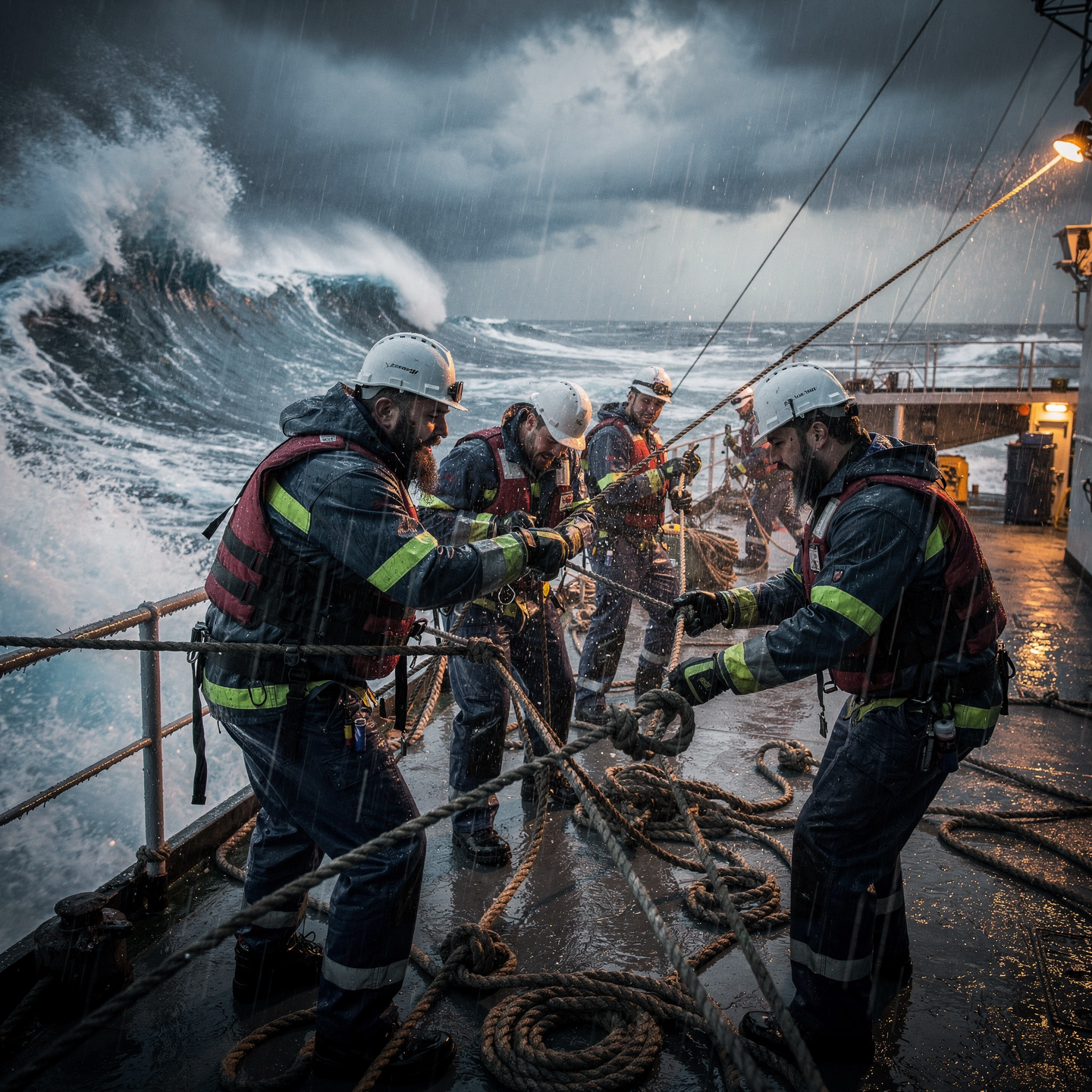
Course on the prevention of nautical accidents

Why this course?

The Marine Accident Prevention

course

Is designed to equip you with the tools and knowledge necessary to minimize risks and ensure safety in your maritime activities. You will learn to identify potential hazards, apply effective safety procedures, and respond appropriately to emergency situations. This program combines fundamental theory with practical exercises and real-world case studies for a comprehensive understanding.

Differential Advantages

  • Risk Analysis: Identification and evaluation of specific navigational hazards.
  • Emergency Procedures: Response practice for fires, collisions, man overboard, and other critical situations.
  • Legislation and Regulations: Knowledge of relevant maritime laws and regulations.
  • Safety Equipment: Proper use and maintenance of life jackets, life rafts, communication systems, and other devices.
  • Drills and Practical Exercises: Reinforcement of learning through realistic scenarios.
Prevención

Course on the prevention of nautical accidents

Availability: 1 in stock

Who is it aimed at?

  • Recreational boat skippers looking to deepen their knowledge of safety, risk management, and best practices on board.
  • Sailing enthusiasts wanting to acquire theoretical and practical knowledge to avoid incidents and sail with confidence.
  • Instructors and sailing schools looking to update their training and offer high-quality instruction in accident prevention.
  • Boat rental companies interested in standardizing safety protocols and minimizing risks for their clients.
  • Public bodies and associations dedicated to maritime safety seeking to promote prevention and reduce accidents.

Flexibility and continuous learning
Ā Adapted At your own pace: 24/7 accessible online materials, discussion forums and regular updates on regulations and best practices.

Prevención

Objectives and competencies

Apply navigation rules correctly:

“By correctly interpreting national and international regulations, and acting accordingly in unforeseen situations.”

Inspect and maintain safety equipment:

“Conduct systematic inspections, document findings, and ensure the operational availability of the equipment through preventive and corrective maintenance.”

Recognize and mitigate the specific risks of the aquatic environment:

“Identify hazards (currents, tides, weather) and proactively adapt navigation and maneuvers.”

Responding effectively to water-related emergencies:

Quickly assess the situation, prioritize actions (rescue, safety), communicate the emergency according to the protocol (radio, signals), and execute evasive/rescue maneuvers minimizing risks to the crew and the vessel.

Familiarize yourself with and apply sea survival techniques:

Identify risks, use safety equipment, apply emergency procedures, and remain calm under pressure.

Interpreting and communicating maritime meteorological information:

“Identify sources of information (bulletins, notices to mariners, weather fax) and adapt navigation to the expected conditions, clearly communicating this to the crew.”

Curriculum - Modules

  1. Comprehensive Maritime Incident Management: protocols, roles, and chain of command for coordinated response
  2. Operational Planning and Execution: briefing, routes, weather windows, and go/no-go criteria
  3. Rapid Risk Assessment: criticality matrix, scene control, and decision-making under pressure
  4. Operational Communication: VHF/GMDSS, standardized reports, and inter-agency liaison
  5. Tactical Mobility and Safe Boarding: RHIB maneuvers, approach, mooring, and recovery
  6. Equipment and Technologies: PPE, signaling, satellite tracking, and field data logging
  7. Immediate Care of the Affected: primary assessment, hypothermia, trauma, and stabilization for evacuation
  8. Adverse Environmental Conditions: swell, Visibility, flows, and operational mitigation

    Simulation and training: critical scenarios, use of VR/AR, and exercises with performance metrics

    Documentation and continuous improvement: lessons learned, indicators (MTTA/MTTR), and SOP updates

  1. Introduction to Maritime Safety: Statistics, Risks, and Trends
  2. Human Factors: Communication, Leadership, Decision-Making, and Culture
  3. Fatigue and Stress: Causes, Effects, and Mitigation Strategies
  4. CRM/BRM: Principles, Tools, and Application on the Bridge and in the Engine Room
  5. Emergency Management: Planning, Organization, and Response
  6. Fires on Board: Prevention, Detection, Extinguishing, and Evacuation
  7. Waterlogged Leaks and Flooding: Control, Pumping, and Stabilization
  8. Abandon Ship: Preparation, Procedures, and Survival
  9. Search and Rescue: Organization, Coordination, and Collaboration
  10. Analysis Post-incident: Investigation, Reporting, and Lessons Learned

  1. Introduction to Maritime Safety: Key Concepts and Regulatory Framework
  2. Onboard Risk Assessment: Hazard Identification, Analysis, and Mitigation
  3. Safety Equipment: Life Jackets, Life Rafts, Immersion Suits, EPIRB, SART
  4. Firefighting: Equipment, Techniques, Fire Classes, and Emergency Plans
  5. Damage Control: Watertightness, Pumping, Materials, and Temporary Repair Procedures
  6. First Aid and Basic Life Support: Protocols for responding to medical emergencies onboard
  7. Search and Rescue (SAR): Coordination, Communications, and Maritime Rescue Procedures
  8. Crisis Management: Effective communication, decision-making, and stress management in emergency situations.
  9. Onboard Emergency Plans: Development, implementation, and drills.
  10. International and National Maritime Safety Legislation: Applicable conventions and regulations.

  1. Introduction to Maritime Safety: Definition, Scope, and Importance.
  2. International Regulatory Framework: SOLAS, MARPOL, STCW Conventions, etc.
  3. Risk Management in Navigation: Identification, Assessment, and Control.
  4. Risks Associated with Loading and Stowage: Types of Cargo, Handling, and Safety.
  5. Environmental Risks: Prevention of Marine Pollution by Hydrocarbons and Other Substances.
  6. Maritime Safety Equipment: Types, Maintenance, and Proper Use.
  7. Emergency Procedures: Abandon Ship, Firefighting, Man Overboard.
  8. Safety in Port Operations: Ship-Port Interaction, Specific Risks.
  9. Maritime Cybersecurity: Threats, Vulnerabilities, and Protection Measures.
  10. Case Studies and Lessons Learned from Maritime Incidents.

  1. Introduction to Maritime Safety: Concepts, Threats, and Risks
  2. International Maritime Law: SOLAS, MARPOL, STCW, and other conventions
  3. Risk Assessment on Board: Identification, Analysis, and Evaluation
  4. Emergency Communication Protocols: GMDSS, VHF, Distress Calls
  5. Personal Protective Equipment: Life Jackets, Immersion Suits, EPIRBs
  6. Fire Detection and Extinguishing Systems on Board: Types, Operation, and Maintenance
  7. Damage Control and Ship Stability: Procedures and Equipment
  8. Safe Handling of Dangerous Goods: IMDG Code and procedures
  9. International Ship Security Protocol (ISPS): Security Levels, Threats, and Countermeasures
  10. Emergency Drills and Exercises: Planning, Execution, and Evaluation

  1. System Architecture and Components: Structural design, materials, and subsystems (mechanical, electrical, electronic, and fluid) with selection and assembly criteria for marine environments
  2. Fundamentals and Principles of Operation: Physical and engineering foundations (thermodynamics, fluid mechanics, electricity, control, and materials) that explain performance and operating limits
  3. Safety and Environmental (SHE): Risk analysis, PPE, LOTO, hazardous atmospheres, spill and waste management, and emergency response plans
  4. Applicable Regulations and Standards: IMO/ISO/IEC requirements and local regulations;
  5. Conformance criteria, certification, and best practices for operation and maintenance
  6. Inspection, testing, and diagnostics: Visual/dimensional inspection, functional testing, data analysis, and predictive techniques (vibration, thermography, fluid analysis) to identify root causes
  7. Preventive and predictive maintenance: Hourly/cycle/seasonal plans, lubrication, adjustments, calibrations, consumable replacement, post-service verification, and operational reliability
  8. Instrumentation, tools, and metrology: Measuring and testing equipment, diagnostic software, calibration and traceability; selection criteria, safe use, and storage
  9. Onboard integration and interfaces: Mechanical, electrical, fluid, and data compatibility; Sealing and watertightness, EMC/EMI, corrosion protection, and interoperability testing.

    Quality, acceptance testing, and commissioning: process and materials control, FAT/SAT, bench and sea trials, go/no-go criteria, and evidence documentation.

    Technical documentation and integrated practice: logs, checklists, reports, and a complete case study (safety → diagnosis → intervention → verification → report) applicable to any system.

Plan de estudio - Módulos

  1. Comprehensive Maritime Incident Management: protocols, roles, and chain of command for coordinated response
  2. Operational Planning and Execution: briefing, routes, weather windows, and go/no-go criteria
  3. Rapid Risk Assessment: criticality matrix, scene control, and decision-making under pressure
  4. Operational Communication: VHF/GMDSS, standardized reports, and inter-agency liaison
  5. Tactical Mobility and Safe Boarding: RHIB maneuvers, approach, mooring, and recovery
  6. Equipment and Technologies: PPE, signaling, satellite tracking, and field data logging
  7. Immediate Care of the Affected: primary assessment, hypothermia, trauma, and stabilization for evacuation
  8. Adverse Environmental Conditions: swell, Visibility, flows, and operational mitigation

    Simulation and training: critical scenarios, use of VR/AR, and exercises with performance metrics

    Documentation and continuous improvement: lessons learned, indicators (MTTA/MTTR), and SOP updates

  1. Introduction to Maritime Safety: Statistics, Risks, and Trends
  2. Human Factors: Communication, Leadership, Decision-Making, and Culture
  3. Fatigue and Stress: Causes, Effects, and Mitigation Strategies
  4. CRM/BRM: Principles, Tools, and Application on the Bridge and in the Engine Room
  5. Emergency Management: Planning, Organization, and Response
  6. Fires on Board: Prevention, Detection, Extinguishing, and Evacuation
  7. Waterlogged Leaks and Flooding: Control, Pumping, and Stabilization
  8. Abandon Ship: Preparation, Procedures, and Survival
  9. Search and Rescue: Organization, Coordination, and Collaboration
  10. Analysis Post-incident: Investigation, Reporting, and Lessons Learned

  1. Introduction to Maritime Safety: Key Concepts and Regulatory Framework
  2. Onboard Risk Assessment: Hazard Identification, Analysis, and Mitigation
  3. Safety Equipment: Life Jackets, Life Rafts, Immersion Suits, EPIRB, SART
  4. Firefighting: Equipment, Techniques, Fire Classes, and Emergency Plans
  5. Damage Control: Watertightness, Pumping, Materials, and Temporary Repair Procedures
  6. First Aid and Basic Life Support: Protocols for responding to medical emergencies onboard
  7. Search and Rescue (SAR): Coordination, Communications, and Maritime Rescue Procedures
  8. Crisis Management: Effective communication, decision-making, and stress management in emergency situations.
  9. Onboard Emergency Plans: Development, implementation, and drills.
  10. International and National Maritime Safety Legislation: Applicable conventions and regulations.

  1. Introduction to Maritime Safety: Definition, Scope, and Importance.
  2. International Regulatory Framework: SOLAS, MARPOL, STCW Conventions, etc.
  3. Risk Management in Navigation: Identification, Assessment, and Control.
  4. Risks Associated with Loading and Stowage: Types of Cargo, Handling, and Safety.
  5. Environmental Risks: Prevention of Marine Pollution by Hydrocarbons and Other Substances.
  6. Maritime Safety Equipment: Types, Maintenance, and Proper Use.
  7. Emergency Procedures: Abandon Ship, Firefighting, Man Overboard.
  8. Safety in Port Operations: Ship-Port Interaction, Specific Risks.
  9. Maritime Cybersecurity: Threats, Vulnerabilities, and Protection Measures.
  10. Case Studies and Lessons Learned from Maritime Incidents.

  1. Introduction to Maritime Safety: Concepts, Threats, and Risks
  2. International Maritime Law: SOLAS, MARPOL, STCW, and other conventions
  3. Risk Assessment on Board: Identification, Analysis, and Evaluation
  4. Emergency Communication Protocols: GMDSS, VHF, Distress Calls
  5. Personal Protective Equipment: Life Jackets, Immersion Suits, EPIRBs
  6. Fire Detection and Extinguishing Systems on Board: Types, Operation, and Maintenance
  7. Damage Control and Ship Stability: Procedures and Equipment
  8. Safe Handling of Dangerous Goods: IMDG Code and procedures
  9. International Ship Security Protocol (ISPS): Security Levels, Threats, and Countermeasures
  10. Emergency Drills and Exercises: Planning, Execution, and Evaluation

  1. System Architecture and Components: Structural design, materials, and subsystems (mechanical, electrical, electronic, and fluid) with selection and assembly criteria for marine environments
  2. Fundamentals and Principles of Operation: Physical and engineering foundations (thermodynamics, fluid mechanics, electricity, control, and materials) that explain performance and operating limits
  3. Safety and Environmental (SHE): Risk analysis, PPE, LOTO, hazardous atmospheres, spill and waste management, and emergency response plans
  4. Applicable Regulations and Standards: IMO/ISO/IEC requirements and local regulations;
  5. Conformance criteria, certification, and best practices for operation and maintenance
  6. Inspection, testing, and diagnostics: Visual/dimensional inspection, functional testing, data analysis, and predictive techniques (vibration, thermography, fluid analysis) to identify root causes
  7. Preventive and predictive maintenance: Hourly/cycle/seasonal plans, lubrication, adjustments, calibrations, consumable replacement, post-service verification, and operational reliability
  8. Instrumentation, tools, and metrology: Measuring and testing equipment, diagnostic software, calibration and traceability; selection criteria, safe use, and storage
  9. Onboard integration and interfaces: Mechanical, electrical, fluid, and data compatibility; Sealing and watertightness, EMC/EMI, corrosion protection, and interoperability testing.

    Quality, acceptance testing, and commissioning: process and materials control, FAT/SAT, bench and sea trials, go/no-go criteria, and evidence documentation.

    Technical documentation and integrated practice: logs, checklists, reports, and a complete case study (safety → diagnosis → intervention → verification → report) applicable to any system.

  1. International Legal Framework: SOLAS, MARPOL, STCW, and ISPS Conventions.
  2. Risk Assessment in Maritime Safety: Identification and Analysis.
  3. Organization of Safety on Board: Roles and Responsibilities.
  4. Personal Protective Equipment (PPE) and its correct use.
  5. Fire Prevention on Board: Detection and Extinguishing Systems.
  6. Procedures for Abandoning Ship: Lifeboats, Rafts, and Survival Equipment.
  7. First Aid and Medical Assistance on Board: Protocols and Procedures.
  8. Damage Control and Flooding: Techniques and equipment.
  9. Safety in Loading and Unloading Operations: Handling of Hazardous Materials.
  10. Communication in Emergency Situations: Procedures and Equipment.

  1. International Maritime Law: SOLAS, STCW, and MARPOL Conventions.
  2. Organization of Safety on Board: Roles and Responsibilities, Safety Committee.
  3. Safety Equipment: Types, Maintenance, and Inspection of Lifesaving and Firefighting Equipment.
  4. Emergency Plans: Development, Implementation, and Evaluation of Response Plans.
  5. Damage Control: Response Procedures for Floods, Fires, and Other Incidents.
  6. Emergency Communication: Internal and External Communication Procedures, GMDSS.
  7. Evacuation and Abandonment of Ship: Procedures, Lifesaving and Survival Equipment at Sea.
  8. Search and Rescue: Organization and Procedures for Search and Rescue Maritime.
  9. First aid and medical assistance on board: Protocols for treating the wounded and sick, first aid kit.
  10. Emergency drills: Planning, execution, and evaluation of safety drills.

  1. Introduction to Maritime Safety: Definitions and Scope
  2. Legal and Regulatory Framework: International Conventions (SOLAS, ISM, etc.)
  3. Human Factors in Maritime Safety: Human Performance and Error
  4. Effective Communication: Interpersonal and Organizational Communication
  5. Leadership and Teamwork: Situational Leadership, Roles, and Responsibilities
  6. Fatigue Management: Causes, Consequences, and Mitigation Strategies
  7. Safety Culture: Elements, Promotion, and Continuous Improvement
  8. Risk Management: Risk Identification, Assessment, and Control
  9. Incident Analysis and Lessons Learned: Methodologies and Tools
  10. Ergonomics in Equipment Design and workspaces

  1. Introduction to Maritime Safety: Definitions, Scope, and Evolution
  2. International Regulatory Framework: IMO, SOLAS, MARPOL, STCW
  3. Risk Analysis: Identification, Assessment, and Prioritization
  4. Risk Management: Mitigation, Transfer, and Acceptance Strategies
  5. Human Factors in Maritime Safety: Errors, Communication, and Culture
  6. Safety Management Systems (SMS): Implementation and Auditing
  7. Maritime Safety Equipment: Inspection, Maintenance, and Proper Use
  8. Emergency Response: Contingency Plans, Drills, and Exercises
  9. Investigation of Maritime Accidents and Incidents: Methodology and Lessons Learned
  10. Continuous Improvement of Maritime Safety: Key Indicators performance (KPIs)

Career opportunities

  • Nautical Safety Instructor: Conducting courses and workshops on accident prevention.
  • Maritime Safety Consultant: Advising companies and organizations on preventative measures.
  • Nautical Safety Inspector: Verifying compliance with regulations on vessels and facilities.
  • Maritime Rescuer: Participating in search and rescue operations at sea.
  • Port and Marina Security Personnel: Surveillance and access control to prevent accidents.
  • Nautical Safety Equipment Maintenance Technician: Inspecting and repairing devices such as life jackets and life rafts.
  • Marine Environmental Educator: Raising awareness about safe and environmentally responsible practices.
  • Risk Manager in Activities Nautical: Identification and mitigation of hazards in events and competitions.

    “`

Admission requirements

Academic/professional profile:

Degree/Bachelor's degree in Nautical Science/Maritime Transport, Naval/Marine Engineering, or a related field; or proven professional experience in bridge/operations.

Language proficiency:

Recommended functional maritime English (SMCP) for simulations and technical materials.

5. Induction

Updated resume, copy of degree or seaman's book, ID card/passport, letter of motivation.

Technical requirements (for online):

Equipment with camera/microphone, stable connection, ≄ 24ā€ monitor recommended for ECDIS/Radar-ARPA.

Admission process and dates

1. Online
application

(form + documents).

2. Academic review and interview

(profile/objectives/schedule compatibility).

3. Admission decision

(+ scholarship proposal if applicable).

4. Reservation of place

(deposit) and registration.

5. Induction

(access to campus, calendars, simulator guides).

Scholarships and grants

  • Risk Identification: Learn to recognize potential hazards in nautical environments and assess their severity.
  • Preventive Measures: Master the essential techniques and protocols for preventing accidents, from equipment maintenance to onboard safety management.
  • Maritime Legislation: Understand the national and international regulations governing navigational safety and the skipper’s responsibilities.
  • Emergency Management: Acquire practical skills to act effectively in emergency situations, such as fires, floods, or rescues at sea.
  • Case Analysis: Study real-life cases of nautical accidents to understand their causes and apply the lessons learned to future prevention.
Get ready to sail safely and confidence, minimizing risks and protecting life at sea.

Testimonials

Frequently asked questions

To ensure the safety of human life at sea and to protect the marine environment.

Yes. The itinerary includes ECDIS/Radar-ARPA/BRM with harbor, ocean, fog, storm, and SAR scenarios.

Online with live sessions; hybrid option for simulator/practical placements through agreements.

Recommended functional SMCP. We offer support materials for standard phraseology.

Yes, with a relevant degree or experience in maritime/port operations. The admissions interview will confirm suitability.

Optional (3–6 months) through Companies & Collaborations and the Alumni Network.

Simulator practice (rubrics), defeat plans, SOPs, checklists, micro-tests and applied TFM.

A degree from Navalis Magna University + operational portfolio (tracks, SOPs, reports and KPIs) useful for audits and employment.

  1. Introduction to Maritime Safety: Definitions, Scope, and Evolution
  2. International Regulatory Framework: IMO, SOLAS, MARPOL, STCW
  3. Risk Analysis: Identification, Assessment, and Prioritization
  4. Risk Management: Mitigation, Transfer, and Acceptance Strategies
  5. Human Factors in Maritime Safety: Errors, Communication, and Culture
  6. Safety Management Systems (SMS): Implementation and Auditing
  7. Maritime Safety Equipment: Inspection, Maintenance, and Proper Use
  8. Emergency Response: Contingency Plans, Drills, and Exercises
  9. Investigation of Maritime Accidents and Incidents: Methodology and Lessons Learned
  10. Continuous Improvement of Maritime Safety: Key Indicators performance (KPIs)

Request information

  1. Complete the Application Form
  2. Attach your CV/Qualifications (if you have them to hand).
  3. Indicate your preferred cohort (January/May/September) and whether you want the hybrid option with simulator sessions.
An academic advisor will contact you within 24–48 hours to guide you through the admission process, scholarships, and compatibility with your professional schedule. Translated with DeepL.com (free version)
Please enable JavaScript in your browser to complete this form.
Click or drag a file to this area to upload.

Teachers

0
    0
    Tu carrito
    Tu carrito esta vacĆ­oRegresar a la tienda
    Scroll to Top


