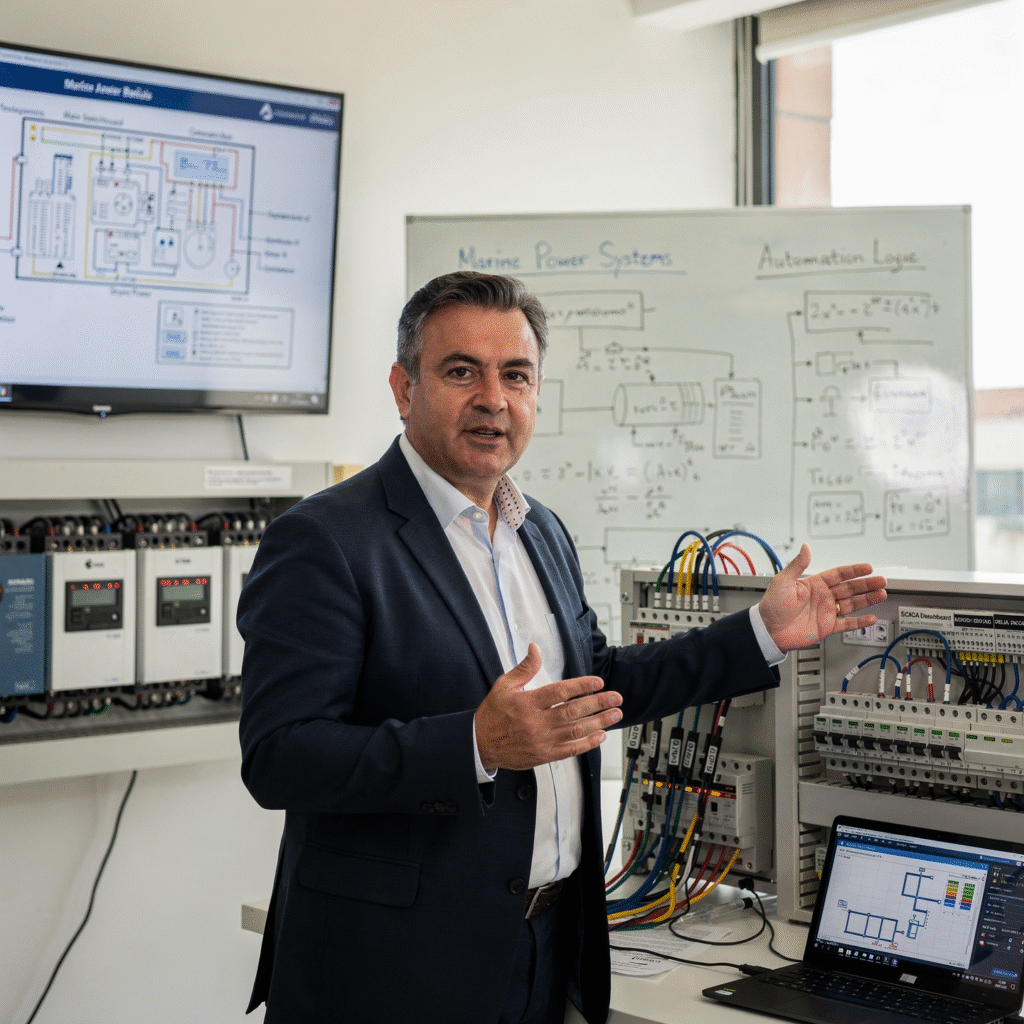
Equipment Inspection and Maintenance Course

Why this course?

The Equipment Inspection and Maintenance

This course provides you with the essential tools and knowledge to optimize the lifespan of your assets. You will learn to identify potential failures, implement effective preventive maintenance programs, and ensure operational safety. Master visual inspection techniques, non-destructive testing, and lubricant analysis for advanced predictive maintenance.

Differentiating Advantages

  • Practical Approach: Real-world case studies and exercises applied to various types of equipment.
  • Up-to-date Regulations: Compliance with the latest safety and maintenance regulations and standards.
  • Resource Optimization: Strategies to reduce maintenance costs and increase operational efficiency.
  • Continuous Improvement: Implementation of a maintenance management system for constant improvement.
  • Professional Certification: Obtain a certificate that validates your inspection and maintenance skills.

Equipment Inspection and Maintenance Course

Availability: 1 in stock

Who is it aimed at?

  • Maintenance technicians looking to deepen their knowledge of equipment diagnosis, repair, and optimization.
  • Plant engineers and supervisors who need to optimize the planning of preventive and predictive maintenance.
  • Health and safety managers who need to update their knowledge of regulations and inspection procedures.
  • Purchasing and warehouse personnel interested in efficiently managing spare parts and tool inventory.
  • Students and recent graduates in technical fields seeking practical specialization in industrial maintenance.

Learning flexibility Adapted to your pace: downloadable material, 24/7 access to the virtual classroom, and personalized online tutoring.

Objectives and competencies

Ensuring the availability and reliability of equipment:

Implement a rigorous preventive maintenance plan, managing critical spare parts stock and documenting each intervention for continuous performance analysis.

Optimize the lifespan of equipment through preventive maintenance:

“Develop and implement predictive and preventive maintenance plans based on data and best practices, minimizing downtime and maximizing the availability of critical equipment.”

Diagnose and troubleshoot problems efficiently:

“Identify the root cause through systematic analysis, using flowcharts and component verification, prioritizing safety and minimizing downtime.”

Comply with safety and environmental regulations in maintenance tasks:

Identify and mitigate maintenance-specific environmental and safety risks, using appropriate personal protective equipment (PPE) and following established safe work procedures (SWPs).

Document and report inspection and maintenance activities:

Recording accurate and complete data, using specific software, and communicating findings to stakeholders in a timely manner.

Perform thorough inspections to identify potential faults or wear:

By following preventive maintenance routines, analyzing historical data and using specialized diagnostic tools (thermography, vibration analysis, etc.).

Curriculum - Modules

1.1. Equipment typologies and criticality identification: impact on safety, continuity, and life cycle cost
1.2. Maintenance approaches: corrective, preventive, predictive, proactive, and reliability-centered maintenance (RCM)
1.3. Master inspection plan: frequencies, acceptance criteria, responsible parties, and operational windows
1.4. Reading and interpreting technical documentation: manuals, data sheets, drawings, tolerances, and operating limits
1.5. Maintenance data management: history, traceability, work orders, and intervention evidence
1.6. Key indicators: availability, MTBF/MTTR, backlog, cost per piece of equipment, and plan adherence

2.1. Visual and functional inspection: deterioration criteria, checklists, early signs, and systematic recording
2.2. Non-destructive testing and condition techniques: thermography, ultrasound, vibration, and basic analysis
2.3. Diagnosis of recurring failures: failure modes, symptoms, correlations, and prioritization by severity
2.4. Dimensional measurement and verification: clearances, alignment, wear, and control of operating tolerances
2.5. Root cause analysis: 5 Whys, Ishikawa diagram, evidence, and verifiable corrective actions
2.6. Technical inspection report: findings, classification, recommendations, and intervention plan

3.1. Standardized preventive routines: technical cleaning, retightening, adjustments, calibrations, and final verification
3.2. Industrial lubrication applied: types, compatibilities, intervals, contamination, and consumption control
3.3. Replacement of consumables and parts: change criteria, quality control, and post-assembly validation
3.4. Management of critical spare parts: criticality, minimum levels, obsolescence, and agreements with suppliers
3.5. Shutdown planning: sequencing, permits, coordination with operations, and minimization of downtime
3.6. Use of CMMS/EAM: scheduling, digital checklist, spare parts, technical shutdown and reporting

4.1. Corrective intervention protocols: rapid diagnosis, equipment isolation, and collateral damage control
4.2. Safe disassembly and assembly: tools, tightening torques, alignment, and mechanical integrity control
4.3. Electrical and electronic failures: verification of protections, wiring, connectors, and common components
4.4. Functional and load testing: acceptance criteria, degraded modes, and operational stability
4.5. Incident management during intervention: go/no-go decisions, technical escalation, and change log
4.6. Closure documentation: work report, evidence, traceability, and lessons learned

5.1. Risk assessment by task: matrices, controls, PPE and safety prerequisites
5.2. Lockout/Tagout (LOTO): energy isolation, absence verification and safe release
5.3. Special work: working at height, confined spaces, hazardous atmospheres and work permits
5.4. Management of substances and waste: lubricants, solvents, batteries, contaminated rags and traceability
5.5. Coordination of activities and contractors: roles, SLAs, access control and supervision
5.6. Preparation for audits and inspections: records, evidence, conformity and corrective actions

6.1. Instrumentation for predictive maintenance: sensors, thresholds, alarms, and intervention criteria
6.2. Analytics applied to maintenance: trends, anomaly detection, and data-driven prioritization
6.3. Reliability strategies: elimination of chronic failures, redesigns, standardization, and change control
6.4. Energy management and equipment efficiency: consumption, performance, losses, and operational optimization
6.5. Data governance and basic operational cybersecurity: access, integrity, backups, and continuity
6.6. Final applied project: inspection and maintenance plan for a fleet of equipment with KPIs and evidence

Plan de estudio - Módulos

1.1. Equipment typologies and criticality identification: impact on safety, continuity, and life cycle cost
1.2. Maintenance approaches: corrective, preventive, predictive, proactive, and reliability-centered maintenance (RCM)
1.3. Master inspection plan: frequencies, acceptance criteria, responsible parties, and operational windows
1.4. Reading and interpreting technical documentation: manuals, data sheets, drawings, tolerances, and operating limits
1.5. Maintenance data management: history, traceability, work orders, and intervention evidence
1.6. Key indicators: availability, MTBF/MTTR, backlog, cost per piece of equipment, and plan adherence

2.1. Visual and functional inspection: deterioration criteria, checklists, early signs, and systematic recording
2.2. Non-destructive testing and condition techniques: thermography, ultrasound, vibration, and basic analysis
2.3. Diagnosis of recurring failures: failure modes, symptoms, correlations, and prioritization by severity
2.4. Dimensional measurement and verification: clearances, alignment, wear, and control of operating tolerances
2.5. Root cause analysis: 5 Whys, Ishikawa diagram, evidence, and verifiable corrective actions
2.6. Technical inspection report: findings, classification, recommendations, and intervention plan

3.1. Standardized preventive routines: technical cleaning, retightening, adjustments, calibrations, and final verification
3.2. Industrial lubrication applied: types, compatibilities, intervals, contamination, and consumption control
3.3. Replacement of consumables and parts: change criteria, quality control, and post-assembly validation
3.4. Management of critical spare parts: criticality, minimum levels, obsolescence, and agreements with suppliers
3.5. Shutdown planning: sequencing, permits, coordination with operations, and minimization of downtime
3.6. Use of CMMS/EAM: scheduling, digital checklist, spare parts, technical shutdown and reporting

4.1. Corrective intervention protocols: rapid diagnosis, equipment isolation, and collateral damage control
4.2. Safe disassembly and assembly: tools, tightening torques, alignment, and mechanical integrity control
4.3. Electrical and electronic failures: verification of protections, wiring, connectors, and common components
4.4. Functional and load testing: acceptance criteria, degraded modes, and operational stability
4.5. Incident management during intervention: go/no-go decisions, technical escalation, and change log
4.6. Closure documentation: work report, evidence, traceability, and lessons learned

5.1. Risk assessment by task: matrices, controls, PPE and safety prerequisites
5.2. Lockout/Tagout (LOTO): energy isolation, absence verification and safe release
5.3. Special work: working at height, confined spaces, hazardous atmospheres and work permits
5.4. Management of substances and waste: lubricants, solvents, batteries, contaminated rags and traceability
5.5. Coordination of activities and contractors: roles, SLAs, access control and supervision
5.6. Preparation for audits and inspections: records, evidence, conformity and corrective actions

6.1. Instrumentation for predictive maintenance: sensors, thresholds, alarms, and intervention criteria
6.2. Analytics applied to maintenance: trends, anomaly detection, and data-driven prioritization
6.3. Reliability strategies: elimination of chronic failures, redesigns, standardization, and change control
6.4. Energy management and equipment efficiency: consumption, performance, losses, and operational optimization
6.5. Data governance and basic operational cybersecurity: access, integrity, backups, and continuity
6.6. Final applied project: inspection and maintenance plan for a fleet of equipment with KPIs and evidence

#VALUE!

#VALUE!

#VALUE!

#VALUE!

Career opportunities

  • Industrial Maintenance Technician: Execution of preventive and corrective maintenance plans in various sectors.
  • Equipment Inspector: Evaluation and certification of the condition of equipment and facilities, guaranteeing their safety and efficiency.
  • Maintenance Manager: Planning, organization, and supervision of maintenance activities, optimizing resources and minimizing costs.
  • Quality Control Technician: Verification of compliance with quality standards in the manufacturing and repair of equipment.
  • Technical Advisor: Technical support and consulting in the selection, installation, and maintenance of equipment.
  • Technical Sales Representative: Sales and promotion of equipment and maintenance services, offering solutions tailored to customer needs.
  • Industrial Safety Manager: Implementation and supervision of safety measures in environments industrial.
  • Maintenance Trainer: Delivery of courses and training programs in equipment inspection and maintenance techniques.

“`

Admission requirements

Academic/professional profile:

Degree/Bachelor's degree in Nautical Science/Maritime Transport, Naval/Marine Engineering, or a related field; or proven professional experience in bridge/operations.

Language proficiency:

Recommended functional maritime English (SMCP) for simulations and technical materials.

5. Induction

Updated resume, copy of degree or seaman's book, ID card/passport, letter of motivation.

Technical requirements (for online):

Equipment with camera/microphone, stable connection, ≥ 24” monitor recommended for ECDIS/Radar-ARPA.

Admission process and dates

1. Online
application

(form + documents).

2. Academic review and interview

(profile/objectives/schedule compatibility).

3. Admission decision

(+ scholarship proposal if applicable).

4. Reservation of place

(deposit) and registration.

5. Induction

(access to campus, calendars, simulator guides).

Scholarships and grants

  • Solid Foundations: Master the techniques of visual inspection, non-destructive testing, and predictive diagnostics.
  • Efficient Maintenance: Learn preventive maintenance and corrective maintenance strategies to optimize the performance of your equipment.
  • Safety and Regulations: Comply with industrial safety standards and technical standards applicable to inspection and maintenance.
  • Practical Cases: Apply your knowledge in real-world simulations and case studies to strengthen your skills.
  • Professional Certification: Obtain a certificate that validates your inspection competencies and equipment maintenance. Increase the lifespan of your equipment, reduce costs, and minimize risks with this specialized training.

Testimonials

Frequently asked questions

Maximize the lifespan and efficiency of equipment, minimizing failures and associated costs.

Yes. The itinerary includes ECDIS/Radar-ARPA/BRM with harbor, ocean, fog, storm, and SAR scenarios.

Online with live sessions; hybrid option for simulator/practical placements through agreements.

To ensure the safe, efficient and reliable operation of the equipment.

Recommended functional SMCP. We offer support materials for standard phraseology.

Yes, with a relevant degree or experience in maritime/port operations. The admissions interview will confirm suitability.

Optional (3–6 months) through Companies & Collaborations and the Alumni Network.

Simulator practice (rubrics), defeat plans, SOPs, checklists, micro-tests and applied TFM.

A degree from Navalis Magna University + operational portfolio (tracks, SOPs, reports and KPIs) useful for audits and employment.

#VALUE!

Request information

  1. Complete the Application Form
  2. Attach your CV/Qualifications (if you have them to hand).
  3. Indicate your preferred cohort (January/May/September) and whether you want the hybrid option with simulator sessions.
An academic advisor will contact you within 24–48 hours to guide you through the admission process, scholarships, and compatibility with your professional schedule. Translated with DeepL.com (free version)
Please enable JavaScript in your browser to complete this form.
Click or drag a file to this area to upload.

Teachers

0
    0
    Tu carrito
    Tu carrito esta vacíoRegresar a la tienda
    Scroll to Top