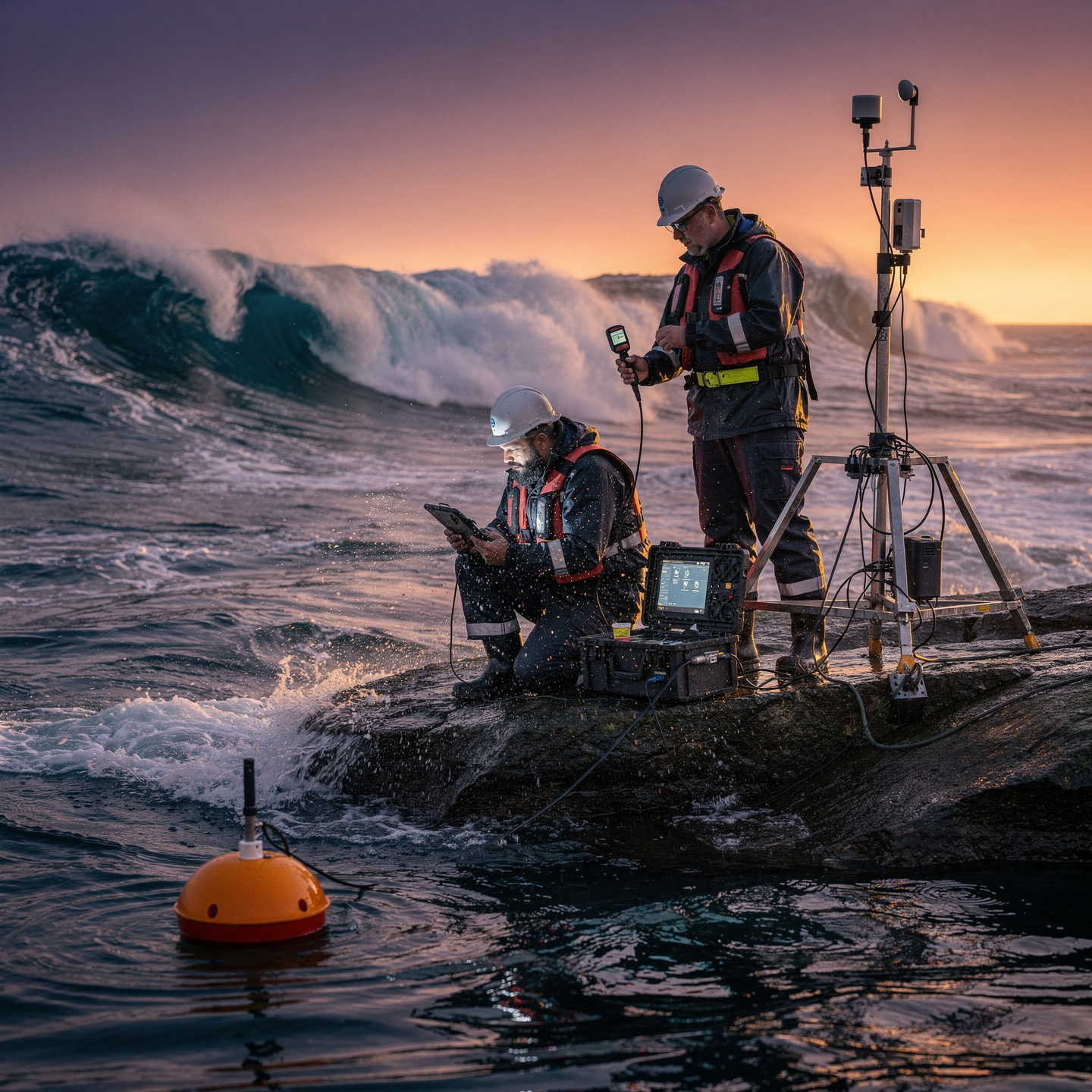
Wave and Tidal Energy Course

Why this course?

The Wave and Tidal Energy: Harnessing and Sustainability

course

Immerses you in the fascinating world of ocean energy. You will learn everything from the physical fundamentals of waves and tides to the most innovative technologies for converting them into electricity. This program provides you with the tools to understand the energy potential of the oceans and their crucial role in the transition to a sustainable future. It delves into the design, operation, and maintenance of wave and tidal energy devices, as well as the environmental impact assessment and economic viability of projects.

Differential Advantages

  • Practical Approach: Case studies of real projects and technology simulations.
  • Leading Experts: Taught by professionals with experience in the marine renewable energy sector.
  • Comprehensive Knowledge: From theory to application, including regulatory and financial aspects.
  • Sustainable Development: Emphasis on minimizing environmental impact and maximizing social benefit.
  • Networking: Opportunities to connect with other professionals and companies in the sector.
mareas

Wave and Tidal Energy Course

Availability: 1 in stock

Who is it aimed at?

  • Energy engineers and consultants looking to expand their portfolio with innovative renewable energy sources.
  • Energy policymakers and environmental managers interested in sustainable development and diversifying the energy mix.
  • Researchers and academics wishing to delve deeper into wave and tidal energy conversion technologies.
  • Entrepreneurs and startups exploring business opportunities in the marine renewable energy sector.
  • Engineering, environmental science, and related field students seeking to specialize in marine renewable energy.

Learning flexibility:
Access content at your own pace, with active discussion forums and Q&A sessions I live with industry experts.

mareas

Objectives and competencies

Evaluate the technical and economic feasibility of wave and tidal energy projects:

“Analyze in detail the energy resource, technology, investment and operating costs, and the regulatory framework to determine the profitability and sustainability of the project.”

Design and optimize wave and tidal energy conversion systems:

“To evaluate the technical and economic feasibility of different technologies, considering environmental factors, energy efficiency and useful life.”

Develop accurate predictive models of ocean energy resources:

Use machine learning techniques and advanced statistical analysis to model the spatio-temporal variability of the resource, incorporating observational oceanographic data and high-resolution numerical simulations.

Integrating wave and tidal energy into the electricity grid efficiently and sustainably:

“Implement energy storage systems (batteries, pumped hydro) and demand management strategies to optimize supply and minimize variability.”

Minimizing the environmental impact of ocean energy facilities:

“Employ technologies and procedures for mitigating underwater noise during construction and operation, minimizing disruption to marine fauna.”

Promoting innovation and technological development in the ocean energy sector:

“Implement remote monitoring and data analytics solutions to optimize infrastructure performance and maintenance.”

Curriculum - Modules

  1. Comprehensive Maritime Incident Management: protocols, roles, and chain of command for coordinated response
  2. Operational Planning and Execution: briefing, routes, weather windows, and go/no-go criteria
  3. Rapid Risk Assessment: criticality matrix, scene control, and decision-making under pressure
  4. Operational Communication: VHF/GMDSS, standardized reports, and inter-agency liaison
  5. Tactical Mobility and Safe Boarding: RHIB maneuvers, approach, mooring, and recovery
  6. Equipment and Technologies: PPE, signaling, satellite tracking, and field data logging
  7. Immediate Care of the Affected: primary assessment, hypothermia, trauma, and stabilization for evacuation
  8. Adverse Environmental Conditions: swell, Visibility, flows, and operational mitigation

    Simulation and training: critical scenarios, use of VR/AR, and exercises with performance metrics

    Documentation and continuous improvement: lessons learned, indicators (MTTA/MTTR), and SOP updates

  1. Introduction to Ocean Energy: Types, Potential, and Challenges.
  2. Waves: Characterization, Modeling, and Prediction of the Resource.
  3. Wave Energy Conversion Technologies (WECs): Types, Operating Principles, Efficiency, and Costs.
  4. Tidal Energy: Cycles, Currents, and Global Potential.
  5. Tidal Energy Conversion Technologies: Tidal Turbines, Tidal Barrages, and Other Devices.
  6. Ocean Thermal Energy (OTEC): Thermodynamic Principles, Rankine Cycles, and Efficiency.
  7. OTEC Technologies: Open-Cycle, Closed-Cycle, and Hybrid Systems.
  8. Salinity
  9. Ocean Energy Storage: Energy extraction methods using pressure-retarded osmosis (PRO) and electrodialysis reverse (RED).
  10. Environmental Impact of Ocean Energy Technologies: Assessment and Mitigation.
  11. Ocean Energy Storage: Underwater Batteries, Hydrogen, and Other Options.

  1. Introduction to Ocean Energy: Global Potential and Types of Utilization.
  2. Waves: Formation, Characteristics (Height, Period, Wavelength), and Propagation.
  3. Tides: Astronomical Causes, Types of Tides (Diurnal, Semidiurnal, Mixed), and Ranges.
  4. Wave Theory: Linear, Nonlinear, Airy, Stokes; Implications for converter design.
  5. Numerical modeling of waves and tides: tools and validation.
  6. Resource measurement: wave buoys, HF radars, ADCPs, tide gauges.
  7. Wave energy converters (WECs): operating principles and classification.
  8. Tidal energy converters (TECs): operating principles and classification.
  9. Marine infrastructure: design, materials, anchoring, and maintenance.
  10. Environmental impact of ocean energy technologies and mitigation strategies.

  1. Introduction to Marine Renewable Energies: Potential and Challenges
  2. Waves and Tides: Formation, Characteristics, and Prediction
  3. Wave Energy Conversion Technologies: Oscillating Systems, Oscillating Water Columns, etc.
  4. Ocean Current Energy Conversion Technologies: Horizontal and Vertical Axis Turbines, etc.
  5. Modeling and Simulation of Marine Energy Resources
  6. Life Cycle Assessment (LCA) of Energy Harvesting Systems
  7. Environmental Impact of Marine Energy Installations
  8. Connection to the Electricity Grid: Technical and Regulatory Challenges
  9. Economic Aspects: Costs, Profitability, and Support Policies
  10. Regulations and legislation applicable to marine energy use

  1. Introduction to Wave and Tidal Engineering: History and Basic Concepts
  2. Waves: Formation, Propagation, Types, and Characteristics
  3. Tides: Causes, Types, Prediction, and Coastal Effects
  4. Ocean Energy Resources: Wave Energy, Tidal Energy, and Salinity/Thermal Gradients
  5. Wave Energy Conversion Devices: Principles, Types, and Technologies
  6. Tidal Energy Technologies: Dams, Turbines, and Dynamic Systems
  7. Energy Potential Assessment: Models, Oceanographic Data, and Feasibility Analysis
  8. Environmental Impact of Marine Technologies: Assessment, Mitigation, and Sustainability
  9. Economic and Regulatory Aspects: Costs, incentives, legal frameworks, and public policies

    Case studies and flagship projects: analysis of successes and challenges

  1. System Architecture and Components: Structural design, materials, and subsystems (mechanical, electrical, electronic, and fluid) with selection and assembly criteria for marine environments
  2. Fundamentals and Principles of Operation: Physical and engineering foundations (thermodynamics, fluid mechanics, electricity, control, and materials) that explain performance and operating limits
  3. Safety and Environmental (SHE): Risk analysis, PPE, LOTO, hazardous atmospheres, spill and waste management, and emergency response plans
  4. Applicable Regulations and Standards: IMO/ISO/IEC requirements and local regulations;
  5. Conformance criteria, certification, and best practices for operation and maintenance
  6. Inspection, testing, and diagnostics: Visual/dimensional inspection, functional testing, data analysis, and predictive techniques (vibration, thermography, fluid analysis) to identify root causes
  7. Preventive and predictive maintenance: Hourly/cycle/seasonal plans, lubrication, adjustments, calibrations, consumable replacement, post-service verification, and operational reliability
  8. Instrumentation, tools, and metrology: Measuring and testing equipment, diagnostic software, calibration and traceability; selection criteria, safe use, and storage
  9. Onboard integration and interfaces: Mechanical, electrical, fluid, and data compatibility; Sealing and watertightness, EMC/EMI, corrosion protection, and interoperability testing.

    Quality, acceptance testing, and commissioning: process and materials control, FAT/SAT, bench and sea trials, go/no-go criteria, and evidence documentation.

    Technical documentation and integrated practice: logs, checklists, reports, and a complete case study (safety → diagnosis → intervention → verification → report) applicable to any system.

Plan de estudio - Módulos

  1. Comprehensive Maritime Incident Management: protocols, roles, and chain of command for coordinated response
  2. Operational Planning and Execution: briefing, routes, weather windows, and go/no-go criteria
  3. Rapid Risk Assessment: criticality matrix, scene control, and decision-making under pressure
  4. Operational Communication: VHF/GMDSS, standardized reports, and inter-agency liaison
  5. Tactical Mobility and Safe Boarding: RHIB maneuvers, approach, mooring, and recovery
  6. Equipment and Technologies: PPE, signaling, satellite tracking, and field data logging
  7. Immediate Care of the Affected: primary assessment, hypothermia, trauma, and stabilization for evacuation
  8. Adverse Environmental Conditions: swell, Visibility, flows, and operational mitigation

    Simulation and training: critical scenarios, use of VR/AR, and exercises with performance metrics

    Documentation and continuous improvement: lessons learned, indicators (MTTA/MTTR), and SOP updates

  1. Introduction to Ocean Energy: Types, Potential, and Challenges.
  2. Waves: Characterization, Modeling, and Prediction of the Resource.
  3. Wave Energy Conversion Technologies (WECs): Types, Operating Principles, Efficiency, and Costs.
  4. Tidal Energy: Cycles, Currents, and Global Potential.
  5. Tidal Energy Conversion Technologies: Tidal Turbines, Tidal Barrages, and Other Devices.
  6. Ocean Thermal Energy (OTEC): Thermodynamic Principles, Rankine Cycles, and Efficiency.
  7. OTEC Technologies: Open-Cycle, Closed-Cycle, and Hybrid Systems.
  8. Salinity
  9. Ocean Energy Storage: Energy extraction methods using pressure-retarded osmosis (PRO) and electrodialysis reverse (RED).
  10. Environmental Impact of Ocean Energy Technologies: Assessment and Mitigation.
  11. Ocean Energy Storage: Underwater Batteries, Hydrogen, and Other Options.

  1. Introduction to Ocean Energy: Global Potential and Types of Utilization.
  2. Waves: Formation, Characteristics (Height, Period, Wavelength), and Propagation.
  3. Tides: Astronomical Causes, Types of Tides (Diurnal, Semidiurnal, Mixed), and Ranges.
  4. Wave Theory: Linear, Nonlinear, Airy, Stokes; Implications for converter design.
  5. Numerical modeling of waves and tides: tools and validation.
  6. Resource measurement: wave buoys, HF radars, ADCPs, tide gauges.
  7. Wave energy converters (WECs): operating principles and classification.
  8. Tidal energy converters (TECs): operating principles and classification.
  9. Marine infrastructure: design, materials, anchoring, and maintenance.
  10. Environmental impact of ocean energy technologies and mitigation strategies.

  1. Introduction to Marine Renewable Energies: Potential and Challenges
  2. Waves and Tides: Formation, Characteristics, and Prediction
  3. Wave Energy Conversion Technologies: Oscillating Systems, Oscillating Water Columns, etc.
  4. Ocean Current Energy Conversion Technologies: Horizontal and Vertical Axis Turbines, etc.
  5. Modeling and Simulation of Marine Energy Resources
  6. Life Cycle Assessment (LCA) of Energy Harvesting Systems
  7. Environmental Impact of Marine Energy Installations
  8. Connection to the Electricity Grid: Technical and Regulatory Challenges
  9. Economic Aspects: Costs, Profitability, and Support Policies
  10. Regulations and legislation applicable to marine energy use

  1. Introduction to Wave and Tidal Engineering: History and Basic Concepts
  2. Waves: Formation, Propagation, Types, and Characteristics
  3. Tides: Causes, Types, Prediction, and Coastal Effects
  4. Ocean Energy Resources: Wave Energy, Tidal Energy, and Salinity/Thermal Gradients
  5. Wave Energy Conversion Devices: Principles, Types, and Technologies
  6. Tidal Energy Technologies: Dams, Turbines, and Dynamic Systems
  7. Energy Potential Assessment: Models, Oceanographic Data, and Feasibility Analysis
  8. Environmental Impact of Marine Technologies: Assessment, Mitigation, and Sustainability
  9. Economic and Regulatory Aspects: Costs, incentives, legal frameworks, and public policies

    Case studies and flagship projects: analysis of successes and challenges

  1. System Architecture and Components: Structural design, materials, and subsystems (mechanical, electrical, electronic, and fluid) with selection and assembly criteria for marine environments
  2. Fundamentals and Principles of Operation: Physical and engineering foundations (thermodynamics, fluid mechanics, electricity, control, and materials) that explain performance and operating limits
  3. Safety and Environmental (SHE): Risk analysis, PPE, LOTO, hazardous atmospheres, spill and waste management, and emergency response plans
  4. Applicable Regulations and Standards: IMO/ISO/IEC requirements and local regulations;
  5. Conformance criteria, certification, and best practices for operation and maintenance
  6. Inspection, testing, and diagnostics: Visual/dimensional inspection, functional testing, data analysis, and predictive techniques (vibration, thermography, fluid analysis) to identify root causes
  7. Preventive and predictive maintenance: Hourly/cycle/seasonal plans, lubrication, adjustments, calibrations, consumable replacement, post-service verification, and operational reliability
  8. Instrumentation, tools, and metrology: Measuring and testing equipment, diagnostic software, calibration and traceability; selection criteria, safe use, and storage
  9. Onboard integration and interfaces: Mechanical, electrical, fluid, and data compatibility; Sealing and watertightness, EMC/EMI, corrosion protection, and interoperability testing.

    Quality, acceptance testing, and commissioning: process and materials control, FAT/SAT, bench and sea trials, go/no-go criteria, and evidence documentation.

    Technical documentation and integrated practice: logs, checklists, reports, and a complete case study (safety → diagnosis → intervention → verification → report) applicable to any system.

  1. Introduction to Ocean Energy: Waves, Tides, Currents, and Thermal Gradients.
  2. Waves: Formation, Propagation, Characteristics (Height, Period, Wavelength).
  3. Tides: Astronomical Causes, Types of Tides (Diurnal, Semidiurnal, Mixed).
  4. Wave Energy Technologies: Wave Energy Converters (OWCs, Attenuators, Point Absorbers).
  5. Tidal Energy Technologies: Tidal Barrages, Tidal Turbines, Dynamic Tidal Energy.
  6. Environmental Impact of Wave and Tidal Technologies: Effects on Marine Fauna, Sedimentation, Water Quality.
  7. Legal and Regulatory Framework for Ocean Energy: Permits, environmental impact assessments, safety standards.
  8. Environmental management of ocean energy projects: impact mitigation, environmental monitoring, habitat restoration.
  9. Life cycle assessment (LCA) of wave and tidal technologies: environmental footprint assessment from manufacturing to decommissioning.
  10. Ocean energy project case studies: successes, failures, and lessons learned.

  1. Introduction to Wave and Tidal Energy: Potential and Challenges
  2. Waves and Tides: Formation, Characteristics, and Modeling
  3. Wave Energy Harvesting Technologies: Buoys, Point Absorbers, Attenuators
  4. Tidal Energy Harvesting Technologies: Flow Turbines, Tidal Barrages, Subsea Kites
  5. Energy Conversion Systems: Hydraulic, Pneumatic, Mechanical, Electrical
  6. Marine Infrastructure: Design, Construction, and Installation of Platforms
  7. Connection to the Electrical Grid: Marine Substations, Subsea Cables, Power Quality
  8. Environmental Impact: Assessment, Mitigation, and Monitoring of Effects
  9. Regulatory and legal aspects: permits, concessions, and standards
  10. Economic analysis and project feasibility: costs, benefits, and incentives

  1. Introduction to Ocean Energy: Global Potential and Types of Technologies.
  2. Waves: Formation, Characteristics (Height, Period, Wavelength), and Modeling.
  3. Tides: Astronomical Causes, Cycles (Diurnal, Semidiurnal), Prediction, and Resonance.
  4. Energy Resources: Assessment of the Energy Potential of Waves and Tides in Different Locations.
  5. Wave Energy Conversion Technologies: Point Converters, Attenuators, Oscillating Water Columns.
  6. Tidal Energy Conversion Technologies: Tidal Turbines, Tidal Barrages, Tidal Kites.
  7. Design and Selection of Devices: Design Criteria, Efficiency, Materials, and Optimization.
  8. Infrastructure and Deployment: moorings, submarine cables, substations, and grid connection.
  9. Environmental impact: effects on marine life, sedimentation, water quality, and mitigation.
  10. Economic and regulatory aspects: costs, financing, permits, standards, and support policies.

  1. Introduction to Technological Development and its Environmental Impact
  2. Life Cycle Assessment (LCA): Methodology and Applications
  3. Environmental Risk Analysis: Identification, Assessment, and Mitigation
  4. Clean Technologies and Eco-Innovation: Principles and Examples
  5. Environmental Legislation: National and International Regulations
  6. Environmental Impact Assessment (EIA): Process and Documentation
  7. Sustainability Indicators: Selection and Monitoring
  8. Circular Economy: Business Models and Environmental Benefits
  9. Waste and Natural Resource Management: Strategies and Technologies
  10. Case Studies: Project Analysis and its environmental performance

Career opportunities

  • Design and Development Engineer: Creation and optimization of wave and tidal energy conversion technologies.
  • Maintenance and Installation Technician: Supervision and execution of the assembly, repair, and maintenance of devices in marine environments.
  • Energy Consultant: Project feasibility assessment, environmental impact analysis, and advice on marine energy policies.
  • Researcher and Scientist: Development of new materials, design optimization, and study of the environmental impact of these technologies.
  • Energy Project Manager: Planning, coordination, and supervision of wave and tidal energy projects from the conception phase to commissioning.
  • Resource Assessment Specialist: Identification and characterization of sites with potential for wave and tidal energy exploitation.
  • Resource Assessment Specialist: Identification and characterization of sites with potential for wave and tidal energy exploitation.
  • Data Analyst and Modeler: Simulating wave and tidal behavior to optimize device efficiency and predict performance.
  • Regulator and Legislator: Developing legal and regulatory frameworks for the sustainable exploitation of wave and tidal energy.

“`

Admission requirements

Academic/professional profile:

Degree/Bachelor's degree in Nautical Science/Maritime Transport, Naval/Marine Engineering, or a related field; or proven professional experience in bridge/operations.

Language proficiency:

Recommended functional maritime English (SMCP) for simulations and technical materials.

5. Induction

Updated resume, copy of degree or seaman's book, ID card/passport, letter of motivation.

Technical requirements (for online):

Equipment with camera/microphone, stable connection, ≥ 24” monitor recommended for ECDIS/Radar-ARPA.

Admission process and dates

1. Online
application

(form + documents).

2. Academic review and interview

(profile/objectives/schedule compatibility).

3. Admission decision

(+ scholarship proposal if applicable).

4. Reservation of place

(deposit) and registration.

5. Induction

(access to campus, calendars, simulator guides).

Scholarships and grants

  • Master Ocean Energy: Learn how to harness the potential of waves and tides to generate renewable energy.
  • Innovative Technologies: Explore the latest wave and tidal energy conversion technologies, from turbines to flotation systems.
  • Analysis and Modeling: Acquire skills to assess energy resources, model wave and tidal behavior, and optimize device design.
  • Environmental and Socioeconomic Impact: Understand the benefits and challenges of ocean energy in terms of sustainability, local development, and job creation.
  • Case Studies: Analyze real-world projects and simulations to apply your knowledge and prepare for the future of marine energy.
Boost Your Career in the Sector Learn about renewable energy and become an expert in wave and tidal energy.

Testimonials

Frequently asked questions

Wave energy comes from the wind, while tidal energy comes from the gravitational force of the moon and the sun.

Yes. The itinerary includes ECDIS/Radar-ARPA/BRM with harbor, ocean, fog, storm, and SAR scenarios.

Online with live sessions; hybrid option for simulator/practical placements through agreements.

Recommended functional SMCP. We offer support materials for standard phraseology.

Yes, with a relevant degree or experience in maritime/port operations. The admissions interview will confirm suitability.

Optional (3–6 months) through Companies & Collaborations and the Alumni Network.

Simulator practice (rubrics), defeat plans, SOPs, checklists, micro-tests and applied TFM.

A degree from Navalis Magna University + operational portfolio (tracks, SOPs, reports and KPIs) useful for audits and employment.

  1. Introduction to Technological Development and its Environmental Impact
  2. Life Cycle Assessment (LCA): Methodology and Applications
  3. Environmental Risk Analysis: Identification, Assessment, and Mitigation
  4. Clean Technologies and Eco-Innovation: Principles and Examples
  5. Environmental Legislation: National and International Regulations
  6. Environmental Impact Assessment (EIA): Process and Documentation
  7. Sustainability Indicators: Selection and Monitoring
  8. Circular Economy: Business Models and Environmental Benefits
  9. Waste and Natural Resource Management: Strategies and Technologies
  10. Case Studies: Project Analysis and its environmental performance

Request information

  1. Complete the Application Form
  2. Attach your CV/Qualifications (if you have them to hand).
  3. Indicate your preferred cohort (January/May/September) and whether you want the hybrid option with simulator sessions.
An academic advisor will contact you within 24–48 hours to guide you through the admission process, scholarships, and compatibility with your professional schedule. Translated with DeepL.com (free version)
Please enable JavaScript in your browser to complete this form.
Click or drag a file to this area to upload.

Teachers

0
    0
    Tu carrito
    Tu carrito esta vacíoRegresar a la tienda
    Scroll to Top


