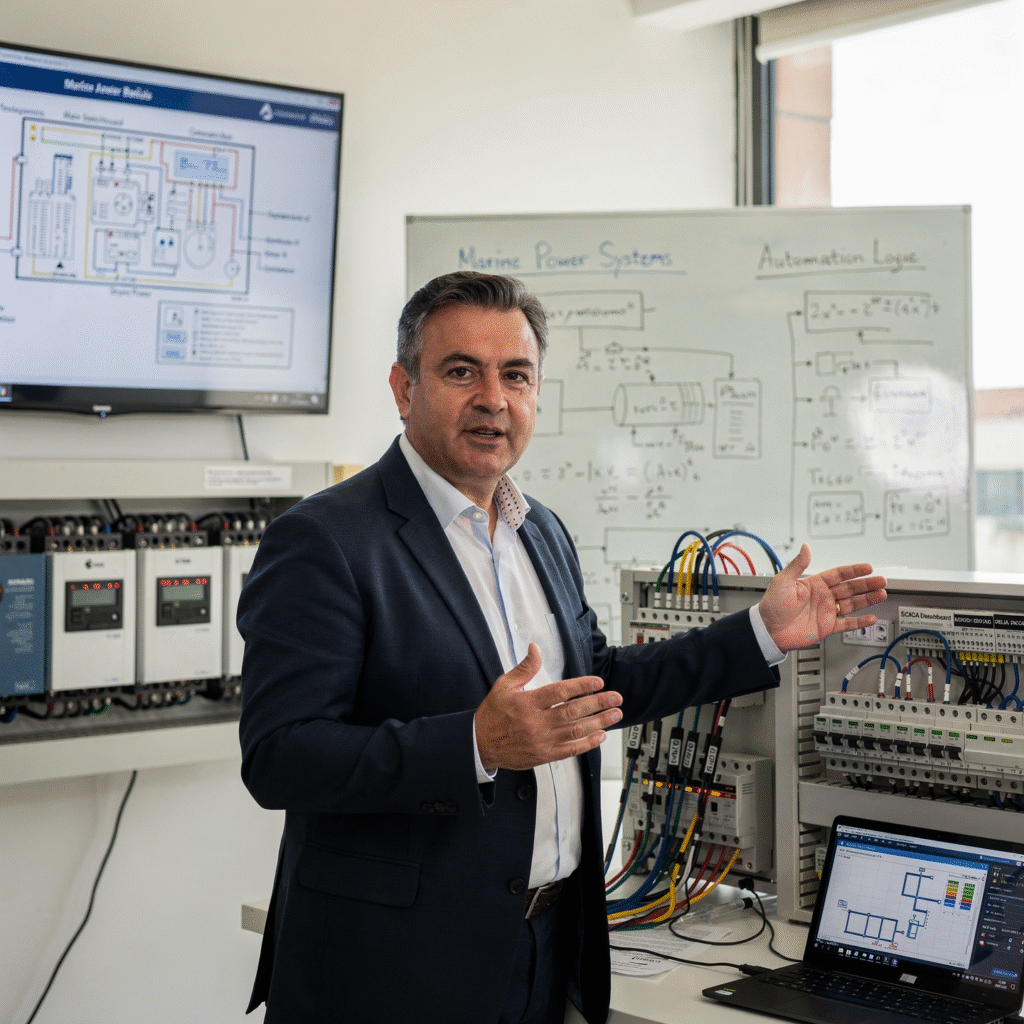
Renewable energy systems maintenance course
Why this course?
The Renewable Systems Maintenance Course
This course provides you with the essential skills to ensure the optimal operation and efficiency of clean energy technologies. Learn to diagnose, repair, and maintain solar photovoltaic, wind, and other renewable energy systems. This program is designed for professionals seeking to expand their knowledge in a booming sector and contribute to a sustainable future. Gain hands-on experience in inspection, testing, component replacement, and troubleshooting common issues in renewable energy installations.
Differential Advantages
- Practical Approach: Real-world case studies and simulations to apply acquired knowledge.
- Expert Instructors: Professionals with extensive experience in the renewable energy sector.
- Recognized Certification: Obtain a certification that validates your skills in renewable energy system maintenance.
- Wide Job Opportunities: Access a constantly growing job market with high demand for qualified professionals.
- Flexibility: Online format with 24/7 access to content and the option of in-person practical sessions.
- Modality: Online
- Level: Cursos
- Hours: 150 H
- Start date: 25-04-2026
Availability: 1 in stock
Who is it aimed at?
- Maintenance technicians looking to specialize in renewable energy systems such as solar, wind, or biomass.
- Electrical and mechanical engineers wanting to expand their knowledge in the operation and maintenance of clean energy.
- Renewable energy system installers needing to deepen their knowledge of diagnosing and repairing common faults.
- Installation managers with renewable energy systems looking to optimize performance and reduce maintenance costs.
- Students and recent graduates in technical fields wanting to start a career in the renewable energy sector.
Learning flexibility:
Tailored to your needs: 24/7 accessible online content, active discussion forums, and personalized tutoring to answer your questions.
Objectives and competencies

Diagnosing and repairing faults in solar inverters:
“Identify the root cause using diagrams, diagnostic tools and safety protocols, replacing defective components and verifying proper functioning.”

Evaluate the efficiency and optimize the performance of wind farms:
Analyze production, maintenance and weather data to identify areas for improvement and propose technical and operational solutions.

Manage and maintain solar thermal installations to maximize energy production:
“Perform accurate diagnoses, optimize operating parameters, and execute efficient preventive/corrective maintenance.”

Implement safety and efficiency protocols in the maintenance of biomass plants:
“Establish lockout/tagout (LOTO) procedures, pre-startup inspections, risk analysis (HAZOP/BowTie) and emergency response plans, ensuring compliance with environmental and industrial safety regulations.”
Supervise and coordinate maintenance teams in geothermal plants:
“To ensure the correct execution of preventive and corrective maintenance plans, optimizing resources and minimizing downtime.”
Conduct energy audits to optimize consumption in renewable energy installations:
“Identifying losses, proposing improvements, and verifying regulatory compliance with technical and economic rigor.”
Curriculum - Modules
- Comprehensive Maritime Incident Management: protocols, roles, and chain of command for coordinated response
- Operational Planning and Execution: briefing, routes, weather windows, and go/no-go criteria
- Rapid Risk Assessment: criticality matrix, scene control, and decision-making under pressure
- Operational Communication: VHF/GMDSS, standardized reports, and inter-agency liaison
- Tactical Mobility and Safe Boarding: RHIB maneuvers, approach, mooring, and recovery
- Equipment and Technologies: PPE, signaling, satellite tracking, and field data logging
- Immediate Care of the Affected: primary assessment, hypothermia, trauma, and stabilization for evacuation
- Adverse Environmental Conditions: swell, Visibility, flows, and operational mitigation
Simulation and training: critical scenarios, use of VR/AR, and exercises with performance metrics
Documentation and continuous improvement: lessons learned, indicators (MTTA/MTTR), and SOP updates
- Introduction to Diagnostics in Renewable Systems: Objectives and Methodology
- Fundamentals of Energy Efficiency: Indicators and Optimization
- Performance Analysis: Data Collection, Modeling, and Simulation
- Diagnostics of Photovoltaic Systems: I-V Curves, Thermography, and Common Failures
- Diagnostics of Wind Turbine Systems: Vibrations, Oil Analysis, and Mechanical/Electrical Failures
- Monitoring and Control: SCADA Systems, Sensors, and Actuators
- Analysis of Component Degradation: Aging, Corrosion, and Fatigue
- Maintenance
Predictive Maintenance: Inspection Techniques, Non-Destructive Testing, and Trend Analysis
Useful Life Estimation: Predictive Models, Environmental Factors, and Maintenance Optimization
Case Studies: Diagnosis, Efficiency Improvement, and Useful Life Extension in Renewable Systems
‘
- Introduction to Energy Efficiency: Basic Concepts and Regulations
- Fundamentals of Photovoltaic Solar Energy: Cells, Modules, Inverters
- Fundamentals of Wind Energy: Wind Turbines, Blades, Towers
- Components of a PV Solar System: Design, Sizing, and Installation
- Components of a Wind Turbine System: Design, Sizing, and Installation
- Operation and Maintenance of PV Solar Systems: Monitoring, Cleaning, and Troubleshooting
- Operation and Maintenance of Wind Turbines: Monitoring, Inspection, and Lubrication
- Control Systems for Energy Efficiency: Automation and Optimization
- Safety in Operation and Maintenance: Electrical Hazards and Working at Heights
- Data Analysis and Continuous Improvement: Optimization of energy efficiency
‘
- Introduction to Energy Efficiency: Basic Concepts and Regulations
- Energy Management Systems: ISO 50001, Energy Audits
- Thermographic Analysis: Identifying Hot Spots and Leaks
- Thermal Insulation: Materials, Applications, and Calculations
- Efficient Lighting: LED Technologies, Control, and Optimization
- HVAC Systems: Optimizing Heating, Cooling, and Ventilation
- Electrical Safety: Regulations, Risks, and Prevention
- Personal Protective Equipment (PPE): Selection and Proper Use
- Emergency Procedures: Responding to Fires and Electrical Accidents
- Troubleshooting of electrical and thermal systems: diagnosis and repair.
‘
- Introduction to Efficiency, Monitoring, and Diagnosis (ESD): Concepts and Objectives
- Effective Monitoring Methodologies: Observation, Communication, and Feedback
- Diagnostic Tools: Data Analysis, Key Performance Indicators (KPIs)
- Energy Efficiency: Measurement, Optimization, and Resource Savings
- Process Monitoring: Bottleneck Identification and Continuous Improvement
- Failure Diagnosis: Problem-Solving Techniques and Root Cause Analysis
- Performance Management: Goal Setting, Monitoring, and Evaluation
- Compliance Monitoring: Audits, Inspections, and Corrective Actions
- Human Performance Diagnosis: Identifying Training and Development Needs
- Implementation of an ESD System: Planning, Execution, and Monitoring
‘
- System Architecture and Components: Structural design, materials, and subsystems (mechanical, electrical, electronic, and fluid) with selection and assembly criteria for marine environments
- Fundamentals and Principles of Operation: Physical and engineering foundations (thermodynamics, fluid mechanics, electricity, control, and materials) that explain performance and operating limits
- Safety and Environmental (SHE): Risk analysis, PPE, LOTO, hazardous atmospheres, spill and waste management, and emergency response plans
- Applicable Regulations and Standards: IMO/ISO/IEC requirements and local regulations;
- Conformance criteria, certification, and best practices for operation and maintenance
- Inspection, testing, and diagnostics: Visual/dimensional inspection, functional testing, data analysis, and predictive techniques (vibration, thermography, fluid analysis) to identify root causes
- Preventive and predictive maintenance: Hourly/cycle/seasonal plans, lubrication, adjustments, calibrations, consumable replacement, post-service verification, and operational reliability
- Instrumentation, tools, and metrology: Measuring and testing equipment, diagnostic software, calibration and traceability; selection criteria, safe use, and storage
- Onboard integration and interfaces: Mechanical, electrical, fluid, and data compatibility; Sealing and watertightness, EMC/EMI, corrosion protection, and interoperability testing.
Quality, acceptance testing, and commissioning: process and materials control, FAT/SAT, bench and sea trials, go/no-go criteria, and evidence documentation.
Technical documentation and integrated practice: logs, checklists, reports, and a complete case study (safety → diagnosis → intervention → verification → report) applicable to any system.
Plan de estudio - Módulos
- Comprehensive Maritime Incident Management: protocols, roles, and chain of command for coordinated response
- Operational Planning and Execution: briefing, routes, weather windows, and go/no-go criteria
- Rapid Risk Assessment: criticality matrix, scene control, and decision-making under pressure
- Operational Communication: VHF/GMDSS, standardized reports, and inter-agency liaison
- Tactical Mobility and Safe Boarding: RHIB maneuvers, approach, mooring, and recovery
- Equipment and Technologies: PPE, signaling, satellite tracking, and field data logging
- Immediate Care of the Affected: primary assessment, hypothermia, trauma, and stabilization for evacuation
- Adverse Environmental Conditions: swell, Visibility, flows, and operational mitigation
Simulation and training: critical scenarios, use of VR/AR, and exercises with performance metrics
Documentation and continuous improvement: lessons learned, indicators (MTTA/MTTR), and SOP updates
- Introduction to Diagnostics in Renewable Systems: Objectives and Methodology
- Fundamentals of Energy Efficiency: Indicators and Optimization
- Performance Analysis: Data Collection, Modeling, and Simulation
- Diagnostics of Photovoltaic Systems: I-V Curves, Thermography, and Common Failures
- Diagnostics of Wind Turbine Systems: Vibrations, Oil Analysis, and Mechanical/Electrical Failures
- Monitoring and Control: SCADA Systems, Sensors, and Actuators
- Analysis of Component Degradation: Aging, Corrosion, and Fatigue
- Maintenance
Predictive Maintenance: Inspection Techniques, Non-Destructive Testing, and Trend Analysis
Useful Life Estimation: Predictive Models, Environmental Factors, and Maintenance Optimization
Case Studies: Diagnosis, Efficiency Improvement, and Useful Life Extension in Renewable Systems
‘
- Introduction to Energy Efficiency: Basic Concepts and Regulations
- Fundamentals of Photovoltaic Solar Energy: Cells, Modules, Inverters
- Fundamentals of Wind Energy: Wind Turbines, Blades, Towers
- Components of a PV Solar System: Design, Sizing, and Installation
- Components of a Wind Turbine System: Design, Sizing, and Installation
- Operation and Maintenance of PV Solar Systems: Monitoring, Cleaning, and Troubleshooting
- Operation and Maintenance of Wind Turbines: Monitoring, Inspection, and Lubrication
- Control Systems for Energy Efficiency: Automation and Optimization
- Safety in Operation and Maintenance: Electrical Hazards and Working at Heights
- Data Analysis and Continuous Improvement: Optimization of energy efficiency
‘
- Introduction to Energy Efficiency: Basic Concepts and Regulations
- Energy Management Systems: ISO 50001, Energy Audits
- Thermographic Analysis: Identifying Hot Spots and Leaks
- Thermal Insulation: Materials, Applications, and Calculations
- Efficient Lighting: LED Technologies, Control, and Optimization
- HVAC Systems: Optimizing Heating, Cooling, and Ventilation
- Electrical Safety: Regulations, Risks, and Prevention
- Personal Protective Equipment (PPE): Selection and Proper Use
- Emergency Procedures: Responding to Fires and Electrical Accidents
- Troubleshooting of electrical and thermal systems: diagnosis and repair.
‘
- Introduction to Efficiency, Monitoring, and Diagnosis (ESD): Concepts and Objectives
- Effective Monitoring Methodologies: Observation, Communication, and Feedback
- Diagnostic Tools: Data Analysis, Key Performance Indicators (KPIs)
- Energy Efficiency: Measurement, Optimization, and Resource Savings
- Process Monitoring: Bottleneck Identification and Continuous Improvement
- Failure Diagnosis: Problem-Solving Techniques and Root Cause Analysis
- Performance Management: Goal Setting, Monitoring, and Evaluation
- Compliance Monitoring: Audits, Inspections, and Corrective Actions
- Human Performance Diagnosis: Identifying Training and Development Needs
- Implementation of an ESD System: Planning, Execution, and Monitoring
‘
- System Architecture and Components: Structural design, materials, and subsystems (mechanical, electrical, electronic, and fluid) with selection and assembly criteria for marine environments
- Fundamentals and Principles of Operation: Physical and engineering foundations (thermodynamics, fluid mechanics, electricity, control, and materials) that explain performance and operating limits
- Safety and Environmental (SHE): Risk analysis, PPE, LOTO, hazardous atmospheres, spill and waste management, and emergency response plans
- Applicable Regulations and Standards: IMO/ISO/IEC requirements and local regulations;
- Conformance criteria, certification, and best practices for operation and maintenance
- Inspection, testing, and diagnostics: Visual/dimensional inspection, functional testing, data analysis, and predictive techniques (vibration, thermography, fluid analysis) to identify root causes
- Preventive and predictive maintenance: Hourly/cycle/seasonal plans, lubrication, adjustments, calibrations, consumable replacement, post-service verification, and operational reliability
- Instrumentation, tools, and metrology: Measuring and testing equipment, diagnostic software, calibration and traceability; selection criteria, safe use, and storage
- Onboard integration and interfaces: Mechanical, electrical, fluid, and data compatibility; Sealing and watertightness, EMC/EMI, corrosion protection, and interoperability testing.
Quality, acceptance testing, and commissioning: process and materials control, FAT/SAT, bench and sea trials, go/no-go criteria, and evidence documentation.
Technical documentation and integrated practice: logs, checklists, reports, and a complete case study (safety → diagnosis → intervention → verification → report) applicable to any system.
- Introduction to Electromechanics: Fundamentals, Components, and Applications
- Basic Electricity: Ohm’s Law, Circuits, Measurement, and Electrical Safety
- Electrical Machines: Motors, Generators, Transformers, and their Maintenance
- Mechanical Systems: Transmissions, Gears, Lubrication, and Alignment
- Pneumatics and Hydraulics: Components, Circuits, and Industrial Applications
- Automation and Control: Sensors, Actuators, PLCs, and SCADA Systems
- Occupational Health and Safety Regulations: Electrical and Mechanical Hazards, Personal Protective Equipment (PPE)
- Workplace Safety: Safe Procedures, Permits Work and First Aid
- Sustainability in Industry: Energy Efficiency, Waste Management, and Circular Economy
- Predictive Maintenance: Monitoring Techniques, Vibration Analysis, and Thermography
‘
- Introduction to Energy Efficiency: Key Concepts and Benefits
- Fundamentals of Thermodynamics: Laws, Cycles, and Applications in Energy Systems
- Conventional Energy Systems: Generation, Distribution, and Consumption
- Renewable Energy Sources: Solar, Wind, Hydropower, Biomass, and Geothermal
- Energy Efficiency in Buildings: Insulation, HVAC, Lighting, and Domestic Hot Water
- Energy Efficiency in Industry: Processes, Equipment, and Optimization
- Monitoring Energy Consumption: Instruments, Sensors, and Data Acquisition Systems
- Energy Data Analysis: Identifying Patterns, Anomalies, and Opportunities for Improvement
- Predictive Energy Consumption Models: Statistical and Machine Learning Techniques learning
- Implementation of energy efficiency measures and monitoring: planning, execution and follow-up
‘
- Introduction to Energy Efficiency: Basic Concepts and Terminology
- Energy Audits: Methodologies, Instruments, and Results Analysis
- Energy Management Systems (ISO 50001): Implementation and Certification
- Efficient Operation of Equipment and Installations: Lighting, HVAC, Motors, Pumps
- Thermal Insulation: Materials, Loss Calculation, and Optimization
- Renewable Energies: Integration in Buildings and Industries (Solar, Wind, Biomass)
- Life Cycle Assessment: Environmental Impact Assessment of Energy
- Safety in Energy Installations: Regulations, Electrical, Thermal, and Mechanical Risks
- Predictive and corrective maintenance: Optimizing equipment lifespan.
- Energy legislation and regulations: Energy efficiency and renewable energy.
‘
- Introduction to Energy Efficiency: Basic Concepts and Definitions
- Legislation and Regulations: National and International Regulatory Framework
- Energy Audits: Types, Methodologies, and Phases of an Audit
- Data Collection and Analysis: Energy Measurement and Diagnostic Tools
- Key Performance Indicators (KPIs): Definition and Monitoring
- Energy Efficiency Technologies: Lighting, HVAC, Insulation
- Energy Management Systems (EnMS): ISO 50001, Implementation, and Benefits
- Remote Monitoring: Sensors, Communication, and Management Platforms
- Data Analysis and Anomaly Detection: Algorithms and Software Tools
- Reporting and Recommendations: Development of improvement plans and monitoring of results.
‘
Career opportunities
- Wind Farm Maintenance Technician: Inspection, repair, and preventive maintenance of wind turbines.
- Photovoltaic Solar Plant Maintenance Technician: Supervision, cleaning, and repair of solar panels and inverters.
- Solar Thermal System Installer: Assembly, connection, and commissioning of solar heating and hot water systems.
- Biomass System Maintenance Technician: Operation and maintenance of biomass boilers and cogeneration plants.
- Renewable Energy Plant Operator: Monitoring, control, and optimization of plant performance.
- Renewable Energy Project Technician: Support in the planning, design, and execution of renewable energy projects.
- Energy Equipment and Services Sales Representative
Renewables: Sales and technical advice on renewable energy equipment and solutions.
Energy Auditor: Evaluation of energy consumption and proposal of measures to improve energy efficiency in buildings and industries.
“`
Admission requirements

Academic/professional profile:
Degree/Bachelor's degree in Nautical Science/Maritime Transport, Naval/Marine Engineering, or a related field; or proven professional experience in bridge/operations.

Language proficiency:
Recommended functional maritime English (SMCP) for simulations and technical materials.

5. Induction
Updated resume, copy of degree or seaman's book, ID card/passport, letter of motivation.

Technical requirements (for online):
Equipment with camera/microphone, stable connection, ≥ 24” monitor recommended for ECDIS/Radar-ARPA.
Admission process and dates

1. Online
application
(form + documents).

2. Academic review and interview
(profile/objectives/schedule compatibility).

3. Admission decision
(+ scholarship proposal if applicable).

4. Reservation of place
(deposit) and registration.

5. Induction
(access to campus, calendars, simulator guides).
Scholarships and grants
- Optimize performance: Learn the key techniques for preventive and corrective maintenance of solar and wind systems.
- Extend lifespan: Master the strategies to identify and troubleshoot faults, ensuring maximum efficiency of your installations.
- Reduce costs: Acquire the skills necessary to minimize downtime and repair expenses.
- Guaranteed safety: Understand the regulations and procedures for safe and efficient maintenance of renewable energy systems.
- Professional certification: Obtain official recognition that validates your knowledge and propels you forward in the energy sector. Renewables.
Testimonials
During my training in Renewable Systems Maintenance, I excelled at troubleshooting photovoltaic systems. I implemented a new diagnostic and repair strategy for solar panels that reduced downtime by 30% at a 2MW solar plant, increasing energy efficiency and resulting in significant cost savings for the company.
This Renewable Energy and Efficiency course provided me with the tools and knowledge necessary to lead a solar panel installation project in my community. We managed to reduce energy consumption by 30% and are now working on expanding the project to other areas.
During my training in Renewable Energy Systems Maintenance, I excelled at resolving a critical failure in a photovoltaic solar power system. I quickly identified a fault in the inverter, utilizing my knowledge of power electronics and systems diagnostics, and repaired it efficiently, minimizing downtime and restoring power generation. This intervention was crucial for the system’s operational continuity and demonstrated my practical skills and technical expertise.
During my training in renewable energy systems maintenance, I was able to diagnose and solve a critical failure in the solar tracking system of a photovoltaic plant, optimizing its performance by 15% and avoiding significant losses for the company.

Frequently asked questions
Ensuring optimal performance and lifespan of renewable energy systems.
Yes. The itinerary includes ECDIS/Radar-ARPA/BRM with harbor, ocean, fog, storm, and SAR scenarios.
Online with live sessions; hybrid option for simulator/practical placements through agreements.
Clean solar panels regularly to remove dust, dirt, and other debris that may reduce efficiency.
Recommended functional SMCP. We offer support materials for standard phraseology.
Yes, with a relevant degree or experience in maritime/port operations. The admissions interview will confirm suitability.
Optional (3–6 months) through Companies & Collaborations and the Alumni Network.
Simulator practice (rubrics), defeat plans, SOPs, checklists, micro-tests and applied TFM.
A degree from Navalis Magna University + operational portfolio (tracks, SOPs, reports and KPIs) useful for audits and employment.
- Introduction to Energy Efficiency: Basic Concepts and Definitions
- Legislation and Regulations: National and International Regulatory Framework
- Energy Audits: Types, Methodologies, and Phases of an Audit
- Data Collection and Analysis: Energy Measurement and Diagnostic Tools
- Key Performance Indicators (KPIs): Definition and Monitoring
- Energy Efficiency Technologies: Lighting, HVAC, Insulation
- Energy Management Systems (EnMS): ISO 50001, Implementation, and Benefits
- Remote Monitoring: Sensors, Communication, and Management Platforms
- Data Analysis and Anomaly Detection: Algorithms and Software Tools
- Reporting and Recommendations: Development of improvement plans and monitoring of results.
‘
Request information
- Complete the Application Form
- Attach your CV/Qualifications (if you have them to hand).
- Indicate your preferred cohort (January/May/September) and whether you want the hybrid option with simulator sessions.
Teachers
Eng. Tomás Riera
Full Professor
Eng. Tomás Riera
Full Professor
Eng. Sofía Marquina
Full Professor
Eng. Sofía Marquina
Full Professor
Eng. Javier Bañuls
Full Professor
Eng. Javier Bañuls
Full Professor
Dr. Nuria Llobregat
Full Professor
Dr. Nuria Llobregat
Full Professor
Dr. Pau Ferrer
Full Professor
Dr. Pau Ferrer
Full Professor
Cap. Javier Abaroa (MCA)
Full Professor
Cap. Javier Abaroa (MCA)
Full Professor