
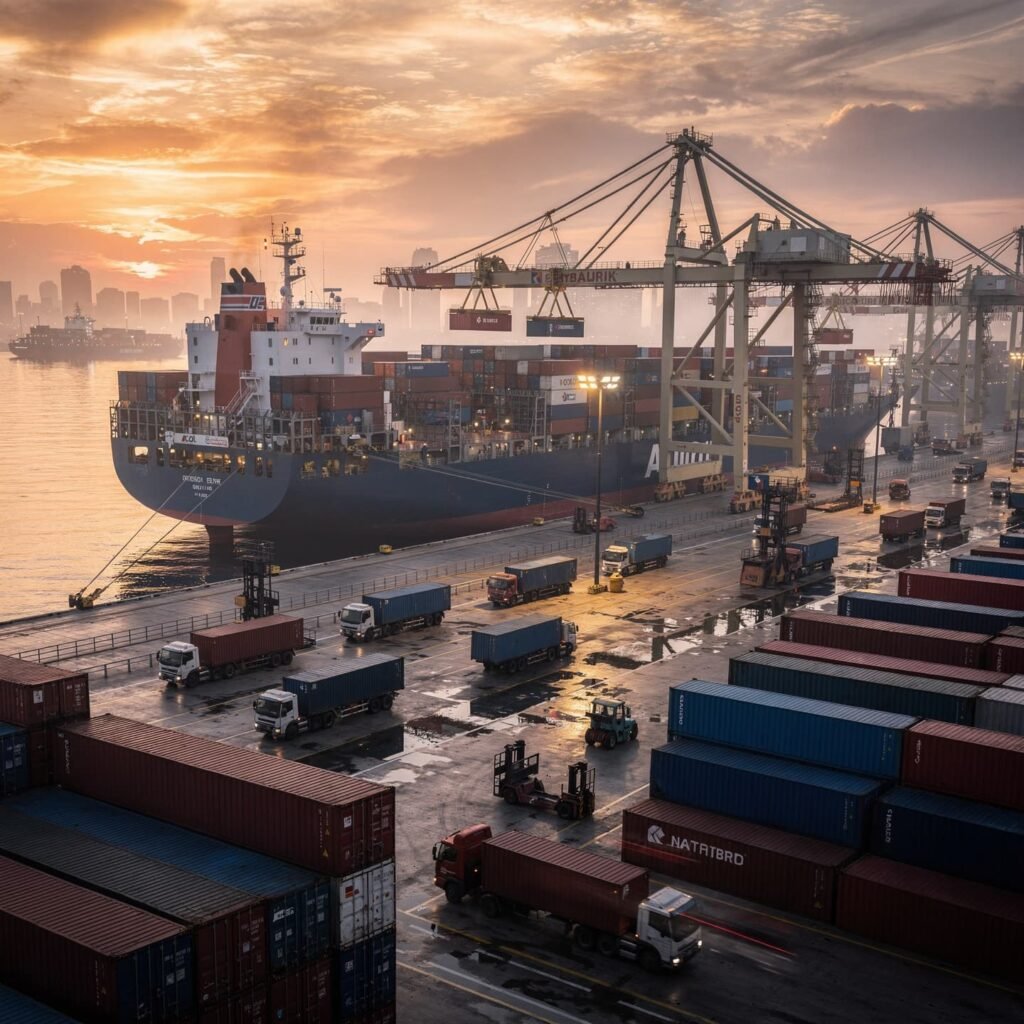
Ports Are Where Maritime Complexity Becomes Real Work
Ports are the meeting point of shipping schedules, terminal constraints, safety requirements, customs and documentation, labour availability, hinterland connections, and commercial pressure. This makes port operations and maritime logistics some of the most demanding shore-based career pathways in the sector.
If your goal is employment, promotion, or a transition from sea-going to shore-based work, port-focused training is one of the most practical investments—because it is immediately applicable and measurable through performance improvement.
This article outlines what high-value port and logistics education should include, and how to choose programmes designed for international relevance.
The Difference Between Port Operations and Maritime Logistics (Why It Matters)
These terms are often used interchangeably, but they are not the same:
Port operations focuses on terminal execution:
-
Berthing, turnaround, and resource planning
-
Yard operations and equipment coordination
-
Safety controls and incident prevention
-
Performance measurement (productivity, dwell time, utilisation)
Maritime logistics focuses on end-to-end flow:
-
Shipping documentation and coordination
-
Schedule reliability and disruption management
-
Stakeholder alignment (carriers, agents, terminals, inland transport)
-
Cost control and service-level performance
A strong diploma or master’s pathway links both: it teaches how operational decisions affect the whole system.
What Employers Look for in Port and Logistics Professionals
Hiring and promotion decisions often hinge on whether you can:
-
Understand processes as systems (not isolated tasks)
-
Improve performance without creating safety risk
-
Communicate with stakeholders using shared operational language
-
Manage exceptions (disruption, weather, equipment failure, congestion)
-
Produce correct documentation consistently
Training should therefore develop:
-
Process mapping and improvement skills
-
KPI literacy and reporting discipline
-
Practical risk control thinking
-
Scenario-based disruption management
-
Documentation competence (the most underestimated skill)
Core Curriculum Elements for High-Impact Port Training
If you are building or buying “very extensive” SEO-friendly content, these are the core content clusters people search for—and what the programme should deliver:
1) Terminal operations fundamentals
-
Berth planning, yard planning, and resource scheduling
-
Equipment constraints and productivity logic
-
Turnaround optimisation without unsafe shortcuts
2) Safety culture and operational risk controls
-
Hazard identification in dynamic environments
-
Contractor interfaces and access control
-
Incident reporting, corrective actions, and learning loops
3) Documentation and compliance workflows
-
Shipping documents and operational records
-
Audit trails, performance reports, and evidence handling
-
Corrective action documentation and follow-up discipline
4) KPI-driven performance management
-
Selecting useful metrics (and avoiding misleading ones)
-
Root cause analysis for performance drops
-
Continuous improvement planning
5) Disruption management and resilience
-
Congestion patterns and mitigation strategies
-
Weather planning and recovery logic
-
Coordination across carriers, agents, terminals, and inland operators
International Career Value: Port Skills Travel Well
Port and logistics competence is transferable because:
-
The underlying operational logic is consistent globally (constraints, safety, KPIs)
-
Documentation and compliance discipline is universal in regulated environments
-
Coordination and disruption management are core requirements everywhere
For learners pursuing international mobility, programmes should include:
-
Global stakeholder communication practices
-
Comparative operational models (different port types and cargo profiles)
-
Strong applied assessment (plans, reports, improvement proposals)
How Our Port & Logistics Programmes Are Designed
At Navalis Magna Institute (Excellence in International Naval & Maritime Education), port and logistics programmes are built around:
-
Operational realism: case-based learning and disruption scenarios
-
Performance evidence: KPI analysis tasks and improvement proposals
-
Documentation discipline: professional outputs aligned with real workflows
-
Career mapping: clear route from junior operational roles to leadership positions
FAQs
Can port operations training help me move from sea to shore?
Yes. Ports value operational judgement, safety discipline, and process thinking—skills sea-going professionals often have, especially when training translates them into shore-based workflows and documentation.
Do I need to work in a port already to take these programmes?
Not necessarily. Good programmes include foundational modules and applied tasks that build credibility for entry or transition roles.