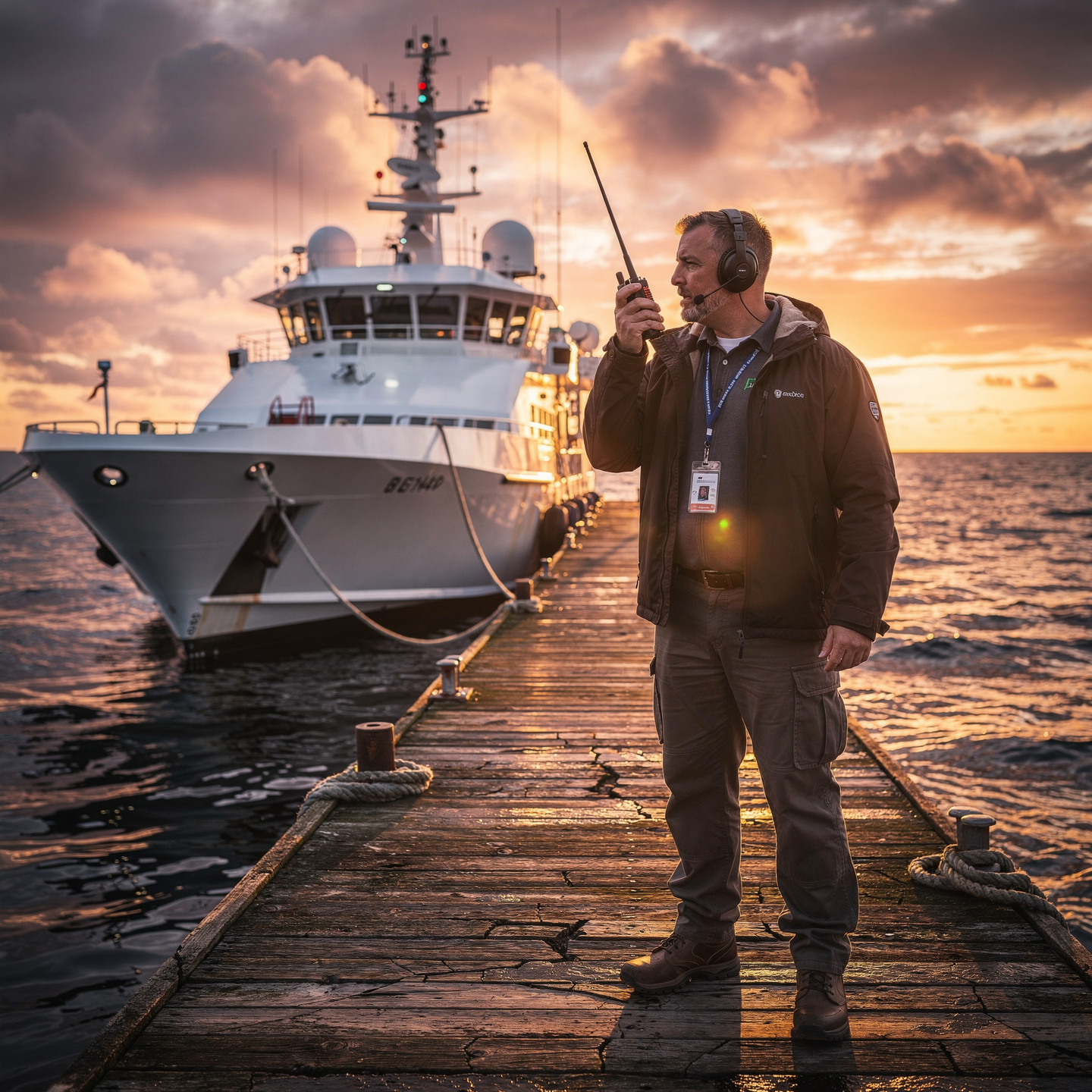
Diploma in Radio and Satellite Communications
Why this certificate program?
The Diploma in Radio and Satellite Communications
This program provides you with a comprehensive understanding of modern communication systems, from theoretical foundations to practical, real-world applications. Learn about modulation, antennas, signal propagation, and communication protocols, with an emphasis on satellite technologies. This program prepares you to design, implement, and maintain reliable and efficient communication systems.
Key Benefits
- Technical Mastery: Gain in-depth knowledge of radio and satellite technologies, including VSAT, Inmarsat, and more.
- Design and Optimization: Learn to design satellite communication networks and optimize their performance.
- Specialized Software: Use simulation and analysis tools for link planning.
- Practical Applications: Explore case studies in telecommunications, navigation, broadcasting, and defense.
- Professional Certification: Earn a recognized diploma that will boost your career in the industry.
- Modality: Online
- Level: Diplomado
- Hours: 800 H
- Start date: 01-10-2026
Availability: 1 in stock
Who is it aimed at?
- Electronics and telecommunications technicians and engineers seeking to specialize in maritime communications, satellite systems, and international regulations.
- Merchant marine officers and radio operators wishing to update their knowledge of state-of-the-art communication equipment, GMDSS, and emergency procedures.
- Personnel from coastal stations and maritime control centers needing to deepen their knowledge of satellite communication technologies, maritime traffic management, and safety protocols.
- Professionals from shipping and maritime service companies interested in optimizing their fleet communications, reducing operating costs, and ensuring regulatory compliance.
- Students and recent graduates in related fields seeking specialized training to enter the workforce in the maritime and communications sector.
Flexibility and applicability
Adapted to your pace: online format with live classes, downloadable materials, and access to industry experts to answer your questions.
Objectives and competencies

Implement and maintain resilient satellite communication systems:
“Select robust equipment, diversify satellite routes, and establish automatic backup protocols in case of outages.”

Design and optimize high-performance radio communication networks:
Select and configure suitable radio equipment and antennas, considering wave propagation, transmission power, and receiver sensitivity, to maximize signal range and clarity.

To efficiently diagnose and resolve faults in radio and satellite equipment:
“Identify the root cause quickly, using advanced diagnostic tools and technical documentation, prioritizing service restoration with temporary and permanent solutions.”

Manage and coordinate complex radio and satellite telecommunications projects:
“Define scope, manage resources, mitigate risks and ensure quality in each phase of the project, applying agile and predictive methodologies.”

Mastering emerging technologies in radio and satellite communications:
“Implement advanced communication protocols (5G, low Earth orbit satellites) to optimize bandwidth and latency in maritime environments.”

Leading innovation in the field of wireless and satellite communications:
“Develop and deploy advanced connectivity solutions, driving the adoption of emerging technologies and optimizing the performance of existing networks.”
Curriculum - Modules
- Comprehensive Maritime Incident Management: protocols, roles, and chain of command for coordinated response
- Operational Planning and Execution: briefing, routes, weather windows, and go/no-go criteria
- Rapid Risk Assessment: criticality matrix, scene control, and decision-making under pressure
- Operational Communication: VHF/GMDSS, standardized reports, and inter-agency liaison
- Tactical Mobility and Safe Boarding: RHIB maneuvers, approach, mooring, and recovery
- Equipment and Technologies: PPE, signaling, satellite tracking, and field data logging
- Immediate Care of the Affected: primary assessment, hypothermia, trauma, and stabilization for evacuation
- Adverse Environmental Conditions: swell, Visibility, flows, and operational mitigation
Simulation and training: critical scenarios, use of VR/AR, and exercises with performance metrics
Documentation and continuous improvement: lessons learned, indicators (MTTA/MTTR), and SOP updates
- Introduction to Radio: History, Electromagnetic Spectrum, and Regulations
- Antenna Fundamentals: Types, Gain, Directivity, Polarization
- Modulation and Demodulation: AM, FM, PM, Digital Techniques
- Radio Transmitters and Receivers: Architectures and Key Parameters
- Radio Wave Propagation: Ionospheric, Tropospheric, Space
- Terrestrial Radiocommunication Systems: VHF, UHF, Microwave
- Communication Satellites: Orbits, Architecture, Links
- Microwave Links: Design, Link Budget, Attenuation
- Techniques of Multiple Access: FDMA, TDMA, CDMA, OFDMA
Measurements and Tests in Radio Systems, Satellites, and Links
‘
- Introduction to Radio: History, Electromagnetic Spectrum, Applications
- Basic Components of a Radio System: Transmitters, Receivers, Antennas
- AM and FM Modulation: Principles, Characteristics, Advantages and Disadvantages
- Digital Modulation: ASK, FSK, PSK, QAM – Concepts and Applications
- Radio Wave Propagation: Types of Waves, Factors Affecting Propagation
- Antennas: Types, Parameters (Gain, Directivity, Polarization), Basic Design
- Introduction to Satellite Communication: History, Orbits, Applications
- Architecture of a Satellite System: Terrestrial and Space Segments, Communication Links
- Multiple Access Techniques: FDMA, TDMA, CDMA – Principles and Comparisons
- Modulation and Coding in Satellite Systems: Standards and Considerations
‘
- Introduction to Modulation: Basic concepts, types of modulation, key parameters.
- Analog Modulation: AM, FM, PM – Fundamentals, advantages, disadvantages, applications.
- Digital Modulation: ASK, FSK, PSK, QAM – Fundamentals, advantages, disadvantages, applications.
- Multiplexing Techniques: FDM, TDM, CDM – Principles, applications in satellite communications.
- Antennas Fundamentals: Antenna parameters, types of antennas, radiation patterns.
- Antennas for Satellite Communications: Parabolic antennas, horn antennas, phased array antennas.
- Radio Wave Propagation: Free-space propagation, atmospheric effects, propagation losses.
- Satellite propagation: Signal path, ionospheric effects, tropospheric effects, fading.
- Satellite links: Link design, link budget, link availability.
- Standards and regulations: ITU, ETSI, national and international regulations.
‘
- Introduction to Radio Frequency (RF): Electromagnetic spectrum, units of measurement, basic concepts
- Basic RF Components: Resistors, capacitors, inductors in RF, resonance
- RF Circuits: Amplifiers, oscillators, mixers, filters
- Fundamentals of Modulation: AM, FM, PM – principles and applications
- Analog Modulation: Detailed analysis of AM, FM, PM, advantages and disadvantages
- Digital Modulation: ASK, FSK, PSK, QAM – principles and applications
- Transmitters and Receivers: Architecture, components, and operation
- Introduction to Antennas: Antenna parameters (gain, directivity, impedance, polarization)
- Types of Antennas: dipole, monopole, Yagi-Uda, horn antennas, parabolic antennas
- Transmission Lines: types, characteristic impedance, impedance matching, VSWR
‘
- System Architecture and Components: Structural design, materials, and subsystems (mechanical, electrical, electronic, and fluid) with selection and assembly criteria for marine environments
- Fundamentals and Principles of Operation: Physical and engineering foundations (thermodynamics, fluid mechanics, electricity, control, and materials) that explain performance and operating limits
- Safety and Environmental (SHE): Risk analysis, PPE, LOTO, hazardous atmospheres, spill and waste management, and emergency response plans
- Applicable Regulations and Standards: IMO/ISO/IEC requirements and local regulations;
- Conformance criteria, certification, and best practices for operation and maintenance
- Inspection, testing, and diagnostics: Visual/dimensional inspection, functional testing, data analysis, and predictive techniques (vibration, thermography, fluid analysis) to identify root causes
- Preventive and predictive maintenance: Hourly/cycle/seasonal plans, lubrication, adjustments, calibrations, consumable replacement, post-service verification, and operational reliability
- Instrumentation, tools, and metrology: Measuring and testing equipment, diagnostic software, calibration and traceability; selection criteria, safe use, and storage
- Onboard integration and interfaces: Mechanical, electrical, fluid, and data compatibility; Sealing and watertightness, EMC/EMI, corrosion protection, and interoperability testing.
Quality, acceptance testing, and commissioning: process and materials control, FAT/SAT, bench and sea trials, go/no-go criteria, and evidence documentation.
Technical documentation and integrated practice: logs, checklists, reports, and a complete case study (safety → diagnosis → intervention → verification → report) applicable to any system.
- Introduction to Radio: History, radio spectrum, modulation, and demodulation.
- Antenna Fundamentals: Parameters, types (dipole, Yagi, parabolic), polarization, and gain.
- Transmission Lines: Impedance, VSWR, impedance matching, and losses.
- Ground Wave Propagation: Direct wave, surface wave, and ionospheric wave.
- Ionospheric Propagation: Ionospheric layers, critical frequency, MUF, and hopping.
- Introduction to Satellite Communication: Types of satellites, orbits (GEO, MEO, LEO).
- Satellite Link: Link diagram, losses due to open space, rain, and noise.
- Satellite Antennas: Parabolic antennas, horn antennas, and phased arrays.
- Multiple Access: FDMA, TDMA, CDMA, and OFDMA.
- Standards and regulations in satellite radio and communications (ITU, FCC).
‘
Career opportunities
Radio Technician: Installation, maintenance, and repair of radio equipment in various industries.
Satellite Communications Technician: Deployment and support of satellite communication systems for companies and organizations.
Earth Station Operator: Monitoring and control of satellite communications from ground stations.
Radio Network Specialist: Design, implementation, and management of radio communication networks.
Communications Consultant: Advising companies on the best communication solutions, including radio and satellite.
Telecommunications Support Technician: Troubleshooting technical issues and providing support to users of radio and satellite equipment.
Technical Sales Representative: Marketing of radio and communications equipment and services. Satellite communications.
Research and Development: Participation in innovation projects in the field of wireless communications.
Regulation and Compliance: Work in regulatory bodies in the telecommunications sector.
“`
Admission requirements

Academic/professional profile:
Degree/Bachelor's degree in Nautical Science/Maritime Transport, Naval/Marine Engineering, or a related field; or proven professional experience in bridge/operations.

Language proficiency:
Recommended functional maritime English (SMCP) for simulations and technical materials.

Documentation:
Updated resume, copy of degree or seaman's book, ID card/passport, letter of motivation.

Technical requirements (for online):
Equipment with camera/microphone, stable connection, ≥ 24” monitor recommended for ECDIS/Radar-ARPA.
Admission process and dates

1. Online
application
(form + documents).

2. Academic review and interview
(profile/objectives/schedule compatibility).

3. Admission decision
(+ scholarship proposal if applicable).

4. Reservation of place
(deposit) and registration.

5. Induction
(access to campus, calendars, simulator guides).
Scholarships and grants
- Master the technologies: Delve into modern radio systems and essential satellite communications.
- Design and optimize: Learn to design efficient communication networks and optimize their performance.
- Apply in practice: Develop skills with specialized software and real-world scenario simulations.
- Professional certification: Earn a recognized diploma to boost your career in the industry.
- Connect with experts: Interact with leading professionals and expand your network.
Testimonials
This diploma program exceeded my expectations. I gained a solid theoretical and practical understanding of radio frequencies, modulation, antennas, and satellite systems. I was able to apply what I learned directly to my work, optimizing the performance of our communications and solving complex interference problems. The hands-on training with real equipment was fundamental to my professional development.
The Diploma in Onboard Communications & Technology exceeded my expectations. I gained a solid practical understanding of communication systems and emerging technologies in the industry, enabling me to lead the implementation of a new connectivity system in my company, optimizing operational efficiency and improving the customer experience.
This diploma program exceeded my expectations. I acquired solid theoretical and practical knowledge of radio frequencies, modulation, antennas, and satellite link design. The hands-on experience with simulation software and the focus on new technologies have opened doors to very interesting job opportunities in the sector.
This diploma program provided me with the theoretical and practical tools I needed to design and implement a satellite communication system for an isolated rural area. Thanks to the knowledge I gained, I was able to connect the community to internet and telephone services, positively impacting its social and economic development.

Frequently asked questions
Yes. The itinerary includes ECDIS/Radar-ARPA/BRM with harbor, ocean, fog, storm, and SAR scenarios.
Online with live sessions; hybrid option for simulator/practical placements through agreements.
Yes, this diploma generally covers both theoretical and practical aspects of radio and satellite communications.
Recommended functional SMCP. We offer support materials for standard phraseology.
Yes, with a relevant degree or experience in maritime/port operations. The admissions interview will confirm suitability.
Optional (3–6 months) through Companies & Collaborations and the Alumni Network.
Simulator practice (rubrics), defeat plans, SOPs, checklists, micro-tests and applied TFM.
A degree from Navalis Magna University + operational portfolio (tracks, SOPs, reports and KPIs) useful for audits and employment.
- Introduction to Satellite Networks: History, evolution, and applications.
- Fundamentals of Satellite Communication: Orbits, frequencies, and bandwidth.
- Space Segment Architecture: Types of satellites, transponders, and platforms.
- Ground Segment Architecture: Earth stations, antennas, and communication equipment.
- Multiple Access Protocols: FDMA, TDMA, CDMA, and their variants.
- Physical Layer and Data Link Protocols: Modulation, encoding, and error correction.
- Network Protocols: TCP/IP over satellite, optimizations, and adaptations.
- Quality of Service (QoS) in Networks Satellite Communications: Prioritization, congestion management, and SLAs.
Security in Satellite Communications: Encryption, authentication, and jamming protection.
Future Trends in Architecture and Protocols: Low Earth Orbit (LEO) satellites, 5G, and beyond.
‘
Request information
Complete the Application Form.
Attach your CV/degree certificate (if you have it to hand).
Indicate your preferred cohort (January/May/September) and whether you would like the hybrid option with simulator sessions.
An academic advisor will contact you within 24–48 hours to guide you through the admission process, scholarships, and compatibility with your professional schedule.
Faculty
Eng. Tomás Riera
Full Professor
Eng. Tomás Riera
Full Professor
Eng. Sofía Marquina
Full Professor
Eng. Sofía Marquina
Full Professor
Eng. Javier Bañuls
Full Professor
Eng. Javier Bañuls
Full Professor
Dr. Nuria Llobregat
Full Professor
Dr. Nuria Llobregat
Full Professor
Dr. Pau Ferrer
Full Professor
Dr. Pau Ferrer
Full Professor
Cap. Javier Abaroa (MCA)
Full Professor
Cap. Javier Abaroa (MCA)
Full Professor

