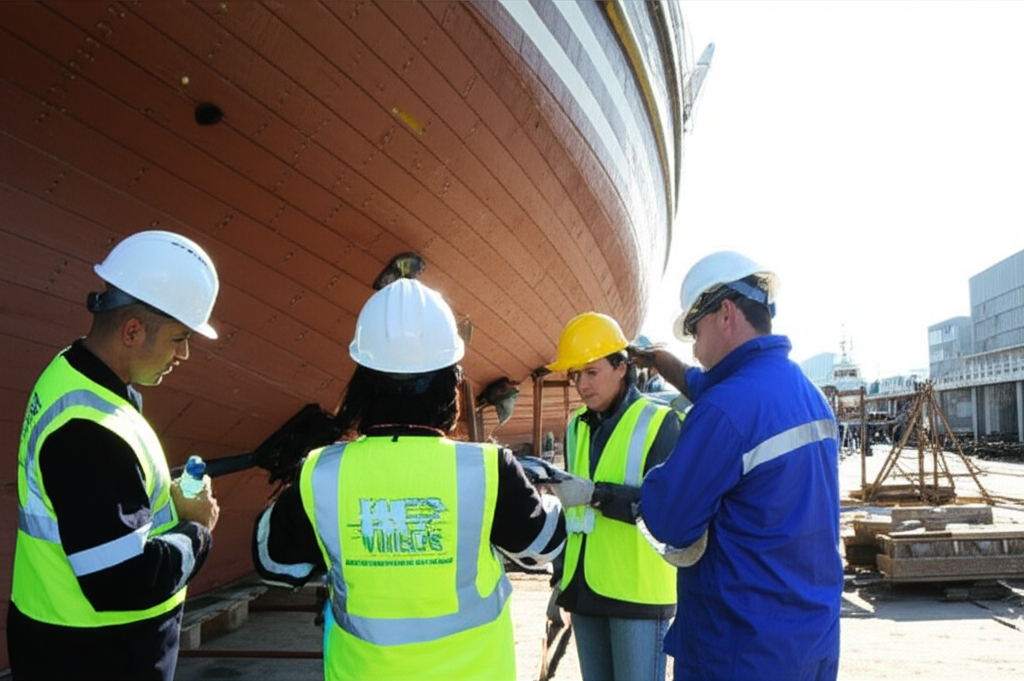
Master’s Degree in Naval Heritage and Restoration of Historic Ships
Why this master’s programme?
The Master’s Degree in Naval Heritage and Restoration of Historic Ships
This program offers an in-depth immersion in the conservation and restoration of vessels of historical value. Learn the most advanced techniques for damage diagnosis, the selection of compatible materials, and the application of restoration methods that respect authenticity. This program equips you to manage museumization and rehabilitation projects, contributing to the preservation of maritime heritage.
Differential Advantages
- Multidisciplinary Approach: naval archaeology, maritime history, naval engineering, and heritage conservation.
- Internships in Historic Shipyards: real-world experience in restoration projects of iconic vessels.
- Cutting-Edge Technologies: 3D modeling, laser scanning, and non-destructive analysis applied to conservation.
- Expert Faculty: renowned professionals in the field of naval restoration and heritage management.
- Networking: access to a broad network of institutions and professionals in the maritime and cultural sectors.
- Modality: Online
- Level: Masters
- Hours: 1600 H
- Start date: 25-04-2026
Availability: 1 in stock
Who is it aimed at?
- Art historians and naval archaeologists seeking to specialize in the conservation of maritime heritage and the documentation of historic vessels.
- Naval architects and marine engineers interested in applying sustainable restoration techniques and structural analysis of historic ships.
- Professionals from maritime museums and interpretation centers wishing to enhance their skills in the management of naval collections and the dissemination of heritage.
- Craftsmen and shipwrights seeking to deepen their knowledge of traditional techniques of historic shipbuilding and their application in restoration.
- Graduates in History, Conservation and Restoration or related disciplines aspiring to a professional career in the protection and enhancement of Naval heritage.
Academic flexibility
Adapted for professionals and students: online and in-person modalities, supervised research projects and internships in collaborating shipyards and museums.
Objectives and skills

Directing comprehensive naval heritage conservation projects:
“Manage multidisciplinary teams (restorers, engineers, historians) to ensure the technical, historical and financial viability of the project.”

Evaluate and diagnose the state of conservation of historic ships:
“Identify structural and material pathologies through visual inspection, non-destructive testing, and document analysis.”

Applying advanced restoration techniques to deteriorated naval elements:
“Using innovative materials and respecting historical authenticity, documenting each phase of the process.”

To manage and disseminate the historical and cultural value of naval heritage:
“To develop educational programs and outreach activities, using digital resources and collaborating with cultural institutions and local communities.”

Develop innovative strategies for the musealization of naval heritage:
Implement immersive technologies (VR/AR) to recreate historical scenarios and interactive experiences, combining the preservation of the physical object with the digital dissemination of knowledge.

To thoroughly investigate and document the history and evolution of shipbuilding:
Identify key technological milestones, innovations in design and materials, and their socio-economic impact in different cultures and historical periods.
Study plan – Modules
- Scientific and technical foundations of non-destructive testing (NDT) applied to historical naval structures: ultrasound, thermography, digital radiography, and vibration analysis
- Advanced structural inspection methodologies: 3D scanning techniques, photogrammetric modeling, and laser scanning for precise dimensional evaluation
- Application of smart sensor technologies (Wireless Sensor Networks, piezoelectric sensors) for real-time monitoring of structural integrity and early detection of corrosion and fatigue
- Use of computational structural analysis (CAE) and finite element analysis (FEA) simulations to predict mechanical behavior and maximize the preservation of the hull and superstructure
- Diagnosis and evaluation of microstructural deterioration in metal alloys and traditional woods: electron microscopy, X-ray diffraction, and impedance spectroscopy techniques
- Advanced protocols for the restoration and consolidation of original materials, including
- Ecological biocides, corrosion inhibition treatments, and polymeric consolidants compatible with historic materials
- Implementation of preventive conservation systems using controlled microclimates and environmental encapsulation to prevent the progression of damage and extend the service life of ships
- Application of augmented reality and virtual modeling technologies for the planning and visualization of complex restoration interventions on historic ships
- International regulations and best practices in structural conservation: recommendations from ICOMOS and UNESCO, and ISO standards applied to heritage ships
- Relevant case studies: critical analysis of emblematic international restoration projects and evaluation of technical and heritage outcomes
- Fundamentals of Historical Naval Materials: Composition, Mechanical Properties, and Deterioration in Marine Environments
- Advanced Diagnosis of Material Pathologies: Non-Destructive Testing (NDT), Ultrasonic Testing, Thermography, and Chemical Analysis
- Comprehensive Structural Evaluation: Stress Analysis, Electromechanical Corrosion, and Bimetallic Degradation in Composite Materials
- Cleaning and Stabilization Protocols: Mechanical, Chemical, and Electrochemical Methods Applied to Metals, Woods, and Traditional Composites
- Consolidation and Reinforcement Techniques: Use of Epoxy Resins, Mineral Consolidants, and Natural Fibers in Naval Restoration
- Methodologies for Reversibility in Treatments: Technical Criteria and International Standards for Conservative Interventions
- Application of Protective Coatings: Anti-corrosive Layers, Marine Varnishes, and State-of-the-Art Hydrophobic Treatments
- Integration of Technologies Digital tools: 3D scanning, CAD modeling, and real-time structural monitoring for preservation.
Comprehensive restoration project management: planning, photogrammetric documentation, timelines, and quality control.
International standards and regulations for the conservation of naval heritage: ICOMOS, UNESCO, and specific guidelines for historic vessels.
- Fundamentals of technological innovation in naval restoration: historical evolution, current trends, and future perspectives in the conservation of historic vessels.
- Advanced diagnostics of naval structures: non-destructive testing (NDT), ultrasound, digital radiography, and infrared thermography applied to metallic and timber materials.
- 3D modeling and laser scanning: precise capture of the structural and morphological condition for digital documentation, analysis, and intervention planning.
- Preventive and corrective conservation methodologies: assessment and mitigation of structural pathogens, corrosion, biodeterioration, and environmental degradation.
- Intelligent continuous monitoring systems: embedded sensors, IoT, and data analysis to anticipate failures and optimize the maintenance of heritage vessels.
- Application of innovative materials in restoration: composites, lightweight alloys, and advanced coatings that respect historical integrity and They guarantee durability.
Specialized software for the management and planning of naval restoration projects: BIM applied to maritime heritage and specific CAD/CAM tools.
Advanced structural reconstruction techniques: precision welding, reinforcement techniques, and structural adaptations compatible with criteria of authenticity and reversibility.
Applicable international protocols and technical standards: UNESCO, ICOMOS, the Hague Convention, and the advisory council on maritime naval heritage.
Case studies and analysis of landmark projects: critical evaluation of successful technological applications and lessons learned to optimize future interventions on historic vessels.
- Fundamentals of strategic management applied to naval restoration: objectives, scope, and alignment with heritage conservation
- Advanced planning methodologies: analysis of technical and economic feasibility in historic vessel restoration projects
- Comprehensive risk assessment: identification, analysis, and prioritization of structural, environmental, and operational risks during restoration
- Design and implementation of risk mitigation plans: specific protocols for the preservation of original materials and minimization of reversible impacts
- Quality control in naval restorations: international standards, applicable ISO regulations, and acceptance criteria for specialized work
- Management of technical documentation: recording of interventions, traceability of materials, and document control in accordance with heritage legislation
- Interdisciplinary coordination: integration of naval archaeologists, engineers, naval architects, and restorers to ensure technical and artistic coherence
- Implementation of advanced technologies for the Project monitoring: use of Building Information Modeling (BIM) systems adapted to naval restoration
Ongoing evaluation and technical audits: protocols to ensure compliance throughout all project phases and guarantee historical integrity
Resource management and logistics: planning of specific supplies, machinery, and human resources specialized in naval restoration
Legal and ethical aspects of historic vessel restoration: permits, local and international regulations, and preservation of authenticity
Financial management and budget control: cost estimation, project financing, and control of budget variances
Strategies for communication and public awareness: disseminating the historical and social value of naval heritage during and after restoration
Study of emblematic cases of successful naval restorations: critical analysis of methodologies, results, and lessons learned
Preparation of comprehensive technical reports: presentation of results, analysis of pathologies, and recommendations for future maintenance
- Post-restoration maintenance planning: protocols to ensure long-term conservation and monitoring of environmental conditions
- Innovation and sustainability in naval restoration projects: application of eco-efficient techniques and materials compatible with the marine environment
- Fundamentals and principles of digital documentation applied to naval heritage: international standards, regulations, and cataloging protocols
- Three-dimensional capture technologies: advanced photogrammetry, 3D laser scanning, and remote sensing applied to historic vessels
- Digital processing and modeling: specialized software for the geometric reconstruction and faithful texturing of the hull and naval structures
- Implementation of Geographic Information Systems (GIS) for the spatial and temporal management of underwater and terrestrial naval heritage
- Hybrid methodologies for structural analysis: integration of digital information and physical data obtained through inspection and sensor technology
- Advanced techniques in materials analysis: chemical, mechanical, and microstructural characterization of historic woods, metals, and composites
- Digital management of the life cycle of historic vessels: from initial documentation to monitoring interventions and preventive maintenance
- Application of Artificial intelligence and machine learning in the detection of deterioration and prediction of pathologies in heritage naval structures
Digital conservation protocols: standards for digital preservation, authenticity, and long-term access in digital archives and heritage databases
Development of virtual environments and augmented reality for dissemination, awareness, and training in historical naval heritage
Interdisciplinary integration: collaboration between archaeologists, conservators, naval engineers, and ICT specialists for the design of digital conservation projects
Ethical and legal aspects in the documentation and digital dissemination of naval heritage: image rights, intellectual property, and protection of sensitive data
Case studies and digital intervention protocols in the restoration of historic vessels: methodologies applied in landmark international projects
Planning, execution, and evaluation of digital conservation projects: design of schedules, allocation of resources, and assessment of technical and heritage impact
- Innovation and future trends in digital documentation and conservation: emerging technologies, big data, and their application in the comprehensive management of historical naval heritage
- Fundamentals of historical materials used in shipbuilding: wood, steel, copper, and traditional alloys
- Advanced non-destructive testing (NDT) technologies: ultrasound, infrared thermography, magnetic resonance imaging, and digital radiography
- Structural modeling and simulation applied to historical vessels using finite element analysis (FEM): stress assessment and dynamic behavior
- Application of 3D photogrammetry and laser scanning techniques for the accurate reconstruction and documentation of deteriorated structures
- Innovations in preventive and corrective conservation: consolidation of organic materials, cathodic protection, and environmental control to prevent corrosion
- Advanced restoration methodologies: techniques for material reversibility and compatibility, and criteria for minimally invasive intervention
- Comprehensive management of naval restoration projects: strategic planning, schedules, resource management, and quality control
- Real-time digital monitoring systems: Smart sensors for early detection of deformations, humidity, and the presence of aggressive microorganisms.
International regulations and technical standards applicable to the conservation of naval heritage: UNESCO, ICOMOS, and specific national codes.
Case studies and analyses of landmark naval restoration projects: detailed study of procedures, technical challenges, and results obtained.
- Advanced principles in non-destructive testing (NDT) applied to historic vessels: ultrasound, infrared thermography, acoustic emission, and eddy currents
- Computational structural modeling for predictive integrity analysis: finite element methods (FEM) and multiphysics simulations of hull and superstructure
- Applications of 3D laser scanning and digital photogrammetry for generating accurate and detailed models of heritage vessels
- Innovative structural conservation techniques: nanotechnologies in anti-corrosion treatment, wood consolidation, and specific resins for naval restoration
- Implementation of Building Information Modeling (BIM) systems adapted to naval heritage for multidisciplinary integration in restoration projects
- Digital documentation protocols: capture, management, secure storage, and traceability of information using GIS systems and specialized databases
- Digital Image Correlation (DIC) methodologies for in-situ monitoring of structural deformations and stresses during restoration processes
- Integration of drones and remotely operated underwater vehicles (ROVs) for inspection and monitoring in inaccessible or high-risk environments
- Advanced chemical and microstructural analysis: Raman spectroscopy, X-ray diffraction (XRD), and scanning electron microscopy (SEM) applied to materials from historic shipbuilding
- International regulations and technical standards for the conservation and restoration of naval heritage, including ICOMOS and UNESCO guidelines and specific ISO standards
- Fundamentals of Non-Destructive Testing (NDT) Techniques Applied to Historical Naval Machinery: Physical Principles, Scope, and Limitations
- Ultrasound: Ultrasonic Inspection Methods, Equipment Calibration, and Detection of Surface and Volumetric Defects in Metallic Components
- Infrared Thermography: Thermal Analysis for Identifying Anomalies in Propulsion Systems and Auxiliary Machinery Without Direct Contact
- Liquid Penetrant and Magnetic Particle Testing: Procedures for Detecting Cracks and Fissures in Ferrous and Non-Ferrous Materials of Naval Structures
- Advanced Visual Inspection: Use of Videoscopy, Endoscopes, and Microscopy to Evaluate the Internal Condition of Engines and Complex Systems
- Metrology Applied to Restoration: Dimensional Measurement Techniques for Degradation Control and Fit in Original Parts
- Corrosion and Fatigue in Historical Machinery: Mechanisms,
- Diagnostics and mitigation strategies without compromising authenticity
- Comprehensive protocol for the preventive conservation and functional restoration of naval machinery: documentation, materials analysis, and intervention schedule
- Restorative intervention methodologies: controlled dismantling, structural repair, reversible replacement, and reinstallation according to museological criteria
- Interdisciplinary integration: collaboration between naval engineers, conservators, and restoration technicians to guarantee historical accuracy and operational functionality
- Fundamentals of structural assessment in historic vessels: non-destructive testing (NDT), ultrasonic techniques, infrared thermography, and X-ray analysis for accurate diagnosis.
- Advances in three-dimensional scanning and photogrammetry for detailed digital documentation of naval heritage, including Building Information Modeling (BIM) applied to historic naval structures.
- Original and modern materials: physical and chemical characterization of historic woods, steels, and metal alloys using spectroscopy and scanning electron microscopy (SEM) for the selection of conservation techniques.
- Advanced structural consolidation methodologies: use of epoxy resins, special alloys, and microinjection techniques for restoration without altering historical integrity.
- Application of nanotechnologies in the protection of naval surfaces: antimicrobial agents, corrosion inhibitors, and smart coatings that guarantee durability in marine environments.
aggressive.
Continuous environmental monitoring and diagnosis: integration of smart sensors to control humidity, temperature, salinity, and vibrations that affect the stability of the historic vessel.
Repair and reconstruction of structural elements following reversibility and minimal intervention criteria, using reverse engineering techniques and advanced prototyping for replicating original parts.
International regulations and standards applied to maritime restoration: evaluation of authenticity, integrity, and compatibility criteria according to UNESCO, ICOMOS, and IMO regulations.
Digital tools for planning and monitoring restoration projects: specialized software for controlling time, resources, risks, and quality in complex interventions.
Advanced case studies: detailed analysis of landmark historic vessel restoration projects worldwide, evaluating technical and methodological results and heritage sustainability.
- Advanced research in 3D scanning and photogrammetry technologies for the precise documentation of the structural condition of historic vessels
- Application of composite materials and nanotechnology techniques in the restoration of deteriorated elements, respecting the original integrity
- Digital modeling and structural simulation using specialized software to predict behavior under environmental and operational loads
- Implementation of real-time monitoring systems based on IoT sensors for preventive conservation and dynamic evaluation
- Integrated multidisciplinary strategies: coordination among naval historians, naval engineers, conservators, and architects for coherent and sustainable interventions
- International regulations and specific protocols for interventions in naval heritage: detailed analysis of UNESCO, ICOMOS, and MARPOL conventions applied to restoration
- Critical analysis of emblematic cases of global naval restoration, identifying best practices and lessons learned in complex interventions
- Development of master restoration plans: phases of diagnosis, intervention, restoration, and long-term maintenance
- Integration of augmented and virtual reality technologies for the planning, training, and dissemination of documentation for restoration projects
- Advanced technical writing of the Final Project: scientific methodology, presentation of results, critical analysis, and innovative proposals for naval preservation
Career prospects
“`html
- Naval Heritage Manager: cataloging, conservation, and dissemination of historic ships and maritime collections.
- Historic Ship Restorer: planning and execution of restoration projects, applying traditional and modern techniques.
- Maritime Heritage Consultant: advising public and private institutions on the protection and enhancement of naval heritage.
- Maritime Exhibition and Museum Designer: creation of content and experiences for the dissemination of naval heritage.
- Researcher in Naval History and Maritime Archaeology: development of research projects on shipbuilding and the history of navigation.
- Naval Heritage Instructor: teaching courses and workshops on the conservation and restoration of historic ships.
- Preventive Conservation Technician: application of measures for protection and preservation of historic ships and maritime collections.
- Cultural Manager in Maritime Institutions: promotion and development of cultural activities related to naval heritage.
“`
Entry requirements

Academic/professional profile:
Bachelor’s degree in Nautical Science/Maritime Transport, Naval/Marine Engineering or a related qualification; or proven professional experience on the bridge/in operations.

Language proficiency:
Functional Maritime English (SMCP) recommended for simulations and technical materials.

Documentation:
Updated CV, copy of qualification or seaman’s book, national ID/passport, motivation letter.

Technical requirements (for online):
Device with camera/microphone, stable internet connection, monitor ≥ 24” recommended for ECDIS/Radar-ARPA.
Admissions process and dates

Online
application
(form + documents).

Academic review and interview
Admissions decision

Admissions decision
(+ scholarship offer if applicable).

Place reservation
(deposit) and enrolment.

Induction
(access to the virtual campus, calendars, simulator guides).
Scholarships and financial support
- Immersion in Naval History: Delve into the construction, evolution, and significance of historic ships.
- Cutting-Edge Restoration Techniques: Learn advanced methodologies for the conservation and restoration of maritime heritage.
- Hands-on Experience in Shipyards and Museums: Participate in real-world naval heritage restoration and management projects.
- Expert Instructors and Industry Leaders: Learn from professionals with extensive experience in naval conservation and restoration.
- Networking with Industry Professionals: Establish key contacts for your future career in the field of maritime heritage.
Testimonials
This master’s degree provided me with the necessary theoretical and practical tools to lead the restoration project of the brig “Goletta Esperanza”. I applied the knowledge I acquired about traditional shipbuilding, materials analysis, and project management, achieving the successful recovery of this emblematic vessel, returning it to sailing and transforming it into a floating museum that preserves local maritime heritage.
The Master’s in Naval History and Heritage provided me with the tools and knowledge necessary to develop my research on the evolution of shipbuilding in the 18th century. The combination of theory and practice, along with access to archives and experts, allowed me to publish my thesis in a prestigious academic journal and obtain a position as a researcher at the National Maritime Museum.
My experience in the Master’s program in Naval Heritage and Restoration of Historic Ships was exceptional. I acquired solid theoretical and practical knowledge, from underwater archaeology to traditional shipbuilding techniques, which enabled me to successfully lead the restoration of the 18th-century sailing ship “Santa María.” The combination of academic rigor with practical experience in shipyards and museums fully prepared me for my current role as a consultant on international naval conservation projects.
I applied the knowledge I gained during my master’s degree to lead the restoration of the brigantine schooner “Real Fernando.” The project, initially complex due to the vessel’s deteriorated condition, was successfully completed thanks to the application of techniques learned during the course, making it seaworthy and preserving its historical value for future generations.

Frequently asked questions
Naval heritage and restoration of historic ships.
Yes. The itinerary includes ECDIS/Radar-ARPA/BRM with harbor, ocean, fog, storm, and SAR scenarios.
Online with live sessions; hybrid option for simulator/practical placements through agreements.
It focuses on the conservation of old ships, including their restoration.
Recommended functional SMCP. We offer support materials for standard phraseology.
Yes, with a relevant degree or experience in maritime/port operations. The admissions interview will confirm suitability.
Optional (3–6 months) through Companies & Collaborations and the Alumni Network.
Simulator practice (rubrics), defeat plans, SOPs, checklists, micro-tests and applied TFM.
A degree from Navalis Magna University + operational portfolio (tracks, SOPs, reports and KPIs) useful for audits and employment.
- Advanced research in 3D scanning and photogrammetry technologies for the precise documentation of the structural condition of historic vessels
- Application of composite materials and nanotechnology techniques in the restoration of deteriorated elements, respecting the original integrity
- Digital modeling and structural simulation using specialized software to predict behavior under environmental and operational loads
- Implementation of real-time monitoring systems based on IoT sensors for preventive conservation and dynamic evaluation
- Integrated multidisciplinary strategies: coordination among naval historians, naval engineers, conservators, and architects for coherent and sustainable interventions
- International regulations and specific protocols for interventions in naval heritage: detailed analysis of UNESCO, ICOMOS, and MARPOL conventions applied to restoration
- Critical analysis of emblematic cases of global naval restoration, identifying best practices and lessons learned in complex interventions
- Development of master restoration plans: phases of diagnosis, intervention, restoration, and long-term maintenance
- Integration of augmented and virtual reality technologies for the planning, training, and dissemination of documentation for restoration projects
- Advanced technical writing of the Final Project: scientific methodology, presentation of results, critical analysis, and innovative proposals for naval preservation
Request information
Complete the Application Form.
Attach your CV/degree certificate (if you have it to hand).
Indicate your preferred cohort (January/May/September) and whether you would like the hybrid option with simulator sessions.
An academic advisor will contact you within 24–48 hours to guide you through the admission process, scholarships, and compatibility with your professional schedule.
Faculty
Eng. Tomás Riera
Full Professor
Eng. Tomás Riera
Full Professor
Eng. Sofía Marquina
Full Professor
Eng. Sofía Marquina
Full Professor
Eng. Javier Bañuls
Full Professor
Eng. Javier Bañuls
Full Professor
Dr. Nuria Llobregat
Full Professor
Dr. Nuria Llobregat
Full Professor
Dr. Pau Ferrer
Full Professor
Dr. Pau Ferrer
Full Professor
Cap. Javier Abaroa (MCA)
Full Professor
Cap. Javier Abaroa (MCA)
Full Professor

