Master’s Degree in Museology and Maritime Heritage Management

Why this master’s programme?

The Master’s in Museology and Maritime Heritage Management

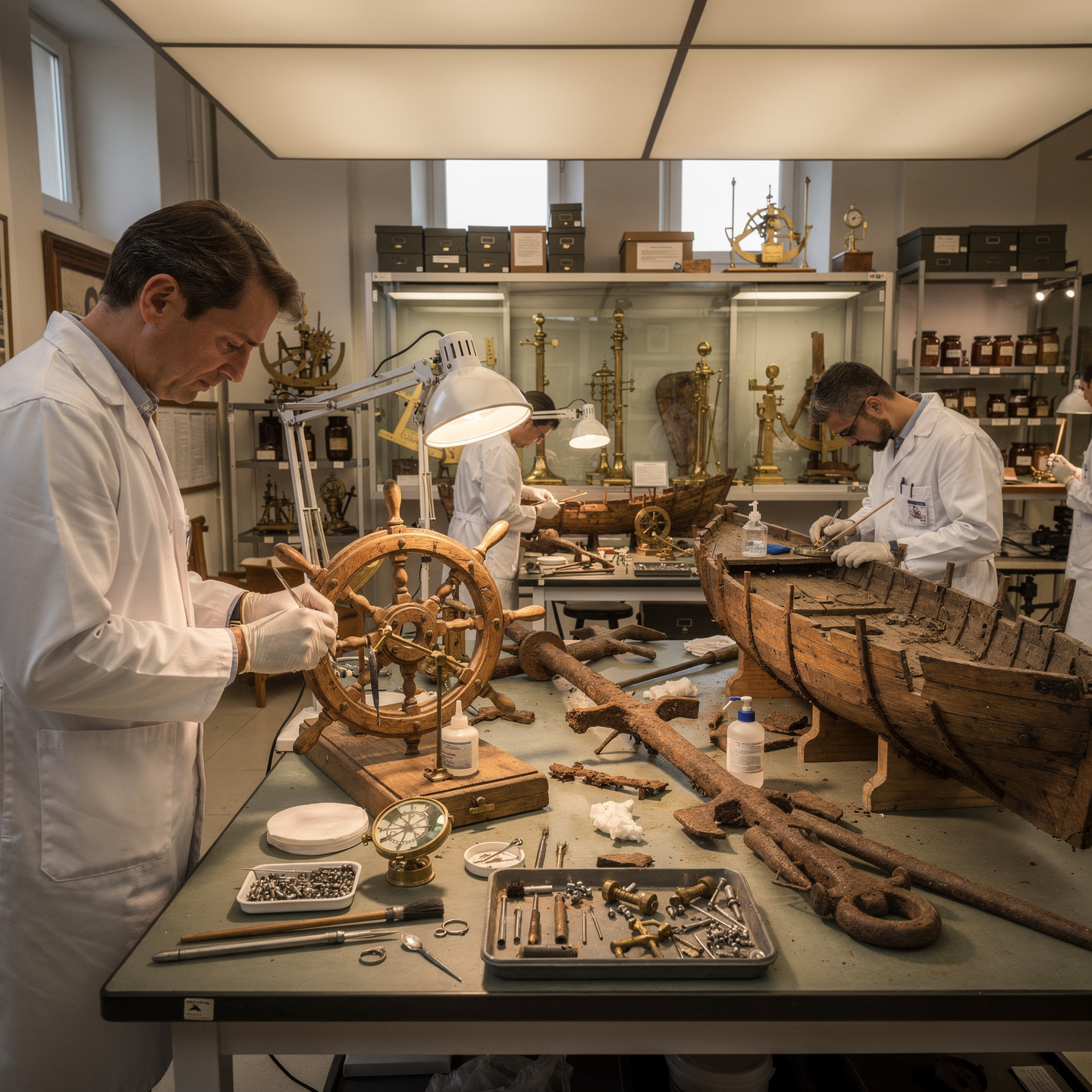
This program prepares you to lead the conservation and dissemination of maritime heritage. Acquire the tools for research, cataloging, and collection management, as well as the design of innovative exhibitions and educational programs that connect the public with the history of the sea. This program offers a comprehensive view of maritime heritage, from underwater archaeology to intangible culture, boosting your career in museums, cultural institutions, and sustainable tourism projects.

This program prepares you to lead the conservation and dissemination of maritime heritage.

Differential Advantages

  • Multidisciplinary Approach: integrates history, anthropology, conservation, and cultural management.
  • Professional Internships: collaborates with renowned museums and maritime organizations.
  • Applied Technology: uses digital tools for heritage documentation and dissemination.
  • Expert Network: learn from leading professionals in museology and maritime heritage.
  • Project Development: designs and manages heritage conservation and enhancement projects.
MuseologĂ­a

Master’s Degree in Museology and Maritime Heritage Management

Availability: 1 in stock

Who is it aimed at?

  • Graduates in History, Art, Archaeology, Anthropology, and Tourism who wish to specialize in the conservation and promotion of maritime heritage.
  • Museum, archive, and interpretation center professionals seeking to update their knowledge in the management of maritime collections and exhibitions.
  • Public administration and foundation officials working in the protection of cultural heritage and the promotion of coastal tourism.
  • Educators and science communicators interested in developing innovative educational programs on maritime history and culture.
  • Sea and naval history enthusiasts aspiring to a professional career in the management and dissemination of maritime heritage.

Flexibility Academic:
 Tailored to your needs: online modality, 24/7 access to content and personalized tutoring.

MuseologĂ­a

Objectives and skills

Cataloging and preserving maritime cultural assets:

“Identify and document artifacts, shipwrecks, and submerged sites using archaeological methodologies and preventive conservation criteria.”

Design and manage interactive maritime exhibitions:

“Create engaging narratives, incorporating immersive technology and adapting content to diverse audiences to maximize educational impact and enjoyment.”

Develop sustainable maritime cultural tourism strategies:

“Design itineraries that balance visitor experience with heritage conservation, involving local communities and minimizing environmental impact.”

Leading research projects in maritime heritage:

“Define the scope, budget, and timeline of the project, ensuring its feasibility and the achievement of its objectives.”

Assess the social and economic impact of maritime heritage:

“Identify key indicators to measure the contribution of maritime heritage to local and regional development, considering both tangible benefits (tourism, employment) and intangible benefits (cultural identity, social cohesion).”

Applying innovative technologies to maritime museum displays:

“Implement Augmented Reality to recreate historical naval battles on scale models, enriching the visitor experience with superimposed contextual information.”

Study plan – Modules

  1. Fundamentals of Maritime Heritage Conservation: Theoretical Principles and Applicable International Regulations (UNESCO, ICOMOS, ICCROM)
  2. Multidisciplinary Analysis of Maritime Heritage: Integration of Underwater Archaeology, Naval History, Ethnography, and Environmental Conservation
  3. Advanced Diagnosis of Conservation Status: Visual Inspection Techniques, Digital Photogrammetry, 3D Scanning, and Specialized Environmental Monitoring
  4. Application of Technologies for Preventive and Corrective Conservation: Environmental Control, Restoration of Organic and Inorganic Materials in Marine Contexts
  5. Strategic Management of Maritime Collections: Acquisition, Cataloging, Preservation, and Digitization Policies for Museums and Cultural Spaces
  6. Design and Development of Interactive and Multisensory Exhibitions Focusing on Maritime Heritage, Integration of Augmented and Virtual Reality for Scientific Dissemination
  7. Comprehensive Security Planning in Maritime Museums: Emergency Protocols, Anti-Theft Systems, Access control and risk management in coastal environments

    International and national regulations for the protection of underwater and coastal heritage: legal analysis, case studies, and best practices in maritime museology

    Sustainability and accessibility strategies in maritime heritage management: inclusive management, community participation, and responsible cultural tourism

    Ongoing evaluation and auditing of maritime museology projects: indicators of cultural, social, and economic impact for informed decision-making

  1. Fundamentals of Contemporary Maritime Museology: Historical Evolution and Global Context
  2. Principles and Techniques of Museographic Design Applied to Maritime Spaces
  3. Emerging Digital Technologies in Exhibitions: Augmented Reality (AR), Virtual Reality (VR), and Mixed Reality (MR)
  4. Design and Development of Interactive Interfaces: User Experience (UX) and Accessibility in Maritime Museums
  5. Implementation of Tracking and Sensor Systems for Interactive Collections: IoT in Museographic Environments
  6. Integration of Multimedia Databases and Digital Management of Maritime Collections for Dynamic Exhibitions
  7. 3D Modeling and Digital Recreation of Historical Naval Artifacts: Techniques and Practical Applications
  8. Protocols for the Preventive Conservation and Maintenance of Technological Devices in Maritime Spaces
  9. Impact Assessment and Interaction Metrics: Quantitative and Qualitative Analysis of the Experience
  10. visitor

    Innovative proposals for digital museum narratives for the dissemination of maritime heritage

    Regulations and ethical considerations in the digitization and interactive presentation of maritime cultural assets

    Technological project management in maritime museums: planning, resources, budgets, and timelines

    International case studies of excellence in interactive exhibitions and digital technologies applied to maritime museology

  1. Scientific and technical foundations of preventive conservation in maritime heritage: principles of stability, pH, humidity, and temperature
  2. Identification and characterization of traditional nautical materials: woods, metals, textiles, and pigments in marine contexts
  3. Evaluation of physical, chemical, and biological deterioration factors in maritime historical objects and elements
  4. Advanced inspection and diagnostic protocols: non-invasive analyses, imaging techniques, spectroscopy, and applied microscopy
  5. Design and implementation of controlled environments for preservation: microclimates, filtration systems, and atmospheric pollutant control
  6. Specialized cleaning methodologies: safe procedures for the removal of salts, biofilm, and corrosion from maritime artifacts
  7. Consolidation and stabilization techniques for woods and metals affected by marine degradation processes
  8. Scientific documentation and technical record protocols: data sheets, catalogs Digital resources and databases for monitoring interventions

    Principles and practice of ethical restoration: criteria of reversibility, historical legibility, and material compatibility

    International regulations and professional standards applied to the conservation and restoration of maritime heritage

  1. Conceptual framework of strategic planning applied to maritime heritage: objectives, situational analysis, and definition of key indicators
  2. Current national and international legislation on maritime museology: conventions, regulations, and cultural salvage protocols
  3. Legal procedures for obtaining permits and authorizations for maritime heritage interventions: underwater archaeology and the rescue of cultural property
  4. Governance models and inter-institutional coordination for the efficient management of maritime heritage: public-private collaboration and community participation
  5. Advanced strategies for the financial sustainability of maritime museums: revenue diversification, public and private funds, and crowdfunding
  6. Implementation of corporate sponsorships and strategic alliances: selection criteria, negotiation, and monitoring
  7. Specialized marketing for maritime museums: audience segmentation, cultural branding, and digital communication
  8. Instruments for measuring social and economic impact Museum activities related to maritime heritage

    Risk management and cultural salvage protocols: preventive protection, emergency response, and restoration of cultural assets

    Case studies and outstanding international experiences in strategic planning and sustainable financing for maritime museology

  1. Fundamentals of museographic design applied to maritime heritage: concepts, history, and contemporary evolution
  2. Theories and methodologies in the construction of immersive narratives for cultural and maritime exhibition spaces
  3. Advanced techniques in the selection and arrangement of objects and museographic resources to optimize the interpretation of naval heritage
  4. Integration of immersive technologies: augmented reality (AR), virtual reality (VR), and interactive projections in the creation of maritime sensory experiences
  5. User-centered design: audience analysis, accessibility, emotional experience, and engagement in marine museographic environments
  6. Strategic planning for temporary and permanent exhibitions: curatorial criteria, timelines, and resource management
  7. Multidisciplinary research and documentation: historical sources, maritime archaeology, iconography, and oral testimonies applied to museographic design
  8. Application of narrative theories and Transmedia storytelling for the effective dissemination of maritime heritage

    International regulations and standards in the conservation, handling, and exhibition of maritime collections

    Qualitative and quantitative evaluation of museum projects: impact metrics, audience feedback, and exhibition sustainability

  1. Fundamentals of Preventive Conservation: Initial Diagnosis, Risk Assessment, and Prioritization Criteria for Nautical Objects
  2. Advanced Restoration Techniques: Materials, Methods, and Technologies Applied to Maritime Historical Elements
  3. Optimal Environmental Conditions for Preservation: Control of Temperature, Relative Humidity, Lighting, and Atmospheric Pollution in Museum Spaces
  4. Continuous Monitoring Systems and Methods: Sensors, Data Loggers, and Preventive Maintenance Protocols
  5. Evaluation and Treatment of Deterioration Agents: Biological, Chemical, and Physical Agents Affecting Maritime Heritage
  6. International Regulations and Technical Standards for the Conservation of Maritime Cultural Heritage (ICOM, ICCROM, UNESCO)
  7. Design and Management of Exhibition Spaces: Criteria for the Safe and Educational Display of Nautical Objects and Historical Artifacts
  8. Mounting and Fixing Techniques: Reversible Materials, Compatibility, and Safety for delicate artifacts
  9. Integration of digital and multimedia technologies in the enhancement and dissemination of maritime heritage

    Strategic planning for long-term conservation: development of management plans, intervention protocols, and specialized training strategies

    Methodologies for the documentation, cataloging, and traceability of interventions in maritime collections

    Analysis of case studies and innovative projects in the restoration and preventive conservation of naval and coastal heritage

    Ethics and professional responsibility in the conservation and restoration of maritime heritage

    Interdisciplinary collaboration among museologists, conservators, archaeologists, and naval engineering experts for the comprehensive protection of maritime historical heritage

  1. Fundamentals of Maritime Museology: Principles, History, and Evolution of Naval and Cultural Heritage
  2. Exhibition Planning Methodologies: Audience Analysis, Museographic Objectives, and Thematic Conceptualization
  3. Museum Design Applied to Maritime Spaces: Integration of Architecture, Scenography, and Preventive Conservation
  4. Exhibition Dipharography: Advanced Techniques for the Graphic and Digital Representation of Marine Objects and Spaces
  5. Selection and Management of Maritime Collections: Selection Criteria, Cataloging, and Specific Conservation for Organic, Metallic, and Ceramic Materials
  6. Multimodal Interactive Resources: Development and Implementation of Immersive Technologies, Augmented Reality, and Virtual Reality in Maritime Museums
  7. Application of Digital Systems and Databases for the Documentation and Accessibility of Maritime Heritage
  8. Risk Management and Security in Maritime Exhibitions: International Regulations, Deterioration Prevention, and In-Situ Conservation
  9. Communication and heritage education strategies: design of educational programs and interpretive activities for diverse audiences
  10. Evaluation and monitoring of exhibitions: success indicators, visitor feedback, and continuous adaptation through analytical tools
  1. Fundamentals and international regulatory framework for risk management in maritime museums: analysis of conventions, ISO 31000 standards, and ICOM guidelines
  2. Identification and assessment of specific risks in coastal and naval environments: natural, anthropogenic, and technological threats
  3. Design and application of security protocols adapted to maritime museums and their infrastructure: access, exhibition, and storage of heritage assets
  4. Implementation of advanced monitoring and control systems: environmental sensors, fire detection systems, perimeter surveillance, and access control
  5. Emergency and contingency plans for incidents in maritime museums: drills, evacuation, and coordination with maritime and land-based emergency services
  6. Safe handling, conservation, and restoration of organic and inorganic materials of maritime heritage under hazardous conditions
  7. Comprehensive crisis management in port and coastal environments: institutional communication and management Media and post-event recovery protocols
  8. Continuing staff training and development in security protocols, first aid, and the use of protection systems against specific risks

    Assessment and management of cybersecurity risks in computer systems and heritage databases linked to maritime museums

    Case studies and critical analysis of historical and contemporary incidents: lessons learned and best practices in safeguarding maritime heritage

  1. Theoretical Foundations of Maritime Heritage Conservation: Principles, Materials, and Degradation Processes in Marine Environments
  2. Comprehensive Diagnosis and Evaluation of Maritime Assets: Advanced Non-Invasive Analysis Techniques, Environmental Monitoring, and Risk Assessment
  3. Strategic Planning for Sustainable Conservation: Development of Adaptive Protocols, Prioritization of Interventions, and Management of Uncertainties
  4. Technological Innovations Applied to Conservation: Use of Remote Sensing, Spectrophotometric Analysis, and 3D Modeling for Evaluation and Restoration
  5. Specialized Museographic Design for Maritime Heritage: Exhibition Criteria, Multisensory Interaction, and Contextualized Didactic Narrative
  6. Management of Maritime Collections: Digital Cataloging, International Standards, and Ensuring Document Traceability
  7. Implementation of Environmental Control Systems in Exhibition Spaces: Regulation of Humidity, Temperature, Lighting, and Pollutants
  8. Strategies for Community Participation and Collaborative Governance:
  9. Construction of local networks and inclusive heritage education programs
  10. International and national regulatory framework: conventions, maritime protection regulations, and public policies for safeguarding and dissemination
  11. Socioeconomic impact assessment and sustainability: indicators, case studies, and formulation of integrated management plans for maritime heritage
  1. Theoretical and methodological foundations for the design and formulation of museum projects in maritime heritage
  2. Multidisciplinary analysis of maritime heritage: underwater archaeology, naval history, ethnography, and in-situ conservation
  3. Comprehensive diagnosis of the state of conservation and environmental risks: pollution, biofouling, and physical-chemical deterioration
  4. Strategic planning for integrated management: assessment tools, SWOT matrix, and stakeholder analysis
  5. Development of advanced protocols for the preventive conservation and specialized restoration of maritime movable and immovable property
  6. Innovation in technologies applied to maritime museography: augmented reality, 3D digitization, and interactive interpretation systems
  7. Sustainable management models and community participation: governance, public policies, and inter-institutional partnerships
  8. Design of communication and educational strategies for the dissemination of maritime heritage in face-to-face and virtual formats
  9. Ongoing evaluation and monitoring of museum projects: indicators of cultural, social, and economic impact
  10. Development of a final project aimed at creating a comprehensive plan that integrates conservation, management, and dissemination in cutting-edge museum spaces

Career prospects

“`html

  • Maritime Museum Manager: Design, planning, and management of museums dedicated to maritime heritage.
  • Maritime Collections Conservator: Cataloging, conservation, and restoration of objects and documents related to maritime history.
  • Museum and Interpretation Center Educator: Design and implementation of educational programs and activities for diverse audiences.
  • Maritime Heritage Researcher: Development of research projects on maritime history, archaeology, and culture.
  • Maritime Heritage Management Consultant: Advising institutions and companies on the conservation, dissemination, and enhancement of maritime heritage.
  • Maritime Historical Site Manager: Planning and management of archaeological sites and monuments related to maritime activity.
  • Maritime Cultural Tourism Technician: Design and promotion of tourist routes and products related to maritime heritage.
  • Head of Maritime Cultural Projects: Management of cooperation and development projects related to maritime heritage.

“`

Entry requirements

Academic/professional profile:

Bachelor’s degree in Nautical Science/Maritime Transport, Naval/Marine Engineering or a related qualification; or proven professional experience on the bridge/in operations.

Language proficiency:

Functional Maritime English (SMCP) recommended for simulations and technical materials.

Documentation:

Updated CV, copy of qualification or seaman’s book, national ID/passport, motivation letter.

Technical requirements (for online):

Device with camera/microphone, stable internet connection, monitor ≥ 24” recommended for ECDIS/Radar-ARPA.

Admissions process and dates

Online
application

(form + documents).

Academic review and interview

Admissions decision

Admissions decision

(+ scholarship offer if applicable).

Place reservation

(deposit) and enrolment.

Induction

(access to the virtual campus, calendars, simulator guides).

Scholarships and financial support

  • Maritime Heritage Mastery: Delve into museological theory applied to maritime contexts and their integrated management.
  • Conservation Strategies: Learn advanced techniques for heritage preservation, from historic vessels to underwater cultural assets.
  • Management Skills: Develop competencies in planning, financing, and marketing of museum and heritage projects.
  • Real-World Case Studies: Analyze international examples of successful maritime museums and heritage valorization projects.
  • Expert Network: Connect with leading professionals in museology, maritime history, and management Cultural to boost your career. Boost your career in the conservation and promotion of maritime heritage.

Testimonials

Frequently asked questions

Yes. The itinerary includes ECDIS/Radar-ARPA/BRM with harbor, ocean, fog, storm, and SAR scenarios.

Online with live sessions; hybrid option for simulator/practical placements through agreements.

Recommended functional SMCP. We offer support materials for standard phraseology.

Yes, with a relevant degree or experience in maritime/port operations. The admissions interview will confirm suitability.

Optional (3–6 months) through Companies & Collaborations and the Alumni Network.

Simulator practice (rubrics), defeat plans, SOPs, checklists, micro-tests and applied TFM.

A degree from Navalis Magna University + operational portfolio (tracks, SOPs, reports and KPIs) useful for audits and employment.

  1. Theoretical and methodological foundations for the design and formulation of museum projects in maritime heritage
  2. Multidisciplinary analysis of maritime heritage: underwater archaeology, naval history, ethnography, and in-situ conservation
  3. Comprehensive diagnosis of the state of conservation and environmental risks: pollution, biofouling, and physical-chemical deterioration
  4. Strategic planning for integrated management: assessment tools, SWOT matrix, and stakeholder analysis
  5. Development of advanced protocols for the preventive conservation and specialized restoration of maritime movable and immovable property
  6. Innovation in technologies applied to maritime museography: augmented reality, 3D digitization, and interactive interpretation systems
  7. Sustainable management models and community participation: governance, public policies, and inter-institutional partnerships
  8. Design of communication and educational strategies for the dissemination of maritime heritage in face-to-face and virtual formats
  9. Ongoing evaluation and monitoring of museum projects: indicators of cultural, social, and economic impact
  10. Development of a final project aimed at creating a comprehensive plan that integrates conservation, management, and dissemination in cutting-edge museum spaces

Request information

  1. Complete the Application Form.

  2. Attach your CV/degree certificate (if you have it to hand).

  3. Indicate your preferred cohort (January/May/September) and whether you would like the hybrid option with simulator sessions.

    An academic advisor will contact you within 24–48 hours to guide you through the admission process, scholarships, and compatibility with your professional schedule.

Please enable JavaScript in your browser to complete this form.
Click or drag a file to this area to upload.

Faculty

0
    0
    Tu carrito
    Tu carrito esta vacĂ­oRegresar a la tienda
    Scroll to Top


