
Master’s Degree in Offshore Renewable Energies (tidal, offshore wind, blue hydrogen)
Why this master’s programme?
The Master’s in Offshore Renewable Energies
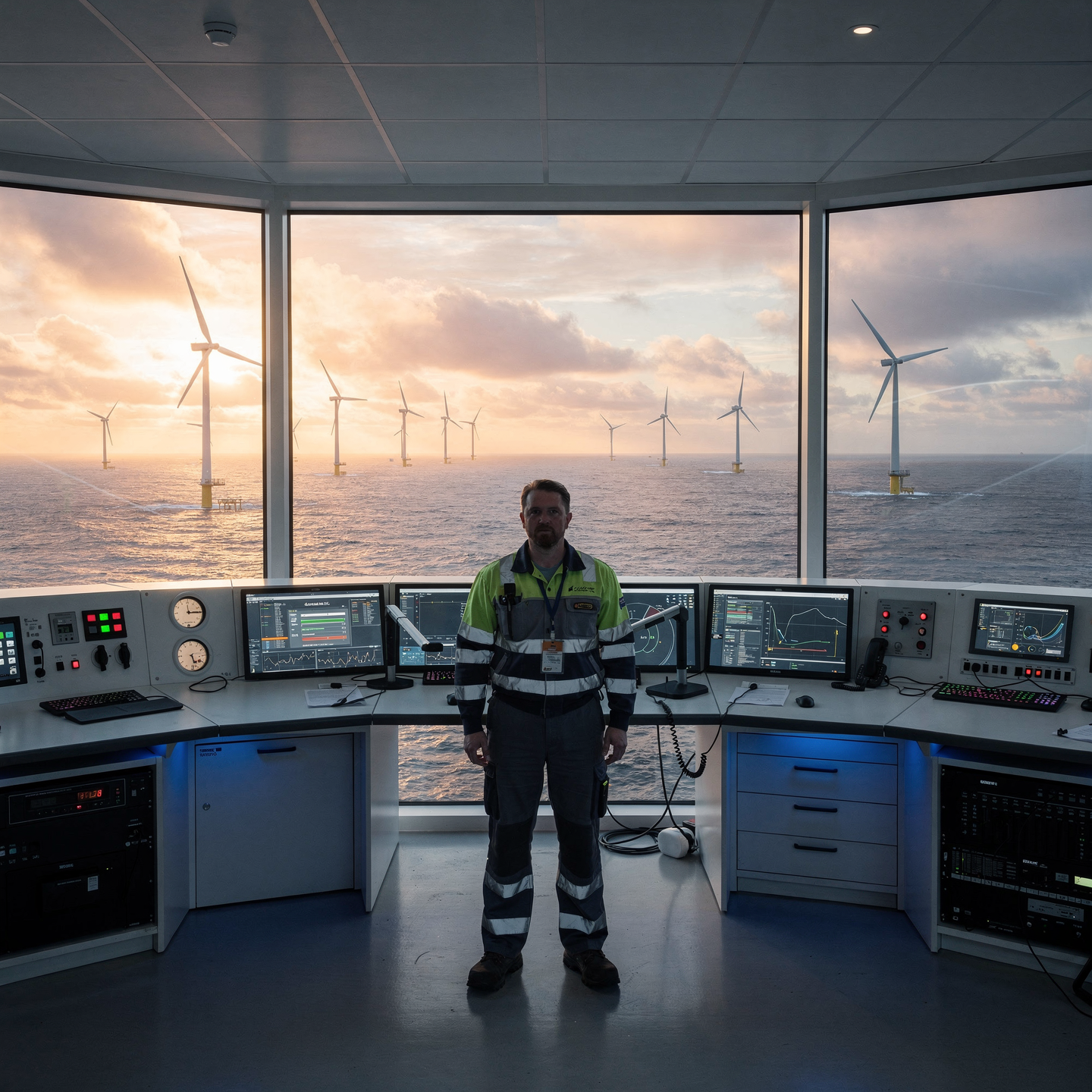
Immers you in the energy future, exploring tidal, offshore wind, and blue hydrogen technologies in depth. Learn to design, implement, and manage innovative projects in the challenging marine environment, mastering everything from engineering and resource management to legislation and environmental impact. Prepare to lead the energy transition with comprehensive, cutting-edge training.
Differentiating Advantages
- In-depth Specialization: Master the three main sources of offshore renewable energy.
- Practical Approach: Develop real-world projects and apply the latest simulation and analysis tools.
- Expert Faculty: Learn from leading professionals in industry and research.
- Global Perspective: Understand the offshore energy market and its international opportunities.
- Networking: Connect with companies and professionals in the sector through events and collaborative projects.
- Modality: Online
- Level: Masters
- Hours: 1600 H
- Start date:
Availability: 1 in stock
Who is it aimed at?
- Energy and naval engineers seeking to specialize in the design, installation, and maintenance of offshore infrastructure.
- Project managers and consultants wishing to lead the marine energy transition and the development of renewable energy parks.
- Oil & gas industry professionals; Gas professionals interested in refocusing their expertise towards clean energy and blue hydrogen.
Researchers and academics eager to delve deeper into emerging technologies and the challenges of ocean energy.
Environmental and marine science graduates seeking a career boost in the offshore renewable energy sector.
Flexibility and networking: Combine online learning with specialized seminars and technical visits to real-world facilities. Expand your network with industry experts.
Objectives and skills

Managing offshore renewable energy projects:
“To evaluate the technical and economic feasibility of offshore wind projects, considering the depth, the seabed and the distance to the coast.”

Evaluate the technical and economic feasibility of offshore renewable energy projects:
“Analyze wind, wave, and current data, considering the depth and characteristics of the seabed, to estimate energy production and installation and maintenance costs, applying financial models that evaluate the return on investment and the project’s risk.”

Design and optimize offshore renewable energy installations:
“To evaluate the technical and economic feasibility of different wind and marine technologies, considering offshore environmental and regulatory factors.”

Develop environmental risk mitigation strategies for offshore projects:
Implement oil spill response plans, including rapid mobilization of teams and coordination with government agencies and local communities.
Leading multidisciplinary teams in the construction and commissioning of offshore wind farms:
Manage effective communication between stakeholders (engineers, marine biologists, authorities, etc.) by adapting the message and channel to each audience to ensure alignment and conflict resolution.

Implementing energy management systems on offshore platforms:
“Optimize energy consumption through continuous monitoring, data analysis, and the implementation of efficient control strategies tailored to the platform’s specific operational demands and environmental conditions.”
Study plan – Modules
- Advanced meto-oceanographic characterization: measurement and modeling of waves (JONSWAP/PM spectra), tidal and subcurrent currents, extreme wind, infragravity waves, stochastic environmental load analysis, return events, design criteria for load combinations, and definition of boundary conditions for multiphysics simulations.
- Geotechnical and geophysical studies for offshore sites: high-resolution seismic surveys, CPT soundings, dynamic penetration tests, seabed characterization, nonlinear soil modeling, liquefaction, scouring, and their impact on the bearing capacity of foundations and anchors.
- Design of fixed structures: monopiles, jackets, gravity base foundations, and their dimensioning criteria for fatigue, current-induced vibrations, and fluid-structure resonances; Construction considerations, port assembly, and transport to the site.
Design of floating platforms and substructures: semi-submersibles, spars, barges, and floating solutions for wind turbines and tidal power devices; Stability analysis, trim, hydrodynamic response in transient and steady-state regimes, active position control, and motion limitation for energy extraction optimization.
Anchoring and mooring systems: technical and economic comparison between catenary mooring, elastic/taut-leg mooring, gravity anchors, vertical and dedicated piles (suction anchors, drag anchors), fatigue effects, inspection, re-tensioning, and redesign for changing scouring and sedimentation conditions.
Structure-sediment interaction and scouring protection: design of protections (rip-rap, geotextiles), criteria for seabed monitoring, methodology for recalculating bearing capacity after erosion, and recommendations for preventive maintenance.
Offshore substations and electrical collector architectures: design of AC and DC substation platforms, configuration of rings and medium-voltage topologies, transformer selection, reactive power compensation, harmonic filtering, and redundancy strategies for high availability.
Export Energy: HVAC versus HVDC (VSC-HVDC) comparison, loss analysis, incremental cost, converter controls, link topologies (MSI, MMC), selection criteria based on distance and power, and grid connection requirements based on stability and frequency regulation.
Power conversion in wind turbines and offshore converters: transmission system design (gearbox vs. direct-drive), frequency converters, onboard transformers, pitch and yaw control, control strategies for power maximization and transient load reduction.
Tidal power generation technologies and turbine design: axial, cross-flow, and oscillating runner concepts; rotor hydrodynamics, cavitation, pitch control, protection against sedimentation and biofouling.
- Volumetric efficiency and fatigue criteria for tidal cycles.
- Hybrid systems and multi-vector integration: operational and electrical coupling of wind and tidal power plants, synchronization, curtailment management, active control for power smoothing, and joint dispatch strategies with electrolyzers for hydrogen production.
- Integrated offshore blue hydrogen production: conceptual and detailed design of electrolysis units (PEM, alkaline, SOEC) powered by renewable energy and/or hybrid systems, integration with gas treatment units, emissions capture and recompression, and evaluation of heat and mass balances.
- Emissions management and capture for blue hydrogen: effluent treatment technologies, CO2 separation and capture, liquefaction and compression techniques, criteria for CO2 transport to underground storage or utilization, and process integrity assurance measures.
- Storage Offshore hydrogen energy and storage: technical and economic evaluation of lithium-ion batteries, redox flow, compression and cryogenic hydrogen storage, subsea physical storage (bulb tanks, artificial caverns), and acoustic and thermal analysis for loss minimization and operational safety.
Hydrogen transport and distribution: design of isothermal pipelines, export pipelines or transfer lines to ships (LH2, NH3, LOHC), materials and coatings resistant to hydrogen embrittlement, expansion joints, certified valves, and segregation of electrical and gas networks.
Material integrity and protection against marine and hydrogen corrosion: selection of alloys, coatings, cathodes (sacrificial anodes and impressed current), H2S considerations, chlorinated environments, sulfidation testing, and specialized non-destructive testing (NDT) protocols for subsea and topside equipment.
Industrial control, SCADA, and Communications in offshore environments: redundant network design, industrial protocols (IEC 61850, OPC UA), time synchronization, OT/IT cybersecurity, latency in converter control, and telemetry for remote operation optimization and digital twins for wind farm digital twins.
Advanced Operation and Maintenance (O&M) strategies: predictive maintenance based on condition monitoring (vibration, acoustics, thermography, leakage currents), machine learning techniques for failure prediction, logistics planning for vessels and helicopters, and RCM and LCC schemes for availability and cost optimization.
Underwater inspection and access techniques: use of ROVs/AUVs, ILI, dive inspection, aerial drones for topside inspection, laser inspection technologies and 3D photogrammetry, inspection frequency criteria, and protocols for FAT, SAT, and periodic testing.
Industrial and maritime safety: HAZID/HAZOP risk assessment, ATEX/IECEx, management of explosive atmospheres in confined spaces, safety procedures for hydrogen loading and unloading, emergency response plans, fire control in marine environments, and evacuation and rescue planning.
Applicable technical and regulatory certifications: DNV-GL requirements and certification cycles, IEC 61400-3 (offshore wind), IEC 62600 (tidal power), ISO, API, ABS; Criteria for acceptable designs, design documentation, acceptance testing, and regulatory and financial audits.
Advanced structural analysis and load calculation: coupled fluid-structure finite element modeling (FEA-CFD), modal and fatigue analysis, criteria for seismic design of platforms, and buckling and buckling checks on members subjected to cyclic and thermal loads.
Thermal integration and fluid management: design of cooling and heating networks, condensate management and ballast/service water treatment, heat exchangers, waste heat recovery systems, and their use in electrolysis and compression processes.
Logistics, assembly, and port facilities: planning of installation campaigns, special cranes, transport routes for large components, floating assembly stations, and analysis of logistical costs and risks for offshore assembly.
Economic and financial modeling: calculation of CAPEX/OPEX, technology-specific LCOE, and Location, sensitivity analysis, discounted cash flow assessment, hybrid business models (PPA + hydrogen sales), project financing, and contractual risks.
Environmental impact and permits: Environmental Impact Assessment (EIA), effects on bathymetry, marine fauna, underwater noise, mitigation measures, environmental monitoring plans, and compliance with local and international regulations for obtaining permits and occupancy rights.
Decommissioning and life cycle: Dismantling strategies, recycling and reuse of materials, remaining life testing, criteria for life extension, and decommissioning planning in accordance with applicable legislation.
Testing, commissioning, and start-up: FAT/SAT protocols, load testing, electrical and mechanical commissioning, verification of controllers and protection systems, sequential start-up, and contractual acceptance based on performance milestones.
Risk management and insurance: Identification of technical, marine, and commercial risks, mitigation strategies, and policy terms. and bonuses for compliance with safety and reliability standards; risk assessments and contingency plans.
- Operational training and skills: training programs for offshore and onshore personnel, simulators for installation and emergency maneuvers, specific STCW certifications, and development of technical capabilities for the operation of electrolyzers and hydrogen systems.
- Case studies and applied engineering studies: detailed analysis of real and reference projects, lessons learned, benchmarking of technological solutions, multi-criteria optimization, and replicability plans for industrial scaling.
- Integrated phases of the offshore project: strategic screening, technical and economic feasibility study, conceptual design, detailed engineering, construction, commissioning, operation and decommissioning; Deliverables and milestones for each phase.
Methodologies for assessing tidal and offshore wind resources: measurement campaigns (ADCP, LiDAR, tide gauges), time series processing, spectral analysis, extreme statistics, correlation with reanalysis, and digital twins for long-term extrapolation.
Site characterization and marine geotechnics: multibeam bathymetric mapping, high-resolution seismics, CPT and coring soundings, seabed assessment, sediment stability, identification of geohazards (landslides, gas-related geohazards), and foundation requirements (piles, gravity bases, moorings).
Integrated energy architecture design: park topologies (wind turbines, tidal converters), internal interconnection criteria, power converter selection (AC/DC), offshore substation configuration, export options (HVAC vs. HVDC), and interfaces with hydrogen production units and CO2 capture plants.
Applicable offshore blue hydrogen production technologies: reforming plants with capture (SMR/ATR + CCS), gas treatment; comparative discussion with power generation;
- Natural gas quality requirements, thermal and electrical integration, and sizing of CO2 capture and compression units.
- CO2 transport and storage: manifold design, compression and export via pipeline/subsea injection architectures, selection of saline/caprock reservoirs, injection modeling, seismic risk management, and long-term monitoring requirements for regulatory acceptance.
- Blue hydrogen commercialization options: target markets (industry, refining, fertilizers, bunkering), logistics chains (pipeline, LNG carriers/hydrogen carriers, LOHC, ammonia), offtake agreements (HPA, hybrid PPAs), certification and traceability schemes, and breakeven price analysis (LCOH) against carbon scenarios.
- Advanced economic analysis: financial modeling (DCF), creation of cash flow statements, stressed scenarios, sensitivity analysis (capex/opex, plant factor, gas price, cost of CO2), LCOE/LCOH calculations, and bank metrics (DSCR, LLCR, IRR) for structuring project financing.
Financing instruments and risk structures: project finance, corporate finance, joint ventures, public-private partnerships, export guarantees, construction and operating insurance, risk mitigation mechanisms (price hedging, FSRU/H2 contracts), and access to green funds and innovation funds (CEF, Horizon, national funds).
Maritime regulations and permits: international legal framework (UNCLOS), national legislation on exclusive economic zones, concessions for the use of public domain, occupancy licenses, dredging and seabed alteration authorizations, conditions for access to the electricity grid, and interconnection regime.
Strategic Environmental Impact Assessment (EIA/SEA): scope of the study, ecological baseline (benthos, fish fauna, marine mammals, birds), analysis of cumulative and synergistic impacts, mitigation measures, Post-construction monitoring programs and adaptation requirements for climate change and sea-level rise.
Specific impacts and mitigation in tidal and offshore wind farms: underwater noise (pile driving, vibrator operation), alteration of benthic habitat, bird and mammal collisions, EMF effects from cables, reduction measures (pile encasings, bubble curtains, shut-down-on-demand, routing), and design of marine corridors and exclusion zones.
Stakeholder engagement and social management: stakeholder mapping (coastal communities, fisheries, port operators, environmental authorities), public consultation strategies, conflict resolution, environmental and social compensation agreements, and ESG criteria for institutional investors.
Offshore safety and emergency response requirements: spill response plans, CO2/hydrogen contingency plans, ATEX equipment certification and compatibility, safe abandonment procedures, and coordination with services. SAR and HSE protocols for work at height and in confined spaces.
Contracts and procurement models: EPC/EPCM/PPP strategies, bankable clauses, risk allocation, performance guarantees, liquidated damages, contractual interfaces between developer, network operator, hydrogen/CCS suppliers, and offtake customers; Comparison of international contractual models.
Legal security and due diligence: analysis of maritime property titles, evaluation of regulatory conditions, reviews of environmental permits, analysis of regulatory compliance, and preparation of documentation packages for banks and insurers.
Logistics design and maritime operations: planning of operational windows, selection of installation vessels (WTIV, PSV, CLV, SOV), DP and dynamic capacities, optimization of supply chains, port warehousing, and reduction of time at sea through modularization and prefabrication.
Asset integration and digitalization: SCADA/OT systems, process control of electrolyzers and CCS, digital twins for failure prediction and optimization, industrial cybersecurity (IEC 62443), and interoperability requirements for remote monitoring and predictive O&M.
Operating and maintenance cost assessment: condition-based maintenance models, critical spare parts strategies, levelized cost of maintenance, contracts for Long-term service (O&M, life extension) and comparative analysis of repair solutions (on-site vs. port recovery).
Market analysis and commercial strategy: mapping of regional and international demand, forecasting of hydrogen and fossil fuel prices, market entry models (spot vs. contracts), branding and certification strategy (hydrogen guarantees of origin), and design of competitive export routes.
Energy policy and incentive framework: review of support mechanisms (CAPEX subsidies, contracts for difference, carbon market mechanisms, tax deductions), impact of EU regulations (Fit for 55, RED II/III), and use of regulatory instruments to improve bankability.
Risk modeling and insurance: identification of main risks (weather, construction, technological, market, regulatory), quantification of residual risk, policy design (BI, CAR, E&O, P&I), insurability of new technologies (electrolyzers, CCS). Offshore) and strategies for transferring risk to insurers/lenders.
Certification and technical standards: applicable standards (IEC, ISO, DNV GL, API), requirements for the certification of electrical installations and hydrogen systems, FAT/SAT specifications, performance testing protocols, and acceptance criteria for financiers.
Tax structuring and cost optimization: tax impact analysis by jurisdiction, investment incentives, double taxation treaties, transfer pricing models for vertical integrations, and cash flow planning to optimize capital costs.
Circular economy and responsible decommissioning: strategies for reusing and recycling materials, design for dismantling, financial planning for decommissioning, provisions and guarantees, and compliance with legal obligations to return the marine public domain to its original state.
Financial simulation and support tools: use of software (PVSyst-style for renewables, HOMER for hybrids, MATLAB/PLEXOS for market), creation of parameterized models, macroeconomic stress testing, and presentation of bankable cases for lenders and investors.
Sustainability indicators and reporting: specific ESG metrics (emissions avoided, hydrogen carbon footprint, biodiversity), integration into mandatory and voluntary reports (TCFD, GRI), and design of binding contractual KPIs for offtakers and investors.
Comparative case studies and lessons learned: detailed analysis of successful and unsuccessful tidal and offshore wind projects, offshore hydrogen pilot projects, financial and operational benchmarking, and replicable templates for Bankable Feasibility Studies.
Practical work plan for the module: development of a complete Bankable Feasibility Study (executive summary, technical analysis, abridged EIA, financial model, timeline, permitting plan, financing strategy, and contractual memoranda) for presentation to investment committees and financing entities.
This is the title of your module:
Intelligent Control and Digital Twins for Offshore Wind Farms: Hydrodynamic and Aeroelastic Simulation, Predictive Monitoring, and Energy Performance Optimization
- Fundamentals of digital twins: definition, distributed architecture, physical vs. Data, fidelity levels, and interoperability requirements for offshore wind farms.
Hydrodynamic modeling methodologies: potential theory, Boundary Element Methods (BEM), RANS/LES solvers, modeling of wave and surf nonlinearities, coupling with ocean currents, and stratification effects.
Advanced aeroelasticity of offshore wind turbines: rotating beam theory, multi-body models, fluid-structure coupling (FSI), fatigue and extreme load estimation under combined wind and wave conditions.
Dynamics of floating systems and moorings: modeling of semi-submersible platforms, spars and barges, behavior of chains and mooring lines, soil-structure interaction, and operational stability analysis.
Coupled wind farm-turbine simulation: wake effects, collective loss modeling, layout strategies, and temporal and spatial resolution for aggregate optimization of wind farm energy performance.
- Numerical methods and verification/validation: discretization, convergence criteria, code verification, experimental validation campaigns (wave tanks, wind tunnels), and quantified modeling uncertainty.
- Industrial platforms and tools: expert use of OpenFAST, WAMIT/MIKE, ANSYS/CFD, OpenFOAM, DNVGL, and IEC standards applied to digital twins; Integration with HPC and cloud environments.
Data architecture for twins: acquisition, normalization, time-series databases, SCADA/OPC-UA protocols, latency, multi-sensor synchronization, and metadata management for traceability and reproducibility.
Real-time monitoring and sensor deployment: sensor selection and calibration (inertial, strain gauges, LIDAR, ADCP, SCADA), offshore communication network topologies, and data filtering and fusion strategies.
Predictive monitoring and PHM (prognostics and health management): fault detection algorithms, remaining life estimation, physical-empirical degradation models, and decision frameworks for condition-based maintenance.
Applied artificial intelligence and machine learning: supervised/unsupervised techniques for anomaly detection and classification, deep neural networks, reinforcement learning for adaptive control, and explainability in models of Prediction.
Real-time control and intelligent strategies: pitch control, yaw control, wake steering, farm controller, multivariate optimization to maximize AEP and minimize structural loads.
Digital twins for operations and maintenance (O&M): simulation of operational scenarios, intervention planning, virtual testing, digital commissioning, and cost reduction through virtual twins.
Integration with energy systems: production variability modeling, storage (including blue hydrogen), curtailment management, interfaces with offshore networks, and supply and balance strategies for offshore wind and tidal power.
Economic evaluation and KPIs: calculation of AEP, LCOE, sensitivity analysis, technical and financial risk assessment, and operationally relevant metrics to justify investments in twins and intelligent control.
Cybersecurity and operational resilience: threats in OT/IT environments, twin hardening, robust sensor authentication, and detection of Intrusions and operational continuity in offshore installations.
Regulation, certification, and standardization: IEC/ISO/DNV requirements applicable to control systems, validation of digital models, accreditation of control algorithms, and regulatory compliance for offshore projects.
Practical implementation and laboratories: deployment of digital twins in the cloud/HPC, SCADA-ML integration, real-time simulations, hardware-in-the-loop (HIL), and exercises with real data from pilot farms.
Case studies and lessons learned: detailed analysis of real projects (offshore wind, tidal power, and hydrogen integration), incidents, optimizations achieved, and a technological roadmap for industrial scale.
Final applied project: design and implementation of an operational digital twin for a hypothetical offshore farm, including hydrodynamic/aeroelastic simulation campaigns, a predictive monitoring strategy, and an energy performance optimization package with technical and economic justification.
This is the title of your module:
Technical and Commercial Management of Offshore Parks: Advanced Modeling, Certification, Financing, and Innovation in Tidal, Offshore Wind, and Blue Hydrogen
Submarine cable and line dynamics: modeling of dynamic cables, bending effects, installation operations, bend radius criteria, fatigue resistance, and mitigation solutions for tidal environments
Hybrid and topside platforms: electrical and mechanical integration of power generation facilities and electrolysis/SMR+CCS units for blue hydrogen; Plant architecture, integrated control and distribution
Offshore hydrogen generation and management: production technologies (PEM, alkaline, SOEC, SMR with capture), transient coupling with renewable sources, energy efficiency, thermal footprint, and modular sizing
H2 storage, compression, and transport: on-site compression, liquefied vs. gas storage, subsea pipeline transport, use of existing pipelines, analysis of operating conditions, and leak mitigation
Process safety and industrial risk: dispersion modeling, flammability analysis, ATEX zones, detonation management, emergency response procedures, and safety criteria for hydrogen in marine environments
Environmental impact and advanced EIA: methodology for assessing effects on marine fauna, underwater noise (pile driving), cable EMF, sedimentation modeling, and design of compensatory measures and post-installation monitoring
Scale testing and validation Experimental: design of flume/tow tank campaigns, hydrodynamic similarity (Froude/Reynolds), prototype testing, test bench verification, and full-scale extrapolation.
Certification and regulations: certification process, relationships with classification societies and agencies (DNV, Lloyd’s, Bureau Veritas), applicable IEC/ISO standards, regulatory compliance, and type certification requirements.
Technical and legal compliance: maritime permits, consents, interaction with port authorities, maritime safety requirements (IMO), MARPOL compliance, and access route studies.
Economic and financial models of offshore projects: LCOE/LCOH, detailed CAPEX/OPEX, learning curves, economies of scale, and sensitivity analysis of key variables (electricity price, IRR, DSCR).
Financial structuring and risk mitigation: project finance, SPVs, PPAs, hydrogen supply contracts, insurance, performance guarantees, production hedges, and strategies.
Installation and logistics engineering: Lift planning, heavy transport analysis, stability calculations under towing conditions, installation sequencing with jack-ups and heavy-lift vessels, and fleet economic evaluation.
Marine operations management: Vessel utilization optimization (SOV, CTV), performance metrics, weather window-based planning, and minimizing human risk during crew transfers.
Structural monitoring and integrity management: SHM (strain sensors, accelerometers, fiber optics), signal interpretation, remaining life management, and repair/retirement criteria.
Design innovation and disruptive technologies: Advanced floating foundations, hybrid tidal-wind concepts, vertical axis turbines, cooperative control, in-situ storage, and the development of catalysts and membranes for… Electrolysis
Supply chain and industrial scalability: shipyard capacity analysis, logistics of critical components (blades, nacelles, transformers), local content strategies, and bottleneck reduction
Hydrogen market models and commercialization: H2 market design, long-term contracts, certification of origin (green certificates vs. low/blue hydrogen certificates), integration with electricity and gas markets
Social aspects and governance: community participation, compensation, local employment, governance of multinational projects, and stakeholder management in sensitive environments
Sustainability metrics and reporting: ESG KPIs applied to offshore wind farms, reporting methodologies (GRI, SASB), carbon footprint, and independent verification
Case studies and real-world feasibility studies: detailed analysis of pilot and commercial projects, lessons learned, failures, and best practices in design, construction, operation, and closure
Applied technical workshops: modeling exercises Numerical analysis, development of a complete business case, preparation of documentation for the certification pack, and financial due diligence simulations for investors.
Final integrated evaluation: capstone project resolution including marine weather modeling, preliminary structural design, installation plan, certification strategy, and financial package for project financing.
This is the title of your module:
Architecture and Technical Governance of Offshore Parks: Engineering, Certification, and Commercialization Solutions for Tidal, Offshore Wind, and Blue Hydrogen
- Comprehensive Vision of Offshore Park Architecture: Conceptual Models (Fixed vs. Floating vs. Hybrid), Technology Selection Criteria by Metocean Regime and Energy Resources.
- Advanced Metocean Characterization: Spectral Wave Analysis (Pierson-Moskowitz, JONSWAP), Wind/Turbulence Spectra, Tidal Currents and Their Harmonics, Hindcast Data, In-Situ Measurement Campaigns, and Use of Reanalyzed Models (ERA5, Copernicus).
- Mapping and Surveying of the Seabed: High-Resolution Bathymetry, Sub-Bottom Profiling, Geophysical Analysis (Side-Scan, Sub-Bottom, Magnetometry), Geotechnical Interpretation for Foundations and Anchors.
- Engineering of Foundations: design of monopiles, jackets, piles, suction caissons, floating solutions (spar, semi-submersible, TLP), structural dimensioning, verification against static, seismic, and dynamic loads.
Mooring and anchoring systems: mooring alternatives (catenary, taut-leg, single-point), dynamic analysis in OrcaFlex, cable and line fatigue, selection of materials and accessories (lines, chains, connectors), and protection strategies against abrasion and corrosion.
Structural dynamics and hydrodynamics: hydrodynamic modeling with BEM/CFD, added mass and damping coefficients, modal analysis and irregular excitation response, fluid-structure coupling for tidal and floating devices.
Load analysis and load cases: definition of Load Cases and Design Load Cases (DLCs), 1-in-X year extreme conditions, wind/wave/current combinations, fatigue Accumulated and acceptance criteria according to standards.
- Integrity of substructures and topsides: structural design criteria, fatigue and fracture resistance assessment, non-destructive testing (NDT) applicable to offshore works, planned inspection (RBI), and remaining life management.
- Design and management of submarine cables: cable routing calculations, scour and traffic protection, thermal design and electrical losses, mechanical protection, connection to offshore and onshore substations, and installation standards.
- Offshore converters and electrical transmission: HVAC vs. HVDC technologies, converter topologies, transformers on platforms, losses, reactive power control, and intertwined stability with the onshore grid.
- Offshore substation systems (OSS): functional design (AC platforms, HVDC converter stations), switchgear architecture, redundancy, differential protection, and criteria for topsides and topside interfaces.
- Integration of marine energy Hybrid systems: architecture of combined-use parks (tidal + wind + hydrogen electrolysis), electrical and thermal coupling strategies, and energy dispatch optimization.
Offshore electrolysis and blue hydrogen production: integration architectures with natural gas and CCS, criteria for in-situ vs. onshore electrolysis, heat balance, emissions management, and technical and logistical feasibility assessment.
Systems engineering for tidal power devices: PTO (power take-off) concepts, transmission, active control, anchoring and support structures, integration with electrical converters, and bench and sea trials.
Control, SCADA, and Digital Twin: redundant SCADA architectures, plant control, control strategies for load mitigation, digital twin for monitoring, simulation, and O&M optimization.
Cybersecurity and communications: protection of critical infrastructure, secure protocols (IEC 62443), network segmentation, and link redundancy. Satellite/fiber optics and incident management.
Predictive modeling and condition-based maintenance: Machine learning techniques for early damage detection, prognostic algorithms, integration with inspection data (ROV/AUV, thermography, vibration).
Offshore operations, logistics, and construction: Mobilization analysis, vessel selection (installation vessels, WTIVs, CTVs), campaign planning, operational windows, DP requirements, and weather contingencies.
Remote inspection and R&D techniques: Use of ROVs, AUVs, surface drones, and state-of-the-art sensors for hull/shore inspection, current tunnel metrology, and real-time remote monitoring.
Corrosion management and cathodic protection: Material selection, advanced coatings, anode design, potential monitoring, and degradation modeling in harsh marine environments.
Environmental impact and monitoring: Assessment Impact Assessments (EIAs), underwater noise, biotope displacement, electromagnetic fields (EMF), and mitigation plans; compliance with MARPOL and European and local environmental regulations.
Permits, governance, and maritime spatial planning (MSP): authorization processes, stakeholders (port authorities, fishing, shipping, communities), mitigation of land use conflicts, and social acceptance strategy.
Standards and technical certification: practical application of IEC (61400-3, 62600 series), DNV GL standards (DNV-ST-0126, DNVGL-RP-0435), API, ISO, and national codes; Preparation of certification dossiers and on-site testing.
Risk and safety management: HAZID/HAZOP applied to offshore wind farms, QRA for gas release and loss of integrity, emergency procedures, rescue, and crew training.
Project economics and financial models: detailed CAPEX/OPEX estimation, sensitivity analysis, LCOE, NPV/IRR, learning curves, and scale effects on turbine, foundation, and electrolysis costs.
Commercialization and contract structuring: business models (EPC, EPCM, BOO, PPA), risk allocation in contracts, bankable terms, interconnection agreements, and critical technical clauses in supply and O&M contracts.
Financing, insurance, and bankability: technical due diligence requirements, insurance (CAR, P&I, political risk), performance guarantees, and technical criteria that condition project financing. Offshore.
Supply chains, manufacturing, and industrial logistics: local content strategy, port prefabrication, modular assembly, supplier quality assurance, and optimization of heavy transport logistics.
Maritime traffic rules and navigational safety: route impact assessment, coordination with TSS/VTS, signaling, exclusion zones, and mitigation of risks to human life at sea.
Decommissioning, end-of-life management, and the circular economy: FID-based decommissioning planning, material reuse, component recycling, and post-project liability analysis.
Regulatory framework and international governance: cross-border agreements, grid interconnection regulations, emissions standards, and governance of multi-jurisdictional projects.
Case studies and detailed engineering studies: analysis of real-world projects (e.g., floating wind farms, tidal power plants in coastal passages, hydrogen hubs), lessons learned Lessons learned, common mistakes, and proven solutions.
Advanced design software and tools: Hands-on training in OrcaFlex, ANSYS AQWA, OpenFAST, WAMIT, MIKE21, QTRADS, wiring and GIS software; reproducible workflows and cross-checking of results.
KPIs and performance metrics: Definition and monitoring of technical, financial, and environmental indicators; Dashboard for real-time decision-making and reporting for stakeholders and certification bodies.
Ethics, sustainability, and social acceptance: social impact assessment, local community engagement, technical communication strategy, and transparency to ensure social licenses and long-term viability.
Final module project: development of a complete dossier (concept design to bankable package) for a hybrid offshore wind farm, including: Metocean study, architecture selection, preliminary design, risk matrix, certification plan, and financial and commercial model.
Why mastering this module sets you apart in the professional market: ability to design robust technical solutions, lead certification processes, and commercially structure complex projects; immediate aptitude for roles in engineering, technical consulting, project management, and financing of offshore energy infrastructure.
- System Architecture and Components: Structural design, materials, and subsystems (mechanical, electrical, electronic, and fluid) with selection and assembly criteria for marine environments
- Fundamentals and Principles of Operation: Physical and engineering foundations (thermodynamics, fluid mechanics, electricity, control, and materials) that explain performance and operating limits
- Safety and Environmental (SHE): Risk analysis, PPE, LOTO, hazardous atmospheres, spill and waste management, and emergency response plans
- Applicable Regulations and Standards: IMO/ISO/IEC requirements and local regulations;
- Conformance criteria, certification, and best practices for operation and maintenance
- Inspection, testing, and diagnostics: Visual/dimensional inspection, functional testing, data analysis, and predictive techniques (vibration, thermography, fluid analysis) to identify root causes
- Preventive and predictive maintenance: Hourly/cycle/seasonal plans, lubrication, adjustments, calibrations, consumable replacement, post-service verification, and operational reliability
- Instrumentation, tools, and metrology: Measuring and testing equipment, diagnostic software, calibration and traceability; selection criteria, safe use, and storage
- Onboard integration and interfaces: Mechanical, electrical, fluid, and data compatibility; Sealing and watertightness, EMC/EMI, corrosion protection, and interoperability testing.
Quality, acceptance testing, and commissioning: process and materials control, FAT/SAT, bench and sea trials, go/no-go criteria, and evidence documentation.
Technical documentation and integrated practice: logs, checklists, reports, and a complete case study (safety → diagnosis → intervention → verification → report) applicable to any system.
HVDC/Subsea interconnection engineering, maritime logistics, and cybersecurity for tidal and wind farms with blue hydrogen production
Conceptual and strategic framework: architecture of integrated offshore wind farms (tidal + wind) with blue hydrogen production and export; Selection criteria for interconnection topologies (radial AC, meshed AC, multi-terminal HVDC, VSC-MTDC)
Fundamentals of HVDC VSC and MMC: topologies, modulation, power flow control, dynamic behavior in response to network faults, and virtual inertia contribution
Design of converter stations (onshore/offshore): modular configuration, thermal requirements, cooling, space, integration with electrical substations and compressors/electrolyzers
Calculation and modeling of subsea HVDC and AC cables: selection of conductors, insulators, armor, calculation of current-carrying capacity, thermal losses, and sizing for transients
Electrical protection engineering and DC circuit breakers: DC fault detection, converter response, DC circuit breaker technologies, protection coordination, and reclosing schemes
Structure-line-cable interaction: loads on platforms, interface with monopiles/jackets, anchors, and stress management during installation and operation
Conversion and coupling systems with electrolyzers: power ramp control, quality of supply (frequency/voltage), start-up/shutdown requirements for stable hydrogen production
Integration with the blue hydrogen value chain: compression, temporary storage, transport (offshore pipelines, LH2 carriers), interfaces with carbon capture and storage (CCS) plants
Economic and valorization models: LCOE, LCOH, OPEX/CAPEX analysis, electricity market scenarios, and carbon certificate prices Financial optimization of hybrid projects
Advanced maritime logistics: homeport selection, installation window planning, vessel logistics (SOVs, HLVs, T&I vessels, cable-laying ships), fleet planning, and downtime management
Installation and maintenance (O&M) operations: pull-in, tow-out, and hook-up procedures, FAT/SAT testing, predictive maintenance strategies, and use of ROVs/AUVs for inspection and repair
Provisional Depot requirements and maneuvering safety: vessel classifications, positioning criteria, and CTV/SOV procedures for personnel and material transfer
Applicable permits, regulations, and standards: IEC 60092/61892/62600/62786, DNV-GL RP/OS, ISO, NIS2 directives, and national maritime regulations Compliance in cross-border projects
Risk management and assurance: HAZID/HAZOP applied to subsea-HVDC-hydrogen interconnection, reliability, availability, and safety indexing (SIL) analysis of critical systems
OT/IT cybersecurity in platforms and converter stations: specific threats to HVDC and SCADA, secure architecture, network segmentation, industrial firewalls, and hardening policies
Cybersecurity standards and best practices: IEC 62443, NERC CIP (where applicable), NIS2, incident response procedures, threat intelligence, and patch updates in critical environments
Protection against GNSS attacks and satellite communications: spoofing/jamming mitigation, alternative positioning, and communications redundancy (fiber, microwave, satcom)
Advanced monitoring and anomaly detection: use of IIoT, digital twins, and machine learning Early detection of electrical and mechanical failures and cyberattacks; real-time dashboards and KPIs
Testing, commissioning, and start-up: integrated HVDC–AC–electrolyzer test protocols, interconnection tests, functional safety tests, and contractual acceptance
Case studies and real-world projects: detailed analysis of international offshore projects, lessons learned in installation, operation, and contingency mitigation
Hands-on workshops and simulators: HVDC/subsea link design exercises, logistics planning with realistic weather scenarios, cybersecurity incident simulations, and recovery exercises
Final applied project: comprehensive development of an HVDC interconnection project for a tidal and wind farm with a blue hydrogen plant, including electrical and logistical studies, an O&M plan, risk analysis, and a financial model Presentation before a panel of experts
Skills and career paths: technical and managerial roles in interconnection engineering, TSO/OS operators, EPC contractors, O&M companies, renewable energy consulting and industrial cybersecurity; professional certification strategies
This is the title of your module:
Integrated Architecture and Business of Offshore Wind Farms: Marine Systems Design, Subsea Electrification, Blue Hydrogen Production and Logistics with Digital Twins, Predictive Control, and Resilience Management
Strategic Overview: Definition of an integrated offshore wind farm architecture (tidal + offshore wind) with blue hydrogen production modules; business models, market scenarios, and a technology roadmap for 0–30 years.
Farm Layout and Design Engineering: Site selection criteria (energy resources, bathymetry, environmental constraints), optimal layout configuration for turbines, tidal power devices, substations, and electrolysis areas; Multi-objective optimization tools (genetic, PSO, MIP).
Foundations and anchorages: comparative technical-economic design of fixed (monopile, jacket) vs. floating (spar, semi-submersible, gondola) solutions and mooring systems for high dynamic loads; Fatigue load analysis, soil-structure interaction, and applicable DNV/IEC criteria.
Comprehensive subsea electrification: interconnection topologies (inter-array, export), choice between AC and HVDC (VSC-MMC) based on distance/scale, sizing of dynamic and static cables, protection and subsea switchgear, thermal and corona considerations.
Power conversion and control systems: power converter architecture (VSC, MMC), converter control for renewable integration and grid stability, harmonic mitigation, filters, and real-time dispatch strategies.
Offshore substations and floating platforms: electrotechnical design of OSS and FOSS, selection between jacket/transformer topside substation or floating substation, mechanical-electrical interfaces, accommodations, and maintenance requirements.
Offshore blue hydrogen production: generation processes (electrolysis) Integrated PEM/AE/alkali systems with in-situ CO2 capture), sizing of electrolysis units at the park scale, energy integration with fluctuations and intermittency, and overall efficiency calculation.
CO2 capture, compression, and management: capture technologies applicable in marine environments, subsea compression or transport to coastal facilities, risk assessment, and H2-CO2 chain economics to define viable “blue hydrogen.”
Hydrogen logistics and transport: export options (subsea pipeline, gas carrier – LH2, chemical carrier such as ammonia/LOHC), designs of compression stations and bunkering interfaces for offshore vessels; LCOH/LCOE selection and evaluation criteria.
Operation, installation, and maintenance (O&M): installation strategies (vessels, cable-lay, J-tube, trenching), operational planning with weather windows, use of ROVs/AUVs, and limited human access; Predictive maintenance models and O&M contracts.
Digital twins and multi-physics simulation: development and validation of digital models (CFD, FEA, aeroelasticity, hydrodynamics), integration of generation models, electrical networks, and H2 processes into a digital twin for real-time decision-making and lifecycle support.
Predictive control and online optimization: implementation of MPC (Model Predictive Control) and adaptive control algorithms to maximize production, stabilize voltage/frequency, manage curtailment, and coordinate electrolysis with storage and grids. Practical examples and case studies.
Resilience and business continuity management: N-1 design, redundancy strategies, blackstart offshore recovery plans, islanded microgrids, extreme weather contingency management, and climate risk mitigation plans.
Cybersecurity and functional security: secure OT/IT architecture, industrial communication protocols (OPC-UA, IEC 61850, MQTT), network segmentation, incident response plans, and compliance with functional security standards (IEC 61508/61511) and industry best practices.
Advanced monitoring, diagnostics, and prognostics: distributed sensors (strain gauges, accelerometers, corrosion sensors), ML/AI techniques for early failure detection, remaining life (RUL) prognostics, and condition-based maintenance (CBM) strategies.
Instrumentation and commissioning tests: FAT/SAT protocols, subsea and topside commissioning tests, sensor calibration, SCADA/EMS integration tests, and acceptance criteria for handover to operation.
Professional skills and deliverables: design packages (P&IDs, single-line diagrams, cable schedules), technical specifications, risk matrix, warranty plan, operations manual, and executive presentation for stakeholders and investors.
Assessment methods: practical assignments, final integrative project (economic model + digital twin + resilience plan), presentations to a panel of experts, and a technical exam to certify skills applicable to the job market.
This is the title of your module:
Circular Economy and Design for Offshore Wind Farm Decommissioning: Recycling, Reuse, Safe Decommissioning, and Lifetime Cost Analysis for Tidal, Offshore Wind, and Blue Hydrogen
Reuse and Remanufacturing Feasibility Assessment: technical criteria, non-destructive testing, permissible tolerances, recertification, and reconditioning processes for wind turbines, substructures, and electrical components.
Recycling Technologies for Key Components:
Composites and Blades: mechanical shredding with fiber recovery, pyrolysis, solvolysis, opportunities for recycled resins, and use in secondary composite materials.
Steel and Metals: dismantling, separation, decontamination, and steelmaking recycling; Recovery of alloys and rare metals from electrical and electronic components.
Marine concrete and gravity foundations: crushing, valorization as recycled aggregate, and decontamination techniques for use in marine works.
Design for Dismantling (DfD): modular design criteria, detachable connections, standardized fasteners, lifting points, access points for cutting and separation, and material selection with circularity in mind.
Design for Remanufacturing and Recyclability: material selection, joint and adhesive compatibility, minimization of polymer blends, labeling, and standardization to facilitate subsequent processes.
Dismantling planning: phases (preliminary study, execution engineering, logistics, marine operations, port treatment), development of work methodologies and schedules integrated with commercial and environmental operations.
Evaluation Structural integrity prior to dismantling: integrity inspection, fatigue and corrosion analysis, FEA simulations to define cutting points, lifting loads, and safe operating limits. Subsea and topside cutting and separation methodologies: diamond wire cutting, abrasive water jetting, thermal cutting, mechanical cutting, ROV-assisted tooling, and particle and sediment control procedures. Marine operations and lifting logistics: vessel selection (heavy lift, jack-up, DP vessels), stability and relative motion analysis, crane-lifting maneuver planning, and mooring and temporary storage procedures. Risk management and operational safety: safe work procedures, HAZID/HAZOP/LOPA analysis, stored energy control, inerting and purging (especially in hydrogen infrastructure), maritime emergency plans, and coordination with response services. Environmental impact and mitigation measures Mitigation: Impact assessment during decommissioning activities, management of atmospheric and acoustic emissions (underwater noise), protection of benthos and biota, monitoring plans, and post-construction surveillance programs. Waste management and port logistics: Flow classification, on-site treatment vs. transport to port, recycling and processing plant capacities, port infrastructure requirements, and waste reception permits. Special techniques for blue hydrogen equipment: Safe depressurization, decontamination of pipes and vessels (H2S, CO2), purging, treatment of liquid and solid waste, and criteria for reusing compressors, pumps, and pipes. Considerations for tidal power: Foundation devices and hydraulic machinery, recovery of rotors and marine turbines, biofouling treatment, and specific materials suitable for recycling. Contracting, contractual clauses, and insurance: contractual requirements for decommissioning, financial guarantees, specific insurance, transfer of responsibilities, and environmental obligations in EPC/OM/Decommissioning contracts. Supply chain and local industrial development: identifying opportunities for recycling hubs, local value creation (ports, shipyards), capacity building, and recovery of skilled jobs. Digital tools for decision-making: digital twins for decommissioning planning, lifecycle twins, 4D logistics modeling, environmental information systems, and collaborative platforms for stakeholders. Performance indicators and ESG reporting: circularity metrics, LCA-based KPIs, emissions accounting, supply chain transparency, and reporting for investors and financial institutions. Stakeholder management and communication: strategies for public consultations and coordination. with maritime authorities, NGOs, and fishing communities, and management of socio-environmental conflicts during facility removal. Case studies and international case analyses: comparative analysis of real-world decommissioning and blade and substructure recycling projects; lessons learned and best practices applicable to tidal, offshore wind, and blue hydrogen infrastructure. Practical exercises, templates, and deliverables: development of a complete decommissioning plan, LCCA/LCA templates, safety checklist, financial models, and technical cutting and transport protocols. Final competencies and career paths: ability to design circular strategies and technically and financially optimized decommissioning plans, leadership in offshore circular economy projects, and preparation for roles in consulting, engineering, regulation, and asset management.
This is the title of your module: Master’s Thesis: Comprehensive Project for a Hybrid Offshore Wind Farm (Tidal + Wind) with Blue Hydrogen Production — Multidisciplinary Design, Digital Twin, HVDC/Subsea, Certification, Predictive Monitoring, Logistics, and Decommissioning Strategy
- Objective of the Thesis: definition of technical scope, success criteria, deliverables (technical report, feed-in data pack, operational digital twin, environmental impact study, decommissioning plan), and integrated work plan with milestones, resources, and timeline.
- Multidisciplinary Methodology: coordination of disciplines (oceanic, structural, electrical, chemical, geotechnical, environmental, logistical, and legal engineering), RACI matrix, and document flow to ensure traceability and change control.
- Offshore Energy Resource Assessment: campaigns and analysis by metocean. (wind, currents, tides, waves), in-situ sensors (ADCP, LIDAR, buoys), and numerical modeling with statistical validation for estimating hourly production and reliability.
Site selection and geotechnical studies: seismic survey, CPT, borehole logs, sediment characterization, geohydraulic risk assessment, and restriction maps for maritime easements and biodiversity.
Conceptual design of the hybrid topology: wind farm configuration (layout of wind turbines and tidal energy converters), spacing, optimization of wake interactions, and internal electrical interconnection criteria.
Structural engineering: FEA/CFD analysis for foundations (piles, gravity bases, floating supports), cyclic fatigue, seismic design, and verification against combined environmental loads (EN/ISO and DNV standards).
Design and selection of converters Tidal power plants: rotor concepts, housings, transmission systems, direct or gearbox coupling to generators, protection against cavitation and sediment erosion.
Offshore wind turbine design: study of fixed and floating options, aeroelastic analysis, turbine control, resonance mitigation, and certification according to IEC 61400 and marine classification guidelines.
Wind farm electrical systems: internal medium-voltage design, interconnection topologies, protection coordination (relays, breakers), short-circuit analysis, and harmonic studies.
HVDC/Subsea: technical and economic comparison between HVDC VSC and HVAC, sizing of converters in offshore/onshore stations, selection of submarine cables (extruded vs. mass impregnated), and thermal and long-distance power transmission considerations.
Export cable design and submarine protection: route selection, protection against anchors and fishing, and burial techniques. (trenching, jetting), cable crossings, and inspection using ROV/AUV.
Blue hydrogen conversion and generation systems: hybrid configurations combining electrolysis and reforming processes with CO2 capture (SMR/ATR + CCS), energy balance, integration with renewable energy availability, and fossil fuel supply systems, if applicable.
Hydrogen plant engineering: sizing of electrolysers (PEM, alkaline), reformers, separation and purification systems, compression, storage (pressure tanks, salt cavities), and safety of offshore/nearshore H2 facilities.
CO2 capture, transport, and storage systems for blue hydrogen: post-combustion and pre-combustion capture technologies, feasibility assessment of offshore/onshore geological injection, and CO2 plume modeling.
Energy integration and energy management (EMS): dispatch strategies between tidal, wind, and producers Hydrogen; control algorithms to maximize resource utilization and minimize curtailment; generation and demand forecasting.
Multidomain simulation: development of integrated models (CFD + FEA + EMTP/PSCAD + chemical processes) for sizing, interaction analysis, and contingency studies; Verification through virtual testing in the digital twin.
Digital twin: DT architecture, data acquisition (SCADA, OPC-UA, time-series DB), physical and data-driven models, twin during design, operation, and maintenance, use for virtual commissioning and operational optimization.
Monitoring and predictive maintenance: sensors (vibration, torque, pressure, temperature, corrosion), analysis techniques (FFT, cepstrum, wavelets), machine learning models (anomaly detection, LSTM, survival analysis), and RCM/CBM strategies.
Cybersecurity and communications: design of redundant industrial networks, separation of OT/IT networks, secure protocols (IEEE, IEC 62443), subsea and satellite communications, and hardening for remote operations.
Logistics and marine installation: planning of installation campaigns (heavy-lift, jacking, float-over), vessel selection (HLV, SOV, TIV), DP usage, operational window time, operations simulation, and associated costs.
Offshore operations and maintenance: CTV/SOV procedures, spares strategy, inventory optimization, O&M contracts, crew training, and breakdown response scenarios.
Safety, health, and environment: HSE management system, risk analysis (HAZID/HAZOP), maritime permits, contingency plans for spills, fires, H2 leaks, and fugitive CO2 emissions.
Certification and regulations: DNV, Lloyd’s Register, and IEC requirements for wind and tidal power, hydrogen standards (ISO 19880, ISO/TS), inspection, verification, and testing procedures (Factory Acceptance Test, Site Acceptance Test).
Environmental and social impact assessment (EIA/ESIA): evaluation of Underwater noise, impact on marine fauna, mitigation measures, post-construction monitoring, and environmental compensation programs.
Economic and financial modeling: detailed CapEx/OpEx estimation, LCOE/LCOH, sensitivity to variables (energy price, load factor, learning curve), financing structures (project finance, PPAs, offtake agreements), and financial risk modeling.
Legal and contractual framework: maritime permits, exploitation rights, EPC/EPCM contracts, O&M, interconnection agreements, hydrogen purchase agreements, and CO2 transport/CCS agreements.
Interface with the electrical grid: compliance with grid codes, ancillary services (FCR, aFRR, black-start), dynamic behavior requirements, start-up/shutdown testing, and grid contingency response.
Marine safety and navigation: traffic analysis, integration into nautical charts, exclusion zone design, and coordination with maritime authorities (TSS, VTS) and safety procedures for nearby activities.
- Module’s differentiating value: end-to-end approach from site selection to decommissioning with integration of cutting-edge technologies (HVDC, CCS, digital twin, AI), positioning graduates for strategic roles in the emerging offshore renewable energy and hydrogen production market.
- Mandatory Final Project Deliverables: complete technical report (min. 120 pages), set of engineering drawings, basic FEED package, functional digital twin with demonstrated use cases, certification plan, and robust economic-financial study.
- Evaluation Methodology: rubric weighted by technical innovation, design rigor, depth of numerical/experimental analysis, integrity of the operational plan, and economic-environmental viability.
Reliability and availability assessment: component reliability models, FMEA/FMECA analysis, redundancy strategies, and target times to repair (MTTR) and replacement (MTBF) to ensure contractual availability levels.
Testing and commissioning: electrical, mechanical, and functional test protocols, FAT/SAT plans, HVDC system and hydrogen plant integration tests, and operational ramp-up plan.
Data analytics and advanced control: implementation of extended SCADA, use of a twin for predictive control (MPC), real-time optimization of H2 production, and minimized curtailment using adaptive algorithms.
Social responsibility and sustainable supply chain: identification of critical suppliers, ESG assessment, material traceability, measures to minimize carbon footprint, and responsible purchasing criteria.
Decommissioning and circularity strategy: design for Reversibility, decommissioning plans (timeline, cost, permits), material recycling, foundation reuse, and post-closure impact assessment.
Emerging risks and climate adaptation: sensitivity analysis to sea level rise, extreme events, resource changes, and adaptation measures in design and operation for long-term resilience.
Technical and commercial communication plan: preparation of a commercial dossier, presentations for investors and stakeholders, project KPIs, and a technology demonstration plan to ensure market acceptance.
Delivery of documentation and models: detailed FEED dossier, engineering drawings, P&IDs, technical specifications, operating manuals, digital twin with datasets, and roadmap for the EPC and operation phases.
Skills acquired: ability to lead hybrid offshore projects, produce FEED/permitting/certification documentation, develop industrial digital twins, and apply advanced predictive monitoring and optimization techniques.
Public defense and review by a panel of industry experts.
Recommended bibliography and resources: technical standards (IEC, DNV), scientific articles and Metocean databases, simulation tools (ANSYS, OpenFOAM, SIMULINK, PSCAD, PVSyst), twin platforms (Siemens, AVEVA, MATLAB Digital Twin).
Expected professional impact: profile prepared for senior engineering roles in consulting firms, offshore operators, energy companies, and regulatory bodies; ability to lead decarbonization initiatives that combine renewables and hydrogen value chains.
Career prospects
“`html
- Offshore Project Engineer: Design, planning, and management of marine renewable energy projects.
- Tidal Energy Specialist: Development and optimization of tidal energy technologies.
- Offshore Wind Energy Specialist: Design, installation, and maintenance of offshore wind farms.
- Blue Hydrogen Engineer: Development of technologies for hydrogen production from natural gas with carbon capture and storage in marine environments.
- Energy Consultant: Technical and economic advice on offshore renewable energy projects.
- Offshore Wind Farm Manager: Operation and maintenance of offshore wind farms.
- Marine Renewable Energy Researcher: Development of new technologies and Solutions for harnessing marine energy.
- Offshore Project Feasibility Analyst: Evaluation of the technical and economic feasibility of marine renewable energy projects.
- Sustainability Manager in Energy Companies: Implementation of sustainability strategies in offshore renewable energy projects.
- Offshore Wind Turbine Maintenance Technician: Preventive and corrective maintenance of wind turbines in offshore wind farms.
- Offshore Wind Farm Grid Connection Specialist: Design and management of grid connection for offshore wind farms.
- Offshore Project Safety Engineer: Safety management in the construction and operation of marine renewable energy projects.
“`



Entry requirements

Academic/professional profile:
Bachelor’s degree in Nautical Science/Maritime Transport, Naval/Marine Engineering or a related qualification; or proven professional experience on the bridge/in operations.

Language proficiency:
Functional Maritime English (SMCP) recommended for simulations and technical materials.

Documentation:
Updated CV, copy of qualification or seaman’s book, national ID/passport, motivation letter.

Technical requirements (for online):
Device with camera/microphone, stable internet connection, monitor ≥ 24” recommended for ECDIS/Radar-ARPA.
Admissions process and dates

Online
application
(form + documents).
Academic review and interview
Admissions decision

Admissions decision
(+ scholarship offer if applicable).

Place reservation
(deposit) and enrolment.

Induction
(access to the virtual campus, calendars, simulator guides).
Scholarships and financial support
- Master the key technologies: Delve into tidal power, offshore wind, and blue hydrogen, the pillars of offshore energy.
- Lead the energy transition: Acquire the skills to design, implement, and manage renewable energy projects at sea.
- Boost your career: Specialize in a booming sector with high demand for experts in offshore renewable energy.
- Develop innovative solutions: Learn to optimize the use of marine resources for clean and sustainable energy generation.
- Train with leading experts: Interact with industry professionals and expand your network in the sector Offshore.

Testimonials
During my Master’s degree in Offshore Renewable Energies, I gained in-depth technical knowledge in three areas of focus: tidal, offshore wind, and blue hydrogen. This knowledge enabled me to lead the design of an innovative hybrid power generation system combining offshore wind and tidal energy for a small island, reducing its dependence on fossil fuels by 60% in simulations. This project opened the door to a project engineer position at a leading company in the sector, where I currently develop offshore blue hydrogen solutions.

During my Master’s degree in Naval Engineering and Mechanics, I developed a hybrid propulsion system for cargo ships, reducing fuel consumption by 15% and CO2 emissions by 20% in simulations, which earned me the award for best final master’s project and a job offer from a major company in the sector.
The Master’s in Offshore Renewable Energies provided me with the tools and knowledge necessary to lead the development of a pilot project for blue hydrogen using offshore wind energy. Thanks to my specialization in tidal technologies, I was able to optimize the integration of different renewable energy sources, achieving a 30% reduction in projected production costs and ensuring the project’s economic viability.
After completing the Master’s in Offshore Renewable Energies, I secured a position as a project engineer at a leading offshore wind company. My specialized training in offshore technologies, including tidal, offshore wind, and blue hydrogen, was key to standing out from other candidates and leading the development of an innovative floating wind farm. The solid technical foundation and global market perspective I gained during the Master’s program allowed me to contribute significantly to the project’s viability and success, exceeding the company’s expectations.
Frequently asked questions
Tidal energy, offshore wind and blue hydrogen.
Yes. The itinerary includes ECDIS/Radar-ARPA/BRM with harbor, ocean, fog, storm, and SAR scenarios.
Online with live sessions; hybrid option for simulator/practical placements through agreements.
Tidal energy, offshore wind energy and blue hydrogen.
Recommended functional SMCP. We offer support materials for standard phraseology.
Yes, with a relevant degree or experience in maritime/port operations. The admissions interview will confirm suitability.
Optional (3–6 months) through Companies & Collaborations and the Alumni Network.
Simulator practice (rubrics), defeat plans, SOPs, checklists, micro-tests and applied TFM.
A degree from Navalis Magna University + operational portfolio (tracks, SOPs, reports and KPIs) useful for audits and employment.
This is the title of your module: Master’s Thesis: Comprehensive Project for a Hybrid Offshore Wind Farm (Tidal + Wind) with Blue Hydrogen Production — Multidisciplinary Design, Digital Twin, HVDC/Subsea, Certification, Predictive Monitoring, Logistics, and Decommissioning Strategy
- Objective of the Thesis: definition of technical scope, success criteria, deliverables (technical report, feed-in data pack, operational digital twin, environmental impact study, decommissioning plan), and integrated work plan with milestones, resources, and timeline.
- Multidisciplinary Methodology: coordination of disciplines (oceanic, structural, electrical, chemical, geotechnical, environmental, logistical, and legal engineering), RACI matrix, and document flow to ensure traceability and change control.
- Offshore Energy Resource Assessment: campaigns and analysis by metocean. (wind, currents, tides, waves), in-situ sensors (ADCP, LIDAR, buoys), and numerical modeling with statistical validation for estimating hourly production and reliability.
Site selection and geotechnical studies: seismic survey, CPT, borehole logs, sediment characterization, geohydraulic risk assessment, and restriction maps for maritime easements and biodiversity.
Conceptual design of the hybrid topology: wind farm configuration (layout of wind turbines and tidal energy converters), spacing, optimization of wake interactions, and internal electrical interconnection criteria.
Structural engineering: FEA/CFD analysis for foundations (piles, gravity bases, floating supports), cyclic fatigue, seismic design, and verification against combined environmental loads (EN/ISO and DNV standards).
Design and selection of converters Tidal power plants: rotor concepts, housings, transmission systems, direct or gearbox coupling to generators, protection against cavitation and sediment erosion.
Offshore wind turbine design: study of fixed and floating options, aeroelastic analysis, turbine control, resonance mitigation, and certification according to IEC 61400 and marine classification guidelines.
Wind farm electrical systems: internal medium-voltage design, interconnection topologies, protection coordination (relays, breakers), short-circuit analysis, and harmonic studies.
HVDC/Subsea: technical and economic comparison between HVDC VSC and HVAC, sizing of converters in offshore/onshore stations, selection of submarine cables (extruded vs. mass impregnated), and thermal and long-distance power transmission considerations.
Export cable design and submarine protection: route selection, protection against anchors and fishing, and burial techniques. (trenching, jetting), cable crossings, and inspection using ROV/AUV.
Blue hydrogen conversion and generation systems: hybrid configurations combining electrolysis and reforming processes with CO2 capture (SMR/ATR + CCS), energy balance, integration with renewable energy availability, and fossil fuel supply systems, if applicable.
Hydrogen plant engineering: sizing of electrolysers (PEM, alkaline), reformers, separation and purification systems, compression, storage (pressure tanks, salt cavities), and safety of offshore/nearshore H2 facilities.
CO2 capture, transport, and storage systems for blue hydrogen: post-combustion and pre-combustion capture technologies, feasibility assessment of offshore/onshore geological injection, and CO2 plume modeling.
Energy integration and energy management (EMS): dispatch strategies between tidal, wind, and producers Hydrogen; control algorithms to maximize resource utilization and minimize curtailment; generation and demand forecasting.
Multidomain simulation: development of integrated models (CFD + FEA + EMTP/PSCAD + chemical processes) for sizing, interaction analysis, and contingency studies; Verification through virtual testing in the digital twin.
Digital twin: DT architecture, data acquisition (SCADA, OPC-UA, time-series DB), physical and data-driven models, twin during design, operation, and maintenance, use for virtual commissioning and operational optimization.
Monitoring and predictive maintenance: sensors (vibration, torque, pressure, temperature, corrosion), analysis techniques (FFT, cepstrum, wavelets), machine learning models (anomaly detection, LSTM, survival analysis), and RCM/CBM strategies.
Cybersecurity and communications: design of redundant industrial networks, separation of OT/IT networks, secure protocols (IEEE, IEC 62443), subsea and satellite communications, and hardening for remote operations.
Logistics and marine installation: planning of installation campaigns (heavy-lift, jacking, float-over), vessel selection (HLV, SOV, TIV), DP usage, operational window time, operations simulation, and associated costs.
Offshore operations and maintenance: CTV/SOV procedures, spares strategy, inventory optimization, O&M contracts, crew training, and breakdown response scenarios.
Safety, health, and environment: HSE management system, risk analysis (HAZID/HAZOP), maritime permits, contingency plans for spills, fires, H2 leaks, and fugitive CO2 emissions.
Certification and regulations: DNV, Lloyd’s Register, and IEC requirements for wind and tidal power, hydrogen standards (ISO 19880, ISO/TS), inspection, verification, and testing procedures (Factory Acceptance Test, Site Acceptance Test).
Environmental and social impact assessment (EIA/ESIA): evaluation of Underwater noise, impact on marine fauna, mitigation measures, post-construction monitoring, and environmental compensation programs.
Economic and financial modeling: detailed CapEx/OpEx estimation, LCOE/LCOH, sensitivity to variables (energy price, load factor, learning curve), financing structures (project finance, PPAs, offtake agreements), and financial risk modeling.
Legal and contractual framework: maritime permits, exploitation rights, EPC/EPCM contracts, O&M, interconnection agreements, hydrogen purchase agreements, and CO2 transport/CCS agreements.
Interface with the electrical grid: compliance with grid codes, ancillary services (FCR, aFRR, black-start), dynamic behavior requirements, start-up/shutdown testing, and grid contingency response.
Marine safety and navigation: traffic analysis, integration into nautical charts, exclusion zone design, and coordination with maritime authorities (TSS, VTS) and safety procedures for nearby activities.
- Module’s differentiating value: end-to-end approach from site selection to decommissioning with integration of cutting-edge technologies (HVDC, CCS, digital twin, AI), positioning graduates for strategic roles in the emerging offshore renewable energy and hydrogen production market.
- Mandatory Final Project Deliverables: complete technical report (min. 120 pages), set of engineering drawings, basic FEED package, functional digital twin with demonstrated use cases, certification plan, and robust economic-financial study.
- Evaluation Methodology: rubric weighted by technical innovation, design rigor, depth of numerical/experimental analysis, integrity of the operational plan, and economic-environmental viability.
Reliability and availability assessment: component reliability models, FMEA/FMECA analysis, redundancy strategies, and target times to repair (MTTR) and replacement (MTBF) to ensure contractual availability levels.
Testing and commissioning: electrical, mechanical, and functional test protocols, FAT/SAT plans, HVDC system and hydrogen plant integration tests, and operational ramp-up plan.
Data analytics and advanced control: implementation of extended SCADA, use of a twin for predictive control (MPC), real-time optimization of H2 production, and minimized curtailment using adaptive algorithms.
Social responsibility and sustainable supply chain: identification of critical suppliers, ESG assessment, material traceability, measures to minimize carbon footprint, and responsible purchasing criteria.
Decommissioning and circularity strategy: design for Reversibility, decommissioning plans (timeline, cost, permits), material recycling, foundation reuse, and post-closure impact assessment.
Emerging risks and climate adaptation: sensitivity analysis to sea level rise, extreme events, resource changes, and adaptation measures in design and operation for long-term resilience.
Technical and commercial communication plan: preparation of a commercial dossier, presentations for investors and stakeholders, project KPIs, and a technology demonstration plan to ensure market acceptance.
Delivery of documentation and models: detailed FEED dossier, engineering drawings, P&IDs, technical specifications, operating manuals, digital twin with datasets, and roadmap for the EPC and operation phases.
Skills acquired: ability to lead hybrid offshore projects, produce FEED/permitting/certification documentation, develop industrial digital twins, and apply advanced predictive monitoring and optimization techniques.
Public defense and review by a panel of industry experts.
Recommended bibliography and resources: technical standards (IEC, DNV), scientific articles and Metocean databases, simulation tools (ANSYS, OpenFOAM, SIMULINK, PSCAD, PVSyst), twin platforms (Siemens, AVEVA, MATLAB Digital Twin).
Expected professional impact: profile prepared for senior engineering roles in consulting firms, offshore operators, energy companies, and regulatory bodies; ability to lead decarbonization initiatives that combine renewables and hydrogen value chains.
Request information
Complete the Application Form.
Attach your CV/degree certificate (if you have it to hand).
Indicate your preferred cohort (January/May/September) and whether you would like the hybrid option with simulator sessions.
An academic advisor will contact you within 24–48 hours to guide you through the admission process, scholarships, and compatibility with your professional schedule.
Faculty

Eng. Tomás Riera
Full Professor
Eng. Tomás Riera
Full Professor
Naval engineer specializing in the selection, integration, and optimization of propulsion systems for yachts, high-speed craft, and service vessels.

Eng. Sofía Marquina
Full Professor
Eng. Sofía Marquina
Full Professor
Materials engineer specializing in marine composites and corrosion protection systems for ships, yachts, and port structures.
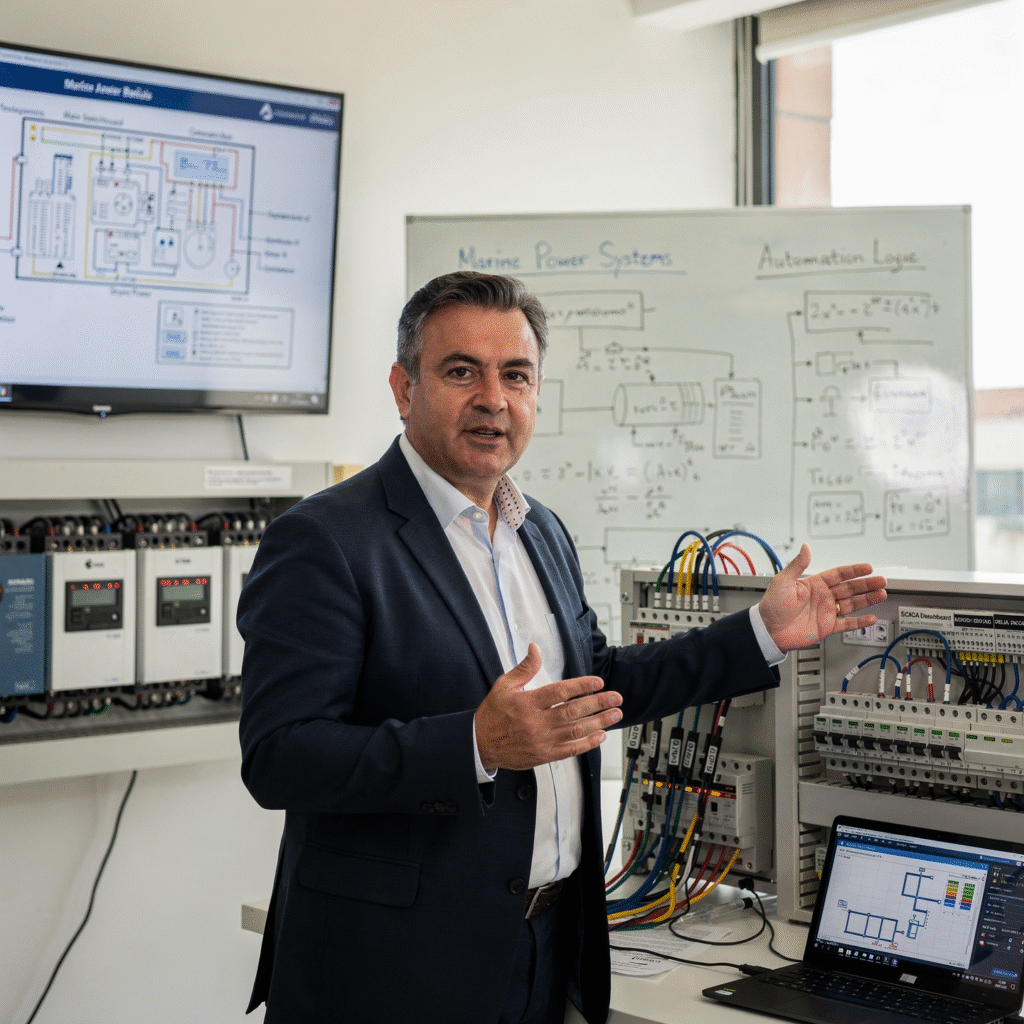
Eng. Javier Bañuls
Full Professor
Eng. Javier Bañuls
Full Professor
Naval electrical engineer with over fifteen years of experience in the design, integration, and operation of power and automation systems.

Dr. Nuria Llobregat
Full Professor
Dr. Nuria Llobregat
Full Professor
Specialist in meteorological and operational decision-making for coastal and offshore navigation, integrating wind, wave, and current models.

Dr. Pau Ferrer
Full Professor
Dr. Pau Ferrer
Full Professor
Naval engineer with a PhD in applied hydrodynamics and over a decade of experience designing high-performance hulls and marine structures.

Cap. Javier Abaroa (MCA)
Full Professor
Cap. Javier Abaroa (MCA)
Full Professor
MCA-certified captain with command of ocean-going vessels, specializing in advanced maneuvering, navigation management, and bridge safety.