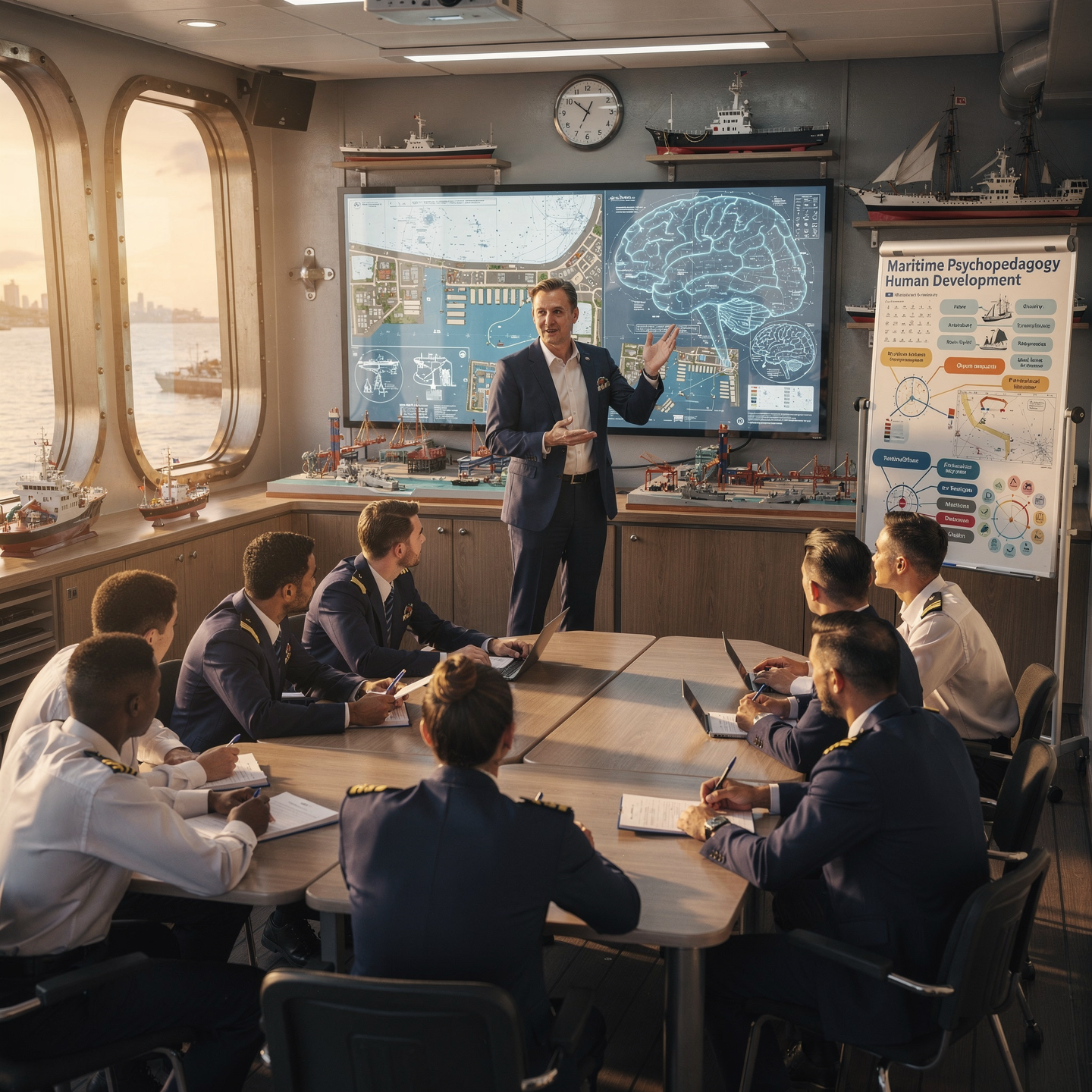
Master’s Degree in Maritime Psychopedagogy

Why this master’s programme?

The Master’s Degree in Maritime Psychopedagogy

Offers comprehensive training for maritime professionals interested in optimizing learning and human development in naval and port contexts. Learn to apply psychopedagogical principles in the training of seafarers, the management of onboard teams, and the improvement of psychological well-being at sea. This program delves into maritime work psychology, the design of effective training programs, stress management, and the prevention of psychosocial risks in the shipbuilding industry.

Differentiating Advantages

  • Specialized Focus: the only master’s program focused on the application of educational psychology in the maritime sector.
  • Skills Development: learn to design and implement innovative and effective training programs.
  • Onboard Wellbeing: acquire tools to promote the mental health and wellbeing of crew members.
  • Talent Management: optimize the selection, training, and development of maritime personnel.
  • Networking: connect with experts and professionals in the maritime sector and educational psychology.
Psicopedagogía

Master’s Degree in Maritime Psychopedagogy

Availability: 1 in stock

Who is it aimed at?

  • Maritime teachers and trainers seeking to optimize their teaching strategies, adapting them to the specific needs of the sector.
  • Psychologists and educators interested in specializing in the maritime field, understanding the psychosocial challenges of seafarers.
  • Directors of shipping companies and maritime training centers who wish to improve the well-being and performance of their staff through educational psychology.
  • HR professionals and recruitment managers seeking to implement support and development programs for crew members and shore-based personnel.
  • Graduates in Psychology, Education, or maritime studies seeking an innovative specialization with direct application in the maritime sector and port operations.

Flexibility and applicability
 Adapted to working professionals: online format with live and recorded classes, practical case studies based on real-life situations, and personalized tutoring.

Psicopedagogía

Objectives and skills

Optimizing learning in maritime contexts:

Efficiently manage available resources (human, technical, information) to maximize safety and performance in complex maritime operations.

Design psychoeducational intervention programs for maritime personnel:

“To identify the specific needs of maritime personnel in areas such as stress management, effective communication and decision making under pressure, in order to develop customized interventions that improve their well-being and performance.”

Advising on stress management and resilience in maritime environments:

“Identify unique stressors in the maritime environment, implement customized coping strategies, and foster team cohesion to improve resilience in the face of adversity.”

Promoting the psychological and social well-being of the maritime community:

Promote effective communication and mutual support, facilitating stress management and resilience in the face of adverse situations.

Develop strategies for the prevention of psychosocial risks in the maritime sector:

Implement awareness and training programs in mental health, stress management and assertive communication, adapted to the particularities of life on board and maritime operations, evaluating their impact through surveys and continuous monitoring.

Adapting teaching methodologies to the specific needs of maritime students:

“Incorporate simulations of real maritime scenarios and emergencies, promoting decision-making under pressure and onboard resource management.”

Study plan – Modules

  1. Theoretical Foundations of Applied Educational Psychology in Maritime Contexts: Neuropsychological and Educational Bases Adapted to Life on Board
  2. Educational Psychological Assessment of Maritime Personnel: Specific Techniques and Tools for Identifying Developmental Needs and Areas of Intervention
  3. Design of Educational Psychological Intervention Strategies in Maritime Environments: Adaptive Methods to Improve Well-being and Work Effectiveness
  4. Stress Management and Emotional Resilience on Board: Preventive Programs and Coping Techniques for Personnel at Sea
  5. Communication and Group Dynamics in Maritime Teams: Application of Educational Psychological Models to Strengthen Cohesion and Collaborative Work
  6. Motivation and Professional Development: Personalized Plans to Enhance Educational Psychological Skills and Competencies in Contexts of Isolation and Extreme Conditions
  7. Innovations Technological tools for remote psychoeducational support: use of virtual platforms, telehealth, and digital resources

    Strategies for the prevention of psychosocial risks: addressing fatigue, social isolation, and seaman’s syndrome

    Evaluation and monitoring of psychoeducational progress: key indicators and continuous measurement tools in the maritime environment

    The role of the maritime psychoeducational specialist in continuing education: designing educational programs, workshops, and training activities for the crew

    Ethics and confidentiality in maritime psychoeducational intervention: international standards, protocols, and legal considerations

    Case studies and best practices: analysis of successful interventions on different types of vessels and in different operational contexts

  1. Theoretical Foundations of Psychoeducational Assessment in Maritime Contexts: Integration of Cognitive, Emotional, and Social Models Adapted to Life on Board
  2. Design and Application of Specific Assessment Batteries for Crews: Psychometric, Observational, and Self-Report Tools for the Early Detection of Performance Impairments
  3. Advanced Neuropsychological Instruments: Adaptation and Validation of Tests to Assess Executive Functions, Memory, and Attention Under Marine Conditions
  4. Diagnostic Methodologies for Identifying Anxiety Disorders, Post-Traumatic Stress, and Chronic Fatigue in Maritime Operators
  5. Assessment of Organizational Climate and Its Impact on Group Dynamics and Psychological Well-being: Social Network Analysis and Effective Communication on Board
  6. Protocols for Assessing Thermal Stress, Environmental Noise, and Confinement: Psychophysiological Correlations and Mitigation Strategies
  7. Implementation of qualitative and quantitative techniques in the collection and analysis of maritime psychoeducational data
  8. Predictive models of resilience and adaptation in multidisciplinary teams at sea: risk indicators and protective factors
  9. Design of personalized psychoeducational intervention plans: cognitive and emotional coaching tools to optimize performance in high-pressure environments
  10. Systematization of nautical psychoeducational reports: technical, ethical, and confidentiality standards for strategic decision-making in human resource management
  1. Neuropsychopedagogical Foundations Applied to the Maritime Environment: Cognitive and Emotional Bases of Learning in Contexts of High Operational Complexity
  2. Specialized Psychopedagogical Diagnosis of Crews: Use of Standardized Tools and Projective Techniques to Identify Individual and Group Needs
  3. Design of Individualized Intervention Plans: Personalization Criteria Based on Neurocognitive Profile, Learning Styles, and Specific Psychosocial Conditions of Life at Sea
  4. Preventive Strategies for Improving Academic and Operational Performance: Implementation of Psychoeducational Programs Focused on Resilience, Stress Management, and Optimizing Attention
  5. Application of Active and Participatory Methodologies in Maritime Psychopedagogical Training: Problem-Based Learning (PBL), Simulations, and Constructive Feedback
  6. Mediation and Facilitation Techniques for Resolving Intragroup Conflicts in Crews: Development of Socio-Emotional and Communication Skills Assertiveness
  7. Continuous assessment and monitoring of cognitive and emotional progress using psychoeducational and technological indicators adapted to the maritime context

    Intervention in situations of psychological vulnerability: early detection of anxiety disorders, depression, and chronic fatigue in crew members, with links to specialized support resources

    Design and implementation of psychoeducational workshops for the prevention of cognitive decline and promotion of overall well-being in isolated marine environments

    Individual and group follow-up and feedback protocols: use of psychoeducational management software for evidence-based decision-making and continuous improvement

  1. Theoretical Foundations of Psychopedagogical Leadership in the Maritime Sector: Analysis of Contemporary Models and Their Applicability in High-Demand Operational Contexts
  2. Design of Evidence-Based Training Programs: Blended Methodologies, Needs Assessment, and Curriculum Development Adapted to Maritime Crews
  3. Team Psychology and Operational Cohesion: Group Dynamics, Conflict Management, Trust Building, and Resilience in Maritime Environments
  4. Advanced Psychopedagogical Assessment Tools for Safety: Psychological Diagnosis, Early Detection of Human Risks, and Preventive Protocols
  5. Implementation of Psychopedagogical Interventions for Crews: Techniques, Monitoring, and Impact Measurement on Performance and Well-being
  6. Situational and Transformational Leadership Models Applied to Maritime Team Management: Case Studies and Practical Analysis
  7. Development of Emotional and Cognitive Competencies for Decision-Making Under Pressure in Operations Nautical Studies

    Integration of psychopedagogical training with international maritime safety regulations (ISM, ISPS, STCW): compliance and corporate culture

    Evaluation and optimization of organizational climate on vessels: psychometric indicators, structured interviews, and continuous feedback

    Emergency protocols and psychopedagogical drills: training focused on anticipation, response, and post-incident learning

    Application of advanced technology and simulators for leadership and maritime psychopedagogy training: virtual reality, e-learning, and data analysis

    Professional ethics and social responsibility in crew training: promoting values, sustainability, and holistic well-being on board

    Managing work-related stress and preventing burnout in maritime crews: innovative psychopedagogical strategies and psychosocial support

    Monitoring and continuous evaluation of training programs: success metrics, KPIs, and Evidence-based adjustments and user feedback

    Case studies and integrated simulations: design, implementation, and analysis of psycho-pedagogical training plans for highly complex maritime scenarios

  1. Neuropsychological Foundations Applied to Cognitive Dynamics in Maritime Environments: Brain Structure, Attentional Processes, and Working Memory Under Conditions of High Sensory Demand
  2. Psychopedagogical Models for the Assessment and Development of Specific Cognitive Skills in Crews: Diagnosis, Design, and Application of Personalized Interventions
  3. Neurobiology of Stress at Sea: Neuroendocrine Mechanisms, Impact on Decision-Making, and Emotional Regulation in Critical Situations at Sea
  4. Tools for the Identification and Management of Chronic Stress in Crew Members: Validated Psychometric Scales, Biofeedback, and Neuroregulation Techniques
  5. Advanced Theories of Group Learning and Cooperation in Multicultural Teams: Application of Social Psychology to Cohesion and Collective Performance in Crews
  6. Emotional Dynamics and Their Influence on Effective Communication: Psychopedagogical Strategies to Optimize Active Listening and Empathy in Confined Environments Onboard

    Design and application of cognitive and emotional training programs: evidence-based methodologies to strengthen resilience, cognitive flexibility, and conflict management in crews

    Psychoeducational interventions for the prevention of burnout and adjustment syndrome in the maritime context: comprehensive protocols and specialized psychotherapeutic support

    Psychoeducational assessment of soft and hard skills in crew members: specific competency matrices and their translation into personalized training plans

    Technological tools and specialized software for monitoring and continuous improvement of cognitive and emotional health in crew members: data analysis, telepsychoeducation, and immersive virtual realities

    Impact of multiculturalism and generational diversity on crew dynamics: psychoeducational strategies for inclusion, intercultural respect, and operational synergy

    Case studies and simulations of psychosocial crises onboard: Design, implementation, and evaluation of psychoeducational exercises to improve group resilience

    Analysis of international regulations and psychoeducational standards applicable to the psychological well-being of crews: compliance, professional ethics, and best practices

    Role of the maritime psychoeducational specialist in interdisciplinary teams: coordination with officers, physicians, and safety experts for the comprehensive optimization of the work environment at sea

    Advanced frameworks for integrating psychoeducational principles into maritime continuing education: curriculum design, impact assessment, and sustainability of learning in dynamic contexts

  1. Theoretical Foundations of Psychoeducational Assessment in Maritime Contexts: Cognitive, Behavioral, and Systemic Approaches Applied to Crew and Naval Personnel
  2. Psychometric and Psychodiagnostic Instruments Adapted to the Particularities of the Maritime Environment: Validity, Reliability, and International Standards
  3. Design and Application of Multidimensional Assessment Protocols Integrating Emotional, Cognitive, and Social Aspects Specific to Working at Sea
  4. Advanced Qualitative Methodologies: Interviews, Focus Groups, and Participant Observation in Naval and Maritime Environments
  5. Analysis and Interpretation of Psychoeducational Data Based on Environmental Variables, Thermal Stress, Isolation, and Rotating Shifts
  6. Personalized Intervention Models: Conceptualization and Development of Action Plans Integrating Neuropsychology, Cognitive Ergonomics, and Stress Management for Crew Members
  7. Application of Emerging Technologies in Assessment Maritime Psychopedagogical Assessment: Virtual Reality, Simulators, and Digital Tools for Monitoring and Feedback

    Assessment of Intellectual and Emotional Performance in High-Pressure Situations, Critical Decision-Making, and Conflict Resolution on Board

    Design of Evidence-Based Intervention Strategies to Improve Psychosocial Well-being and Prevent Isolation and Fatigue-Related Disorders in Crews

    Implementation of Psychopedagogical Support Programs that Consider Cultural, Linguistic, and Organizational Aspects in the International Maritime Industry

    Impact of Psychopedagogical Leadership on Group Cohesion and Operational Efficiency in Complex Marine Environments

    Real-Time Evaluation and Adjustment of Psychopedagogical Interventions: Monitoring, Results Measurement, and Continuous Adaptation to Operational Demands

    Ethical and Regulatory Aspects in Maritime Psychopedagogical Assessment and Intervention: Confidentiality, Informed Consent, and Professional Responsibility

    Case Studies and Analysis of real-life situations involving psychoeducational diagnosis and intervention on ships, offshore platforms, and coastal communities

  8. Interdisciplinary integration: collaboration with clinical psychologists, occupational health physicians, human resources officers, and naval commanders for a holistic approach
  1. Neuropsychopedagogical Foundations Applied to Maritime Environments: Theoretical Bases and Scientific Evidence
  2. Advanced Diagnostic Assessment: Use of Psychometric Tools Adapted to the Maritime Population and Aquatic Contexts
  3. Systematic Observation Techniques and Behavioral Analysis in Maritime Crews and Personnel
  4. Design of Comprehensive Psychopedagogical Interventions Aimed at Improving Cognitive and Emotional Performance in Crews
  5. Implementation of Psychological Resilience and Psychosocial Well-being Programs in Confined Maritime Spaces
  6. Application of Emerging Technologies: Virtual Reality, Advanced Simulators, and Digital Platforms for Psychopedagogical Assessment and Training in the Naval Industry
  7. Predictive Models and Data Analysis for Monitoring Psychopedagogical Performance in Real Time During Maritime Operations
  8. Preventive Intervention Strategies for Adjustment Disorders and Work-Related Stress and fatigue in seafarers
  9. Interdisciplinary integration: collaboration with medical, safety, and operations areas for the optimization of overall well-being

    Post-intervention assessment and follow-up protocols: impact measurement and dynamic adjustment based on marine contextual variables

    Ethical regulations and international standards in psychopedagogy applied to the maritime industry: confidentiality, consent, and cultural respect

    Case studies and advanced simulations for the design and application of personalized interventions in complex maritime scenarios

    Development of professional skills for the effective implementation of assessments and intervention plans in multicultural and multidisciplinary contexts

    Evaluation of the impact of specific environmental and social factors of the maritime environment on learning and emotional well-being

    Innovation in psychopedagogical methodologies for continuing education and adaptation to technological change in the naval sector

  1. Neurobiological Foundations of Stress in Maritime Contexts: Activation of the HPA Axis, Cortisol, and Adaptive Response in Extreme Conditions
  2. Contemporary Paradigms in Psychoeducational Resilience: Dynamic Models and Psychosocial Processes Applied to Crews at Sea
  3. Advanced Psychometric Assessment of Stress and Psychological Vulnerability: Specific Tools for Maritime Crew Members and Their Integration into Mental Health Protocols
  4. Innovative Cognitive-Behavioral Intervention Techniques for Emotional Regulation in Confined Maritime Spaces: Mindfulness, Biofeedback, and Acceptance and Commitment Therapy (ACT)
  5. Neuroplasticity-Based Stress Management Strategies: Neurocognitive Training and Its Impact on Improving Operational Performance and Decision-Making at Sea
  6. Biomechanics of Sleep and Fatigue in Crews: Diagnosis, Monitoring, and Psychoeducational Protocols to Optimize Rest and Prevent
  7. Accidents
  8. Design and implementation of group resilience programs: fostering social support, cohesion, and organizational climate in multicultural maritime environments
  9. Psychoeducational intervention in crisis and adversity management: psychological first aid protocols adapted to critical incidents at sea
  10. Integration of wearable technologies and mobile applications for continuous monitoring of stress and mental well-being in crews
  11. Methodologies for evaluating the impact of psychoeducational interventions on stress reduction and improvement of psychosocial well-being on board
  12. Ethical and legal aspects in the management of maritime psychoeducational stress: confidentiality, informed consent, and current international regulations
  13. Clinical cases and practical simulations: implementation of resilience and stress management protocols in real and virtual offshore scenarios
  14. Planning and leadership in promoting mental health in maritime teams: skills development Psychopedagogical support for officers and crew leaders

    Impact of isolation and digital disconnection on mental health: innovative strategies for mitigating psychosocial stress during long periods at sea

    Future perspectives: advanced research in maritime psychopedagogy for the continuous improvement and sustainability of crew and maritime operations

  1. Theoretical Foundations in Psychopedagogy Applied to Maritime Environments: Cognitive and Affective Models in Crew Adaptation
  2. Innovation in Psycho-Playful Assessment: Design and Application of Specific Psychometric Batteries for Seafarers and Nautical Crews
  3. Advanced Methodologies for Identifying Work Stress, Fatigue, and Burnout in High-Demand Maritime Contexts
  4. Psychophysiological Analysis Tools: Use of Biofeedback, Heart Rate Monitoring, and Neurocognitive Parameters in Seafarers
  5. Design of Personalized Psycho-pedagogical Intervention Programs to Improve Cognitive and Emotional Performance in Crews
  6. Integration of Emerging Technologies in Psychological Assessment and Monitoring: Digital Platforms, Apps, and Immersive Virtual Reality Systems
  7. Strategies for Developing Psychosocial Competencies: Resilience, Teamwork, Decision-Making Under Pressure, and Conflict Management
  8. Onboard

    Psychological safety protocols: identification and mitigation of psychosocial risks in maritime environments and their impact on operational safety

    Case studies and scientific evidence in the application of personalized programs for accident prevention and performance optimization in crews

    Continuous evaluation and dynamic adjustment of psychoeducational interventions: design of success indicators and continuous improvement strategies

  1. Conceptual framework and key definitions in maritime psychopedagogy: integration of psychopedagogical theories applied to closed and dynamic maritime environments.
  2. Psychopedagogical assessment of crews: advanced protocols for evaluating cognitive, emotional, and social skills in seafarers.
  3. Design of psychopedagogical intervention programs aimed at optimizing cognitive and emotional performance in maritime environments.
  4. Innovative training methodologies for stress and fatigue management in crews: techniques based on neuroscience and positive psychology.
  5. Application of resilience and psychological well-being models adapted to life at sea and conditions of prolonged isolation.
  6. Human factors in maritime safety: detailed analysis of the interaction between psychology, ergonomics, and the work environment on ships and platforms.
  7. Technological tools for continuous psychopedagogical monitoring during Navigation: Telepsychology and the use of biometric sensors.

    Comprehensive protocols for the prevention and management of interpersonal conflicts in multidisciplinary maritime work teams.

    Evaluation and optimization of intra-crew communication: Constructive feedback techniques and emotional coaching in high-pressure environments.

    Ethical and legal aspects of maritime psychoeducational intervention: International regulations, confidentiality, and crew rights.

    Design, implementation, and evaluation of personalized psychoeducational intervention plans: Adaptive models based on longitudinal analyses.

    Success indicators and quantifiable metrics to measure the effectiveness of wellness and performance programs in maritime environments.

    Final report and professional presentation of the applied research: Development of technical documents and their presentation to maritime and academic organizations.

Career prospects

“`html

  • Counselor in Maritime Educational Centers: Supporting students in their academic and vocational development, considering the specific characteristics of the maritime sector.
  • Psychopedagogical Advisor in Companies in the Maritime Sector: Designing and implementing staff training and development programs, optimizing performance and motivation.
  • Educational Inclusion Specialist for Students with Specific Needs in the Maritime Sector: Adapting educational methodologies and resources to guarantee equal opportunities.
  • Conflict Mediator in Maritime Environments: Facilitating communication and problem-solving among crew members, work teams, and organizations.
  • Designer of Socio-Emotional Skills Training Programs for Maritime Professionals: Developing competencies such as leadership, resilience, and stress management in high-pressure situations requirement.
  • Researcher in Maritime Psychopedagogy: study of learning and development processes in the maritime context, generating knowledge to improve educational and professional practice.
  • Consultant in the selection and evaluation of personnel for maritime companies: application of psychopedagogical tests and techniques to identify suitable candidates and evaluate their development potential.
  • Trainer in the prevention of psychosocial risks in the maritime sector: design and delivery of programs to promote workplace well-being and prevent stress, harassment, and other psychosocial risks.

“`

Entry requirements

Academic/professional profile:

Bachelor’s degree in Nautical Science/Maritime Transport, Naval/Marine Engineering or a related qualification; or proven professional experience on the bridge/in operations.

Language proficiency:

Functional Maritime English (SMCP) recommended for simulations and technical materials.

Documentation:

Updated CV, copy of qualification or seaman’s book, national ID/passport, motivation letter.

Technical requirements (for online):

Device with camera/microphone, stable internet connection, monitor ≥ 24” recommended for ECDIS/Radar-ARPA.

Admissions process and dates

Online
application

(form + documents).

Academic review and interview

Admissions decision

Admissions decision

(+ scholarship offer if applicable).

Place reservation

(deposit) and enrolment.

Induction

(access to the virtual campus, calendars, simulator guides).

Scholarships and financial support

  • Applied Educational Psychology in the Maritime Sector: delve into learning and development strategies in naval and port environments.
  • Intervention and Adaptation: learn to identify and address the specific training and development needs of maritime personnel.
  • Training Program Design: master the tools to create effective training programs tailored to the demands of the sector.
  • Educational Innovation: explore the latest trends in educational technology and their application to maritime training.
  • Skills Development: enhance your communication, leadership, and team management skills in the field of maritime training.
Apply your knowledge in a constantly evolving sector and contribute to improving the performance and well-being of maritime personnel.

Testimonials

Frequently asked questions

Professionals who work or wish to work in the educational and psychological field within the maritime sector, such as cruise ships, merchant ships or nautical schools.

Yes. The itinerary includes ECDIS/Radar-ARPA/BRM with harbor, ocean, fog, storm, and SAR scenarios.

Online with live sessions; hybrid option for simulator/practical placements through agreements.

Recommended functional SMCP. We offer support materials for standard phraseology.

Yes, with a relevant degree or experience in maritime/port operations. The admissions interview will confirm suitability.

Optional (3–6 months) through Companies & Collaborations and the Alumni Network.

Simulator practice (rubrics), defeat plans, SOPs, checklists, micro-tests and applied TFM.

A degree from Navalis Magna University + operational portfolio (tracks, SOPs, reports and KPIs) useful for audits and employment.

  1. Conceptual framework and key definitions in maritime psychopedagogy: integration of psychopedagogical theories applied to closed and dynamic maritime environments.
  2. Psychopedagogical assessment of crews: advanced protocols for evaluating cognitive, emotional, and social skills in seafarers.
  3. Design of psychopedagogical intervention programs aimed at optimizing cognitive and emotional performance in maritime environments.
  4. Innovative training methodologies for stress and fatigue management in crews: techniques based on neuroscience and positive psychology.
  5. Application of resilience and psychological well-being models adapted to life at sea and conditions of prolonged isolation.
  6. Human factors in maritime safety: detailed analysis of the interaction between psychology, ergonomics, and the work environment on ships and platforms.
  7. Technological tools for continuous psychopedagogical monitoring during Navigation: Telepsychology and the use of biometric sensors.

    Comprehensive protocols for the prevention and management of interpersonal conflicts in multidisciplinary maritime work teams.

    Evaluation and optimization of intra-crew communication: Constructive feedback techniques and emotional coaching in high-pressure environments.

    Ethical and legal aspects of maritime psychoeducational intervention: International regulations, confidentiality, and crew rights.

    Design, implementation, and evaluation of personalized psychoeducational intervention plans: Adaptive models based on longitudinal analyses.

    Success indicators and quantifiable metrics to measure the effectiveness of wellness and performance programs in maritime environments.

    Final report and professional presentation of the applied research: Development of technical documents and their presentation to maritime and academic organizations.

Request information

  1. Complete the Application Form.

  2. Attach your CV/degree certificate (if you have it to hand).

  3. Indicate your preferred cohort (January/May/September) and whether you would like the hybrid option with simulator sessions.

    An academic advisor will contact you within 24–48 hours to guide you through the admission process, scholarships, and compatibility with your professional schedule.

Please enable JavaScript in your browser to complete this form.
Click or drag a file to this area to upload.

Faculty

0
    0
    Tu carrito
    Tu carrito esta vacíoRegresar a la tienda
    Scroll to Top


