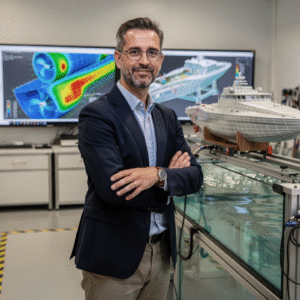
Master’s Degree in Conceptual Design of Ships of the Future

Why this master’s programme?

The Master in Conceptual Design of Ships of the Future

Prepares you to lead innovation in the naval industry. Learn to integrate disruptive technologies, such as alternative propulsion, advanced automation, and smart materials, to create more efficient, sustainable, and safer ships. Master state-of-the-art modeling and simulation tools and develop a design approach focused on the ship’s lifecycle. This program empowers you to become a leader in the transformation of the maritime sector, capable of anticipating and responding to the challenges of the future.

Differentiating Advantages

  • Practical Approach: development of real-world projects and innovative case studies.
  • Leading Experts: professors with extensive experience in industry and research.
  • Networking: connection with companies and professionals in the naval sector globally.
  • Comprehensive Vision: from initial conception to operational optimization of the vessel.
  • Professional Certification: recognition of your skills and knowledge in naval design.

Master’s Degree in Conceptual Design of Ships of the Future

Availability: 1 in stock

Who is it aimed at?

  • Naval engineers and naval architects who wish to lead innovation in ship design, exploring new technologies and fuels.
  • Maritime professionals (shipowners, shipyards, classification societies) seeking to anticipate regulations and market demands in sustainability and efficiency.
  • Researchers and academics interested in deepening their knowledge of modeling and simulation of complex naval systems and performance optimization.
  • Consultants and project engineers who want to expand their expertise in conceptual design, meeting the highest safety and environmental standards.
  • Graduates in engineering and related sciences seeking a cutting-edge specialization with a practical focus on the maritime industry. future.

Flexibility and Professional Focus
 Adapted to the needs of today’s professional: flexible online methodology, practical projects with real-world application in the industry, and networking with industry experts.

Objectives and skills

Leading innovation in naval design:

Promote multidisciplinary collaboration, integrating new technologies and agile design methodologies to optimize the efficiency and sustainability of vessels.

Optimizing the energy efficiency of vessels:

“Implement onboard energy management strategies, monitoring consumption, optimizing routes, and using efficient propulsion systems.”

Integrating emerging technologies into naval design:

“Implement AI-based predictive monitoring systems to optimize ship maintenance and efficiency.”

Developing sustainable naval design solutions:

“Optimize hull hydrodynamics and propulsion to minimize drag and fuel consumption.”

Managing complex naval design projects:

“Define the WBS and manage the schedule by optimizing project resources, costs, and risks.”

Modeling and simulating the behavior of ships:

“Implement mathematical models and simulation software to predict the ship’s response to different environmental and operational conditions, including the effects of wind, waves, currents, and maneuvers.”

Study plan – Modules

  1. Fundamentals of Naval Conceptual Design: Analysis of Requirements, Functionality, and Strategic Objectives in Ships of the Future
  2. Technological Advancements: Integration of Disruptive Technologies such as Artificial Intelligence, Advanced Automation, and Hybrid Propulsion Systems
  3. Innovative Materials: Application of Composites, Lightweight Alloys, and Nanotechnology for Structural Optimization and Weight Reduction
  4. Modern Production Processes: Additive Manufacturing, Friction Welding Techniques, and Modular Assembly to Accelerate Construction Times
  5. Advanced Simulation Methodologies: CFD (Computational Fluid Dynamics), FEA (Finite Element Analysis), and Digital Modeling for Predictive Evaluations
  6. Propulsion and Energy Systems: Comparative Analysis of Conventional, Electric, and Sustainable Alternatives such as Hydrogen and High-Capacity Batteries
  7. Sustainability Innovation: Design for Emission Minimization, Efficient waste management and recyclability throughout the lifecycle

    Automation and intelligent control: Integration of SCADA systems, maritime IoT, and digital twins for predictive maintenance and real-time monitoring

    Regulations and certifications: Updates on international standards for new technologies and materials in shipbuilding

    Case studies and practical applications: Detailed analysis of cutting-edge projects and their impact on the global shipbuilding industry

  1. Fundamentals of Naval Propulsion Systems: Classification, Energy Efficiency, and Historical Evolution
  2. Hybrid and Electric Propulsion: Architectures, Motor Configuration, and Integrated Control
  3. Integration of High-Density Battery Technologies and Advanced Energy Storage Systems
  4. Applied Renewable Energies: Wind, Solar, and Oceanographic Energy in Contemporary Naval Design
  5. Thermodynamic and Life Cycle Analysis for the Optimal Selection of Propulsion Systems
  6. Intelligent Energy Management Systems: Predictive Controls, Optimization, and Real-Time Monitoring
  7. Modular Design and Scalability in Propulsion Systems for Multi-Function and Flexible Vessels
  8. Impact of Environmental Regulations and International Standards: IMO, MARPOL, and New Green Regulations
  9. Advanced Simulation and Computational Modeling for the Integration and Validation of Advanced propulsion systems

    Case studies and future trends: disruptive innovation in naval propulsion and energy transition in commercial and military vessels

  1. Advanced Materials Fundamentals for Shipbuilding: Mechanical Properties, Corrosion Resistance, and Fatigue in Marine Environments
  2. Material Innovation: Development and Application of High-Strength Lightweight Metal Alloys and Smart Composite Materials in Shipbuilding Structures
  3. Emerging Technologies in Protective Coatings: Nanotechnology, Self-Healing Coatings, and Antimicrobial Systems for Enhanced Durability
  4. Advanced Manufacturing Processes: Metal 3D Printing, Additive Manufacturing of Structural Components, and State-of-the-Art Welding Techniques
  5. Automation in Shipbuilding Production: Integration of Robotic Systems for Assembly, Inspection, and Predictive Maintenance on the Construction Line
  6. Design for Manufacturing (DFM) and Design for Assembly (DFA) Methodologies Adapted to Shipbuilding 4.0
  7. Digitalization and Digital Twins: Parametric Modeling of Materials and Construction Processes for Real-Time Optimization
  8. Impact of Industry 4.0 on Shipbuilding: IoT Applied to Structural Monitoring and Automated Quality Control
  9. Sustainability Assessment: Selection of Eco-efficient Materials and Processes to Minimize Environmental Footprint and Maximize Recyclability
  10. Case Studies: Analysis of Innovative Projects in Smart and Sustainable Ships, Practical Application of Cutting-Edge Materials and Processes
  1. Fundamentals of intelligent naval architecture: adaptive structures, advanced materials, and modular design geared towards the integration of autonomous systems
  2. Design and modeling of hybrid and electric propulsion systems geared towards energy efficiency and sustainability in autonomous vessels
  3. Intelligent control architecture: AI in operational decision-making, machine learning algorithms, and expert systems for autonomous navigation management
  4. Advanced integration of sensors and perception systems: LIDAR, multibeam radar, thermal imaging cameras, acoustic systems, and their fusion for situational awareness
  5. Development of autonomous navigation and maneuvering systems: route planning, obstacle detection and avoidance, predictive analytics, and real-time optimization
  6. Cybersecurity in autonomous vessels: specific threats, architecture design Secure, encrypted communication protocols, and defense strategies against cyberattacks.

    International regulations and current legislation: review of SOLAS and IMO conventions on autonomous operations, IEEE standards for intelligent systems, and safety certifications.

    Risk management and operational reliability: FMEA methodologies, stress testing, failure simulations, and predictive maintenance applied to autonomous systems.

    Advanced communication systems: integration of digital VHF, satellites, 5G/6G networks, and distributed intelligence protocols for remote control and real-time monitoring.

    Case studies and critical analysis of current pilot projects: evaluation of technological architectures, achievements, limitations, and future direction of the conceptual design of autonomous vessels.

  1. Fundamentals of naval hydraulics applied to hydrodynamic optimization: principles of drag, buoyancy, and dynamic stability
  2. Advanced computational modeling: use of CFD (Computational Fluid Dynamics) for detailed analysis of flow around the hull and propulsion
  3. Parametric design and multi-objective optimization: integration of genetic algorithms and machine learning in the development of efficient hydrodynamic configurations
  4. Hull-wave interaction and its impact on energy efficiency: spectral analysis and its modeling under real-world conditions
  5. Hybrid propulsion and energy systems: study of alternative technologies, such as dual-fuel engines, electric propulsion, and onboard energy storage
  6. Advanced simulation of maneuvers and dynamic drag: tools for evaluating performance under different operating profiles
  7. Experimental testing in hull tanks: techniques for measuring drag, drag, and lift, including forces of Towing and hydrostatic balance
  8. Validation of CFD models using experimental data: statistical correlation and parameter adjustment to ensure accurate predictions

    International standards and certifications on emissions and energy efficiency: IMO MARPOL Chapter VI and Energy Efficiency Design Index (EEDI)

    Integrated conclusions and practical applications: development of conceptual design projects incorporating hydrodynamic optimization to reduce energy consumption and pollutant emissions

  1. Fundamentals of Technological Innovation in the Naval Industry: Historical Evolution and Disruptive Trends
  2. Advanced Materials for Ships of the Future: Lightweight Alloys, Polymer Matrix Composites, and Nanostructured Materials
  3. Design and Application of Autonomous Systems: Smart Sensors, Onboard AI, and Predictive Control
  4. Sustainable Propulsion: Hybrid Technologies, Green Hydrogen, Fuel Cells, and Alternative Fuels
  5. Integration of Renewable Energy Systems: Solar Panels, Wind Turbines, and Onboard Energy Storage
  6. Hydrodynamic Efficiency and Hull Design: Advanced CFD, Eco-Friendly Antifouling Coatings, and Structural Optimization
  7. Implementation of Digital Twins for Real-Time Simulation and Predictive Maintenance
  8. Environmental Regulations: MARPOL Compliance, IMO Zero Emission Requirements, and Certifications green
  9. Development of collective intelligence systems for autonomous fleets and operational synchronization
  10. Management and recycling of materials and components in sustainable shipbuilding
  1. Advanced principles of marine propulsion: thermodynamic analysis, energy efficiency, and pollutant emissions in conventional and alternative engines
  2. Hybrid propulsion systems: integration of diesel, turboelectric, and fuel cell engines; control and energy management strategies for operational optimization
  3. Design and modeling of marine gas turbines and their application in high-speed vessels and military ships
  4. Innovations in marine electric propulsion: synchronous, asynchronous, and reluctance motors; converters; and advanced energy storage systems
  5. Marine renewable energies: photovoltaic technologies integrated into the superstructure, offshore wind turbines, and wave energy systems applied to ship energy autonomy
  6. Design and optimization of next-generation battery systems: lithium-ion, redox flow, and emerging technologies, with an emphasis on safety and energy density and life cycle
  7. Integration of autonomous ship architectures: sensors, actuators, navigation and control systems, redundant communication, and protocols for unmanned operation

    Implementation of artificial intelligence and machine learning systems for predictive management of the maintenance and operation of propulsion and energy systems

    Innovation in materials and construction techniques for weight reduction and improved energy efficiency in autonomous and renewable energy-integrated ships

    International regulations, certifications, and standards applicable to green propulsion systems and autonomous ships: regulatory challenges and future perspectives

  1. Digital Transformation in Naval Engineering: Foundations and Historical Evolution Towards Integrated Digital Design
  2. Advanced Application of Artificial Intelligence and Machine Learning for Design Optimization and Structural Behavior Prediction
  3. Integration of Digital Twins in the Conceptual Phase: Real-Time Simulation and Iterative Optimization of Ships
  4. Intelligent Automation: Autonomous Systems in Maritime Operations, Remote Control, and Virtual Crew Support
  5. Implementation of IoT Technologies for Monitoring and Predictive Maintenance Throughout the Ship’s Lifecycle
  6. Data-Driven Modeling Methodologies for Advanced Conceptual Design, Including Multi-Scenario Analysis and Environmental Simulation
  7. Blockchain and Cybersecurity: Cryptographic Tools Applied to Design Traceability and Protection Against Cyberattacks in Naval Systems
  8. Development of Human-Machine Interfaces (HMIs) and Augmented Reality for Visualization and decision-making in collaborative design

    International regulations, emerging standards, and their impact on technology adoption in the shipbuilding industry

    Case studies and critical analysis of leading projects implementing disruptive digitization and automation in the design of futuristic ships

  1. Advanced Analysis of Composite Materials: Mechanical Properties, Corrosion Resistance, and Applications in Naval Structures
  2. Nanotechnology in Marine Materials: Carbon Nanotubes, Smart Coatings, and Their Impact on Hull Durability
  3. Integration of Autonomous Systems: Sensors, Actuators, and Distributed Control Systems for Navigation and Maneuvering
  4. AI and Machine Learning Applied to Optimizing the Design and Operation of Autonomous Vessels
  5. Renewable Energies in Naval Design: Hybrid Propulsion Systems, Photovoltaic Solar Energy, and Offshore Wind Turbines
  6. Energy Storage and Management: Next-Generation Batteries, Supercapacitors, and Energy Recovery Systems
  7. Real-Time Monitoring Systems: Industrial IoT for Predictive Maintenance and Operational Improvement
  8. Advanced Simulation and Digital Modeling: Tools CAD/CAM/CAE to optimize the integration of new technologies in conceptual design

    International standards and regulations applicable to innovative materials and autonomous systems in the naval sector

    Case studies and applied research projects: prototype analysis, laboratory testing, and open water validation

  1. Fundamentals of Conceptual Design: Principles, Objectives, and Phases of the Comprehensive Design Process in Advanced Shipbuilding
  2. Applied Technological Innovation: Alternative Propulsion Systems (Electrification, Hydrogen, Fuel Cells) and Their Integration into Ship Design
  3. Advanced Materials and Smart Structures: Analysis of Composites, Lightweight Alloys, and Embedded Sensors for Real-Time Monitoring
  4. Digital Modeling and Simulation: CAD/CAE Tools Specific to the Shipbuilding Industry, CFD Simulation for Fluid Dynamics, and Hydrodynamic Optimization
  5. Sustainable Design: Life Cycle Assessment, Minimizing the Environmental Footprint, and Compliance with International Regulations (MARPOL, IMO 2020, EEDI)
  6. Energy Systems and Resource Management: Integration of Renewable Energies, Energy Storage, and Onboard Energy Recovery Systems
  7. Autonomy and Technologies of Intelligent navigation: design of autonomous control systems, artificial intelligence applied to ship operation, and cybersecurity

    Ergonomics and habitability: crew-centered design, simulation of habitable environments, and psychosocial impact analysis

    Economic and strategic evaluation: cost analysis, profitability, and economic life cycle planning of the conceptual vessel

    Advanced technical presentation and documentation: preparation of technical reports, calculation reports, drawings, and executive presentations for stakeholders

Career prospects

“`html

  • Conceptual Ship Designer: Development of new ideas and concepts for innovative ships.
  • Naval Project Engineer: Participation in ship design and construction projects, overseeing systems integration.
  • Naval Design Consultant: Technical advice to shipyards, shipowners, and companies in the maritime sector on optimizing ship design.
  • Maritime Technology Researcher: Development of new technologies and materials for the construction of more efficient and sustainable ships.
  • Simulation and Modeling Specialist: Creation of virtual models for evaluating ship performance and safety.
  • Technical and Economic Feasibility Analyst: Evaluation of the feasibility of ship design projects, considering technical and economic aspects.
  • Innovation Manager in the Naval Industry: Identifying and developing innovation opportunities in the naval sector, driving the adoption of new technologies.
  • Maritime Regulations and Standards Expert: Advising on compliance with national and international regulations and standards regarding ship design and construction.

“`

Entry requirements

Academic/professional profile:

Bachelor’s degree in Nautical Science/Maritime Transport, Naval/Marine Engineering or a related qualification; or proven professional experience on the bridge/in operations.

Language proficiency:

Functional Maritime English (SMCP) recommended for simulations and technical materials.

Documentation:

Updated CV, copy of qualification or seaman’s book, national ID/passport, motivation letter.

Technical requirements (for online):

Device with camera/microphone, stable internet connection, monitor ≥ 24” recommended for ECDIS/Radar-ARPA.

Admissions process and dates

Online
application

(form + documents).

Academic review and interview

Admissions decision

Admissions decision

(+ scholarship offer if applicable).

Place reservation

(deposit) and enrolment.

Induction

(access to the virtual campus, calendars, simulator guides).

Scholarships and financial support

  • Naval Innovation: Master the most advanced tools and methodologies for designing the ships of the future.
  • Maritime Sustainability: Learn to integrate energy efficiency criteria and emissions reduction into naval design.
  • Advanced Simulation: Use state-of-the-art software to simulate and optimize the performance of your designs.
  • Comprehensive Final Project: Develop a complete conceptual design project, applying all the knowledge acquired.
  • Career Opportunities: Boost your career in the naval industry, marine engineering, and the Research and Development.
Become a leader in the design of ships of the future, prepared for the challenges of tomorrow.

Testimonials

Frequently asked questions

Innovative and futuristic vessels, with a focus on sustainability, new technologies and adaptation to the future challenges of the maritime sector.

Yes. The itinerary includes ECDIS/Radar-ARPA/BRM with harbor, ocean, fog, storm, and SAR scenarios.

Online with live sessions; hybrid option for simulator/practical placements through agreements.

It focuses on both, combining aesthetic design with naval engineering principles to conceive futuristic ships.

Recommended functional SMCP. We offer support materials for standard phraseology.

Yes, with a relevant degree or experience in maritime/port operations. The admissions interview will confirm suitability.

Optional (3–6 months) through Companies & Collaborations and the Alumni Network.

Simulator practice (rubrics), defeat plans, SOPs, checklists, micro-tests and applied TFM.

A degree from Navalis Magna University + operational portfolio (tracks, SOPs, reports and KPIs) useful for audits and employment.

  1. Fundamentals of Conceptual Design: Principles, Objectives, and Phases of the Comprehensive Design Process in Advanced Shipbuilding
  2. Applied Technological Innovation: Alternative Propulsion Systems (Electrification, Hydrogen, Fuel Cells) and Their Integration into Ship Design
  3. Advanced Materials and Smart Structures: Analysis of Composites, Lightweight Alloys, and Embedded Sensors for Real-Time Monitoring
  4. Digital Modeling and Simulation: CAD/CAE Tools Specific to the Shipbuilding Industry, CFD Simulation for Fluid Dynamics, and Hydrodynamic Optimization
  5. Sustainable Design: Life Cycle Assessment, Minimizing the Environmental Footprint, and Compliance with International Regulations (MARPOL, IMO 2020, EEDI)
  6. Energy Systems and Resource Management: Integration of Renewable Energies, Energy Storage, and Onboard Energy Recovery Systems
  7. Autonomy and Technologies of Intelligent navigation: design of autonomous control systems, artificial intelligence applied to ship operation, and cybersecurity

    Ergonomics and habitability: crew-centered design, simulation of habitable environments, and psychosocial impact analysis

    Economic and strategic evaluation: cost analysis, profitability, and economic life cycle planning of the conceptual vessel

    Advanced technical presentation and documentation: preparation of technical reports, calculation reports, drawings, and executive presentations for stakeholders

Request information

  1. Complete the Application Form.

  2. Attach your CV/degree certificate (if you have it to hand).

  3. Indicate your preferred cohort (January/May/September) and whether you would like the hybrid option with simulator sessions.

    An academic advisor will contact you within 24–48 hours to guide you through the admission process, scholarships, and compatibility with your professional schedule.

Please enable JavaScript in your browser to complete this form.
Click or drag a file to this area to upload.

Faculty

0
    0
    Tu carrito
    Tu carrito esta vacíoRegresar a la tienda
    Scroll to Top