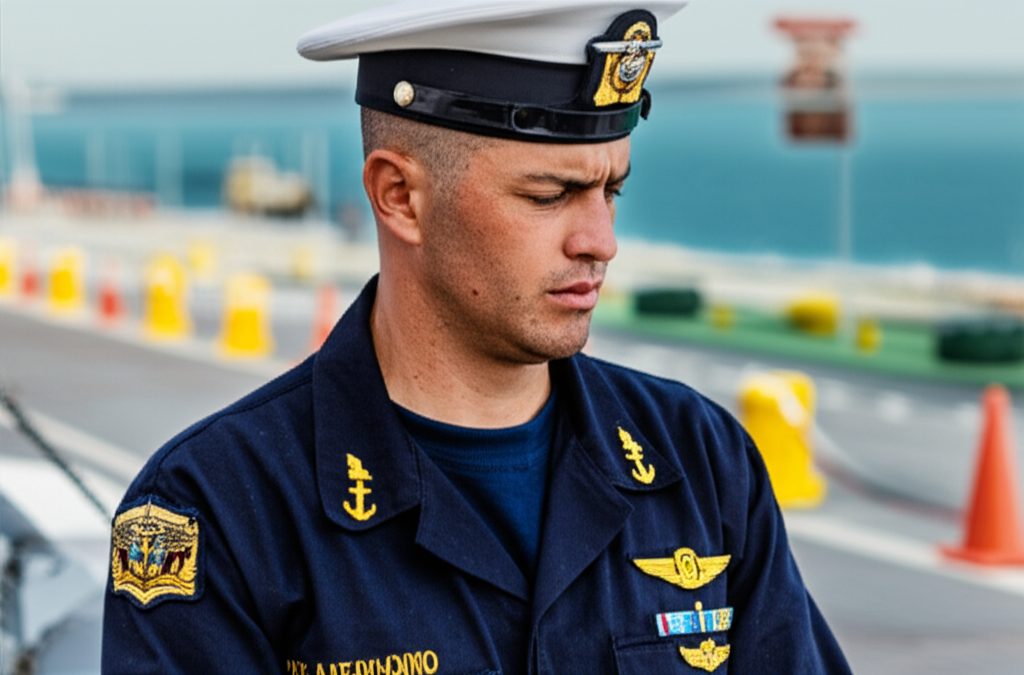
Course on Naval Traditions
Why this course?
Discover the fascinating world of Naval Traditions
A course designed to immerse you in the rich history, customs, and rituals that have shaped the identity of sailors throughout the centuries. Learn about the origins of naval ceremonies, the meaning of codes of honor, and the symbolism behind uniforms and decorations. This program offers an in-depth look at maritime culture, ideal for historians, sailing enthusiasts, and industry professionals who wish to understand and appreciate the legacy of life at sea.
Distinctive Advantages
- Historical Analysis: A journey from ancient maritime civilizations to the modern era.
- Case Studies: We will examine concrete examples of traditions and their impact on crew morale and cohesion.
- Guest Experts: Masterclasses with naval historians and veteran seafarers.
- Audiovisual Materials: Access to exclusive documentaries, photographs, and historical archives.
- Certification: Earn a certificate of completion that validates your knowledge of the traditions maritime.
Who is it aimed at?
- Passionate about maritime history who wish to explore the roots and evolution of nautical customs.
- Students of history, anthropology, and social sciences interested in the influence of the sea on global culture.
- Merchant and military personnel seeking to understand the meaning behind rituals and hierarchies on board.
- Sailing and model ship enthusiasts who wish to delve deeper into the cultural context of their hobbies.
- Writers, filmmakers, and artists seeking inspiration in the narratives and symbolism of the maritime world.
Cultural Approach
Interactive exploration with historical and audiovisual materials, guided discussions, and application of traditions to the present day.
Objectives and competencies

Instilling and maintaining team spirit:
To foster camaraderie, mutual respect, and effective collaboration among all team members, promoting a culture of support and loyalty.

To promote respect for and understanding of naval history:
“Analyzing key milestones, naval battles, and historical figures to understand the evolution of warfare at sea and its impact on global geopolitics.”

To preserve and transmit the legacy of naval values and virtues:
“To emulate the mettle and leadership of our heroes at sea, fostering honor and discipline in every action.”

Promote discipline and honorable behavior:
“Comply with the orders and instructions of the captain/superior officer, maintaining calm and respect in situations of pressure and emergency.”

Strengthening identity and commitment to naval service:
“To identify and promote naval values and traditions in every action and decision, fostering esprit de corps and loyalty to the institution.”

Develop a sense of duty and personal responsibility:
“Comply with standard procedures and report any deviations, taking responsibility for your own actions and decisions.”
Curriculum - Modules
- Comprehensive Maritime Incident Management: protocols, roles, and chain of command for coordinated response
- Operational Planning and Execution: briefing, routes, weather windows, and go/no-go criteria
- Rapid Risk Assessment: criticality matrix, scene control, and decision-making under pressure
- Operational Communication: VHF/GMDSS, standardized reports, and inter-agency liaison
- Tactical Mobility and Safe Boarding: RHIB maneuvers, approach, mooring, and recovery
- Equipment and Technologies: PPE, signaling, satellite tracking, and field data logging
- Immediate Care of the Affected: primary assessment, hypothermia, trauma, and stabilization for evacuation
- Adverse Environmental Conditions: swell, Visibility, flows, and operational mitigation
Simulation and training: critical scenarios, use of VR/AR, and exercises with performance metrics
Documentation and continuous improvement: lessons learned, indicators (MTTA/MTTR), and SOP updates
- Introduction to Naval History: Definitions, Periodization, and Sources.
- The Navy in Antiquity: Phoenicians, Greeks, and Romans. Naval Tactics and Technologies.
- The Maritime Middle Ages: Vikings, Crusades, and Maritime Trade. Evolution of Navigation.
- The Age of Discovery: Explorations, conquests, and European naval power.
- 17th and 18th Centuries: The great naval powers, key battles, and maritime treaties.
- The 19th Century: Industrial Revolution, battleships, and imperial expansion.
- 20th and 21st Centuries: World wars, submarines, aircraft carriers, and the nuclear age.
- Naval Ceremonial: Honors, salutes, whistle calls, and onboard protocol.
- Maritime Culture: Traditions, folklore, superstitions, and nautical jargon.
- Naval Museums and Maritime Heritage: Preservation and dissemination of naval history.
‘
- Introduction to Naval History: eras, battles, and key figures.
- The Navy Through the Centuries: technological and strategic evolution.
- International Maritime Ceremonial: salutes, honors, and flags.
- Protocol for Official Visits: reception, precedence, and courtesies.
- Naval Uniforms: history, meaning, and proper use.
- Flags and Standards: history, protocol, and use at sea and on land.
- Funeral Honors at Sea: procedures and symbolism.
- Naval Etiquette: onboard behavior, relationships, and hierarchies.
- Naval Celebrations and Commemorations: traditions and meaning.
- The role of the Naval Historian and the preservation of maritime heritage.
‘
- Introduction to Naval Ceremonial: History and Foundations.
- International Maritime Protocol: Rules and Conventions.
- Naval Hierarchy: Ranks, Insignia, and Titles.
- Social Etiquette on Board: Behavior and Attire.
- Precedence and Honors: Salutes, Funeral Honors, and Receptions.
- Naval Events and Celebrations: Anniversaries, Navy Days, and Official Visits.
- Organizing Formal Meals on Board: Menus, Table Setting, and Toasts.
- Official Communication and Correspondence: Writing Letters, Invitations, and Speeches.
- Protocol in the Raising and Lowering the Flag: Anthems and Honors.
- Crisis Management and Unexpected Situations: Flexibility and Adaptation.
‘
- Introduction to Naval Ceremonial: Origin, Evolution, and Importance
- Precedence: Application in the Navy, Civil and Military Authorities
- Naval Honors: Salutes, Mariner’s Pipes, and Presentations of Arms
- Protocol at Naval Events: Official Visits, Parades, Naval Reviews, and Funerals
- Naval Attire: Uniforms, Insignia, and Decorations (Proper Use and Meaning)
- Formal Communications: Official Correspondence, Speeches, and Toasts
- Flags and Pennants: Meaning, Hoisting and Lowering, Use in Port and at Sea
- Maritime Culture: Naval Traditions, Customs, and Superstitions
- Onboard etiquette: behavior, treatment of personnel, and hierarchy.
- Naval ceremonial in the international context: interactions with other navies.
‘
- System Architecture and Components: Structural design, materials, and subsystems (mechanical, electrical, electronic, and fluid) with selection and assembly criteria for marine environments
- Fundamentals and Principles of Operation: Physical and engineering foundations (thermodynamics, fluid mechanics, electricity, control, and materials) that explain performance and operating limits
- Safety and Environmental (SHE): Risk analysis, PPE, LOTO, hazardous atmospheres, spill and waste management, and emergency response plans
- Applicable Regulations and Standards: IMO/ISO/IEC requirements and local regulations;
- Conformance criteria, certification, and best practices for operation and maintenance
- Inspection, testing, and diagnostics: Visual/dimensional inspection, functional testing, data analysis, and predictive techniques (vibration, thermography, fluid analysis) to identify root causes
- Preventive and predictive maintenance: Hourly/cycle/seasonal plans, lubrication, adjustments, calibrations, consumable replacement, post-service verification, and operational reliability
- Instrumentation, tools, and metrology: Measuring and testing equipment, diagnostic software, calibration and traceability; selection criteria, safe use, and storage
- Onboard integration and interfaces: Mechanical, electrical, fluid, and data compatibility; Sealing and watertightness, EMC/EMI, corrosion protection, and interoperability testing.
Quality, acceptance testing, and commissioning: process and materials control, FAT/SAT, bench and sea trials, go/no-go criteria, and evidence documentation.
Technical documentation and integrated practice: logs, checklists, reports, and a complete case study (safety → diagnosis → intervention → verification → report) applicable to any system.
Plan de estudio - Módulos
- Comprehensive Maritime Incident Management: protocols, roles, and chain of command for coordinated response
- Operational Planning and Execution: briefing, routes, weather windows, and go/no-go criteria
- Rapid Risk Assessment: criticality matrix, scene control, and decision-making under pressure
- Operational Communication: VHF/GMDSS, standardized reports, and inter-agency liaison
- Tactical Mobility and Safe Boarding: RHIB maneuvers, approach, mooring, and recovery
- Equipment and Technologies: PPE, signaling, satellite tracking, and field data logging
- Immediate Care of the Affected: primary assessment, hypothermia, trauma, and stabilization for evacuation
- Adverse Environmental Conditions: swell, Visibility, flows, and operational mitigation
Simulation and training: critical scenarios, use of VR/AR, and exercises with performance metrics
Documentation and continuous improvement: lessons learned, indicators (MTTA/MTTR), and SOP updates
- Introduction to Naval History: Definitions, Periodization, and Sources.
- The Navy in Antiquity: Phoenicians, Greeks, and Romans. Naval Tactics and Technologies.
- The Maritime Middle Ages: Vikings, Crusades, and Maritime Trade. Evolution of Navigation.
- The Age of Discovery: Explorations, conquests, and European naval power.
- 17th and 18th Centuries: The great naval powers, key battles, and maritime treaties.
- The 19th Century: Industrial Revolution, battleships, and imperial expansion.
- 20th and 21st Centuries: World wars, submarines, aircraft carriers, and the nuclear age.
- Naval Ceremonial: Honors, salutes, whistle calls, and onboard protocol.
- Maritime Culture: Traditions, folklore, superstitions, and nautical jargon.
- Naval Museums and Maritime Heritage: Preservation and dissemination of naval history.
‘
- Introduction to Naval History: eras, battles, and key figures.
- The Navy Through the Centuries: technological and strategic evolution.
- International Maritime Ceremonial: salutes, honors, and flags.
- Protocol for Official Visits: reception, precedence, and courtesies.
- Naval Uniforms: history, meaning, and proper use.
- Flags and Standards: history, protocol, and use at sea and on land.
- Funeral Honors at Sea: procedures and symbolism.
- Naval Etiquette: onboard behavior, relationships, and hierarchies.
- Naval Celebrations and Commemorations: traditions and meaning.
- The role of the Naval Historian and the preservation of maritime heritage.
‘
- Introduction to Naval Ceremonial: History and Foundations.
- International Maritime Protocol: Rules and Conventions.
- Naval Hierarchy: Ranks, Insignia, and Titles.
- Social Etiquette on Board: Behavior and Attire.
- Precedence and Honors: Salutes, Funeral Honors, and Receptions.
- Naval Events and Celebrations: Anniversaries, Navy Days, and Official Visits.
- Organizing Formal Meals on Board: Menus, Table Setting, and Toasts.
- Official Communication and Correspondence: Writing Letters, Invitations, and Speeches.
- Protocol in the Raising and Lowering the Flag: Anthems and Honors.
- Crisis Management and Unexpected Situations: Flexibility and Adaptation.
‘
- Introduction to Naval Ceremonial: Origin, Evolution, and Importance
- Precedence: Application in the Navy, Civil and Military Authorities
- Naval Honors: Salutes, Mariner’s Pipes, and Presentations of Arms
- Protocol at Naval Events: Official Visits, Parades, Naval Reviews, and Funerals
- Naval Attire: Uniforms, Insignia, and Decorations (Proper Use and Meaning)
- Formal Communications: Official Correspondence, Speeches, and Toasts
- Flags and Pennants: Meaning, Hoisting and Lowering, Use in Port and at Sea
- Maritime Culture: Naval Traditions, Customs, and Superstitions
- Onboard etiquette: behavior, treatment of personnel, and hierarchy.
- Naval ceremonial in the international context: interactions with other navies.
‘
- System Architecture and Components: Structural design, materials, and subsystems (mechanical, electrical, electronic, and fluid) with selection and assembly criteria for marine environments
- Fundamentals and Principles of Operation: Physical and engineering foundations (thermodynamics, fluid mechanics, electricity, control, and materials) that explain performance and operating limits
- Safety and Environmental (SHE): Risk analysis, PPE, LOTO, hazardous atmospheres, spill and waste management, and emergency response plans
- Applicable Regulations and Standards: IMO/ISO/IEC requirements and local regulations;
- Conformance criteria, certification, and best practices for operation and maintenance
- Inspection, testing, and diagnostics: Visual/dimensional inspection, functional testing, data analysis, and predictive techniques (vibration, thermography, fluid analysis) to identify root causes
- Preventive and predictive maintenance: Hourly/cycle/seasonal plans, lubrication, adjustments, calibrations, consumable replacement, post-service verification, and operational reliability
- Instrumentation, tools, and metrology: Measuring and testing equipment, diagnostic software, calibration and traceability; selection criteria, safe use, and storage
- Onboard integration and interfaces: Mechanical, electrical, fluid, and data compatibility; Sealing and watertightness, EMC/EMI, corrosion protection, and interoperability testing.
Quality, acceptance testing, and commissioning: process and materials control, FAT/SAT, bench and sea trials, go/no-go criteria, and evidence documentation.
Technical documentation and integrated practice: logs, checklists, reports, and a complete case study (safety → diagnosis → intervention → verification → report) applicable to any system.
- Introduction to Maritime Ceremonial: Definition, importance, and historical evolution.
- Naval Protocol: Orders, salutes, honors, and precedence in the maritime sphere.
- History of the Navy: Origins, key naval battles, and relevant historical figures.
- Naval Uniforms: Types, insignia, decorations, and their historical significance.
- Flags and Standards: Evolution, meaning, and use in naval ceremonies and events.
- Naval Music: Traditional marches, hymns, and bugle calls.
- Maritime Culture: Traditions, superstitions, language, and customs of seafarers.
- Ceremonies Onboard: Sea baptisms, line crossings, funerals, and other significant events.
Commemorative Events: Navy Day, battle anniversaries, tributes to naval heroes.
Legislation and Regulations: Current maritime ceremonial regulations and naval protocol.
‘
- Introduction to Naval Culture: History and Evolution of Maritime Traditions
- Hierarchy and Ranks: Command Structure in the Navy and Merchant Marine
- Salutes and Bows: Protocol for Saluting Superiors and Flags
- Naval Attire: Uniforms, Insignia, and Their Meaning
- Flag Raising and Lowering Ceremonies: Meaning and Protocol
- Birthing of the Line: Traditions and Rituals When Crossing the Equator
- Change of Command Ceremonies: Protocol and Symbolism
- Funeral Honors at Sea: Respect and Mourning in Naval Culture
- Welcome and Farewell: Celebrations and Traditions on Board
Sailor Customs and Superstitions: Beliefs and Their Influence on Life on Board
‘
- Introduction to Naval History: Eras, Key Battles, and Technological Evolution.
- The Navy Through Time: From Antiquity to the Modern Era.
- Great Naval Figures: Admirals, Explorers, and Strategists.
- Naval Protocol: Precedence, Salutes, Honors, and Uniforms.
- Maritime Ceremonial: Naval Reviews, Keel Layings, and Launches.
- Flags and Pennants: Meaning, Use, and Protocol.
- Official Visits to Warships and Naval Bases.
- Naval Table Etiquette: Rules and Customs.
- Protocol Communications: Letters, Telegrams and speeches.
- Organization of naval events: planning and execution.
‘
- Origins of Naval History: From Antiquity to the Modern Era
- Great Naval Battles: Salamis, Lepanto, Trafalgar, Jutland, Midway
- Evolution of Naval Architecture: From Oars to Nuclear Propulsion
- Naval Hierarchy: Command Structure, Ranks, and Insignia
- Seafaring Traditions: Line Baptisms, Changing of the Guard, Whistles
- Onboard Protocol: Precedence, Salutes, Uniforms
- Naval Ceremonial: Official Visits, Funerals, Naval Reviews
- Flags and Pennants: Meaning and Proper Use
- Discipline
Naval regulations, courts-martial, code of honor
Influence of the navy on culture: art, literature, music, and film
‘
Career opportunities
- Maritime Cultural Researcher: Documentation and preservation of naval traditions.
- Specialized Tour Guide: Presentation of maritime history and customs in museums or at events.
- Consultant for Audiovisual Productions: Advising on the accurate representation of maritime rituals and traditions in film, television, and documentaries.
- Maritime Cultural Heritage Manager: Conservation and promotion of artifacts and historical sites related to the navy.
- Themed Event Organizer: Recreation and enhancement of traditional naval celebrations and ceremonies.
- Educator in Maritime Institutions: Transmission of knowledge about the history and significance of naval traditions to new generations of seafarers.
- Specialized Writer/Journalist: Dissemination of information about maritime traditions through books, articles, and media Digital.
- Specialized artisan: creation and restoration of objects and symbols related to maritime traditions.
“`
Admission requirements

Academic/professional profile:
Degree/Bachelor's degree in Nautical Science/Maritime Transport, Naval/Marine Engineering, or a related field; or proven professional experience in bridge/operations.

Language proficiency:
Recommended functional maritime English (SMCP) for simulations and technical materials.

5. Induction
Updated resume, copy of degree or seaman's book, ID card/passport, letter of motivation.

Technical requirements (for online):
Equipment with camera/microphone, stable connection, ≥ 24” monitor recommended for ECDIS/Radar-ARPA.
Admission process and dates

1. Online
application
(form + documents).

2. Academic review and interview
(profile/objectives/schedule compatibility).

3. Admission decision
(+ scholarship proposal if applicable).

4. Reservation of place
(deposit) and registration.

5. Induction
(access to campus, calendars, simulator guides).
Scholarships and grants
- Maritime History: Discover the origins and evolution of the most emblematic naval traditions.
- Rituals and Ceremonies: Learn the meaning and protocol of salutes to the flag, line baptisms, and other maritime rites.
- Naval Culture: Immerse yourself in the nautical language, superstitions, and customs that define life at sea.
- Historical Legacy: Explore the influence of traditions on naval identity and their impact on global maritime culture.
- App Current: Understand how traditions remain alive in the modern navy and their relevance to the training of officers and sailors. Acquire a deep understanding of the navy’s cultural richness and historical legacy.
Testimonials
During my Naval Traditions training, I internalized the importance of honor, courage, and commitment. I applied these principles to every task, from the meticulous care of my uniform to the precise execution of maneuvers. The result was outstanding performance that earned me the recognition of my superiors and the trust of my comrades.
The Naval Culture and History course exceeded my expectations. I gained a deep understanding of maritime evolution, from ancient civilizations to the present day, including naval tactics, logistics, and the geopolitical impact of naval power. The dynamic methodology and the materials provided allowed me to grasp the importance of the sea in the development of societies, broadening my historical and cultural perspective.
Mastering naval traditions, from bugle calls to ceremonial etiquette, allowed me to quickly integrate into the unit’s culture and earn the respect of my superiors and peers. This solid foundation facilitated my adjustment to life at sea and directly contributed to my success in operations.
During my Naval Traditions training, I not only learned the history and values of the navy, but also developed a deep sense of belonging and pride. The rigorous instruction taught me discipline, teamwork, and leadership—skills I successfully applied in a simulated onboard crisis, where my team and I achieved an effective resolution thanks to the clear communication and respect for the chain of command instilled throughout the course.

Frequently asked questions
To foster unity, pride, and esprit de corps within the naval force.
Yes. The itinerary includes ECDIS/Radar-ARPA/BRM with harbor, ocean, fog, storm, and SAR scenarios.
Online with live sessions; hybrid option for simulator/practical placements through agreements.
The ceremony of crossing the Equator.
Recommended functional SMCP. We offer support materials for standard phraseology.
Yes, with a relevant degree or experience in maritime/port operations. The admissions interview will confirm suitability.
Optional (3–6 months) through Companies & Collaborations and the Alumni Network.
Simulator practice (rubrics), defeat plans, SOPs, checklists, micro-tests and applied TFM.
A degree from Navalis Magna University + operational portfolio (tracks, SOPs, reports and KPIs) useful for audits and employment.
- Origins of Naval History: From Antiquity to the Modern Era
- Great Naval Battles: Salamis, Lepanto, Trafalgar, Jutland, Midway
- Evolution of Naval Architecture: From Oars to Nuclear Propulsion
- Naval Hierarchy: Command Structure, Ranks, and Insignia
- Seafaring Traditions: Line Baptisms, Changing of the Guard, Whistles
- Onboard Protocol: Precedence, Salutes, Uniforms
- Naval Ceremonial: Official Visits, Funerals, Naval Reviews
- Flags and Pennants: Meaning and Proper Use
- Discipline
Naval regulations, courts-martial, code of honor
Influence of the navy on culture: art, literature, music, and film
‘
Request information
- Complete the Application Form
- Attach your CV/Qualifications (if you have them to hand).
- Indicate your preferred cohort (January/May/September) and whether you want the hybrid option with simulator sessions.
Teachers
Eng. Tomás Riera
Full Professor
Eng. Tomás Riera
Full Professor
Eng. Sofía Marquina
Full Professor
Eng. Sofía Marquina
Full Professor
Eng. Javier Bañuls
Full Professor
Eng. Javier Bañuls
Full Professor
Dr. Nuria Llobregat
Full Professor
Dr. Nuria Llobregat
Full Professor
Dr. Pau Ferrer
Full Professor
Dr. Pau Ferrer
Full Professor
Cap. Javier Abaroa (MCA)
Full Professor
Cap. Javier Abaroa (MCA)
Full Professor

