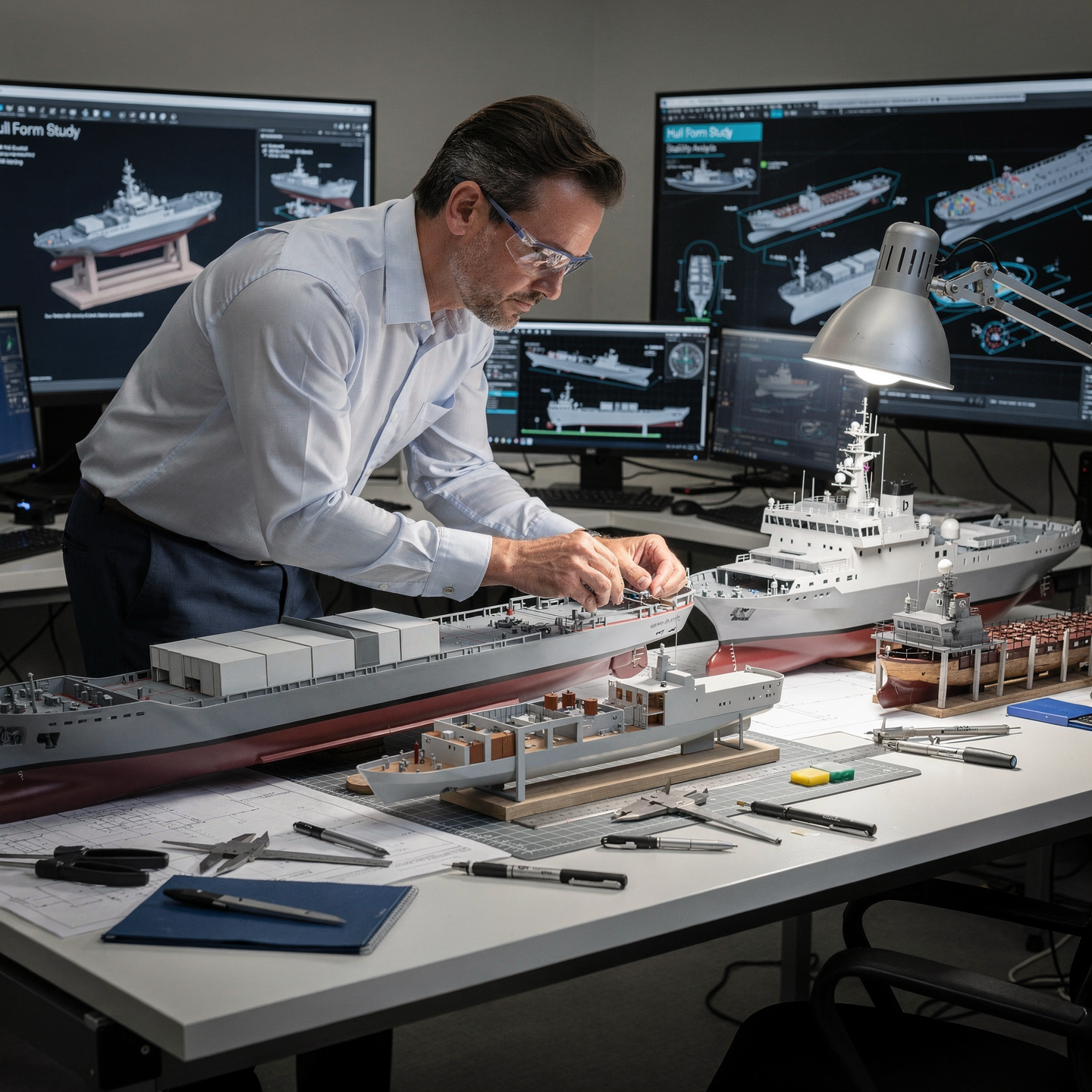
Master’s Degree in Naval Architecture and Ship Design

Why this master’s programme?

The Master’s in Naval Architecture and Ship Design

Provides you with the tools and expert knowledge to lead innovation in the maritime industry. Learn to design, build, and optimize high-performance vessels, from initial conception to final delivery. Master the latest technologies in 3D modeling, hydrodynamic simulation, and structural analysis, and become a highly sought-after professional.

Differentiating Advantages

  • Comprehensive Ship Design: from merchant ships to recreational vessels, covering all stages of the process.
  • Specialized Software: expert use of industry-leading tools such as AutoCAD, Maxsurf, Ansys, and Star-CCM+.
  • Energy Efficiency and Sustainability: design of ships with reduced environmental impact and optimized fuel consumption.
  • Maritime Regulations and Safety: in-depth knowledge of international regulations and best safety practices.
  • Applied Final Project: development of a real-world project with mentorship From experts, preparing your entry into the working world.

Master’s Degree in Naval Architecture and Ship Design

Availability: 1 in stock

Who is it aimed at?

  • Naval engineers seeking advanced specialization in conceptual design, structural optimization, and innovative propulsion systems.
  • Naval architects wishing to deepen their knowledge of computational hydrodynamics (CFD), stability analysis, and international safety regulations.
  • Engineering graduates (mechanical, industrial, naval) aspiring to a high-level career in shipyards, design bureaus, or classification societies.
  • Maritime industry professionals (shipowners, insurers, regulators) requiring expert knowledge in the construction and design of modern vessels.
  • Researchers and academics interested in developing new technologies and methodologies in the field of naval architecture and design.
  • ships.

Academic Flexibility
 Adapted to your needs: online and in-person modalities, practical projects with companies in the sector and personalized tutoring.

Objectives and skills

Develop innovative and efficient naval designs:

Optimize hydrodynamics and stability using advanced simulation software and channel tests, prioritizing the reduction of drag and safety under various navigation conditions.

Managing complex shipbuilding and repair projects:

“Plan, coordinate and control resources (human, material, financial) throughout the project life cycle, minimizing risks and maximizing efficiency.”

Optimizing vessel performance and safety:

“Implement preventive and corrective maintenance routines on propulsion, steering and electrical systems, complying with regulations and safety standards.”

Apply international regulations and standards in the shipbuilding industry:

“Implement the SOLAS Convention and its amendments, ensuring the safety of human life at sea, and keep up-to-date knowledge of the latest IMO regulations.”

Leading multidisciplinary teams on large-scale naval projects:

“Defining roles and responsibilities, managing effective communication and resolving conflicts, fostering collaboration and high performance.”

Evaluate and mitigate the risks associated with the design and operation of ships:

Implement HAZID/HAZOP analysis and emergency response plans, considering human and technological factors.

Study plan – Modules

  1. Fundamental Principles of Naval Propulsion: Conventional and Advanced Systems
  2. Hybrid Electric Propulsion: Configuration, Components, and Energy Efficiency Advantages
  3. Innovations in Marine Internal Combustion Engines: Low-Emission Technologies and Alternative Fuels
  4. Azimuthal Propulsion Systems and Pod Drives: Design, Integration, and Improved Maneuverability
  5. Thermodynamic and Energy Performance Analysis of Naval Propulsion Plants
  6. Energy Recovery and Utilization Technologies: Waste Heat Recovery and Kinetic Energy Recovery Systems
  7. Application of Artificial Intelligence and Predictive Control for Propulsion Optimization
  8. Advanced Materials and Structural Design for Weight Reduction and Improved Energy Efficiency
  9. Impact of Advanced Hydrodynamics and Coatings
  10. Antifriction in reducing energy consumption
  11. International standards and certifications for emissions and energy efficiency in ships
  12. Implementation of Energy Management Systems (EMS) and continuous consumption monitoring
  13. Computational simulation and modeling for predicting propulsion behavior and consumption
  14. Integration strategies for hybrid and renewable systems: batteries, fuel cells, and wind/solar energy
  15. Case studies and technological innovation studies in commercial, military, and research vessels
  16. Cost-benefit analysis and return on investment in efficient and sustainable propulsion technologies
  1. Fundamentals of hydrodynamics applied to naval design: principles of fluid mechanics, flow behavior around hulls, and effects on drag
  2. Advanced theory of hydrodynamic shapes: profile analysis and hull shape optimization to minimize viscous and wave drag
  3. Numerical modeling and CFD (Computational Fluid Dynamics) simulation: configuration, validation, and results analysis for predicting hydrodynamic performance
  4. Drag and propulsion analysis: decomposition of resisting forces, calculation of total drag, and calibration of experimental models with real data
  5. Design and optimization of propulsion systems: selection of propellers, stabilizers, and auxiliary propulsion systems to maximize energy efficiency
  6. Hydrostatic and dynamic stability: evaluation of restoring moments, wave response, and international safety criteria
  7. Advanced structural optimization: introduction to element methods Finite Element Methods (FEM) applied to the structural design of hulls and superstructures

    Innovative construction materials and technologies: structural behavior analysis of composite materials, lightweight alloys, and high-strength steels

    Integrating hydrodynamic design with naval architecture: strategies for balancing performance, safety, and costs in high-performance vessels

    Case studies and applied projects: comprehensive design of high-speed vessels, ferries, and military craft with multidisciplinary optimization

  1. Advanced Fundamentals of Naval Propulsion Systems: Diesel Engines, Gas Turbines, and Hybrid Electric Systems
  2. Propeller Design and Selection: Hydrodynamic Analysis, Geometry and Material Optimization for Cavitation and Noise Reduction
  3. Integration of Renewable Energies in Ships: Solar and Wind Energy Utilization Techniques and Waste Energy Recovery Systems
  4. Next-Generation Propulsion Systems: Waterjet Propulsion, Electric Propulsion, and Integration with Artificial Intelligence for Energy Savings
  5. Computational Analysis and CFD Simulation for Improving Propulsion Performance and Reducing Hydrodynamic Drag
  6. Study and Application of Advanced Materials in Propulsion Components to Increase Efficiency and Durability
  7. Comprehensive Energy Management onboard: Intelligent Monitoring Systems, Automatic Control, and Real-Time Consumption Optimization real
  8. Environmental impact assessment and international regulations for reducing pollutant emissions in high-tech vessels
  9. Implementation of integrated energy systems for reducing the carbon footprint and complying with IMO Tier III standards
  10. Case studies on technological innovations and best practices in propulsion and energy efficiency applied in the contemporary shipbuilding industry
  1. Fundamentals of Naval Stability: Hydrostatic Principles, Stability Curves, and Transverse and Longitudinal Stability Criteria
  2. Advanced Stability Analysis under Operational Conditions: Load Compensation, Damage Effects, International Standards (IMO, SOLAS), and Numerical Methods
  3. Swell Dynamics: Theoretical and Experimental Models for Evaluating Structural and Kinematic Responses to Different Wave Regimes
  4. Hydrodynamic Response Theory: Finite Element Methods, Modal Analysis, and CFD Simulations for Predicting Dynamic Motions and Loads
  5. Composite Materials in Naval Architecture: Mechanical Properties, Durability, Corrosion Resistance, and Advantages over Conventional Materials
  6. Manufacturing and Repair Techniques of Composite Materials Applied to the Hull and Superstructure: Rolling, Infusion, and In-Situ Repair Processes
  7. Systems Integration Onboard: Conceptualization and design of interconnected electrical, hydraulic, and electronic systems for operational optimization

    Automation and control: Real-time monitoring systems, energy management, and communication protocols on modern platforms

    Modular ship construction: Planning of structural modules, assembly, and quality control for reduced manufacturing times and costs

    Technological innovations: Use of BIM digital models, 3D printing, and advanced welding techniques for high-tech vessels

  1. Mathematical foundations of numerical modeling applied to fluid dynamics in marine environments: Navier-Stokes equations, conservation of mass and momentum
  2. Advanced discretization methodologies: finite volumes, finite differences, and finite elements oriented towards CFD simulation of hulls and naval structures
  3. Implementation of complex computational meshes: generation, local refinement, quality filters, and dynamic adaptation for modeling advanced naval geometries
  4. Turbulent modeling and laminar-turbulent transition: selection and calibration of SST, k-ε, LES, and DES models for accurate flow prediction within the vessel envelope
  5. Critical hydrodynamic considerations: fluid-structure interaction, wave effects, viscous and form resistance, and transient regime analysis for maneuvers and extreme conditions
  6. Multidisciplinary coupled simulation: integration of CFD with structural analysis using FEA methods for comprehensive optimization of structural design and strength under dynamic loads

    Implementation of parametric optimization techniques and evolutionary algorithms for minimizing energy consumption and improving the operational stability of smart ships

    Validation and verification of numerical models through comparison with experimental tests in hydrodynamic test tanks and full-scale field data

    Application of state-of-the-art simulation software: ANSYS Fluent, OpenFOAM, STAR-CCM+, and construction of automated workflows for repetitive analysis and iterative design

    Advanced interpretation of CFD results: analysis of pressure fields, shear stress, flow distribution, and hydrodynamic parameters for design decision-making

    Development and design of smart ships: active control systems based on CFD data for real-time optimization of hydrodynamic and structural behavior

    Integration of artificial intelligence and machine learning techniques for

  7. Predict operational behavior and improve energy efficiency and structural safety
  8. Applicable regulations and international naval design standards related to the simulation and validation of smart ships
  9. Detailed case studies: CFD analysis applied to drag reducers, hull optimization, rudder and propeller designs, and evaluation of structures subjected to extreme waves
  10. Innovations and trends in numerical modeling and simulation for the next generation of autonomous and energy-sustainable ships
  1. Fundamentals of Naval Propulsion: Thermodynamic principles applied to conventional and alternative propulsion systems.
  2. Advanced Propulsion Technologies: Integration of high-efficiency diesel engines, gas turbines, electric thrusters, and hybrid systems.
  3. Design and Optimization of Propellers and Azimuth Thrusters: Hydrodynamic analysis and performance under varying operating conditions.
  4. Electric Propulsion Systems and Energy Storage: Next-generation batteries, supercapacitors, and onboard energy management systems.
  5. Computational Modeling and CFD Simulation for improving propulsion performance and reducing vibration and noise.
  6. Energy Efficiency Concepts in Ships: Fuel consumption optimization, waste heat recovery, and use of renewable energy onboard.
  7. Intelligent Monitoring and Control Systems: Implementation SCADA and sensor networks for efficient propulsion and energy consumption management.
  8. Advanced materials for shipbuilding: high-performance composites, lightweight alloys, and specialized coatings for weight reduction and corrosion resistance.

    Impact of advanced materials on reducing hydrodynamic drag and improving structural durability.

    International standards and certifications for implementing innovative propulsion and materials technologies in the naval sector.

  1. Fundamentals of Naval Propulsion: Types of Propulsion Systems, Thermodynamic and Mechanical Principles Applied to Modern Ships
  2. Electric and Hybrid Propulsion: Integration of Electric Motors, Generators, and Energy Storage for Performance Optimization and Emission Reduction
  3. Innovations in Marine Diesel Engines: Advanced Combustion Technologies, Electronic Management, and Pollutant Reduction Systems (SCR, EGR)
  4. Advanced Hydrodynamic Design: CFD (Computational Fluid Dynamics) Analysis for Hull Optimization, Turbulence, Drag, and Energy Efficiency
  5. Application of Advanced Materials: Composites, Lightweight Alloys, and Smart Coatings for Weight Reduction, Increased Durability, and Corrosion Resistance
  6. Azimuth and Pod-Driven Propulsion Systems: Design, Operational Advantages, Maneuverability, and Maintenance Predictive energy analysis

    Integration of renewable energy technologies in ships: incorporation of solar, wind, and fuel cell systems for sustainable vessels

    Energy analysis in ships: energy balance, auxiliary systems, consumption optimization, and savings strategies on maritime routes

    Innovation in control and automation systems for propulsion: communication networks, smart sensors, and remote diagnostics

    Case studies and cutting-edge research: analysis of real-world projects of high-performance vessels with applied disruptive technologies

  1. Architecture of integrated control systems in smart ships: topologies, communication protocols, and international standards.
  2. Advanced instrumentation and sensors: measurement of environmental, structural, and machinery variables for real-time monitoring.
  3. Automation in propulsion and maneuvering systems: engine control, steering, alternative energy sources, and efficient fuel management.
  4. Implementation of SCADA and PLC systems for the remote monitoring and control of critical onboard functions.
  5. Integration of IoT and Big Data technologies for predictive maintenance optimization and downtime reduction.
  6. Autonomous navigation platforms: control algorithms, AI-based decision-making, and contingency response.
  7. Onboard energy management systems: evaluation, modeling, and optimization of consumption in modern naval architectures.
  8. Advanced cybersecurity aspects in automation Naval: Prevention, detection, and response to digital threats in maritime environments.

    International standards and certifications that regulate automated systems in smart ships and their impact on design and operation.

    Case studies and applied simulations: Design, implementation, and diagnostics of integrated systems for the efficient operation of next-generation ships.

  1. Advanced principles of naval propulsion: thermodynamic cycle, engine types, and hybrid systems
  2. Innovations in electric and azimuth propulsion: types, advantages, and application in high-tech vessels
  3. Energy efficiency strategies: consumption analysis, power curve optimization, and load management
  4. Energy recovery systems: integrated energy matrix, waste heat recovery, and onboard storage
  5. Advanced materials for hull and superstructure: carbon fiber composites, high-strength alloys, and nanostructured materials
  6. Application of smart materials and their impact on weight reduction and predictive maintenance
  7. Computational fluid dynamics (CFD) for hydrodynamic optimization: analysis, simulation, and experimental validation
  8. Modular and adaptable design: integration
  9. Disruptive technologies in the shipbuilding process
  10. Sustainable propulsion systems: LNG engines, hydrogen, and next-generation batteries
  11. International standards and certifications related to energy efficiency and pollutant emissions
  12. Environmental impact assessment: life cycle, carbon footprint, and mitigation strategies
  13. Comprehensive optimization through the integration of propulsion, materials, and auxiliary systems for maximum operational efficiency
  14. Case studies and future trends: megayachts, autonomous vessels, and applications in marine renewable energy
  1. Conceptualization and definition of the final project: establishing technical objectives, constraints, and innovation criteria in naval design.
  2. Multidisciplinary integration of onboard systems: advanced hydrodynamics, hybrid propulsion, electrical and electronic systems, as well as naval control and automation.
  3. Computational modeling and simulation: use of specialized CAD/CAE software for structural analysis, computational fluid dynamics (CFD), and evaluation of the vessel’s dynamic response.
  4. Technological innovation applied to naval design: incorporation of advanced composite materials, sustainable propulsion technologies (fuel cells, high-capacity batteries), and systems for reducing pollutant emissions.
  5. Sustainable design and life cycle analysis: environmental assessment, selection of sustainable materials, ballast water treatment, and compliance with international regulations such as IMO Tier III and DCS.
  6. Hydrodynamic Optimization for Energy Efficiency: Techniques to minimize drag, optimize hull shapes, and develop next-generation propulsion systems.
  7. Integration of Navigation and Safety Systems: Implementation of advanced technology for maritime traffic management (AIS, ECDIS), anti-collision systems, and bridge cybersecurity protocols.
  8. Modular Design and Operational Flexibility: Strategies for the adaptable design of interior spaces, cargo, and auxiliary systems that facilitate future modifications and reduce maintenance times.
  9. Advanced Maritime Project Management: Agile methodologies applied to naval development, resource planning, risk management, and quality assurance according to international standards.
  10. Technical Defense and Presentation of the Final Project: Preparation of a technical report, defense before a panel, presentation of results, and justification of the innovative and sustainable impact of the proposed design on the sector naval.

Career prospects

“`html

  • Naval Designer: development of plans, stability and resistance calculations, optimization of shapes.
  • Project Engineer: comprehensive management of naval construction and repair projects, supervision of teams.
  • Naval Consultant: technical advice in areas such as safety, energy efficiency, and regulatory compliance.
  • Naval Inspector/Expert: evaluation of the condition of ships, accident investigation, and issuance of technical reports.
  • Shipyard Technical Office: design, calculation, and supervision of ship construction and repair.
  • Classification Companies: verification of compliance with safety and quality standards.
  • Maritime Administration: management of registries, inspection of ships, and development of regulations.
  • Engineering and Consulting: Design and analysis of naval structures, propulsion systems, and equipment.

    Research and Development: Participation in technological innovation projects in the naval sector.

    Teaching and Research: Training of new professionals and development of knowledge in naval architecture.

    “`

Entry requirements

Academic/professional profile:

Bachelor’s degree in Nautical Science/Maritime Transport, Naval/Marine Engineering or a related qualification; or proven professional experience on the bridge/in operations.

Language proficiency:

Functional Maritime English (SMCP) recommended for simulations and technical materials.

Documentation:

Updated CV, copy of qualification or seaman’s book, national ID/passport, motivation letter.

Technical requirements (for online):

Device with camera/microphone, stable internet connection, monitor ≥ 24” recommended for ECDIS/Radar-ARPA.

Admissions process and dates

Online
application

(form + documents).

Academic review and interview

Admissions decision

Admissions decision

(+ scholarship offer if applicable).

Place reservation

(deposit) and enrolment.

Induction

(access to the virtual campus, calendars, simulator guides).

Scholarships and financial support

  • Innovative Design: Master the latest CAD/CAM/CAE tools and the most advanced techniques in 3D modeling and hydrodynamic simulation.
  • Shipbuilding: Delve into the processes of manufacturing, materials, structures, and ship propulsion and steering systems.
  • Marine Engineering: Learn to optimize the performance, safety, and efficiency of vessels, complying with international regulations (IMO).
  • Real-World Projects: Participate in ship design projects, from conception to construction, applying your knowledge in a real-world environment Professional.
  • Career Opportunities: Become a highly sought-after expert in shipyards, naval engineering firms, technical offices, and research centers.
Boost your career and lead the next generation of ships with our Master’s in Naval Architecture and Ship Design.

Testimonials

Frequently asked questions

Yes. The itinerary includes ECDIS/Radar-ARPA/BRM with harbor, ocean, fog, storm, and SAR scenarios.

Online with live sessions; hybrid option for simulator/practical placements through agreements.

It covers both aspects, including the structural design of the ship, propulsion engineering, hydrodynamics, and other related areas.

Recommended functional SMCP. We offer support materials for standard phraseology.

Yes, with a relevant degree or experience in maritime/port operations. The admissions interview will confirm suitability.

Optional (3–6 months) through Companies & Collaborations and the Alumni Network.

Simulator practice (rubrics), defeat plans, SOPs, checklists, micro-tests and applied TFM.

A degree from Navalis Magna University + operational portfolio (tracks, SOPs, reports and KPIs) useful for audits and employment.

  1. Conceptualization and definition of the final project: establishing technical objectives, constraints, and innovation criteria in naval design.
  2. Multidisciplinary integration of onboard systems: advanced hydrodynamics, hybrid propulsion, electrical and electronic systems, as well as naval control and automation.
  3. Computational modeling and simulation: use of specialized CAD/CAE software for structural analysis, computational fluid dynamics (CFD), and evaluation of the vessel’s dynamic response.
  4. Technological innovation applied to naval design: incorporation of advanced composite materials, sustainable propulsion technologies (fuel cells, high-capacity batteries), and systems for reducing pollutant emissions.
  5. Sustainable design and life cycle analysis: environmental assessment, selection of sustainable materials, ballast water treatment, and compliance with international regulations such as IMO Tier III and DCS.
  6. Hydrodynamic Optimization for Energy Efficiency: Techniques to minimize drag, optimize hull shapes, and develop next-generation propulsion systems.
  7. Integration of Navigation and Safety Systems: Implementation of advanced technology for maritime traffic management (AIS, ECDIS), anti-collision systems, and bridge cybersecurity protocols.
  8. Modular Design and Operational Flexibility: Strategies for the adaptable design of interior spaces, cargo, and auxiliary systems that facilitate future modifications and reduce maintenance times.
  9. Advanced Maritime Project Management: Agile methodologies applied to naval development, resource planning, risk management, and quality assurance according to international standards.
  10. Technical Defense and Presentation of the Final Project: Preparation of a technical report, defense before a panel, presentation of results, and justification of the innovative and sustainable impact of the proposed design on the sector naval.

Request information

  1. Complete the Application Form.

  2. Attach your CV/degree certificate (if you have it to hand).

  3. Indicate your preferred cohort (January/May/September) and whether you would like the hybrid option with simulator sessions.

    An academic advisor will contact you within 24–48 hours to guide you through the admission process, scholarships, and compatibility with your professional schedule.

Please enable JavaScript in your browser to complete this form.
Click or drag a file to this area to upload.

Faculty

0
    0
    Tu carrito
    Tu carrito esta vacíoRegresar a la tienda
    Scroll to Top


