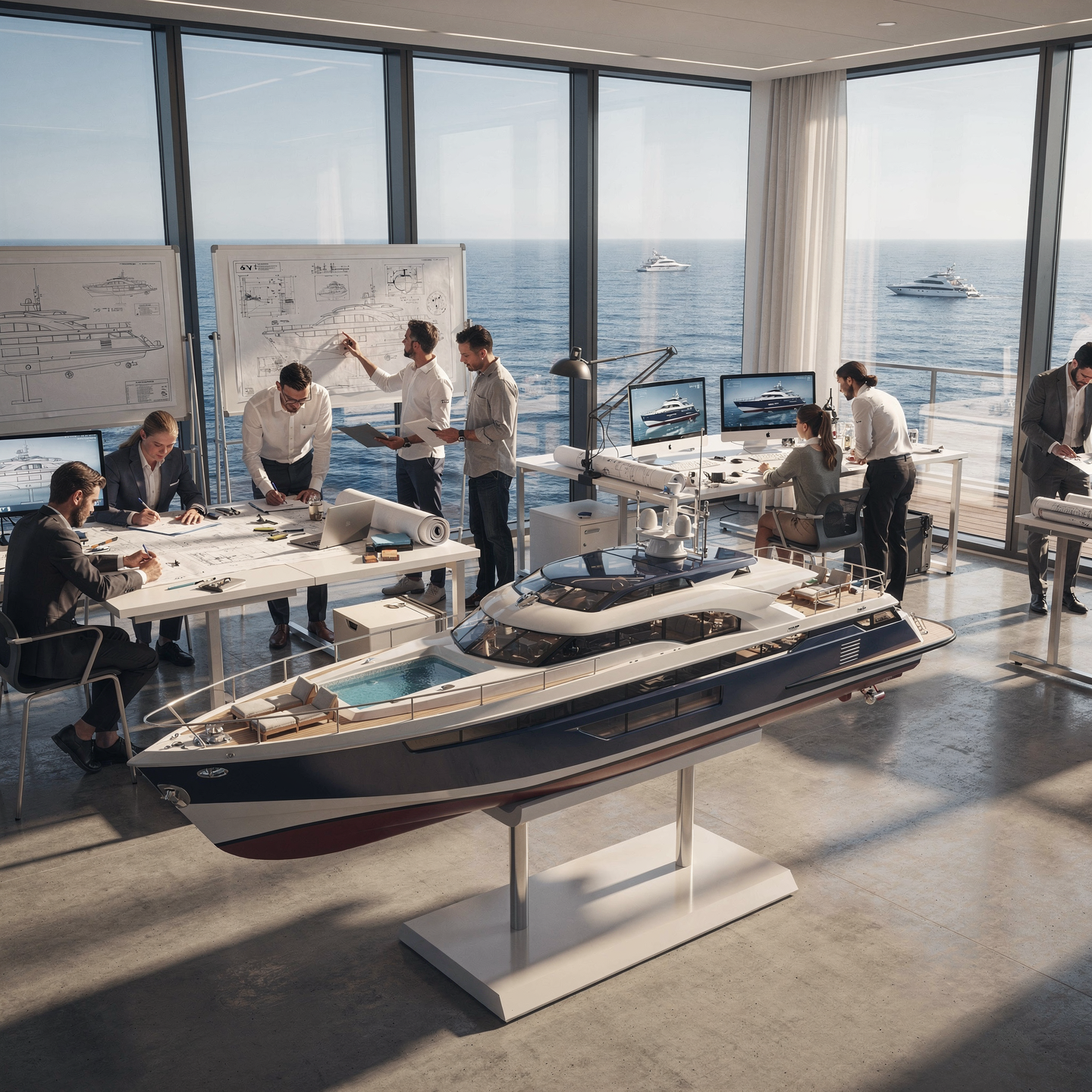
Master’s Degree in Luxury Yacht and Sports Boat Design

Why this master’s programme?

The Master in Luxury Yacht and Sports Vessel Design

This program prepares you to lead the way in creating exclusive, high-performance vessels. Master conceptual design, applied naval engineering, and the latest trends in materials and technologies. Learn to create sophisticated and optimized interior spaces, design fluid and aerodynamic exterior lines, and integrate state-of-the-art propulsion systems. This program equips you with the skills to transform innovative ideas into reality, responding to the demands of a demanding and constantly evolving market.

Differentiating Advantages

  • Practical Approach: Development of real projects using 3D modeling and simulation software.
  • Industry Collaboration: Masterclasses and workshops with renowned shipyards and designers.
  • Global Perspective: Analysis of the international market and current nautical regulations.
  • Specialization: Choose your area of ​​expertise: Interior Design, Exterior Design, or Systems Engineering.
  • Networking: Expand your professional network at industry events and trade shows.

Master’s Degree in Luxury Yacht and Sports Boat Design

Availability: 1 in stock

Who is it aimed at?

  • Naval architects and designers looking to specialize in luxury yachts, exploring new materials, technologies, and design trends.
  • Naval and mechanical engineers wanting to delve deeper into the optimization of propulsion, automation, and onboard comfort systems for high-performance sports boats.
  • Marine professionals (shipyards, brokers, fleet management) aspiring to expand their technical knowledge of the design and construction of luxury yachts and sports boats.
  • Graduates in industrial design, engineering, or architecture seeking a career in the design of luxury yachts and sports boats, acquiring specific skills and a comprehensive view of the process.
  • Entrepreneurs and Investors interested in the luxury yacht and sports boat market who need a solid foundation in design, engineering, and industry trends.

    Flexibility and specialization
    Designed for professionals and recent graduates: online and in-person options, practical projects with leading companies, and an emphasis on innovation and sustainability.

Objectives and skills

Mastering nautical aesthetics and functionality:

“Designing efficient and safe spaces, optimizing equipment layout and the flow of people, considering factors such as ergonomics, maintenance, and accessibility.”

Managing high-end naval design projects:

“Define scope, timeline, and budget, optimizing resources and managing risks with agile methodologies.”

Optimizing efficiency and sustainability in naval design:

Integrate alternative propulsion technologies and advanced hydrodynamic design to reduce fuel consumption and emissions.

Leading innovation in the design of luxury yachts and sports boats:

“Implement user-centered and sustainability-focused design methodologies, integrating innovative materials and technologies to optimize performance, efficiency, and customer experience.”

Integrating advanced technologies into vessel design:

“Optimizing energy efficiency through CFD simulation and the implementation of hybrid propulsion systems.”

Develop customized design solutions for demanding clients:

“Identifying the client’s aesthetic and functional needs, translating them into innovative and viable proposals, optimizing resources and exceeding expectations.”

Study plan – Modules

  1. Advanced Composite Materials: Structural analysis and mechanical properties of carbon fiber, fiberglass, and aramid applied to hulls and superstructures for weight and strength optimization.
  2. Nanotechnology in Coatings: Formulations and applications of paints and varnishes with nanoparticles for improvements in corrosion resistance, self-cleaning, and reduction of hydrodynamic drag.
  3. Lightweight Metals and High-Strength Alloys: Integration of aerospace-grade aluminum, titanium, and magnesium components into structural systems; fatigue analysis; and performance under extreme marine conditions.
  4. Sustainable and Recyclable Materials: Evaluation of biopolymers, natural composites, and recycled materials in the manufacture of interiors and aesthetic components without compromising performance and durability.
  5. Green Propulsion Technologies: Study of hybrid and electric motors, pod propulsion systems, Integration of high-energy-density batteries and thermal management in luxury yachts.

    Renewable energy systems on board: Design and sizing of solar panels, wind turbines, and kinetic energy recovery systems for sustainable autonomy and carbon footprint reduction.

    Optimization of naval design through digital simulation: CAD/CAE tools for water flow analysis, resistance to forward motion, and simulation of advanced material integration, ensuring efficiency and structural safety.

    International standards and certifications: Compliance with ISO, RINA, and ABS standards for materials and technologies for recreational craft and luxury yachts, focusing on environmental and safety certification.

    Innovations in insulation and acoustic systems: Selection and application of technical materials to maximize interior comfort, thermal insulation, and reduction of structural noise in marine environments.

    Case studies and integrated projects: Detailed analysis of next-generation yachts that incorporate advanced materials and sustainable technologies, addressing technical, economic, and design challenges from conceptualization to production.

  1. Theoretical Foundations of Aerodynamics Applied to Luxury Yachts: Analysis of Laminar and Turbulent Flow in Large Structures
  2. Principles of Advanced Hydrodynamics: Hull-Water Interaction, Viscous, Form, and Wave Drag, and Their Impact on Energy Efficiency
  3. Optimized Hull and Superstructure Design: Use of CFD (Computational Fluid Dynamics) for Precise Simulations and 3D Modeling
  4. Materials and Finishes: Selection and Application of Hydrophobic Coatings and Anti-fouling Treatments to Minimize Friction and Drag
  5. Integration of Active and Passive Systems for Improved Hydrodynamic Stability: Gyroscopic Stabilizers, Retractable Fins, and Improvements to the Bow Bulb Shape
  6. Optimization of Propulsive Performance: Analysis of Propellers, Turbines, and Engines to maximize efficiency at different speed regimes
  7. Innovations in superstructure aerodynamics: reducing aerodynamic drag through the intelligent design of decks, masts, and exterior elements
  8. Computerized control and intelligent systems: implementing sensors and algorithms to dynamically optimize the adjustment of hydrodynamic and aerodynamic controls during navigation
  9. Environmental impact assessment using advanced simulation and modeling techniques to minimize the ecological footprint without sacrificing performance
  10. Case studies and real-world project studies: detailed analysis of luxury yachts and high-performance sports boats with a focus on the continuous improvement of aerodynamic and hydrodynamic design
  1. Fundamentals of Advanced Materials: Mechanical, Thermal, and Chemical Properties Applied to Naval Design
  2. Reinforced Polymer Matrix Composites: Carbon, Aramid, and Glass; Manufacturing and application processes in hulls and superstructures
  3. Nanotechnology in materials: Carbon nanotubes, smart coatings, and their impact on weight reduction and performance improvement
  4. High-strength lightweight metals: Aluminum and titanium alloys, heat treatments, and resistance to marine corrosion
  5. Innovation in sustainable coatings: Eco-friendly paints, biocompatible antifouling coatings, and self-cleaning technologies
  6. Introduction to recyclable and biodegradable materials applied to interiors and furnishings of luxury yachts
  7. Green propulsion systems: Integration of hybrid, electric, and fuel cell technologies in sports boats and luxury yachts
  8. Life cycle assessment (LCA) and sustainability analysis in the selection of materials and production processes
  9. International standards and environmental certifications: Compliance with MARPOL, ISO 14000, and sustainable shipbuilding industry standards

    Advanced case studies: yacht prototype design with innovative materials, structural simulations, and energy efficiency results

    Digital tools for design and modeling with advanced materials: CAD/CAM software, FEA simulation, and topology optimization

    Interdisciplinary integration: collaborative work between engineering, naval architecture, and design for high-performance and sustainable solutions

  1. Fundamentals of Naval Architecture applied to Luxury Yachts: hydrodynamics, stability, and behavior in different maritime conditions
  2. Introduction to Computational Fluid Dynamics (CFD): advanced simulation for hull optimization and hydrodynamic efficiency
  3. Hull and Structural Design with Composite Materials: selection of fibers, resins, laminates, and construction techniques for high strength and lightness
  4. Concepts and practical application of Hybrid-Electric Propulsion: engine systems, energy integration, battery management, and emissions reduction
  5. Ergonomics and Habitability in Luxury Yachts: interior design focused on comfort, accessibility, space distribution, and user experience
  6. Integrated Control and Automation Systems: electronic architecture, CAN bus networks, real-time monitoring, and remote management of onboard systems
  7. Advanced Structural Analysis: Finite Element Methods (FEM) for Mechanical integrity and durability under dynamic and static loads

    Performance optimization using CFD applied to propulsion and steering systems: turbulence reduction and improved maneuverability

    Specific international standards and certifications for luxury yachts and sports boats: compliance with SOLAS, ISO, and environmental design rules

    Multidisciplinary integration in systems design: coordination between naval architecture, electrical engineering, industrial design, and user experience

    Technological innovation in materials and systems: nanotechnology, smart coatings, and energy-efficiency solutions for premium vessels

    Advanced project management in naval design: use of integrated CAD/CAM/CAE software, interdepartmental coordination, quality control, and prototyping phases

    3D modeling and virtual simulation for design and ergonomic validation before physical manufacturing

    Environmental impact and sustainability analysis in The construction and operation of luxury yachts: strategies to minimize ecological footprint

    Security systems and electronic redundancy: protocols for critical systems and contingencies in navigation and propulsion

    Real-world case studies and market evolution: design trends, customer preferences, and technological advancements applied to luxury yachts and sports boats

  1. Fundamentals of Conceptual Design: Comprehensive analysis of technical, regulatory, and aesthetic requirements for luxury yachts
  2. Advanced Ideation and Sketching Methodologies: From traditional sketches to digital CAD/CAM tools
  3. Innovation in Hull Design: Hydrodynamic shapes optimized for energy efficiency and dynamic stability
  4. Selection and application of high-strength composite materials and alloys for lightweight and durable construction
  5. Integration of Technological Systems: Hybrid propulsion, automated navigation control, and renewable energy systems
  6. High-End Interior Design: Ergonomics, selection of premium finishes, and optimization of living space
  7. 3D Modeling and Computational Simulations: CFD (Computational Fluid Dynamics) analysis for performance and comfort
  8. Development and Manufacturing of Functional Prototypes: Rapid prototyping, scale models, and tank testing Hydrodynamics

    Alignment with international certifications and maritime regulations: SOLAS, CE, RINA, Lloyd’s Register

    Comprehensive cost assessment and strategic planning for luxury vessel design and construction projects

  1. Advanced Composite Materials: Carbon Fibers, Kevlar, Aramids, and Their Mechanical and Chemical Properties Applied to Naval Design
  2. Manufacturing Technologies: Infusion Molding, Prepreg, and Autoclave Techniques, and Their Impact on the Strength and Weight of Structures
  3. Smart Surfaces and Functional Coatings: Hydrophobic, Anti-fouling, and UV Protection Properties to Optimize Performance and Durability
  4. Integration of Sustainable Materials: Biocomposites, Natural Fibers, and Eco-Friendly Resins Applied to the Construction of Yachts and Sports Watercraft
  5. Comprehensive Design Based on CAE (Computer-Aided Engineering) Analysis: Structural Simulation, Computational Fluid Dynamics (CFD), and Topology Optimization
  6. Innovations in Electric and Hybrid Propulsion Systems: Battery Material Selection, Hull Integration, and Thermal Management
  7. Implementation of Sustainable propulsion technologies: hydrogen, fuel cells, and solar energy in high-performance vessels

    Ergonomics and interior design with advanced materials: thermal and acoustic comfort and wear resistance in demanding marine environments

    Life cycle assessment (LCA) of materials and components: evaluation from extraction to final disposal to minimize the environmental footprint

    International standards and certifications applicable to materials and processes in luxury and sports shipbuilding: ISO, RINA, Lloyd’s Register, and CE

    Integration of sensors and intelligent systems in design: materials with sensory capabilities for real-time structural monitoring and predictive maintenance

    Innovation in finishes and aesthetics: use of nanotechnology for visual effects, color durability, and resistance to surface impacts

    Advanced structural resistance studies: fatigue, impact, and corrosion in composite and metallic materials applied to high-performance vessels

  8. Trends in functional and sustainable design: analysis of success stories and practical application for creating exceptional and responsible vessels
  9. Multidisciplinary integration methodologies: coordination between engineering, design, production, and sustainability for bespoke and ultra-customized projects
  1. Characterization and classification of advanced materials: composites, lightweight alloys, nanostructured materials, and high-performance polymers applied in the naval industry
  2. Analysis of critical mechanical and chemical properties for luxury yachts and sports boats: resistance to fatigue, corrosion, abrasion, and aging in extreme marine environments
  3. Innovations in structural design: integration of advanced materials for optimization of weight, stiffness, and durability without compromising aesthetics and comfort
  4. Sustainable technologies applied to design and construction: onboard renewable energy, hybrid and electric propulsion systems, and strategies for reducing pollutant emissions
  5. Comprehensive design methodology: advanced CAD/CAM modeling, CFD (Computational Fluid Dynamics) simulation for hydrodynamic optimization, and FEA (Finite Element Analysis) structural analysis
  6. Implementation of modular and sustainable architecture: design to facilitate maintenance, technological upgrades, and Eco-efficient dismantling

    Innovative onboard energy management systems: integration of next-generation batteries, energy recovery and storage systems

    Optimization of ergonomics and well-being in interior spaces through smart materials and sensory technologies for maximum comfort and functionality

    International standards and environmental certifications applied to the selection of materials and manufacturing processes for high-end vessels

    Case studies and practical applications: detailed analysis of luxury yachts and sports boats that implement advanced materials and sustainable technologies to achieve high performance and exclusivity

  1. Advanced electronic systems architecture in luxury yachts: components, communication protocols, and network topologies
  2. Integration of automation systems: centralized control, CAN bus, marine Ethernet, and NMEA 2000/0183 protocols
  3. Onboard energy management systems: monitoring, intelligent distribution, and optimization of energy consumption
  4. Automation of propulsion and maneuvering systems: hybrid control, dynamic power management, and state-of-the-art joystick systems
  5. Implementation of advanced electronic navigation systems: integration of radar, AIS, differential GPS, gyroscopes, and environmental sensors
  6. Electronic security and surveillance systems: biometric access control, thermal cameras, intrusion detection, and integrated alarms
  7. Optimization of the sailing experience: automation of climate control systems, intelligent lighting, and advanced onboard entertainment management
  8. Protocols Communication and redundancy in critical systems: design for high availability and fault tolerance

    Implementation of predictive diagnostics and remote maintenance systems through IoT and Big Data

    Cybersecurity applied to luxury yachts: protection strategies, threat detection, and international regulations

    International regulations and standards in electronic integration and marine automation: compliance with SOLAS, IEC 61162, and IMO standards

    Installation, testing, and validation procedures for integrated systems: methodologies to guarantee performance and reliability

    Management of electronic integration projects: planning, multidisciplinary coordination, and quality control

    Case studies of advanced integration: analysis of real projects and innovative solutions applied to yachts and recreational vessels

    Future trends in automation and marine electronics: artificial intelligence, 5G networks, and autonomous navigation systems

  1. Fundamentals of advanced composite materials: carbon fibers, aramids, and epoxy resins for marine applications
  2. Manufacturing processes and lamination techniques in luxury yachts: autoclave, vacuum infusion, and pultrusion
  3. Innovation in lightweight and strong metal alloys: marine aluminum, titanium, and specific reinforced alloys for sports boats
  4. Mechanical properties and durability of materials under extreme marine conditions: corrosion, fatigue, and erosion
  5. Integration of nanotechnology to improve strength, self-cleaning, and hydrodynamic profile in hull and superstructure surfaces
  6. Sustainable technologies in naval design: hybrid propulsion systems, onboard renewable energy, and efficient resource management
  7. Advanced methodologies for optimizing structural weight without compromising safety or comfort
  8. Digital simulation and CAD/CAM modeling for the Comprehensive design: structural analysis, computational fluid dynamics (CFD), and hydrodynamic performance optimization

    Development of intelligent, real-time material control and monitoring systems for predictive maintenance and continuous improvement

    International standards and specific certifications for materials and technologies applied to luxury and sports vessels

    Case studies: practical implementation and results in current projects for exclusive yachts and high-performance vessels

    Ecological design and environmental impact: selection of biodegradable and recyclable materials, emissions reduction, and circular economy strategies

    Innovation in highly durable, aesthetic finishes and coatings: techniques applied to maximize aesthetics without sacrificing functionality

    Harmonious integration of materials, technological systems, and ergonomics for excellence in onboard user experience

    Future perspectives on the evolution of materials and disruptive technologies for luxury and extreme performance cruising

  1. Advanced analysis of technical and aesthetic requirements in the design of luxury yachts and sports boats, considering global trends and the expectations of exclusive clients
  2. Comprehensive methodology for conceptual and detailed design, including the use of CAD/CAM software specialized in the high-end naval industry
  3. Application of composite materials and innovative technologies in marine construction: carbon fiber, advanced resins, and nanotechnology for structural and weight optimization
  4. Integration of high-efficiency, low-emission propulsion systems: state-of-the-art hybrid, electric, and conventional engines
  5. Advanced hydrodynamic and aerodynamic design: analysis using CFD (Computational Fluid Dynamics) to maximize performance and stability in extreme conditions
  6. Ergonomics and onboard luxury: planning of interior and exterior spaces with a focus on comfort, functionality, and smart technology for the end user
  7. Implementation of navigation, communication, and security systems Integrated electronics, compliant with international regulations and industry standards.

    Structural evaluation and resistance to marine impact using FEA (Finite Element Analysis) simulations to guarantee exceptional safety and durability.

    Optimization of weight and distribution to improve performance and maneuverability in high-performance sports boats.

    Development of virtual prototypes and physical scale models, wind tunnel and tank testing to model behavior and validate designs.

    Advanced management of multidisciplinary projects in ship design: coordination between engineering, design, production, and marketing teams.

    Detailed technical documentation for homologation, certification, and construction: plans, technical reports, specifications, and operating manuals.

    Study of international regulations and specific certifications for luxury yachts and sports boats: ISO, RINA, Lloyd’s Register, and other reference entities.

    Sustainable planning and efficient environmental management systems throughout the life cycle. of the vessel, with an assessment of its ecological impact and mitigation strategies.

    Presentation and professional defense of the final project with simulations in virtual environments and scale models, including critical analysis and proposals for future innovation.

Career prospects

“`html

  • Luxury Yacht Designer: Concept creation, exterior and interior design, development of plans and specifications.
  • Specialized Naval Architect: Calculation of stability, hydrodynamics, performance optimization, and safety.
  • Nautical Systems Engineer: Design and integration of electrical, electronic, propulsion, and automation systems on yachts.
  • Shipbuilding Project Manager: Planning, coordination, and supervision of yacht construction, ensuring quality and deadlines.
  • Yacht Design Consultant: Advising shipyards and clients on the selection of materials, technologies, and design.
  • Yacht Interior Designer: Creation of luxurious and functional onboard spaces, selection of furniture and finishes.
  • Yacht Marketing and Sales Specialist: Promotion and marketing of luxury yachts, representing shipyards or brokers.
  • Research and Development: Innovation in materials, technologies, and designs for the yacht and recreational boating industry.

“`

Entry requirements

Academic/professional profile:

Bachelor’s degree in Nautical Science/Maritime Transport, Naval/Marine Engineering or a related qualification; or proven professional experience on the bridge/in operations.

Language proficiency:

Functional Maritime English (SMCP) recommended for simulations and technical materials.

Documentation:

Updated CV, copy of qualification or seaman’s book, national ID/passport, motivation letter.

Technical requirements (for online):

Device with camera/microphone, stable internet connection, monitor ≥ 24” recommended for ECDIS/Radar-ARPA.

Admissions process and dates

Online
application

(form + documents).

Academic review and interview

Admissions decision

Admissions decision

(+ scholarship offer if applicable).

Place reservation

(deposit) and enrolment.

Induction

(access to the virtual campus, calendars, simulator guides).

Scholarships and financial support

  • Comprehensive Design: Master the creation of yachts and boats, from initial concept to detailed engineering and material selection.
  • Advanced Software: Learn to use industry-leading CAD/CAM tools for 3D design, simulation, and hydrodynamic optimization.
  • Luxury Trends: Explore the latest trends in interior design, comfort, and personalization to meet the demands of the high-end market.
  • Shipbuilding: Delve into construction processes, regulations, and international standards to ensure quality and safety.
  • Professional Internships: Access internships at renowned shipyards and design studios to apply your knowledge and build your network. Contacts.
Boost your career in the nautical sector with a master’s degree that prepares you to lead innovative and exclusive projects.

Testimonials

Frequently asked questions

Yes. The itinerary includes ECDIS/Radar-ARPA/BRM with harbor, ocean, fog, storm, and SAR scenarios.

Online with live sessions; hybrid option for simulator/practical placements through agreements.

In both, encompassing both the aesthetic and technical design of luxury yachts and sports boats.

Recommended functional SMCP. We offer support materials for standard phraseology.

Yes, with a relevant degree or experience in maritime/port operations. The admissions interview will confirm suitability.

Optional (3–6 months) through Companies & Collaborations and the Alumni Network.

Simulator practice (rubrics), defeat plans, SOPs, checklists, micro-tests and applied TFM.

A degree from Navalis Magna University + operational portfolio (tracks, SOPs, reports and KPIs) useful for audits and employment.

  1. Advanced analysis of technical and aesthetic requirements in the design of luxury yachts and sports boats, considering global trends and the expectations of exclusive clients
  2. Comprehensive methodology for conceptual and detailed design, including the use of CAD/CAM software specialized in the high-end naval industry
  3. Application of composite materials and innovative technologies in marine construction: carbon fiber, advanced resins, and nanotechnology for structural and weight optimization
  4. Integration of high-efficiency, low-emission propulsion systems: state-of-the-art hybrid, electric, and conventional engines
  5. Advanced hydrodynamic and aerodynamic design: analysis using CFD (Computational Fluid Dynamics) to maximize performance and stability in extreme conditions
  6. Ergonomics and onboard luxury: planning of interior and exterior spaces with a focus on comfort, functionality, and smart technology for the end user
  7. Implementation of navigation, communication, and security systems Integrated electronics, compliant with international regulations and industry standards.

    Structural evaluation and resistance to marine impact using FEA (Finite Element Analysis) simulations to guarantee exceptional safety and durability.

    Optimization of weight and distribution to improve performance and maneuverability in high-performance sports boats.

    Development of virtual prototypes and physical scale models, wind tunnel and tank testing to model behavior and validate designs.

    Advanced management of multidisciplinary projects in ship design: coordination between engineering, design, production, and marketing teams.

    Detailed technical documentation for homologation, certification, and construction: plans, technical reports, specifications, and operating manuals.

    Study of international regulations and specific certifications for luxury yachts and sports boats: ISO, RINA, Lloyd’s Register, and other reference entities.

    Sustainable planning and efficient environmental management systems throughout the life cycle. of the vessel, with an assessment of its ecological impact and mitigation strategies.

    Presentation and professional defense of the final project with simulations in virtual environments and scale models, including critical analysis and proposals for future innovation.

Request information

  1. Complete the Application Form.

  2. Attach your CV/degree certificate (if you have it to hand).

  3. Indicate your preferred cohort (January/May/September) and whether you would like the hybrid option with simulator sessions.

    An academic advisor will contact you within 24–48 hours to guide you through the admission process, scholarships, and compatibility with your professional schedule.

Please enable JavaScript in your browser to complete this form.
Click or drag a file to this area to upload.

Faculty

0
    0
    Tu carrito
    Tu carrito esta vacíoRegresar a la tienda
    Scroll to Top


