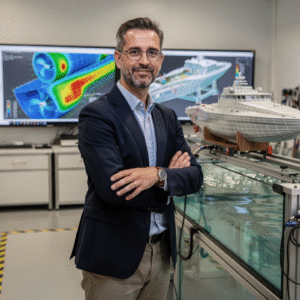
Master’s Degree in Nautical Art and Naval Painting
Why this master’s programme?
The Master’s Degree in Nautical Art and Naval Painting
Offers an in-depth immersion in the artistic representation of the maritime world, combining traditional and contemporary painting techniques with a rigorous study of naval and maritime history. Develop your ability to capture the light, movement, and atmosphere of the sea, mastering the particularities of shipbuilding and navigation through practice and research. Learn from renowned masters and create an impressive portfolio that will propel you in the art market.
Differentiating Advantages
- Practical Approach: Intensive workshops in drawing, oil painting, and watercolor, focusing on nautical themes.
- Specialized Knowledge: History of navigation, shipbuilding, and maritime symbology.
- Personal Style Development: Individualized mentoring to enhance your unique artistic voice.
- Professional Networking: Contact with galleries, museums, and collectors specializing in nautical art.
- Final Exhibition: Opportunity to exhibit your work in a high-visibility group show.
- Modality: Online
- Level: Masters
- Hours: 1600 H
- Start date:
Availability: 1 in stock
Who is it aimed at?
- Visual artists and painters seeking specialization and differentiation in the niche of maritime art.
- Art historians and exhibition curators interested in delving deeper into naval iconography and symbolism.
- Collectors and gallery owners wishing to expand their knowledge of naval painting and its market.
- Merchant and military officers with an artistic vocation seeking to integrate their maritime experience into their creative work.
- Graphic designers and illustrators aspiring to master naval representation techniques for editorial and audiovisual projects.
Creative Flexibility
Suitable for professionals and students: method adaptable online learning, personalized tutorials, and support in developing your portfolio.
Objectives and skills

To artistically represent navigation and maritime heritage:
Interpret traditional and contemporary nautical iconography, adapting it to different visual representation techniques.

Mastering the techniques of naval painting and their application on various supports:
Understand color theory, perspective, and composition by experimenting with acrylics, oils, and watercolors on canvas, paper, and wood.

To investigate and document the history and evolution of nautical art:
With academic rigor, analyzing primary and secondary sources, to understand its influence on maritime culture.

Understanding nautical terminology and its correct application in artistic representation:
Interpret nautical charts and plans, identifying symbols, bearings and references with pictorial precision.

Develop your own style in the representation of maritime scenes:
Mastering atmospheric perspective and color theory to evoke the immensity and dynamism of the sea, creating visually striking and emotionally resonant compositions.

Restore and conserve nautical works of art, applying specialized techniques:
Thoroughly document the initial state, original materials and techniques of the work to ensure a respectful and reversible intervention.
Study plan – Modules
- Introduction to advanced marine painting techniques: history, evolution, and contemporary applications in vessel preservation and restoration
- Specialized materials and pigments for marine painting: chemical properties, corrosion resistance, durability, and selection according to vessel type
- Surface preparation and pretreatments: stripping techniques, polishing, application of anti-corrosive primers, and state-of-the-art marine sealants
- Paint application methodologies: immersion painting systems, electrostatic spraying, roller, and brush, with emphasis on uniformity and a professional finish
- Aesthetic and functional design of vessels: principles of composition, nautical colorimetry, historical symbolism, and adaptations to corporate and cultural identity
- Incorporation of traditional and modern materials in naval design: use of fine woods, treated metals, synthetic compounds, and mixed media techniques in ornamentation
- Conservation and management of Maritime artistic heritage: criteria for authenticity, cataloging, preventive maintenance, and ethical restoration of emblematic pieces and vessels.
International regulations and certifications related to naval painting and heritage conservation: SOLAS, MARPOL, applicable ISO standards, and maritime museography standards.
Application of digital technologies in naval artistic design and documentation: 3D modeling, laser scanning, and augmented reality for project planning and monitoring.
Case studies and critical analysis of restorations and emblematic artistic projects in naval painting and the design of classic and contemporary vessels.
Comprehensive management of maritime artistic projects: planning, quality control, logistics, budgeting, and interdisciplinary coordination among naval architects, artists, and conservators.
Practical workshop and development of an advanced painting project for a vessel: from conceptualization and technical design to preparation and execution under expert supervision.
- Chemical composition and mechanical properties of traditional materials in historical naval painting: woods, metals, and natural fibers
- Innovations in resins and polymers: thermoset and thermoplastic polymers applied in restoration and their compatibility with original substrates
- Application of nanotechnology in protective coatings: nanomaterials for corrosion resistance, hydrophobicity, and self-cleaning
- Development and use of functional pigments: anticorrosive, photosensitive, and bioactive pigments in the conservation of naval works
- Advanced surface preparation techniques: mechanical, chemical, and laser methods to ensure the adhesion and durability of new finishes
- Evaluation and selection of compatible materials for restoration: criteria of reversibility, stability, and accelerated aging
- Methodologies for structural consolidation without altering historical integrity: use of structural adhesives and invisible internal reinforcements
- Case studies in restoration with innovative materials: analysis of long-term results and evaluation of side effects
- International regulations and applicable technical standards in the conservation and restoration of naval heritage
- Protocols for post-restoration monitoring and preventive maintenance: integrated sensors and control of environmental parameters
- Fundamentals of the chemical and structural composition of materials used in historical nautical art: woods, pigments, varnishes, and metals
- Advanced analysis and diagnosis of deterioration: non-invasive imaging, spectroscopy, and chromatography techniques applied to naval conservation
- Innovations in next-generation resins and adhesives: properties, compatibility, and application in the restoration of marine works
- Advanced techniques for the consolidation and stabilization of pictorial and sculptural supports in marine environments
- Methodologies for the evaluation and mitigation of corrosion in metallic elements present in naval structures and ornamentation
- Application of nanotechnology and biotechnology in protection and restoration treatments: principles, efficacy, and case studies
- Development and use of sustainable and ecological materials in restoration: innovative formulations and international standards
- Chromatic reintegration and retouching techniques using photocatalytic pigments and spectral methods to guarantee authenticity and durability
- Preventive conservation protocols in museum spaces and nautical exhibitions: environmental control, lighting, and microclimate management
- Technical documentation and advanced digitization for the preservation and dissemination of nautical works: 3D capture, augmented reality, and specialized archiving systems
- Fundamentals of corrosion in historical naval structures: electrochemical mechanisms, corrosion typologies, and conditioning environmental factors
- Selection and formulation of anti-corrosion coatings: epoxies, polyurethanes, phenolics, and advanced barrier systems for marine protection in aggressive environments
- Pre-application evaluation and diagnosis: surface analysis, profilometry, blast cleaning, and preparation criteria according to ISO 8501 and SSPC standards
- Advanced marine painting application techniques: traditional methods and modern electrostatic, airless, and thermoplastic equipment for an optimal and durable finish
- Chromatic and aesthetic control in the restoration of historical vessels: color management, special pigmentation, and historical accuracy in the reproduction of maritime palettes
- International and national regulations applicable to marine painting on heritage vessels: MARPOL, IMO guidelines, ASTM standards, and ISO guidelines Specifics
- Strategic planning in the technical management of naval painting projects: schedules, resource management, risk assessment, and industrial safety protocols
- Non-destructive testing (NDT) in naval coatings: ultrasound, acoustic emission, infrared thermography, and advanced visual inspection techniques to ensure integrity and adhesion
- Durability monitoring and predictive maintenance: wear analysis, periodic inspections, and adaptive protection systems to preserve structural and aesthetic integrity
- Technological innovations and sustainability in naval painting: eco-friendly coatings, nanotechnology, biofouling control, and reducing the environmental impact of ship preservation
- Fundamentals of corrosion in marine environments: electrochemical mechanisms, types of corrosion, and accelerating factors
- Selection and characteristics of materials for marine surfaces: metals, alloys, treated woods, and advanced composites
- Advanced surface condition diagnosis: non-destructive techniques, microstructural analysis, and predictive evaluation
- Principles and techniques of specialized cleaning: physical, chemical, and abrasive methods safe for marine materials
- Formulation and application of anti-corrosive and protective coatings: epoxies, polyurethanes, vinyls, and multi-layer systems
- Preventive treatments against biofouling: biocides, antifouling coatings, and ecological strategies
- Technical procedures for the restoration of artistic and decorative finishes in marine paintwork
- International regulations and technical standards for conservation in marine environments: ISO, ASTM, IMO, and Environmental Regulations
Comprehensive Management of Naval Conservation Projects: Planning, Execution, Quality Control, and Thorough Documentation
Monitoring and Predictive Maintenance: Sensors, IoT Technologies, and Remote Management Systems for Harsh Environments
Environmental Impact and Occupational Safety Protocols: Waste Management, Chemicals, and Personnel Protection in Maritime Operations
Technological Innovations in Nautical Restoration: Use of Drones, Underwater Robotics, and Nanostructured Materials
Case Studies and Critical Analysis of Historical and Contemporary Interventions in Naval Heritage
Development of Technical and Artistic Skills for the Interpretation and Faithful Reproduction of Classic Naval Finishes
Multidisciplinary Integration: Collaboration Among Naval Engineers, Conservators, Marine Biologists, and Visual Artists in Complex Restoration Projects
- Advanced Foundations of Nautical Restoration: Historical Analysis, Cultural Context, and Technical Assessment of Nautical Works
- Traditional and Contemporary Materials in Naval Painting: Identification, Physicochemical Properties, and Compatibility in Restorations
- Modern Diagnostic Techniques: Spectroscopy, X-ray Fluorescence (XRF) Analysis, Chromatography, and Electron Microscopy Applied to Naval Works
- Structural Stabilization and Preventive Conservation Procedures: Assessment of Damage from Environmental and Biological Factors in Historical Vessels
- Innovation in Cleaning Techniques: From Mechanical to Advanced Chemical Methods, Risks, and Criteria for Their Application on Delicate Surfaces
- Chromatic Recovery and Reintegration: Use of Synthetic and Natural Pigments, Layering and Repainting Techniques Respecting Authenticity
- Application of Technical Resins and Polymers for Long-Term Protection
Timeframe: Analysis of durability, resistance to salinity and biocorrosive agents
Digital preservation and 3D documentation: Laser scanning, modeling, and file generation for virtual conservation and collaborative study
International standards and best practices in conservation: Intervention criteria, professional ethics, and specific regulations for naval heritage
Comprehensive planning of restoration projects: Multidisciplinary management, timelines, budgets, and impact assessment in the museum or exhibition environment
- Advanced Foundations of Conservation in Nautical Heritage: Physicochemical and Biological Principles Applied to Historical Materials
- Comprehensive Diagnosis and Analysis of Naval Elements: Non-Invasive Inspection Techniques, Spectroscopy, and Digital Microscopy
- Traditional Materials and Advanced Composites in Historical Vessels: Properties, Degradation, and Behavior in Marine Environments
- Innovations in Restoration Techniques: Application of Nanomaterials and Smart Polymers for Surface Stabilization and Protection
- Specialized Protocols for the Structural Consolidation of Wood and Metal in Nautical Art: Selection Criteria and Applied Methods
- Integrated Management of Restoration Projects: Planning, Execution, Monitoring, and Evaluation with Digital and BIM Tools Adapted to Naval Heritage
- Environmental Control in Conservation Spaces: Microclimate Systems, Monitoring of Atmospheric Variables, and Mitigation Strategies for Degrading Agents
- Technical documentation and historical record: methodologies for generating databases, technical reports, and digital conservation of heritage
- International regulations and ethical standards in nautical conservation: analysis of ICOMOS, UNESCO, and specific legislation on maritime heritage
- Advanced case studies: restoration of emblematic vessels, technical challenges, and applied interdisciplinary solutions
- Fundamental principles of nautical heritage conservation: definition, objectives, and comprehensive scope
- Traditional materials in shipbuilding: wood, metals, fibers, and finishes; Analysis of degradation and specific pathologies
Scientific techniques applied to restoration: non-invasive methods, spectroscopic analysis, thermography, and dendrochronological dating
Diagnosis and structural evaluation: advanced visual inspection, ultrasound, endoscopy, and microcrack monitoring
Artistic design for restoration: integration of aesthetic and functional criteria in recovery projects
Chemical and biological treatments for conservation: protection against wood-boring insects, fungi, corrosion, and marine pollutants
Application of traditional and modern naval painting techniques: enamels, varnishes, and airbrushing techniques for the protection and enhancement of heritage vessels
Intervention protocols: rigorous planning, photographic documentation, and creation of detailed technical reports
Applicable international and national regulations: MARPOL, UNESCO, ICCROM recommendations, museographic standards, and Sectoral legislation
Technological innovations in nautical conservation: use of drones, 3D modeling software, digital printing, and augmented reality in restoration projects
Comprehensive management of nautical heritage: multidisciplinary coordination, financing, cultural dissemination, and professional ethics
Case studies and critical analysis of emblematic maritime restoration projects worldwide
Advanced laboratory and workshop practices: sample preparation, coating application, and environmental durability testing
Post-intervention evaluation and maintenance: monitoring, preventive conservation, and periodic review protocols
Scientific and artistic communication: writing technical reports, creating outreach materials, and presenting at specialized forums
- Innovations in composite materials: carbon fibers, Kevlar, and nanotechnology applied to shipbuilding and restoration
- Physicochemical properties of epoxy, polyester, and vinyl ester resins: appropriate selection for protection and durability in marine environments
- Advanced application techniques: electrostatic spraying, 3D printing, and layer heterogeneity to optimize coating adhesion and resistance
- Non-destructive diagnostics in nautical works: ultrasound, infrared thermography, and electromagnetic excitation analysis for detecting structural flaws
- Scientific procedures for the preventive conservation of maritime heritage: environmental control, stabilization, and surface treatment
- Digital restoration: 3D modeling and augmented reality for planning and visualizing interventions on historic vessels and pieces of naval art
- Innovation in pigments and painting techniques
Marine painting: a study of organic and inorganic pigments resistant to salt water and sunlight.
Integration of traditional and contemporary techniques in naval painting: oil enamels, marine lacquers, and advanced multilayer systems for high-resistance finishes.
Sustainable management in conservation processes: environmentally friendly materials and low-impact processes in naval restoration and maintenance.
International regulations and technical standards applied to the conservation and design of vessels and nautical art: ISO, ICOMOS, and contemporary maritime specifications.
- Introduction to the comprehensive project: objectives, scope, and methodology applied in the conservation and restoration of historical nautical works
- Technical and documentary analysis of naval pieces and structures: identification of materials, construction techniques, and common pathologies
- Advanced deterioration diagnosis: evaluation of environmental, biological, and anthropogenic factors affecting the conservation of maritime works
- Restoration and conservation methodologies: selection of compatible techniques and materials for specific treatments of paintings and naval structures
- Artistic design applied to nautical heritage: historical reinterpretation and creation of original works with technical and aesthetic rigor
- Comprehensive project planning: sequencing of phases, resource management, schedules, and budgets for multidisciplinary interventions
- National and international regulations in maritime heritage conservation: standards, certifications, and best professional practices
- Documentation and graphic recording techniques: scientific photography, 3D scanning and preparation of detailed technical reports
Application of digital technologies in restoration: use of CAD software, virtual modeling, and simulations for project planning and monitoring
Critical evaluation and justification of the approach adopted: analysis of results, obstacles encountered, and proposals for improvement for future interventions
Career prospects
“`html
- Professional Nautical Artist: Creation and sale of original works in galleries and on commission, specializing in maritime themes.
- Naval Illustrator: Production of technical and artistic illustrations for books, magazines, advertising, and ship design.
- Curator of Nautical Art Exhibitions: Research, selection, and installation of exhibitions in museums, galleries, and maritime-related events.
- Conservator-Restorer of Naval Art: Preservation and restoration of paintings, sculptures, and objects related to maritime history.
- Naval Set Designer for Film and Theater: Creation of realistic sets and maritime environments for audiovisual productions.
- Teacher and Researcher in Nautical Art: Teaching at universities and schools Art research on the history and techniques of naval painting.
Art consultant for nautical projects: Consulting for shipowners, shipyards, and museums on the selection and acquisition of naval artworks.
Cultural manager in maritime institutions: Development and promotion of cultural programs related to naval art and history.
“`
Entry requirements

Academic/professional profile:
Bachelor’s degree in Nautical Science/Maritime Transport, Naval/Marine Engineering or a related qualification; or proven professional experience on the bridge/in operations.

Language proficiency:
Functional Maritime English (SMCP) recommended for simulations and technical materials.

Documentation:
Updated CV, copy of qualification or seaman’s book, national ID/passport, motivation letter.

Technical requirements (for online):
Device with camera/microphone, stable internet connection, monitor ≥ 24” recommended for ECDIS/Radar-ARPA.
Admissions process and dates

Online
application
(form + documents).

Academic review and interview
Admissions decision

Admissions decision
(+ scholarship offer if applicable).

Place reservation
(deposit) and enrolment.

Induction
(access to the virtual campus, calendars, simulator guides).
Scholarships and financial support
- Mastery of Painting Techniques: Learn to capture the beauty and dynamism of the sea through the most advanced techniques in naval painting.
- Knowledge of Nautical Art: Immerse yourself in the history and fundamentals of nautical art, from its origins to contemporary trends.
- Development of a Personal Style: Find your artistic voice through experimentation and guidance from experts in the field.
- Creation of a Professional Portfolio: Build a collection of works that will open doors for you in the world of nautical art.
- Visibility and Networking: Connect with artists, galleries, and industry professionals to boost your career. Career.
Testimonials
This master’s program provided me with the tools and knowledge necessary to take my passion for art and the sea to a professional level. I mastered classical naval painting techniques, the representation of ship anatomy, and the realistic and precise recreation of maritime scenes. Thanks to the practical training and historical approach of the program, I can now undertake highly complex commissions, and my work has been exhibited in specialized galleries, opening doors to a promising future in this field.
The Master’s in Naval Art & Literature provided me with the critical tools and historical perspective necessary to publish my essay on the representation of the Battle of Trafalgar in Romantic painting, which was awarded by the Naval History Society and subsequently published in a prestigious academic journal.
This Master’s degree provided me with the technical skills and historical knowledge necessary to excel in naval painting. I can now accurately depict the anatomy of ships, the movement of water, and the marine atmosphere, which has allowed me to secure commissions from private collectors and maritime museums.
This master’s degree provided me with the technical skills and historical knowledge necessary to achieve my dream: restoring the family sailboat. I not only master marine painting and finishing techniques, but I also understand the evolution of ship design and construction, which allowed me to approach the restoration with precision and respect for its history. The result is a vessel that is not only beautiful, but also true to its era—an achievement that fills me with pride.
Frequently asked questions
Yes, this master’s degree combines the theory of nautical art with the practice of naval painting.
Yes. The itinerary includes ECDIS/Radar-ARPA/BRM with harbor, ocean, fog, storm, and SAR scenarios.
Online with live sessions; hybrid option for simulator/practical placements through agreements.
Recommended functional SMCP. We offer support materials for standard phraseology.
Yes, with a relevant degree or experience in maritime/port operations. The admissions interview will confirm suitability.
Optional (3–6 months) through Companies & Collaborations and the Alumni Network.
Simulator practice (rubrics), defeat plans, SOPs, checklists, micro-tests and applied TFM.
A degree from Navalis Magna University + operational portfolio (tracks, SOPs, reports and KPIs) useful for audits and employment.
- Introduction to the comprehensive project: objectives, scope, and methodology applied in the conservation and restoration of historical nautical works
- Technical and documentary analysis of naval pieces and structures: identification of materials, construction techniques, and common pathologies
- Advanced deterioration diagnosis: evaluation of environmental, biological, and anthropogenic factors affecting the conservation of maritime works
- Restoration and conservation methodologies: selection of compatible techniques and materials for specific treatments of paintings and naval structures
- Artistic design applied to nautical heritage: historical reinterpretation and creation of original works with technical and aesthetic rigor
- Comprehensive project planning: sequencing of phases, resource management, schedules, and budgets for multidisciplinary interventions
- National and international regulations in maritime heritage conservation: standards, certifications, and best professional practices
- Documentation and graphic recording techniques: scientific photography, 3D scanning and preparation of detailed technical reports
Application of digital technologies in restoration: use of CAD software, virtual modeling, and simulations for project planning and monitoring
Critical evaluation and justification of the approach adopted: analysis of results, obstacles encountered, and proposals for improvement for future interventions
Request information
Complete the Application Form.
Attach your CV/degree certificate (if you have it to hand).
Indicate your preferred cohort (January/May/September) and whether you would like the hybrid option with simulator sessions.
An academic advisor will contact you within 24–48 hours to guide you through the admission process, scholarships, and compatibility with your professional schedule.
Faculty
Eng. Tomás Riera
Full Professor
Eng. Tomás Riera
Full Professor
Eng. Sofía Marquina
Full Professor
Eng. Sofía Marquina
Full Professor
Eng. Javier Bañuls
Full Professor
Eng. Javier Bañuls
Full Professor
Dr. Nuria Llobregat
Full Professor
Dr. Nuria Llobregat
Full Professor
Dr. Pau Ferrer
Full Professor
Dr. Pau Ferrer
Full Professor
Cap. Javier Abaroa (MCA)
Full Professor
Cap. Javier Abaroa (MCA)
Full Professor