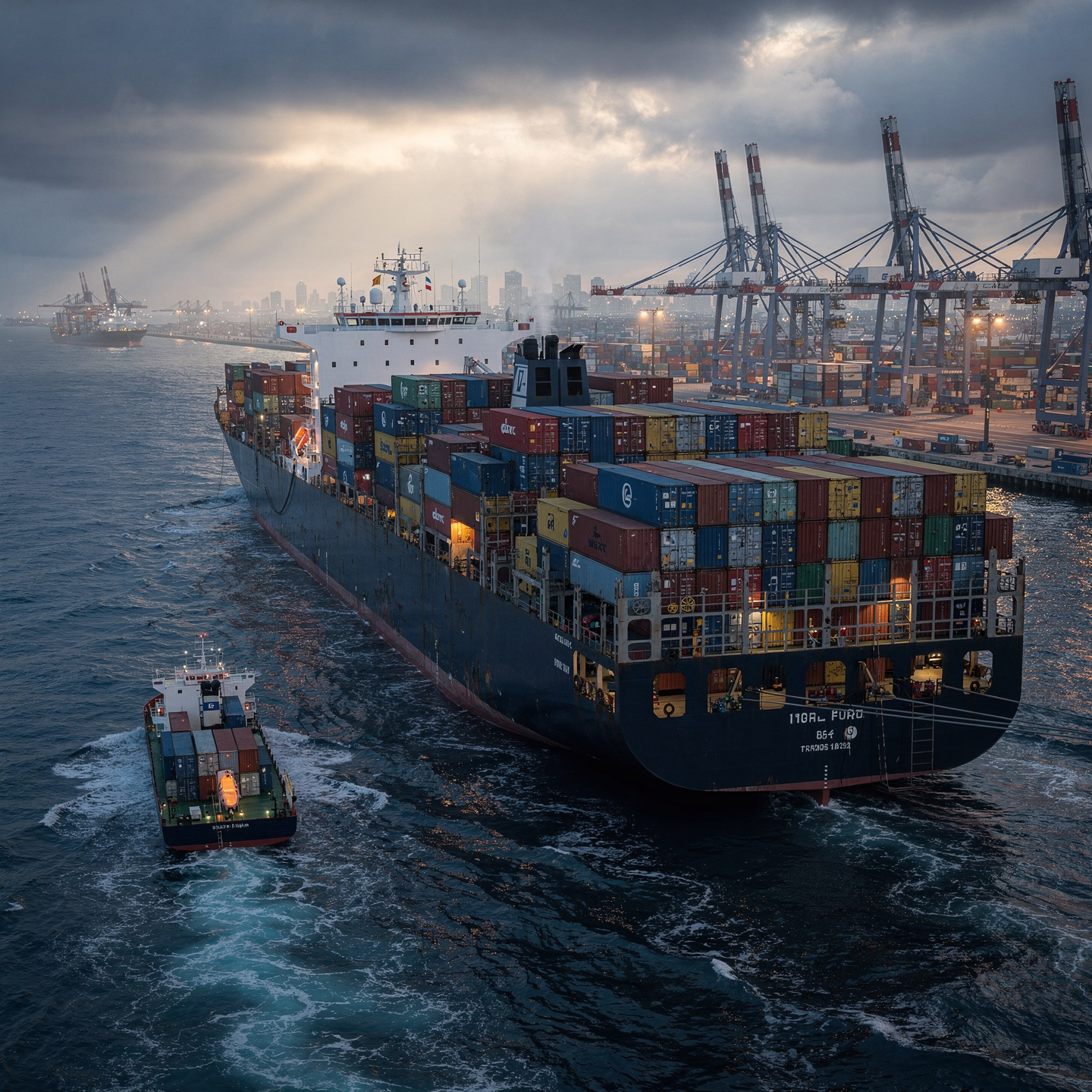
Master’s Degree in Maritime Transport and International Trade

Why this master’s programme?

The Master’s Degree in Maritime Transport and International Trade

This program provides you with a comprehensive and specialized overview of the sector, from supply chain management to international maritime law. Learn to optimize maritime transport operations, master international trade strategies, and understand the key legal and financial aspects. This program prepares you to lead in a globalized and dynamic market.

Differentiating Advantages

  • Practical Approach: real-world case studies and business simulations.
  • Expert Faculty: active professionals in the maritime and logistics sector.
  • Networking: opportunities to connect with leading companies in the sector.
  • Specialization: delve into areas such as port management, marine insurance, and trade finance.
  • Flexibility: online format adapted to your professional needs.

Master’s Degree in Maritime Transport and International Trade

Availability: 1 in stock

Who is it aimed at?

  • International trade professionals seeking to specialize in the maritime logistics chain and optimize their import/export operations.
  • Graduates in Business Administration, Economics, Law, or Engineering interested in a career in the maritime sector, with a focus on management, finance, and international law.
  • Executives and middle managers of shipping companies, ports, terminals, and logistics operators who wish to deepen their understanding of maritime transport strategies and their impact on global trade.
  • Consultants and business advisors seeking to expand their expertise in the field of international maritime trade and offer specialized solutions to their clients.
  • Entrepreneurs with a vision to develop innovative businesses in the maritime transport and trade sector International.

Training Flexibility
 Designed for professionals and recent graduates: adaptable online methodology, real-world case studies, and networking with industry experts at an international level.

Objectives and skills

Efficiently manage port logistics operations:

Optimize resource planning (human, equipment, spaces) to ensure efficient load flows and meet response times required by customers and regulations.

Assessing and mitigating risks in the global maritime supply chain:

Implement and audit contingency plans for disruptions, cyberattacks, and geopolitical events, diversifying suppliers and routes.

Develop strategies for internationalization and maritime trade expansion:

“Analyze potential markets, adapting the value proposition and logistics to the specific characteristics of each region.”

Optimizing economic and financial management in maritime companies:

“Implement financing and foreign exchange risk hedging strategies tailored to the maritime sector.”

Leading multicultural teams in international maritime environments:

Implement effective intercultural communication strategies, adapting leadership to diverse cultural norms and work styles to optimize team performance and cohesion.

Mastering international maritime law and its practical application:

Manage conventions (SOLAS, MARPOL, STCW) and port regulations, interpreting legal implications in the daily operation of the ship.

Study plan – Modules

  1. Fundamentals of International Logistics: Definition, Scope, and Evolution in the Global Maritime Context
  2. Design and Optimization of Maritime Supply Chains: Identification of Critical Nodes and Integrated Strategies
  3. Inventory and Warehousing Management in Ports and Logistics Hubs: Advanced Techniques and Applied Technology
  4. Multimodal Maritime Transport: Integration of Modes, Interoperability, and Associated Documentation (B/L, CMR, AWB)
  5. Port Operations: Planning, Coordination, and Effective Control for Supply Chain Efficiency
  6. Technological Tools in Maritime Logistics: TMS, WMS, IoT, and Blockchain for Traceability and Security
  7. Impact of International Regulations on Maritime Logistics: INCOTERMS, International Conventions, Customs, and Compliance
  8. Risk Management in the Supply Chain: Threat Assessment, Vulnerability Analysis, and Business Continuity operations
  9. Sustainability and green logistics: strategies for emissions reduction and eco-efficiency in maritime transport
  10. Key performance indicators (KPIs) and benchmarking in the integrated management of maritime supply chains
  1. Introduction to Advanced Maritime Traffic Management: Fundamentals, Evolution, and Current Trends in International Trade
  2. Digital Platforms for Port Management: Integrations of Intelligent Systems, IoT, and Big Data Applied to Port Operations and Logistics
  3. Predictive Models of Maritime Traffic Flow: Congestion Analysis, Waiting Times, and Route Optimization Using Artificial Intelligence
  4. Smart Port Management: Design, Implementation, and Maintenance of Connected Infrastructures to Increase Efficiency and Sustainability
  5. International Regulations and Standards Applicable to Port Management and Maritime Traffic in Globalized Environments
  6. Decision Support Systems (DSS) in the Planning and Operational Control of Maritime Traffic and Port Activities
  7. Optimizing the Use of Port Spaces Through Advanced Simulation Techniques and Real-Time Analysis
  8. Intermodal Integration: Strategic coordination of maritime transport with rail, road, and air networks for efficient global trade
  9. Security and Risk Management in Smart Ports: Cybersecurity, Physical Protection, and Emergency Response Protocols
  10. Case Studies and Benchmarking Studies: Analysis of leading ports in smart port management and lessons applicable to emerging environments
  1. Technological evolution in maritime transport: from mechanization to comprehensive digitalization.
  2. Digital transformation in the maritime logistics chain: integration of IoT, Big Data, and advanced analytics for operational optimization.
  3. Implementation of Transport Management Systems (TMS) and their interoperability with port and customs systems.
  4. Automation and robotics in port terminals: smart cranes, autonomous vehicles, and collaborative robotics.
  5. Blockchain applied to international trade and maritime transport: traceability, transparency, and reduction of document fraud.
  6. Digital platforms and marketplaces for efficient maritime transport contracting and cargo management.
  7. Advanced satellite tracking and location systems (AIS, GNSS, RFID) for real-time monitoring of assets and goods.
  8. Digital twins and predictive simulation in maritime operations planning and management.
  9. and logistics.

    Artificial intelligence and machine learning for demand forecasting, route optimization, and predictive fleet maintenance.

    Cybersecurity in maritime infrastructure: threats, vulnerabilities, and sector-specific protection protocols.

    Regulatory and normative impact on maritime digitalization: compliance with international norms and technological standards.

    Cultural transformation and digital training for human capital in maritime transport and international logistics.

    Case studies and analyses of successful implementation of disruptive technologies in shipping lines and logistics operators.

    Future perspectives: emerging trends in technological innovation and their disruptive potential in global maritime trade.

  1. Introduction to financing in maritime trade: financial structures, sources of capital, marine leasing, and economic feasibility analysis
  2. Marine insurance instruments and mechanisms: coverage policies, insurable risks, exclusions, and specific clauses
  3. Analysis of Charter Clauses: types (time, voyage, demise), rights and obligations of the parties, standard clauses (BARECON, GENCON), and contract negotiation
  4. Liability and coverage under Protection and Indemnity (P&I) policies: typical claims, protection limits, and coordination with traditional insurance
  5. Incoterms 2020 applied to maritime transport: legal interpretation, practical application, transferred risks, and associated costs according to the mode of transport
  6. Letters of credit in trade finance International: Types (import and export), operation, required documents, and bank guarantees

    Comprehensive risk management in maritime trade: identification, assessment, and mitigation of financial, operational, and legal risks

    Advanced risk management and monitoring tools: qualitative and quantitative analysis, use of combined insurance and reinsurance

    International regulations and their impact on maritime contracting: CMI, UNCITRAL, Rotterdam Convention, and IMO Resolutions

    Case studies and simulations of charter party agreements, insurance negotiation, and issuance of letters of credit for complex maritime operations

  1. International regulatory framework: SOLAS, MARPOL, MLC, and FAL Conventions and their impact on maritime operations
  2. Compliance in maritime transport: management systems, ISO 28000 and 9001 certifications, and compliance audits
  3. Customs and trade regulations: INCOTERMS 2020, international sales contracts, and tariff policies
  4. ISPS system and port security: threat assessment, security plans, and incident response protocols
  5. Legal framework on civil liability and maritime insurance: P&I policies, cargo clauses, and international claims
  6. Applicable environmental regulations: emissions control, waste management, and sustainable practices in maritime transport
  7. Regulation and control of the global logistics chain: digitalization, traceability, and compliance in international trade
  8. Oversight and control by government authorities: Port inspections, Port State Control, and administrative sanctions

    Risk management and fraud prevention in maritime trade: threat analysis, money laundering, and bribery in the sector

    Comprehensive maritime security: surveillance systems, operational cybersecurity, and protocols for preventing illicit acts

    Regulatory updates and trends: adapting to international regulatory changes and future legal challenges

    Corporate ethics and international compliance standards: promoting a culture of compliance and corporate social responsibility

  1. Fundamentals of the maritime logistics chain: essential components, key players, and their interrelation in global trade
  2. Advanced strategies for integrated supply chain management: inventory optimization, demand planning, and reduction of operating costs
  3. Technological innovations applied to maritime transport: IoT, digitalization, and big data for real-time monitoring and continuous improvement
  4. Automation and intelligent systems in ports and terminals: automated cranes, blockchain, and smart contracts to streamline procedures and ensure transparency
  5. Quantitative models and predictive analytics for optimizing maritime routes and selecting multimodal transport modes
  6. Current international regulations and standards: SOLAS, MARPOL, FAL, and their impact on maritime logistics operations
  7. Compliance and risk management in the face of inspections by port authorities, customs, and maritime security agencies
  8. Green logistics and sustainability in maritime transport: strategies for reducing emissions and complying with environmental standards
  9. Efficient management of the chain of custody and cargo documentation: bills of lading, manifests, and the use of electronic technologies
  10. Practical case studies of logistics optimization: analysis of real-world studies and simulations to maximize operational and competitive efficiency in international trade
  1. Fundamentals and evolution of maritime logistics: integration of the global supply chain and its impact on international trade
  2. Strategic supply chain analysis: design, optimization, and management of logistics networks in port and maritime environments
  3. Advanced planning and control models: forecasting, demand, inventories, multimodal transport, and efficient distribution
  4. Warehouse and port terminal management: automation technologies, WMS systems, security, and operational resilience
  5. Reverse logistics in maritime transport: processes, challenges, and sustainable solutions for material recovery and reuse
  6. Applicable international regulations: INCOTERMS 2020, IMO conventions, customs regulations, and their effect on logistics management
  7. Disruptive technologies applied to maritime logistics: IoT, blockchain, big data, and traceability and interoperability systems
  8. Risk management and business continuity in maritime supply chains: assessment, mitigation, and advanced contingency plans

    Route optimization and fleet planning: mathematical algorithms, specialized software, and negotiation with logistics operators

    Key performance indicators (KPIs) and benchmarking for continuous improvement: quantitative and qualitative analysis in maritime logistics management

    Integrating sustainability into the logistics chain: strategies to minimize the carbon footprint and comply with international environmental standards

    Case studies and best practices: situational analysis of successful supply chains in global maritime trade, with an emphasis on innovation and efficiency

    Inter-institutional coordination and collaborative management: roles of public and private actors in international maritime logistics optimization

    Advanced real-time monitoring tools: TOS systems, satellite tracking, and predictive analytics in cargo and resource management

    Impact of e-commerce and digitalization in maritime logistics strategies: adaptation to technological and market changes

  1. Fundamentals of Strategic Management in International Maritime Trade: Conceptual Framework and Operational Objectives
  2. Design and Optimization of Global Maritime Supply Chains: Route Analysis, Multimodal Modes, and Logistics Hubs
  3. International Regulations: IMO Conventions, Bilateral and Multilateral Agreements, and Their Impact on Operations
  4. Customs Regulations and International Trade Documentation: Bills of Lading, Certificates of Origin, and Customs Compliance
  5. Risk Management in Maritime Transport: Threat Analysis, Marine Insurance, and Operational Mitigation
  6. Sustainability and Environment: MARPOL Compliance, Emission Reduction Strategies, and Waste Management
  7. Technological Innovation Applied to Strategic Management: Digitalization, Blockchain, and Real-Time Tracking
  8. Financial and Economic Management of Maritime Trade: Operating Costs, Port Fees, and Profitability analysis

    Strategic port operations: intermodal coordination, waiting times, and dwell time optimization

    Governance and decision-making models in international maritime trade: stakeholder roles and strategic leadership

  1. International regulatory framework in maritime transport: IMO, United Nations, and WTO conventions and protocols
  2. Customs and tax regulations applicable to international maritime trade operations
  3. Security in the maritime logistics chain: strategies for risk and threat prevention
  4. Compliance in maritime trade: implementation of anti-corruption and anti-money laundering systems and policies
  5. Risk management in maritime transport: analysis, evaluation, and mitigation of operational and legal contingencies
  6. ISPS regulations and their application in ports and vessels to ensure protection against illicit acts
  7. Compliance audits and security certifications: processes, standards, and best practices
  8. Legal and contractual liability in maritime transport: analysis of Incoterms clauses, charter parties, and marine insurance
  9. Monitoring and control technologies to ensure real-time regulatory compliance

    Advanced document management: traceability, certifications, and reports for optimal international logistics coordination

  1. Diagnosis and analysis of the international maritime logistics chain: evaluation of critical points and bottlenecks in the integrated management of cargo transport
  2. Technological innovation applied to maritime transport: digitalization, blockchain, IoT, and intelligent systems for operational optimization and traceability
  3. Advanced sustainability models in maritime trade: life cycle assessment, emissions reduction, and application of clean energy in ships and terminals
  4. Efficient management of alternative fuels and environmental regulatory compliance: use of LNG, green ammonia, and biofuels in merchant fleets
  5. Risk analysis and mitigation tools in the maritime supply chain: resilience, business continuity, and planning for climate and geopolitical contingencies
  6. International policies and multilateral agreements for sustainability in maritime transport: IMO, MARPOL, BWM, and their implications for operational management
  7. Innovation
  8. Sustainable port infrastructure: eco-design, energy efficiency, and circular economies in maritime cargo terminals
  9. Design and application of sustainable performance indicators (ESG KPIs) in the integrated management of maritime freight transport
  10. Strategic analysis for the implementation of integrated quality, safety, and environmental management systems in international shipping companies
  11. Presentation and defense of the final project: innovative proposal for the sustainable optimization of a real-world case of international maritime freight transport with a complete technical, economic, and environmental analysis

Career prospects

“`html

  • International Trade Operations Manager: Coordination of shipments, customs documentation, and comprehensive logistics.
  • Maritime Market Analyst: Research on trends, risk and opportunity assessment in the shipping sector.
  • Maritime Logistics Consultant: Supply chain optimization, transportation strategy design, and cost reduction.
  • Marine Insurance Specialist: Risk assessment, claims management, and insurance policy advice.
  • Maritime Business Development Manager: Identification of new markets, service expansion, and customer acquisition.
  • Port Manager: Planning and coordination of port activities, resource optimization, and efficiency improvement.
  • Expert in Maritime Law: Legal advice on transport contracts, maritime litigation, and international regulations.

    Customs Broker: Processing of customs documentation, regulatory compliance, and tax management.

    “`

Entry requirements

Academic/professional profile:

Bachelor’s degree in Nautical Science/Maritime Transport, Naval/Marine Engineering or a related qualification; or proven professional experience on the bridge/in operations.

Language proficiency:

Functional Maritime English (SMCP) recommended for simulations and technical materials.

Documentation:

Updated CV, copy of qualification or seaman’s book, national ID/passport, motivation letter.

Technical requirements (for online):

Device with camera/microphone, stable internet connection, monitor ≥ 24” recommended for ECDIS/Radar-ARPA.

Admissions process and dates

Online
application

(form + documents).

Academic review and interview

Admissions decision

Admissions decision

(+ scholarship offer if applicable).

Place reservation

(deposit) and enrolment.

Induction

(access to the virtual campus, calendars, simulator guides).

Scholarships and financial support

  • Strategic Analysis: Master the global trends in maritime transport and their impact on international trade.
  • Port Management: Learn to optimize operations and strategies in state-of-the-art port terminals.
  • Maritime Law: Delve into international legislation and dispute resolution in the maritime-commercial sphere.
  • Maritime Finance: Acquire the tools for the economic evaluation of projects and risk management in the sector.
  • Global Networking: Connect with industry leaders and experts through events and projects collaborative.
Boost your career with a comprehensive view of maritime transport and international trade.

Testimonials

Frequently asked questions

Yes. The itinerary includes ECDIS/Radar-ARPA/BRM with harbor, ocean, fog, storm, and SAR scenarios.

Online with live sessions; hybrid option for simulator/practical placements through agreements.

It focuses primarily on maritime transport, although it may include aspects of other modes of transport related to the international logistics chain.

Recommended functional SMCP. We offer support materials for standard phraseology.

Yes, with a relevant degree or experience in maritime/port operations. The admissions interview will confirm suitability.

Optional (3–6 months) through Companies & Collaborations and the Alumni Network.

Simulator practice (rubrics), defeat plans, SOPs, checklists, micro-tests and applied TFM.

A degree from Navalis Magna University + operational portfolio (tracks, SOPs, reports and KPIs) useful for audits and employment.

  1. Diagnosis and analysis of the international maritime logistics chain: evaluation of critical points and bottlenecks in the integrated management of cargo transport
  2. Technological innovation applied to maritime transport: digitalization, blockchain, IoT, and intelligent systems for operational optimization and traceability
  3. Advanced sustainability models in maritime trade: life cycle assessment, emissions reduction, and application of clean energy in ships and terminals
  4. Efficient management of alternative fuels and environmental regulatory compliance: use of LNG, green ammonia, and biofuels in merchant fleets
  5. Risk analysis and mitigation tools in the maritime supply chain: resilience, business continuity, and planning for climate and geopolitical contingencies
  6. International policies and multilateral agreements for sustainability in maritime transport: IMO, MARPOL, BWM, and their implications for operational management
  7. Innovation
  8. Sustainable port infrastructure: eco-design, energy efficiency, and circular economies in maritime cargo terminals
  9. Design and application of sustainable performance indicators (ESG KPIs) in the integrated management of maritime freight transport
  10. Strategic analysis for the implementation of integrated quality, safety, and environmental management systems in international shipping companies
  11. Presentation and defense of the final project: innovative proposal for the sustainable optimization of a real-world case of international maritime freight transport with a complete technical, economic, and environmental analysis

Request information

  1. Complete the Application Form.

  2. Attach your CV/degree certificate (if you have it to hand).

  3. Indicate your preferred cohort (January/May/September) and whether you would like the hybrid option with simulator sessions.

    An academic advisor will contact you within 24–48 hours to guide you through the admission process, scholarships, and compatibility with your professional schedule.

Please enable JavaScript in your browser to complete this form.
Click or drag a file to this area to upload.

Faculty

0
    0
    Tu carrito
    Tu carrito esta vacíoRegresar a la tienda
    Scroll to Top


