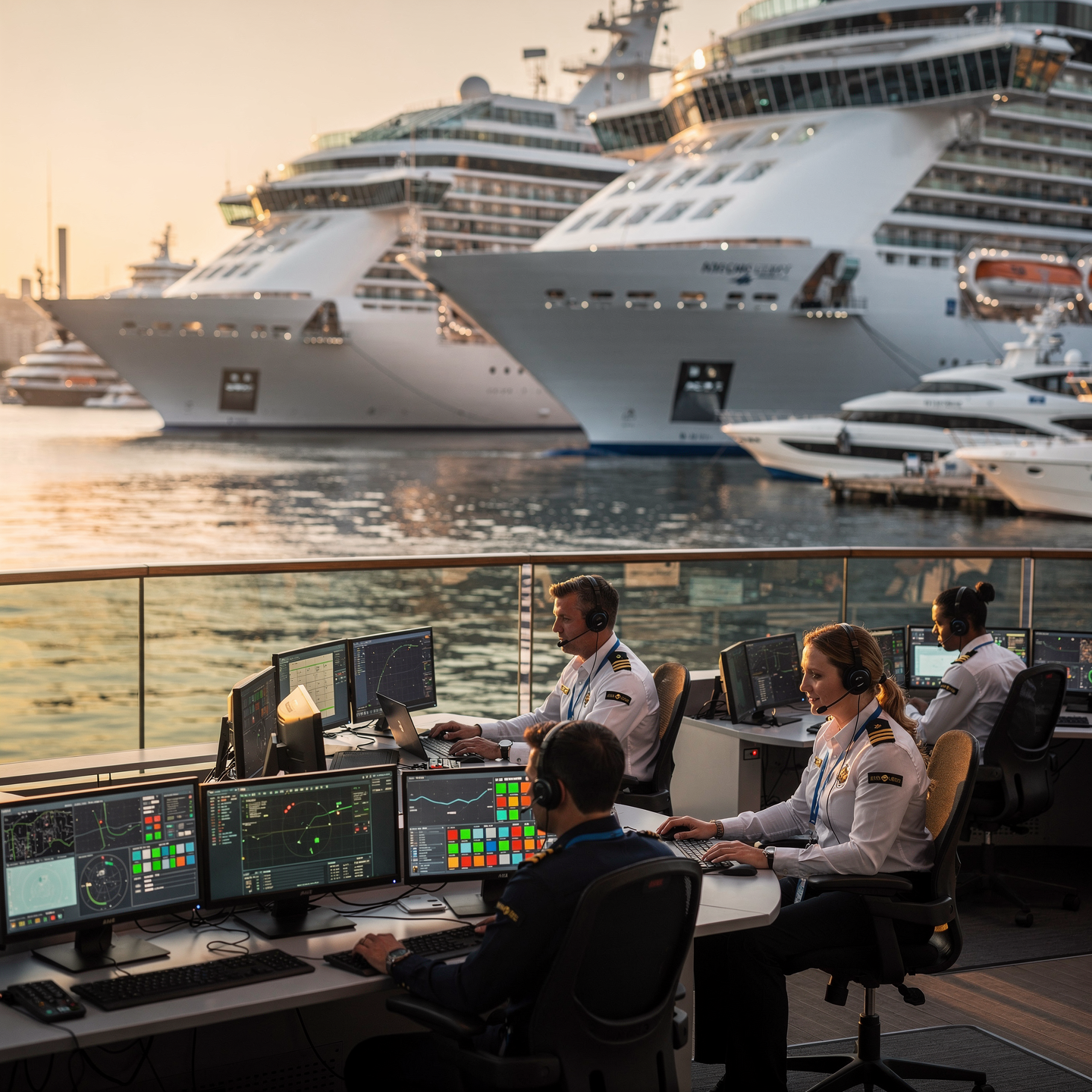
Master’s Degree in Cruise and Megayacht Operations Management

Why this master’s programme?

The Master’s in Cruise and Megayacht Operations Management

Offers comprehensive training for professionals aspiring to leadership positions in the luxury yachting industry. This program provides you with the skills and knowledge necessary for the planning, coordination, and supervision of complex operations both onboard and ashore. Master the logistics of exclusive events, the management of high-end services, and compliance with the most demanding international regulations. Learn to optimize the customer experience and maximize profitability in this constantly growing sector.

Differentiating Advantages

  • Multicultural Crew Management: Leadership, intercultural communication, and conflict resolution.
  • VIP Customer Experience: Designing personalized experiences, managing expectations, and resolving complaints.
  • Safety and Regulatory Compliance: International maritime regulations, onboard safety, and risk management.
  • Sustainability in the Nautical Industry: Sustainable practices, waste management, and energy efficiency.
  • Professional Internships: Opportunity to apply the knowledge acquired in leading companies in the sector.

Master’s Degree in Cruise and Megayacht Operations Management

Availability: 1 in stock

Who is it aimed at?

  • Tourism professionals who wish to specialize in the comprehensive management of cruise ships and megayachts, from planning to operational execution.
  • Graduates in Tourism, Business Administration, or related fields seeking a career boost in a booming and highly demanded market.
  • Department managers in shipping companies and travel agencies who aspire to optimize the efficiency and profitability of cruise and megayacht operations.
  • Forward-thinking entrepreneurs who want to develop new, innovative, and sustainable business models in the cruise and megayacht sector.
  • Cruise and megayacht service providers interested in Understanding the needs and expectations of the sector to offer value-added solutions.

    Flexibility and networking

    Program designed for working professionals: online format with live classes, access to a global community of experts, and opportunities for professional internships at leading companies.

Objectives and skills

Optimize the operational efficiency and profitability of cruise ships and megayachts.

Implement dynamic Revenue Management strategies, optimizing prices and occupancy in real time, considering factors such as seasonality, events and specific demand to maximize revenue.

Implement and monitor security and emergency protocols.

Effectively manage crisis situations (fires, breakdowns, man overboard) by following standardized procedures and coordinating response teams.

Manage the vessel's technical and logistical maintenance in its entirety:

Ensure the operability, safety and efficiency of the vessel, optimizing resources and complying with regulations.

Lead and motivate multidisciplinary teams on board and on land.

Promote effective communication and professional development by setting clear goals and providing constructive feedback.

Master the maritime regulations and legislation applicable to the cruise and megayacht industry:

Comply with maritime safety and security regulations (ISM/ISPS), implementing procedures and managing internal/external audits to ensure regulatory compliance.

Develop marketing and sales strategies for cruise ships and megayachts:

Segment target markets, design attractive packages, and use online/offline channels to maximize sales and occupancy.

Study plan – Modules

  1. Fundamentals and structure of the logistics chain in maritime operations: definition, key components, and particularities of cruise ships and megayachts
  2. Strategic supply chain design: demand analysis, supplier segmentation, and inventory optimization for maritime scenarios
  3. Advanced purchasing and procurement management: selection criteria, supplier evaluation, contracts, and specific negotiations for luxury and technical supplies
  4. Reverse logistics and waste management: international regulations, sustainable policies, and their impact on the operations and reputation of cruise ships and megayachts
  5. Demand planning and control: predictive tools, forecasting models, and trend analysis of onboard consumption
  6. Smart storage: IoT technologies and WMS systems applied to the management of limited space and specific storage conditions on vessels
  7. Multimodal transport and distribution: maritime route management, associated land transport, and intermodal coordination for meeting deadlines and quality standards
  8. Supply chain optimization through Big Data and advanced analytics: key indicators, dashboards, and real-time data-driven decision-making
  9. Integrated management systems (ERP/SCM): implementation, integration, and customization for complex operations on cruise ships and megayachts
  10. Risk management and regulatory compliance: supply chain security, contingency protocols, and alignment with IMO, ISO standards, and local regulations
  11. Innovation and sustainability in the supply chain: renewable energy, emissions reduction, and efficient resource use in maritime operations
  12. Talent management and leadership in maritime logistics: training, critical roles, and an organizational culture focused on operational excellence
  13. Case studies and benchmarking studies: in-depth analysis of real-world operations on cruise ship and megayacht fleets, identification of best practices and opportunities for improvement
  14. Digital integration with suppliers and customers: collaborative platforms, blockchain, and traceability to ensure transparency and efficiency
  15. Logistics performance evaluation: Specific KPIs, internal audits, and continuous improvement plans tailored to the luxury maritime industry
  1. Fundamentals of Advanced Route Planning: Analysis of Environmental, Operational, and Commercial Variables for the Optimal Definition of Itineraries for Cruise Ships and Megayachts
  2. Mathematical Models and Algorithms for Fuel Optimization: Evaluation of Consumption, Emissions, and Costs Under Dynamic Navigation Conditions
  3. Analysis of Tides, Currents, and Meteorological Conditions: Integration of Hydrological and Meteorological Data to Improve Navigation Accuracy
  4. Application of Advanced ECDIS Systems in Route Planning and Tracking: Implementation of Electronic Charts, Waypoints, and Exclusion Zones
  5. Comprehensive Fleet Management: Strategies for Efficient Resource Allocation, Predictive Maintenance, and Coordinated Operations Among Multiple Vessels
  6. Real-Time Route Simulation and Adjustment: Use of Specialized Software to Adapt to Environmental Changes, Port Restrictions, and Emergencies
  7. Environmental Impact Assessment and Regulatory Compliance: Criteria for Minimizing the Ecological Footprint in Maritime routes and operations
  8. Strategic refueling and storage planning: logistical assessment and supply management for large-capacity cruise ships and megayachts

    Integration of IoT and Big Data technologies for continuous fleet performance monitoring and operational optimization

    Preparation of post-voyage technical reports: performance analysis, deviations, lessons learned, and recommendations for future operations

  1. Advanced logistics management models in maritime operations: supply chain integration for cruise ships and megayachts
  2. Optimization of maritime routing using predictive algorithms and dynamic simulations under variable oceanographic conditions
  3. Strategic fleet management planning: efficient resource allocation, preventive and predictive maintenance applied to megayachts and cruise ships
  4. Technical analysis of port infrastructure and its impact on operational logistics: terminals, docks, services, and dwell times
  5. Implementation of integrated tracking and telemetry systems for real-time monitoring of fleets at sea
  6. International regulations and protocols for environmental management and operational safety on cruise ships and megayachts
  7. Advanced demand assessment Operational and forecasting models for optimizing routes and onboard services

    Technological tools for intelligent fuel management, emissions reduction, and MARPOL compliance for megayachts and cruise ships

    Case studies of logistical coordination during maritime emergencies and operational contingencies in mixed fleets

    Development of continuous improvement plans and post-operation analysis to maximize efficiency and minimize costs in complex maritime operations

  1. Predictive Maintenance Fundamentals: Key Concepts, Emerging Technologies, and Benefits for the Continuous Operation of Cruise Ships and Megayachts
  2. Real-Time Monitoring Systems: IoT Sensors, Advanced Telemetry, and Data Analytics for the Early Detection of Mechanical and Electrical Failures
  3. Integrating Digital Twins into Technical Management: Simulation, Optimization, and Validation of Operational and Maintenance Scenarios
  4. Advanced Condition-Based vs. Time-Based Maintenance Protocols: Technical Criteria, Planning, and Cost Savings
  5. Specialized Tools and Software for Predictive Management: Implementation, Customization, and Training of Technical Crews
  6. Structural Organization of the Technical Crew: Roles, Specific Competencies, Shifts, and Human Resource Planning Aligned with Maintenance
  7. Management Methodologies for Multidisciplinary Teams: Technical Leadership, Effective Communication, and a Culture of Prevention in the Maritime Environment
  8. Design and Application of Standardized Operating Procedures
  9. Standard Operating Procedures (SOPs) for maintenance and safe operation on cruise ships and megayachts

    Operational reliability management: Failure Mode, Effects, and Effects Analysis (FMEA), Reliability-Centered Maintenance (RCM) techniques applied to mega-vessels

    Implementation of integrated management systems: ISO 55000 standards for assets, ISO 31000 for risks and their impact on efficient and safe operation

    Key performance indicators (KPIs) in technical operations: measurement, monitoring, and continuous improvement to guarantee availability and safety

    Operational coordination between departments: engineering, bridge, hospitality, and security to maximize efficiency and response to incidents

    Life cycle assessment of critical components: strategic planning for replacements, major repairs, and technological upgrades

    Technical emergency protocols: contingency plans for critical failures, drills, and specialized crew training

  10. Compliance and applicable international regulations: SOLAS, ISM, and specific guidelines for maintenance and technical operation in the cruise and megayacht sector
  11. Innovations in propulsion and auxiliary systems: technical analysis, predictive maintenance, and adaptation to new fuels and green technologies
  12. Internal and external audits: preparation, execution, and management of findings with a focus on predictive maintenance and operational safety
  13. Real-world case studies: detailed analysis of technical incidents, response, and applied learning to optimize future operations
  14. Future perspectives: integration of artificial intelligence, machine learning, and advanced automation in the operational management of cruise ships and megayachts
  1. Technological innovation applied to onboard service management: integrated management systems and advanced automation
  2. Advanced safety protocols on cruise ships and megayachts: identification, assessment, and mitigation of operational risks
  3. Comprehensive onboard supply chain management: logistics, inventory control, and resource optimization in limited spaces
  4. International regulations and ISO standards applied to the operation and safety of cruise ships and megayachts
  5. Design and implementation of emergency and contingency procedures: drills, simulations, and immediate response
  6. Real-time surveillance and control systems: CCTV, smart alarms, and access management in maritime environments
  7. Training and development of service personnel: competency-based approaches and a comprehensive safety culture
  8. Predictive and corrective maintenance strategies for critical equipment in hospitality and operations areas
  9. Impact Sustainability and environmental management in onboard service operations: policies, certifications, and responsible practices.

    Analysis of real-world cases and lessons learned from incidents related to safety and service management on cruise ships and megayachts.

    […]

  1. Advanced Fundamentals of Maritime Logistics: Comprehensive Supply Chain Management Specific to the Cruise and Megayacht Industry
  2. Maritime Route Optimization Models: Routing Algorithms, Cost Analysis, and Environmental Variables
  3. Fleet Management System (FMS) Integration: Telemetry, Predictive Maintenance, and Dynamic Planning
  4. Capacity Management and Efficient Allocation: Balancing Demand, Availability, and Operational Constraints
  5. Strategic Port and Call Planning: Optimal Port Selection, Coordination with Authorities, and Berth Time Management
  6. Provisioning and Supply Logistics: Inventory Planning and Control for Safe and Efficient Provisioning at Sea
  7. Impact of Meteorological and Oceanographic Factors on Logistics Planning: Advanced Use of Predictive Models of Tides, Currents, and Weather Conditions
  8. Big Data and Machine Learning Applications for Demand Forecasting and Adjustments in
  9. Real-time logistics in cruise and megayacht operations
  10. International regulations and safety standards applied to logistics and operational management
  11. Risk and contingency assessment in maritime logistics: action protocols, simulations, and business continuity plans
  12. Technological innovations in route optimization: use of AIS, ECDIS, and GIS systems for advanced navigation management
  13. Human resource management in logistics operations: interdisciplinary coordination, leadership, and decision-making under pressure
  14. Measurement and analysis of key performance indicators (KPIs) in fleet management and logistics operations
  15. Case studies and real-world case studies of logistics optimization and fleet management in large-scale cruise ships and megayachts
  1. Design and structure of the logistics chain in the nautical sector: identification of critical links for cruise ships and megayachts
  2. Advanced logistics optimization models: simulation techniques, heuristic algorithms, and operational cost analysis
  3. Strategic maritime route planning: analysis of meteorological, maritime, and economic variables for efficiency improvement
  4. Integration of Geographic Information Systems (GIS) for the planning and monitoring of navigation itineraries
  5. Dynamic fleet management: resource allocation, predictive maintenance, and optimization of operational performance
  6. Application of Big Data and machine learning in demand forecasting and logistics management for the cruise ship and megayacht industry
  7. Logistics risk assessment and mitigation: analysis of supply chain vulnerabilities and contingency protocols
  8. Automation in warehouse and supply management: RFID technologies, IoT and Blockchain for Traceability and Transparency

    Multidimensional Optimization of Energy Consumption in Fleets: Strategies for Emission Reduction and Environmental Regulatory Compliance

    Real-Time Monitoring and SCADA Systems Applied to Maritime Fleets: Competitive Advantages and Operational Sustainability

    Intermodal Coordination in Port Logistics: Integration of Maritime, Land, and Air Transport for Efficient Operations

    Impact of International Policies and Maritime Regulations on Logistics Management and Operational Planning

    Development of Customized KPIs and Dashboards for Continuous Evaluation of the Logistics Chain and Fleet Performance

    Case Studies and Advanced Planning and Optimization Simulators for Strategic Decision-Making in Operations Management

    Innovation and Emerging Technological Trends in the Logistics and Operational Management of Cruise Ships and Megayachts

  1. International legal and regulatory framework for maritime security: SOLAS, ISPS, and MARPOL conventions and their operational impact on cruise ships and megayachts
  2. Detailed risk and threat analysis: identification of specific vulnerabilities in onboard and port operations, assessment, and mitigation
  3. Advanced crisis management strategies: design, implementation, and monitoring of contingency plans for onboard emergencies, including fires, abandonments, and terrorist threats
  4. Immediate response protocols in emergency situations: coordination between the crew, bridge, and specialized teams to optimize reaction times and minimize damage
  5. Onboard physical and cybersecurity: integrated surveillance systems, access control, intrusion prevention, and protection of critical digital systems
  6. Communication in maritime crises: efficient internal and external communication protocols, interoperability with port authorities and maritime control centers
  7. Advanced evacuation and survival techniques: lifeboat operation, safe zone management, and specialized training for crew and passengers
  8. Psychological management and emotional support during crises: protocols for passenger and crew care, stress management, and decision-making under pressure
  9. Drills and practical exercises: design, execution, and continuous evaluation to maintain operational readiness for different crisis scenarios
  10. Roles and responsibilities in safety and emergency committees: functions of the safety officer, captain, team leader, and coordination with external forces
  11. Monitoring and early detection systems: integration of technologies for the constant surveillance of environmental conditions, critical systems, and external threats
  12. Post-incident evaluation: forensic analysis, official reports, continuous improvement, and adaptation of protocols following adverse events on cruise ships and megayachts
  1. Advanced Fundamentals of Port Logistics: Supply Chain Management Specific to Cruise Ships and Megayachts
  2. Route Optimization: Route Planning Algorithms Based on Weather Variables, Maritime Traffic, and Operational Constraints
  3. Predictive Simulation Models for Efficient Fleet Dispatch: Integration of Historical and Real-Time Data
  4. Dynamic Fleet Management: Automated Systems for Resource Allocation, Preventive Maintenance, and Redistribution in Contingencies
  5. Implementation of IoT and Big Data Technologies in Megayacht and Cruise Ship Monitoring: Sensors, Advanced Telemetry, and Predictive Analytics
  6. Software Tools for Smart Logistics: Collaborative Platforms, Digitized Document Management, and Operational KPI Analysis
  7. Comprehensive Environmental Impact Analysis in Logistics Operations: Compliance with MARPOL Regulations and Footprint Reduction Strategies carbon footprint
  8. Supply and replenishment planning: critical inventory management, coordination with international suppliers, and customs handling

    Advanced security and compliance protocols in logistics operations to meet ISPS and international regulations

    Real-world case studies: logistics optimization on transoceanic routes and simultaneous operations in high-traffic ports

  1. Initial analysis and diagnosis: identification of specific operational, logistical, and security needs for large-scale cruise ships and megayachts.
  2. Design of an integrated system: modular architecture for operational, logistical, and security management, enabling interoperability between departments and resource optimization.
  3. Implementation of advanced technologies: use of IoT, Big Data, and automation systems for real-time monitoring and control of critical processes on board and ashore.
  4. Multimodal logistics planning: synchronization of supply chains, provisioning, and preventive and corrective maintenance of vessels with a focus on efficiency and cost reduction.
  5. Management of operational flows: optimized protocols for embarkation and disembarkation, cargo and baggage handling, and coordination of onboard service teams.
  6. Design and implementation of the Safety Management System (SMS): integration of international standards (ISM, ISPS) with emergency procedures adapted to real-world scenarios.
  7. Crisis management and business continuity models: establishing contingency plans for maritime and weather incidents and security risks.
  8. System monitoring and evaluation: key performance indicators (KPIs), use of digital dashboards and predictive analytics tools for strategic decision-making.
  9. Training and change management: development of training programs for crew and shore-based teams, focused on adopting the integrated system and strengthening the safety culture.
  10. Preparation of final reports and presentation of results: technical documentation, validation of the implemented system, and recommendations for continuous improvement in operational, logistical, and safety management.

Career prospects

“`html

  • Cruise Operations Manager: Planning, coordination, and supervision of all onboard and shore operations.
  • Megayacht Operations Manager: Management of logistics, maintenance, and high-end services onboard luxury yachts.
  • Logistics and Procurement Manager: Management of the supply chain, ensuring resource availability and optimizing costs.
  • Safety and Regulatory Compliance Specialist: Implementation and supervision of safety, health, and environmental protocols.
  • Onboard Hotel Director: Management of the guest experience, including accommodation, dining, and entertainment.
  • Shore Excursions and Activities Coordinator: Design and management of shore excursion and activity programs for passengers.
  • Cruise and Megayacht Industry Consultant: Advising on areas such as operations, marketing, sustainability, and customer experience.
  • Human Resources Manager: Recruitment, training, and development of onboard and shore-based staff.
  • Marketing and Sales Manager: Developing strategies to attract and retain customers, promoting cruise and megayacht services.
  • Itinerary and Scheduling Manager: Designing optimized routes and schedules to maximize passenger experience and profitability.

“`

Entry requirements

Academic/professional profile:

Bachelor’s degree in Nautical Science/Maritime Transport, Naval/Marine Engineering or a related qualification; or proven professional experience on the bridge/in operations.

Language proficiency:

Functional Maritime English (SMCP) recommended for simulations and technical materials.

Documentation:

Updated CV, copy of qualification or seaman’s book, national ID/passport, motivation letter.

Technical requirements (for online):

Device with camera/microphone, stable internet connection, monitor ≥ 24” recommended for ECDIS/Radar-ARPA.

Admissions process and dates

Online
application

(form + documents).

Academic review and interview

Admissions decision

Admissions decision

(+ scholarship offer if applicable).

Place reservation

(deposit) and enrolment.

Induction

(access to the virtual campus, calendars, simulator guides).

Scholarships and financial support

  • Comprehensive Mastery: Learn to manage the complexity of cruise and megayacht operations, from logistics to customer experience.
  • Practical Approach: Immerse yourself in real-world case studies and simulations that will prepare you for the challenges of the industry.
  • Networking: Connect with industry leaders and key professionals to boost your career.
  • Skills Development: Strengthen your leadership, decision-making, and team management skills in a global environment.
  • Career Opportunities: Access senior management positions in cruise lines, shipyards, and luxury maritime service companies.
Boost your career in the maritime industry with this specialized master’s degree.

Testimonials

Frequently asked questions

Yes. The itinerary includes ECDIS/Radar-ARPA/BRM with harbor, ocean, fog, storm, and SAR scenarios.

Online with live sessions; hybrid option for simulator/practical placements through agreements.

Recommended functional SMCP. We offer support materials for standard phraseology.

Yes, with a relevant degree or experience in maritime/port operations. The admissions interview will confirm suitability.

Optional (3–6 months) through Companies & Collaborations and the Alumni Network.

Simulator practice (rubrics), defeat plans, SOPs, checklists, micro-tests and applied TFM.

A degree from Navalis Magna University + operational portfolio (tracks, SOPs, reports and KPIs) useful for audits and employment.

  1. Initial analysis and diagnosis: identification of specific operational, logistical, and security needs for large-scale cruise ships and megayachts.
  2. Design of an integrated system: modular architecture for operational, logistical, and security management, enabling interoperability between departments and resource optimization.
  3. Implementation of advanced technologies: use of IoT, Big Data, and automation systems for real-time monitoring and control of critical processes on board and ashore.
  4. Multimodal logistics planning: synchronization of supply chains, provisioning, and preventive and corrective maintenance of vessels with a focus on efficiency and cost reduction.
  5. Management of operational flows: optimized protocols for embarkation and disembarkation, cargo and baggage handling, and coordination of onboard service teams.
  6. Design and implementation of the Safety Management System (SMS): integration of international standards (ISM, ISPS) with emergency procedures adapted to real-world scenarios.
  7. Crisis management and business continuity models: establishing contingency plans for maritime and weather incidents and security risks.
  8. System monitoring and evaluation: key performance indicators (KPIs), use of digital dashboards and predictive analytics tools for strategic decision-making.
  9. Training and change management: development of training programs for crew and shore-based teams, focused on adopting the integrated system and strengthening the safety culture.
  10. Preparation of final reports and presentation of results: technical documentation, validation of the implemented system, and recommendations for continuous improvement in operational, logistical, and safety management.

Request information

  1. Complete the Application Form.

  2. Attach your CV/degree certificate (if you have it to hand).

  3. Indicate your preferred cohort (January/May/September) and whether you would like the hybrid option with simulator sessions.

    An academic advisor will contact you within 24–48 hours to guide you through the admission process, scholarships, and compatibility with your professional schedule.

Please enable JavaScript in your browser to complete this form.
Click or drag a file to this area to upload.

Faculty

0
    0
    Tu carrito
    Tu carrito esta vacíoRegresar a la tienda
    Scroll to Top


