Master’s Degree in Educational Innovation for Nautical Academies
Why this masterās programme?
The Master in Educational Innovation for Nautical Academies
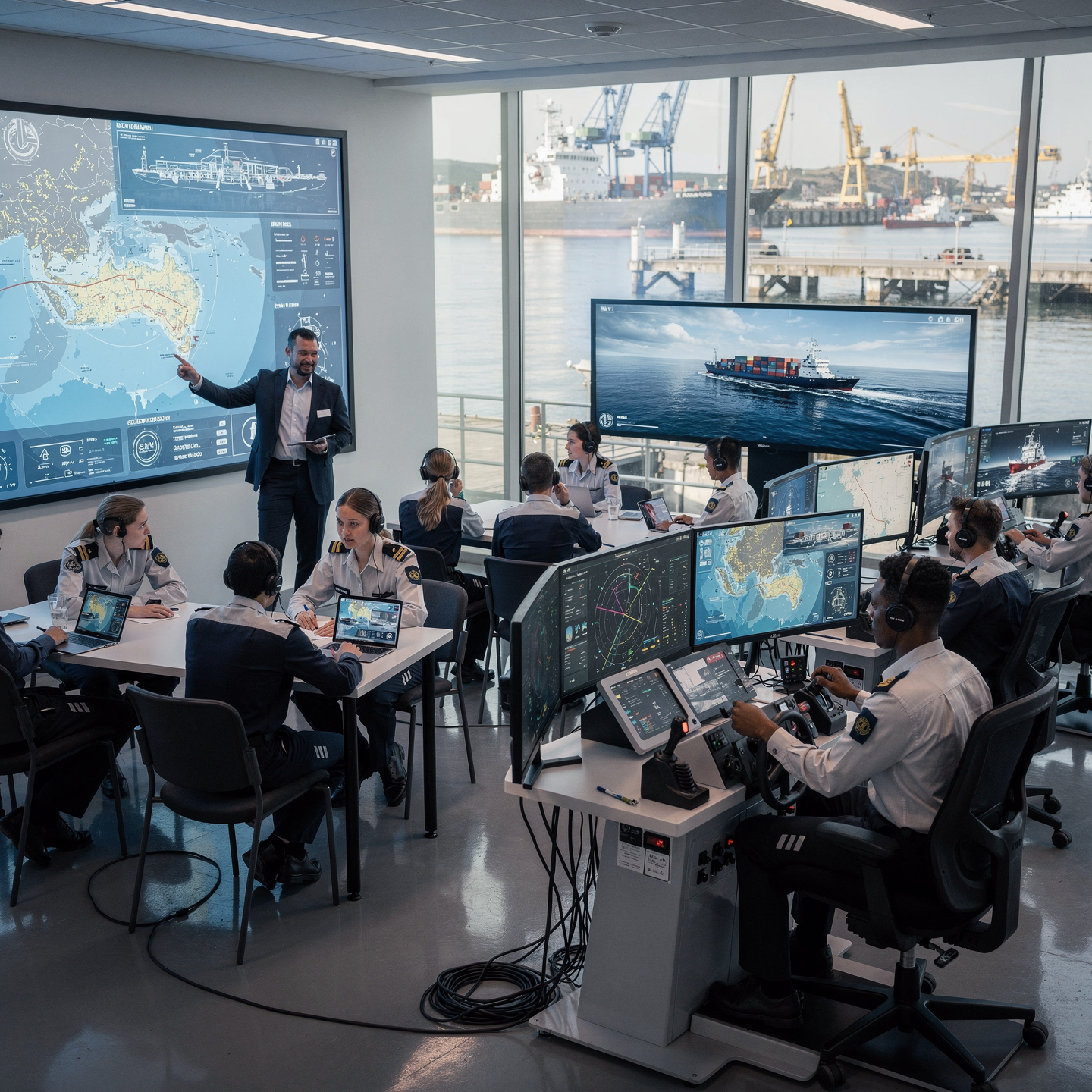
Is designed to transform teaching in the maritime sector, driving the adoption of cutting-edge methodologies and emerging technologies. This program empowers educators to design and implement immersive and personalized learning experiences, preparing future nautical professionals for the challenges of the 21st century. You will learn to integrate advanced simulations, virtual/augmented reality, and interactive e-learning platforms, creating a dynamic and highly effective learning environment.
Differential Advantages
- Active Methodologies: gamification, project-based learning (PBL), flipped classroom.
- Instructional Design: creation of engaging and effective digital educational content.
- Formative Assessment: tools and strategies for continuous monitoring of student progress.
- Educational Leadership: fostering innovation and collaboration within the teaching team.
- Networking: connection with experts and leaders in the international nautical industry.
- Modality: Online
- Level: Masters
- Hours: 1600 H
- Start date: 13-06-2026
Availability: 1 in stock
Who is it aimed at?
- Academic directors and coordinators who seek to transform their programs with active methodologies and emerging technologies.
- Experienced nautical instructors who wish to update their pedagogical skills and design innovative learning experiences.
- Maritime professionals interested in developing customized educational solutions for nautical training.
- Educational technology companies seeking to collaborate with nautical academies for the implementation of cutting-edge tools.
- Graduates in pedagogy or related fields who aspire to specialize in maritime didactics and educational innovation.
Learning flexibility
Ā Designed for Active professionals: flexible online modality, with discussion forums and personalized tutoring for learning at your own pace.
Objectives and skills

Integrating emerging technologies into nautical education:
Implement augmented reality for real-time navigation simulation, integrating AIS and meteorological data, enabling safe and efficient practices in complex scenarios.

Develop nautical training programs adapted to the changing needs of the sector:
“Design flexible training modules, incorporating advanced simulation and virtual reality to optimize practical learning.”

To foster creativity and critical thinking in nautical students and teachers:
“To develop simulations of complex and unexpected scenarios, promoting the search for innovative solutions and the critical evaluation of the decisions made.”

To promote research and development of new pedagogical methodologies in the nautical field:
“Design innovative navigation simulations that integrate human factors and emerging technologies.”

Leading digital transformation processes in nautical academies:
“Implement agile methodologies for the development and implementation of digital solutions, optimizing resource management and the student experience.”

Managing quality and continuous improvement in nautical training programs:
Implement a continuous evaluation system (surveys, reports, feedback) to identify areas for improvement and adapt the content/methodologies to the needs of the sector and current regulations.
Study plan ā Modules
- Theoretical Foundations of Disruptive Methodologies Applied to Nautical Training: Accelerated Learning, Gamification, and Flipped Classroom
- Critical Analysis of Traditional Pedagogical Models Compared to New Innovative Trends in Advanced Maritime Contexts
- Instructional Design for Nautical Academies: Integration of Immersive Technologies (VR/AR) and State-of-the-Art Simulators
- Planning Personalized Learning Experiences Using Artificial Intelligence and Big Data to Adapt Content and Assessments
- Active Methodologies for Developing Complex Nautical Skills: Project-Based Learning, Collaborative Challenges, and Real-Time Simulations
- Implementation of Virtual Environments and Blended Learning in Advanced Nautical Training: Best Practices and Educational Platform Management
- Innovative Formative and Summative Assessment: Use of Learning Analytics, Automated Feedback, and Dynamic Rubrics Applied to Technical Skills and decision-making in navigation
- Instructor training in disruptive methodologies: digital skills, process facilitation, and pedagogical leadership in nautical environments
- Case studies: success in the application of disruptive methodologies in international nautical academies and local adaptation
- Development of educational innovation projects for nautical academies: needs identification, design, implementation, and impact evaluation
- Fundamentals of immersive technologies applied to nautical education: virtual reality (VR), augmented reality (AR), and mixed reality (MR)
- Instructional design for immersive environments: pedagogical principles, adaptability, and personalized learning
- Advanced simulation in navigation: development and validation of hydraulic, dynamic, and environmental models for safe and realistic practice
- Integration of nautical simulators with real-time information systems: sensors, telemetry, and data analysis for continuous feedback
- Tools for assessing and monitoring competencies through simulation: performance metrics, adaptive learning, and predictive analytics
- Implementation of immersive platforms in nautical academies: technological infrastructure, hardware and software requirements, and operational maintenance
- Safety and ergonomics protocols in simulated environments to prevent fatigue, dizziness, and other physical and mental risks
- Application of artificial intelligence and machine learning to personalize training scenarios and evolve the level of difficulty
- Best practices for change management and technology adoption in nautical academic environments: teacher training, support, and continuous updating
- Case studies and impact analysis: return on investment, improved student retention, and optimization of training outcomes through immersive technologies and simulation
Cognitive
- Fundamentals of Educational Innovation Applied to Nautical Training: Theories of Disruptive Learning and Their Impact in Technical Environments
- Instructional Design for Advanced Nautical Academies: Integration of Active Methodologies such as Flipped Classroom, Problem-Based Learning, and Gamification
- Evaluation of Immersive Technologies: Augmented Reality (AR), Virtual Reality (VR), and Nautical Simulators for the Development of Practical and Cognitive Skills
- Development of 3D Virtual Environments for Simulating Maneuvers and Navigation in Complex Scenarios, with an Emphasis on Real-Time Interaction and Feedback
- Implementation of M-learning and E-learning Platforms Specialized in Nautical Content: Strategies to Maximize Accessibility, Personalization, and Monitoring of Student Progress
- Integration of Artificial Intelligence and Big Data Analytics to Personalize the Learning Experience and Optimize Decision-Making in Simulations and Case Studies
- Change management and teacher training in the use of immersive technologies and disruptive methodologies to ensure effective and sustainable adoption
- Design of metrics and KPIs to evaluate the impact of educational innovation on operational performance and nautical safety
- Regulatory and ethical aspects related to the use of immersive technologies in nautical training: data protection, digital security, and professional responsibility
- Success stories and critical analysis of innovative projects in advanced nautical training: lessons learned and recommendations for replicability
Practicalities
- Fundamentals of strategic management in the context of nautical academies: analysis of the environment, mission, vision, and organizational values āāapplied to the nautical education sector
- Advanced methodologies for competency-based curriculum design: integration of technical, practical, and transversal knowledge for the training of highly qualified nautical professionals
- Formative and summative assessment models oriented toward nautical competencies: development of rubrics, performance criteria, and continuous feedback systems
- International regulations and standards for the accreditation of nautical training programs: compliance with legal and regulatory requirements according to STCW and national and international educational bodies
- Quality management of teaching in nautical academies: implementation of continuous improvement systems, internal and external audits, academic performance indicators, and student satisfaction
- Design and implementation of strategic plans: alignment between institutional objectives and market needs Nautical, SWOT analysis for strategic decision-making
Technological innovations applied to curriculum design and strategic management: use of e-learning platforms, navigation simulators, and augmented reality for integrated training
Management skills for nautical education leaders: situational leadership, change management, and development of teaching teams specializing in nautical training
Accreditation and certification processes in nautical academies: preparation of documentation, coordination with certifying bodies, and management of evidence of educational quality
Real-time evaluation and monitoring of educational quality: key indicators, analysis of institutional data, and strategies for evidence-based continuous improvement
- Fundamentals of advanced digital platform management in nautical education: architecture, interoperability, and scalability
- Design and configuration of specialized Learning Management Systems (LMS) for nautical academies: integration of content, navigation modules, and virtual simulators
- Analysis of large volumes of educational data (Big Data) applied to nautical training: collection, storage, and real-time processing
- Application of statistical models and machine learning algorithms to personalize training pathways according to the profile, performance, and needs of nautical students
- Implementation of predictive analytics techniques to anticipate learning trends and real-time curriculum adaptation
- Advanced data visualization tools for instructors and directors: dashboards, dynamic reports, and key performance and engagement metrics
- Optimizing the learning experience with AI-based adaptive platforms: continuous monitoring and automated feedback for Navigation and maneuvering practices
Integration of gamification and augmented reality systems to enhance motivation, retention, and practical application of nautical knowledge
Security and data protection protocols on digital platforms, complying with international privacy and student protection regulations
Hybrid and online training strategies for nautical academies, combining asynchronous and synchronous learning with collaborative and multimedia tools
- Fundamentals of Pedagogical Innovation in the Nautical Field: Concepts, Evolution, and Emerging Paradigms Applied to Nautical Academies
- Advanced Instructional Design: Integration of Disruptive Pedagogical Models for the Effective Development of Nautical Competencies
- Active and Collaborative Methodologies: Project-Based Learning (PBL), Flipped Classroom, and Gamification in Nautical Education
- Implementation of Advanced Simulators: Types, Functionalities, Integration with Real Navigation Systems, and Didactic Validation
- Technological Tools for Nautical Training: LMS Platforms, Augmented Reality (AR), Virtual Reality (VR), and Specialized Mobile Applications
- Competency-Based Management in Nautical Academies: Analysis, Design, Evaluation, and Certification Oriented to International Standards and Regulatory Frameworks
- Formative and Summative Assessment Supported by Technology: Real-Time Monitoring, Analytics of Learning and personalized feedback
Developing digital skills in nautical instructors: ICT competencies, adaptation to hybrid environments, and the use of educational big data
Innovation in the management of nautical academies: management models, optimization of technological resources, and continuous improvement strategies based on performance indicators
Case studies and applied projects: design and implementation of disruptive training experiences using immersive technologies and advanced nautical simulation
- Theoretical Foundations of Disruptive Methodologies in Vocational Training: Critical Analysis and Contextualization in the Nautical Field
- Advanced Instructional Design for Nautical Academies: Integration of Active Pedagogies and Experiential Learning
- Immersive Technologies Applied to Nautical Education: Virtual Reality (VR), Augmented Reality (AR), and 3D Simulation for Highly Realistic Scenarios
- Implementation of Immersive Environments for Training in Complex Maneuvers: Bridge Simulators, Emergency Management, and Decision-Making Under Pressure
- Advanced Gamification and Ludification: Creation of Interactive Scenarios to Enhance Participation and Cognitive Retention in Nautical Students
- Big Data and Learning Analytics: Real-Time Monitoring of Student Performance for Training Personalization
- Hybrid and Blended Learning Models in Nautical Academies: Maximizing Time and Resources by Combining Training Face-to-face and virtual
Formative and summative assessment with emerging technologies: use of intelligent simulators and adaptive systems to measure practical and theoretical competencies
Integration of artificial intelligence for personalized tutoring and automated feedback in nautical learning processes
Success stories and applied studies of educational transformation in international nautical institutions: impact analysis and best practices
- Fundamentals of Competency-Based Curriculum Design: Analysis of Professional Profiles and Mapping of Essential Nautical Skills
- Active Teaching and Learning Methodologies: Integration of Experiential, Collaborative, and Situated Learning in Real-World Nautical Contexts
- Application of Immersive Technology in Nautical Training: Virtual Reality (VR), Augmented Reality (AR), and Advanced Simulators for Reproducing Complex Maritime Scenarios
- Design of Modular and Interdisciplinary Training Programs: Planning by Competency Units and Flexible Approaches to Adapt to the Needs of the Nautical Sector
- Comprehensive Training Management: Planning, Implementation, Monitoring, and Continuous Evaluation Processes with a Focus on Continuous Improvement and Educational Quality
- Authentic and Formative Assessment: Development of Rubrics, Portfolios, and Simulations to Objectively Measure Technical and Transferable Competencies
- Implementation of Specialized Learning Management Systems (LMS) for nautical academies and their integration with immersive technologies
Digital tutoring and facilitation models: strategies to support autonomous learning and learning in immersive virtual environments
Regulations and accreditation of training programs in the maritime sector: compliance with international and local standards for skills certification
Analysis of success stories and emerging trends in educational innovation applied to nautical training: a strategic approach for academic and operational excellence
- Fundamentals and advanced theories of educational innovation: from constructivism to experiential learning applied to nautical training
- Adaptive instructional design for nautical academies: integration of blended learning and flipped classroom models in face-to-face and virtual environments
- Implementation of immersive technologies: augmented reality (AR) and virtual reality (VR) for simulations of maneuvers and complex maritime scenarios
- Big Data and learning analytics in nautical training: personalization of the training process and predictive performance evaluation
- Gamification and serious game-based learning to optimize motivation and retention in critical nautical skills training
- Integration of advanced learning management systems (LMS) for monitoring, evaluation, and continuous feedback in nautical academies
- Agile methodologies applied to the planning and continuous improvement of training programs
Nautical
Innovations in formative assessment and digital certification using blockchain to guarantee transparency and security in nautical accreditations
Educational cybersecurity: protocols and best practices to protect sensitive information and guarantee the integrity of training processes on digital platforms
Case studies and applied projects: design and development of transformative programs that integrate cutting-edge technologies with practical nautical skills
- Advanced methodologies for analyzing and diagnosing training needs in nautical academies
- Instructional design focused on experiential learning and key competencies for the nautical sector
- Integration of disruptive technologies: augmented reality, advanced simulators, and artificial intelligence applied to training
- Formative and summative assessment models geared towards professional certification and regulatory compliance
- Development of collaborative learning environments and specific LMS platforms for nautical training
- Application of gamification and microlearning concepts to maximize student motivation and retention
- Implementation of data tracking and analysis systems (Learning Analytics) to optimize training processes
- Management of educational innovation projects: planning, execution, monitoring, and closure according to PMI and Agile standards
- Legal and ethical considerations and safety in nautical training with emerging technologies
- Development and defense of a final project: creation of an innovative model that integrates disruptive technologies and professional skills adapted to the operational reality of nautical academies
Career prospects
“`html
- Designer of innovative nautical educational programs: Creation of courses adapted to new technologies and methodologies.
- Consultant in educational innovation for nautical academies: Advising on the implementation of cutting-edge pedagogical strategies.
- Manager of educational innovation projects in the nautical sector: Leadership in the digital transformation of maritime training.
- Developer of digital nautical educational resources: Creation of simulators, online platforms, and interactive tools.
- Trainer of trainers in innovative methodologies: Training nautical instructors in the use of new technologies and pedagogical approaches.
- Researcher in educational innovation applied to the nautical sector: Analysis and evaluation of new trends and their Impact on maritime learning.
- Responsible for quality and continuous improvement in nautical training: Implementation of evaluation and monitoring systems to guarantee educational excellence.
- Entrepreneur in the field of nautical educational innovation: Creation of startups and companies that offer innovative solutions for maritime training.
“`
Entry requirements

Academic/professional profile:
Bachelorās degree in Nautical Science/Maritime Transport, Naval/Marine Engineering or a related qualification; or proven professional experience on the bridge/in operations.

Language proficiency:
Functional Maritime English (SMCP) recommended for simulations and technical materials.

Documentation:
Updated CV, copy of qualification or seamanās book, national ID/passport, motivation letter.

Technical requirements (for online):
Device with camera/microphone, stable internet connection, monitor ā„ 24ā recommended for ECDIS/Radar-ARPA.
Admissions process and dates

Online
application
(form + documents).

Academic review and interview
Admissions decision

Admissions decision
(+ scholarship offer if applicable).

Place reservation
(deposit) and enrolment.

Induction
(access to the virtual campus, calendars, simulator guides).
Scholarships and financial support
- Transform Your Academy: Learn to integrate innovative methodologies and emerging technologies into nautical education.
- Advanced Curriculum Design: Master the techniques to create updated and student-centered curricula.
- Key Skills Development: Enhance your ability to lead innovation projects and manage educational change.
- Strategic Networking: Connect with industry experts and build a strong and collaborative professional network.
- Immediate Practical Application: Implement what you’ve learned in your academy from day one and Enhance the learning experience.
Testimonials
This Master’s degree provided me with the tools and knowledge necessary to transform the teaching methodology at my nautical academy. I implemented a simulation- and gamified learning system, which increased student participation by 30% and improved their scores on practical navigation tests by 20%.
During the Master’s in Nautical Education & Training, I developed an innovative simulation program for teaching emergency maneuvers, which was successfully implemented in a nautical school, increasing student performance by 30% in practical assessments.
I successfully implemented a simulation-based learning system for emergency maneuver training, increasing knowledge retention by 30% and reducing simulated incidents by 15% in the first quarter of its implementation.
I successfully implemented a virtual navigation simulation-based learning system at my academy, which increased student performance by 20% on practical maneuvering tests and by 15% in understanding navigation principles. This significantly reduced on-water practice time, optimizing resources and minimizing environmental impact.

Frequently asked questions
Nautical and maritime education sector.
Yes. The itinerary includes ECDIS/Radar-ARPA/BRM with harbor, ocean, fog, storm, and SAR scenarios.
Online with live sessions; hybrid option for simulator/practical placements through agreements.
Education professionals working in nautical academies or maritime training, interested in innovating teaching and learning processes in this specific field.
Recommended functional SMCP. We offer support materials for standard phraseology.
Yes, with a relevant degree or experience in maritime/port operations. The admissions interview will confirm suitability.
Optional (3ā6 months) through Companies & Collaborations and the Alumni Network.
Simulator practice (rubrics), defeat plans, SOPs, checklists, micro-tests and applied TFM.
A degree from Navalis Magna University + operational portfolio (tracks, SOPs, reports and KPIs) useful for audits and employment.
- Advanced methodologies for analyzing and diagnosing training needs in nautical academies
- Instructional design focused on experiential learning and key competencies for the nautical sector
- Integration of disruptive technologies: augmented reality, advanced simulators, and artificial intelligence applied to training
- Formative and summative assessment models geared towards professional certification and regulatory compliance
- Development of collaborative learning environments and specific LMS platforms for nautical training
- Application of gamification and microlearning concepts to maximize student motivation and retention
- Implementation of data tracking and analysis systems (Learning Analytics) to optimize training processes
- Management of educational innovation projects: planning, execution, monitoring, and closure according to PMI and Agile standards
- Legal and ethical considerations and safety in nautical training with emerging technologies
- Development and defense of a final project: creation of an innovative model that integrates disruptive technologies and professional skills adapted to the operational reality of nautical academies
Request information
Complete the Application Form.
Attach your CV/degree certificate (if you have it to hand).
Indicate your preferred cohort (January/May/September) and whether you would like the hybrid option with simulator sessions.
An academic advisor will contact you within 24ā48 hours to guide you through the admission process, scholarships, and compatibility with your professional schedule.
Faculty
Eng. TomƔs Riera
Full Professor
Eng. TomƔs Riera
Full Professor
Eng. SofĆa Marquina
Full Professor
Eng. SofĆa Marquina
Full Professor
Eng. Javier BaƱuls
Full Professor
Eng. Javier BaƱuls
Full Professor
Dr. Nuria Llobregat
Full Professor
Dr. Nuria Llobregat
Full Professor
Dr. Pau Ferrer
Full Professor
Dr. Pau Ferrer
Full Professor
Cap. Javier Abaroa (MCA)
Full Professor
Cap. Javier Abaroa (MCA)
Full Professor

