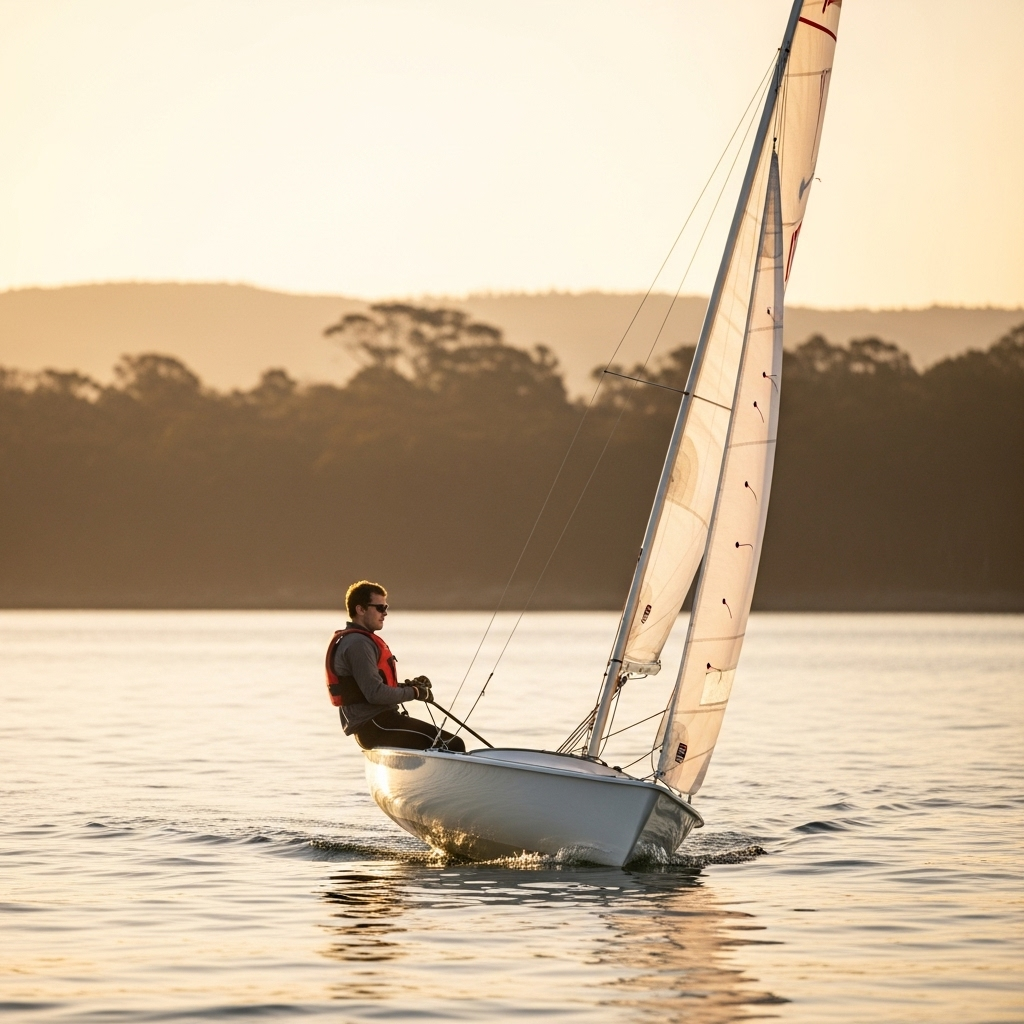
Maneuvering course with small sailboats

Why this course?

The Small Sailboat Maneuvering Course

This course provides you with the essential skills to sail safely and confidently. Learn everything from the basics of sailing to advanced control techniques. Master raising and lowering sails, using the helm and sheets, and basic sailing maneuvers. This practical course will prepare you to fully enjoy sailing.

This course provides you with the essential skills to sail safely and confidently.

Differentiating Advantages

  • Hands-on Training on Real Sailboats: Learn by doing, with personalized instruction on the water.
  • Experienced Instructors: Benefit from the knowledge and guidance of professional sailors.
  • Small Groups: Individualized attention and a collaborative learning environment.
  • Safety First: Comprehensive safety protocols and emergency training.
  • Guaranteed Fun: Enjoy the pleasure of sailing in a safe and stimulating environment.
Maniobras

Maneuvering course with small sailboats

Availability: 1 in stock

Who is it aimed at?

  • Dinghy sailing enthusiasts looking to master basic and advanced maneuvers, optimize courses, and gain confidence in handling the boat.
  • Beginners with no prior experience who want to learn to sail from scratch, learn nautical terminology, and enjoy the freedom of the sea.
  • Experienced sailors on larger boats who want to adapt their knowledge to smaller sailboats, perfect upwind and downwind sailing techniques, and explore new possibilities.
  • Sailing instructors and coaches looking to update their teaching methods, discover practical training exercises, and get ideas to make their classes more dynamic.
  • Families and groups of friends who want to share a nautical experience and learn to sail together Safely enjoy the marine environment.

    Flexibility for your learning

    Practical sessions at different times and locations, online learning materials, and a team of qualified instructors to answer your questions.

Maniobras

Objectives and competencies

Master the basic sailing techniques:

“Adjust sails according to wind and course, maintain desired course, and safely execute basic tacks/jibes.”

Execute the tacking and gybing maneuvers with precision:

“Anticipating the ship’s response and minimizing the loss of speed and space.”

Adjust and optimize sail trim for various wind conditions:

“Identify and correct camber, leech tension, and angle of attack to maximize efficiency upwind, across, and downwind.”

Responding effectively to emergency and safety situations at sea:

Assess the situation, communicate clearly (Mayday/Pan Pan), and act calmly according to emergency procedures (fire, flood, abandonment) and coordinate with maritime rescue.

Interpret and apply current maritime regulations:

“To comply with SOLAS, MARPOL and other international conventions, adapting procedures to national legislation and interpreting circulars and notices to mariners.”

To tie essential nautical knots and use them properly:

“Know the terminology, execute skillfully, and ensure the correct tension for each situation.”

Curriculum - Modules

  1. Comprehensive Maritime Incident Management: protocols, roles, and chain of command for coordinated response
  2. Operational Planning and Execution: briefing, routes, weather windows, and go/no-go criteria
  3. Rapid Risk Assessment: criticality matrix, scene control, and decision-making under pressure
  4. Operational Communication: VHF/GMDSS, standardized reports, and inter-agency liaison
  5. Tactical Mobility and Safe Boarding: RHIB maneuvers, approach, mooring, and recovery
  6. Equipment and Technologies: PPE, signaling, satellite tracking, and field data logging
  7. Immediate Care of the Affected: primary assessment, hypothermia, trauma, and stabilization for evacuation
  8. Adverse Environmental Conditions: swell, Visibility, flows, and operational mitigation

    Simulation and training: critical scenarios, use of VR/AR, and exercises with performance metrics

    Documentation and continuous improvement: lessons learned, indicators (MTTA/MTTR), and SOP updates

  1. Basic Nomenclature: Parts of the boat, rigging, sails, and equipment.
  2. Principles of Sailing: Apparent and true wind, sailing angles, and acting forces.
  3. Sail Rigging and Trim: Adjusting the sails according to the wind and course.
  4. Basic Maneuvers: Tacking and gybing, close-hauled, reaching, broad reach, and downwind.
  5. Personal Safety: Life jackets, harnesses, lifelines, and appropriate footwear.
  6. Mandatory Safety Equipment: Flares, horn, first aid kit, and VHF radio.
  7. Basic Meteorology: Recognizing weather patterns, interpreting forecasts, and using weather sources. information.
  8. Basic Navigation: Using the compass, identifying landmarks, and estimating position.
  9. Emergency Procedures: Man Overboard (MOB), abandoning ship, and Mayday calls.
  10. Skipper’s Responsibilities: Knowledge of navigation rules, vessel maintenance, and crew safety.

  1. Sailing Boat Nomenclature: Hull, Masts, Sails, Steering
  2. Basic Equipment: Safety, Navigation, Anchoring, Comfort
  3. Roping: Essential Nautical Knots, Care and Maintenance
  4. Rigging and Rigging: Types, Basic Trim, Maintenance
  5. Sails: Types, Parts, Hoisting, Lowering, Furling, Reefing
  6. Basic Sailing Maneuvers: Tacking, Gybing
  7. Sailing Boat Steering: Tiller vs. Wheel, propeller effect
  8. Auxiliary engine: starting, stopping, basic maintenance
  9. Safety on board: life jackets, flares, VHF radio, life raft
  10. Basic first aid and risk prevention at sea

  1. Basic Terminology: Parts of the boat, rigging, sails, lines
  2. Rigging and Trimming: Standing and running rigging, sail adjustment according to the wind
  3. Essential Nautical Knots: Figure eight, clove hitch, bowline, square knot
  4. Safety on Board: Life jackets, flares, portable VHF radio, first aid kit
  5. Basic Maneuvers: Leaving and arriving in port, tacking and gybing
  6. Fundamentals of Sailing: Sailing angles, courses
  7. Basic Meteorology: Wind, clouds, forecasts, safety in bad weather
  8. Rules of Navigation
  9. (COLREG): Right-of-way rules, signals

    Rescue techniques: Man overboard, basic towing

    Basic maintenance: Cleaning, inspection of components, winterizing

  1. Basic Nomenclature: Parts of the boat, rigging, sails, and equipment
  2. Wind Theory: True wind, apparent wind, angle of attack, and lift
  3. Rigging and Sails: Types, materials, basic and advanced trim
  4. Basic Maneuvers: Tacking, jibing, and gybing
  5. Sheets and Halyards: Handling, adjustment, and optimization according to the wind
  6. The Rudder: Effects of the rudder, steering, and course correction
  7. Safety on Board: Safety equipment, life jackets, harnesses, VHF radios
  8. Sailors’ Knots: Figure eight, clove hitch, bowline, square knot, and sheet bend
  9. Basic Navigation Rules: COLREG, Buoyage and Signals
  10. Basic Meteorology: Forecast Interpretation and Sky Observation

  1. System Architecture and Components: Structural design, materials, and subsystems (mechanical, electrical, electronic, and fluid) with selection and assembly criteria for marine environments
  2. Fundamentals and Principles of Operation: Physical and engineering foundations (thermodynamics, fluid mechanics, electricity, control, and materials) that explain performance and operating limits
  3. Safety and Environmental (SHE): Risk analysis, PPE, LOTO, hazardous atmospheres, spill and waste management, and emergency response plans
  4. Applicable Regulations and Standards: IMO/ISO/IEC requirements and local regulations;
  5. Conformance criteria, certification, and best practices for operation and maintenance
  6. Inspection, testing, and diagnostics: Visual/dimensional inspection, functional testing, data analysis, and predictive techniques (vibration, thermography, fluid analysis) to identify root causes
  7. Preventive and predictive maintenance: Hourly/cycle/seasonal plans, lubrication, adjustments, calibrations, consumable replacement, post-service verification, and operational reliability
  8. Instrumentation, tools, and metrology: Measuring and testing equipment, diagnostic software, calibration and traceability; selection criteria, safe use, and storage
  9. Onboard integration and interfaces: Mechanical, electrical, fluid, and data compatibility; Sealing and watertightness, EMC/EMI, corrosion protection, and interoperability testing.

    Quality, acceptance testing, and commissioning: process and materials control, FAT/SAT, bench and sea trials, go/no-go criteria, and evidence documentation.

    Technical documentation and integrated practice: logs, checklists, reports, and a complete case study (safety → diagnosis → intervention → verification → report) applicable to any system.

Plan de estudio - Módulos

  1. Comprehensive Maritime Incident Management: protocols, roles, and chain of command for coordinated response
  2. Operational Planning and Execution: briefing, routes, weather windows, and go/no-go criteria
  3. Rapid Risk Assessment: criticality matrix, scene control, and decision-making under pressure
  4. Operational Communication: VHF/GMDSS, standardized reports, and inter-agency liaison
  5. Tactical Mobility and Safe Boarding: RHIB maneuvers, approach, mooring, and recovery
  6. Equipment and Technologies: PPE, signaling, satellite tracking, and field data logging
  7. Immediate Care of the Affected: primary assessment, hypothermia, trauma, and stabilization for evacuation
  8. Adverse Environmental Conditions: swell, Visibility, flows, and operational mitigation

    Simulation and training: critical scenarios, use of VR/AR, and exercises with performance metrics

    Documentation and continuous improvement: lessons learned, indicators (MTTA/MTTR), and SOP updates

  1. Basic Nomenclature: Parts of the boat, rigging, sails, and equipment.
  2. Principles of Sailing: Apparent and true wind, sailing angles, and acting forces.
  3. Sail Rigging and Trim: Adjusting the sails according to the wind and course.
  4. Basic Maneuvers: Tacking and gybing, close-hauled, reaching, broad reach, and downwind.
  5. Personal Safety: Life jackets, harnesses, lifelines, and appropriate footwear.
  6. Mandatory Safety Equipment: Flares, horn, first aid kit, and VHF radio.
  7. Basic Meteorology: Recognizing weather patterns, interpreting forecasts, and using weather sources. information.
  8. Basic Navigation: Using the compass, identifying landmarks, and estimating position.
  9. Emergency Procedures: Man Overboard (MOB), abandoning ship, and Mayday calls.
  10. Skipper’s Responsibilities: Knowledge of navigation rules, vessel maintenance, and crew safety.

  1. Sailing Boat Nomenclature: Hull, Masts, Sails, Steering
  2. Basic Equipment: Safety, Navigation, Anchoring, Comfort
  3. Roping: Essential Nautical Knots, Care and Maintenance
  4. Rigging and Rigging: Types, Basic Trim, Maintenance
  5. Sails: Types, Parts, Hoisting, Lowering, Furling, Reefing
  6. Basic Sailing Maneuvers: Tacking, Gybing
  7. Sailing Boat Steering: Tiller vs. Wheel, propeller effect
  8. Auxiliary engine: starting, stopping, basic maintenance
  9. Safety on board: life jackets, flares, VHF radio, life raft
  10. Basic first aid and risk prevention at sea

  1. Basic Terminology: Parts of the boat, rigging, sails, lines
  2. Rigging and Trimming: Standing and running rigging, sail adjustment according to the wind
  3. Essential Nautical Knots: Figure eight, clove hitch, bowline, square knot
  4. Safety on Board: Life jackets, flares, portable VHF radio, first aid kit
  5. Basic Maneuvers: Leaving and arriving in port, tacking and gybing
  6. Fundamentals of Sailing: Sailing angles, courses
  7. Basic Meteorology: Wind, clouds, forecasts, safety in bad weather
  8. Rules of Navigation
  9. (COLREG): Right-of-way rules, signals

    Rescue techniques: Man overboard, basic towing

    Basic maintenance: Cleaning, inspection of components, winterizing

  1. Basic Nomenclature: Parts of the boat, rigging, sails, and equipment
  2. Wind Theory: True wind, apparent wind, angle of attack, and lift
  3. Rigging and Sails: Types, materials, basic and advanced trim
  4. Basic Maneuvers: Tacking, jibing, and gybing
  5. Sheets and Halyards: Handling, adjustment, and optimization according to the wind
  6. The Rudder: Effects of the rudder, steering, and course correction
  7. Safety on Board: Safety equipment, life jackets, harnesses, VHF radios
  8. Sailors’ Knots: Figure eight, clove hitch, bowline, square knot, and sheet bend
  9. Basic Navigation Rules: COLREG, Buoyage and Signals
  10. Basic Meteorology: Forecast Interpretation and Sky Observation

  1. System Architecture and Components: Structural design, materials, and subsystems (mechanical, electrical, electronic, and fluid) with selection and assembly criteria for marine environments
  2. Fundamentals and Principles of Operation: Physical and engineering foundations (thermodynamics, fluid mechanics, electricity, control, and materials) that explain performance and operating limits
  3. Safety and Environmental (SHE): Risk analysis, PPE, LOTO, hazardous atmospheres, spill and waste management, and emergency response plans
  4. Applicable Regulations and Standards: IMO/ISO/IEC requirements and local regulations;
  5. Conformance criteria, certification, and best practices for operation and maintenance
  6. Inspection, testing, and diagnostics: Visual/dimensional inspection, functional testing, data analysis, and predictive techniques (vibration, thermography, fluid analysis) to identify root causes
  7. Preventive and predictive maintenance: Hourly/cycle/seasonal plans, lubrication, adjustments, calibrations, consumable replacement, post-service verification, and operational reliability
  8. Instrumentation, tools, and metrology: Measuring and testing equipment, diagnostic software, calibration and traceability; selection criteria, safe use, and storage
  9. Onboard integration and interfaces: Mechanical, electrical, fluid, and data compatibility; Sealing and watertightness, EMC/EMI, corrosion protection, and interoperability testing.

    Quality, acceptance testing, and commissioning: process and materials control, FAT/SAT, bench and sea trials, go/no-go criteria, and evidence documentation.

    Technical documentation and integrated practice: logs, checklists, reports, and a complete case study (safety → diagnosis → intervention → verification → report) applicable to any system.

  1. Introduction to dinghy sailing: history, types of boats, and safety.
  2. Basic terminology: parts of the boat, sails, and rigging.
  3. Wind theory: true wind, apparent wind, and its effect on sails.
  4. Rigging and trimming: basic sail adjustments according to the wind.
  5. Basic maneuvers: tacking and gybing.
  6. Heads to the wind: close-hauled, reach, broad reach, and downwind.
  7. Safety on the water: personal equipment, emergency procedures, and rescue.
  8. Basic knots: clove hitch, bowline, square knot, and figure-eight knot.
  9. Basic rules of navigation: right of way and prevention of collisions.
  10. Basic first aid in dinghy sailing.

  1. Introduction to Dinghy Sailing: Types of boats, basic terminology, and main components.
  2. Personal Safety Equipment: Life jackets, appropriate footwear, sun and thermal protection.
  3. Basic Knots: Figure eight, clove hitch, bowline, sheet bend, and their applications in dinghy sailing.
  4. Sail Rigging and Trim: Standing and running rigging, sail tension control for different conditions.
  5. Basic Maneuvers: Starting, finishing, tacking, gybing, and close-hauled sailing.
  6. Safety on the Water: Man overboard (MOB) procedures, self-rescue, and towing.
  7. Basic Meteorology: Interpreting wind direction and speed, types of Clouds and local forecasts.
  8. Rules of precedence and buoyage: Racing Rules of Sailing (RRS) and navigational marks.
  9. Basic vessel maintenance: Inspection, cleaning, and minor repairs of sails and hull.
  10. Ethics and environmental responsibility: Respect for the marine environment and sustainable sailing practices.

  1. Basic Nomenclature: parts of the boat, sails, running rigging, and standing rigging.
  2. Wind Theory: true wind, apparent wind, angle of attack, and sail.
  3. Basic Sailing Maneuvers: tacking, gybing, raising and lowering sails.
  4. Heads to the Wind: close-hauled, beam reach, reach, downwind.
  5. Sail Trim: halyard tension, sheet tension, genoa track, vang tension.
  6. Safety on Board: mandatory safety equipment, life jackets, harnesses.
  7. Basic Ropework: essential knots (figure eight, square knot, clove hitch, bowline).
  8. Man Overboard: Rescue procedures (Quick Stop method, figure eight).
  9. Basic Meteorology: Cloud identification, weather forecasting for coastal navigation.
  10. Basic First Aid: Treatment of minor injuries, sunburn, seasickness.

  1. Basic Nomenclature: Parts of the boat, rigging, sails, and equipment.
  2. Sailing Principles: How a sail works, aerodynamic and hydrodynamic forces.
  3. Sail Rigging and Trim: Adjusting sails according to wind and course.
  4. Sailing Courses: Close-hauled, reach, broad reach, and downwind.
  5. Basic Maneuvers: Tacking, gybing.
  6. Using the Rudder and Steering the Boat: Maintaining course, correcting drift.
  7. Safety at Sea: Using life jackets, emergency procedures.
  8. Basic Knots: Clove hitch, bowline, plain.
  9. Basic Meteorology: Interpretation of weather conditions and their influence on navigation.
  10. Navigation Rules: Priorities at sea, lights and shapes.

Career opportunities

  • Sailing Instructor: Teaching basic sailing and safety techniques at yacht clubs and sailing schools.
  • Recreational Craft Skipper (PER): Renting small sailboats for excursions and tourist activities.
  • Instructor’s Assistant: Supporting the training of new sailors and vessel maintenance.
  • Nautical Event Organizer: Participating in the planning and development of regattas and recreational activities on sailboats.
  • Volunteer in Maritime Rescue Organizations: Assisting in search and rescue operations on the coast.
  • Sailboat Maintenance and Repair: Performing conservation and maintenance work on boats at shipyards or yacht clubs.
  • Boat Sales: Advising on the sale and rental of small sailboats in nautical shops or specialized companies.
  • Participation in Amateur Competitions: Developing skills and experience in sailing regattas at the local level.

“`

Admission requirements

Academic/professional profile:

Degree/Bachelor's degree in Nautical Science/Maritime Transport, Naval/Marine Engineering, or a related field; or proven professional experience in bridge/operations.

Language proficiency:

Recommended functional maritime English (SMCP) for simulations and technical materials.

5. Induction

Updated resume, copy of degree or seaman's book, ID card/passport, letter of motivation.

Technical requirements (for online):

Equipment with camera/microphone, stable connection, ≥ 24” monitor recommended for ECDIS/Radar-ARPA.

Admission process and dates

1. Online
application

(form + documents).

2. Academic review and interview

(profile/objectives/schedule compatibility).

3. Admission decision

(+ scholarship proposal if applicable).

4. Reservation of place

(deposit) and registration.

5. Induction

(access to campus, calendars, simulator guides).

Scholarships and grants

  • Sailing Fundamentals: Learn the basic principles of wind physics and its interaction with sails.
  • Essential Maneuvers: Master tacks, jibes, close-hauled sailing, and other crucial movements for safe and efficient sailing.
  • Safety at Sea: Learn emergency procedures, the use of safety equipment, and best practices to avoid risks.
  • Basic Maintenance: Learn to inspect and care for your vessel, extending its lifespan and ensuring optimal performance.
  • Intensive Practice: Enjoy hours of real sailing on small sailboats, guided by experienced instructors.
Get ready to experience the freedom of the wind and become a safe and competent sailor!

Testimonials

Frequently asked questions

Yes. The itinerary includes ECDIS/Radar-ARPA/BRM with harbor, ocean, fog, storm, and SAR scenarios.

Online with live sessions; hybrid option for simulator/practical placements through agreements.

Recommended functional SMCP. We offer support materials for standard phraseology.

Yes, with a relevant degree or experience in maritime/port operations. The admissions interview will confirm suitability.

Optional (3–6 months) through Companies & Collaborations and the Alumni Network.

Simulator practice (rubrics), defeat plans, SOPs, checklists, micro-tests and applied TFM.

A degree from Navalis Magna University + operational portfolio (tracks, SOPs, reports and KPIs) useful for audits and employment.

  1. Basic Nomenclature: Parts of the boat, rigging, sails, and equipment.
  2. Sailing Principles: How a sail works, aerodynamic and hydrodynamic forces.
  3. Sail Rigging and Trim: Adjusting sails according to wind and course.
  4. Sailing Courses: Close-hauled, reach, broad reach, and downwind.
  5. Basic Maneuvers: Tacking, gybing.
  6. Using the Rudder and Steering the Boat: Maintaining course, correcting drift.
  7. Safety at Sea: Using life jackets, emergency procedures.
  8. Basic Knots: Clove hitch, bowline, plain.
  9. Basic Meteorology: Interpretation of weather conditions and their influence on navigation.
  10. Navigation Rules: Priorities at sea, lights and shapes.

Request information

  1. Complete the Application Form
  2. Attach your CV/Qualifications (if you have them to hand).
  3. Indicate your preferred cohort (January/May/September) and whether you want the hybrid option with simulator sessions.
An academic advisor will contact you within 24–48 hours to guide you through the admission process, scholarships, and compatibility with your professional schedule. Translated with DeepL.com (free version)
Please enable JavaScript in your browser to complete this form.
Click or drag a file to this area to upload.

Teachers

0
    0
    Tu carrito
    Tu carrito esta vacíoRegresar a la tienda
    Scroll to Top


