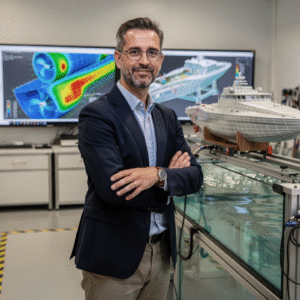
Diploma in Fleet Management and Naval Operations
Why this certificate program?
The Diploma in Fleet Management and Naval Operations
This program provides you with the essential tools to optimize performance and efficiency in the maritime industry. Learn to plan, execute, and monitor complex naval operations, maximizing profitability and minimizing risks. This program covers everything from maintenance and safety management to route optimization and supply chain management, with a practical, case-based approach.
Differential Advantages
- Optimization Strategies: Master techniques to reduce operating costs and increase fleet efficiency.
- Risk Management: Identify and mitigate risks associated with naval operations, ensuring safety and regulatory compliance.
- Cutting-Edge Technologies: Apply the latest technologies and tools for fleet management, including data analytics and automation.
- Leadership and Team Management: Develop leadership skills to direct and motivate teams in challenging maritime environments.
- Professional Networking: Connect with industry experts and expand your network within the naval industry.
- Modality: Online
- Level: Diplomado
- Hours: 800 H
- Start date: 19-07-2026
Availability: 1 in stock
Who is it aimed at?
- Fleet and Operations Managers seeking to optimize efficiency, reduce operating costs, and improve fleet safety.
- Technical and Naval Superintendents needing to deepen their knowledge of maintenance planning, drydock management, and regulatory compliance.
- Merchant Marine Officers aspiring to leadership roles in fleet management and the supervision of naval operations.
- Naval Engineers and Naval Architects interested in applying their technical knowledge to comprehensive fleet management.
- Maritime professionals (lawyers, insurers, consultants) seeking a in-depth understanding of fleet and operations management Naval.
Flexibility for working professionals: Online format with 24/7 access to content, discussion forums and personalized tutoring to answer questions and apply knowledge to the workplace.
Objectives and competencies

Optimize fleet operational efficiency:
“Implement route optimization and fuel consumption management strategies, monitoring performance in real time and adjusting parameters to reduce costs and emissions.”

Implement predictive maintenance strategies:
Analyze sensor and equipment data to detect anomalies and predict failures, optimizing intervention planning and minimizing downtime.

Efficiently manage the human and material resources of the fleet:
“Optimize preventive and corrective maintenance planning, minimizing downtime and costs, ensuring the operational availability of the fleet.”

Ensuring regulatory compliance and maritime safety:
“Implement the ISPS, managing access, threats, and contingency plans.”

Assessing and mitigating risks in maritime operations:
Analyze meteorology, currents and tides, adjusting navigation plans with a preventive approach and applying bridge resource management (BRM) techniques.

Mastering fleet logistics and supply:
“Optimize routes and consumption, considering weather factors and sea conditions, to minimize costs and transit times.”
Curriculum - Modules
- Comprehensive Maritime Incident Management: protocols, roles, and chain of command for coordinated response
- Operational Planning and Execution: briefing, routes, weather windows, and go/no-go criteria
- Rapid Risk Assessment: criticality matrix, scene control, and decision-making under pressure
- Operational Communication: VHF/GMDSS, standardized reports, and inter-agency liaison
- Tactical Mobility and Safe Boarding: RHIB maneuvers, approach, mooring, and recovery
- Equipment and Technologies: PPE, signaling, satellite tracking, and field data logging
- Immediate Care of the Affected: primary assessment, hypothermia, trauma, and stabilization for evacuation
- Adverse Environmental Conditions: swell, Visibility, flows, and operational mitigation
Simulation and training: critical scenarios, use of VR/AR, and exercises with performance metrics
Documentation and continuous improvement: lessons learned, indicators (MTTA/MTTR), and SOP updates
- Introduction to optimization and predictive maintenance: key concepts and benefits.
- Criticality analysis: identification of critical equipment and infrastructure.
- Monitoring techniques: vibration, temperature, ultrasound, oil analysis.
- Sensors and data acquisition systems: selection, installation, and calibration.
- Data analysis and predictive modeling: algorithms, software, and visualization.
- Failure diagnosis: identification of root causes and failure patterns.
- Maintenance planning: proactive, preventive, and predictive strategies.
- Spare parts management: inventory optimization and procurement.
- Implementation of a predictive maintenance program: phases and roles and responsibilities.
- Performance evaluation and continuous improvement: KPIs and success metrics.
‘
- Introduction to Route Optimization: Key Concepts and Benefits.
- Data Collection and Analysis: Route history, fuel consumption, and failures.
- Route Optimization Software: Available Tools and Platforms.
- Factors Influencing Fuel Consumption: Weight, speed, weather conditions.
- Efficient Driving Techniques: Acceleration, braking, speed maintenance.
- Preventive Maintenance vs. Predictive Maintenance: Advantages and Disadvantages.
Sensors and Real-Time Monitoring: Data Collection for Predictive Maintenance.
Predictive Maintenance Algorithms: Machine Learning and Data Analysis.
Implementation of a Comprehensive Optimization Plan: Route, Consumption, and Maintenance.
Evaluation and Monitoring of Results: KPIs and Continuous Improvement.
‘
- Introduction to Naval Logistics: Challenges and Opportunities
- Naval Supply Chain Management: Procurement, Warehousing, and Distribution
- Optimizing Shipping Routes: Efficiency, Safety, and Sustainability
- Maintenance Planning and Scheduling: Preventive, Corrective, and Predictive Maintenance
- Predictive Maintenance Techniques: Vibration Analysis, Thermography, and Oil Analysis
- Equipment Condition Monitoring: Sensors, Data Acquisition, and Analysis
- Data Analysis for Decision Making: Identifying Patterns and Trends
- Spare Parts Inventory Management: Stock Optimization, Turnover, and Obsolescence
- Reverse Logistics and Waste Management: Recycling, Reuse, and Final Disposal
- Regulations and Quality standards in logistics and naval maintenance
‘
- Introduction to Fleet Management: Current Challenges and Opportunities
- Regulatory and Normative Framework: Emissions, Safety, and Sustainability
- Fleet Life Cycle Analysis: From Acquisition to Disposal
- Fuel Optimization Strategies: Efficient Driving, Telemetry, and Predictive Maintenance
- Alternative Propulsion Technologies: Electric Vehicles, Hybrids, LNG, and Biofuels
- Route Planning and Logistics: Efficiency, Emission Reduction, and Cost Reduction
- Maintenance Management: Preventive, Predictive, and Corrective Maintenance for Sustainability
- Staff Training and Awareness: Drivers, Mechanics, and Managers
- Monitoring and Analysis of Data: KPIs, sustainability reports, and continuous improvement
Environmental impact assessment and emissions offsetting strategies
‘
- System Architecture and Components: Structural design, materials, and subsystems (mechanical, electrical, electronic, and fluid) with selection and assembly criteria for marine environments
- Fundamentals and Principles of Operation: Physical and engineering foundations (thermodynamics, fluid mechanics, electricity, control, and materials) that explain performance and operating limits
- Safety and Environmental (SHE): Risk analysis, PPE, LOTO, hazardous atmospheres, spill and waste management, and emergency response plans
- Applicable Regulations and Standards: IMO/ISO/IEC requirements and local regulations;
- Conformance criteria, certification, and best practices for operation and maintenance
- Inspection, testing, and diagnostics: Visual/dimensional inspection, functional testing, data analysis, and predictive techniques (vibration, thermography, fluid analysis) to identify root causes
- Preventive and predictive maintenance: Hourly/cycle/seasonal plans, lubrication, adjustments, calibrations, consumable replacement, post-service verification, and operational reliability
- Instrumentation, tools, and metrology: Measuring and testing equipment, diagnostic software, calibration and traceability; selection criteria, safe use, and storage
- Onboard integration and interfaces: Mechanical, electrical, fluid, and data compatibility; Sealing and watertightness, EMC/EMI, corrosion protection, and interoperability testing.
Quality, acceptance testing, and commissioning: process and materials control, FAT/SAT, bench and sea trials, go/no-go criteria, and evidence documentation.
Technical documentation and integrated practice: logs, checklists, reports, and a complete case study (safety → diagnosis → intervention → verification → report) applicable to any system.
- Introduction to maritime route optimization: objectives and benefits
- Maritime meteorology: map interpretation, forecasting, and optimal routes
- Route optimization software: comparative analysis and practical use
- Fuel management: consumption, economical speed, and optimal trim
- Predictive maintenance: fundamentals, techniques, and benefits
- Sensors and monitoring: vibration, temperature, and oil analysis
- Data analysis and algorithms: machine learning and predictive models
- Maintenance planning: scheduling, resources, and spare parts management
- Maritime safety regulations: SOLAS, ISM, ISPS, and national regulations
- Risk management: identification, assessment, and preventive measures
‘
Career opportunities
- Fleet Manager: resource optimization, cost control, predictive maintenance.
- Maritime Terminal Operator: berthing planning, loading and unloading management, service coordination.
- Naval Logistics Consultant: route analysis, supply chain optimization, operational efficiency improvement.
- Ship Inspector: regulatory compliance verification, risk assessment, safety audits.
- Maritime Safety Officer: emergency plan development, staff training, crisis management.
- Naval Data Analyst: traffic pattern modeling, demand forecasting, port operations optimization.
- Navigation Systems Technician: installation, maintenance, and repair of electronic equipment, technical support for the Crew.
- Sales in companies in the maritime sector: selling services, account management, developing new business opportunities.
“`
Admission requirements

Academic/professional profile:
Degree/Bachelor's degree in Nautical Science/Maritime Transport, Naval/Marine Engineering, or a related field; or proven professional experience in bridge/operations.

Language proficiency:
Recommended functional maritime English (SMCP) for simulations and technical materials.

Documentation:
Updated resume, copy of degree or seaman's book, ID card/passport, letter of motivation.

Technical requirements (for online):
Equipment with camera/microphone, stable connection, ≥ 24” monitor recommended for ECDIS/Radar-ARPA.
Admission process and dates

1. Online
application
(form + documents).

2. Academic review and interview
(profile/objectives/schedule compatibility).

3. Admission decision
(+ scholarship proposal if applicable).

4. Reservation of place
(deposit) and registration.

5. Induction
(access to campus, calendars, simulator guides).
Scholarships and grants
- Resource Optimization: Master the tools for efficient fleet management, reducing costs and maximizing profitability.
- Operational Strategies: Learn to plan and execute safe naval operations, complying with international regulations and quality standards.
- Data Analysis: Use the power of data to make informed decisions, improving the performance and safety of your operations.
- Maritime Leadership: Develop leadership and team management skills to lead effectively and build a collaborative work environment.
- Emerging Technologies: Explore the latest innovations in the naval sector, preparing for future challenges and taking advantage of new opportunities.
Testimonials
This diploma provided me with the necessary tools and knowledge to optimize the management of our fleet, resulting in a 15% reduction in operating costs and a 20% increase in transport efficiency in just 6 months.
The Diploma in Maritime Law & Management exceeded my expectations. I gained in-depth knowledge of international and national maritime regulations, as well as practical tools for port and shipping management. This enabled me to take on new responsibilities within my company and lead projects with greater safety and efficiency. I highly recommend this program for its excellent faculty and the relevance of its content.
“This diploma program provided me with the tools and knowledge necessary to optimize our fleet management. I implemented the principles I learned about logistics and planning, resulting in a 15% reduction in operating costs and a 10% increase in transport efficiency in just six months. Furthermore, the naval safety training improved our protocols, eliminating incidents in the last year.”
“Thanks to the Diploma in Fleet Management and Naval Operations, I optimized our fleet’s routes, reducing fuel costs by 15% and improving delivery times by 20%. These results allowed me to obtain a promotion to Logistics Manager.”
Frequently asked questions
Yes. The itinerary includes ECDIS/Radar-ARPA/BRM with harbor, ocean, fog, storm, and SAR scenarios.
Online with live sessions; hybrid option for simulator/practical placements through agreements.
It focuses on the management of merchant ships.
Recommended functional SMCP. We offer support materials for standard phraseology.
Yes, with a relevant degree or experience in maritime/port operations. The admissions interview will confirm suitability.
Optional (3–6 months) through Companies & Collaborations and the Alumni Network.
Simulator practice (rubrics), defeat plans, SOPs, checklists, micro-tests and applied TFM.
A degree from Navalis Magna University + operational portfolio (tracks, SOPs, reports and KPIs) useful for audits and employment.
- Introduction to maritime logistics: supply chain, stakeholders, and regulations.
- Preventive and corrective maintenance: planning, management, and documentation.
- Maritime safety: international conventions, codes, and regulations.
- Cargo management: stowage, securing, handling, and safe transport.
- Safety equipment: fire detection, rescue, and communication systems.
- Maritime environmental legislation: pollution prevention, waste and spill management.
- Propulsion systems and machinery: maintenance, common breakdowns, and solutions.
- Risk management in the maritime environment: identification, assessment, and mitigation.
- Occupational health and safety: accident prevention, personal protective equipment, and first aid.
- Inspections and certifications: regulatory compliance and quality standards.
‘
Request information
Complete the Application Form.
Attach your CV/degree certificate (if you have it to hand).
Indicate your preferred cohort (January/May/September) and whether you would like the hybrid option with simulator sessions.
An academic advisor will contact you within 24–48 hours to guide you through the admission process, scholarships, and compatibility with your professional schedule.
Faculty
Eng. Tomás Riera
Full Professor
Eng. Tomás Riera
Full Professor
Eng. Sofía Marquina
Full Professor
Eng. Sofía Marquina
Full Professor
Eng. Javier Bañuls
Full Professor
Eng. Javier Bañuls
Full Professor
Dr. Nuria Llobregat
Full Professor
Dr. Nuria Llobregat
Full Professor
Dr. Pau Ferrer
Full Professor
Dr. Pau Ferrer
Full Professor
Cap. Javier Abaroa (MCA)
Full Professor
Cap. Javier Abaroa (MCA)
Full Professor