Marine Exploration Reporting Course

Why this course?

In our Marine Exploration Reporting Course.

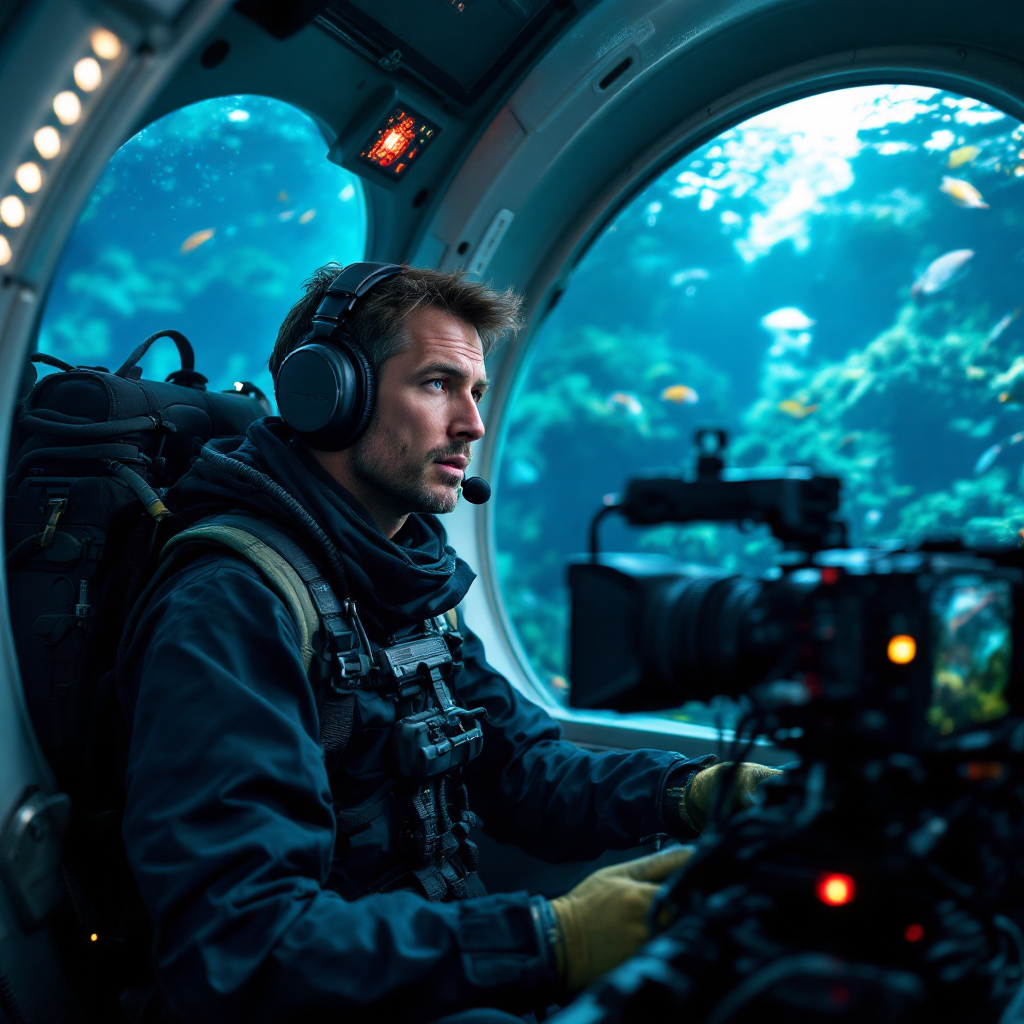
Learn to communicate the science and adventure of the deep ocean through impactful visual narratives and rigorous research. This program will equip you with the skills to produce captivating documentaries, compelling journalistic articles, and innovative multimedia content about marine life, conservation, and scientific discoveries. Master underwater filming techniques, interviewing experts, and professional editing to tell stories that inspire and raise awareness about the importance of the oceans.

Learn to communicate the science and adventure of the deep ocean through impactful visual narratives and rigorous research.

What will you learn?

  • Underwater Filming Techniques: Capture stunning images and adapt your equipment to different marine environments.
  • Narrative and Storytelling: Build exciting narratives that connect with the audience and convey powerful messages.
  • Research and Fact-Checking: Delve into marine science and ensure the accuracy of your reports.
  • Editing and Post-Production: Master editing software to create high-quality audiovisual products.
  • Distribution Strategies: Learn how to promote your reports and reach a wide audience.
Reportajes

Marine Exploration Reporting Course

Availability: 1 in stock

Who is it aimed at?

  • Science journalists and communicators interested in deepening their understanding of the narrative of underwater exploration and its discoveries.
  • Marine biologists and oceanographers seeking to improve their communication skills and connect with wider audiences.
  • Underwater photographers and videographers wishing to refine their visual storytelling for impactful documentaries and reports.
  • Communications officers from marine institutions who want to optimize their outreach strategies and raise public awareness.
  • Journalism and marine science students aspiring to a career in science communication specializing in the marine field.

Flexibility of Learning

Adapted for professionals and students: accessible online materials, asynchronous discussion forums, and personalized tutoring to enhance your reporting project.

Reportajes

Objectives and competencies

Documenting biodiversity and marine ecosystems:

Implement non-invasive sampling methodologies (acoustics, ROVs, environmental DNA) to minimize the impact on sensitive species and fragile habitats, ensuring the long-term integrity of the studied ecosystems.

Use underwater filming and photography equipment effectively:

“Operate underwater cameras and lights, adjusting parameters to optimize image quality under various visibility and depth conditions.”

Applying narrative techniques to communicate scientific findings to the general public:

Adapt technical language, create engaging stories, and use analogies to make science understandable.

Navigating safely and efficiently in challenging marine environments:

“Use navigational aids (electronic charts, radars, AIS) for accurate planning and execution, adapting to adverse weather conditions and heavy traffic.”

Managing safety and survival protocols on marine expeditions:

“Master ship abandonment techniques, including the use of salvage equipment and emergency procedures, in various weather conditions and risk scenarios.”

Identify and assess environmental risks in explored marine environments:

“Discern between risks arising from human activities (spills, fishing, navigation) and natural ones (climatic, geological, biological), proposing preventive and mitigation measures adapted to each scenario.”

Curriculum - Modules

  1. Comprehensive Maritime Incident Management: protocols, roles, and chain of command for coordinated response
  2. Operational Planning and Execution: briefing, routes, weather windows, and go/no-go criteria
  3. Rapid Risk Assessment: criticality matrix, scene control, and decision-making under pressure
  4. Operational Communication: VHF/GMDSS, standardized reports, and inter-agency liaison
  5. Tactical Mobility and Safe Boarding: RHIB maneuvers, approach, mooring, and recovery
  6. Equipment and Technologies: PPE, signaling, satellite tracking, and field data logging
  7. Immediate Care of the Affected: primary assessment, hypothermia, trauma, and stabilization for evacuation
  8. Adverse Environmental Conditions: swell, Visibility, flows, and operational mitigation

    Simulation and training: critical scenarios, use of VR/AR, and exercises with performance metrics

    Documentation and continuous improvement: lessons learned, indicators (MTTA/MTTR), and SOP updates

  1. Introduction to Marine Exploration Narrative: History and Trends
  2. Fundamentals of Underwater Photography: Equipment, Techniques, and Safety
  3. Underwater Videography: Cameras, Lighting, Basic Editing, and Storytelling
  4. Scriptwriting for Marine Reports: Structure, Characters, and Conflict
  5. Interview Techniques in Marine Environments: Preparation, Conduct, and Ethics
  6. Collecting Scientific Data: Tools, Protocols, and Collaboration with Experts
  7. Safety on Marine Expeditions: Diving, Navigation, and First Aid
  8. Communication Equipment: Radio, Satellite, and Real-Time Reporting Strategies
  9. Editing and Post-Production of Reports: Software, Visual Narrative, and Music
  10. Legal Aspects and Marine Conservation: Permits, Copyright and environmental ethics.

  1. Introduction to Underwater Visual Storytelling: History, Ethics, and Aesthetics.
  2. Underwater Imaging Equipment: Cameras, Lenses, Lighting, and Housing.
  3. Underwater Filming Techniques: Composition, Framing, Movement, and Focus.
  4. Underwater Photography: Lighting Techniques, White Balance, and Post-Processing.
  5. Underwater Research: Planning, Safety, and Dive Protocol.
  6. Visual Documentation of Marine Ecosystems: Flora, Fauna, and Environments.
  7. Marine Conservation Narratives: Storytelling to Create Impact.
  8. Underwater Interviewing Techniques: Communication and Recording in Aquatic Environments.
  9. Editing and Underwater Video Post-Production: Software, color correction, and sound.

    Legal and Ethical Aspects of Underwater Visual Storytelling: Permissions, copyright, and consent.

  1. Introduction to Marine Reporting: History, Ethics, and Current Trends
  2. Photographic and Video Equipment: Cameras, Lenses, Underwater Housings, Lighting
  3. Underwater Filming Techniques: Stability, Focus, Color Compensation, Safety
  4. Visual Narrative: Composition, Framing, Angles, Shots, Rhythm, and Editing
  5. Lighting in Marine Photography and Video: Natural Light, Flash, Strobes, Video Lights
  6. Photo and Video Editing: Software, Color Correction, Sound, Editing
  7. Planning a Marine Report: Research, Permits, Logistics, Safety
  8. Interview Techniques: Preparation, Questions, Active Listening, Conflict Management
  9. Legal and Copyright Aspects in Marine reports
  10. Distribution and promotion of the report: platforms, festivals, media outlets

  1. Introduction to Underwater Visual Storytelling: Ethics and Responsibility
  2. Underwater Photography and Video Equipment: Selection, Maintenance, and Use
  3. Underwater Lighting Techniques: Natural Light, Flashes, Spotlights, and White Balance
  4. Underwater Composition and Framing: Rule of Thirds, Lines, Perspective, and Point of Interest
  5. Planning Dives for Reportage: Safety, Logistics, and Objectives
  6. Diving with Models and Team Collaboration: Communication, Signals, and Roles
  7. Editing and Post-Production of Underwater Images and Videos: Software, Workflows, and Color Correction
  8. Narrative and Storytelling in Marine Reportage: Script, Characters, Conflict, and Resolution
  9. Aspects Legal and copyright issues in underwater photography and video

    Dissemination and promotion of marine reports: platforms, competitions, and festivals

  1. System Architecture and Components: Structural design, materials, and subsystems (mechanical, electrical, electronic, and fluid) with selection and assembly criteria for marine environments
  2. Fundamentals and Principles of Operation: Physical and engineering foundations (thermodynamics, fluid mechanics, electricity, control, and materials) that explain performance and operating limits
  3. Safety and Environmental (SHE): Risk analysis, PPE, LOTO, hazardous atmospheres, spill and waste management, and emergency response plans
  4. Applicable Regulations and Standards: IMO/ISO/IEC requirements and local regulations;
  5. Conformance criteria, certification, and best practices for operation and maintenance
  6. Inspection, testing, and diagnostics: Visual/dimensional inspection, functional testing, data analysis, and predictive techniques (vibration, thermography, fluid analysis) to identify root causes
  7. Preventive and predictive maintenance: Hourly/cycle/seasonal plans, lubrication, adjustments, calibrations, consumable replacement, post-service verification, and operational reliability
  8. Instrumentation, tools, and metrology: Measuring and testing equipment, diagnostic software, calibration and traceability; selection criteria, safe use, and storage
  9. Onboard integration and interfaces: Mechanical, electrical, fluid, and data compatibility; Sealing and watertightness, EMC/EMI, corrosion protection, and interoperability testing.

    Quality, acceptance testing, and commissioning: process and materials control, FAT/SAT, bench and sea trials, go/no-go criteria, and evidence documentation.

    Technical documentation and integrated practice: logs, checklists, reports, and a complete case study (safety → diagnosis → intervention → verification → report) applicable to any system.

Plan de estudio - Módulos

  1. Comprehensive Maritime Incident Management: protocols, roles, and chain of command for coordinated response
  2. Operational Planning and Execution: briefing, routes, weather windows, and go/no-go criteria
  3. Rapid Risk Assessment: criticality matrix, scene control, and decision-making under pressure
  4. Operational Communication: VHF/GMDSS, standardized reports, and inter-agency liaison
  5. Tactical Mobility and Safe Boarding: RHIB maneuvers, approach, mooring, and recovery
  6. Equipment and Technologies: PPE, signaling, satellite tracking, and field data logging
  7. Immediate Care of the Affected: primary assessment, hypothermia, trauma, and stabilization for evacuation
  8. Adverse Environmental Conditions: swell, Visibility, flows, and operational mitigation

    Simulation and training: critical scenarios, use of VR/AR, and exercises with performance metrics

    Documentation and continuous improvement: lessons learned, indicators (MTTA/MTTR), and SOP updates

  1. Introduction to Marine Exploration Narrative: History and Trends
  2. Fundamentals of Underwater Photography: Equipment, Techniques, and Safety
  3. Underwater Videography: Cameras, Lighting, Basic Editing, and Storytelling
  4. Scriptwriting for Marine Reports: Structure, Characters, and Conflict
  5. Interview Techniques in Marine Environments: Preparation, Conduct, and Ethics
  6. Collecting Scientific Data: Tools, Protocols, and Collaboration with Experts
  7. Safety on Marine Expeditions: Diving, Navigation, and First Aid
  8. Communication Equipment: Radio, Satellite, and Real-Time Reporting Strategies
  9. Editing and Post-Production of Reports: Software, Visual Narrative, and Music
  10. Legal Aspects and Marine Conservation: Permits, Copyright and environmental ethics.

  1. Introduction to Underwater Visual Storytelling: History, Ethics, and Aesthetics.
  2. Underwater Imaging Equipment: Cameras, Lenses, Lighting, and Housing.
  3. Underwater Filming Techniques: Composition, Framing, Movement, and Focus.
  4. Underwater Photography: Lighting Techniques, White Balance, and Post-Processing.
  5. Underwater Research: Planning, Safety, and Dive Protocol.
  6. Visual Documentation of Marine Ecosystems: Flora, Fauna, and Environments.
  7. Marine Conservation Narratives: Storytelling to Create Impact.
  8. Underwater Interviewing Techniques: Communication and Recording in Aquatic Environments.
  9. Editing and Underwater Video Post-Production: Software, color correction, and sound.

    Legal and Ethical Aspects of Underwater Visual Storytelling: Permissions, copyright, and consent.

  1. Introduction to Marine Reporting: History, Ethics, and Current Trends
  2. Photographic and Video Equipment: Cameras, Lenses, Underwater Housings, Lighting
  3. Underwater Filming Techniques: Stability, Focus, Color Compensation, Safety
  4. Visual Narrative: Composition, Framing, Angles, Shots, Rhythm, and Editing
  5. Lighting in Marine Photography and Video: Natural Light, Flash, Strobes, Video Lights
  6. Photo and Video Editing: Software, Color Correction, Sound, Editing
  7. Planning a Marine Report: Research, Permits, Logistics, Safety
  8. Interview Techniques: Preparation, Questions, Active Listening, Conflict Management
  9. Legal and Copyright Aspects in Marine reports
  10. Distribution and promotion of the report: platforms, festivals, media outlets

  1. Introduction to Underwater Visual Storytelling: Ethics and Responsibility
  2. Underwater Photography and Video Equipment: Selection, Maintenance, and Use
  3. Underwater Lighting Techniques: Natural Light, Flashes, Spotlights, and White Balance
  4. Underwater Composition and Framing: Rule of Thirds, Lines, Perspective, and Point of Interest
  5. Planning Dives for Reportage: Safety, Logistics, and Objectives
  6. Diving with Models and Team Collaboration: Communication, Signals, and Roles
  7. Editing and Post-Production of Underwater Images and Videos: Software, Workflows, and Color Correction
  8. Narrative and Storytelling in Marine Reportage: Script, Characters, Conflict, and Resolution
  9. Aspects Legal and copyright issues in underwater photography and video

    Dissemination and promotion of marine reports: platforms, competitions, and festivals

  1. System Architecture and Components: Structural design, materials, and subsystems (mechanical, electrical, electronic, and fluid) with selection and assembly criteria for marine environments
  2. Fundamentals and Principles of Operation: Physical and engineering foundations (thermodynamics, fluid mechanics, electricity, control, and materials) that explain performance and operating limits
  3. Safety and Environmental (SHE): Risk analysis, PPE, LOTO, hazardous atmospheres, spill and waste management, and emergency response plans
  4. Applicable Regulations and Standards: IMO/ISO/IEC requirements and local regulations;
  5. Conformance criteria, certification, and best practices for operation and maintenance
  6. Inspection, testing, and diagnostics: Visual/dimensional inspection, functional testing, data analysis, and predictive techniques (vibration, thermography, fluid analysis) to identify root causes
  7. Preventive and predictive maintenance: Hourly/cycle/seasonal plans, lubrication, adjustments, calibrations, consumable replacement, post-service verification, and operational reliability
  8. Instrumentation, tools, and metrology: Measuring and testing equipment, diagnostic software, calibration and traceability; selection criteria, safe use, and storage
  9. Onboard integration and interfaces: Mechanical, electrical, fluid, and data compatibility; Sealing and watertightness, EMC/EMI, corrosion protection, and interoperability testing.

    Quality, acceptance testing, and commissioning: process and materials control, FAT/SAT, bench and sea trials, go/no-go criteria, and evidence documentation.

    Technical documentation and integrated practice: logs, checklists, reports, and a complete case study (safety → diagnosis → intervention → verification → report) applicable to any system.

  1. Introduction to marine journalism: history, evolution, and current relevance.
  2. The ocean as a narrative setting: ecosystems, issues, and key players.
  3. Marine research techniques: sources, data access, and specific methodologies.
  4. Interviews in the marine environment: preparation, execution, and logistical challenges.
  5. Visual narratives at sea: underwater and surface photography and videography.
  6. Ethics of marine journalism: environmental responsibility, respect for communities, and truthfulness.
  7. Writing and style in marine journalism: scientific accuracy, engaging narrative, and communication.
  8. Safety on marine journalism expeditions: risks, protocols, and preparation.
  9. Maritime legislation and access to information: rights, limitations, and international agreements.

    Dissemination and platforms for marine reporting: traditional media, digital media, and transmedia projects.

  1. Introduction to underwater journalism: history, evolution, and trends
  2. Basic equipment for underwater photography and video: cameras, housings, lights, filters
  3. Diving safety for reporters: protocols, risks, first aid in marine environments
  4. Underwater lighting techniques: natural light, artificial light, white balance, backlighting
  5. Underwater photographic composition: rule of thirds, guidelines, framing, point of view
  6. Visual storytelling: telling stories through underwater images and videos
  7. Underwater photo and video editing: software, workflow, color correction, stabilization
  8. Ethics in underwater journalism: respect for the environment, informed consent, non-compliance Manipulation

    Legislation and permits for filming and photographing in protected areas and marine reserves
    Dissemination and publication of underwater reports: media, social networks, festivals

  1. Introduction to narrative journalism: History, evolution, and exponents of the genre.
  2. The sea as a stage: History of maritime exploration and exploitation, ecosystems, and issues.
  3. Ethics of underwater reporting: Ethical considerations in interacting with marine life and coastal communities.
  4. Research and documentation: Primary and secondary sources, maritime archives, and interviews with experts.
  5. Diving techniques for journalists: Safety, equipment, underwater communication, and legal considerations.
  6. Underwater photography and videography: Equipment, lighting techniques, composition, and visual storytelling.
  7. Screenwriting and narrative structure: Character development, plot development, and narrative pacing.
  8. Editing and post-production: Video editing tools and audio, color correction, and music composition.
  9. Distribution platforms: Television channels, documentaries, digital media, and social networks.
  10. Maritime law and copyright: Intellectual property protection and international regulations.

  1. Introduction to Marine Visual Storytelling: Ethics, Impact, and Responsibility
  2. Fundamentals of Underwater Photography: Equipment, Safety, and Basic Techniques
  3. Underwater Videography: Camera Setup, Lighting, and Stabilization
  4. Video and Photo Editing: Software, Workflow, and Optimization for the Web
  5. Sound Design for Marine Productions: Audio Capture, Editing, and Mixing
  6. Scriptwriting for Marine Reports: Research, Narrative Structure, and Characters
  7. Virtual Reality (VR) and Augmented Reality (AR) in the Ocean: Fundamentals and Applications
  8. Narrative Immersion Techniques: Storytelling, Empathy, and Connecting with the Audience
  9. Producing Marine Documentaries: Planning and Filming and post-production.
  10. Distribution and promotion of marine content: festivals, online platforms, and social media.

Career opportunities

  • Marine Expedition Documentarian: Creating visual content (video, photography) for media outlets and digital platforms.
  • Underwater Filmmaker: Producing documentaries and films about marine life, exploring shipwrecks and underwater environments.
  • Marine Nature Photographer: Capturing high-quality images for magazines, books, and exhibitions, both scientific and educational.
  • Marine Exploration Tourism Guide: Leading groups on diving, snorkeling, and marine wildlife viewing trips, with a focus on interpreting the environment.
  • Marine Science Communication Consultant: Advising institutions and organizations on disseminating research and projects related to the sea.
  • Marine Exploration Blogger/Vlogger: Creating original content for online platforms, sharing experiences and knowledge about the world Submarine.
  • Research Assistant in Marine Exploration Projects: Support in data collection, sample analysis, and documentation of findings during expeditions.
  • Marine Environmental Educator: Design and delivery of educational programs on the importance of ocean and marine life conservation.

“`

Admission requirements

Academic/professional profile:

Degree/Bachelor's degree in Nautical Science/Maritime Transport, Naval/Marine Engineering, or a related field; or proven professional experience in bridge/operations.

Language proficiency:

Recommended functional maritime English (SMCP) for simulations and technical materials.

5. Induction

Updated resume, copy of degree or seaman's book, ID card/passport, letter of motivation.

Technical requirements (for online):

Equipment with camera/microphone, stable connection, ≥ 24” monitor recommended for ECDIS/Radar-ARPA.

Admission process and dates

1. Online
application

(form + documents).

2. Academic review and interview

(profile/objectives/schedule compatibility).

3. Admission decision

(+ scholarship proposal if applicable).

4. Reservation of place

(deposit) and registration.

5. Induction

(access to campus, calendars, simulator guides).

Scholarships and grants

  • Discover the Depths: Learn the essential techniques and tools for creating impactful marine exploration reports.
  • Underwater Storytelling: Master the art of visual and written storytelling that reveals the secrets of the ocean.
  • Equipment and Safety: Familiarize yourself with specialized equipment and safety protocols for successful expeditions.
  • Editing and Post-Production: Hone your video and photo editing skills to create high-quality content.
  • Impact and Conservation: Use your reports to raise awareness about the importance of marine conservation and promote the change.
Boost your career as an ocean explorer and communicator.

Testimonials

Frequently asked questions

To report on the discoveries and findings of marine expeditions, in order to disseminate knowledge about the ocean and raise awareness of its importance.

Yes. The itinerary includes ECDIS/Radar-ARPA/BRM with harbor, ocean, fog, storm, and SAR scenarios.

Online with live sessions; hybrid option for simulator/practical placements through agreements.

Report on the discoveries and findings of marine expeditions.

Recommended functional SMCP. We offer support materials for standard phraseology.

Yes, with a relevant degree or experience in maritime/port operations. The admissions interview will confirm suitability.

Optional (3–6 months) through Companies & Collaborations and the Alumni Network.

Simulator practice (rubrics), defeat plans, SOPs, checklists, micro-tests and applied TFM.

A degree from Navalis Magna University + operational portfolio (tracks, SOPs, reports and KPIs) useful for audits and employment.

  1. Introduction to Marine Visual Storytelling: Ethics, Impact, and Responsibility
  2. Fundamentals of Underwater Photography: Equipment, Safety, and Basic Techniques
  3. Underwater Videography: Camera Setup, Lighting, and Stabilization
  4. Video and Photo Editing: Software, Workflow, and Optimization for the Web
  5. Sound Design for Marine Productions: Audio Capture, Editing, and Mixing
  6. Scriptwriting for Marine Reports: Research, Narrative Structure, and Characters
  7. Virtual Reality (VR) and Augmented Reality (AR) in the Ocean: Fundamentals and Applications
  8. Narrative Immersion Techniques: Storytelling, Empathy, and Connecting with the Audience
  9. Producing Marine Documentaries: Planning and Filming and post-production.
  10. Distribution and promotion of marine content: festivals, online platforms, and social media.

Request information

  1. Complete the Application Form
  2. Attach your CV/Qualifications (if you have them to hand).
  3. Indicate your preferred cohort (January/May/September) and whether you want the hybrid option with simulator sessions.
An academic advisor will contact you within 24–48 hours to guide you through the admission process, scholarships, and compatibility with your professional schedule. Translated with DeepL.com (free version)
Please enable JavaScript in your browser to complete this form.
Click or drag a file to this area to upload.

Teachers

0
    0
    Tu carrito
    Tu carrito esta vacíoRegresar a la tienda
    Scroll to Top


