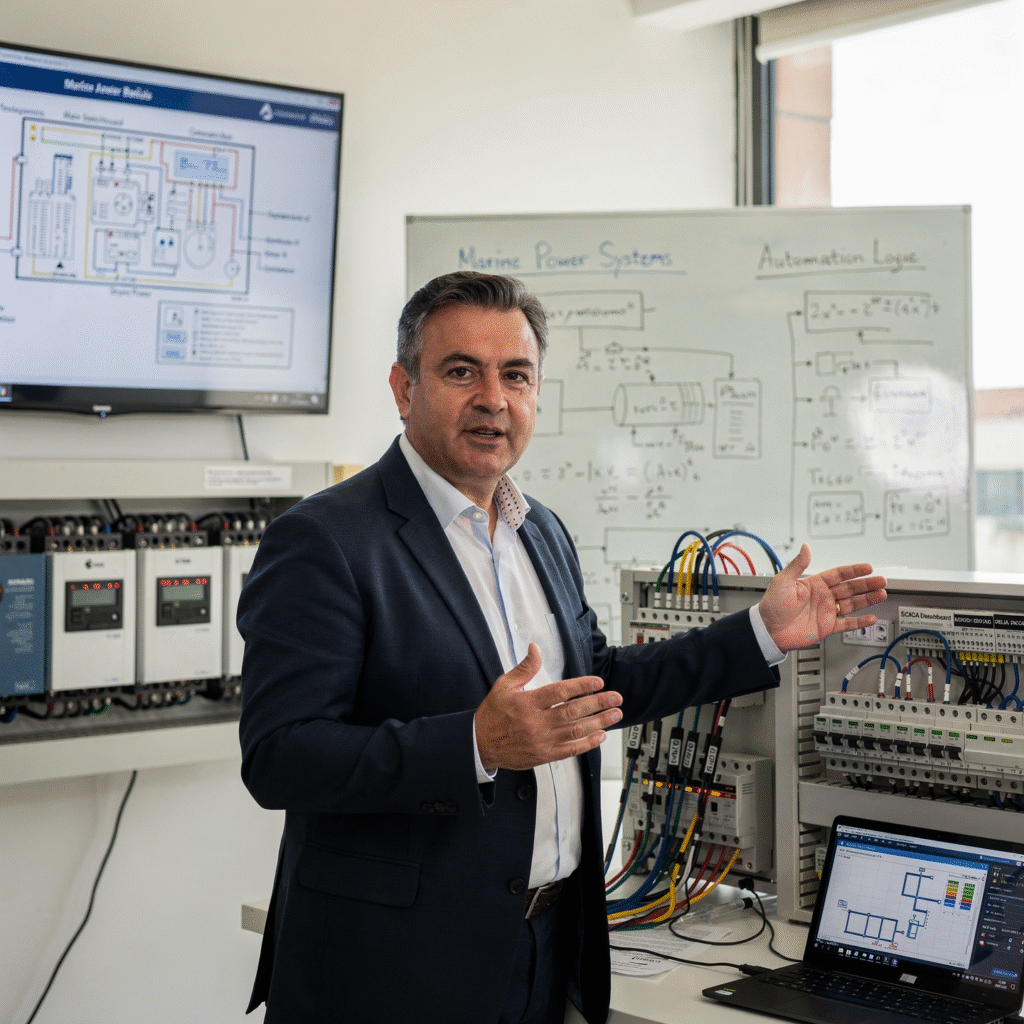
Master’s Degree in Renewable Energies for Mitigation in Ports

Why this master’s programme?

The Master’s in Renewable Energy for Mitigation in Ports

This program prepares you to lead the energy transition in the port sector. Learn to design, implement, and manage renewable energy projects that reduce the carbon footprint of ports and transform them into sustainable energy hubs. Master key technologies, from solar and wind power to energy storage and smart grid management, with a practical approach tailored to the specific needs of the port environment.

This program prepares you to lead the energy transition in the port sector.

Differential Advantages

  • Real-World Case Studies: Analyze successful projects and learn from the challenges overcome in ports around the world.
  • Simulations and Software Tools: Use specialized software to model and optimize renewable energy systems.
  • Collaboration with Industry Experts: Interact with leading professionals in renewable energy and port management.
  • Development of Practical Projects: Apply your knowledge to real-world projects and build a professional portfolio.
  • Networking Opportunities: Connect with companies and organizations seeking renewable energy professionals for ports.
EnergĂ­as

Master’s Degree in Renewable Energies for Mitigation in Ports

Availability: 1 in stock

Who is it aimed at?

  • Engineers and architects seeking specialization in the integration of renewable energy into port infrastructure.
  • Port managers and authorities interested in reducing their carbon footprint, complying with environmental regulations, and optimizing energy consumption.
  • Environmental consultants and advisors requiring advanced technical knowledge to offer innovative solutions in the maritime-port sector.
  • Energy and technology companies wishing to develop renewable energy projects in port and maritime environments.
  • Graduates in environmental engineering, energy, and related fields seeking cutting-edge training to lead the energy transition in the port sector.

Flexibility and focus Practical:
Designed for active professionals: online methodology with real-world case studies, international networking and access to state-of-the-art simulation tools.

EnergĂ­as

Objectives and skills

Design and implement sustainable energy systems:

“Considering the complete life cycle (generation, storage, distribution, consumption) and optimizing efficiency, resilience, and grid integration.”

Assess the environmental impact of energy in ports:

“Identify and quantify the main sources of pollution (emissions, discharges, waste) generated by port operations and energy consumption, proposing mitigation and adaptation measures.”

Managing renewable energy projects in port environments:

Evaluate the technical, economic and environmental feasibility of the project, considering the particularities of the port environment and its specific regulations.

Optimize energy consumption and reduce the carbon footprint:

Implement eco-efficient navigation strategies (trimming, optimal speed, weather routing) and actively monitor the vessel’s energy performance, adjusting operating parameters and preventive maintenance.

Integrating renewable technologies into port infrastructure:

“Optimize energy consumption through intelligent management systems and the implementation of microgrids.”

Developing port resilience strategies in the face of climate change:

“Assess vulnerabilities, implement adaptations (infrastructure, operational), and foster stakeholder collaboration to mitigate climate impacts and ensure operational continuity.”

Study plan – Modules

  1. Fundamentals of Sustainability in Port Infrastructure: Environmental, Social, and Economic Criteria
  2. Energy Diagnosis of Ports: Energy Audits, Consumption Profile, and Evaluation of Available Renewable Sources
  3. Integrated Design for the Incorporation of Renewable Energies: Architectural, Urban Planning, and Operational Aspects
  4. Evaluation of Renewable Resources in the Port Environment: Solar, Wind, Tidal, and Wave Energy
  5. Advanced Models for Simulation and Optimization of the Energy Balance in Port Terminals
  6. International and National Regulations Applicable to Sustainable Port Infrastructure and Renewable Energies
  7. Management of Renewable Energy Projects in Ports: Planning, Cost Control, Risks, and Schedules
  8. Implementation of Intelligent Systems for Energy Monitoring and Control in Port Infrastructure
  9. Connectivity and Hybrid Systems: Integration of Sources Renewables with port power grids and energy storage

    Life cycle assessment (LCA) and environmental impact assessment of renewable port infrastructure

    Emission mitigation strategies and climate adaptability in port design

    Detailed case studies: successful implementation of renewable energy in ports around the world

    Emerging technological innovations for sustainable port infrastructure: advanced materials and modular construction

    Developing policies and regulatory frameworks to promote sustainable investment and operation in ports

    Planning the energy transition in ports: phases, stakeholders, and financing mechanisms

  1. Fundamental principles of renewable energy generation: characteristics, efficiency, and application in ports
  2. Advanced photovoltaic technologies: bifacial modules, solar tracking, and optimization in port areas
  3. Offshore and nearshore wind systems: floating wind turbines, integration into maritime infrastructure, and wind resource analysis
  4. Tidal and wave energy generation: fundamentals, device design, and environmental impact assessment
  5. Emerging technologies in solar thermal energy for port industrial processes and desalination
  6. Advanced energy storage: solid-state batteries, redox flow technologies, and high-temperature thermal storage
  7. Hybrid generation and storage systems: modeling, control, and optimization strategies for dynamic demands in ports
  8. Port smart grids: integration of sources Renewables, demand management, and local electricity grid stability

    Implementation of AI-based Energy Management Systems (EMS) for real-time prediction and optimization

    Environmental impact and regulations: assessment criteria, certifications, and standards applicable to port energy infrastructure

  1. Conceptual and regulatory framework for sustainability in port infrastructure: international guidelines, ISO standards, and applicable environmental policies
  2. Technological innovation in distributed energy systems for ports: integration of microgrids, energy storage, and smart demand management
  3. Advanced design of green infrastructure: eco-efficient materials, sustainable construction techniques, and resilience criteria against climate change
  4. Optimization of renewable energy integration: technical evaluation and selection of renewable resources (wind, solar photovoltaic, wave, and tidal) in port environments
  5. Energy modeling and simulation for port infrastructure: software tools, scenario analysis, and prediction of energy behavior
  6. Control and automation systems for the efficient operation of renewable energy: SCADA, IoT, and industrial communication technologies
  7. Environmental impact assessment and Social impact of energy projects in ports: life cycle analysis, carbon footprint, and participatory methods of public consultation

    Design and configuration of smart ports: integration of digital infrastructure, sensors, and management platforms for real-time monitoring

    Economic and financial aspects of implementing sustainable infrastructure: financing models, cost-benefit analysis, and green subsidies

    Case studies and global trends in the application of renewable technologies in strategic ports: benchmarks, lessons learned, and technological outlook

  1. Fundamentals and evolution of decarbonization in port infrastructure: regulatory challenges, international objectives, and alignment with the 2030 Agenda
  2. Design and architecture of smart microgrids for ports: integration of renewable energies, distributed generation, and energy management systems (EMS)
  3. Planning and optimization of large-scale energy storage: battery technologies, flywheels, hydraulic and thermal systems applied to port demands
  4. Production and use of green hydrogen in ports: electrolyzers, storage, distribution, and applications in mobility and electricity generation
  5. Advanced modeling and simulation for predictive energy management: artificial intelligence algorithms, machine learning, and adaptive control in critical port infrastructure
  6. Energy resilience strategies in the face of extreme events: climate contingencies, grid failures, cybersecurity, and business continuity plans
  7. Implementation of SCADA and IoT systems
  8. For real-time monitoring and control of renewable and conventional energy assets in ports
  9. Environmental and social impact assessment of port decarbonization projects: metrics, indicators, and sustainable reporting in accordance with international standards
  10. Case studies and global benchmarking of leading ports in energy transition: analysis of successful technologies, business models, and public policies
  11. Legal, regulatory, and financial framework for investments in renewable energy and clean technologies in ports: incentives, certifications, and green financing mechanisms
  1. Fundamentals of Hybrid Renewable Energy Systems: Concepts, Configurations, and Applications in Ports
  2. Integrated Renewable Energy Sources: Technical Analysis of Solar Photovoltaics, Wind, Biomass, and Batteries in Port Environments
  3. Advanced Modeling and Simulation: Tools and Software for Energy Optimization in Smart Ports
  4. Predictive and Adaptive Control: Load and Storage Management Algorithms to Maximize Efficiency and Resilience
  5. Integration Strategies with the Port Power Grid: Reducing Peak Demand and Mitigating Outages
  6. Real-Time Energy Management: SCADA, IoT, and Smart Grid Systems Applied to Sustainable Ports
  7. Diagnostics and Predictive Maintenance of Hybrid Systems: Sensors, Continuous Monitoring, and Fault Analysis
  8. Optimizing Energy Consumption in Port Infrastructure: Lighting, Machinery, and Systems
  9. Auxiliary Services
  10. Economic evaluation and life cycle analysis: costs, return on investment, and financial sustainability
  11. International regulations and technical standards applicable to the installation and operation of renewable energy in ports
  12. Case study: design and implementation of a hybrid renewable energy system for a smart and resilient port
  13. Energy resilience in the face of contingencies: backup strategies and climate adaptation in port facilities
  14. Technological innovation and emerging trends: advanced storage, artificial intelligence, and blockchain for energy management
  15. Multidisciplinary integration: coordination with logistics, security, and environment for the energy transition in ports
  16. Practical projects and simulations: real-world application of optimization and control in hybrid systems for emissions mitigation in ports
  1. Fundamentals of Sustainability in Port Infrastructure: Principles, International Standards, and Applied Environmental Regulations
  2. Analysis and Evaluation of Port Environmental Impact: Advanced Methodologies for Quantifying Emissions and Carbon Footprint
  3. Integration of Renewable Energies in the Port Environment: Emerging Technologies and Hybrid Solutions for Clean Generation
  4. Technological Innovation Applied to Reducing the Environmental Footprint: Smart Grids, Energy Storage, and Intelligent Digitalization
  5. Design and Management of Energy Efficiency Systems in Port Operations: Audits, Benchmarking, and Continuous Improvement
  6. Strategic Planning for Climate Change Mitigation in Ports: Climate Risk Analysis and Infrastructure Adaptation
  7. Implementation of Advanced Environmental Monitoring Systems: IoT Sensors, Big Data, and Predictive Models for Real-Time Management
  8. Logistics Optimization and Sustainable Transport: Electrification, Green Hydrogen, and Alternative Fuels in the Supply Chain Port infrastructure
  9. Public policies, incentives, and financing for renewable energy projects in ports: international mechanisms and best practices

    Global and Latin American case studies: successes and challenges in sustainable and technological integration in port infrastructure

  1. Fundamentals of Technological Innovation in Renewable Energies Applied to Port Infrastructure: Principles, Trends, and Success Stories
  2. Comprehensive Energy Diagnosis of Ports: Demand Assessment, Source Analysis, and Carbon Footprint
  3. Design and Application of Hybrid Clean Generation Systems: Integration of Photovoltaics, Wind Power, and Storage Systems in Ports
  4. Advanced Energy Management Models: Distributed Control, Port Smart Grids, and Real-Time Optimization
  5. Implementation of Waste Energy Capture and Utilization Technologies in Port Infrastructure
  6. Methodologies for Assessing Environmental and Economic Sustainability in Port Renewable Energy Projects
  7. International Standards and Certifications for Green Infrastructure in Ports: Compliance, Strategies, and Competitive Advantages
  8. Management of Technological Innovation Projects: Life Cycle, Risks, Financing, and Technology Transfer
  9. Digital Tools for Sustainable port planning and monitoring: energy simulation, IoT, and big data applied.

    Detailed case studies: successful implementation of renewable technologies in strategic ports globally and lessons learned.

  1. Advanced principles of renewable energy applied to port environments: analysis of wind, solar, and tidal resources and their potential for mitigating pollutant emissions in port infrastructure
  2. Design and optimization of hybrid energy generation systems: integration of photovoltaic technologies, offshore wind farms, and bioenergy into smart port grids
  3. Computational modeling and advanced simulation for evaluating the energy performance and emissions of renewable systems in ports: specialized software and predictive algorithms
  4. Implementation and management of smart energy storage systems: high-capacity batteries, hydrogen technologies, and flywheels to ensure stability and continuity of supply
  5. Architecture and configuration of port microgrids: design of topologies and protocols for the efficient and secure integration of renewable sources, storage, and variable loads
  6. Real-time control and monitoring using SCADA and IoT systems: monitoring and predictive diagnostics and adaptive control strategies in port infrastructures
  7. Environmental and economic impact analysis: life cycle assessment, carbon footprint reduction, financial incentives, and regulatory policies applied to energy projects in ports

    Advanced demand management and dynamic response strategies: incorporation of artificial intelligence and machine learning-based algorithms to optimize energy consumption and minimize operating costs

    International regulations and technical standards for the integration of renewable energy in ports: ISO, IEC, International Maritime Organization (IMO) guidelines, and binding local legislation

    Comprehensive case study: design, implementation, and evaluation of a renewable energy system with smart storage in a real port infrastructure, considering technical, environmental, and operational management aspects

  1. Global and regional overview of port decarbonization: analysis of international objectives and standards (2030 Agenda, Paris Agreement, IMO Green Ports)
  2. Technological innovation in renewable energies applied to port infrastructure: solar photovoltaics, offshore wind, wave energy, and biogas
  3. Design and optimization of integrated hybrid energy systems: batteries, thermal storage, and intelligent energy management systems (EMS)
  4. Advanced modeling and simulation for the integration of renewables into port power grids: prediction techniques, demand analysis, and grid stability
  5. Automation and digitalization: integration of IoT, big data, and SCADA control for operational efficiency and real-time monitoring
  6. Strategies for the sustainable energy transition in ports: adaptive planning, risk management, and environmental impact assessment
  7. International case studies and benchmarking: implementation of wind farms Solar power, offshore wind turbines, and storage systems in leading ports

    Regulations, certifications, and specific technical standards for renewable energy projects in port infrastructure

    Financing and innovative business models for clean energy projects in ports: public-private partnerships, green bonds, and tax incentive mechanisms

    Multidisciplinary training and organizational change management to foster a culture of innovation and sustainability in port operations

  1. Introduction to the final project: objectives, scope, and methodology for integrating renewable energy into port infrastructure
  2. Energy and environmental assessment of ports: analysis of consumption, emissions, and carbon footprint in port operations
  3. Evaluation and selection of renewable technologies applicable in port environments: solar photovoltaics, offshore wind, wave energy, and storage systems
  4. Advanced modeling and simulation for optimizing hybrid energy systems in ports: tools, parameters, and resilience scenarios
  5. Design of integrated strategies for energy efficiency and reducing dependence on fossil fuels: smart microgrids and demand management
  6. Technical and economic analysis: cost-benefit analysis, return on investment, and life cycle analysis of renewable solutions in commercial and industrial ports
  7. Regulations, international standards, and public policies for implementing renewable energy in infrastructure
  8. Ports

    Risk management and resilience to extreme weather events and energy fluctuations: operational continuity and adaptation protocols

    Digital tools for real-time monitoring and control of renewable energy systems connected to port infrastructure

    Development of a comprehensive strategic plan for port energy transition: roadmap, sustainability indicators, and innovative financing mechanisms

Career prospects

“`html

  • Renewable Energy Project Manager in Ports: design, planning and implementation of wind, solar, wave energy projects, etc. in port environments.
  • Energy consultant specializing in ports: energy audits, economic feasibility analysis, optimization of energy consumption, and improvement proposals.
  • Sustainability manager in ports: development and implementation of sustainability strategies, reduction of the carbon footprint, and compliance with environmental regulations.
  • Renewable energy installation maintenance technician in ports: operation, preventive and corrective maintenance of wind farms, solar plants, and other installations.
  • Energy systems design engineer for ports: design of renewable energy generation, storage, and distribution systems adapted to port needs.
  • Researcher in renewable energies applied to ports: development of new technologies, optimization of existing systems, and evaluation of their environmental and economic impact.
  • Energy auditor for port facility certification: verification Compliance with energy efficiency and sustainability standards.

    Port Energy Policy Advisor: Development of strategies for integrating renewable energy into port planning and management.

    “`

Entry requirements

Academic/professional profile:

Bachelor’s degree in Nautical Science/Maritime Transport, Naval/Marine Engineering or a related qualification; or proven professional experience on the bridge/in operations.

Language proficiency:

Functional Maritime English (SMCP) recommended for simulations and technical materials.

Documentation:

Updated CV, copy of qualification or seaman’s book, national ID/passport, motivation letter.

Technical requirements (for online):

Device with camera/microphone, stable internet connection, monitor ≥ 24” recommended for ECDIS/Radar-ARPA.

Admissions process and dates

Online
application

(form + documents).

Academic review and interview

Admissions decision

Admissions decision

(+ scholarship offer if applicable).

Place reservation

(deposit) and enrolment.

Induction

(access to the virtual campus, calendars, simulator guides).

Scholarships and financial support

  • Advanced Specialization: Master renewable energy technologies applied to port environments for effective mitigation.
  • Port Sustainability: Learn to design and implement wind, solar, and hydropower solutions in ports, reducing their environmental footprint.
  • Energy Efficiency: Optimize energy consumption and management in port infrastructure, achieving significant savings and complying with environmental regulations.
  • Case Studies: Analyze real-world projects and develop skills for strategic decision-making in the port energy transition.
  • Professional Networking: Connect with industry experts and expand your career opportunities in a growing market. constant.
Apply your knowledge to drive innovation and sustainability in the port sector.

Testimonials

Frequently asked questions

Mitigating the environmental impact of port activity through the integration of renewable energies.

Yes. The itinerary includes ECDIS/Radar-ARPA/BRM with harbor, ocean, fog, storm, and SAR scenarios.

Online with live sessions; hybrid option for simulator/practical placements through agreements.

Recommended functional SMCP. We offer support materials for standard phraseology.

Yes, with a relevant degree or experience in maritime/port operations. The admissions interview will confirm suitability.

Optional (3–6 months) through Companies & Collaborations and the Alumni Network.

Simulator practice (rubrics), defeat plans, SOPs, checklists, micro-tests and applied TFM.

A degree from Navalis Magna University + operational portfolio (tracks, SOPs, reports and KPIs) useful for audits and employment.

  1. Introduction to the final project: objectives, scope, and methodology for integrating renewable energy into port infrastructure
  2. Energy and environmental assessment of ports: analysis of consumption, emissions, and carbon footprint in port operations
  3. Evaluation and selection of renewable technologies applicable in port environments: solar photovoltaics, offshore wind, wave energy, and storage systems
  4. Advanced modeling and simulation for optimizing hybrid energy systems in ports: tools, parameters, and resilience scenarios
  5. Design of integrated strategies for energy efficiency and reducing dependence on fossil fuels: smart microgrids and demand management
  6. Technical and economic analysis: cost-benefit analysis, return on investment, and life cycle analysis of renewable solutions in commercial and industrial ports
  7. Regulations, international standards, and public policies for implementing renewable energy in infrastructure
  8. Ports

    Risk management and resilience to extreme weather events and energy fluctuations: operational continuity and adaptation protocols

    Digital tools for real-time monitoring and control of renewable energy systems connected to port infrastructure

    Development of a comprehensive strategic plan for port energy transition: roadmap, sustainability indicators, and innovative financing mechanisms

Request information

  1. Complete the Application Form.

  2. Attach your CV/degree certificate (if you have it to hand).

  3. Indicate your preferred cohort (January/May/September) and whether you would like the hybrid option with simulator sessions.

    An academic advisor will contact you within 24–48 hours to guide you through the admission process, scholarships, and compatibility with your professional schedule.

Please enable JavaScript in your browser to complete this form.
Click or drag a file to this area to upload.

Faculty

0
    0
    Tu carrito
    Tu carrito esta vacĂ­oRegresar a la tienda
    Scroll to Top