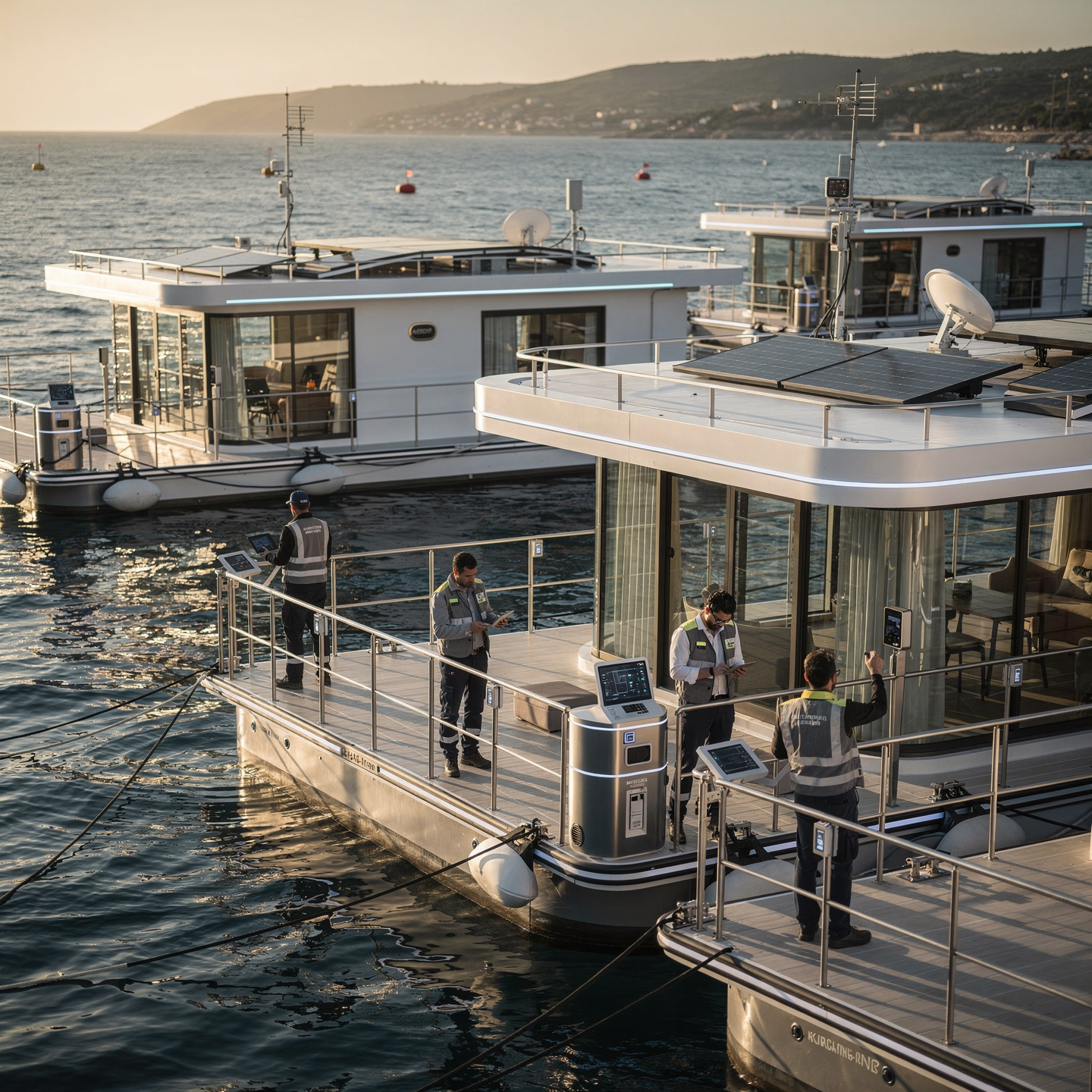
Master’s Degree in Nautical Housing and Smart Homes
Why this master’s programme?
The Master’s Degree in Nautical Homes and Smart Boat Homes
Prepares you to lead the revolution of the sustainable and technologically advanced floating habitat. Explore everything from innovative architectural design to the integration of home automation systems and renewable energy. Learn to create unique living spaces that combine comfort, efficiency, and respect for the marine environment, responding to the growing demand for singular residential alternatives.
Differential Advantages
- Sustainable Design: Eco-design principles applied to floating construction.
- Advanced Home Automation: Intelligent control of systems and home automation.
- Renewable Energies: Integration of solar panels, wind turbines, and energy management systems.
- Regulatory Framework: Comprehensive knowledge of applicable maritime and urban planning regulations.
- Comprehensive Project: Development of a real nautical home or houseboat project. intelligent.
- Modality: Online
- Level: Masters
- Hours: 1600 H
- Start date:
Availability: 1 in stock
Who is it aimed at?
- Naval architects and engineers looking to specialize in the design and construction of sustainable and innovative floating homes.
- Interior designers and landscape architects interested in creating unique and functional living spaces in aquatic environments.
- Real estate developers and tourism developers exploring new business models in the nautical housing sector.
- Nautical professionals (marinas, shipyards) wishing to expand their service offerings with floating housing solutions.
- Investors and entrepreneurs seeking growth opportunities in the emerging market for smart homes on the water.
Flexibility and Specialization
A program designed to combine learning with your professional activity: flexible online methodology, practical projects, and networking with international industry experts.
Objectives and skills

Designing and optimizing floating living spaces:
Integrate habitability, energy efficiency and nautical safety criteria into the conceptual and detailed design of the floating structure.

Integrating and automating technological systems in nautical homes:
“Implement centralized control and remote monitoring systems, ensuring cybersecurity and redundancy.”

Evaluate the feasibility and sustainability of nautical housing projects:
Analyze the long-term environmental, social, and economic impact, considering coastal regulations and resilience to climate change.

Manage and market innovative nautical housing projects:
“Identify market opportunities and adapt the product to customer needs, using digital marketing strategies and specialized networking in the nautical sector.”

Comply with applicable maritime regulations and legislation:
“Interpret and apply national and international legislation relevant to maritime safety, pollution prevention and ship operations.”

Leading the construction and maintenance of residential floating structures:
“Manage multidisciplinary teams (engineers, architects, operators) in the optimization of resources and regulatory compliance.”
Study plan – Modules
- Advanced Foundations of Nautical Design: Integration of Naval and Living Architecture for Floating Homes
- Smart Materials: Properties, Resistance to Marine Corrosion, Selection, and Maintenance in Marine Environments
- Innovations in Structural Systems: Modular Design, Dynamic Flexibility, and Motion Damping in Houseboats
- Passive and Active Thermal Management: Insulation Techniques, Natural Ventilation, and Smart Climate Control Adapted to Nautical Environments
- Implementation of Renewable Energies: Integrated Photovoltaic Systems, Hydraulic Turbines, and Wind Power Generation in Floating Homes
- Advanced Automation and Home Automation: IoT Integration for Remote Control and Energy Optimization in Smart Nautical Homes
- Environmental Monitoring Systems: Air Quality, Humidity, and Leak or Marine Pollution Detection Sensors
- Optimization
- Energy consumption through predictive algorithms and machine learning for houseboat fleets
- Sustainable water management: recycling, compact desalination plants, and rainwater harvesting systems applied to floating homes
- International standards and environmental certifications applicable to smart nautical homes: compliance and competitive advantages
- Fundamentals of home automation in marine dwellings: concepts, evolution, and specific applications to maritime environments
- Architecture of advanced home automation systems: integration of sensors, actuators, and controllers on floating platforms
- Communication protocols and standards: KNX, BACnet, Modbus, MQTT, and their application on houseboats
- Design and implementation of onboard IoT networks: connectivity, mesh networks, and redundancy to ensure reliability
- Intelligent automation: adaptive control algorithms for energy management, climate control, and dynamic lighting
- Onboard security through integrated systems: alarms, IP video surveillance, intruder detection, and real-time monitoring
- Access control using biometrics and RFID systems adapted to maritime environments with adverse conditions
- Comprehensive comfort management: control of temperature, humidity, ventilation, and air quality using advanced sensors and Automatic actuators
Integration of renewable energy and smart storage systems: efficient consumption management and onboard resource optimization
Advanced automation of fire safety and leak detection systems for comprehensive protection of the nautical living space
Human-machine interface (HMI) and mobile applications: ergonomic design for remote control and management of home automation systems from any location
Predictive maintenance protocols and real-time monitoring through data analysis and applied artificial intelligence
Legal and regulatory considerations applicable to home automation systems in floating homes: SOLAS, IMO, and local regulations
Case studies and integrated projects: simulation and configuration of advanced home automation systems in real-world nautical living environments
Emerging trends and the future of home automation in smart homeboats: integration with virtual assistants, augmented reality, and digital technology twins
- Fundamentals of Sustainability in Marine Housing: Environmental principles applied to floating structures, life cycle assessment, and ecological impact analysis.
- Advanced Materials and Nanotechnology: Use of lightweight composites, reinforced polymers, and smart coatings to improve durability and structural efficiency in harsh marine environments.
- Integrated Energy Management Systems: Design and operation of hybrid microgrids combining solar, offshore wind, and smart storage for autonomous floating homes.
- Efficiency in Thermal and Acoustic Insulation: Applications of aerogel technologies, recycled insulation, and multifunctional panels to optimize onboard environmental comfort.
- Smart Home Automation and Systems: Integration of IoT sensors, programmable logic controllers (PLCs), and smart platforms for real-time monitoring of energy consumption and resource management.
- Optimization Hydrodynamics in architectural design: Fluid dynamic principles and CFD simulations to minimize energy consumption and maximize the stability and maneuverability of marine living quarters.
Advanced water treatment and reuse systems: Reverse osmosis technologies, bioreactors, and recycling systems to ensure water self-sufficiency in sustainable vessels.
Implementation of LEED protocols and environmental certifications: Adaptation of international standards for marine living projects, guaranteeing regulatory compliance and sustainability.
Advanced waste management and biodegradable materials: Solutions to minimize the ecological footprint and close the material cycle in marine environments.
Innovations in clean propulsion and renewable energy systems: Fuel cell technologies, electric propulsion, and marine wind turbines for habitable vehicles and smart vessels.
- International and local regulatory framework for Smart Homeboats: comparative analysis of IMO conventions, European directives, and applicable national regulations
- Approval and technical certification criteria: classification of advanced materials, integrated automation systems, and IoT devices in nautical environments
- Physical and structural security protocols: impact resistance, dynamic stability, fire protection, and state-of-the-art fire-resistant materials
- Implementation of cybersecurity systems: defense-in-depth architecture, intrusion detection, vulnerability management, and over-the-air (OTA) updates
- Specific regulations for data management and privacy in Homeboats: GDPR compliance, data encryption, and secure access policies
- Predictive maintenance based on artificial intelligence and data analysis: continuous monitoring using IoT sensors, diagnostic algorithms, and failure forecasting
- Integration SCADA systems and distributed control for the remote monitoring of smart marine facilities
Advanced techniques for non-destructive testing (NDT) of structural components and electrical systems: ultrasound, thermography, and eddy current testing
Technical audit procedures and periodic certifications: ISO standards, Lloyd’s Register certification, Bureau Veritas, and their practical application in houseboats
Comprehensive risk management: incident response protocols, emergency simulations, and contingency plans to ensure the integrity and safe operation of the marine living space
- Advanced Principles of Silent Propulsion: Acoustic Analysis and Noise Reduction in Hybrid Marine Systems
- Design and Selection of High-Efficiency Electric Motors for Residential Vessels: Technical Specifications and Performance
- Integration of Next-Generation Battery Systems: Lithium-Ion, Solid-State, and Modular Solutions for Onboard Energy Storage
- Implementation of Flexible Solar Panels and Photovoltaics Integrated into Hull and Superstructure: Performance and Durability Assessment in Marine Environments
- Generation and Management of Adaptive Wind Energy: Vertical and Horizontal Turbines for Optimizing Energy Supply on Houseboats
- Kinetic and Thermal Energy Recovery and Utilization Systems: Innovations in Passive Power Generation
- Advanced Automation and Intelligent Control of Energy Systems: Optimization Algorithms, Demand Management, and Predictive Maintenance
- Environmental Impact Assessments and International Regulations Applicable to the Eco-friendly propulsion in smart nautical homes
Evaluation and certification of energy efficiency in vessels with integrated renewable energy systems according to IMO standards and international classifications
Case study: comprehensive design and simulation of a silent propulsion and renewable energy system for a state-of-the-art houseboat, including cost-benefit analysis
- Fundamentals of Technological Innovation Applied to Marine Homes: Current and Future Trends in the Maritime Residential Industry
- Comprehensive Sustainability: Analysis of Ecological Materials, Energy Efficiency, and Waste Management in the Design of Smart Boat-Homes
- Standards and Advanced Regulations: Compliance with MARPOL, SOLAS, IMO Guidelines, and Specific Certifications for Smart Marine Homes
- Integration of Home Automation Systems: Advanced home automation for climate control, lighting, security, and onboard automation using marine IoT networks
- Technological Interoperability Protocols: Communication between Devices, Standard Protocols, and System Architecture for Modular and Scalable Installation
- Ecological Propulsion and Renewable Energies: Design and Implementation of Hybrid Systems, Electric Motors, Solar and Wind Power Adapted to Residential Vessels
- Intelligent Management of Hydraulic and Electrical Resources: Storage Systems, Efficient distribution and real-time monitoring of onboard consumption
Advanced modeling and simulation of smart marine environments: specialized software for design optimization and validation of integrated systems
Security and cybersecurity considerations in connected marine homes: protection against digital threats and integrated emergency protocols
Environmental impact assessment and eco-certifications: strategies for minimizing impact and obtaining sustainability labels in smart marine projects
- Advanced principles of sustainable design: life cycle analysis, selection of eco-friendly materials, and strategies to minimize the environmental footprint of marine homes
- Integration of intelligent automation systems: IoT architecture for houseboats, communication protocols, and centralized resource management
- Energy optimization through renewable technologies: installation and configuration of marine solar panels, compact wind turbines, and energy recovery systems
- Modular and adaptable design: construction solutions to maximize living space and functional flexibility in variable marine environments
- Innovations in thermal and acoustic insulation: advanced materials and techniques applied for comfort and energy efficiency in marine environments
- Automation of critical systems: intelligent climate control, dynamic LED lighting, consumption monitoring, and predictive maintenance
- Implementation of eco-friendly propulsion systems: electric motor, hydrogen, and biofuel technologies, with performance analysis and maintenance
- Integration of energy storage and management systems: high-capacity batteries, energy management systems (EMS), and solutions for charge-discharge optimization
- International standards and certifications for smart marine homes: environmental compliance, safety, and operational efficiency
- Real-world case studies and emerging trends: technical analysis of innovative projects, common challenges, and disruptive solutions in the residential marine sector
- Fundamentals of Energy Management in Nautical Environments: Energy Demand Analysis and Simulation Models for Smart Homes and Houseboats
- Design and Sizing of Hybrid Energy Generation Systems: Integration of Photovoltaic Solar Panels, Marine Wind Turbines, and Optimized Diesel Generators
- Advanced Energy Storage Technologies: Lithium-ion Batteries, Redox Flow Systems, and Ultracapacitors Applied to Mobile Nautical Environments
- Smart Grids Applied to Vessels: Architecture, Communication Protocols, and Dynamic Load Management in Floating Homes
- Advanced Control Using SCADA Systems and Predictive Algorithms for Optimizing Energy Consumption, Reducing Losses, and Real-Time Load Balancing
- IoT-Based Monitoring and Diagnostics: Smart Sensors for Continuous Monitoring of Electrical, Thermal, and Environmental Parameters on Houseboats
- Integration of Energy Management Systems with Platforms Smart home automation and remote control via 5G and satellite networks in nautical environments
Energy efficiency and self-consumption strategies: priority management, peak management, and demand response to maximize the autonomy of isolated systems
International regulations and standards for energy efficiency and safety on vessels: IEC, ISO 50001, green certifications, and environmental classification
Digital simulation and modeling for energy performance assessment: dedicated tools and case studies applied to maritime housing and smart homeboat projects
- Fundamentals of home automation applied to marine dwellings: communication protocols (Zigbee, Z-Wave, KNX, Modbus) and distributed systems architecture
- Design and integration of smart sensors: environmental detection, climate control, air quality, and adaptive energy management
- IoT-based automation for houseboats: centralized control platforms, artificial intelligence for predictive management and preventive maintenance
- Implementation of advanced security systems: IP CCTV, facial recognition, motion sensors, alarms, and maritime cybersecurity systems
- Incorporation of sustainable technologies: integrated photovoltaic solar energy, offshore wind turbines, energy storage systems, and water efficiency
- Optimization of HVAC systems with renewable energy: geothermal heat pumps, heat recovery, and smart ventilation in marine environments
- International certification for smart floating homes: ISO standards ISO 16474, LEED O+M, BREEAM, and specific certifications for marine environments
Methodologies for sustainable and resilient design: life cycle analysis, water footprint, use of eco-friendly materials, and reduction of pollutant emissions
Automated predictive and corrective maintenance: integration of digital twin technologies, big data, and real-time analytics for remote management of homeboats
Interoperability and scalability protocols for home automation systems in marine environments: open standards and specifications for future functional expansions
- Advanced analysis of control systems in marine dwellings: principles and fundamentals applied to aquatic environments
- Design and configuration of integrated IoT networks for the monitoring and remote management of smart homeboats
- Implementation of maritime communication protocols: NMEA 2000, MQTT, Modbus and their integration into marine home automation systems
- Energy automation: integration of renewable sources, intelligent battery management, and optimization of onboard consumption
- Development of intelligent climate control systems adapted to variable marine conditions and energy savings
- Control and monitoring of hydraulic and safety systems: pumps, valves, and flood sensors with automated response
- Incorporation of artificial intelligence and machine learning for maintenance prediction and continuous improvement of marine systems
- Software platform architecture for centralized control: dashboards,
- Real-time alerts and marine data analysis
- Applicable regulations and technical standards for the installation and certification of automated systems on houseboats
- Final integrative project: Detailed design of a comprehensive automation system for a smart nautical home, including electrical plans, functional diagrams, and testing and commissioning protocols
Career prospects
“`html
- Nautical Home Designer: Creating innovative and functional concepts for houseboats and floating structures.
- Marine Home Automation Consultant: Advising on the integration of intelligent systems for control and energy efficiency in nautical homes.
- Sustainable Shipbuilding Project Manager: Leading the construction of houseboats and floating homes with sustainability and environmental responsibility criteria.
- Renewable Energy Systems Specialist for Nautical Homes: Designing and implementing efficient and autonomous energy solutions in aquatic environments.
- Floating Home Regulations and Legislation Expert: Knowledge and application of current regulations for the construction and habitability of houseboats and similar structures.
- Researcher in Innovative Technologies for Habitability Aquatic: Development of new construction solutions, materials, and systems to improve the quality of life in nautical homes.
Nautical Home Real Estate Developer: Identification of business opportunities and development of construction and sales projects for houseboats and floating homes.
Smart Nautical Home Marketing and Sales Manager: Promotion and sale of houseboats and floating homes equipped with home automation and high-tech systems.
“`
Entry requirements

Academic/professional profile:
Bachelor’s degree in Nautical Science/Maritime Transport, Naval/Marine Engineering or a related qualification; or proven professional experience on the bridge/in operations.

Language proficiency:
Functional Maritime English (SMCP) recommended for simulations and technical materials.

Documentation:
Updated CV, copy of qualification or seaman’s book, national ID/passport, motivation letter.

Technical requirements (for online):
Device with camera/microphone, stable internet connection, monitor ≥ 24” recommended for ECDIS/Radar-ARPA.
Admissions process and dates

Online
application
(form + documents).

Academic review and interview
Admissions decision

Admissions decision
(+ scholarship offer if applicable).

Place reservation
(deposit) and enrolment.

Induction
(access to the virtual campus, calendars, simulator guides).
Scholarships and financial support
- Design the Floating Future: Master the keys to creating innovative and sustainable nautical homes.
- Smart Onboard Technology: Learn to integrate advanced home automation systems into houseboats to maximize comfort and efficiency.
- Maritime Regulations and Legislation: Understand the legal framework for the development of residential projects on the water, ensuring their viability.
- Energy Efficiency and Sustainability: Apply strategies for reducing environmental impact in the design and construction of nautical homes.
- Case Studies and Real Projects: Analyze successful examples and develop your own comprehensive smart boat-home project.
Testimonials
After completing a Master’s degree in Nautical Homes and Smart Boats, I secured a position as chief project engineer at a leading company in the sector. I apply my acquired knowledge of home automation, energy efficiency, and naval design daily, leading the development of innovative automation systems for luxury vessels. This has allowed me to advance rapidly in my career and gain significant recognition within the industry.
During my Master’s degree in Maritime Architecture & Urban Planning, I developed a coastal regeneration project for a fishing community vulnerable to climate change. My proposal, integrating resilient infrastructure with nature-based solutions, received top marks and was selected for presentation at an international conference on sustainable urbanism. This experience allowed me to apply the knowledge gained in the program to a real-world problem, demonstrating my ability to integrate design, sustainability, and innovation in the maritime sector.
After completing a Master’s degree in Nautical Homes and Smart Boat-Homes, I secured the position of Chief Project Engineer at a leading company specializing in converting vessels into self-sufficient luxury homes. I was able to apply my expertise in home automation, renewable energy, and naval design to create innovative and sustainable solutions, exceeding client expectations and positioning the company at the forefront of the industry.
After completing my Master’s degree in Nautical Housing and Smart Homes, I secured a position as lead project engineer at a leading company in the sector. I applied my acquired knowledge of home automation and energy efficiency to design an innovative energy management system for luxury yachts, which reduced consumption by 30% and increased autonomy by 15%. This achievement earned me recognition from the company and a significant promotion.

Frequently asked questions
Yes. The itinerary includes ECDIS/Radar-ARPA/BRM with harbor, ocean, fog, storm, and SAR scenarios.
Online with live sessions; hybrid option for simulator/practical placements through agreements.
It focuses on design and construction, incorporating smart technologies to create nautical homes and automated, efficient houseboats.
Recommended functional SMCP. We offer support materials for standard phraseology.
Yes, with a relevant degree or experience in maritime/port operations. The admissions interview will confirm suitability.
Optional (3–6 months) through Companies & Collaborations and the Alumni Network.
Simulator practice (rubrics), defeat plans, SOPs, checklists, micro-tests and applied TFM.
A degree from Navalis Magna University + operational portfolio (tracks, SOPs, reports and KPIs) useful for audits and employment.
- Advanced analysis of control systems in marine dwellings: principles and fundamentals applied to aquatic environments
- Design and configuration of integrated IoT networks for the monitoring and remote management of smart homeboats
- Implementation of maritime communication protocols: NMEA 2000, MQTT, Modbus and their integration into marine home automation systems
- Energy automation: integration of renewable sources, intelligent battery management, and optimization of onboard consumption
- Development of intelligent climate control systems adapted to variable marine conditions and energy savings
- Control and monitoring of hydraulic and safety systems: pumps, valves, and flood sensors with automated response
- Incorporation of artificial intelligence and machine learning for maintenance prediction and continuous improvement of marine systems
- Software platform architecture for centralized control: dashboards,
- Real-time alerts and marine data analysis
- Applicable regulations and technical standards for the installation and certification of automated systems on houseboats
- Final integrative project: Detailed design of a comprehensive automation system for a smart nautical home, including electrical plans, functional diagrams, and testing and commissioning protocols
Request information
Complete the Application Form.
Attach your CV/degree certificate (if you have it to hand).
Indicate your preferred cohort (January/May/September) and whether you would like the hybrid option with simulator sessions.
An academic advisor will contact you within 24–48 hours to guide you through the admission process, scholarships, and compatibility with your professional schedule.
Faculty
Eng. Tomás Riera
Full Professor
Eng. Tomás Riera
Full Professor
Eng. Sofía Marquina
Full Professor
Eng. Sofía Marquina
Full Professor
Eng. Javier Bañuls
Full Professor
Eng. Javier Bañuls
Full Professor
Dr. Nuria Llobregat
Full Professor
Dr. Nuria Llobregat
Full Professor
Dr. Pau Ferrer
Full Professor
Dr. Pau Ferrer
Full Professor
Cap. Javier Abaroa (MCA)
Full Professor
Cap. Javier Abaroa (MCA)
Full Professor

