Master’s Degree in Maritime Mega-Infrastructure Engineering

Why this master’s programme?

The Master’s Degree in Maritime Megainfrastructure Engineering

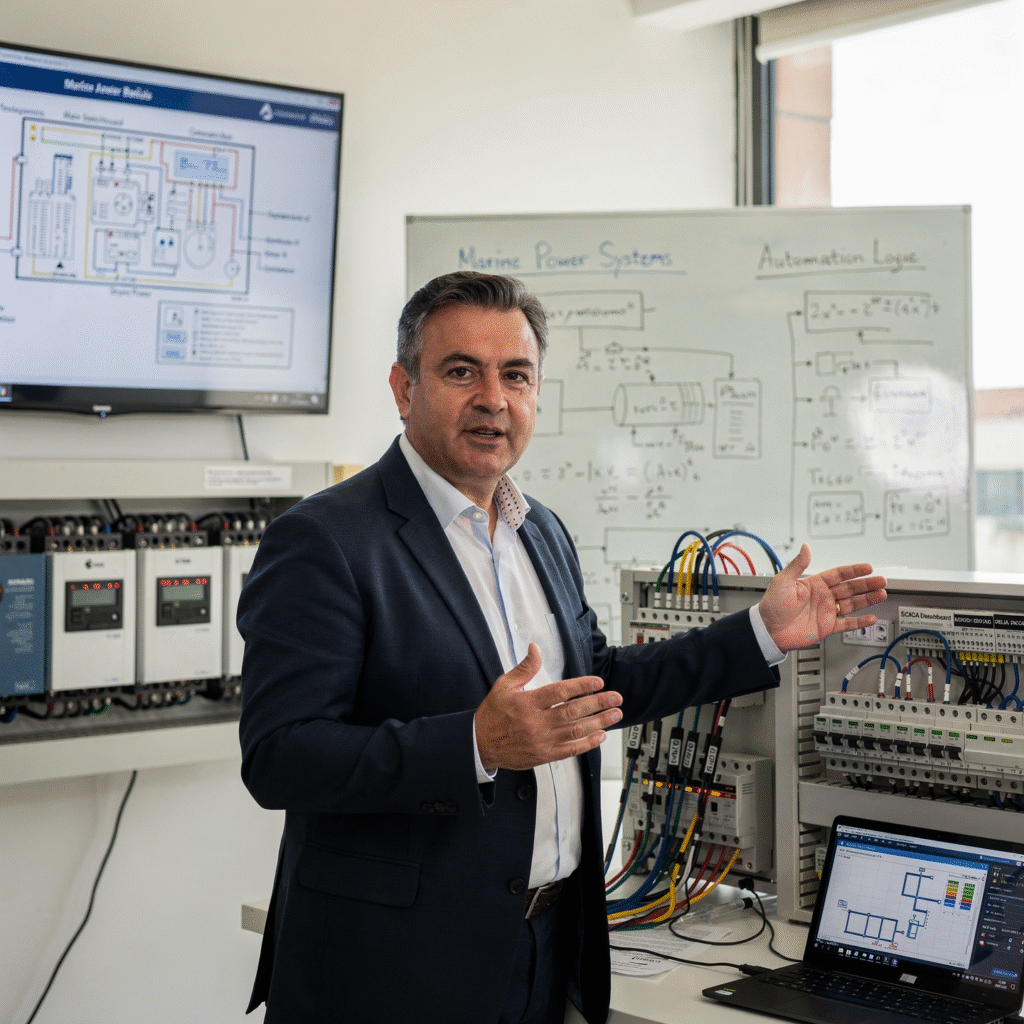
Offers comprehensive training in the design, construction, and management of large-scale maritime projects. You will learn to master the latest technologies and methodologies applied to ports, docks, offshore platforms, and other complex structures. This program prepares you to lead innovative projects, guaranteeing the sustainability and efficiency of the infrastructures of the future.

Differentiating Advantages

  • Advanced Simulations: 3D modeling, risk analysis, and design optimization.
  • Comprehensive Project Management: planning, cost control, and quality assurance.
  • Specialization in Sustainability: resilient design, environmental impact, and renewable energies.
  • Industry Connections: real-world case studies, technical visits, and collaboration with leading companies.
  • Global Networking: participation in international conferences and contact with top-level experts.

Master’s Degree in Maritime Mega-Infrastructure Engineering

Availability: 1 in stock

Who is it aimed at?

  • Civil engineers, port engineers, and naval architects seeking to specialize in the design, construction, and management of large maritime works.
  • Project managers and investors interested in understanding the technical and economic feasibility of coastal and offshore mega-infrastructures.
  • Consultants and technical advisors wishing to expand their expertise in regulations, environmental impact, and risks associated with complex maritime projects.
  • Public administration and port authority officials needing planning and management tools for the sustainable development of maritime infrastructure.
  • Graduates in marine engineering and sciences aspiring to lead innovative projects in the fields of marine renewable energy, smart ports, and defense Coastal.

Academic Flexibility
 Adapted to active professionals: flexible online methodology, real-world case studies, and networking with industry experts at an international level.

Objectives and skills

Design and manage complex port projects:

“Define scope, budget and timeline, managing risks and involving key stakeholders (port authority, shipping companies, operators).”

Optimize the efficiency and sustainability of maritime operations:

Implement ballast and fuel management strategies to minimize environmental impact and optimize energy consumption, considering IMO regulations and operating conditions.

Assessing and mitigating risks in the construction and operation of maritime infrastructure:

Implement risk management protocols (HAZID, HAZOP) during the design, construction and operation phases, including emergency response drills and contingency plans adapted to local maritime conditions and the specific risks of each infrastructure.

Develop innovative solutions for climate change adaptation in coastal areas:

“Implement early warning and coastal risk management systems based on oceanographic and meteorological data, integrating the participation of the local community for an effective response.”
Leading multidisciplinary teams on large-scale marine engineering projects:

“Implement agile methodologies and project management tools, fostering effective communication and conflict resolution to ensure successful project delivery within the established budget and schedule.”

Applying advanced technologies in the inspection and maintenance of marine infrastructure:

“Using underwater drones and remote sensors for accurate and efficient assessment of structural condition, preventing failures and optimizing repair programs.”

Study plan – Modules

  1. Detailed analysis of loads and stresses in maritime mega-infrastructures: hydrodynamic, seismic, thermal, and operational loads
  2. Advanced modeling for structural design: numerical methods, finite elements, CFD simulations, and multiphysics analysis
  3. Multicriteria optimization applied to comprehensive design: safety, cost, sustainability, and operational efficiency criteria
  4. Disruptive technologies in materials and construction: high-strength composites, special concretes, and modular prefabrication techniques
  5. Design and dimensioning of smart ports and offshore platforms for multimodal integration, with an emphasis on adaptability and scalability
  6. Predictive models for environmental impact management: coastal erosion, sedimentation, and climate change
  7. Systems engineering for port logistics: automation, robotics, and digitalization geared towards supply chain efficiency Logistics

    International standards and best practices: maritime associations, design codes, and certifications for mega-infrastructure

    Advanced methodologies for structural and operational risk management: vulnerability analysis and contingency plans

    Implementation of digital twins for real-time monitoring and predictive maintenance of multimodal maritime infrastructure

  1. Fundamentals of structural engineering applied to port infrastructure: analysis of static and dynamic loads in marine environments
  2. Evaluation and modeling of materials resistant to marine corrosion: special concretes, marine steels, and advanced composites
  3. Implementation of intelligent structural monitoring (SHM) systems: sensors, data acquisition, and real-time diagnostics
  4. Advanced numerical simulation using finite elements for fatigue analysis and behavior under extreme events
  5. Integration of IoT technologies and SCADA systems for the management and predictive maintenance of port infrastructure
  6. Resilient design methodologies: adaptation, mitigation, and recovery from natural phenomena such as storms, storm surges, and tsunamis
  7. Optimization of the design of docks, breakwaters, and floating platforms through artificial intelligence and machine learning techniques
  8. Study of the environmental impact and its relationship with Structural durability in coastal and maritime zones

    International regulations and technical standards applied to maritime mega-infrastructures: ISO, PIANC, BS in a port context

    Integrated projects: development of practical cases with the application of structural analysis and adaptive resilience technologies for smart ports

  1. Fundamentals of structural design applied to maritime mega-infrastructures: analysis of hydrodynamic, seismic, and environmental loads
  2. Advanced modeling and numerical simulation methodologies for multiscale structural optimization
  3. Integration of smart technologies: IoT sensors, real-time monitoring, and predictive maintenance systems
  4. Multimodal design: coordination and adaptation of infrastructure for maritime, rail, road, and logistics transport
  5. Application of multi-objective optimization algorithms to maximize operational efficiency and minimize costs
  6. Evaluation and improvement of resilience to extreme events: modeling of climate impacts, waves, and storm surges
  7. International standards and sustainability criteria applied to the design of maritime mega-infrastructures
  8. Implementation of advanced materials and innovative construction techniques for durability and structural strength
  9. Comprehensive Project Management in the Maritime Environment: Planning, Resources, Risks, and Quality Assurance
  10. Case studies and advanced engineering studies with direct application in megaports, offshore terminals, and strategic shipping lanes
  1. Fundamentals of geotechnical engineering applied to megaports: soil properties, soil-structure interaction, and advanced in-situ characterization techniques
  2. Design and execution of deep foundations: piles, precast piles, cast-in-place piles, and combined foundations for marine environments
  3. Advanced seismic analysis for port structures: dynamic modeling, structural response, and applicable international standards
  4. Hydrodynamic evaluation of containment structures: wave loading, marine currents, erosion, and the effects of extreme storms
  5. Advanced materials in marine engineering: high-strength concretes, fiber-reinforced composites, corrosion-resistant metals, and applied nanotechnology
  6. Mitigation strategies against extreme events: resilient design, energy dampers, seismic isolation systems, and flexible hydrodynamic barriers
  7. Numerical modeling and computational simulation: Specialized software for structural, seismic, and fluid-structure interaction analysis in megaports

    Structural monitoring and maintenance: smart sensor technologies, non-destructive testing, and lifecycle management of port infrastructure

    Regulations, international standards, and certifications: compliance, adaptation, and updates to meet global challenges in maritime construction

    Case studies and field studies: comprehensive design of foundations and retaining walls in highly complex megaports, lessons learned, and best practices

  1. Fundamentals of monitoring systems for maritime mega-infrastructures: distributed sensors, data networks, and maritime communication protocols
  2. Advanced instrumentation: real-time data acquisition technologies, laser sensors, ultrasound, fiber optics, and LiDAR applied to maritime structures
  3. Integration of IoT systems and SCADA platforms for continuous, multi-scale monitoring of smart mega-infrastructures
  4. Predictive maintenance: principles of vibration analysis, infrared thermography, spectral analysis, and non-destructive techniques applied to maritime structures
  5. Modeling deterioration and remaining life using artificial intelligence and machine learning algorithms in harsh marine environments
  6. Big data and advanced analytics: processing and managing large volumes of structural and environmental data for maintenance decision-making
  7. Implementation of digital twins
  8. for real-time simulation and optimization of preventive interventions

    Integrated risk management: probabilistic failure assessment, active corrosion monitoring, and structural fatigue under dynamic marine loads

    Cyber-secure architectures for monitoring systems, including encryption protocols and resilience against cyberattacks in critical infrastructure

    Case studies and project studies: application of advanced systems in smart ports, offshore wind farms, marine energy platforms, and bridges over major shipping lanes

  1. Advanced Foundations in Marine Megainfrastructure: Structural Analysis, Modular Design, and Integrated Systems for Large-Scale Infrastructure in Marine Environments
  2. Innovations in Smart Materials and Composites for Strength and Durability in Corrosive and Dynamic Environments
  3. Resilience to Extreme Events: Modeling and Simulation of Climate Impacts, Extreme Waves, Underwater Earthquakes, and Adaptation to Climate Change
  4. Implementation of Advanced Real-Time Monitoring Technologies: IoT Sensors, Autonomous Drones, and SCADA Systems for Predictive Maintenance and Optimized Management
  5. Sustainable Design and Eco-efficiency: Life Cycle Analysis, Environmental Footprint, and Strategies to Minimize Ecological Impact in Protected Marine Ecosystems
  6. Integration of Renewable Energies in Megainfrastructure: Offshore Wind, Tidal, and Hybrid Energy Technologies
  7. Automation and Intelligent Control: Cyber-Physical Systems, Digital Twins, and the Application of Artificial Intelligence for Operation and Decision-Making in Complex Maritime Infrastructures
  8. International Regulations and Technical Standards Applicable to Mega-Infrastructures in Ports, Offshore Facilities, and Efficient and Safe Maritime Transport
  9. Risk Management and Comprehensive Security: Advanced Methodologies for the Analysis and Mitigation of Technical, Environmental, and Operational Risks in Mega-Infrastructures
  10. Real-World Case Studies and Integrated Projects: Design, Resilience, and Technologies Applied in Sustainable Maritime Mega-Infrastructures Globally
  1. Fundamentals of Integrated Management in Maritime Megainfrastructures: Strategic Planning, Multidisciplinary Coordination, and Life Cycle Analysis
  2. Technological Innovation Applied to Design: Advanced Digital Modeling, Numerical Simulation, and New Offshore Engineering Techniques
  3. Emerging Materials and Technologies: Marine-Resistant Composites, Nanotechnology, and Smart Coatings
  4. Integration of Remote Monitoring Systems and IoT Sensors for Predictive Maintenance and Real-Time Control
  5. Advanced Methodologies for Assessing the Environmental Impact and Climate Variables in Megainfrastructures
  6. Environmental Modeling Tools: Hydrodynamics, Coastal Erosion, and Sedimentation for Structural Sustainability
  7. Sustainable Design: Energy Efficiency Criteria, Carbon Footprint Reduction, and Circular Economy Applied to Maritime Infrastructures
  8. International Regulations and Sustainability Standards: Integration of MARPOL, IMO, and national regulations in project management

    Advanced maintenance strategies: predictive analysis using machine learning techniques and structural risk management

    Case studies and success stories in the application of technological innovation for the resilience and sustainability of ports, platforms, and breakwaters

  1. Fundamentals of intelligent systems applied to port management: machine learning, neural networks, and adaptive algorithms
  2. Big Data and its role in the monitoring and optimization of megaports: data architectures, real-time processing, and predictive analytics
  3. Design and implementation of integrated IoT platforms for the intelligent monitoring of maritime infrastructure
  4. Optimization of maritime traffic through intelligent management systems: simulation models, congestion prediction, and dynamic routing algorithms
  5. Integration of SCADA systems and automation technologies for the efficient operation of cranes, docks, and logistics terminals
  6. Modeling and analysis of port workflows with data mining and machine learning techniques for the identification of bottlenecks and operational improvements
  7. Development of predictive maintenance systems in megaports using Big Data analytics and artificial intelligence to maximize the availability of critical equipment
  8. Application of Digital Twins in the management and simulation of port infrastructure for real-time strategic decision-making
  9. Early warning and risk management systems based on the fusion of multisensor data: detection of adverse weather conditions and security events
  10. Strategies for port sustainability supported by Big Data analysis: emissions reduction, efficient energy consumption, and waste management
  11. Integration of blockchain systems for traceability and security in logistics and customs operations in globalized megaports
  12. Regulatory framework and international standards for the implementation of smart technologies in maritime infrastructure
  13. Cybersecurity aspects in the smart management of megaports: data protection, resilience to attacks, and incident response protocols
  14. Advanced visualization tools and smart dashboards for comprehensive monitoring and real-time decision-making
  15. Case studies and Case studies on the integration of AI and Big Data in the operation of leading global megaports
  1. Advanced Foundations of Energy Optimization in Maritime Megainfrastructure: Thermodynamic analysis, efficient resource management, and simulation models for reducing energy footprint.
  2. Structural Resilience: Integrity assessment under extreme loads, adaptive design in the face of severe weather events, and real-time repair methodologies.
  3. Integration of Emerging Technologies in design and management: Artificial intelligence for failure prediction, IoT for continuous monitoring, and cyber-physical systems for operational automation.
  4. Multimodal Analysis of Port Systems: Synergies between maritime, rail, and land logistics for optimizing operations and minimizing transit times.
  5. Advanced Modeling of Marine Environmental Dynamics: Numerical simulation of currents, sedimentation, and erosive effects for sustainable planning and impact mitigation.
  6. Risk Management Protocols and industrial safety applied to mega-infrastructures: probabilistic assessment, contingency plans, and early warning systems.

    Design and application of intelligent control and monitoring systems: SCADA, digital twins, and predictive analytics for continuous improvement and proactive maintenance.

    International regulations and technical standards for the construction and operation of multimodal maritime mega-infrastructures: ISO, IMO, and environmental guidelines.

    Circular economy and sustainability strategies in port management: material reuse, waste management, and environmental impact reduction.

    Case studies and real-world applications of optimized, resilient, and technologically advanced projects: critical success stories and lessons learned for future innovation.

  1. Theoretical and methodological foundations for the integration of maritime mega-infrastructures: multidisciplinary analysis and systems approaches
  2. Advanced environmental impact assessment: hydrodynamic modeling techniques, pollutant dispersion, and mitigation of ecological risks
  3. Innovation in materials and construction technologies for sustainable maritime infrastructures: nanomaterials, composites, and solutions resistant to marine corrosion
  4. Structural design under extreme climate scenarios and natural events: probabilistic modeling, load analysis, and dynamic resilience
  5. Governance strategies and integrated management of maritime resources in mega-infrastructures: international cooperation, regulations, and sustainability protocols
  6. Logistics optimization for construction and operation: digital simulation, advanced BIM applied to maritime infrastructures, and global supply chain management
  7. Automation and intelligent control: integration of SCADA systems, maritime IoT, and AI-based predictive management artificial
  8. Security and protection in mega-infrastructures: analysis of cyber and physical risks, incident response and recovery protocols
  9. Advanced methodologies for financial and social evaluation: cost-benefit analysis, socioeconomic impact, and sustainable financing strategies
  10. Development, presentation, and defense of the final master’s thesis: integration of technical concepts, innovative solutions, and implementation proposals for global maritime mega-infrastructures

Career prospects

“`html

  • Designer/Structural Engineer of Maritime Mega-Infrastructures: Ports, breakwaters, offshore platforms, submerged tunnels.
  • Project Manager: Planning, management, and supervision of the construction and maintenance of maritime mega-infrastructures.
  • Maritime Engineering Consultant: Feasibility studies, environmental impact assessments, risk assessments, and safety evaluations.
  • Researcher and Developer: Innovation in materials, construction techniques, and sustainable solutions for the maritime sector.
  • Maritime Asset Manager: Optimization of the infrastructure lifecycle, including inspection, repair, and renovation.
  • Modeling and Simulation Specialist: Analysis of structural behavior under environmental loads (waves, wind, currents).
  • Maritime Safety and Risk Expert: Identification, assessment, and mitigation of risks associated with mega-infrastructure projects.
  • Sustainability Manager: Implementation of practices and technologies to minimize the environmental impact of maritime construction.

“`

Entry requirements

Academic/professional profile:

Bachelor’s degree in Nautical Science/Maritime Transport, Naval/Marine Engineering or a related qualification; or proven professional experience on the bridge/in operations.

Language proficiency:

Functional Maritime English (SMCP) recommended for simulations and technical materials.

Documentation:

Updated CV, copy of qualification or seaman’s book, national ID/passport, motivation letter.

Technical requirements (for online):

Device with camera/microphone, stable internet connection, monitor ≥ 24” recommended for ECDIS/Radar-ARPA.

Admissions process and dates

Online
application

(form + documents).

Academic review and interview

Admissions decision

Admissions decision

(+ scholarship offer if applicable).

Place reservation

(deposit) and enrolment.

Induction

(access to the virtual campus, calendars, simulator guides).

Scholarships and financial support

  • Advanced Design and Construction: Master the most innovative techniques for creating ports, breakwaters, and offshore platforms.
  • Comprehensive Project Management: Learn to lead complex projects, optimizing costs, deadlines, and resources with the latest tools.
  • Sustainability and Resilience: Integrate environmental impact and climate change adaptation criteria into the design and operation of infrastructure.
  • Cutting-Edge Technologies: Apply BIM modeling, IoT sensors, and predictive analytics for the intelligent management of megastructures.
  • Real-World Case Studies: Work on simulated and real projects, guided by experts in the industry, for an unparalleled learning experience. Boost your career and become a leader in the marine megastructures sector.

Testimonials

Frequently asked questions

Large-scale maritime infrastructures, such as ports, offshore platforms, marine renewable energy facilities, and other coastal structures.

Yes. The itinerary includes ECDIS/Radar-ARPA/BRM with harbor, ocean, fog, storm, and SAR scenarios.

Online with live sessions; hybrid option for simulator/practical placements through agreements.

Recommended functional SMCP. We offer support materials for standard phraseology.

Yes, with a relevant degree or experience in maritime/port operations. The admissions interview will confirm suitability.

Optional (3–6 months) through Companies & Collaborations and the Alumni Network.

Simulator practice (rubrics), defeat plans, SOPs, checklists, micro-tests and applied TFM.

A degree from Navalis Magna University + operational portfolio (tracks, SOPs, reports and KPIs) useful for audits and employment.

  1. Theoretical and methodological foundations for the integration of maritime mega-infrastructures: multidisciplinary analysis and systems approaches
  2. Advanced environmental impact assessment: hydrodynamic modeling techniques, pollutant dispersion, and mitigation of ecological risks
  3. Innovation in materials and construction technologies for sustainable maritime infrastructures: nanomaterials, composites, and solutions resistant to marine corrosion
  4. Structural design under extreme climate scenarios and natural events: probabilistic modeling, load analysis, and dynamic resilience
  5. Governance strategies and integrated management of maritime resources in mega-infrastructures: international cooperation, regulations, and sustainability protocols
  6. Logistics optimization for construction and operation: digital simulation, advanced BIM applied to maritime infrastructures, and global supply chain management
  7. Automation and intelligent control: integration of SCADA systems, maritime IoT, and AI-based predictive management artificial
  8. Security and protection in mega-infrastructures: analysis of cyber and physical risks, incident response and recovery protocols
  9. Advanced methodologies for financial and social evaluation: cost-benefit analysis, socioeconomic impact, and sustainable financing strategies
  10. Development, presentation, and defense of the final master’s thesis: integration of technical concepts, innovative solutions, and implementation proposals for global maritime mega-infrastructures

Request information

  1. Complete the Application Form.

  2. Attach your CV/degree certificate (if you have it to hand).

  3. Indicate your preferred cohort (January/May/September) and whether you would like the hybrid option with simulator sessions.

    An academic advisor will contact you within 24–48 hours to guide you through the admission process, scholarships, and compatibility with your professional schedule.

Please enable JavaScript in your browser to complete this form.
Click or drag a file to this area to upload.

Faculty

0
    0
    Tu carrito
    Tu carrito esta vacíoRegresar a la tienda
    Scroll to Top