Introduction to Marine Biology Course

Why this course?

Immerse yourself in the fascinating world of Marine Biology.

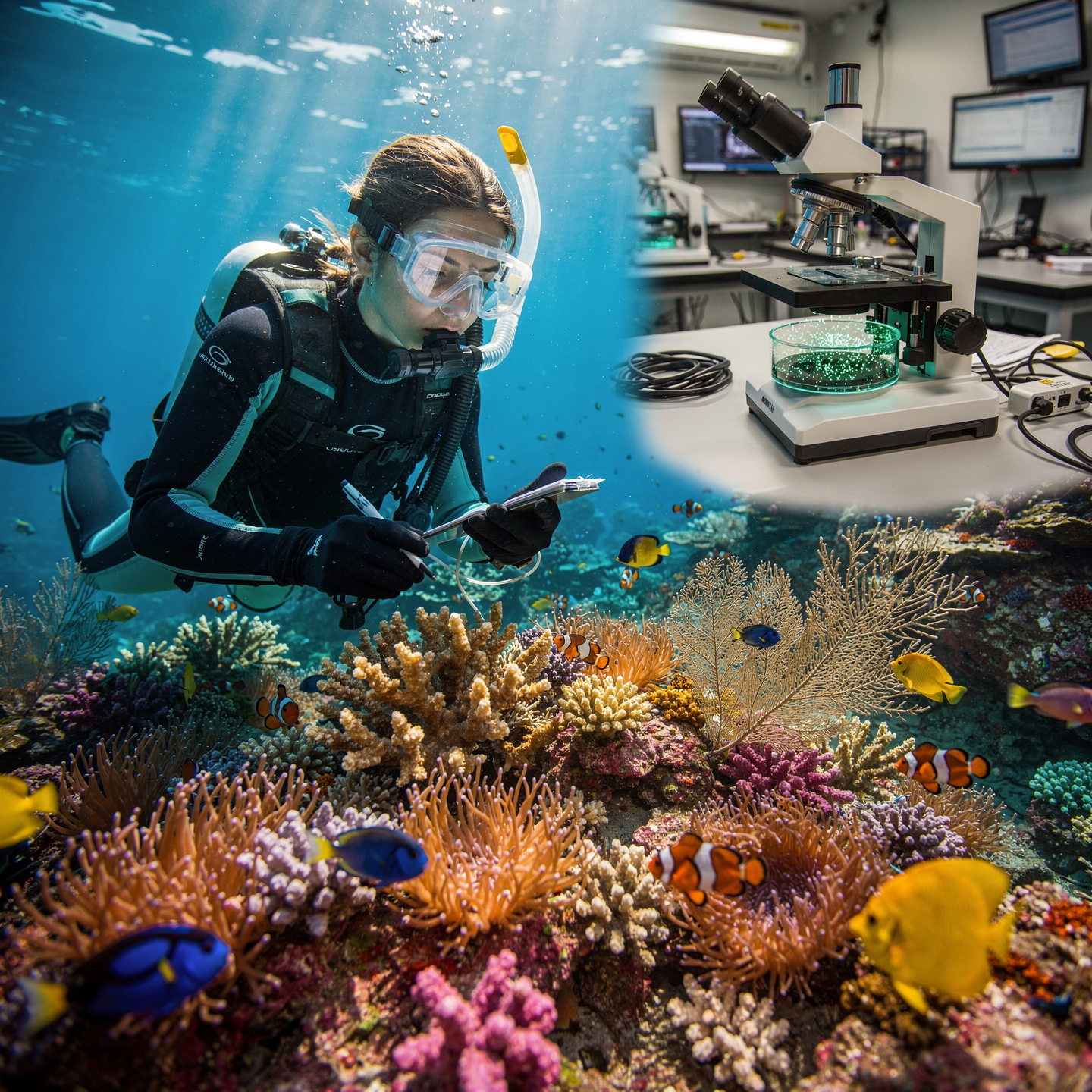
This course offers a comprehensive introduction to ocean ecosystems, the diversity of marine life, and conservation challenges. Learn about marine organisms, from microscopic plankton to giant whales, and their adaptation to the aquatic environment. Explore the ecological processes that govern the oceans, including trophic interactions and biogeochemical cycles. Understand the impacts of climate change and pollution on marine ecosystems, and discover strategies for their protection and sustainable management.

Key Benefits:

  • Solid Foundations: Gain a solid theoretical and practical foundation in marine biology.
  • Diverse Ecosystems: Explore everything from coral reefs to the abyssal depths.
  • Marine Conservation: Understand the challenges and solutions for protecting the oceans.
  • Interactive Learning: Videos, simulations, and case studies for an enriching experience.
  • Certificate of Completion: Recognition of your acquired knowledge and skills.
biologĂ­a

Introduction to Marine Biology Course

Availability: 1 in stock

Who is it aimed at?

  • Students of biology, environmental science, or related fields seeking a solid foundation in ocean life, marine ecosystems, and conservation.
  • Professionals in the fishing and aquaculture sectors interested in understanding the biology of the species they exploit and the foundations for sustainable management.
  • Divers, naturalists, and sea lovers who wish to deepen their knowledge of the marine flora and fauna they observe.
  • Environmental educators and science communicators who need updated tools and content to convey the importance of the oceans.
  • Anyone curious to discover the fascinating biodiversity of the oceans and their crucial role in the planet.

Flexible accessibility:
Online format with 24-hour access to content, discussion forums, and downloadable materials to study at your own pace.

biologĂ­a

Objectives and competencies

Understanding marine biodiversity:

“Identify key species, vulnerable habitats and the impacts of human activity to promote marine conservation.”

Identify and classify common marine organisms:

“Using field guides, dichotomous keys and online resources, differentiating by morphological characteristics, habitat and behavior.”

Analyze ecological interactions in marine ecosystems:

Identify and classify the main trophic (food webs) and symbiotic relationships, evaluating their impact on the structure and function of the ecosystem.

Assess the impact of pollution on ocean health:

“Analyze water quality data, identify sources of pollution, and model their effects on marine life and human health.”

Describe the physical and chemical processes that influence the oceans:

“Explain how salinity, temperature, and pressure affect water density and ocean circulation.”

Apply conservation principles to protect marine ecosystems:

“Implement sustainable fishing practices, minimizing the impact on non-target species and vulnerable habitats.”

Curriculum - Modules

  1. Comprehensive Maritime Incident Management: protocols, roles, and chain of command for coordinated response
  2. Operational Planning and Execution: briefing, routes, weather windows, and go/no-go criteria
  3. Rapid Risk Assessment: criticality matrix, scene control, and decision-making under pressure
  4. Operational Communication: VHF/GMDSS, standardized reports, and inter-agency liaison
  5. Tactical Mobility and Safe Boarding: RHIB maneuvers, approach, mooring, and recovery
  6. Equipment and Technologies: PPE, signaling, satellite tracking, and field data logging
  7. Immediate Care of the Affected: primary assessment, hypothermia, trauma, and stabilization for evacuation
  8. Adverse Environmental Conditions: swell, Visibility, flows, and operational mitigation

    Simulation and training: critical scenarios, use of VR/AR, and exercises with performance metrics

    Documentation and continuous improvement: lessons learned, indicators (MTTA/MTTR), and SOP updates

  1. Introduction to Marine Biology: History, disciplines, and relevance.
  2. Ocean Chemistry: Properties of water, salinity, dissolved gases, and pH.
  3. Physical Oceanography: Ocean currents, waves, tides, and thermohaline circulation.
  4. Marine Biodiversity: Microorganisms, invertebrates, fish, and marine mammals.
  5. Marine Ecology: Interactions between organisms and their environment, trophic chains, and food webs.
  6. Marine Ecosystems: Coral reefs, mangroves, estuaries, and ocean floors.
  7. Adaptations of Marine Life: Morphology, physiology, and behavior.
  8. Study Methods in Marine Biology: Sampling, analysis, and observation techniques.

    Marine Conservation: Threats, protected areas, and sustainable management.

    Ocean Exploration: Underwater technology, research, and the future of marine biology.

  1. Introduction to Marine Biology: History, Disciplines, and Relevance
  2. The Global Ocean: Physical and Chemical Characteristics of Seawater
  3. Marine Biodiversity: Classification of Marine Organisms
  4. Marine Ecology I: Primary Producers: Phytoplankton and Macroalgae
  5. Marine Ecology II: Consumers: Zooplankton and Marine Invertebrates
  6. Adaptations of Marine Organisms: Physiology and Behavior
  7. Marine Ecosystems I: Coastal: Estuaries, Mangroves, and Coral Reefs
  8. Marine Ecosystems II: Deep-Sea: Hydrothermal and Abyssal Vents
  9. Marine Conservation: Threats and Strategies Handling
  10. Study Methodology: Sampling and Analysis Techniques in Marine Biology

  1. Introduction to Oceanography: branches, importance, and challenges.
  2. Marine Geology: tectonic plates, ocean floor, and sedimentation.
  3. Seawater Chemistry: salinity, dissolved gases, and pH.
  4. Ocean Currents: global and regional circulation patterns.
  5. Tides: gravitational forces, tidal types, and their influence on the coast.
  6. Waves: formation, propagation, and effects on coastal erosion.
  7. Coastal Ecosystems: estuaries, mangroves, coral reefs, and seagrass meadows.
  8. Plankton: phytoplankton and zooplankton as the base of the food chain.
  9. Necton: Fish, marine mammals, seabirds, and their adaptation to the environment.
  10. Benthos: Organisms that live on the seabed, their classification and ecological function.

  1. Introduction to Marine Biology: History, disciplines, and relevance.
  2. The Global Ocean: Physical and chemical characteristics of seawater.
  3. Marine Biodiversity: Classification and phylogeny of marine organisms.
  4. Marine Ecology: Ecological interactions, trophic chains, and food webs.
  5. Marine Ecosystems I: Coastal (estuaries, mangroves, coral reefs).
  6. Marine Ecosystems II: Oceanic (deep waters, hydrothermal vents).
  7. Morphological and Physiological Adaptations: Adaptations to the marine environment.
  8. Marine Pollution: Sources, types, and effects of pollution on marine ecosystems.
  9. Oceans.

  10. Marine Conservation: Marine protected areas, resource management, and legislation.
  11. Climate Change and the Ocean: Acidification, warming, and their consequences.

  1. System Architecture and Components: Structural design, materials, and subsystems (mechanical, electrical, electronic, and fluid) with selection and assembly criteria for marine environments
  2. Fundamentals and Principles of Operation: Physical and engineering foundations (thermodynamics, fluid mechanics, electricity, control, and materials) that explain performance and operating limits
  3. Safety and Environmental (SHE): Risk analysis, PPE, LOTO, hazardous atmospheres, spill and waste management, and emergency response plans
  4. Applicable Regulations and Standards: IMO/ISO/IEC requirements and local regulations;
  5. Conformance criteria, certification, and best practices for operation and maintenance
  6. Inspection, testing, and diagnostics: Visual/dimensional inspection, functional testing, data analysis, and predictive techniques (vibration, thermography, fluid analysis) to identify root causes
  7. Preventive and predictive maintenance: Hourly/cycle/seasonal plans, lubrication, adjustments, calibrations, consumable replacement, post-service verification, and operational reliability
  8. Instrumentation, tools, and metrology: Measuring and testing equipment, diagnostic software, calibration and traceability; selection criteria, safe use, and storage
  9. Onboard integration and interfaces: Mechanical, electrical, fluid, and data compatibility; Sealing and watertightness, EMC/EMI, corrosion protection, and interoperability testing.

    Quality, acceptance testing, and commissioning: process and materials control, FAT/SAT, bench and sea trials, go/no-go criteria, and evidence documentation.

    Technical documentation and integrated practice: logs, checklists, reports, and a complete case study (safety → diagnosis → intervention → verification → report) applicable to any system.

Plan de estudio - MĂłdulos

  1. Comprehensive Maritime Incident Management: protocols, roles, and chain of command for coordinated response
  2. Operational Planning and Execution: briefing, routes, weather windows, and go/no-go criteria
  3. Rapid Risk Assessment: criticality matrix, scene control, and decision-making under pressure
  4. Operational Communication: VHF/GMDSS, standardized reports, and inter-agency liaison
  5. Tactical Mobility and Safe Boarding: RHIB maneuvers, approach, mooring, and recovery
  6. Equipment and Technologies: PPE, signaling, satellite tracking, and field data logging
  7. Immediate Care of the Affected: primary assessment, hypothermia, trauma, and stabilization for evacuation
  8. Adverse Environmental Conditions: swell, Visibility, flows, and operational mitigation

    Simulation and training: critical scenarios, use of VR/AR, and exercises with performance metrics

    Documentation and continuous improvement: lessons learned, indicators (MTTA/MTTR), and SOP updates

  1. Introduction to Marine Biology: History, disciplines, and relevance.
  2. Ocean Chemistry: Properties of water, salinity, dissolved gases, and pH.
  3. Physical Oceanography: Ocean currents, waves, tides, and thermohaline circulation.
  4. Marine Biodiversity: Microorganisms, invertebrates, fish, and marine mammals.
  5. Marine Ecology: Interactions between organisms and their environment, trophic chains, and food webs.
  6. Marine Ecosystems: Coral reefs, mangroves, estuaries, and ocean floors.
  7. Adaptations of Marine Life: Morphology, physiology, and behavior.
  8. Study Methods in Marine Biology: Sampling, analysis, and observation techniques.

    Marine Conservation: Threats, protected areas, and sustainable management.

    Ocean Exploration: Underwater technology, research, and the future of marine biology.

  1. Introduction to Marine Biology: History, Disciplines, and Relevance
  2. The Global Ocean: Physical and Chemical Characteristics of Seawater
  3. Marine Biodiversity: Classification of Marine Organisms
  4. Marine Ecology I: Primary Producers: Phytoplankton and Macroalgae
  5. Marine Ecology II: Consumers: Zooplankton and Marine Invertebrates
  6. Adaptations of Marine Organisms: Physiology and Behavior
  7. Marine Ecosystems I: Coastal: Estuaries, Mangroves, and Coral Reefs
  8. Marine Ecosystems II: Deep-Sea: Hydrothermal and Abyssal Vents
  9. Marine Conservation: Threats and Strategies Handling
  10. Study Methodology: Sampling and Analysis Techniques in Marine Biology

  1. Introduction to Oceanography: branches, importance, and challenges.
  2. Marine Geology: tectonic plates, ocean floor, and sedimentation.
  3. Seawater Chemistry: salinity, dissolved gases, and pH.
  4. Ocean Currents: global and regional circulation patterns.
  5. Tides: gravitational forces, tidal types, and their influence on the coast.
  6. Waves: formation, propagation, and effects on coastal erosion.
  7. Coastal Ecosystems: estuaries, mangroves, coral reefs, and seagrass meadows.
  8. Plankton: phytoplankton and zooplankton as the base of the food chain.
  9. Necton: Fish, marine mammals, seabirds, and their adaptation to the environment.
  10. Benthos: Organisms that live on the seabed, their classification and ecological function.

  1. Introduction to Marine Biology: History, disciplines, and relevance.
  2. The Global Ocean: Physical and chemical characteristics of seawater.
  3. Marine Biodiversity: Classification and phylogeny of marine organisms.
  4. Marine Ecology: Ecological interactions, trophic chains, and food webs.
  5. Marine Ecosystems I: Coastal (estuaries, mangroves, coral reefs).
  6. Marine Ecosystems II: Oceanic (deep waters, hydrothermal vents).
  7. Morphological and Physiological Adaptations: Adaptations to the marine environment.
  8. Marine Pollution: Sources, types, and effects of pollution on marine ecosystems.
  9. Oceans.

  10. Marine Conservation: Marine protected areas, resource management, and legislation.
  11. Climate Change and the Ocean: Acidification, warming, and their consequences.

  1. System Architecture and Components: Structural design, materials, and subsystems (mechanical, electrical, electronic, and fluid) with selection and assembly criteria for marine environments
  2. Fundamentals and Principles of Operation: Physical and engineering foundations (thermodynamics, fluid mechanics, electricity, control, and materials) that explain performance and operating limits
  3. Safety and Environmental (SHE): Risk analysis, PPE, LOTO, hazardous atmospheres, spill and waste management, and emergency response plans
  4. Applicable Regulations and Standards: IMO/ISO/IEC requirements and local regulations;
  5. Conformance criteria, certification, and best practices for operation and maintenance
  6. Inspection, testing, and diagnostics: Visual/dimensional inspection, functional testing, data analysis, and predictive techniques (vibration, thermography, fluid analysis) to identify root causes
  7. Preventive and predictive maintenance: Hourly/cycle/seasonal plans, lubrication, adjustments, calibrations, consumable replacement, post-service verification, and operational reliability
  8. Instrumentation, tools, and metrology: Measuring and testing equipment, diagnostic software, calibration and traceability; selection criteria, safe use, and storage
  9. Onboard integration and interfaces: Mechanical, electrical, fluid, and data compatibility; Sealing and watertightness, EMC/EMI, corrosion protection, and interoperability testing.

    Quality, acceptance testing, and commissioning: process and materials control, FAT/SAT, bench and sea trials, go/no-go criteria, and evidence documentation.

    Technical documentation and integrated practice: logs, checklists, reports, and a complete case study (safety → diagnosis → intervention → verification → report) applicable to any system.

  1. Introduction to Marine Biology: Definition, history, and relevance.
  2. Ocean Chemistry: Seawater composition, salinity, pH, and dissolved gases.
  3. Physical Oceanography: Ocean currents, tides, waves, and thermohaline circulation.
  4. Marine Ecosystems: Intertidal zones, estuaries, coral reefs, and deep oceans.
  5. Plankton: Phytoplankton and zooplankton, their importance in the marine food web.
  6. Nekton: Fish, marine mammals, marine reptiles, and seabirds: Adaptations and ecology.
  7. Benthos: Organisms that live on the seabed: Diversity and ecological roles.
  8. Adaptations to Marine Life: Physiological, morphological, and behavioral adaptations.
  9. Marine Conservation: Threats to marine ecosystems, conservation strategies, and marine protected areas.
  10. Marine Exploration and Technologies: Research methods, diving, ROVs, and satellites.

  1. Introduction to Marine Biology: History, disciplines, and ecosystems.
  2. Chemical Composition of Seawater: Salinity, pH, dissolved gases, and nutrients.
  3. Primary Productivity: Photosynthesis, phytoplankton, limiting factors, and algal blooms.
  4. Adaptations of Marine Organisms: Structural, physiological, and behavioral.
  5. Marine Biodiversity: Taxonomic classification, keystone species, and endemism.
  6. Benthic Ecosystems: Rocks, sand, mud, and associated communities.
  7. Pelagic Ecosystems: Zones, vertical migrations, and food webs.
  8. Coral Reefs: Structure, biodiversity, threats, and conservation.
  9. Coastal Wetlands: Mangroves, salt marshes, estuaries, ecological functions.
  10. Human Impact on the Marine Environment: Pollution, overfishing, climate change.

  1. Introduction to Oceanography: History, disciplines, and the importance of the oceans
  2. Physical and Chemical Properties of Seawater: Salinity, temperature, density, dissolved gases, and their influence on marine life
  3. Marine Geology: Tectonic plates, ocean floor, sediments, and coastal processes
  4. Ocean Dynamics: Ocean currents (surface and deep), tides, waves, and their impact on the distribution of organisms
  5. Marine Ecology I: Primary Producers: Phytoplankton, seagrass meadows, mangroves, and their role in photosynthesis and as the base of the food chain
  6. Marine Ecology II: Consumers and Decomposers: Zooplankton, invertebrates, fish, Marine mammals, seabirds, and bacteria
  7. Marine Biodiversity: Classification of marine organisms, endemism, and the importance of genetic diversity
  8. Marine Ecosystems I: Coral Reefs: Formation, structure, associated biodiversity, threats, and conservation
  9. Marine Ecosystems II: Deep-Sea Ecosystems: Hydrothermal vents, cold seeps, submarine canyons, and adaptations to life in darkness
  10. Threats to Marine Ecosystems: Pollution, overfishing, climate change, ocean acidification, and conservation strategies

  1. Introduction to Oceanography: History, Disciplines, and Relevance
  2. Physical Properties of Seawater: Temperature, salinity, density, and their influence on marine life.
  3. Ocean Chemistry: Biogeochemical cycles, nutrients, dissolved oxygen, and ocean acidification.
  4. Marine Geology: Plate tectonics, ocean floor, sedimentation, and mineral resources.
  5. Ocean Currents: Surface and deep circulation, upwelling, and their impact on the distribution of organisms.
  6. Waves and Tides: Formation, types, and effects on coastal areas.
  7. Marine Ecosystems: Intertidal zones, coral reefs, estuaries, the open ocean, and the seabed deep.
  8. Marine biodiversity: Classification of marine organisms, adaptations, and trophic relationships.
  9. Human impact on the oceans: Pollution, overfishing, climate change, and their consequences.
  10. Marine conservation: Marine protected areas, sustainable management, and actions for the preservation of ocean life.

Career opportunities

  • Marine Laboratory Technician: Sample analysis, organism cultivation, equipment maintenance.
  • Marine Environmental Educator: Design and implementation of educational programs, guiding in interpretation centers, science outreach.
  • Marine Research Assistant: Support in research projects, data collection, basic statistical analysis.
  • Aquarist: Care and maintenance of marine aquariums, feeding of organisms, water quality control.
  • Marine Tour Guide: Leading boat excursions, snorkeling, diving, interpretation of the marine ecosystem.
  • Volunteer in Marine NGOs: Participation in conservation projects, beach cleanups, species monitoring.
  • Technician in Marine Wildlife Rescue Centers: Care of injured or stranded marine animals, rehabilitation and Release.
  • Environmental Consultant (Entry Level): Support in environmental impact studies, risk assessments, and environmental management plans.

“`

Admission requirements

Academic/professional profile:

Degree/Bachelor's degree in Nautical Science/Maritime Transport, Naval/Marine Engineering, or a related field; or proven professional experience in bridge/operations.

Language proficiency:

Recommended functional maritime English (SMCP) for simulations and technical materials.

5. Induction

Updated resume, copy of degree or seaman's book, ID card/passport, letter of motivation.

Technical requirements (for online):

Equipment with camera/microphone, stable connection, ≥ 24” monitor recommended for ECDIS/Radar-ARPA.

Admission process and dates

1. Online
application

(form + documents).

2. Academic review and interview

(profile/objectives/schedule compatibility).

3. Admission decision

(+ scholarship proposal if applicable).

4. Reservation of place

(deposit) and registration.

5. Induction

(access to campus, calendars, simulator guides).

Scholarships and grants

  • Discover the Ocean: Explore marine ecosystems, from the abyssal depths to coral reefs.
  • Marine Biodiversity: Learn about fascinating marine life, its classification, adaptation, and evolution.
  • Marine Conservation: Understand current challenges and strategies for protecting our oceans.
  • Research Methodologies: Gain foundational knowledge of research and sampling techniques in marine biology.
  • Human Impact: Analyze the impact of pollution, climate change, and overfishing on marine ecosystems.
Enroll now and immerse yourself in the exciting world of marine biology.

Testimonials

Frequently asked questions

Marine biology studies life in the oceans, including marine organisms and their interactions with the environment.

Yes. The itinerary includes ECDIS/Radar-ARPA/BRM with harbor, ocean, fog, storm, and SAR scenarios.

Online with live sessions; hybrid option for simulator/practical placements through agreements.

Recommended functional SMCP. We offer support materials for standard phraseology.

Yes, with a relevant degree or experience in maritime/port operations. The admissions interview will confirm suitability.

Optional (3–6 months) through Companies & Collaborations and the Alumni Network.

Simulator practice (rubrics), defeat plans, SOPs, checklists, micro-tests and applied TFM.

A degree from Navalis Magna University + operational portfolio (tracks, SOPs, reports and KPIs) useful for audits and employment.

  1. Introduction to Oceanography: History, Disciplines, and Relevance
  2. Physical Properties of Seawater: Temperature, salinity, density, and their influence on marine life.
  3. Ocean Chemistry: Biogeochemical cycles, nutrients, dissolved oxygen, and ocean acidification.
  4. Marine Geology: Plate tectonics, ocean floor, sedimentation, and mineral resources.
  5. Ocean Currents: Surface and deep circulation, upwelling, and their impact on the distribution of organisms.
  6. Waves and Tides: Formation, types, and effects on coastal areas.
  7. Marine Ecosystems: Intertidal zones, coral reefs, estuaries, the open ocean, and the seabed deep.
  8. Marine biodiversity: Classification of marine organisms, adaptations, and trophic relationships.
  9. Human impact on the oceans: Pollution, overfishing, climate change, and their consequences.
  10. Marine conservation: Marine protected areas, sustainable management, and actions for the preservation of ocean life.

Request information

  1. Complete the Application Form
  2. Attach your CV/Qualifications (if you have them to hand).
  3. Indicate your preferred cohort (January/May/September) and whether you want the hybrid option with simulator sessions.
An academic advisor will contact you within 24–48 hours to guide you through the admission process, scholarships, and compatibility with your professional schedule. Translated with DeepL.com (free version)
Please enable JavaScript in your browser to complete this form.
Click or drag a file to this area to upload.

Teachers

0
    0
    Tu carrito
    Tu carrito esta vacĂ­oRegresar a la tienda
    Scroll to Top


