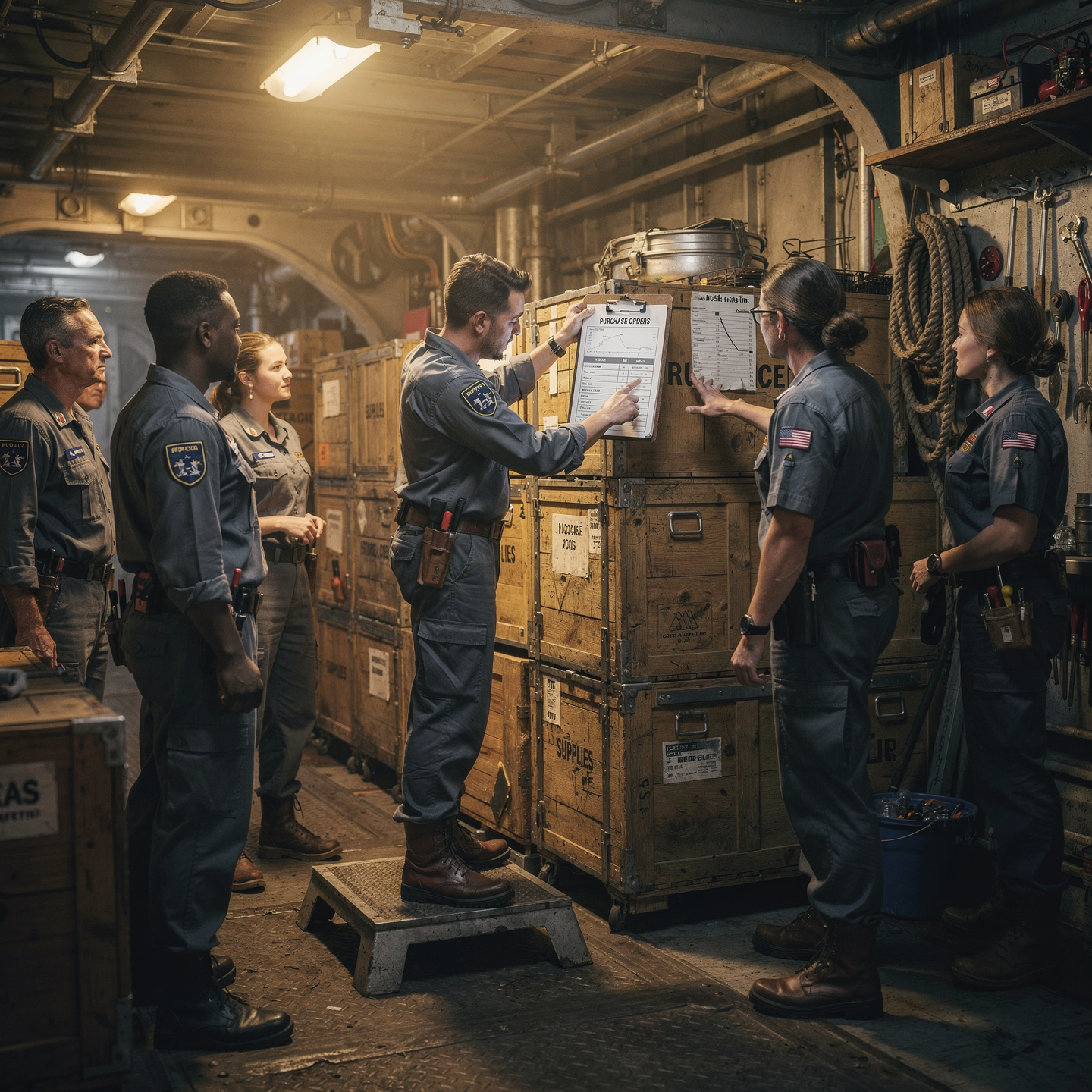
Purchasing and Storage Management Course
Why this course?
The Purchasing and Warehousing Management course
This course provides you with the essential tools and knowledge to optimize your company’s supply chain, from procurement to inventory management. Learn to negotiate with suppliers, select the best products and services, and implement efficient warehousing strategies. This program will allow you to reduce costs, improve operational efficiency, and ensure product availability when needed.
Differential Advantages
- Effective Negotiation: Advanced techniques for obtaining the best prices and terms from suppliers.
- Strategic Supplier Selection: Criteria and methods for evaluating and choosing the most suitable suppliers.
- Optimized Inventory Management: Strategies to minimize storage costs and prevent obsolescence.
- Quality Control: Implementation of processes to ensure the quality of received products.
- Purchasing and Warehouse Management Software: Use of technological tools to automate processes and improve control.
- Modality: Online
- Level: Cursos
- Hours: 150 H
- Start date: 26-07-2026
Availability: 1 in stock
Who is it aimed at?
- Purchasing and logistics professionals looking to optimize their processes, reduce costs, and improve supply chain efficiency.
- Warehouse and inventory management professionals who want to implement best practices, minimize losses, and ensure product availability.
- Entrepreneurs and small business owners who need to establish effective purchasing and warehousing systems to support their business growth.
- Managers and finance personnel interested in understanding the impact of purchasing and warehousing management on the organization’s profitability and cash flow.
- Students and recent graduates in related fields looking to acquire practical skills and up-to-date knowledge in purchasing and Storage.
Flexibility and applicability
Ā Designed for professionals with demanding schedules: 24/7 online access content, applicable practical exercises, and personalized support to answer questions.
Objectives and competencies

Optimize the supply chain:
“Implement demand forecasting strategies, inventory management, and route optimization to reduce costs and delivery times.”

Implement efficient inventory control strategies:
“Optimize inventory turnover, reduce storage costs, and minimize the risk of obsolescence through ABC analysis, EOQ, and demand management.”

Negotiate and manage agreements with strategic suppliers:
“Understand and implement negotiation strategies (Win-Win, BATNA) and evaluate supplier performance using KPIs.”

Monitor and optimize receiving and storage processes:
Implement inventory control methodologies (FIFO, LIFO) and ensure the correct location of merchandise according to safety and accessibility criteria, minimizing risks of damage and optimizing available space.
Ensuring the availability of materials and products while minimizing costs:
“Implement Just-in-Time (JIT) inventory management and optimize transportation routes considering storage costs and obsolescence.”
Evaluate and select suppliers based on quality and cost criteria:
“Thoroughly analyze quotes and references, considering quality certifications, compliance history, and supply chain optimization.”
Curriculum - Modules
- Comprehensive Maritime Incident Management: protocols, roles, and chain of command for coordinated response
- Operational Planning and Execution: briefing, routes, weather windows, and go/no-go criteria
- Rapid Risk Assessment: criticality matrix, scene control, and decision-making under pressure
- Operational Communication: VHF/GMDSS, standardized reports, and inter-agency liaison
- Tactical Mobility and Safe Boarding: RHIB maneuvers, approach, mooring, and recovery
- Equipment and Technologies: PPE, signaling, satellite tracking, and field data logging
- Immediate Care of the Affected: primary assessment, hypothermia, trauma, and stabilization for evacuation
- Adverse Environmental Conditions: swell, Visibility, flows, and operational mitigation
Simulation and training: critical scenarios, use of VR/AR, and exercises with performance metrics
Documentation and continuous improvement: lessons learned, indicators (MTTA/MTTR), and SOP updates
- Introduction to Integrated Logistics: Concepts, Scope, and Evolution
- Supply Chain Management: Material, Information, and Financial Flow
- Strategic Procurement: Supplier Selection, Negotiation, and Contracts
- Warehousing and Inventory Management: Types of Warehouses, Control Techniques
- Transportation and Distribution: Modes of Transport, Route Optimization, and Costs
- Reverse Logistics and Returns Management: Processes, Strategies, and Sustainability
- Information Technologies in Logistics: ERP, WMS, TMS
- Key Performance Indicators (KPIs): Measuring and Analyzing Logistics Efficiency
- Security and Risk Management in Logistics: Loss and Contingency Prevention
- Optimization and Continuous Improvement of Logistics Processes
‘
- Introduction to Integrated Logistics: Concept, Scope, and Objectives
- Purchasing Management: Acquisition Process, Supplier Selection, and Negotiation
- Cost Analysis: Identification, Classification, and Control of Logistics Costs
- Inventory Management: Stock Models, ABC Classification, and Reorder Point
- Warehousing: Design, Layout, Space Management, and Security
- Transportation and Distribution: Modes of Transport, Routing, and Load Optimization
- Supply Chain Optimization: Strategies, Technologies, and Collaboration
- Key Performance Indicators (KPIs): Measurement, Analysis, and Continuous Improvement
- Information Technologies in Logistics: ERP, WMS, TMS
- Sustainability in Logistics: Green Practices, Social Responsibility, and the Circular Economy
‘
- Introduction to Strategic Sourcing: Definition, Objectives, and Benefits
- Spend Analysis: Identification, Classification, and Optimization
- Sourcing Strategies: Sourcing, Negotiation, and Contract Management
- Supplier Selection and Evaluation: Criteria, Metrics, and Development
- Inbound Logistics: Transportation, Warehousing, and Distribution
- Demand Management: Forecasting, Planning, and Collaboration
- Inventory Control: Models, Techniques, and Level Optimization
- Storage and Handling: Design, Layout, and Safety
- Key Performance Indicators
- Information Technologies in the Supply Chain: ERP, WMS, TMS
(KPIs): Measurement, Analysis, and Continuous Improvement
‘
- Introduction to the Supply Chain and its Strategic Importance
- Inventory Control Fundamentals: Models and Techniques
- Demand Forecasting: Qualitative and Quantitative Methods
- Purchasing Management and Strategic Sourcing: Supplier Selection
- Warehousing and Warehouse Management: Design, Operations, and Management
- Transportation and Physical Distribution: Modes, Routes, and Optimization
- Information Technologies in the Supply Chain: ERP, WMS, TMS
- Key Performance Indicators (KPIs) in the Supply Chain and Inventory Control
- Risk and Contingency Management in the Supply Chain
- Supply chain optimization strategies: Lean Supply Chain, Agile Supply Chain
‘
- System Architecture and Components: Structural design, materials, and subsystems (mechanical, electrical, electronic, and fluid) with selection and assembly criteria for marine environments
- Fundamentals and Principles of Operation: Physical and engineering foundations (thermodynamics, fluid mechanics, electricity, control, and materials) that explain performance and operating limits
- Safety and Environmental (SHE): Risk analysis, PPE, LOTO, hazardous atmospheres, spill and waste management, and emergency response plans
- Applicable Regulations and Standards: IMO/ISO/IEC requirements and local regulations;
- Conformance criteria, certification, and best practices for operation and maintenance
- Inspection, testing, and diagnostics: Visual/dimensional inspection, functional testing, data analysis, and predictive techniques (vibration, thermography, fluid analysis) to identify root causes
- Preventive and predictive maintenance: Hourly/cycle/seasonal plans, lubrication, adjustments, calibrations, consumable replacement, post-service verification, and operational reliability
- Instrumentation, tools, and metrology: Measuring and testing equipment, diagnostic software, calibration and traceability; selection criteria, safe use, and storage
- Onboard integration and interfaces: Mechanical, electrical, fluid, and data compatibility; Sealing and watertightness, EMC/EMI, corrosion protection, and interoperability testing.
Quality, acceptance testing, and commissioning: process and materials control, FAT/SAT, bench and sea trials, go/no-go criteria, and evidence documentation.
Technical documentation and integrated practice: logs, checklists, reports, and a complete case study (safety ā diagnosis ā intervention ā verification ā report) applicable to any system.
Plan de estudio - Módulos
- Comprehensive Maritime Incident Management: protocols, roles, and chain of command for coordinated response
- Operational Planning and Execution: briefing, routes, weather windows, and go/no-go criteria
- Rapid Risk Assessment: criticality matrix, scene control, and decision-making under pressure
- Operational Communication: VHF/GMDSS, standardized reports, and inter-agency liaison
- Tactical Mobility and Safe Boarding: RHIB maneuvers, approach, mooring, and recovery
- Equipment and Technologies: PPE, signaling, satellite tracking, and field data logging
- Immediate Care of the Affected: primary assessment, hypothermia, trauma, and stabilization for evacuation
- Adverse Environmental Conditions: swell, Visibility, flows, and operational mitigation
Simulation and training: critical scenarios, use of VR/AR, and exercises with performance metrics
Documentation and continuous improvement: lessons learned, indicators (MTTA/MTTR), and SOP updates
- Introduction to Integrated Logistics: Concepts, Scope, and Evolution
- Supply Chain Management: Material, Information, and Financial Flow
- Strategic Procurement: Supplier Selection, Negotiation, and Contracts
- Warehousing and Inventory Management: Types of Warehouses, Control Techniques
- Transportation and Distribution: Modes of Transport, Route Optimization, and Costs
- Reverse Logistics and Returns Management: Processes, Strategies, and Sustainability
- Information Technologies in Logistics: ERP, WMS, TMS
- Key Performance Indicators (KPIs): Measuring and Analyzing Logistics Efficiency
- Security and Risk Management in Logistics: Loss and Contingency Prevention
- Optimization and Continuous Improvement of Logistics Processes
‘
- Introduction to Integrated Logistics: Concept, Scope, and Objectives
- Purchasing Management: Acquisition Process, Supplier Selection, and Negotiation
- Cost Analysis: Identification, Classification, and Control of Logistics Costs
- Inventory Management: Stock Models, ABC Classification, and Reorder Point
- Warehousing: Design, Layout, Space Management, and Security
- Transportation and Distribution: Modes of Transport, Routing, and Load Optimization
- Supply Chain Optimization: Strategies, Technologies, and Collaboration
- Key Performance Indicators (KPIs): Measurement, Analysis, and Continuous Improvement
- Information Technologies in Logistics: ERP, WMS, TMS
- Sustainability in Logistics: Green Practices, Social Responsibility, and the Circular Economy
‘
- Introduction to Strategic Sourcing: Definition, Objectives, and Benefits
- Spend Analysis: Identification, Classification, and Optimization
- Sourcing Strategies: Sourcing, Negotiation, and Contract Management
- Supplier Selection and Evaluation: Criteria, Metrics, and Development
- Inbound Logistics: Transportation, Warehousing, and Distribution
- Demand Management: Forecasting, Planning, and Collaboration
- Inventory Control: Models, Techniques, and Level Optimization
- Storage and Handling: Design, Layout, and Safety
- Key Performance Indicators
- Information Technologies in the Supply Chain: ERP, WMS, TMS
(KPIs): Measurement, Analysis, and Continuous Improvement
‘
- Introduction to the Supply Chain and its Strategic Importance
- Inventory Control Fundamentals: Models and Techniques
- Demand Forecasting: Qualitative and Quantitative Methods
- Purchasing Management and Strategic Sourcing: Supplier Selection
- Warehousing and Warehouse Management: Design, Operations, and Management
- Transportation and Physical Distribution: Modes, Routes, and Optimization
- Information Technologies in the Supply Chain: ERP, WMS, TMS
- Key Performance Indicators (KPIs) in the Supply Chain and Inventory Control
- Risk and Contingency Management in the Supply Chain
- Supply chain optimization strategies: Lean Supply Chain, Agile Supply Chain
‘
- System Architecture and Components: Structural design, materials, and subsystems (mechanical, electrical, electronic, and fluid) with selection and assembly criteria for marine environments
- Fundamentals and Principles of Operation: Physical and engineering foundations (thermodynamics, fluid mechanics, electricity, control, and materials) that explain performance and operating limits
- Safety and Environmental (SHE): Risk analysis, PPE, LOTO, hazardous atmospheres, spill and waste management, and emergency response plans
- Applicable Regulations and Standards: IMO/ISO/IEC requirements and local regulations;
- Conformance criteria, certification, and best practices for operation and maintenance
- Inspection, testing, and diagnostics: Visual/dimensional inspection, functional testing, data analysis, and predictive techniques (vibration, thermography, fluid analysis) to identify root causes
- Preventive and predictive maintenance: Hourly/cycle/seasonal plans, lubrication, adjustments, calibrations, consumable replacement, post-service verification, and operational reliability
- Instrumentation, tools, and metrology: Measuring and testing equipment, diagnostic software, calibration and traceability; selection criteria, safe use, and storage
- Onboard integration and interfaces: Mechanical, electrical, fluid, and data compatibility; Sealing and watertightness, EMC/EMI, corrosion protection, and interoperability testing.
Quality, acceptance testing, and commissioning: process and materials control, FAT/SAT, bench and sea trials, go/no-go criteria, and evidence documentation.
Technical documentation and integrated practice: logs, checklists, reports, and a complete case study (safety ā diagnosis ā intervention ā verification ā report) applicable to any system.
- Introduction to Supply Chain Logistics: Definition, importance, and scope.
- Demand Management: Forecasting, planning, and inventory control.
- Suppliers: Selection, evaluation, negotiation, and relationship management.
- Purchasing: The purchasing process, purchase orders, contracts, and terms.
- Warehousing: Types of warehouses, layout, storage systems, and picking.
- Inventory Control: Valuation methods, cycle counting, adjustments, and obsolescence.
- Transportation and Distribution: Modes of transport, routes, packaging, and documentation.
- Materials Custody: Security, access control, and loss and theft prevention.
- Key Performance Indicators (KPIs) in Supply Chain Logistics.
- Regulations and Legislation applicable to Supply Chain Logistics, Control, and Custody.
‘
- Introduction to Strategic Logistics: Key Concepts and Evolution
- Strategic Sourcing: Supplier Selection, Negotiation, and Contract Management
- Inventory Management: Inventory Models, Level Optimization, and Costs
- Warehousing and Distribution: Warehouse Design, Cross-Docking, and Distribution Strategies
- Transportation and Routing: Modes of Transportation, Route Optimization, and Fleet Management
- Information Technologies in Logistics: ERP, WMS, TMS, and Tracking Systems
- Key Performance Indicators (KPIs): Metrics for Control and Continuous Improvement
- Supply Chain Management (SCM): Integration and collaboration with strategic partners.
Reverse Logistics and Sustainability: Recovery, recycling, and reduction of environmental impact.
Risk and Contingency Analysis: Response plans for supply chain disruptions.
‘
- Introduction to Strategic Sourcing: Key Concepts and Evolution
- Spending Analysis: Identifying and Classifying Spending
- Sourcing Models: Centralized, Decentralized, Hybrid
- Supplier Segmentation and Supplier Relationship Management (SRM)
- Strategic Negotiation: Advanced Techniques and Negotiation Preparation
- Total Cost of Ownership (TCO) Analysis and Value Engineering
- Supply Chain Risk Management: Identification, Assessment, and Mitigation
- Key Performance Indicators (KPIs) in Sourcing and Benchmarking.
- Information Technologies for Strategic Sourcing: e-Procurement, Blockchain.
- Sustainability and Corporate Social Responsibility (CSR) in Sourcing.
‘
- Introduction to Strategic Sourcing: Definition, objectives, and scope.
- Demand Management: Demand forecasting, planning, and control.
- Spend Analysis: Identifying and classifying spending to optimize purchasing.
- Sourcing Strategies: Kraljic Model, supplier segmentation, and negotiation.
- Supplier Selection and Evaluation: Criteria, methodologies, and risk management.
- Strategic Negotiation: Techniques, tactics, and long-term agreements.
- Contract Management: Contract development, monitoring, and compliance.
- Integrated Logistics: Material flow, warehousing, and Transportation.
Supply Chain Optimization: Lean Logistics, collaboration, and technology.
Key Performance Indicators (KPIs): Measurement and continuous improvement in sourcing and logistics.
‘
Career opportunities
- Purchasing Technician: Supplier selection, price negotiation, order management, and delivery tracking.
- Warehouse Manager: Inventory organization and control, management of incoming and outgoing goods, and space optimization.
- Inventory Analyst: Demand forecasting, stock turnover analysis, obsolescence identification, and inventory level optimization.
- Logistics Coordinator: Transportation and distribution planning and coordination, supply chain management, and route optimization.
- Supply Chain Manager: Process optimization, coordination between suppliers, manufacturers, and distributors, cost reduction, and efficiency improvement.
- Procurement Specialist: Identification of purchasing needs, supplier sourcing and evaluation, and management of contracts and agreements. Supply.
- Reverse Logistics Technician: Managing returns, recycling, and refurbishing products; minimizing environmental impact.
- Purchasing and Warehousing Management Consultant: Analyzing processes, identifying areas for improvement, implementing solutions, and optimizing the supply chain.
“`
Admission requirements

Academic/professional profile:
Degree/Bachelor's degree in Nautical Science/Maritime Transport, Naval/Marine Engineering, or a related field; or proven professional experience in bridge/operations.

Language proficiency:
Recommended functional maritime English (SMCP) for simulations and technical materials.

5. Induction
Updated resume, copy of degree or seaman's book, ID card/passport, letter of motivation.

Technical requirements (for online):
Equipment with camera/microphone, stable connection, ā„ 24ā monitor recommended for ECDIS/Radar-ARPA.
Admission process and dates

1. Online
application
(form + documents).

2. Academic review and interview
(profile/objectives/schedule compatibility).

3. Admission decision
(+ scholarship proposal if applicable).

4. Reservation of place
(deposit) and registration.

5. Induction
(access to campus, calendars, simulator guides).
Scholarships and grants
- Optimize your supply chain: Master the key strategies for efficient and profitable purchasing management.
- Effective negotiation: Learn proven negotiation techniques to get the best prices and terms from your suppliers.
- Inventory control: Implement warehousing and inventory management methods that minimize costs and maximize availability.
- Supplier selection: Identify and evaluate reliable suppliers to build strong and lasting relationships.
- Logistics and distribution: Understand the fundamental principles of logistics to optimize product delivery and reduce lead times.
Testimonials
I implemented a new inventory management system at my previous company, which reduced storage costs by 15% and increased order fulfillment efficiency by 20% in the first quarter.
I mastered culinary techniques to adapt to the limitations of an onboard kitchen, creating balanced international menus and presenting them with the elegance required for first-class service. My inventory management and customer service skills under pressure exceeded course expectations, and I received praise for my proactivity and problem-solving abilities in a simulated flight environment.
I implemented a new inventory management system that reduced storage costs by 15% and increased order fulfillment efficiency by 8%, exceeding the company’s expectations.
I implemented a new inventory management system that reduced storage costs by 15% and increased order fulfillment efficiency by 20% in six months.

Frequently asked questions
To ensure the supply of necessary goods and services at the lowest total cost, with the required quality, at the right time and from the appropriate supplier.
Yes. The itinerary includes ECDIS/Radar-ARPA/BRM with harbor, ocean, fog, storm, and SAR scenarios.
Online with live sessions; hybrid option for simulator/practical placements through agreements.
To ensure the timely and efficient supply of necessary materials and products at the lowest total cost, while maintaining the required quality and optimizing inventory levels.
Recommended functional SMCP. We offer support materials for standard phraseology.
Yes, with a relevant degree or experience in maritime/port operations. The admissions interview will confirm suitability.
Optional (3ā6 months) through Companies & Collaborations and the Alumni Network.
Simulator practice (rubrics), defeat plans, SOPs, checklists, micro-tests and applied TFM.
A degree from Navalis Magna University + operational portfolio (tracks, SOPs, reports and KPIs) useful for audits and employment.
- Introduction to Strategic Sourcing: Definition, objectives, and scope.
- Demand Management: Demand forecasting, planning, and control.
- Spend Analysis: Identifying and classifying spending to optimize purchasing.
- Sourcing Strategies: Kraljic Model, supplier segmentation, and negotiation.
- Supplier Selection and Evaluation: Criteria, methodologies, and risk management.
- Strategic Negotiation: Techniques, tactics, and long-term agreements.
- Contract Management: Contract development, monitoring, and compliance.
- Integrated Logistics: Material flow, warehousing, and Transportation.
Supply Chain Optimization: Lean Logistics, collaboration, and technology.
Key Performance Indicators (KPIs): Measurement and continuous improvement in sourcing and logistics.
‘
Request information
- Complete the Application Form
- Attach your CV/Qualifications (if you have them to hand).
- Indicate your preferred cohort (January/May/September) and whether you want the hybrid option with simulator sessions.
Teachers
Eng. TomƔs Riera
Full Professor
Eng. TomƔs Riera
Full Professor
Eng. SofĆa Marquina
Full Professor
Eng. SofĆa Marquina
Full Professor
Eng. Javier BaƱuls
Full Professor
Eng. Javier BaƱuls
Full Professor
Dr. Nuria Llobregat
Full Professor
Dr. Nuria Llobregat
Full Professor
Dr. Pau Ferrer
Full Professor
Dr. Pau Ferrer
Full Professor
Cap. Javier Abaroa (MCA)
Full Professor
Cap. Javier Abaroa (MCA)
Full Professor