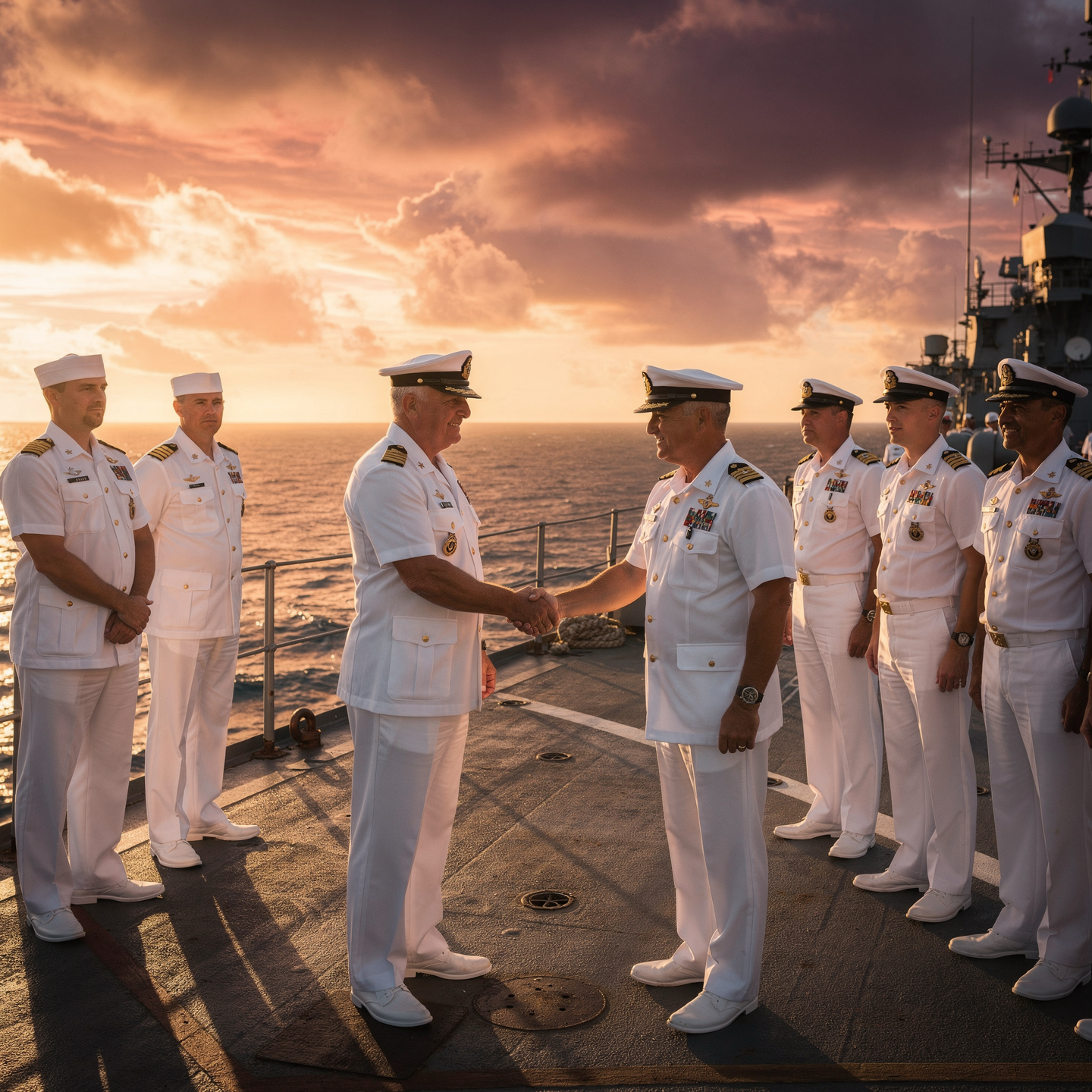
Master’s Degree in Ocean Diplomacy and Naval Geopolitical History

Why this master’s programme?

The Master’s in Ocean Diplomacy and Naval Geopolitical History

This program provides you with a deep understanding of the intersection of naval power, diplomacy, and global history. Learn to analyze the maritime geopolitical dynamics, the international ocean treaties, and the diplomatic strategies that shape relations between nations in the maritime sphere. This program prepares you for a career in international organizations, government, maritime companies, and academia, developing your ability to negotiate, lead, and resolve conflicts in the complex ocean arena.

Differentiating Advantages

  • Interdisciplinary Approach: Combines naval history, maritime law, international relations, and geopolitics.
  • Real-World Case Studies: Studies historical and contemporary maritime conflicts and their diplomatic implications.
  • Skills Development: Enhances your negotiation, intercultural communication, and strategic analysis skills.
  • Networking: Interact with experts in ocean diplomacy, maritime law, and naval security.
  • Practical Application: Participate in simulations negotiation and research projects on current maritime challenges.

Master’s Degree in Ocean Diplomacy and Naval Geopolitical History

Availability: 1 in stock

Who is it aimed at?

  • Diplomacy and international relations professionals who wish to specialize in ocean governance and maritime geopolitical challenges.
  • Defense and security analysts interested in understanding naval history and maritime strategies in the current global context.
  • Lawyers and consultants specializing in maritime law and ocean regulations who seek to deepen their understanding of the geopolitical dimension of their practice.
  • Researchers and academics in history, international relations, and political science who wish to expand their knowledge of ocean diplomacy.
  • Public officials and decision-makers involved in marine resource planning and management and foreign policy.

Study Flexibility
 Adapted for professionals: flexible online methodology, accessible multimedia resources, and personalized follow-up to fit around your career.

Objectives and skills

Leading innovative maritime strategies:

“Implement route optimization and fuel management models, considering weather conditions and ocean currents to minimize costs and emissions.”

Managing international maritime conflicts:

“Implement the Law of the Sea (UNCLOS) and bilateral agreements, defending national interests with diplomacy and firmness.”

Analyze and anticipate naval geopolitical trends:

“To assess the impact of new technologies (drones, AI, hypersonic weapons) on naval strategies and maritime security.”

Negotiate bilateral and multilateral maritime agreements:

“Analyze relevant international treaties (SOLAS, MARPOL, UNCLOS) and adapt clauses to defend national interests in maritime trade.”

Design and implement sustainable ocean policies:

“Promoting the blue economy, balancing economic development with the protection of marine biodiversity and the responsible management of resources.”

Assessing and mitigating risks in global maritime security:

“Implement cybersecurity measures on ships and port infrastructure, adapting to new threats and complying with international regulations.”

Study plan – Modules

  1. Contemporary Foundations and Theories of Maritime Geopolitics: Anglo-Saxon School, Marine Realism, Maritime Space Theory, and Maritime Pivoting
  2. Advanced Analysis of Strategic Maritime Corridors: Choke Points, International Straits, and Their Implications for Global Security
  3. National and Multilateral Strategies for the Control and Sustainable Use of Exclusive Economic Zones (EEZs) and Continental Shelves
  4. International Negotiation in Ocean Diplomacy: Coercive Diplomacy Techniques, Integrative Negotiation, and Maritime Dispute Resolution
  5. Role of International Law of the Sea (UNCLOS, Montego Bay Convention) in the Formulation of Maritime Strategies and Naval Doctrines
  6. Interaction Between State and Non-State Actors in the Oceanic Space: Analysis of Strategic Alliances, Transnational Cooperation, and Asymmetric Threats
  7. Strategic Intelligence and Risk Analysis in Maritime Environments
  8. Dynamics: Use of GIS, Big Data, and Open Sources for Diplomatic Decision-Making

    Applications of Preventive Diplomacy and Confidence-Building in the Naval Sphere: Crisis Management and Mechanisms for Transparency and Communication

    Impact of Climate Change and New Technologies on Maritime Geopolitics: Governance of Arctic Routes, Resource Exploitation, and Ocean Geoengineering

    Case Studies of International Maritime Negotiations: Analysis of Treaties, Bilateral and Multilateral Agreements with a Focus on Modern Ocean Diplomacy

  1. Theoretical Foundations of Naval Geopolitics: Historical Evolution, Schools of Thought, and Contemporary Paradigms
  2. Main Actors in Maritime Geopolitics: Coastal States, Emerging Naval Powers, and International Organizations
  3. Strategic Analysis of Critical Sea Routes: Straits, Canals, Trade Corridors, and Exclusive Economic Zones (EEZs)
  4. Instruments of Maritime Power: Naval Projection, Surface Fleets, Submarines, and Expeditionary Force Capabilities
  5. The Role of Naval Diplomacy in Conflict Resolution and the Consolidation of Multilateral Alliances
  6. Dynamics of Competition and Cooperation in Oceanic Spaces: Arctic, Indo-Pacific, South Atlantic, and Other Strategic Regions
  7. Impact of Advanced Naval Technology on Geopolitics: Warfare Cybernetics, Artificial Intelligence, Surveillance Systems, and Maritime Drones

    Applicable International Legal Framework: United Nations Convention on the Law of the Sea (UNCLOS), bilateral treaties, and customary international law

    Comprehensive Maritime Security Strategies: Combating Piracy, Terrorism, and Drug Trafficking in Oceanic Environments

    Studies of Emblematic Cases: Current Naval Conflicts, Strategic Maneuvers, and Preventive Diplomacy in Global Oceanic Scenarios

    Evaluation and Development of Public Policies for Maritime Defense and Oceanic Diplomacy Oriented Towards Sustainability and Regional Balance

    Advanced Methodologies for Naval Geostrategic Analysis: GIS, Threat Modeling, and Multifactorial Scenario Simulation

    Interaction between Naval Geopolitics and the Global Economy: Influence on Maritime Trade, Supply Chains, and Energy Security

    Future Perspectives in Geopolitics Oceanic: Climate Change, New Shipping Routes, and the Transformation of the Global Naval Balance of Power

  1. Fundamentals of Oceanic Geopolitics: Analysis of strategic dynamics in international maritime spaces and their impact on global politics
  2. Contemporary Theories of Ocean Diplomacy: From maritime realism to functional liberalism applied to the sea
  3. Naval Strategic Intelligence Tools: Collection, analysis, and application of information in diplomatic decision-making
  4. Advanced Maritime Negotiation Techniques: Influence models, persuasion tactics, and conflict management in multilateral contexts
  5. Crisis Management in Disputed Maritime Zones: Case studies and protocols for peaceful resolution
  6. Analysis and study of international treaties: UNCLOS, bilateral and multilateral agreements on ocean matters, and their legal interpretation
  7. Roles and competencies of key actors in ocean diplomacy: States Coastal states, regional and international organizations, and non-state actors

    Preventive diplomacy and its application in high-tension naval and maritime scenarios

    Building and maintaining strategic maritime alliances: networking, cooperation, and managing divergent interests

    Advanced simulations of maritime diplomatic negotiation: developing practical skills in simulated environments and role-playing

  1. Fundamentals and stages of Maritime Command and Control: from strategic conception to tactical execution, including appraisal, planning, execution, and monitoring in complex scenarios.
  2. Advanced Naval Intelligence: collection, processing, and analysis of maritime data; Use of ISR (Intelligence, Surveillance, and Reconnaissance) and information fusion to support operational decision-making.

    Operational planning tools and systems: integration of C4ISR systems, command and control systems, and simulation platforms for real-time naval operations modeling.

    Cybersecurity in naval environments: specific threats to critical maritime infrastructure, protection of SCADA systems, defense against cyberattacks, and digital resilience protocols applied to ocean projection forces.

    Crisis management and decision-making under pressure: risk assessment methods, mitigation protocols, interagency communication, and multinational coordination in maritime conflict and emergency scenarios.

    Theory and practice of ocean diplomacy applied to command: interaction between naval military operations and international politics, maritime law, and strategic negotiation in areas of high geopolitical tension.

    Leadership models in the maritime environment: management of naval units and rapid reaction forces, personnel management in complex missions, and maintenance of morale and organizational cohesion.

    Simulation and analysis of modern naval warfare scenarios: multi-domain operations, electronic warfare, use of drones and anti-ship missiles, and strategies for maritime dominance in the 21st century.

    Interoperability and standardization protocols in international coalitions: technological interoperability, secure communication, and operational coordination among allied navies.

    Examination of relevant historical cases in ocean diplomacy and naval command and control operations: strategic and tactical lessons applicable to contemporary geopolitics and the management of global crises in the maritime domain.

  1. Fundamentals of satellite technologies in ocean monitoring: remote sensors, synthetic aperture radar (SAR), and submarine fiber optics
  2. Integration of ISR (Intelligence, Surveillance, Reconnaissance) systems for advanced maritime surveillance: aerial platforms, maritime drones, and smart buoys
  3. Global positioning systems and advanced navigation: GNSS, DGPS, and differential techniques in maritime environments
  4. Processing and analysis of ocean big data: machine learning algorithms, artificial intelligence, and predictive analytics for naval security and diplomacy
  5. Secure maritime communication networks: geostationary satellites, low Earth orbit (LEO) constellations, and cryptographic protocols for transmitting sensitive data
  6. Application of AIS (Automatic Identification System) and VTS (Vessel Traffic Services) technologies in the integrated management of maritime traffic and reduction of Risks
  7. Capabilities and limitations of underwater acoustic and magnetometric sensors for real-time detection and surveillance of unconventional threats

    Integration of naval command and control (C2) systems with surveillance platforms for multinational operations and diplomatic coordination

    Critical aspects of maritime cybersecurity: threats, vulnerabilities, and defense protocols for strategic ocean infrastructures

    International regulations and technological standards in maritime surveillance: SOLAS, UNCLOS, and NATO and IMO guidelines applied to security technologies

    Development of technological interoperability capabilities for joint missions between naval forces, civilian agencies, and international organizations

    Implementation and maintenance strategies for integrated ocean monitoring systems with an emphasis on sustainability and operational resilience

  1. Fundamentals of Ocean Diplomacy: Naval Power as a Strategic Tool in International Projection
  2. Theory and Practice of Integrated Maritime Control Strategies: Synergies Between Naval Forces, Intelligence, and Diplomacy
  3. Advanced Cybersecurity Components in Maritime Environments: Protection of Critical Infrastructure, Navigation Systems, and Military Communications
  4. Naval Cyber ​​Defense Architecture and Protocols: International Regulations, Advanced Persistent Attacks (APTs), and Tactical Responses
  5. Satellite and Geospatial Monitoring for Maritime Surveillance and Security: Remote Sensing Technologies and Geopolitical Data Analysis
  6. Integration of Observation Satellites, Maritime Drones, and Sensor Networks for Real-Time Naval Intelligence Operations
  7. Hybrid Warfare Models in the Oceanic Domain: Combined Use of Cyberattacks, Propaganda, and Strategic Blockades
  8. Strategic Deployment Planning
  9. Naval operations supported by cyber intelligence and georeferenced satellite data

    Risk management and operational resilience against technological threats and cyberattacks in maritime areas of influence

    Case studies and simulations of diplomatic and military crises with naval and cyber components: analysis, decision-making, and lessons learned

  1. Strategic Foundations of Naval Power: History, Doctrine, and Contemporary Evolution in the Geo-Oceanic Context
  2. Doctrines of Maritime Deterrence and Power Projection: Blue Water Vessels, Littoral Combat, and Maritime Control Operations
  3. Advanced Technological Integration on Naval Platforms: Weapon Systems, Multifunction Radars, and Electro-Optical Sensors
  4. Cybersecurity Architecture and Protocols in Naval Networks: Defense in Depth, Intrusion Detection, and Response to Cyberattacks
  5. Countermeasures and Electronic Resistance in Naval Warfare: Signal Jamming, Electronic Warfare, and Protection of Critical Assets
  6. Use and Applications of Satellite Technology for Maritime Surveillance and Strategic Communications: SAR Satellites, Enhanced GNSS, and Real-Time Data Links
  7. Geospatial Intelligence Capabilities and Satellite Data Analysis for Decision-Making in Diplomacy and Security Oceanic
  8. Multinational Interoperability and Technology Diplomacy: Naval Alliances, Common Standards, and Technology Transfer

    International Legal Framework and Rules for the Use of Maritime and Outer Space: UNCLOS, Satellite Treaties, and Technology Control Regimes

    Case Studies in Combined Naval Operations with Cyber ​​Defense and Satellite Surveillance for Crisis Management and High-Impact Diplomatic Projection

  1. Naval Power Theory: Conceptual Foundations and Historical Evolution in Global Strategic Projection
  2. Critical Analysis of International Maritime Alliances: NATO, QUAD, ASEAN, and Emerging Coalitions
  3. Contemporary Dynamics of Naval Rivalry: Case Studies of China, the United States, India, and Russia in the Indo-Pacific and Atlantic
  4. Projection of Advanced Naval Force: Technological Capabilities, Aircraft Carriers, Nuclear Submarines, and Hypersonic Weapons
  5. Governance of International Maritime Spaces: Legal Framework, UNCLOS, and Territorial Disputes in EEZs and International Waters
  6. Integration of Strategic Resources: Ports, Dual-Use Infrastructure, and Logistics Networks in Support of Sustained Naval Presence
  7. Geopolitical Implications of Controlling Critical Sea Routes: The Straits of Malacca, Hormuz, and Gibraltar
  8. Joint Operations and multinationals: coordination, interoperability, and doctrine in crisis and naval conflict scenarios

    Evaluation of maritime surveillance and situational awareness systems: ISR, satellites, drones, and electronic warfare

    Future perspectives on ocean diplomacy: collaborative governance, sustainability, and maritime security in a multipolar context

    Advanced Maritime Geopolitical Analysis: Identification and evaluation of strategic zones, vital trade routes, and areas of global naval interest within the context of the contemporary international order.

    Naval Power Models and Ocean Diplomacy: Classical and contemporary theories applied to maritime power projection and its impact on global and regional stability.

    Strategic Negotiation in the Maritime Sphere: Tactics and techniques for conflict resolution, international treaties, and bilateral and multilateral agreements focused on ocean resources and maritime sovereignty.

    International Legal Framework for Naval Diplomacy: In-depth analysis of the United Nations Convention on the Law of the Sea (UNCLOS), maritime transit laws, the right of innocent passage, and maritime jurisdiction.

    High-Complexity Naval Deployment and Logistics: Strategic fleet planning, resource management in crisis scenarios, and route optimization for Power projection operations and humanitarian assistance.

    Technological innovations applied to ocean diplomacy: integration of artificial intelligence, unmanned systems (underwater and aerial drones), and maritime surveillance technologies for monitoring and control of strategic maritime zones.

    Cybersecurity and naval warfare in the 21st century: analysis of digital threats in naval defense systems, protection of critical infrastructure, and cyber defense strategies in maritime environments.

    Advanced crisis management and decision-making in ocean environments: simulation of conflict scenarios, risk assessment, and integrated diplomatic and military crisis management.

    Strategic communication and public relations in naval diplomacy: narrative building, media management, and the establishment of international strategic alliances to strengthen diplomatic presence and legitimacy in oceanic spaces.

    Claimous cases and studies Comparative studies: Detailed analysis of historical and contemporary incidents where maritime geopolitics and naval diplomacy determined the course of international relations, with contributions for practical application and professional development.

    *

  1. Innovations in maritime sensors: development and application of advanced remote and multispectral sensing systems for real-time ocean monitoring
  2. Technology diplomacy: integration of disruptive technologies within the international legal framework of exclusive economic zones (EEZs) and maritime governance
  3. Unmanned and autonomous systems: design, navigation, and deployment of autonomous underwater vehicles (AUVs) and surface vehicles (USVs) in naval and diplomatic surveillance operations
  4. Artificial intelligence and big data: application in predictive analysis of naval and geostrategic risks and in the optimization of strategic maritime routes
  5. Cryptography and naval cybersecurity: emerging technologies for the protection of critical infrastructure and communications in hostile maritime environments
  6. Renewable energy and sustainability technologies: integration of hybrid systems for energy autonomy of Fleets and naval bases in remote ocean environments
  7. Advanced mathematical modeling and hydrodynamic simulation for the optimization of naval structures and reduction of environmental impact in maritime operations

    International legal framework: analysis of treaties and conventions on the incorporation of technology in conflict management and cooperation in global oceans

    International cooperation policies: diplomatic strategies for the peaceful use of new ocean technologies for collective security and environmental protection

    Final applied project: design of an integrative project that combines technological innovation, ocean diplomacy, and sustainable naval security strategies based on real-world cases and strategic foresight

Career prospects

“`html

  • Ocean Policy Analyst: Research and consulting on ocean diplomacy and naval geopolitics.
  • Diplomat: Representation and negotiation in international and bilateral organizations related to the sea.
  • Maritime Strategy Consultant: Analysis of risks and opportunities in the maritime sector for companies and governments.
  • Academic Researcher: Development of research projects in naval geopolitical history and ocean diplomacy.
  • Maritime Project Manager: Planning and execution of projects related to maritime security, ocean conservation, and sustainable development.
  • Liaison Officer in International Organizations: Coordination and representation of national interests in international forums on maritime issues.
  • Maritime Journalist: News coverage and analysis of events and trends in the maritime sector.
  • Maritime Defense and Security Advisor: threat analysis and strategy development for the protection of national maritime interests.

“`

Entry requirements

Academic/professional profile:

Bachelor’s degree in Nautical Science/Maritime Transport, Naval/Marine Engineering or a related qualification; or proven professional experience on the bridge/in operations.

Language proficiency:

Functional Maritime English (SMCP) recommended for simulations and technical materials.

Documentation:

Updated CV, copy of qualification or seaman’s book, national ID/passport, motivation letter.

Technical requirements (for online):

Device with camera/microphone, stable internet connection, monitor ≥ 24” recommended for ECDIS/Radar-ARPA.

Admissions process and dates

Online
application

(form + documents).

Academic review and interview

Admissions decision

Admissions decision

(+ scholarship offer if applicable).

Place reservation

(deposit) and enrolment.

Induction

(access to the virtual campus, calendars, simulator guides).

Scholarships and financial support

  • Maritime Geopolitical Analysis: Master naval strategies and their impact on international relations.
  • Law of the Sea and Diplomacy: Apply the maritime legal framework to conflict resolution and diplomatic negotiation.
  • Strategic Naval History: Understand the evolution of naval power and its influence on shaping the world.
  • Maritime Crisis Management: Develop decision-making skills in high-tension maritime scenarios.
  • Leadership in Maritime Environments: Strengthen your leadership capacity in international maritime organizations.
Apply your knowledge to defend maritime interests and promote global peace and security.

Testimonials

Frequently asked questions

Ocean diplomacy uses diplomatic tools to address ocean-related challenges and opportunities, including marine resource management, maritime security, marine environmental protection, and the peaceful resolution of maritime disputes.

Yes. The itinerary includes ECDIS/Radar-ARPA/BRM with harbor, ocean, fog, storm, and SAR scenarios.

Online with live sessions; hybrid option for simulator/practical placements through agreements.

Ocean diplomacy uses naval history to understand the power dynamics, territorial disputes, and legal precedents that shape international negotiations and agreements on the use, management, and governance of the oceans.

Recommended functional SMCP. We offer support materials for standard phraseology.

Yes, with a relevant degree or experience in maritime/port operations. The admissions interview will confirm suitability.

Optional (3–6 months) through Companies & Collaborations and the Alumni Network.

Simulator practice (rubrics), defeat plans, SOPs, checklists, micro-tests and applied TFM.

A degree from Navalis Magna University + operational portfolio (tracks, SOPs, reports and KPIs) useful for audits and employment.

  1. Innovations in maritime sensors: development and application of advanced remote and multispectral sensing systems for real-time ocean monitoring
  2. Technology diplomacy: integration of disruptive technologies within the international legal framework of exclusive economic zones (EEZs) and maritime governance
  3. Unmanned and autonomous systems: design, navigation, and deployment of autonomous underwater vehicles (AUVs) and surface vehicles (USVs) in naval and diplomatic surveillance operations
  4. Artificial intelligence and big data: application in predictive analysis of naval and geostrategic risks and in the optimization of strategic maritime routes
  5. Cryptography and naval cybersecurity: emerging technologies for the protection of critical infrastructure and communications in hostile maritime environments
  6. Renewable energy and sustainability technologies: integration of hybrid systems for energy autonomy of Fleets and naval bases in remote ocean environments
  7. Advanced mathematical modeling and hydrodynamic simulation for the optimization of naval structures and reduction of environmental impact in maritime operations

    International legal framework: analysis of treaties and conventions on the incorporation of technology in conflict management and cooperation in global oceans

    International cooperation policies: diplomatic strategies for the peaceful use of new ocean technologies for collective security and environmental protection

    Final applied project: design of an integrative project that combines technological innovation, ocean diplomacy, and sustainable naval security strategies based on real-world cases and strategic foresight

Request information

  1. Complete the Application Form.

  2. Attach your CV/degree certificate (if you have it to hand).

  3. Indicate your preferred cohort (January/May/September) and whether you would like the hybrid option with simulator sessions.

    An academic advisor will contact you within 24–48 hours to guide you through the admission process, scholarships, and compatibility with your professional schedule.

Please enable JavaScript in your browser to complete this form.
Click or drag a file to this area to upload.

Faculty

0
    0
    Tu carrito
    Tu carrito esta vacíoRegresar a la tienda
    Scroll to Top


