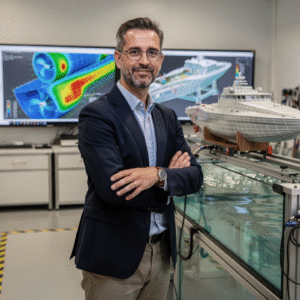
Diploma in International Maritime Traditions
Why this certificate program?
The Diploma in International Maritime Traditions
Immerse yourself in the rich history and cultural diversity that have shaped global navigation. Explore the customs, rituals, and ancestral knowledge of different maritime communities around the world, from ancient civilizations to contemporary practices. This program offers you a unique perspective on the influence of the sea on the identity, trade, and social evolution of diverse cultures.
Differential Advantages
- Global Exploration: A journey through the maritime traditions of Asia, Africa, Europe, and the Americas.
- Multidisciplinary Approach: Historical, anthropological, and cultural analysis of maritime practices.
- International Experts: Masterclasses taught by leading researchers and professionals in the field.
- Exclusive Learning Materials: Access to historical documents, antique maps, and unique audiovisual recordings.
- Practical Application: Development of research projects and analysis of real-world case studies.
- Modality: Online
- Level: Diplomado
- Hours: 800 H
- Start date: 19-06-2026
Availability: 1 in stock
Who is it aimed at?
- Historians, anthropologists, and sociologists interested in delving deeper into the cultural roots of global maritime communities.
- Tourism and cultural management professionals seeking to enrich their offerings with specialized knowledge of maritime heritage.
- Archivists, librarians, and museum professionals who wish to catalogue and exhibit collections related to maritime history.
- Students in the humanities and social sciences seeking specialization in an interdisciplinary and global field of study.
- Sea and naval history enthusiasts seeking to satisfy their curiosity and broaden their understanding of maritime traditions.
Flexibility for your learning
Designed for people with diverse interests and schedules: accessible asynchronous materials, interactive discussion forums and personalized tutoring.
Objectives and competencies

Managing maritime cultural heritage:
Documenting and cataloging maritime cultural assets, applying preventive conservation techniques and valuation criteria for their protection and dissemination.

Critically analyze international maritime regulations:
Evaluate the impact of recent amendments (SOLAS, MARPOL, STCW) on the operation of the ship and propose effective compliance strategies.

Interpreting maritime history to understand contemporary challenges:
“To analyze the evolution of trade routes, naval technologies, and maritime conflicts in order to anticipate geopolitical risks and economic opportunities in the current maritime environment.”

Promote international cooperation in marine conservation:
Actively participate in international agreements and conventions, implementing best practices and sharing information with other nations for the protection of marine ecosystems and the sustainable management of resources.

Assess the environmental impact of maritime activities:
“Identify and analyze the sources of marine pollution (discharges, emissions, noise) and propose preventive and corrective measures based on current regulations and best practices.”

Apply principles of sustainable port management:
“Integrate environmental, social and economic criteria into port planning and operation, optimizing the use of resources and minimizing environmental impact.”
Curriculum - Modules
- Comprehensive Maritime Incident Management: protocols, roles, and chain of command for coordinated response
- Operational Planning and Execution: briefing, routes, weather windows, and go/no-go criteria
- Rapid Risk Assessment: criticality matrix, scene control, and decision-making under pressure
- Operational Communication: VHF/GMDSS, standardized reports, and inter-agency liaison
- Tactical Mobility and Safe Boarding: RHIB maneuvers, approach, mooring, and recovery
- Equipment and Technologies: PPE, signaling, satellite tracking, and field data logging
- Immediate Care of the Affected: primary assessment, hypothermia, trauma, and stabilization for evacuation
- Adverse Environmental Conditions: swell, Visibility, flows, and operational mitigation
Simulation and training: critical scenarios, use of VR/AR, and exercises with performance metrics
Documentation and continuous improvement: lessons learned, indicators (MTTA/MTTR), and SOP updates
- Introduction to Naval History: From Antiquity to the Modern Era
- Great Naval Battles: Tactical and Strategic Analysis of Key Examples
- Exploration and Discovery: The Naval Contribution to Global Expansion
- Shipbuilding: Evolution of Materials, Design, and Technology
- International Maritime Law: Legal and Regulatory Aspects of Navigation
- Maritime Culture: Traditions, Rituals, and Life on Board Throughout History
- Ocean Resources: Exploitation, Conservation, and Sustainability
- Environmental Impact of Shipping: Pollution, Invasive Species, and Climate Change
- Green Technologies in Shipping: Alternative Fuels, Energy Efficiency, and Sustainable Designs
- Policies and Legislation for Ocean Sustainability: International Agreements and National Regulations
‘
- Introduction to Maritime History: Ancient Civilizations and the Sea
- Art and the Sea: Marine Representations Throughout History
- Ancient Maritime Legislation: Historical Maritime Codes and Laws
- Maritime Discoveries: Impact on Art and Legislation
- Piracy and Privateering: Influence on Legislation and Artistic Imagination
- Evolution of International Maritime Legislation: From Customary Law to UNCLOS
- Maritime Art and Propaganda: The Sea as a Symbol of Power and Nation
- The Industrial Revolution and the Sea: Impact on Legislation and New Artistic Representations
- Current Maritime Law: Jurisdiction, Sovereignty, and Delimitation of Maritime Spaces
- Current Challenges: Climate Change, Pollution, and the Protection of Maritime Heritage in Art and Legislation
‘
- Introduction to Naval History: Sources, Periodization, and Approaches
- Underwater Archaeology: Methods, Excavation Techniques, and Documentation
- Shipwrecks: Typology, Site Formation, and Taphonomic Processes
- Legislation on Maritime Cultural Heritage: International and National Conventions
- Ancient Shipbuilding: Technology, Materials, and Vessel Design
- Historical Maritime Routes: Trade, Migration, and Exploration
- Historical Cartography: Evolution, Instruments, and Representation of Maritime Space
- Maritime Museology: Conservation, Exhibition, and Dissemination of Heritage
- Intangible Maritime Culture: Traditions, Rituals, and Local Knowledge
- Case Studies: Archaeological Sites and Collections relevant naval forces
‘
- Global Maritime History: Routes, Empires, and Explorations
- Law of the Sea (UNCLOS): Maritime Zones, Sovereignty, and Jurisdiction
- History of Maritime Law: Origins and Evolution
- International Maritime Organizations: IMO, FAO, etc.
- Legal Regime of Ships: Nationality, Registration, and Flagging
- Maritime Contracts: Chartering, Cargo Transportation, Insurance
- Port Management: Operations, Security, and Environment
- Maritime Criminal Law: Piracy, Smuggling, and Other Offences
- Management of Marine Resources: Fishing, Mining, and Renewable Energy
- Marine Environmental Legislation: Protection of Biodiversity and pollution.
‘
- System Architecture and Components: Structural design, materials, and subsystems (mechanical, electrical, electronic, and fluid) with selection and assembly criteria for marine environments
- Fundamentals and Principles of Operation: Physical and engineering foundations (thermodynamics, fluid mechanics, electricity, control, and materials) that explain performance and operating limits
- Safety and Environmental (SHE): Risk analysis, PPE, LOTO, hazardous atmospheres, spill and waste management, and emergency response plans
- Applicable Regulations and Standards: IMO/ISO/IEC requirements and local regulations;
- Conformance criteria, certification, and best practices for operation and maintenance
- Inspection, testing, and diagnostics: Visual/dimensional inspection, functional testing, data analysis, and predictive techniques (vibration, thermography, fluid analysis) to identify root causes
- Preventive and predictive maintenance: Hourly/cycle/seasonal plans, lubrication, adjustments, calibrations, consumable replacement, post-service verification, and operational reliability
- Instrumentation, tools, and metrology: Measuring and testing equipment, diagnostic software, calibration and traceability; selection criteria, safe use, and storage
- Onboard integration and interfaces: Mechanical, electrical, fluid, and data compatibility; Sealing and watertightness, EMC/EMI, corrosion protection, and interoperability testing.
Quality, acceptance testing, and commissioning: process and materials control, FAT/SAT, bench and sea trials, go/no-go criteria, and evidence documentation.
Technical documentation and integrated practice: logs, checklists, reports, and a complete case study (safety → diagnosis → intervention → verification → report) applicable to any system.
- Introduction to Naval History: From Antiquity to the Modern Era
- The Age of Sail: Naval Development and Maritime Tactics
- The Industrial Revolution: Steamships and Battleships
- 20th Century Naval Wars: Strategies and Technologies
- International Maritime Organizations: IMO, ITLOS, etc.
- United Nations Convention on the Law of the Sea (UNCLOS)
- National Maritime Legislation: Territorial Waters, EEZ, etc.
- Commercial Maritime Law: Charter Parties, Insurance, etc.
- Maritime Culture: Traditions, Language, and Seafaring Folklore
- Maritime Heritage: Historic Ships, Museums, and Sites interest
‘
Career opportunities
- Maritime Heritage Manager: cataloging, conservation, and dissemination of historical collections and archives.
- Maritime Cultural Consultant: advising institutions and companies on projects related to maritime history and traditions.
- Maritime History Researcher: developing academic research projects on specific aspects of international maritime traditions.
- Maritime Educator/Communicator: designing and implementing educational programs and outreach activities for diverse audiences.
- Maritime-Cultural Tourism Manager: creating and promoting tourist routes and experiences related to maritime heritage.
- Maritime Exhibition Curator: designing and mounting exhibitions in museums and cultural centers.
- Audiovisual Media Documentarian: participating in the production of documentaries and other audiovisual content on maritime topics.
- Contributor to international cooperation projects: participation in initiatives for the preservation and promotion of maritime heritage in different countries.
“`
Admission requirements

Academic/professional profile:
Degree/Bachelor's degree in Nautical Science/Maritime Transport, Naval/Marine Engineering, or a related field; or proven professional experience in bridge/operations.

Language proficiency:
Recommended functional maritime English (SMCP) for simulations and technical materials.

Documentation:
Updated resume, copy of degree or seaman's book, ID card/passport, letter of motivation.

Technical requirements (for online):
Equipment with camera/microphone, stable connection, ≥ 24” monitor recommended for ECDIS/Radar-ARPA.
Admission process and dates

1. Online
application
(form + documents).

2. Academic review and interview
(profile/objectives/schedule compatibility).

3. Admission decision
(+ scholarship proposal if applicable).

4. Reservation of place
(deposit) and registration.

5. Induction
(access to campus, calendars, simulator guides).
Scholarships and grants
- Explore Cultural Riches: Discover the maritime traditions that have shaped the world throughout the centuries.
- Global Perspective: Analyze the customs, rituals, and festivities of diverse international maritime cultures.
- Historical Connection: Understand the importance of navigation and its impact on the identity of societies.
- Practical Application: Gain tools to interpret and value maritime heritage in contemporary contexts.
- Networking: Connect with experts and professionals passionate about the history and future of the sea.
Testimonials
This diploma program exceeded my expectations. I gained a solid understanding of international maritime traditions, from laws and conventions to operational practices. The application of real-world case studies and the focus on problem-solving allowed me to develop crucial skills for my career in the maritime sector. Thanks to this training, I was promoted to a position with greater responsibility, where I apply the knowledge I acquired daily.
The Diploma in Naval History, Culture & Heritage exceeded my expectations. I significantly deepened my knowledge of maritime history from a rigorous yet engaging academic perspective. The methodological tools I acquired allowed me to approach historical research with greater confidence, and the interaction with professionals in the field greatly enriched my understanding of naval heritage. This program has been fundamental to my professional development.
This diploma program exceeded my expectations. I gained a solid understanding of international maritime traditions, from their history to modern conventions, which enabled me to critically analyze current jurisprudence and its impact on the sector. The research and analytical skills I developed during the course have been invaluable in my current work.
This diploma program provided me with the necessary tools to fully understand the complex framework of international maritime traditions. I applied the knowledge I gained to the negotiation of a charter party, securing exceptionally favorable terms for my company and consolidating a key strategic alliance for our expansion in the Asian market.
Frequently asked questions
It covers international maritime laws, customs, and practices, including navigation, trade, safety, maritime law, and port management.
Yes. The itinerary includes ECDIS/Radar-ARPA/BRM with harbor, ocean, fog, storm, and SAR scenarios.
Online with live sessions; hybrid option for simulator/practical placements through agreements.
It covers both aspects, both international maritime laws and customs and cultural practices related to the sea.
Recommended functional SMCP. We offer support materials for standard phraseology.
Yes, with a relevant degree or experience in maritime/port operations. The admissions interview will confirm suitability.
Optional (3–6 months) through Companies & Collaborations and the Alumni Network.
Simulator practice (rubrics), defeat plans, SOPs, checklists, micro-tests and applied TFM.
A degree from Navalis Magna University + operational portfolio (tracks, SOPs, reports and KPIs) useful for audits and employment.
- Introduction to Naval History: From Antiquity to the Modern Era
- Great Naval Battles: Tactical and Strategic Analysis
- Evolution of Naval Technology: Propulsion, Armament, and Communications
- Organization and Hierarchy in Navies Throughout History
- Influence of Geopolitics on Naval History
- Law of the Sea: Evolution and Fundamental Principles
- International Conventions on Maritime Safety (SOLAS, MARPOL, etc.)
- International Maritime Organizations: IMO, Coast Guard
- National Maritime Legislation: Responsibilities and Jurisdiction
- Maritime Security: Current Threats and Risks (Piracy, Terrorism, etc.)
‘
Request information
Complete the Application Form.
Attach your CV/degree certificate (if you have it to hand).
Indicate your preferred cohort (January/May/September) and whether you would like the hybrid option with simulator sessions.
An academic advisor will contact you within 24–48 hours to guide you through the admission process, scholarships, and compatibility with your professional schedule.
Faculty
Eng. Tomás Riera
Full Professor
Eng. Tomás Riera
Full Professor
Eng. Sofía Marquina
Full Professor
Eng. Sofía Marquina
Full Professor
Eng. Javier Bañuls
Full Professor
Eng. Javier Bañuls
Full Professor
Dr. Nuria Llobregat
Full Professor
Dr. Nuria Llobregat
Full Professor
Dr. Pau Ferrer
Full Professor
Dr. Pau Ferrer
Full Professor
Cap. Javier Abaroa (MCA)
Full Professor
Cap. Javier Abaroa (MCA)
Full Professor