Master’s Degree in Maritime and Cruise Ship Nursing

Why this master’s programme?

The Master’s in Maritime and Cruise Ship Nursing

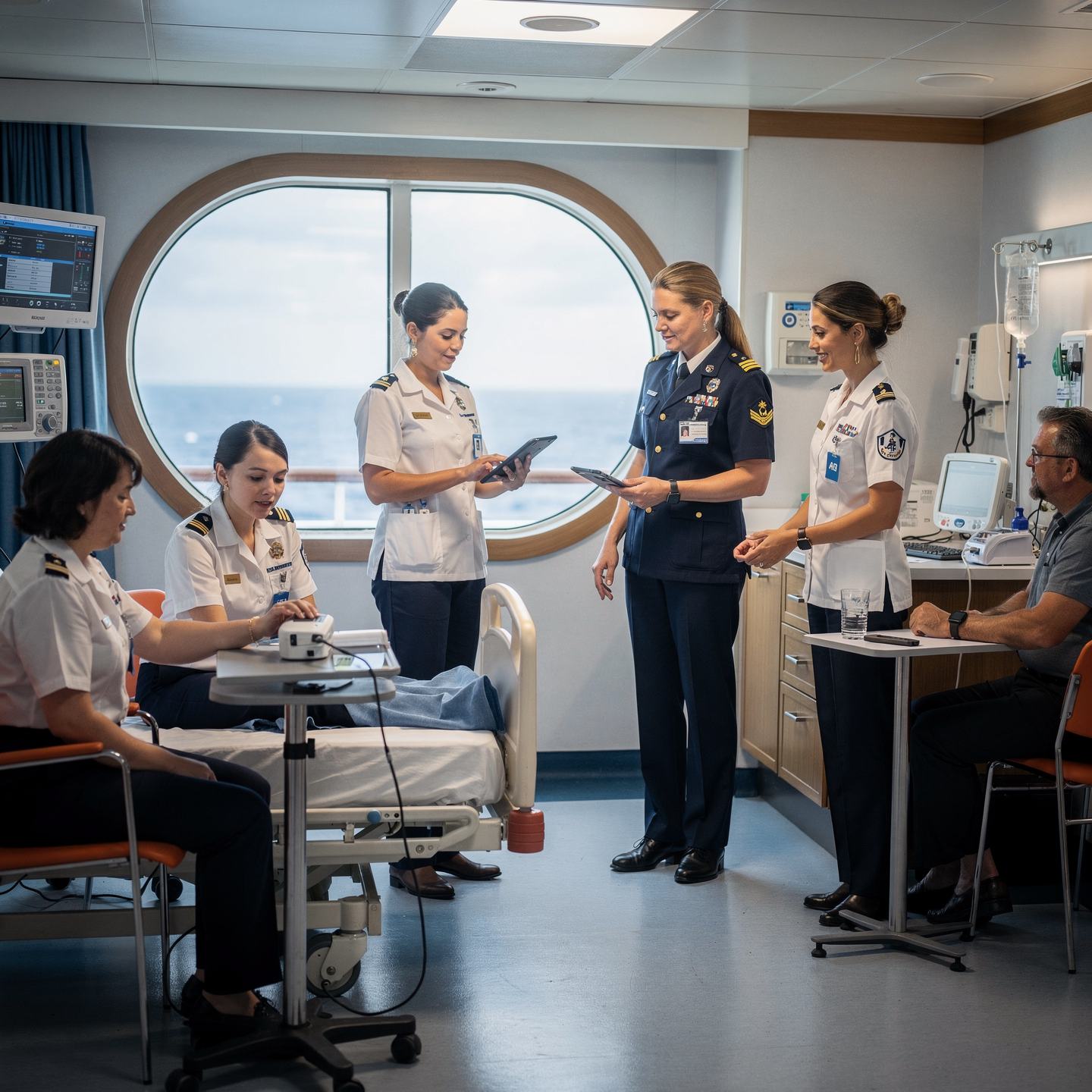
This program prepares you to face the unique challenges of healthcare at sea. Acquire specialized knowledge in emergency medicine, maritime public health, and risk management in isolated environments. Master the protocols for responding to infectious outbreaks, trauma, and chronic illnesses on board, ensuring the well-being of the crew and passengers. This program trains you to lead nursing teams on cruise ships and merchant vessels, with a focus on prevention, diagnosis, and treatment under demanding conditions.

Differentiating Advantages

  • Realistic Simulations: Practice in onboard medical emergency scenarios.
  • Focus on International Health: Management of tropical diseases and global health risks.
  • Legal and Ethical Framework: Knowledge of maritime regulations and patients’ rights at sea.
  • Intercultural Communication Skills: Effective interaction with patients and crew members of diverse nationalities.
  • Networking Opportunities: Connection with leading professionals in the maritime and cruise sector.

Master’s Degree in Maritime and Cruise Ship Nursing

Availability: 1 in stock

Who is it aimed at?

  • Nurses seeking specialization in the maritime field, whether on merchant ships, cruise ships, or offshore platforms.
  • Healthcare professionals interested in providing healthcare in isolated and resource-limited environments.
  • Medical service managers in shipping or cruise lines who wish to improve the quality of care on board.
  • Emergency nurses seeking to expand their knowledge in deep-sea medicine and maritime rescue.
  • Nursing graduates aspiring to an international career in high demand in the maritime sector.

Flexibility and Applicability
Adapted to professional demands: online format with live classes, practical case studies, and a focus on the most recent international protocols.

Objectives and skills

Managing health emergencies on board:

“Prioritize the safety of the patient and crew by assessing the situation, communicating efficiently, and applying the first aid and basic life support protocols available on board.”

Coordinate comprehensive care for maritime patients:

Manage effective communication between the onboard team and telemedicine services, ensuring accurate transmission of information for timely diagnosis and treatment.

Implement hygiene and food safety protocols in maritime environments:

Establish and maintain a HACCP system adapted to the specific characteristics of maritime activity, including supplier control, storage, food preparation and service, and waste management, ensuring traceability and preventing cross-contamination.

Lead health and wellness programs for crew and passengers:

Design and implement strategies to promote mental and physical health, including protocols for action in medical emergencies and post-traumatic psychological support.
Develop and implement occupational risk prevention strategies in the maritime environment:

“Identify specific hazards of maritime activity (cargo, maneuvers, confined spaces) and establish preventive measures based on regulations and best practices.”

Perform triage and classification of patients in maritime emergency situations:

“Assess vital signs, level of consciousness, and mechanisms of injury to prioritize care according to standardized triage scales (START, METTAG) and resources available on board/in the area.”

Study plan – Modules

  1. Comprehensive health risk assessment in maritime and cruise ship environments: identification, analysis, and mitigation of threats.
  2. Advanced triage and initial care protocol for medical emergencies on board: priority criteria and management of limited resources.
  3. Design and implementation of health contingency plans according to international regulations (IMO, IHR, CDC).
  4. Implementation and leadership of multidisciplinary teams for emergency management: roles, communication, and decision-making under pressure.
  5. Specific protocols for the management of communicable diseases and epidemic outbreaks on cruise ships: isolation, disinfection, and notification.
  6. Interpretation and application of clinical algorithms in maritime medical care: basic and advanced life support in confined spaces.
  7. Comprehensive management of medical and pharmaceutical supplies: storage, expiration dates, inventory control, and rational use at sea.
  8. Medical evacuation systems and coordination with services Land and air/sea: planning, drills, and safe patient transfer.

    Legal and ethical regulations in maritime nursing: informed consent, confidentiality, and professional responsibilities in exceptional contexts.

    Clinical record-keeping and documentation methodologies in emergencies: medical reports, incident reports, and health audits on cruise ships.

    Advanced simulation and operational training in critical scenarios on board: management of cardiac arrest, trauma, and mass casualty events.

    Adaptation of hospital protocols to maritime environments: structural limitations, environmental conditions, and available technological resources.

    Use of telemedicine technologies for remote diagnosis and support: secure communication, data interpretation, and collaborative decision-making.

    Prevention and management of post-traumatic stress in crew and passengers after serious health incidents.

    Updates on vaccinations and prophylaxis for crew and passengers: schedules, Contraindications and logistical management on international cruises.

  1. Advanced Fundamentals of Critical Care Nursing: Hemodynamic Assessment, Ventilatory Support, and Airway Management in Maritime Environments
  2. International Protocols and Current Regulations in Maritime Health: Practical Application of the IMO, ILO, and MLC Convention in Healthcare
  3. Comprehensive Management of Medical Emergencies on Board: Advanced Resuscitation Techniques, Use of Automated External Defibrillators (AEDs), and Critical Care Pharmacology in Confined Spaces
  4. Telemedicine and Remote Support: Integration of Satellite Communication Technologies for Diagnosis and Healthcare Advice on Cruise Ships and Vessels
  5. Preventive Health in Maritime Communities: Design and Implementation of Vaccination, Infection Control, and Healthy Habits Promotion Programs for Crews and Passengers
  6. Specialized Care for Pathologies Related to Maritime environment: barotrauma, decompression sickness, hypothermia, and immersion illnesses

    Health risk management in maritime operations: epidemiological analysis, management of infectious outbreaks, and contingency plans on cruise ships

    Advanced triage and medical evacuation procedures: coordination with land-based services and search and rescue (SAR) units

    Mental health and stress management in demanding maritime operational environments: psychological support techniques and prevention of fatigue syndrome in crew members and patients

    Clinical documentation and compliance with electronic health records under international standards: confidentiality, interoperability, and medical audits

    Innovations in equipment and biomedical technology used in maritime nursing units: portable devices, continuous monitoring, and rapid diagnosis

    Training in clinical simulation Advanced training for critical emergency situations on board: virtual scenarios and practical exercises with real-life cases adapted to the maritime environment.

    Multidisciplinary interventions in the management of critically ill patients: coordination with physicians, technicians, and rescue personnel in aquatic environments.

    Ethics and biosafety in the provision of critical care in isolated spaces: waste management, personnel protection, and infection control.

    Evaluation and control of environmental factors affecting health: air quality, temperature, noise, and sea conditions in the prevention of occupational diseases.

  1. Advanced Foundations of Healthcare in Maritime Environments: Physiological and Psychophysiological Characteristics of Patients in High-Mobility and Confined Environments
  2. Innovative Triage and Initial Assessment Protocols for Medical Emergencies on Board: Use of Wearable Technologies and Telemedicine for Optimizing Diagnosis
  3. Design and Adaptation of Clinical Intervention Plans on Cruise Ships: Integration of International Guidelines and Specific Regulations from the International Maritime Organization (IMO) and the World Health Organization (WHO)
  4. Implementation of Continuous Monitoring Systems for Vital Signs and Hemodynamic Response with Wearable Devices and Biometric Sensors Approved for Maritime Use
  5. Advanced Management of Critical Situations: Basic and Advanced Life Support, Including Cardiopulmonary Resuscitation (CPR) Protocols Adapted to Space Limitations and Technical Resources of the Environment
  6. Multidisciplinary Approach and Coordination with Shore-Based Teams and Medical Referral Centers: Protocols for Aeronautical Medical Evacuation and management of complex cases on maritime surfaces

    Innovations in the management of infectious diseases on board: application of isolation systems, outbreak control, and prevention strategies based on the latest scientific evidence for enclosed spaces

    Optimization of pharmacological management in maritime environments: storage, safe administration, and expiration date control under extreme environmental conditions

    Specific protocols for the care of chronic pathologies and pre-existing conditions in crew and passengers, ensuring continuity and quality of care during navigation

    Evaluation and improvement of the quality of maritime healthcare: implementation of performance indicators, clinical audits, and simulation-based continuing education strategies

  1. Fundamentals of maritime telemedicine: historical evolution, specific applications in aquatic environments, and technological challenges
  2. Remote diagnosis on board: advanced clinical assessment techniques via telemedicine, interpretation of vital signs, and use of wearable devices
  3. Medical teleconsultation: protocols for effective communication between crew and specialized centers, emergency management, and real-time decision support
  4. Electronic Health Records (EHRs) in maritime environments: configuration, secure maintenance, and continuous updating of digital medical records on cruise ships and vessels
  5. Continuous monitoring of biometric parameters: wearable sensors, integration with early warning systems, and real-time data management
  6. Interoperability between onboard systems and land-based centers: HL7 and FHIR standards, and protocols for standardized medical information exchange
  7. Cybersecurity in maritime digital health: protection against intrusions, encryption of sensitive data, and management
  8. Privileged access to safeguard privacy
  9. Legal and regulatory aspects: international regulatory compliance, maritime legislation in eHealth, and medico-legal liability in telemedicine on board
  10. Integration of artificial intelligence and machine learning for diagnostic support and real-time prediction of clinical events
  11. Case studies and simulations: comprehensive approach to complex medical situations, multidisciplinary coordination, and optimization of protocols using digital health
  1. Fundamentals and current protocols in advanced life support (ACLS, PALS, ATLS) applied in maritime and riverine environments
  2. Rapid assessment and triage in onboard emergencies: detection and prioritization algorithms in highly complex situations
  3. Safe vascular access and fluid therapy management in adverse conditions: use of intraosseous cannulas, venipuncture in mobile environments, and hemodynamic monitoring
  4. Advanced respiratory support: portable mechanical ventilation techniques, hyperbaric oxygen therapy, and management of difficult airways in confined spaces
  5. Advanced interpretation of clinical monitoring: ECG, capnography, pulse oximetry, and critical parameters for immediate decision-making
  6. Comprehensive management of common critical pathologies in the maritime environment: immersion syndrome, barotrauma, and gas embolism and poisonings by ingestion or inhalation

    Specific protocols for cardiopulmonary resuscitation on unstable surfaces and in hard-to-reach areas, including techniques adapted to extreme environmental conditions

    Advanced care for severe trauma: primary and secondary stabilization in floating scenarios, immobilization, and safe transfer to specialized centers

    Comprehensive stress management and psychological support for crew and critically ill patients during prolonged emergencies

    Implementation and monitoring of onboard emergency medical systems: planning, resources, satellite communication, and inter-institutional coordination in maritime rescues

  1. Introduction to health emergencies in maritime environments: particularities and inherent challenges of onboard medical care
  2. Specific clinical protocols for care on cruise ships and vessels: triage, stabilization, and urgent medical evacuation
  3. Risk assessment and management of health incidents: identification, analysis, and mitigation in onboard care
  4. Action plans for common and emerging pathologies in enclosed maritime spaces: infections, injuries, and chronic conditions
  5. Updating and application of international regulations in maritime health: IMO, ILO, STCW, and WHO guidelines
  6. Integration of advanced technological tools in medical monitoring and diagnosis at sea: telemedicine, wearable devices, and early warning systems
  7. Advanced life support and cardiopulmonary resuscitation techniques adapted to the limitations and resources of a maritime environment
  8. Medication management and cold chain on board: storage, inventory control, and applicable health regulations
  9. Training in emergency medical communications: coordination protocols with land-based health centers and international maritime emergencies
  10. Innovations in portable and wearable technologies for continuous monitoring of crew and passenger health status
  11. Drills and practical training in rapid response to health crises: scenarios of pandemics, poisonings, and mass casualty incidents on cruise ships
  12. Clinical documentation, reporting, and auditing of medical cases in maritime contexts: use of electronic records and ensuring traceability
  13. Ethical and legal aspects of maritime healthcare: informed consent, confidentiality, and professional responsibility
  14. Disinfection and infection control protocols: preventive measures and use of ultrasonic and UV technologies on board
  15. Evaluation and selection of biomedical equipment and specialized medical devices for Maritime environments
  16. Multidisciplinary health management on board: coordination between nursing, medicine, safety, and ship command

    Resilience and psychological support for nursing staff and passengers in stressful and emergency situations at sea

    Implementation and updating of automated health alert systems and clinical management software on cruise ships

    Analysis of real-world cases and field studies on health emergencies in the maritime and cruise ship environment

    Future perspectives in maritime nursing: artificial intelligence applied to diagnostics, advanced telemedicine, and new international regulations

  1. Innovations in biomedical technology applied to maritime environments: wearable devices, telemedicine, and remote monitoring
  2. Advanced protocols for emergency interventions on cruise ships: trauma management, advanced life support, and prehospital stabilization
  3. Integration of artificial intelligence and predictive analytics systems for the early detection of pathologies and clinical decision-making on board
  4. International regulations and quality standards for maritime healthcare: compliance with SOLAS, STCW, and ISO 9001 in nursing
  5. Management of medicines and medical supplies at sea: stock control, expiration dates, and safe storage in environments with logistical constraints
  6. Innovations in rapid diagnostic techniques and portable laboratories specifically designed for maritime conditions
  7. Protocols for continuous training and updates: drills, virtual reality training, and competency-based training
  8. Adaptation and optimization Nursing procedures for confined spaces and adverse environmental conditions: ergonomics and biosafety

    Use of digital platforms for electronic clinical documentation and efficient management of medical records on board

    Applied research and technological development in maritime nursing: future trends and opportunities for improving the quality of care on cruise ships

  1. Fundamentals of Maritime Nursing: Specific Characteristics and Challenges of the Marine Environment
  2. Applicable International Regulations: SOLAS, STCW, IMO, ILO, and Maritime Health Protocols
  3. Advanced Clinical Resource Management: Planning, Logistics, and Management of Medical Supplies on Cruise Ships and Offshore Platforms
  4. Comprehensive Patient Care at Sea: Assessment, Diagnosis, and Treatment in Limited Conditions
  5. Medical Emergency and Urgent Care Protocols: Advanced Life Support and Trauma Management in Isolated Environments
  6. Safety and Prevention of Occupational Risks: Handling Biological Materials, Infectious Agents, and Naval Ergonomics
  7. Occupational and Psychosocial Health for Crews and Passengers: Prevention of Stress, Fatigue, and Common Illnesses
  8. Telemedicine and Applied Technology: Digital Tools for Diagnosis and Coordination with Healthcare Centers
  9. Land-based environments

  10. Outbreak and contagious disease management: isolation, quarantine, and vaccination protocols on board
  11. Planning and execution of emergency drills: multidisciplinary coordination and internal audits to ensure preparedness
  12. Clinical and legal documentation: health records, incident reports, and compliance with international standards
  13. Effective communication and leadership in crisis situations: decision-making under pressure and management of interdisciplinary teams
  14. Nutritional interventions and management of chronic conditions in maritime environments
  15. Professional ethics and responsibility in maritime nursing: confidentiality, informed consent, and patient rights
  16. Continuous updating and training: integration of scientific evidence and best practices specific to the maritime and cruise sector
  1. Fundamentals of comprehensive health emergency management in maritime environments: risk analysis, initial assessment, and chain of survival on board
  2. Standard and advanced medical protocols for cruise ship care: triage, stabilization, and medical evacuation in coordination with land and sea services
  3. International regulations and specific certifications: compliance with SOLAS, MED, STCW, and WHO guidelines for maritime healthcare
  4. Design and management of healthcare areas on board: medical clinics, mobile operating rooms, and isolation units for communicable diseases
  5. Advanced maritime first aid techniques: management of trauma, cardiopulmonary emergencies, poisoning, and common illnesses at sea
  6. Application of innovative technologies in maritime healthcare: telemedicine, remote monitoring systems, and artificial intelligence applications for early diagnosis
  7. Infection control protocols and Outbreak management on board: practical implementation, decontamination, and biosecurity in enclosed spaces

    Multidisciplinary coordination and effective communication between medical teams, crew, and port authorities in health emergencies

    Simulation of critical scenarios and analysis of real cases: response to fires with casualties, mass casualty incidents, and medical evacuations on cruise ships

    Legal, ethical, and psychological aspects of maritime health management: patient rights, confidentiality, informed consent, and emotional support in crisis situations

  1. Introduction to the design of comprehensive health response models: theoretical and methodological foundations applied to the maritime and cruise ship environment
  2. Risk and vulnerability analysis in maritime health emergencies: epidemiological, environmental, and operational factors
  3. International protocols and regulations for managing health emergencies on board: compliance with IMO, IHR, SOLAS, and WHO guidelines
  4. Development and application of innovative technologies for health monitoring and response: telemedicine, artificial intelligence, and satellite communication systems
  5. Integration of portable biomedical devices and early warning systems in the naval context: design, implementation, and maintenance
  6. Multilateral coordination and resource management in health crises: collaboration between port authorities, onboard medical teams, and specialized land-based centers
  7. Advanced training in triage techniques and critical care in confined spaces and mobility Reduced to onboard cruise ships and merchant vessels
  8. Planning and simulation of health emergency scenarios using predictive models and specialized software: optimizing the response and minimizing impacts

    Comprehensive logistics management for medical supplies and infection control during crisis episodes: supply chain and secure storage in maritime environments

    Evaluation and continuous improvement of the integrated health response model: performance indicators, audits, reports, and lessons learned applied to the maritime and cruise sector

Career prospects

“`html

  • Nurse on board merchant ships: comprehensive healthcare for the crew, first aid kit management, and disease control.
  • Nurse on cruise ships: care for passengers and crew, management of medical emergencies, and coordination with hospitals on land.
  • Nurse on offshore platforms: healthcare in remote environments, occupational risk management, and safety protocols.
  • Maritime health consultant: advising shipping companies on occupational risk prevention, public health, and international regulations.
  • Maritime health emergency manager: coordination of maritime rescues, assistance to shipwrecked persons, and management of health crises at sea.
  • Maritime health researcher: development of studies on prevalent diseases in the Maritime industry, risk factors, and preventive measures.
  • Maritime Nursing Trainer: Delivery of first aid, basic life support, and advanced life support courses in maritime environments.
  • Occupational Risk Prevention Technician in the Maritime Sector: Risk assessment, emergency plan design, and safety training for crew members.

“`

Entry requirements

Academic/professional profile:

Bachelor’s degree in Nautical Science/Maritime Transport, Naval/Marine Engineering or a related qualification; or proven professional experience on the bridge/in operations.

Language proficiency:

Functional Maritime English (SMCP) recommended for simulations and technical materials.

Documentation:

Updated CV, copy of qualification or seaman’s book, national ID/passport, motivation letter.

Technical requirements (for online):

Device with camera/microphone, stable internet connection, monitor ≥ 24” recommended for ECDIS/Radar-ARPA.

Admissions process and dates

Online
application

(form + documents).

Academic review and interview

Admissions decision

Admissions decision

(+ scholarship offer if applicable).

Place reservation

(deposit) and enrolment.

Induction

(access to the virtual campus, calendars, simulator guides).

Scholarships and financial support

  • Unique Specialization: Acquire advanced skills in healthcare in maritime and cruise ship environments, a constantly growing sector.
  • Comprehensive Training: Master emergency protocols, management of prevalent diseases on board, and the specificities of health in the maritime context.
  • Practical Experience: Participate in simulations and case studies that will prepare you to face real-life situations at sea.
  • Professional Networking: Connect with industry experts and establish relationships that will boost your career in maritime nursing.
  • Prestigious Certification: Obtain an internationally recognized qualification that will open doors to job opportunities on cruise ships and shipping lines worldwide.
Boost your career and become a highly skilled professional in demand in the maritime sector.

Testimonials

Frequently asked questions

In the maritime environment, specifically on cruise ships and other passenger vessels.

Yes. The itinerary includes ECDIS/Radar-ARPA/BRM with harbor, ocean, fog, storm, and SAR scenarios.

Online with live sessions; hybrid option for simulator/practical placements through agreements.

Recommended functional SMCP. We offer support materials for standard phraseology.

Yes, with a relevant degree or experience in maritime/port operations. The admissions interview will confirm suitability.

Optional (3–6 months) through Companies & Collaborations and the Alumni Network.

Simulator practice (rubrics), defeat plans, SOPs, checklists, micro-tests and applied TFM.

A degree from Navalis Magna University + operational portfolio (tracks, SOPs, reports and KPIs) useful for audits and employment.

  1. Introduction to the design of comprehensive health response models: theoretical and methodological foundations applied to the maritime and cruise ship environment
  2. Risk and vulnerability analysis in maritime health emergencies: epidemiological, environmental, and operational factors
  3. International protocols and regulations for managing health emergencies on board: compliance with IMO, IHR, SOLAS, and WHO guidelines
  4. Development and application of innovative technologies for health monitoring and response: telemedicine, artificial intelligence, and satellite communication systems
  5. Integration of portable biomedical devices and early warning systems in the naval context: design, implementation, and maintenance
  6. Multilateral coordination and resource management in health crises: collaboration between port authorities, onboard medical teams, and specialized land-based centers
  7. Advanced training in triage techniques and critical care in confined spaces and mobility Reduced to onboard cruise ships and merchant vessels
  8. Planning and simulation of health emergency scenarios using predictive models and specialized software: optimizing the response and minimizing impacts

    Comprehensive logistics management for medical supplies and infection control during crisis episodes: supply chain and secure storage in maritime environments

    Evaluation and continuous improvement of the integrated health response model: performance indicators, audits, reports, and lessons learned applied to the maritime and cruise sector

Request information

  1. Complete the Application Form.

  2. Attach your CV/degree certificate (if you have it to hand).

  3. Indicate your preferred cohort (January/May/September) and whether you would like the hybrid option with simulator sessions.

    An academic advisor will contact you within 24–48 hours to guide you through the admission process, scholarships, and compatibility with your professional schedule.

Please enable JavaScript in your browser to complete this form.
Click or drag a file to this area to upload.

Faculty

0
    0
    Tu carrito
    Tu carrito esta vacíoRegresar a la tienda
    Scroll to Top